Places & Day Trips
Things to Do in Interlaken 2026: 25 Picks by a Local
P
Pierre Vetsch
Author
May 17, 2026
6 min
Things to Do in Interlaken: A Local's Honest Guide for 2026
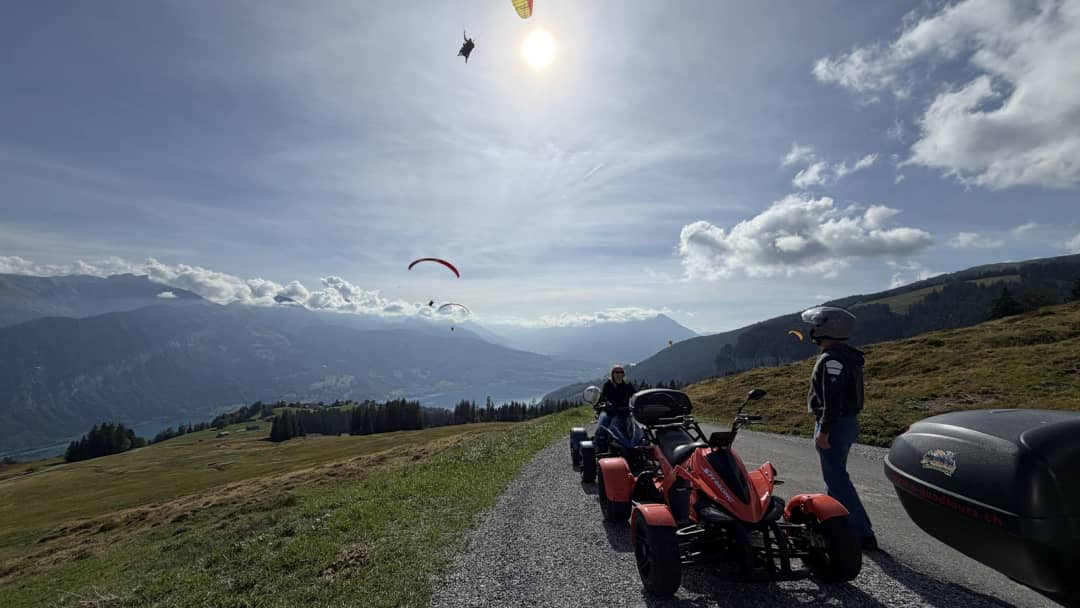
Things to do in Interlaken start at its two stations: a boat on Lake Thun or Lake Brienz, or the 22-minute train to Lauterbrunnen. Tandem paragliding flights land on the Höhematte, the meadow in the town centre. The name itself means "between the lakes".
Ask me for one moment in Interlaken itself, and I stay in the town centre:
"The Höhematte at sunset, the Jungfrau turning pink."
Pierre Vetsch, guide and founder, interviewed on 14 October 2026
Clients of mine have told me that two days here was not enough.
I run small-group adventure tours in this region. After more than 300 guided days across the Bernese Oberland, I know the gap between what lands on every itinerary and what actually stays with people. Some of the itinerary classics deserve their reputation. Some are tourist traps in beautiful packaging. And some of the best moments in the Bernese Oberland never make it onto any list at all.
Here is the honest version.
Is Interlaken Worth Visiting?
Yes, Interlaken is worth it. Some of my clients worried it would be just another overcrowded Swiss town, and the reality surprised them. The town itself is calm outside one square kilometer of souvenir shops. The surrounding region, two lakes, three mountains, and dozens of villages, is what earns the reputation.
Others have told me the town is pretty but less impressive than they expected. They are judging the wrong scale. Interlaken is not a destination you admire from the street. It is a platform for what surrounds it.
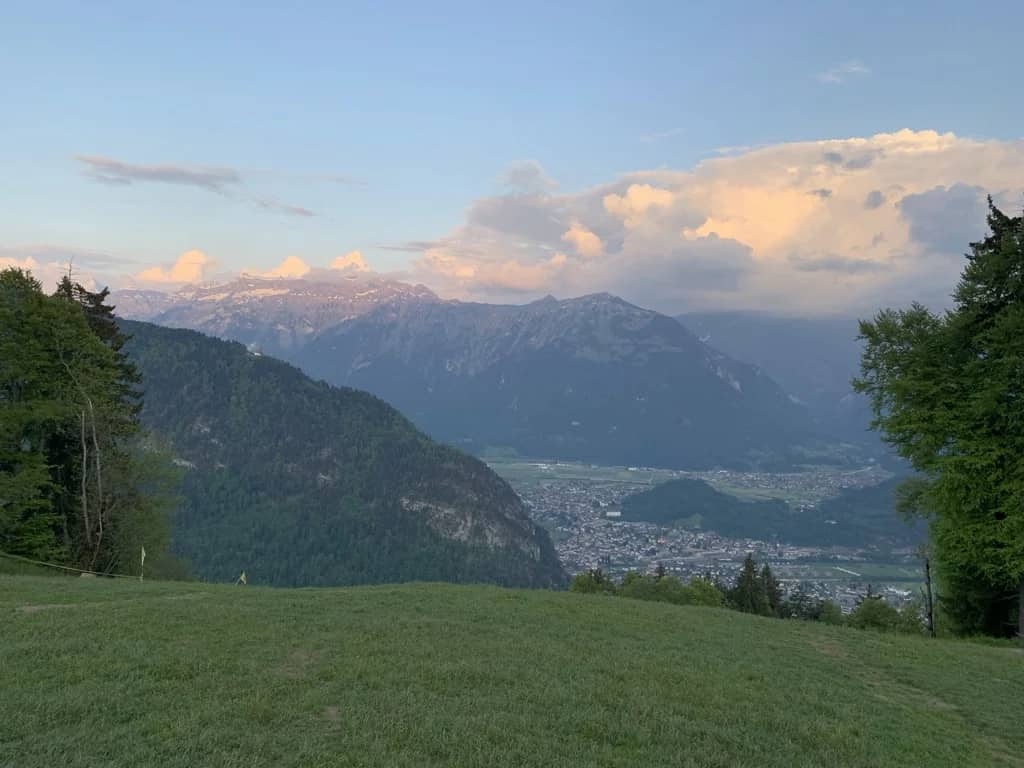
Interlaken sits between Lake Thun to the west and Lake Brienz to the east, in a flat alluvial basin surrounded by the highest mountain range in central Europe. The name literally means between the lakes. That geography gives the town its centrepiece: the Höhematte, a 14-hectare meadow in the dead centre of town, kept green since 1864, when Interlaken's hoteliers bought it and banned any building on it. The ban still holds. That is why you can stand on grass in the middle of a town and see the Jungfrau rise directly above your head.
Lord Byron passed through in September 1816 and dined at "Interlachen", as his Alpine journal records. Mark Twain reached the town at sunset on the European walking tour he began in 1878 and wrote up in A Tramp Abroad. Interlaken has been receiving travelers for two centuries, and it shows.
What Is Interlaken Best Known For?
Interlaken is best known as the adventure capital of Switzerland and the gateway to the Jungfrau region. Paragliding, skydiving, canyoning, and the train to the highest railway station in Europe have put it on every bucket list since the 1990s. But the lakes, the mountain villages, and the Swiss food culture draw just as many people who want nothing to do with adrenaline.
The 25 Best Things to Do in Interlaken in 2026
These are grouped by type. Within each group, they run from most iconic to most overlooked.
Mountain Adventures
Paragliding from Beatenberg (CHF 180-199): Tandem flights launch above the treeline and land on the Höhematte. What the take-off asks of you:
"You run, you don't jump, and there's no vertigo."
Pierre Vetsch, guide and founder, interviewed on 14 October 2026
Some of my clients were terrified at the top and still described it afterwards as one of the best experiences of their lives. Even so, my verdict on the price:
"It's not worth the price, no; better to do another activity, hang gliding instead, otherwise kayaking or something else; keep paragliding for France, Spain or Portugal, for 70 euros."
Pierre Vetsch, guide and founder, interviewed on 14 October 2026
The 70 euros is my rough idea of a flight there, not a published fare. If you still want to fly here, see the full paragliding in Interlaken guide.
Jungfraujoch, Top of Europe (return ticket from CHF 129.60): The train climbs to 3,454 metres, the highest railway station in Europe. Ice palaces, a glacier walkway, and yes, a Lindt stand. Often crowded and expensive for what it is: I don't recommend it, and for one paid summit I prefer the Schilthorn. If it stays on your list, go only on a clear day.
Skydiving over Interlaken (CHF 425): From the Reichenbach dropzone in the Kandertal, the plane climbs for up to 15 minutes over Lake Thun and Lake Brienz to 4,000 metres. Then 45 seconds of free fall at 180 km/h and about five minutes under the canopy, with the Eiger, Mönch and Jungfrau around you.
Canyoning in Saxetenbach or Grimsel (CHF 100-150): Rappelling down waterfalls into emerald pools. The Saxetenbach canyon runs 2.5 hours and works for first-timers. See Interlaken Adventure Activities, Ranked (Local Guide).
White-water rafting on the Lutschine (CHF 80-120): Class II-III rapids, accessible June through September. Short, punchy, good for groups with mixed experience.
Eiger Express gondola to Eigergletscher (CHF 60-80): The fastest cable car in the Alps reaches Eigergletscher in 15 minutes. Glacier views and the Eiger's north face at eye level, without the altitude of Jungfraujoch.
Schynige Platte cogwheel railway (CHF 60-75 round trip, or included in Swiss Travel Pass): The local pick for price-to-magic ratio. A 19th-century cogwheel train climbs through wildflower meadows to a botanical garden at 1,987 metres. The panorama of all three peaks from the summit ridge takes about ten seconds to understand and longer to forget.
Augstmatthorn ridge hike: The cliff selfie spot most Instagram accounts tag without noting the country. 2.5 hours from Habkern, no guide needed in summer.
Lake Experiences
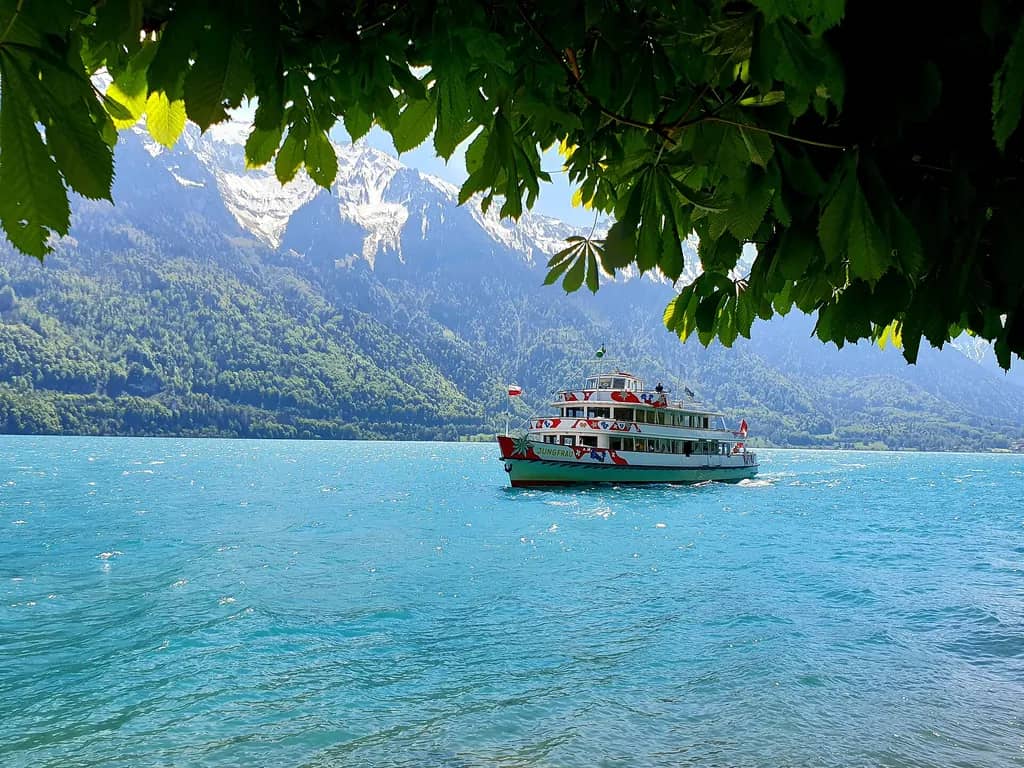
Kayaking on Lake Brienz (CHF 115 per adult, guided): The lake sits cold and emerald, and glacier melt keeps it that color all summer. Guided tours run from May to October, leaving at 09:15 or 09:20 and at 13:15 or 13:20; October departures cost CHF 125.
BLS ferry from Interlaken to Spiez (included in Swiss Travel Pass): Castle shores, vineyards above the water, the town of Spiez with its 9th-century castle. A two-hour return trip most visitors skip.
Swimming at Bönigen (CHF 6 in 2026): That is the adult day ticket at the Bönigen lido on Lake Brienz, open in 2026 from 16 May to 13 September and now closed until 2027. My own spot is free and outside the lido:
"At the end of Bönigen, on the road that goes to Iseltwald. Pebbles, a gradual way in."
Pierre Vetsch, guide and founder, interviewed on 13 September 2026
From mid-September the lake is too cold for most visitors, so keep this swim for summer.
Iseltwald jetty (CHF 5 access fee): Made internationally famous by the Korean drama Crash Landing on You. The municipality charges the fee to step onto the boat pier. My verdict:
"The 5 francs for the pier: we don't recommend it. Better to take free photos everywhere else, in the village and on the other shores."
Pierre Vetsch, guide and founder, interviewed on 14 October 2026
Olivia Lufman from our team makes the same call: "My choice is the photo from the shore." The details are in our guide to the Iseltwald Crash Landing on You pier.
Giessbach Falls, Lake Brienz (free, ferry extra): Fourteen falls that drop directly into the lake, reached by the oldest funicular in Switzerland (1879). The spray reaches the viewing platforms.
St. Beatus Caves on Lake Thun (CHF 19): Underground river galleries, limestone stalactites, and a 14th-century chapel carved into rock. Better for rainy days than any shopping street.
Mountain Villages and Culture
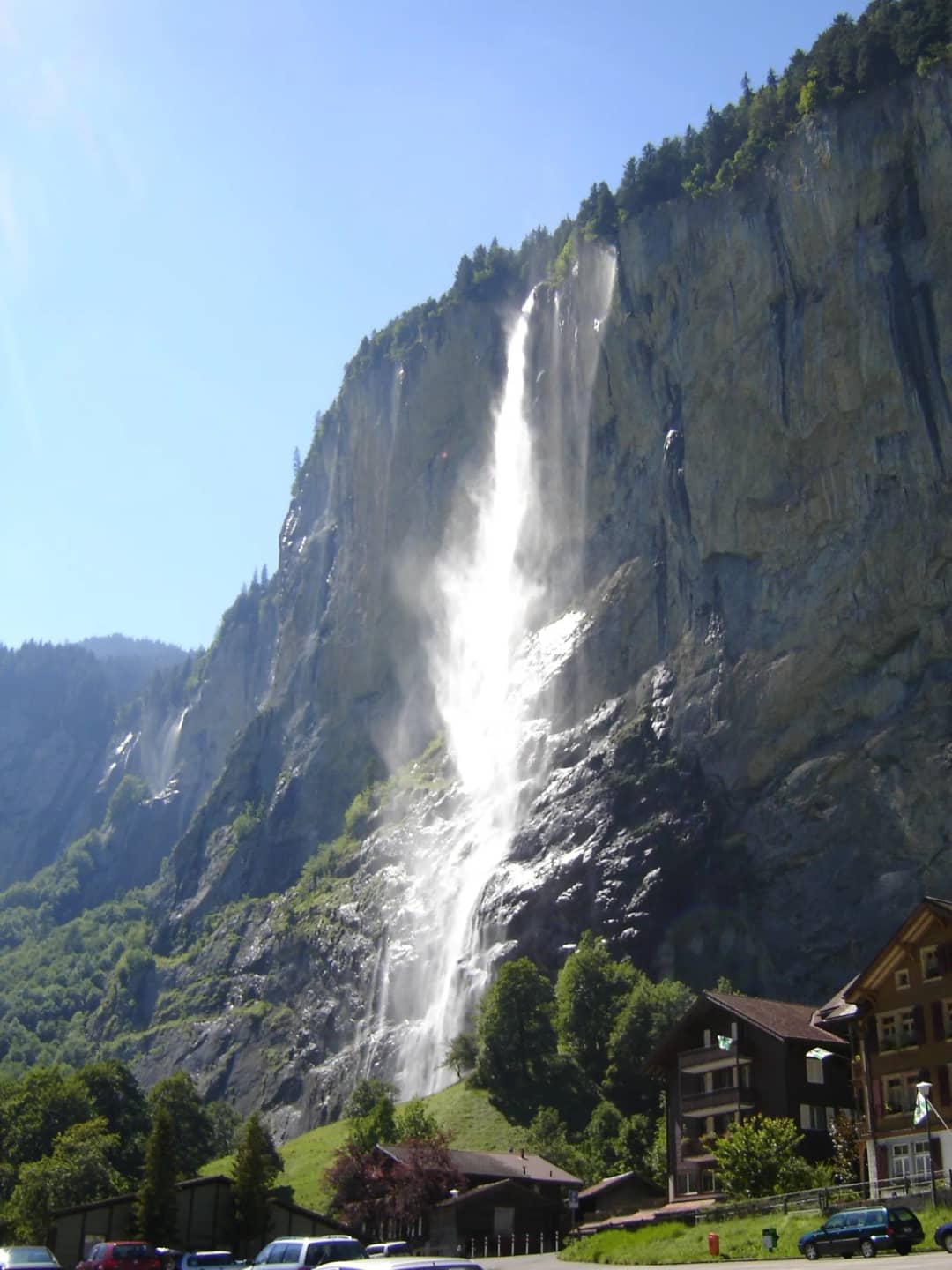
Lauterbrunnen valley (free to enter): 72 waterfalls, including the Staubbachfall that drops 300 metres in a single strand. Walk the valley floor for two hours without paying anything.
The mistake I see in the valley:
"Not walking the valley, stopping at the Staubbach."
Pierre Vetsch, guide and founder, interviewed on 20 September 2026
Mürren by cable car and train (CHF 45-60 from Lauterbrunnen): Car-free at 1,650 metres. Flower boxes on chalets. The Schilthorn above it appeared in the 1969 Bond film On Her Majesty's Secret Service. The Piz Gloria restaurant at the summit still serves fondue.
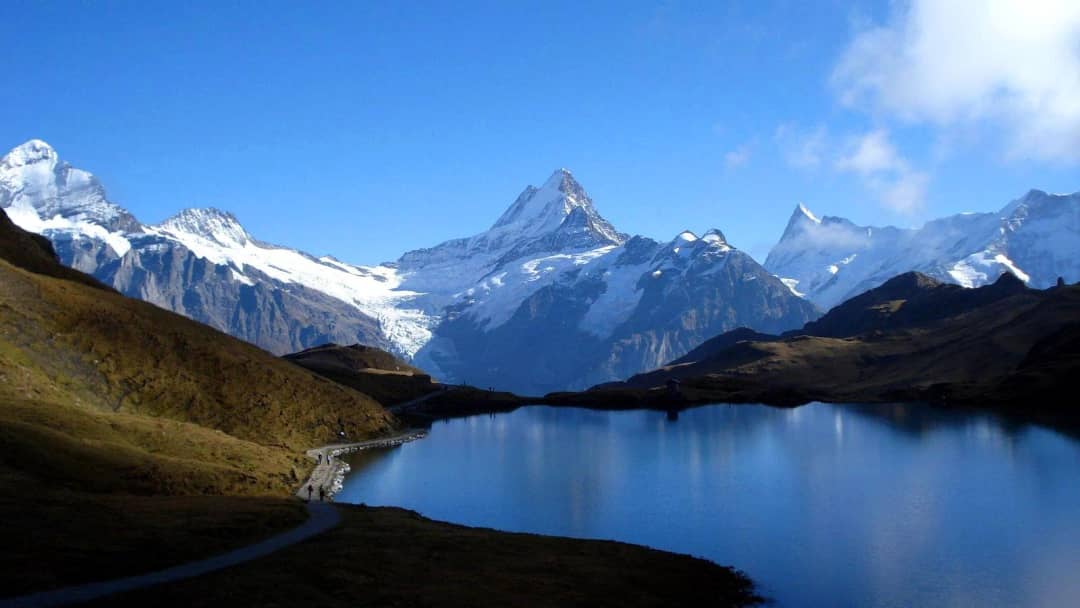
Grindelwald and Bachalpsee hike: Take the cable car to Grindelwald-First (CHF 55 round trip), then hike 45 minutes to Bachalpsee. The lake mirrors the Schreckhorn so perfectly it looks manipulated. Expect company:
"The Bachalpsee for people who aren't fit: easier, a superb view, iconic, but a lot of people."
Pierre Vetsch, guide and founder, interviewed on 29 September 2026
Justistal, the cheese valley above Beatenberg: A high pasture where the Chästeilet still happens every September: the farmers divide up the summer's alp cheese by a centuries-old custom, then lead the decorated cattle down to the valley in traditional costume. The 2026 edition was on 18 September, and I was there. The tourist maps skip it. Locals do not.
Reichenbach Falls above Meiringen (funicular CHF 15 return): Where Sherlock Holmes died in Conan Doyle's story. The Sherlock Holmes Museum in Meiringen is more charming than it has any right to be.
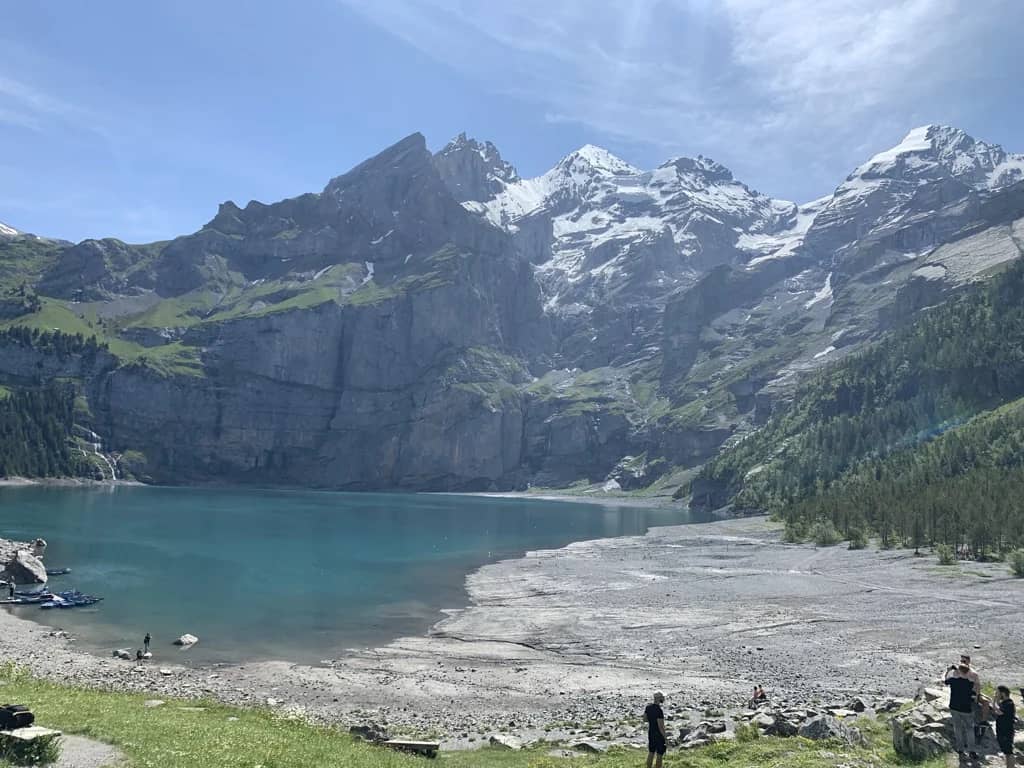
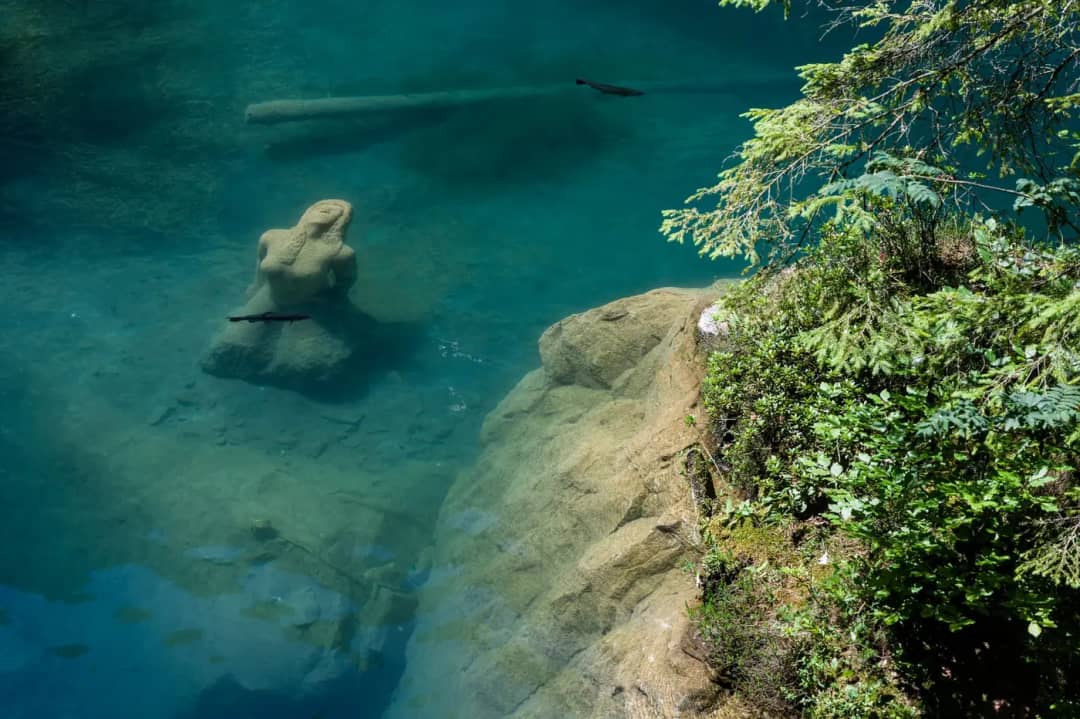
Oeschinensee, Switzerland's most beautiful mountain lake (CHF 36-40 gondola round trip): Deep blue lake at 1,578 metres, backed by cliffs and glacier. A time slot for the ride up is required for the whole summer season, until 8 November 2026. Book it online, or at the ticket machines while slots last. Swiss Travel Pass: 50% off. Important: the Berner Oberland Pass is no longer accepted at Oeschinensee since January 2026. Full guide: Oeschinensee from Interlaken: Swimming, Gondola, Best Month.
The gondola is the easy way up. My verdict:
"Walking up is worth the effort."
Pierre Vetsch, guide and founder, interviewed on 8 October 2026
The number one mistake I see with it: not pairing it with Blausee, on the same Kandersteg day.
Food and Culture
Swiss alpine farm breakfast at Sigriswiler Bärgli, Justistal (CHF 149): Daniela manages production at 1,370 metres in the valley the tourist maps skip. Her day, in her words: "Up at five, cheese every single day." Our Farm Tour leaves Interlaken at 8:00 a.m. on Tuesdays and Thursdays, with breakfast at her table around 9:00: fresh milk, cheese, and bread baked the same morning. CHF 149 per person, CHF 139 from six guests, eight guests at most, from May to mid-September. I guided more than ten of these mornings at Daniela's in 2026, and clients have told me it is what they wish they had done on their first day.
The doubt I hear: it is a demonstration, and you would rather get your hands in. My answer:
"It's her batch of the day, not a workshop: you're watching real work."
Pierre Vetsch, guide and founder, interviewed on 13 October 2026
The 2026 season is over; the tour runs again from May to mid-September.
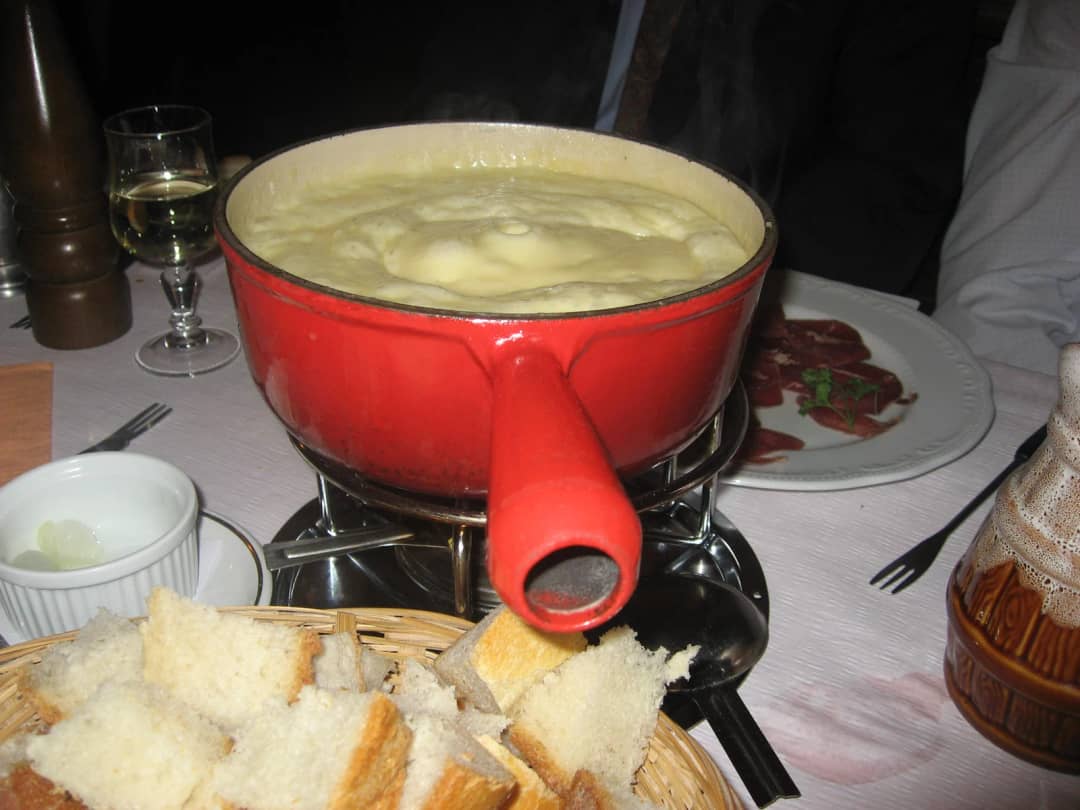
Fondue dinner in Interlaken: The Bernese version uses Gruyère and Vacherin Fribourgeois, melted with white wine and a touch of kirsch. If your bread falls in the pot, tradition says you owe a round of drinks. Order this at least once.
Funky Chocolate Club workshop (CHF 45-65): Hands-on chocolate making in the centre of Interlaken. Better than any boutique tasting and small enough to stay personal.
Spiez wine walk above Lake Thun (free walking, tasting extra): The vineyards above Spiez produce a local Pinot Noir and a Chasselas that very few tourists ever find. An afternoon that costs almost nothing.
Free and Low-Cost
The Höhematte at sunset (free): Sit on the grass. Watch the Jungfrau turn pink, then orange, then white again. The hoteliers who bought the meadow in 1864 and banned building on it gave every visitor this view. It still works.
If you want the full story of that purchase, the 37 co-owners behind it and the rules that keep the meadow open, read why the Höhematte stayed a meadow before you sit down on it.
What Can You Do in Interlaken in Just One Day?
One full day is enough if you keep it in one valley. For a first visit in summer, this is my plan:
"Lauterbrunnen on foot, then Mürren and the Schilthorn."
Pierre Vetsch, guide and founder, interviewed on 14 October 2026
The best single day in Interlaken:
Morning: train from Interlaken Ost to Lauterbrunnen (22 minutes), then walk the valley floor past the Staubbach
Next: cable car and train up to Mürren, the car-free village on the cliff
Then: cable car from Mürren to the Schilthorn and the Piz Gloria restaurant
Evening: back in Interlaken, fondue dinner. Order Spiez white wine with it
Sunset: sit on the Höhematte and watch the light leave the Jungfrau
You will sleep well and wake up wanting to extend the trip.
Is Interlaken Good for People Who Don't Want Adventure Sports?
Completely. The outdoor activities get the marketing attention, but two lakes, three mountain villages, a railway from 1893, and one of the best cheese and wine regions in Switzerland exist entirely outside the adrenaline economy.
Non-adventurers do well with: lake ferry trips on the BLS, the Schynige Platte botanical garden, the St. Beatus Caves, Lauterbrunnen valley on foot, a fondue evening, a wine walk above Spiez, and the farm breakfast at Sigriswiler Bärgli. None of these require a harness.
How Many Days Do You Need in Interlaken?
Two days: enough for one big mountain (Schynige Platte or Schilthorn), one adventure (hang gliding or kayaking rather than paragliding), and one lake afternoon. You will leave wanting more. This is the bare minimum.
Three to four days: the right amount for first-timers. Add Lauterbrunnen valley, an evening in Grindelwald, Iseltwald and Bachalpsee, and at least one proper cheese dinner. Three days feels complete. Four days feels luxurious.
Five to seven days: the right investment if you mix adventure, day trips, and a full rest day. My own list for a stay that long:
"Interlaken as a base for day trips: Grindelwald with First and the Eiger; Lauterbrunnen with Mürren and Wengen; Kandersteg with Blausee and Oeschinensee; Brienz and Iseltwald, the Rothorn and Meiringen; and Interlaken itself."
Pierre Vetsch, guide and founder, interviewed on 23 September 2026
For five days of that, my ticket is the Swiss Travel Pass. Further afield, Bern is 56 to 57 minutes away by direct train and Lucerne 1 hour 51 minutes (timetable checked on 15 October 2026 for a weekday in January 2027; during this autumn's engineering works, a replacement bus between Interlaken Ost and Interlaken West adds time).

What Are the Free Things to Do in Interlaken?
Several of the best experiences cost nothing:
Walking the Höhematte at sunset
Lauterbrunnen valley floor (72 waterfalls, no entry fee)
Augstmatthorn ridge hike from Habkern
Justistal valley above Beatenberg
Spiez wine walk above Lake Thun
Watching the ferry arrive in any lakeside village on the BLS line
The mistake I see in visitors who come for the adrenaline:
"They only do the paid things and never see the landscape."
Pierre Vetsch, guide and founder, interviewed on 8 October 2026
The Swiss Travel Pass covers trains, BLS lake ferries, and gives 50% off most cable cars. If you have the pass, the effective cost of a mountain day drops significantly.
What Day Trips Can You Do from Interlaken?
Interlaken is a genuine hub. These are the best day trips, all reachable by train:

See the full best day trips from Interlaken 2026 for detailed logistics.
💡 Insider Tip from Pierre For one full day in summer on a first visit: "Lauterbrunnen on foot, then Mürren and the Schilthorn." (interviewed on 14 October 2026)
Is Jungfraujoch Worth It?
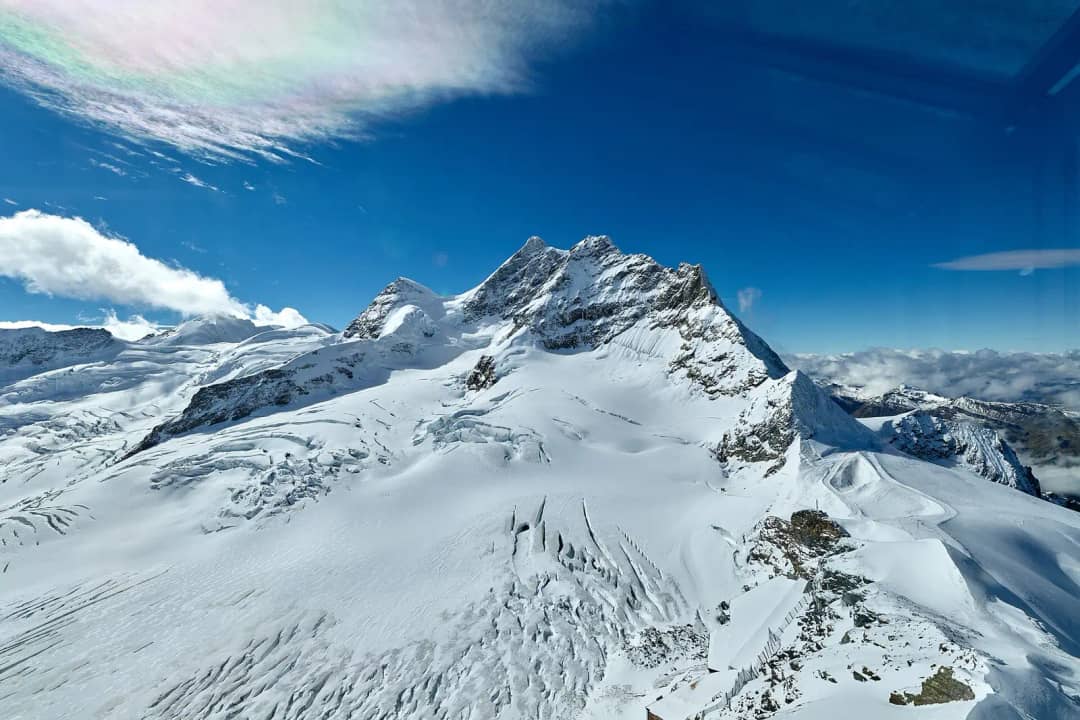
Not in my view. The train climbs to 3,454 metres, the highest railway station in Europe, and Jungfraubahnen advertises the return ticket "from CHF 129.60" (checked on 15 October 2026). Here is my verdict:
"I don't recommend the Jungfraujoch. It's often very crowded, the view is nice but it's expensive for what it is, and sometimes it's in the clouds, so there's no view. I prefer the Schilthorn, Piz Gloria."
Pierre Vetsch, guide and founder, interviewed on 26 September 2026
If it stays on your list anyway, let the weather decide.
On an overcast day: skip it. Redirect to Grindelwald-First or Schynige Platte. Check the summit webcam the evening before. Blue sky on the summit: go. Cloud cover: save the money.
That is the classic mistake I see:
"Paying for the Jungfraujoch on an overcast day."
Pierre Vetsch, guide and founder, interviewed on 24 September 2026
For one paid summit, take the Schilthorn above Mürren instead, on the same day as the Lauterbrunnen valley.
The Two Lakes That Started All of This
Lake Thun and Lake Brienz are not the same lake. Treat them as two separate decisions.
Lake Thun is wider, calmer, more inhabited. Castles line its shoreline: Spiez, Oberhofen, Thun. The BLS ferries loop between villages on a schedule you can build a day around. The water turns mineral-blue in morning light and gold at 7 p.m. This is the lake for slow travel: vineyard walks above Spiez, a boat picnic, a swim off a wooden pier in a village where nobody is rushing.
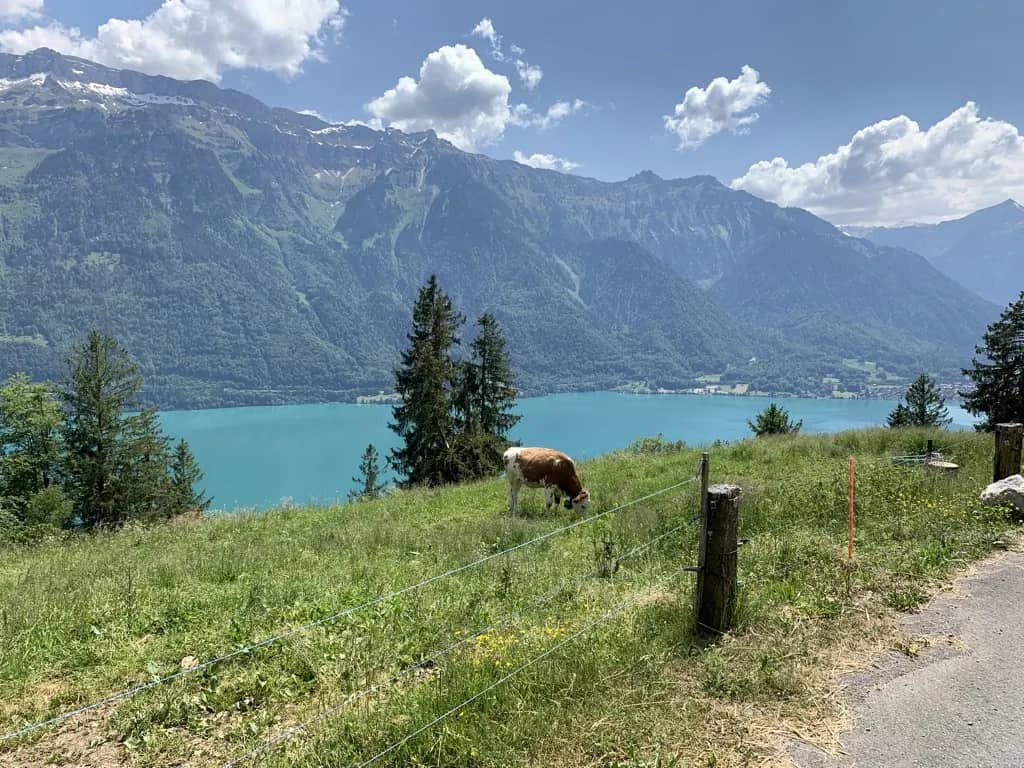
Lake Brienz runs colder and more emerald. Less developed. Glacier melt keeps the color almost artificial-looking all summer. Iseltwald sits at its western shore, made internationally famous overnight by a Korean drama. The Giessbach Falls drop fourteen times into the lake's eastern edge. The village of Brienz itself is known for hand-carved wooden objects, a craft that survives in actual workshops you can visit.
Clear skies: start on Brienz for the color. Overcast: Thun's castle country needs less light.
For the full breakdown of swimming spots, ferry routes, and hidden coves, see all the lakes around Interlaken.
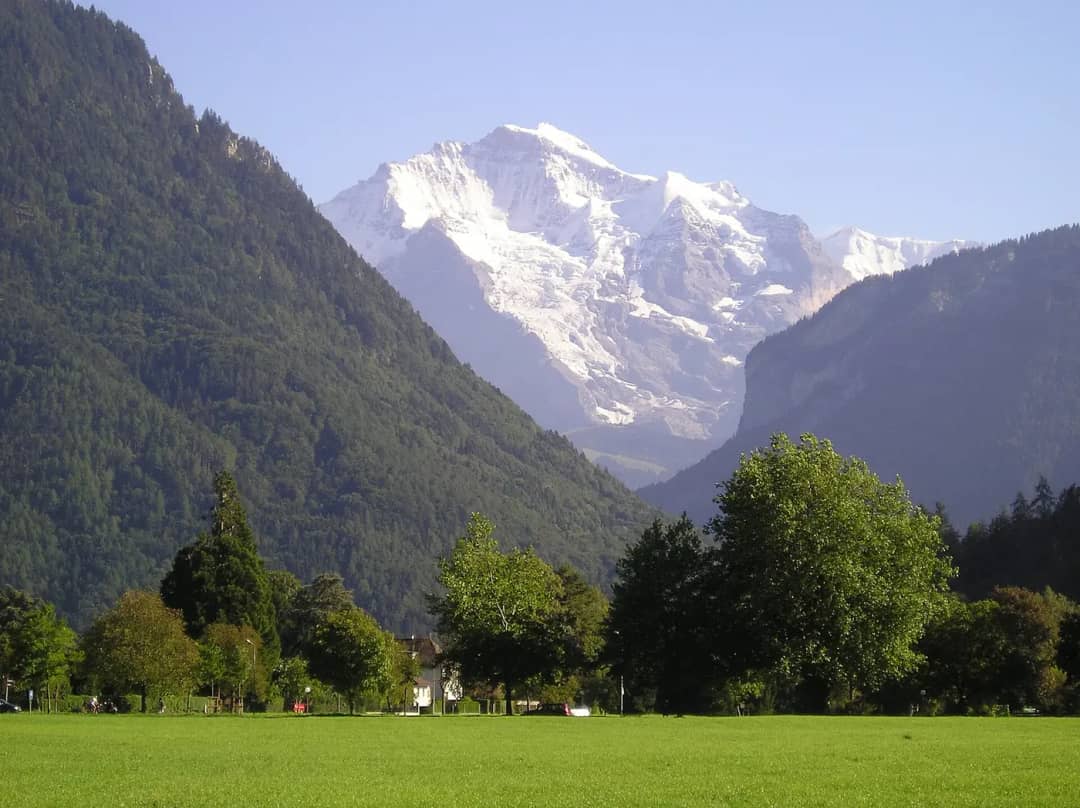
The Three Mountains That Define the Skyline
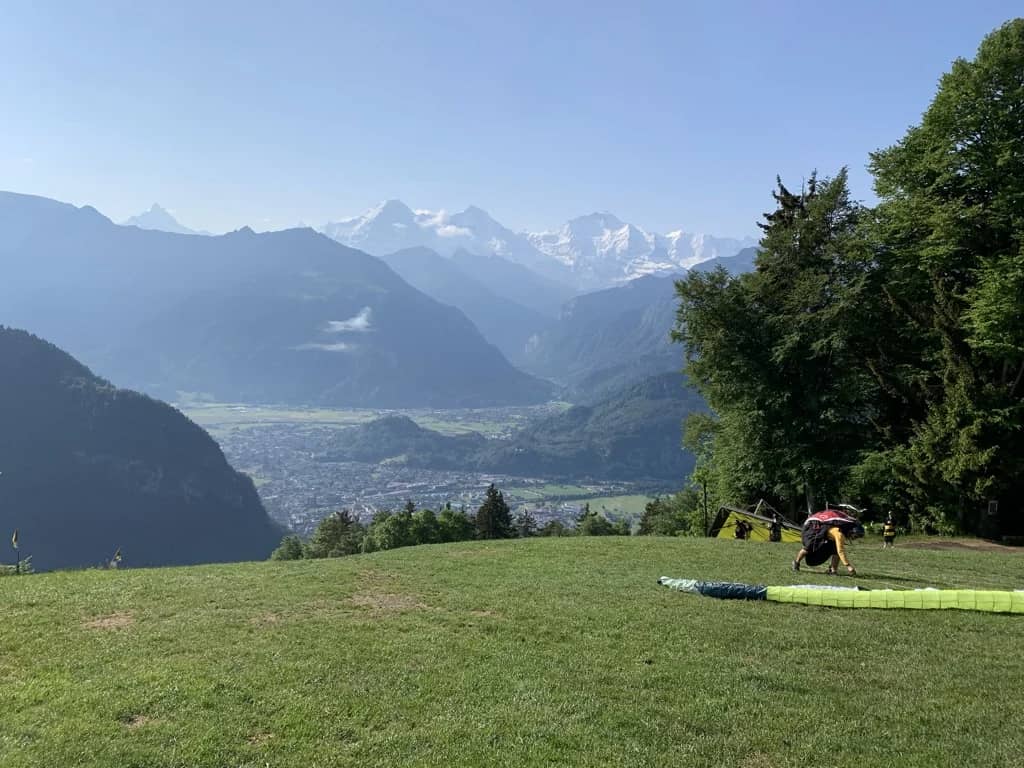
Stand on the Höhematte and look south. Three peaks fill the view.
The Eiger (3,967 m) stands on the left, a dark wall. Its north face is one of the most famous and dangerous in mountaineering history. Thirteen expeditions failed before the first ascent in 1938. You do not need to climb it. Looking at it does most of the work.
The Mönch (4,107 m) sits in the middle. Mönch means monk. The story: the monk stands between the Eiger (ogre) and the Jungfrau (maiden) to protect her. Swiss alpine folklore is older than alpinism itself.
The Jungfrau (4,158 m) rises on the right. One of four UNESCO World Heritage peaks in the Jungfrau-Aletsch region. The symbol of the Bernese Oberland. Eleven months of the year, snow covers the summit.
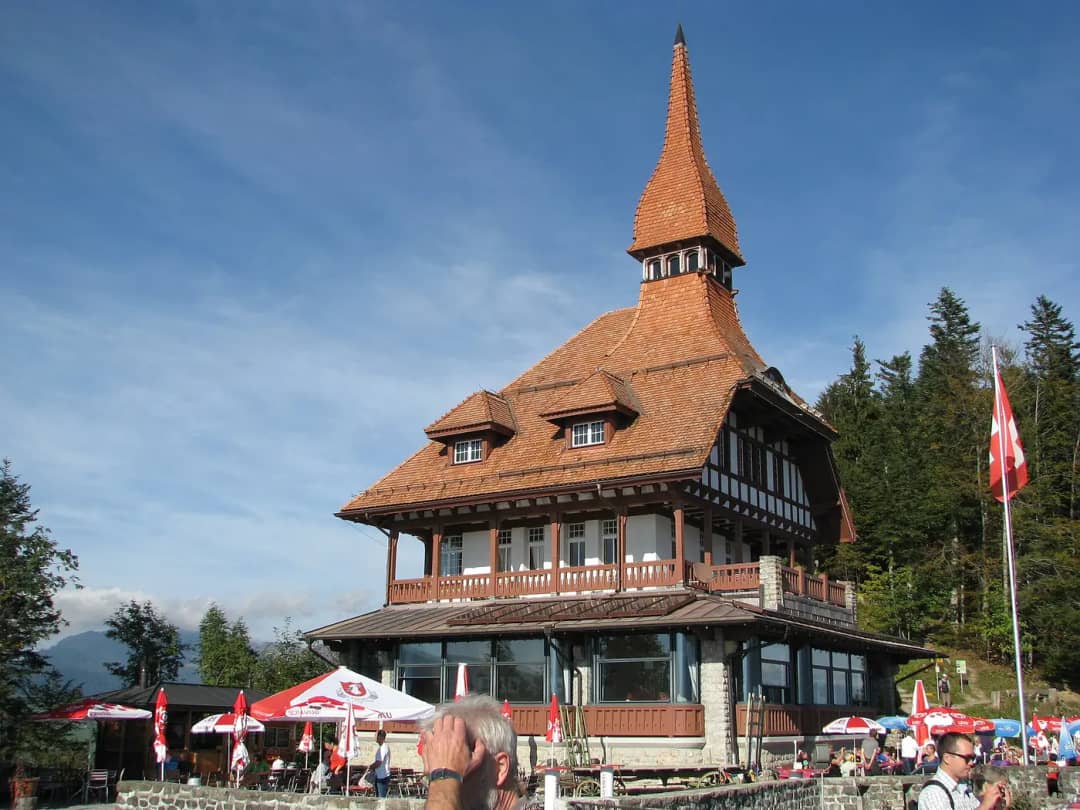
Fun fact: Interlaken's own hill has framed this view for over a century: the Harder Kulm funicular and its summit restaurant opened in mid-May 1908, and the 1,447-metre track climbs 755 metres on a gradient of up to 640 per mille.

Where Do Locals Actually Go in Interlaken?
The overcrowded version of Interlaken exists in one square kilometer around Höheweg. Step outside it and the region changes completely.
The places that paragliding guides, Hightide kayak guides, and restaurant owners or hoteliers have passed on to me over a beer:
Justistal above Beatenberg: a high pasture where traditional alpine farming still runs. Cows with bells, hay, a working alp.
Augstmatthorn ridge: a trail that runs along a narrow cliff with drop views that belong in a film. Not hidden, but not marketed.
Spiez: the castle courtyard and the vineyards above Lake Thun.
Two more are my own. The end of Bönigen, on the road towards Iseltwald, is where I swim in Lake Brienz, free and away from the lido. The Burgseeli is my other swimming spot, often, every summer, and this is my moment there:
"The Burgseeli, on a summer morning, flat water and mist."
Pierre Vetsch, guide and founder, interviewed on 8 October 2026
What Does Interlaken Cost? A Realistic Budget
This is Switzerland. Budget accordingly.
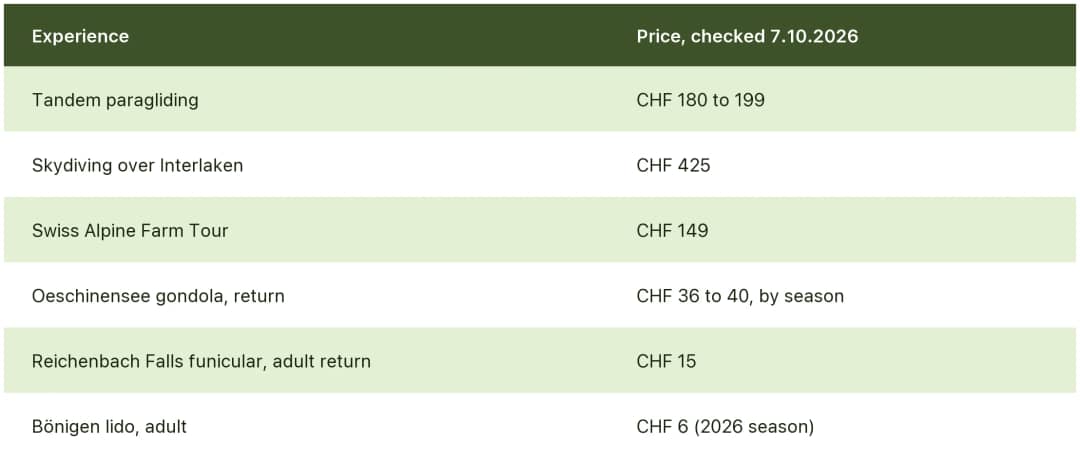
The Swiss Travel Pass pays for itself if you plan three or more train or cable car days in the Bernese Oberland.
Where to Stay and How to Get Around
For base options: Interlaken covers every price point, from dorms to four-star hotels on the Höheweg. Quieter alternatives are Wilderswil (5 minutes by train, cheaper, local feel), Bönigen (on Lake Brienz, walkable to the beach), and Beatenberg (altitude views over both lakes, one bus connection). For splurging: Mürren and Wengen sit car-free on the cliffs above Lauterbrunnen, accessible only by cable car or mountain train.
You do not need a car. The BLS trains run on time. The lake ferries run on time. The bus to Beatenberg runs on time. This is Switzerland, and the public transport is the infrastructure that makes the region function. A visitor with a Swiss Travel Pass has access to more of the Bernese Oberland than most car owners.
Insider tip: For the classic view over both lakes, walk from Interlaken Ost to the Harderbahn valley station: it is a short walk, there is no parking at the station, trains run every 30 minutes and the counter stays open 09:00 to 21:10, so a late ride still fits after a full day out. In winter the Harder Kulm is closed: the funicular does not run from 30 November 2026 to 25 March 2027 (timetable checked on 15 October 2026).
Your Questions About Things to Do in Interlaken
What is Interlaken best known for?
Interlaken is best known as Switzerland's adventure capital and the gateway to the Jungfrau region. Paragliding, skydiving, canyoning, and the railway to the highest station in Europe (Jungfraujoch, 3,454 m) put it on international bucket lists. The two lakes and three alpine peaks surrounding the town complete the picture.
Is Interlaken worth visiting?
Yes. Some of my clients were not too excited to go at first and left convinced. The town center is unremarkable. The surrounding region, lakes, mountain villages, alpine farms, and glacier views, is what justifies the trip.
How many days do you need in Interlaken?
Two days is the minimum to see one mountain and one lake properly. Three to four days covers the essentials without rushing. Five to seven days works well for people using Interlaken as a base for day trips across the Swiss Alps.
What is the best time to visit Interlaken?
June to September for adventure activities, hiking, and lake swimming. July and August are peak months: more expensive, more crowded, but all activities operating. June and September offer better rates and fewer people. Winter (December to March) works for skiing above Grindelwald and Mürren, and for snowshoeing the Lauterbrunnen valley.
Is Interlaken expensive?
Yes. Switzerland is among the most expensive countries in Europe. Budget CHF 100-150 per day for accommodation at the hostel or budget hotel level, plus CHF 50-80 for food. A full mountain day adds CHF 60-150 depending on the destination. The Swiss Travel Pass reduces transport costs if you plan multiple rail or gondola days.
What are free things to do in Interlaken?
The Höhematte at sunset. Lauterbrunnen valley (72 waterfalls, no entry). Augstmatthorn ridge hike from Habkern. Justistal valley above Beatenberg. Walking the Spiez wine trail above Lake Thun. BLS lake ferries are included in the Swiss Travel Pass.
Is Interlaken good for non-adventurers?
Completely. Lake ferry trips, the Schynige Platte botanical garden, St. Beatus Caves, Lauterbrunnen valley on foot, fondue evenings, vineyard walks above Spiez, and the alpine farm breakfast at Sigriswiler Bärgli all work without a harness. The adventure sports represent one part of what the region offers.
What to do in Interlaken in one day?
Keep it in one valley. For a first visit in summer, my plan is Lauterbrunnen on foot, then Mürren and the Schilthorn. Take the train from Interlaken Ost to Lauterbrunnen (22 minutes), walk the valley floor past the Staubbach, then ride the cable car and train up to Mürren and the cable car on to the Schilthorn and Piz Gloria. Back in town, have a fondue dinner with a glass of Spiez Chasselas, then sit on the Höhematte at sunset.
What day trips can you do from Interlaken?
The strongest day trips by train, with times from Interlaken checked on 15 October 2026 for a weekday in January 2027: Bern (56 to 57 min direct), Lucerne (1 h 51 min direct), Zermatt (2 h 7 min to 2 h 18 min), Kandersteg for Oeschinensee (67 to 68 min from Interlaken West, then the gondola) and Gruyères (2 h 22 min to 2 h 50 min). During this autumn's engineering works, a replacement bus between Interlaken Ost and Interlaken West adds time. No car required for any of them.
Oeschinensee is the one that needs planning in summer, because of the reservation window and the pass rules. Our guide to Oeschinensee from Interlaken covers the gondola booking, the walk down to the shore and the best hours for the colour.
Is Jungfraujoch worth it from Interlaken?
Not in my view. I don't recommend the Jungfraujoch: it is often very crowded, expensive for what it is, and sometimes in the clouds, with no view at all. Jungfraubahnen advertises the return ticket from CHF 129.60 (checked on 15 October 2026). For one paid summit from Interlaken, I prefer the Schilthorn and Piz Gloria above Mürren. If the Jungfraujoch stays on your list, go only under a blue sky: check the summit webcam the night before, and on an overcast day redirect to Grindelwald-First or Schynige Platte.
Do you need a car in Interlaken?
No. The train, bus, and ferry network covers every significant destination in the Bernese Oberland. A Swiss Travel Pass or point-to-point tickets cover everything.
Where do locals hang out in Interlaken?
Outside the one square kilometer of Höheweg shops. Justistal above Beatenberg. The end of Bönigen, on the road towards Iseltwald, where I swim in Lake Brienz. The Augstmatthorn ridge. Spiez castle and the vineyards above Lake Thun. The Höhematte in the evening, when the paragliders are still landing and the light is going off the Jungfrau.
Ready to Plan Your Interlaken Trip Like a Local?
Most visitors plan from a list. A few plan from a conversation with someone who knows the region the way a guide knows it: which gondola has the better angle this time of year, which valley to walk instead of ride, which summit is worth the ticket.
For the full season calendar, see the summer activities guide. For honest assessments of every activity, see the outdoor adventures ranking.
Still hesitating? You came to Interlaken for the famous thing, and you want to do it first. My answer:
"Do the paragliding in the morning, our tour in the evening."
Pierre Vetsch, guide and founder, interviewed on 8 October 2026
In winter, that evening tour is our Sunset Sledding & Fondue, and it is also my own pick for a winter day without skis:
"Isenfluh, the evening sledding."
Pierre Vetsch, guide and founder, interviewed on 30 September 2026
Before each tour we check both runs, Mürren and Isenfluh, and take the one in the best condition, then share a cheese fondue back in Interlaken. It leaves Interlaken at 3:30 p.m., Wednesday to Sunday, from 15 December 2026 to 11 April 2027, for CHF 139 per person (CHF 129 from six guests), with eight guests at most. Free cancellation up to 48 hours before departure; if we cancel for weather or safety, you choose between a full refund and another date. The season has not started yet, but the winter dates are open for booking now.
Keep one winter evening for the light on the Jungfrau just before the sled run down: save my seat on a Sunset Sledding & Fondue evening, or ask me first on WhatsApp, where I reply within the hour.
How we made this: facts and prices checked at the official sources on 8 October 2026, written with AI assistance.
*Written by Pierre Vetsch, founder and head guide at Swiss Local Adventures
Source:
on-site guided tours in the Bernese Oberland, 2026.
Tags
#things-to-do-interlaken#interlaken#bernese-oberland#jungfrau-region#swiss-alps#switzerland-travel#lake-thun#lake-brienz#swiss-travel-guide
Sources & References
- •Interlaken Tourism
- •Jungfrau Railways
- •MySwitzerland
- •Photo: Loric Roberti, Wikimedia Commons (CC0)
- •Photo: Jean-Paul Wettstein on Pexels
- •Photo: Johnw, Wikimedia Commons (Public domain)
- •Photo: Leonhard Lenz, Wikimedia Commons (CC0)
- •Photo: Kenwbar at en.wikipedia, Wikimedia Commons (Public domain)
- •Photo: Manfred Wohlfahrt, Wikimedia Commons (Public domain)
- •Photo: Yiftachsam, Wikimedia Commons (Public domain)
- •Jungfrau.ch, Talstation Harderbahn
- •Jungfrau.ch, Harderbahn AG (Jungfraubahn Holding corporate pages)
- •Swiss Local Adventures, Sunset Sledding & Cheese Fondue: season 15 December 2026 to 11 April 2027, Wednesday to Sunday, 3:30 pm, CHF 139 (CHF 129 from 6), eight guests at most, Mürren or Isenfluh, 48 h free cancellation, opened 15.10.2026
- •Swiss Local Adventures, Farm Tour: Start 8:00 AM, Tuesdays and Thursdays, May to mid-September, CHF 149 (CHF 139 from 6), maximum 8 guests, opened 15.10.2026
- •Swiss Local Adventures, Kayaking on Lake Brienz: adults CHF 115, October CHF 125, departures 09:15/09:20 and 13:15/13:20, May to October, opened 15.10.2026
- •timetable.search.ch, Interlaken Ost to Lauterbrunnen 22 min (train R) on 13.01.2027, same on 21.10 and 04.11.2026, opened 15.10.2026
- •timetable.search.ch, Interlaken Ost to Bern 56 to 57 min direct on 13.01.2027 (64 to 71 min with EV1 replacement bus on 04.11.2026), opened 15.10.2026
- •timetable.search.ch, Interlaken Ost to Luzern 111 min direct on 13.01.2027 and 04.11.2026, opened 15.10.2026
- •timetable.search.ch, Interlaken Ost to Zermatt 127 to 138 min on 13.01.2027 (150 to 156 min with EV1/EV4 on 04.11.2026), opened 15.10.2026
- •timetable.search.ch, Interlaken Ost to Gruyères 142 to 170 min on 13.01.2027, opened 15.10.2026
- •timetable.search.ch, Interlaken West to Kandersteg 67 to 68 min on 13.01.2027 (66 to 67 min on 04.11.2026), opened 15.10.2026
- •timetable.search.ch, Harderbahn: funicular every 30 min on 29.11.2026 and 26.03.2027, walk only (126 min) on 30.11.2026 and 25.03.2027, opened 15.10.2026
- •Strandbad Bönigen, Preise: Tageseintritt Erwachsene CHF 6.-, opened 15.10.2026
- •Strandbad Bönigen, home page: 2026 opening 16 May to 13 September, Winterpause, See you in 2027, opened 15.10.2026
- •Gemeinde Iseltwald, filming location: CHF 5.- entrance fee for the boat pier, coins or credit card, opened 15.10.2026
- •Jungfraubahnen, Jungfraujoch Top of Europe: return ticket from CHF 129.60, no Interlaken Ost fare shown, opened 15.10.2026
- •Thunersee Tourismus, Chästeilet Justistal: 18 September 2026, cheese divided by centuries-old custom, farmers in traditional costume lead adorned cattle down, opened 15.10.2026
- •Project Gutenberg, Mark Twain, A Tramp Abroad: tour decided March 1878, arrival in Interlaken just about sunset, Jungfrau Hotel; cow-bells passage is in the Gasterntal, opened 15.10.2026
- •Project Gutenberg, Thomas Moore, Life of Lord Byron Vol. 3: Alpine journal September 1816, passed Interlachen 22 September, Dined at Interlachen, opened 15.10.2026
- •Swiss Local Adventures, best-outdoor-adventures-interlaken: objection and answer wording, CTA anchor reused, opened 15.10.2026
- •Swiss Local Adventures, wengen-or-murren: published translation of lauterbrunnen.md 24 Q4 (Jungfraujoch), opened 15.10.2026
- •Swiss Local Adventures, oberhornsee-hike-stechelberg: published translation of 26 Q8 (Bachalpsee), opened 15.10.2026
- •Swiss Local Adventures, Oeschinensee article: published wording of 41 Q4 and 41 Q5, opened 15.10.2026
- •Swiss Local Adventures, iseltwald-crash-landing-pier: Olivia Lufman "My choice is the photo from the shore.", opened 15.10.2026
Share this article
Similar Articles
Continue your reading with these related articles
Places & Day Trips
10/18/2026
12 min
Where to Watch the Sunset in Interlaken, by Season
Where to watch the sunset in Interlaken: the town loses the sun at 15:48 in December, so take the Höhematte in winter and Harder Kulm in summer.
interlaken-sunsetsunset-spotsalpenglow-jungfrau
By Pierre VetschRead More
Places & Day Trips
9/26/2026
10 min
Wengen or Mürren? Wengen in Summer, Mürren in Winter
Wengen is 13 minutes closer to Interlaken and quieter at night. A local guide on where to stay, and why winter flips the answer to Mürren.
where-to-stay-jungfraulauterbrunnen-valleycar-free-villages-switzerland
By Pierre VetschRead More
Places & Day Trips
9/25/2026
12 min
Is Gimmelwald Worth Visiting? Yes, for an Hour
Since December 2024 the fast cable car to Mürren skips Gimmelwald. A local guide on why you should still stop for an hour, and sleep in Mürren.
lauterbrunnen-valleycar-free-villages-switzerlandmurren-day-trip
By Pierre VetschRead More