Winter
Interlaken in Winter: Worth It, If You Go Up
P
Pierre Vetsch
Author
September 24, 2026
10 min
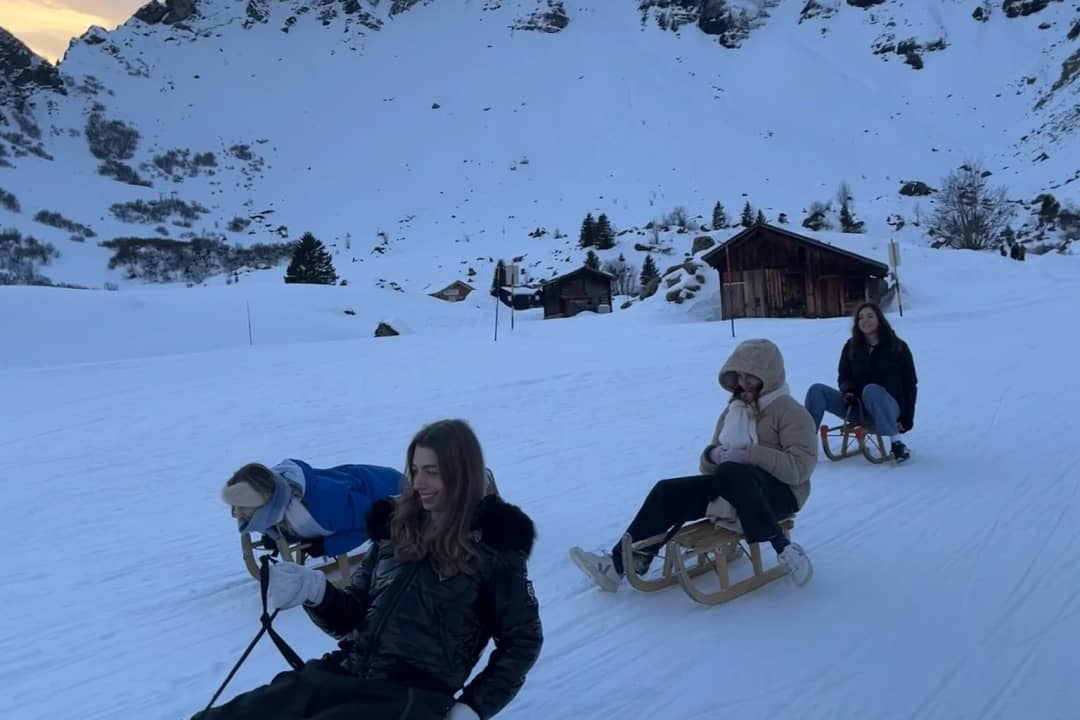
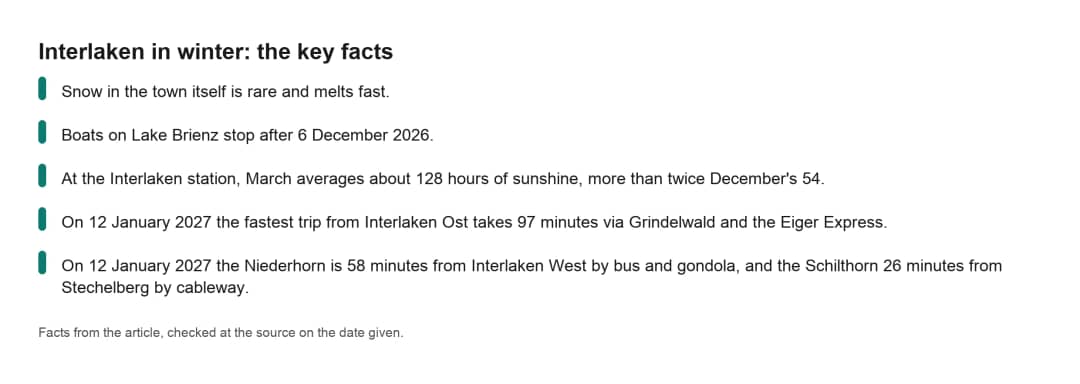
Interlaken in winter is not the postcard most people expect. The town sits low, the snow in its streets rarely lasts, and some days it disappears under a lid of fog. And yet I would still send you here between December and March, without skis.
The winter is not in the town. It is just above it, where the gondolas keep running and the sun is often out while Interlaken stays grey. The trick is to treat the town as a base and go up every day.
I checked which lifts run on a normal winter weekday, pulled ten years of MeteoSwiss records for the town and the valley, and asked myself the questions guests ask me. Below you will find what is open, what is shut, where to find the sun, and the month I would choose.
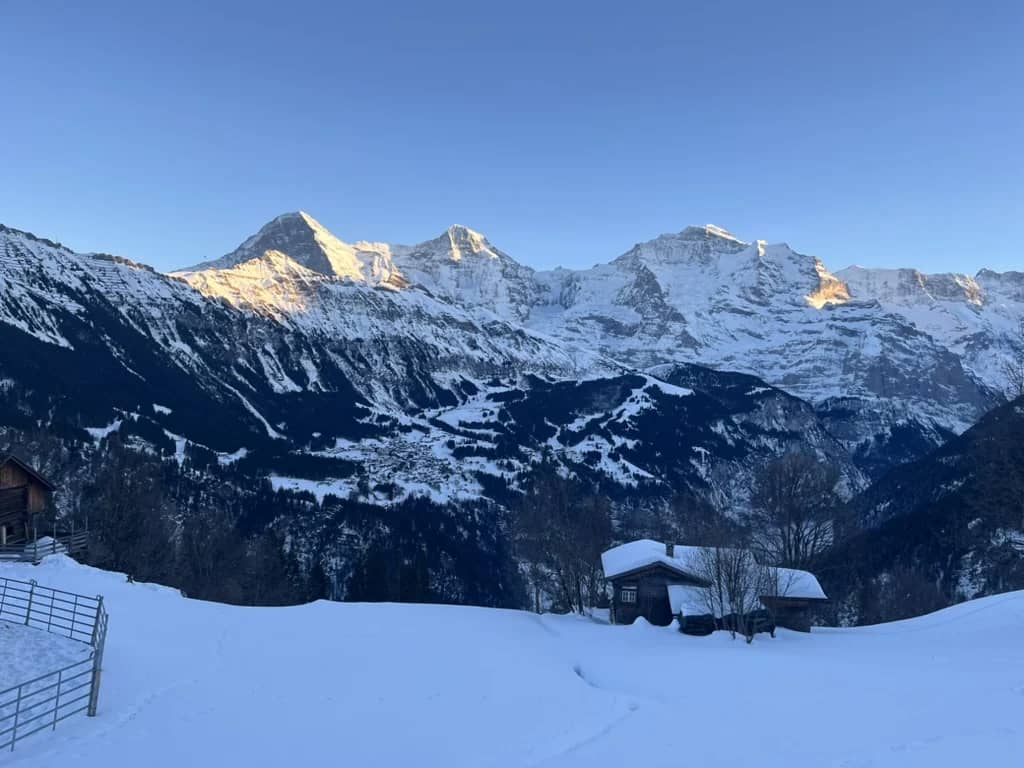
Is Interlaken worth visiting in winter?
Yes, even if you do not ski. You can snowshoe, walk up, or simply ride the gondolas to the snow. What makes it worth it is going up: First, the Männlichen, the Schilthorn and Isenfluh all run in January. What does not work is staying in town and waiting for winter to come to you.
Pierre says: "Yes, even without skiing. You can also go snowshoeing, or just walk up and take the eggs."
Pierre Vetsch, founder and head guide at Swiss Local Adventures
The eggs, in my vocabulary, are the gondolas: the one from Grindelwald to the Männlichen, and the cableway to the Schilthorn. You do not need a ski pass to ride them, and at the top you are in the snow.
The travellers on TripAdvisor tend to split in two. Some had brilliant days in the snow around Grindelwald. Others found January in the lowlands dark, cold and grey. Both are right. The difference is whether they went up.
What is the weather like in Interlaken in winter?
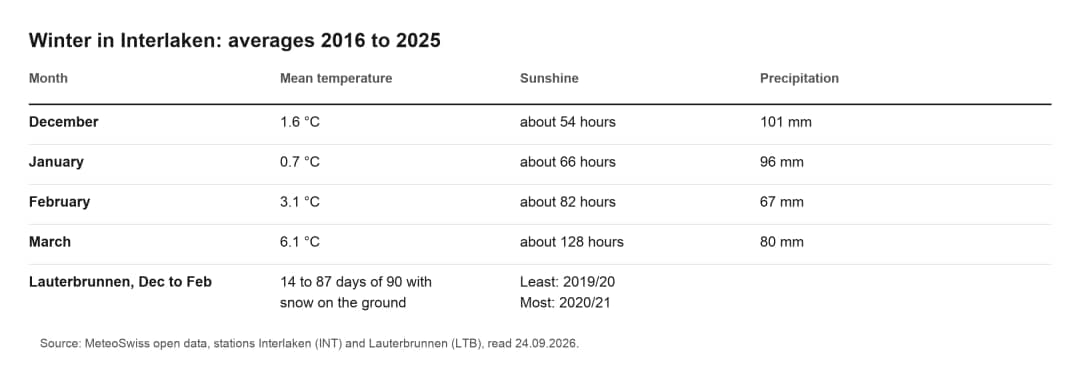
Cold, damp and often grey in town, brighter above it. At the MeteoSwiss station in Interlaken, from 2016 to 2025, January averaged 0.7 °C and about 66 hours of sunshine, and December only about 54 hours. Snow in the town itself is rare and melts fast. Higher up, it is a different season.
Pierre says: "Rare, it melts fast."
Pierre Vetsch, founder and head guide at Swiss Local Adventures, on snow in the streets of Interlaken
Lauterbrunnen, a 22 minute train ride up the valley, shows the change. At its MeteoSwiss station, the ground was white on 14 to 87 days out of 90 between December and February, depending on the winter, over the last ten winters. The snowiest was 2020/21, the poorest 2019/20.
The lakes change too. The famous turquoise is a summer colour, and I would not promise it in January.
Pierre says: "Darker, green-blue. It depends on the sun."
Pierre Vetsch, founder and head guide at Swiss Local Adventures, on the colour of the lakes in winter
What is open around Interlaken in winter, and what is closed?
Most of the high lifts run. On Tuesday 12 January 2027, the official Swiss timetable shows services to First, the Männlichen, the Jungfraujoch, the Schilthorn, the Niederhorn and Sulwald above Isenfluh. It shows none to the Harder Kulm, the Schynige Platte or the Brienzer Rothorn. Boats on Lake Brienz stop after 6 December 2026.
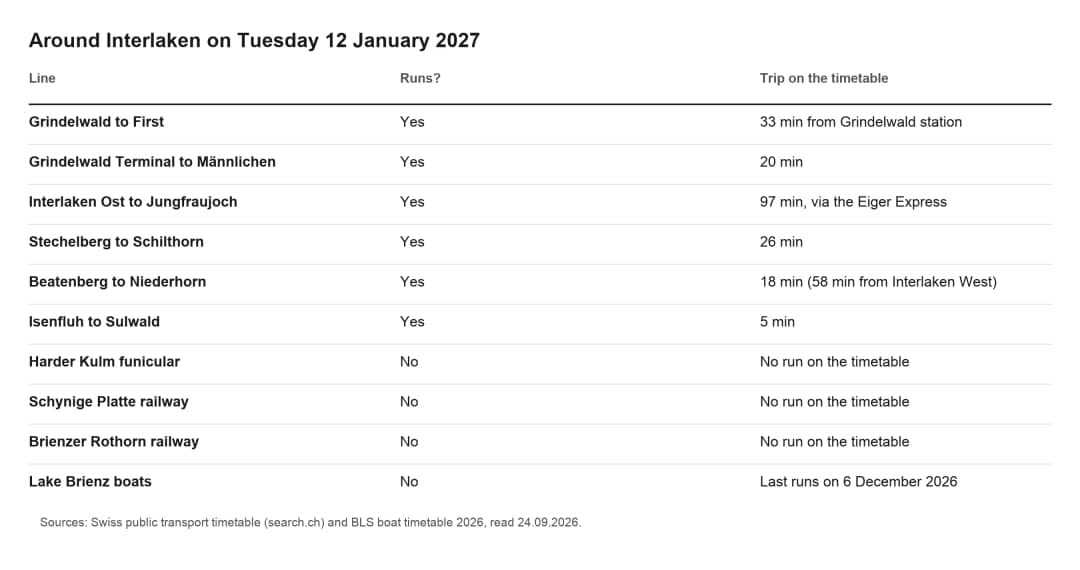
The three closed ones are the ones people can see from town, which is why they catch visitors out. The Harder Kulm funicular starts a short walk from Interlaken Ost. The Schynige Platte railway leaves from Wilderswil, and the Brienzer Rothorn steam train from Brienz. In January, none of them has a single run on the timetable.
The lakes are half open. The BLS 2026 boat timetable runs Lake Brienz boats until 6 December 2026, and nothing after that. Lake Thun keeps a winter service in that timetable. The BLS 2027 timetable is now out: Lake Thun boats run daily through the winter, and Lake Brienz boats start again on 26 March 2027 (checked 8 October 2026).
If you are coming in November, between the seasons, the list is longer. I set out every closing date for the Lauterbrunnen valley in Lauterbrunnen in November.
Where do you find sun when Interlaken is in fog?
Go up, and go high. Winter fog often sits over the lakes and the town while the slopes above are in sunshine. My two picks are the Schilthorn and the Niederhorn. On 12 January 2027 the Niederhorn is 58 minutes from Interlaken West by bus and gondola, and the Schilthorn 24 minutes from Stechelberg by cableway (Swiss timetable, checked 8 October 2026).
Pierre says: "The Schilthorn or the Niederhorn."
Pierre Vetsch, founder and head guide at Swiss Local Adventures, on where he goes to find the sun on a foggy day
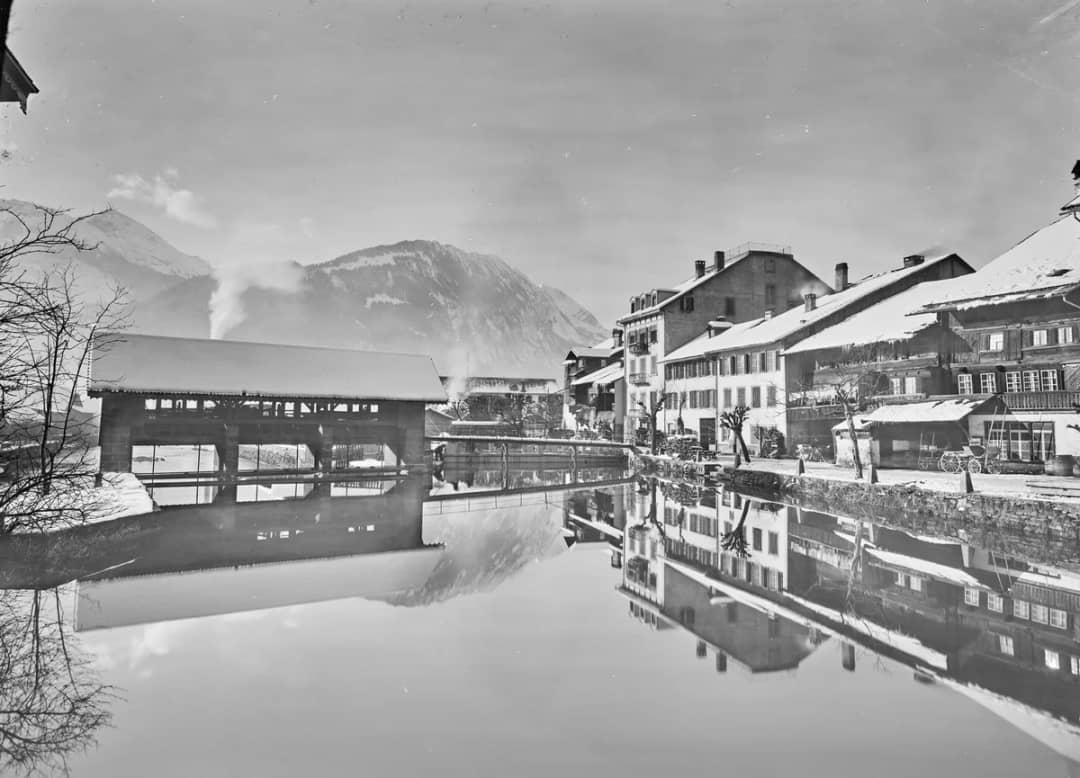
The Niederhorn is the easy one. The 101 bus takes you from Interlaken West up to Beatenberg, and the gondola does the rest in 18 minutes. It sits above Lake Thun, on the other side of the valley from the Jungfrau.
The Schilthorn is the big one. From Stechelberg, the cableway climbs via Mürren and the Birg to the summit. If you only want Mürren and the snow, you can stop halfway, and I explain the three ways up in how to get to Mürren.
What can you do in winter if you don't ski?
Plenty. Snowshoeing, sledding, winter walks and simply riding a gondola into the snow all work without skis. Sledding is the one I would pick first. On our sunset sledding evening, guests talk afterwards about three moments: the sunset at the top, the ride down through the forest by headlamp, and the little cable car of Isenfluh.
Every winter activity, ranked and with its 2026-27 price, is in our guide to winter activities in Interlaken.
Pierre says: "The sunset at the top, and the ride down through the forest with a headlamp, and the little cable car of Isenfluh."
Pierre Vetsch, founder and head guide at Swiss Local Adventures, on what guests remember from the sledding evening
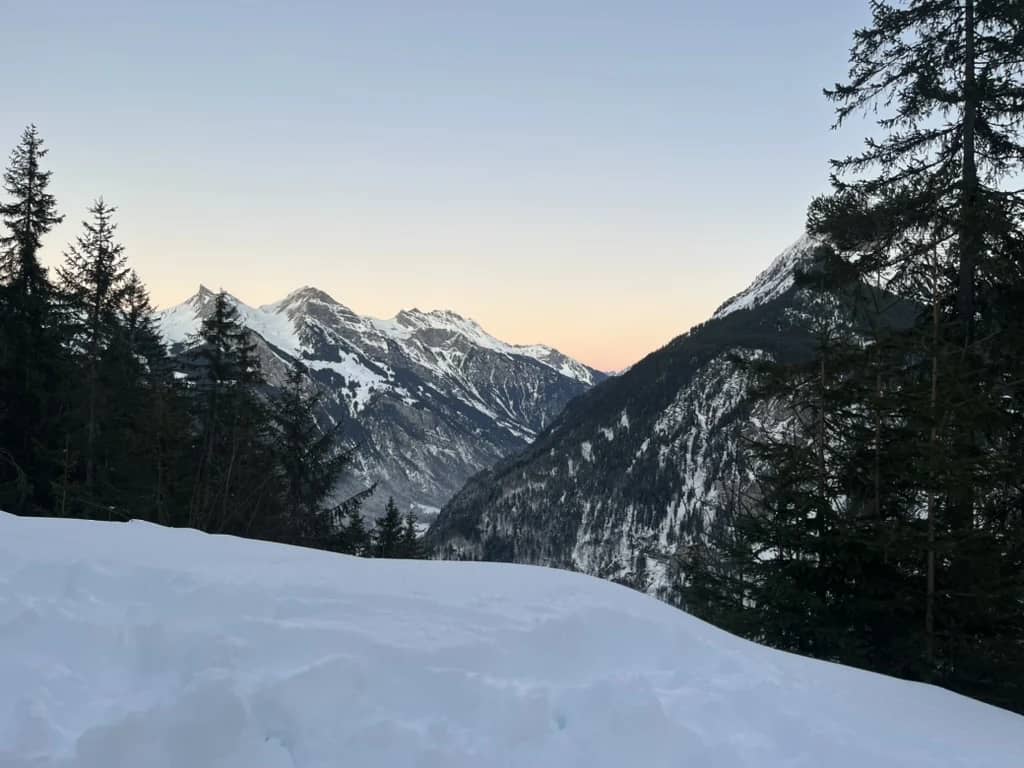
The Isenfluh cable car to Sulwald is a small, old-style cabin, and on 12 January 2027 the ride takes 5 minutes. We take it both for sledding and for snowshoeing.
In Mürren, the Allmendhubel is my other sledding spot, and its funicular runs again from 12 December 2026. Our guides to the best sledding runs near Interlaken and to snowshoeing around Interlaken compare the options in detail.
December, January, February or March: which month is best?
March. There are fewer people, more sun and still snow higher up. At the Interlaken station, March averages about 128 hours of sunshine, more than twice December's 54. December is the darkest month, January the coldest, and February already has more light, with about 82 hours.
Pierre says: "March. Fewer people, more sun, and snow."
Pierre Vetsch, founder and head guide at Swiss Local Adventures
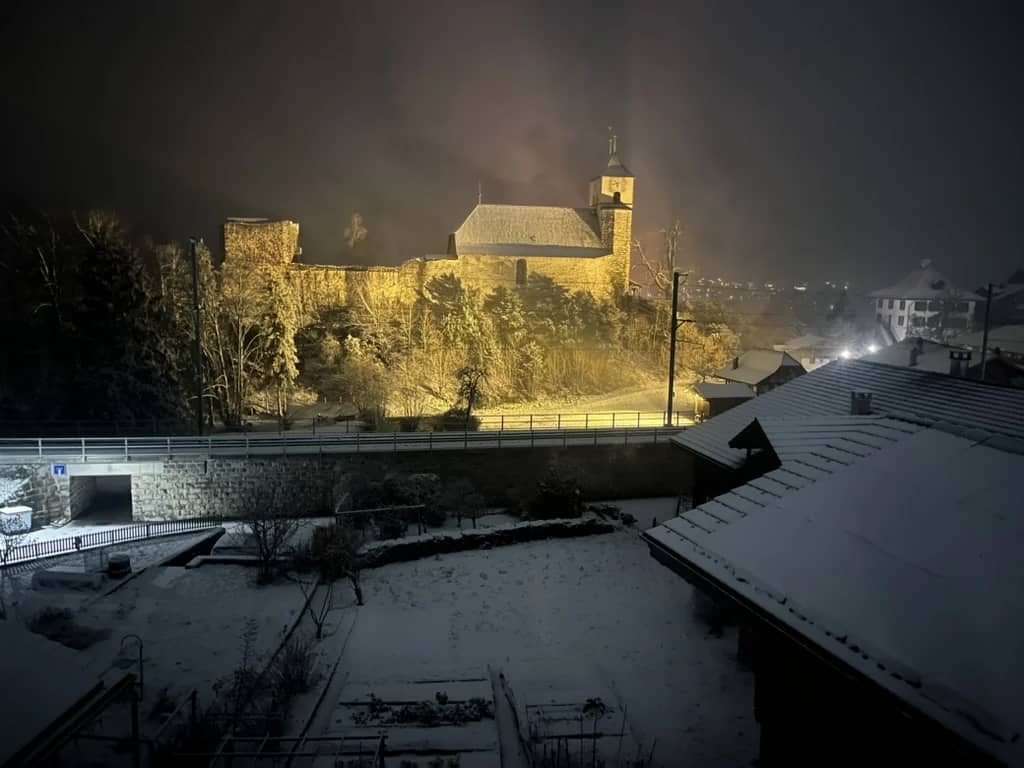
March vs December: my verdict. March wins on light and space. December only wins if you are set on the Advent season, and then you have to accept short, grey days in town and spend them up high. If you want to see the mountains, come in March.
Fun fact: at the MeteoSwiss station in Interlaken, the average temperature climbs from 0.7 °C in January to 6.1 °C in March, while the sunshine almost doubles from about 66 to about 128 hours.
Is the Jungfraujoch worth it in winter?
Only on a clear day. The classic winter mistake is paying for the Jungfraujoch when the sky is covered, and seeing nothing but white at the top. On 12 January 2027 the fastest trip from Interlaken Ost takes 97 minutes via Grindelwald and the Eiger Express. Check the summit webcam the same morning before you buy.
Pierre says: "Paying for the Jungfraujoch when it's overcast."
Pierre Vetsch, founder and head guide at Swiss Local Adventures, on the classic winter mistake
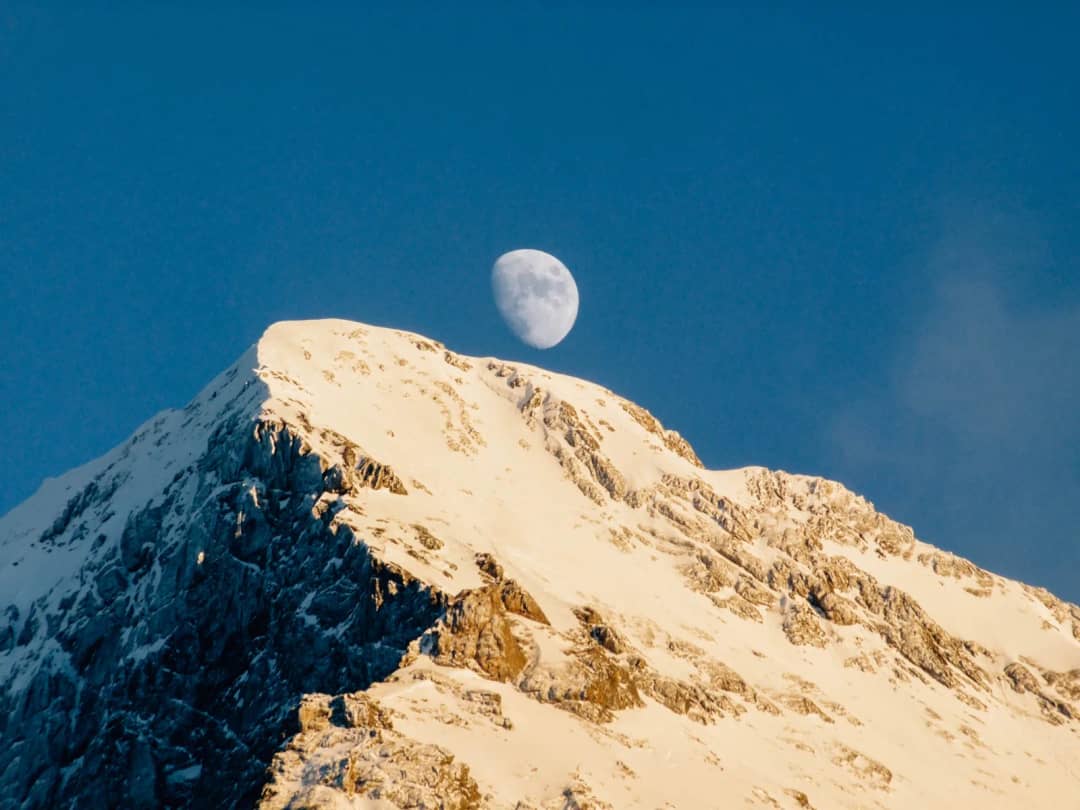
Insider tip: open the Jungfrau Railways webcam page on the morning you plan to go. If the top is in cloud, go to the Schilthorn or the Niederhorn that day instead, and keep the Jungfraujoch for the next clear morning.
If you do go, Grindelwald is where the Eiger Express starts, and it is also where the Männlichen gondola leaves: 20 minutes up on 12 January 2027. For more ideas, our guide to the best winter day trips from Interlaken lists the full set.
Your Questions About Interlaken in Winter
These are the questions winter travellers ask again and again on TripAdvisor before a trip to Interlaken. I answer them with the Swiss timetable for 12 January 2027, the BLS boat timetable, ten years of MeteoSwiss records and what I see as a guide who lives here. Dates change every year, so check yours.
Does it snow in Interlaken in winter?
Sometimes, but it rarely stays. In winter 2025-26, the MeteoSwiss station in Interlaken recorded snow on the ground on 25 mornings, none of them in December, and its deepest reading was 19 cm, on 27 March 2026. The station has only measured snow depth since April 2025, so that is one winter, not an average. Higher up, snow is reliable enough to plan on. In Lauterbrunnen, 22 minutes away by train, the ground was white on 14 to 87 days out of 90 between December and February over the last ten winters, and the ski and sledding slopes sit higher still.
What is closed in Interlaken in winter?
The Harder Kulm funicular, the Schynige Platte railway and the Brienzer Rothorn steam train have no runs on the timetable for 12 January 2027. Boats on Lake Brienz stop after 6 December 2026. Most high lifts run, though: First, the Männlichen, the Jungfraujoch, the Schilthorn, the Niederhorn and Isenfluh to Sulwald. In November, between seasons, more things close.
How cold is Interlaken in winter?
At the MeteoSwiss station in Interlaken, the monthly average from 2016 to 2025 was 1.6 °C in December, 0.7 °C in January, 3.1 °C in February and 6.1 °C in March. It feels colder in the damp and the fog, and much colder once you go up. Dress in layers, with waterproof shoes and gloves, even for a day in town.
Should you stay in Interlaken or in the mountains in winter?
Interlaken, for most people. From one base you reach Grindelwald, Lauterbrunnen, Mürren and the lakes, and you choose each morning where the sun is. Skiers are the exception: if you ski every day, sleeping in Mürren or Wengen saves you the commute. I compare the options in Lauterbrunnen or Interlaken as a base.
Do the lake boats run in winter?
Not on Lake Brienz. The BLS 2026 timetable runs boats on Lake Brienz until 6 December 2026, then stops. Lake Thun keeps a reduced winter service in that timetable. The BLS 2027 timetable is now out: Lake Thun keeps a daily winter service, and Lake Brienz boats start again on 26 March 2027 (checked 8 October 2026). Check the BLS site for your own dates before you plan a boat day.
Spend a winter evening above the valley
Winter here is at its best when you are up high at the end of the day, with the light going and the lights coming on below. That is the evening we built our sunset sledding around: up by the little cable car of Isenfluh, sunset at the top, then down through the forest.
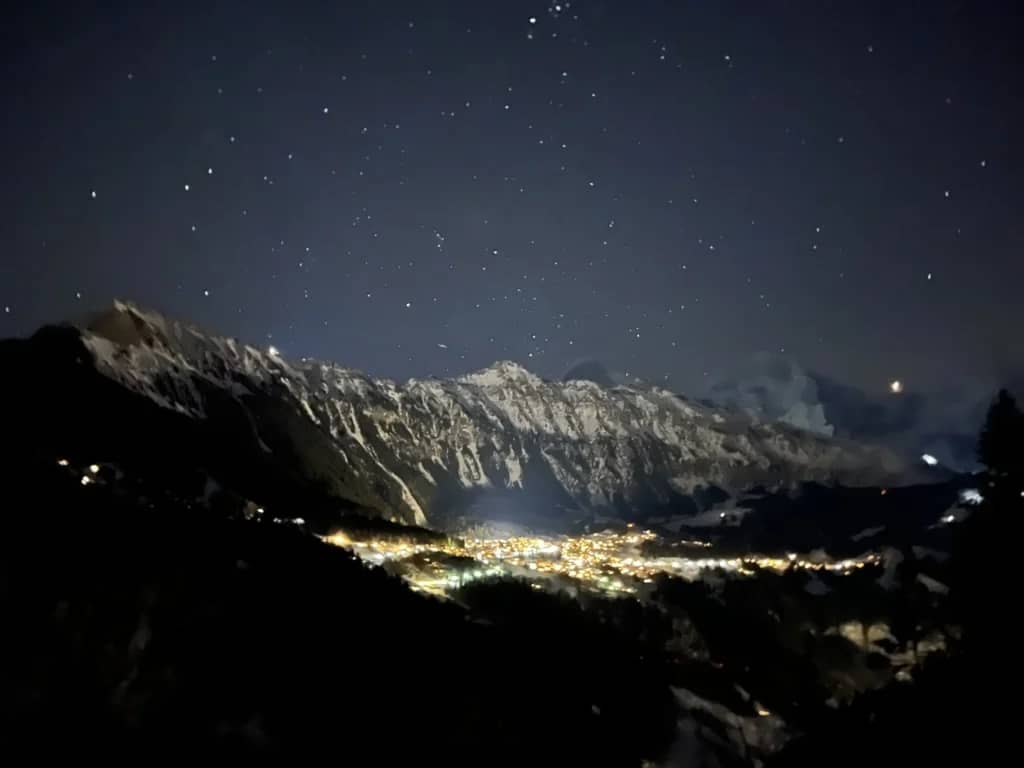
The worry with a winter trip is spending grey days in town. The way around it is to spend at least one evening above the fog. If that sounds like your trip, join us for sunset sledding with Swiss cheese fondue, from Interlaken.
Source: BLS boat timetable 2026, Jungfrau Railways webcams, MeteoSwiss open data, the Swiss public transport timetable, and guided winter days around Interlaken, 2024 to 2026.
How we made this: facts and prices checked at the official sources on 8 October 2026, written with AI assistance.
*Written by Pierre Vetsch, founder and head guide at Swiss Local Adventures
Tags
#interlaken-in-winter#winter-without-skiing#jungfrau-region-winter#sledding-interlaken#winter-travel-switzerland#homepage
Sources & References
- •BLS boat timetable 2026, Lake Thun and Lake Brienz, read 24.09.2026
- •Swiss public transport timetable, connections for Tuesday 12 January 2027, read 24.09.2026
- •MeteoSwiss open data, stations Interlaken (INT) and Lauterbrunnen (LTB), read 24.09.2026
- •Jungfrau Railways, live webcams, read 24.09.2026
- •Photo: Pcs34560, Interlaken Ost station, 16 November 2010, public domain, via Wikimedia Commons
- •Photo: Jean Gaberell, Photoglob-Wehrli, Unterseen in winter, 1910, Swiss National Library, public domain
- •Photos: Pierre Vetsch / Swiss Local Adventures, Sulwald, Isenfluh, Ringgenberg and Grindelwald, December 2024
- •Photo: Andras Toth, CC BY 3.0, Wikimedia Commons
Share this article
Similar Articles
Continue your reading with these related articles
Winter
10/29/2026
8 min
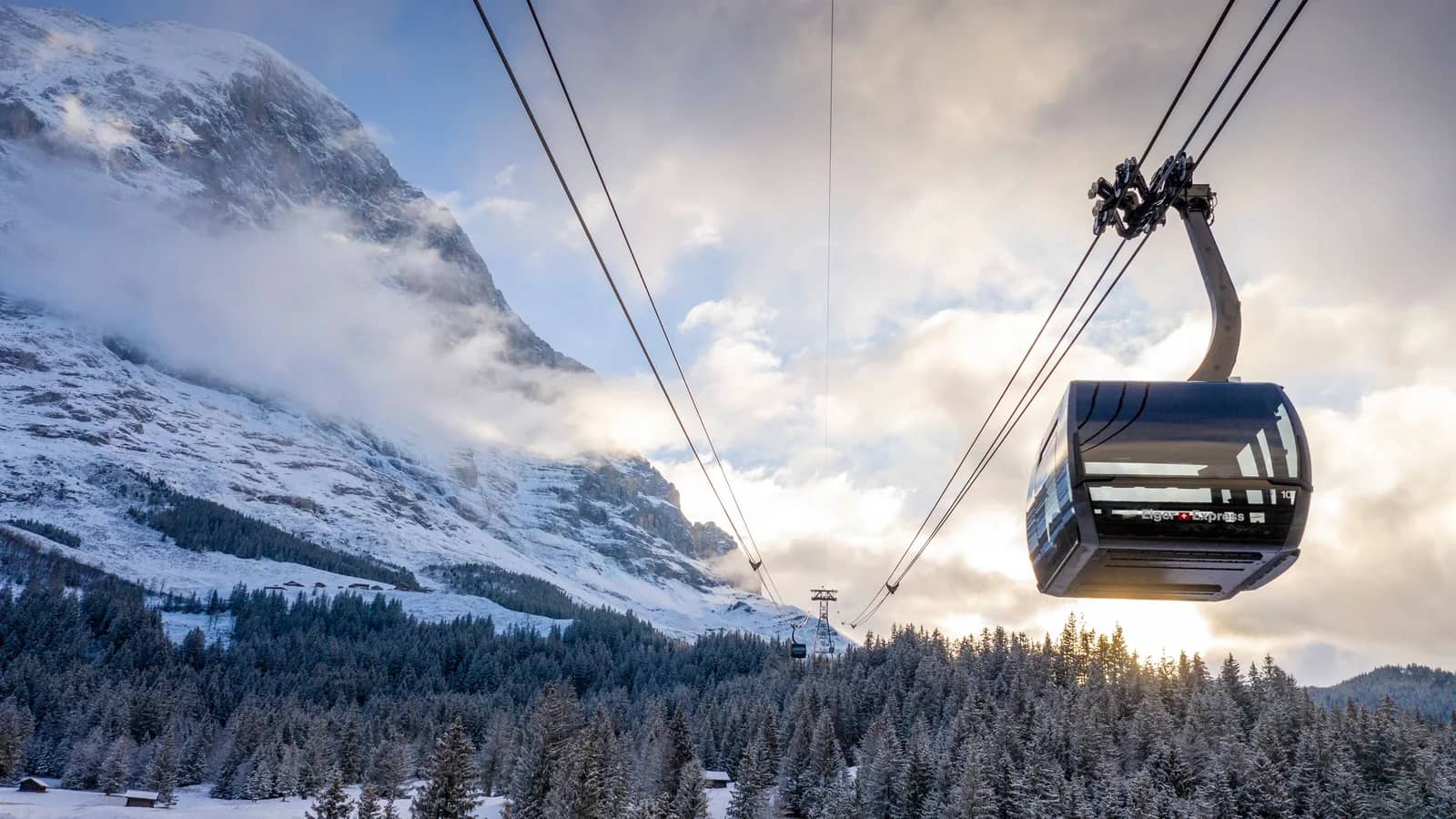
Can You Ski at Jungfraujoch? No, Here Is Where You Can
Can you ski at Jungfraujoch? No: no piste leaves the 3,454 m station in winter. Skiers add it for CHF 63 with a 3-day pass, or ski the 211 km below it.
ski-jungfraujochjungfraujoch-winterjungfrau-ski-pass
By Pierre VetschRead More
Winter
10/29/2026
15 min
Jungfrau Ski Pass: What It Covers and Where to Buy
Jungfrau ski pass explained: CHF 79 a day covers 211 km of pistes and the train from Interlaken Ost. Prices, half-days, Top Ticket and where to buy it.
jungfrau-ski-passski-pass-prices-jungfrauskiing-near-interlaken
By Pierre VetschRead More
Winter
10/28/2026
6 min
Ski Clothes Rental in Interlaken: Where and How Much
Ski clothes rental in Interlaken: a jacket costs CHF 16 a day and trousers CHF 15 in Grindelwald, and on our winter tours CHF 5 an item. Four addresses.
ski-clothes-rental-interlakenwhat-to-wear-winter-interlakenski-rental-interlaken
By Pierre VetschRead More