Interlaken
Best Day Trips from Interlaken by Train (19 Places)
P
Pierre Vetsch
Author
April 25, 2026
7 min
Best Day Trips from Interlaken, Switzerland: 19 Destinations for 2026
Interlaken sits between two lakes at the foot of three of the most recognisable mountains in Europe. That makes it an extraordinary base. Within an hour in almost any direction, the terrain changes completely.
I have lived and guided here for years. The questions I hear most often are about what is worth the trip, what costs too much for what you get, and what the tourist maps leave out. This guide answers all three.
Nineteen destinations below, grouped by type. Some need a full day. Others work in two hours before lunch. All of them are reachable without a car.
Mountain Summits Worth the Trip
Most visitors come to Interlaken for the mountains. The range goes from Jungfraujoch at CHF 261 per person to Schynige Platte covered by the Swiss Travel Pass, with views that are nearly as good. Here is an honest comparison.
1. Jungfraujoch: The Top of Europe
Getting there: Train from Interlaken Ost via Grindelwald or Lauterbrunnen (2h15)
Price: CHF 224 to 261 per person
Swiss Travel Pass: 25% reduction only
Duration: Full day (6+ hours)
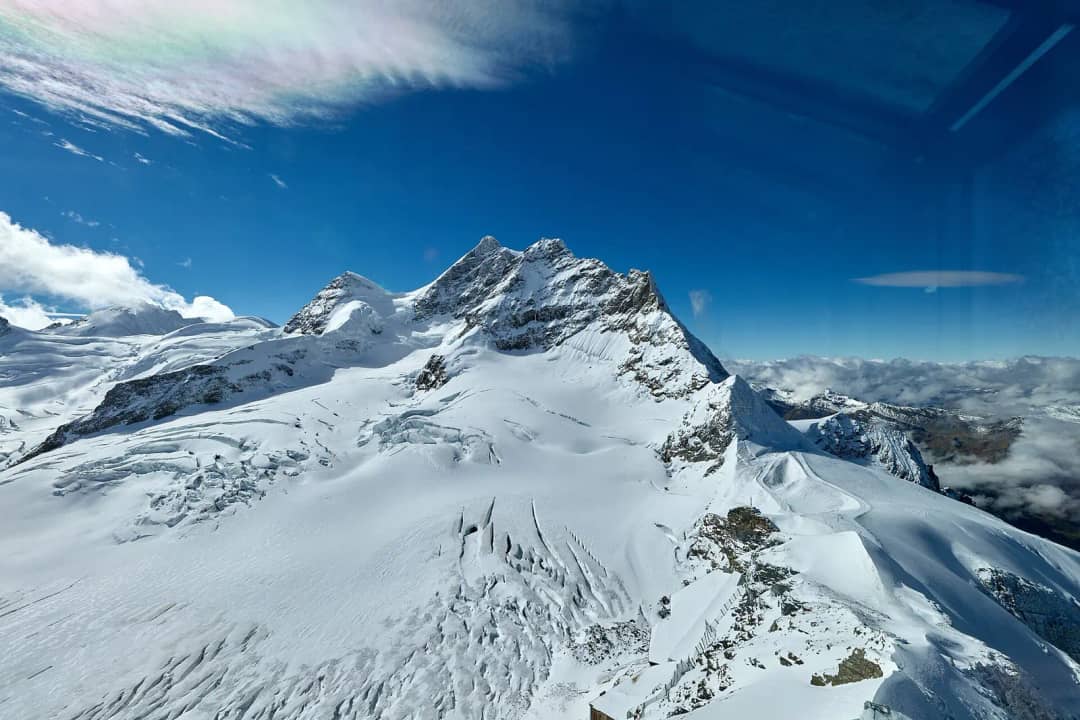
At 3,454 metres, Jungfraujoch is the highest railway station in Europe. The views across the Aletsch Glacier are unlike anything else in the Alps. That is the honest case for going.
The honest case against: clouds cover the summit regularly, especially in July and August. You can spend CHF 200 and arrive to a white void.
💡Pierre's tip: Before you buy the ticket, check the live webcam at the summit at jungfrau.ch. It shows current conditions in real time. On a cloudy morning, wait a day. The ticket is non-refundable once purchased.
2. Männlichen: The Best Views Without the Price Tag
Getting there: Eiger Express gondola from Grindelwald (25 min by train, then 15 min gondola), or cable car from Wengen
Price: CHF 45-65 RT depending on departure point
Swiss Travel Pass: Not included
Duration: Half day or full day
Männlichen sits at 2,230 metres with a direct sightline to the Eiger, Mönch and Jungfrau. The view is almost identical to Jungfraujoch at roughly a third of the price, in far less crowded conditions.
The ridge walk from Männlichen to Kleine Scheidegg takes about two hours at an easy pace. The path is flat, wide, and faces the north face of the Eiger the entire way.
💡Pierre's tip: Walk down from Männlichen to Kleine Scheidegg, then take the cog railway back. A full half-day circuit that costs less than a single Jungfraujoch ticket.
3. Schilthorn and Mürren: The 007 Mountain
Getting there: Train to Lauterbrunnen (20 min), cable car to Grütschalp, train to Mürren. Total: 1h15. Schilthorn gondola from Mürren: add 15 min
Price: CHF 100-115 to summit
Swiss Travel Pass: Included as far as Mürren; gondola to summit extra
Duration: Full day
The Schilthorn at 2,970 metres hosted James Bond filming in 1969. The rotating Piz Gloria restaurant and 360-degree views are still there.
Fun fact: The new aerial cableway from Stechelberg up to Mürren climbs at a gradient of 159.4 percent, which Schilthornbahn describes as the steepest cable car in the world. The ride up is a record holder in its own right.
Mürren is the reason to stay longer. Car-free at 1,650 metres, reachable only by cable car. Wooden chalets, terraces facing the Eiger. It attracts a fraction of the visitors that Grindelwald does.
💡Pierre's tip: Most people arrive on the 10am cable car and leave by 2pm. Go early morning or late afternoon and the village is nearly empty.
See also: Best Outdoor Adventures in Interlaken
4. Schynige Platte: Alpine Botany and a Vintage Rack Railway
Getting there: Train from Interlaken Ost to Wilderswil (5 min), then Schynige Platte Bahn cog railway (50 min).
Season: late May to late October
Price: 68 chf RT
Swiss Travel Pass: 50% reduction
Duration: Half day
A century-old rack railway climbs from 584 to 1,967 metres through forest and pasture. At the top: a botanical garden with 600+ species of Alpine plants against views of the Eiger, Mönch and Jungfrau. Almost nobody here on a weekday.
5. Brienzer Rothorn: Steam Rack Railway Since 1892
Getting there: Train to Brienz (25 min), then steam rack railway to summit (1h). Summit: 2,350m
Price: 98 chf RT
Swiss Travel Pass: 50% reduction
Duration: Full day
An unelectrified rack railway from 1892 where steam is the normal timetable, not a special excursion. About 90 percent of departures run on steam and the rest on diesel. The train itself is as much the experience as the destination. Views cross Lake Brienz to the north and the Bernese Oberland range to the south. Combine with a half day in Brienz village for a full day.
Insider tip: The steam trains to Rothorn Kulm run from 6 June to 25 October 2026, and the last regular ascent leaves Brienz at 16:36. Plan your time on the summit accordingly: the last regular descent leaves Rothorn Kulm at 17:40.
Valleys and Car-Free Villages
6. Lauterbrunnen Valley: Gateway to 72 Waterfalls
Getting there: Train from Interlaken Ost (20 min)
Price: 15.60 chf RT - Trümmelbach Falls 18 chf
Swiss Travel Pass: Included (exclude Trümmelbach Falls)
Duration: Half day
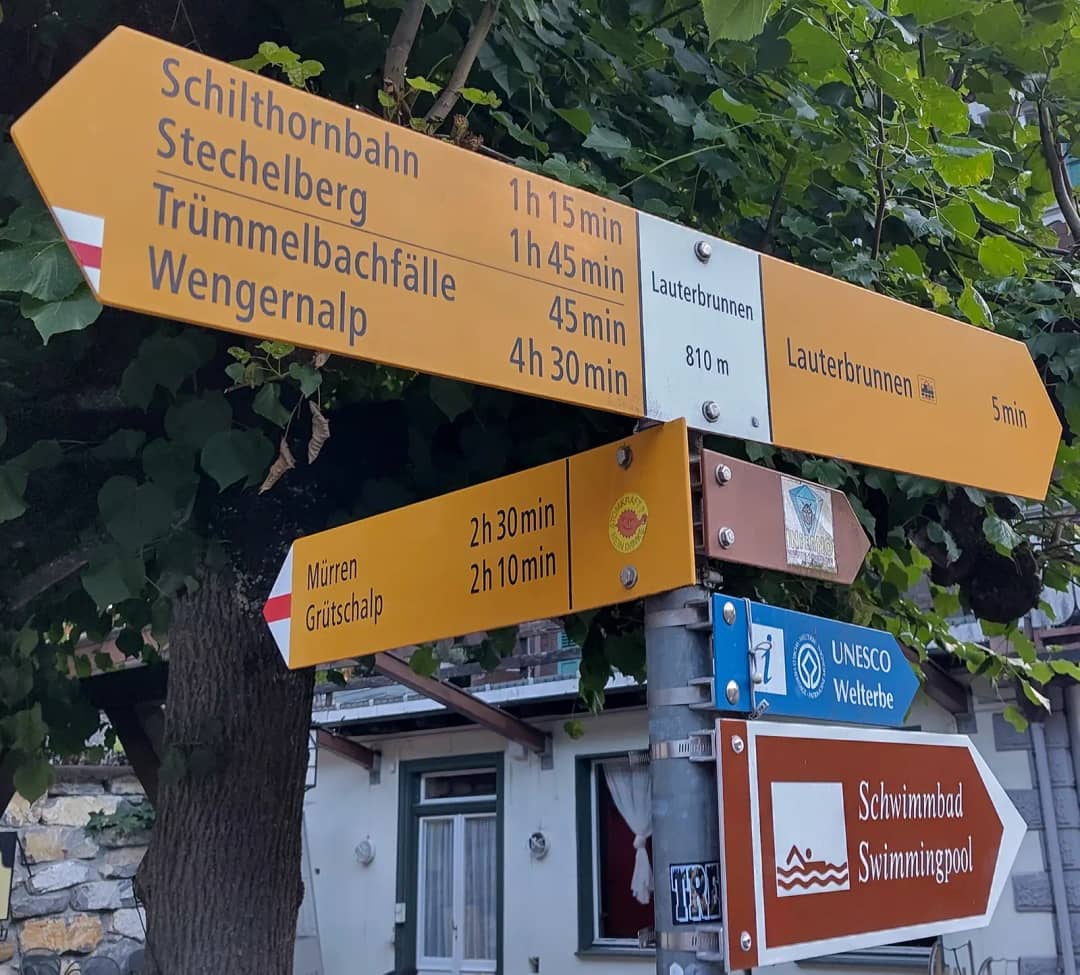
Lauterbrunnen earns its place on this list as a gateway to two car-free villages above it: Mürren to the west and Wengen to the east, not as a destination in itself. The village is often traffic-heavy in summer. It is only quiet before 10:00 and after 17:00. Of the 72 waterfalls the valley advertises, only six carry a name in the federal register.
That said: the Staubbach Falls drop 297 metres into the valley floor. Trümmelbach Falls, inside the mountain, carry glacier melt from the Eiger, Mönch and Jungfrau through illuminated tunnels. Entry: CHF 16 adults. Go early; the car park fills by 10am in July.
7. Grindelwald: The Glacier Village
Getting there: Train from Interlaken Ost (35 min)
Price: 24 chf RT
Swiss Travel Pass: Included (exclude cable car)
Duration: Full day
Grindelwald at 1,034 metres sits under the north face of the Eiger. The most developed mountain resort in the area: Eiger Express gondola, First cable car, year-round ski and hiking terrain. Widest range of services. Also the busiest. If quiet matters, Wengen or Männlichen will suit you better.
8. Wengen: The Quiet Alternative
Getting there: Train via Lauterbrunnen (35 min total)
Price: 32 chf RT
Swiss Travel Pass: Included
Duration: Full day
Wengen is car-free at 1,274 metres on the eastern wall of the Lauterbrunnen Valley. No roads reach it. Where Grindelwald draws thousands, Wengen stays quiet.
💡Pierre's tip: The train from Wengen to Kleine Scheidegg approaches the Jungfrau from a different angle than the Grindelwald route. Take one direction up, the other back down; two completely different views.
9. Isenfluh and Sulwald: Rarely Sees Tourist Crowds
Getting there: PostBus from Wilderswil (25 min, hourly)
Price: 8 chf RT
Swiss Travel Pass: Included
Duration: Half day or full day
A hamlet at 1,094 metres above the Lauterbrunnen Valley, reachable by a road too steep for coaches. A small cable car climbs to Sulwald, at about 1,520 metres, with views across the full valley. Walking trails above Sulwald rarely see tourist crowds despite scenery comparable to Kleine Scheidegg. That is the point.
Lakes and Waterfalls
10. Oeschinensee: A UNESCO Mountain Lake
Getting there: Train to Kandersteg (1h), then gondola (12 min). Until 8 November 2026, the ascent needs a reserved time slot (2027 rule not published yet), check kandersteg.ch
Price: CHF 36 RT (9 May to 14 June and 22 Sept to 9 Nov) / CHF 40 RT (15 June to 21 Sept)
Swiss Travel Pass: 50% reduction. Berner Oberland Pass: not accepted since January 2026
Duration: Full day
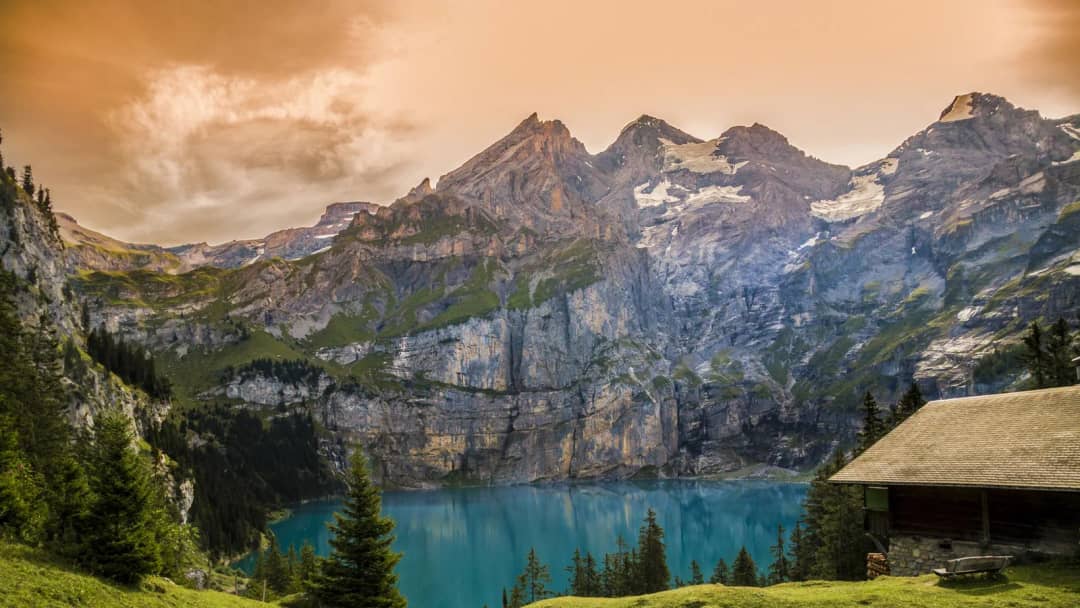
Oeschinensee at 1,578 metres sits in a glacial cirque with walls rising 600 metres on three sides. UNESCO World Natural Heritage site. Water colour shifts from pale turquoise early in the season to deeper blue-green in late summer. Swimmable in July and August. The circular trail around the lake takes about 90 minutes.
💡Pierre's tip: Book the first gondola of the day. On a Tuesday or Wednesday in August, you will have an hour at the lake before the main wave arrives.
See also:Switzerland's Most Beautiful Mountain Lake
11. Lake Brienz, Giessbach Falls and Iseltwald
Getting there: Train to Brienz (25 min) or BLS lake ferry from Interlaken
Price: 26 chf RT
Swiss Travel Pass: Train and BLS ferry fully included
Duration: Full day
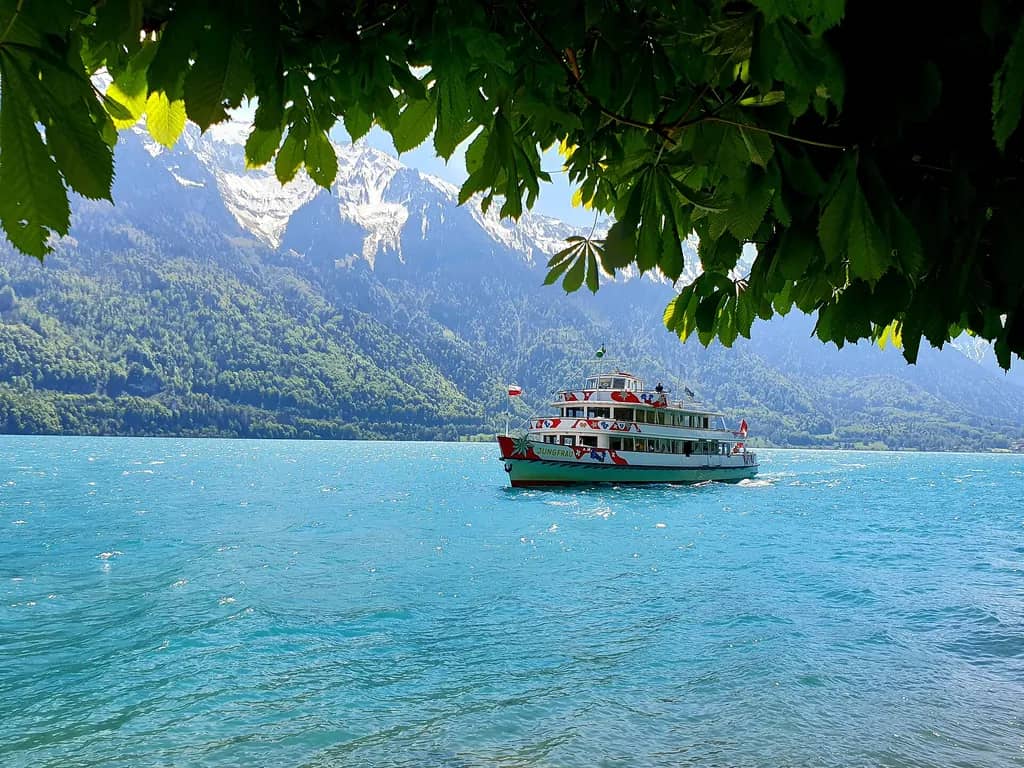
Lake Brienz is the quieter of Interlaken's two lakes, a distinct deep turquoise fed by glacier melt. The BLS ferry crossing from Interlaken to Brienz, covered entirely by the Swiss Travel Pass, is one of the better slow-travel experiences in the region.
Seen news of a Brienz landslide? That is Brienz/Brinzauls in Graubünden, 131 km east of Interlaken as the crow flies. Brienz on the lake is a different village.
Giessbach Falls drop in fourteen stages above the eastern shore. A Victorian funicular (operating since 1879) connects the jetty to the Grand Hotel Giessbach terrace facing the falls.
Iseltwald sits on the south shore, reached by car or boat. Access to the famous pier costs CHF 5/person since 2023. The pier appeared in Korean Netflix series "Crash Landing on You," which turned a quiet dock into a busy photo stop by 9am in summer.
💡Pierre's tip: Arrive at Iseltwald after 5pm. The tour groups are gone, the light is better, and the pier is nearly empty.
12. Meiringen: Aare Gorge, Sherlock Holmes and a Canyon
Getting there: Train from Interlaken Ost (30 min)
Price: 34 chf RT; Aare Gorge CHF 13
Swiss Travel Pass: Included
Duration: Half day
Our day trip to Meiringen gives the train times, the prices and the order that works.
Three things in one half-day.
Aare Gorge: 1.4km of limestone canyon with walls less than a metre apart in places. Wooden walkway throughout. Entry: CHF 13 adults (checked 15.09.2026). Open 3 April to 1 November 2026.
Reichenbach Falls: Where Arthur Conan Doyle set Sherlock Holmes's fictional death in 1893. Historic funicular to the viewpoint (1 May to 3 October 2027, CHF 15 return). Small Sherlock Holmes museum in the village below.
Meringue: Meiringen claims to have invented the dessert. At least six bakeries in town sell the original. Worth knowing before lunch.
Towns and Culture
13. Bern: Switzerland's Federal Capital
Getting there: Direct train from Interlaken West (50 min)
Price: 54 chf RT
Swiss Travel Pass: Included
Duration: Full day
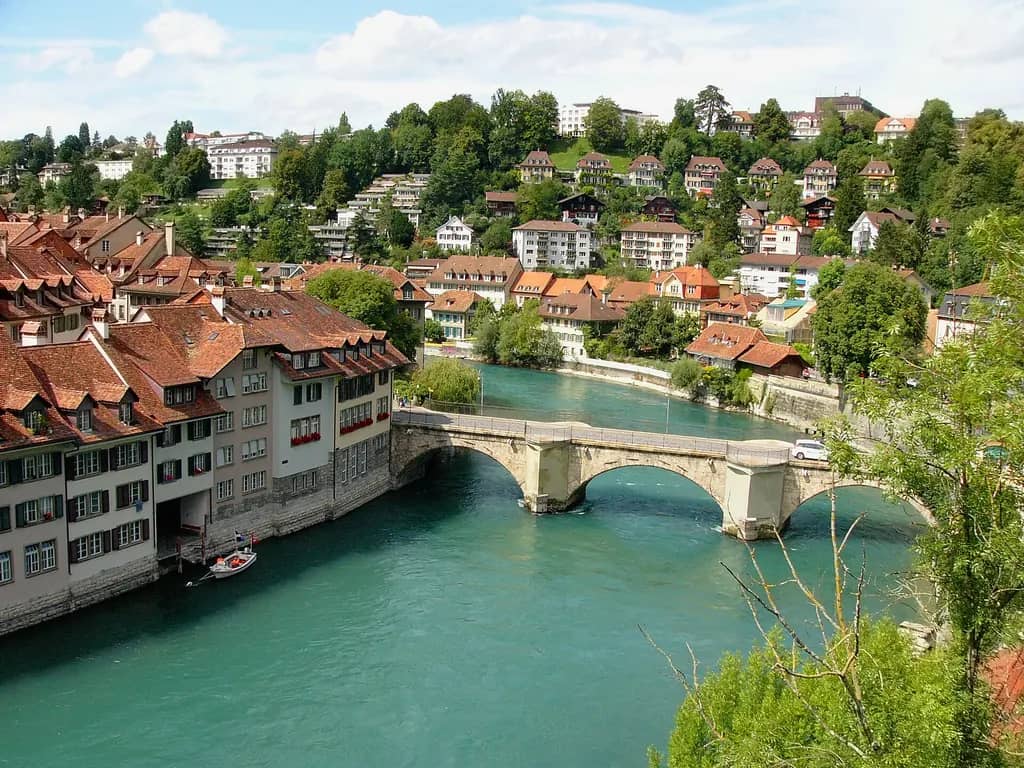
Bern's medieval old town is a UNESCO World Heritage Site: six kilometres of arcaded pavements, Zytglogge clock tower, and the Bear Park along the Aare River. In summer, locals float downstream in the Aare current; entirely normal and genuinely worth watching.
The Rose Garden above the old town has the best view over the city. Most visitors never find it.
14. Thun and Its Medieval Castle
Getting there: Train from Interlaken West (20 min)
Price: 20 chf RT; castle museum 10 chf
Swiss Travel Pass: Included
Duration: Half day or full day
Thun sits where Lake Thun meets the Aare. The castle above the old town has lake and mountain views and a museum inside (entry CHF 10). The old town's covered arcades run along the first-floor rooftops of the ground-floor shops; an unusual architectural feature worth walking for its own sake.
💡Pierre's tip: Thun and Spiez are ten minutes apart by train. Combine both in a single day: Thun in the morning, Spiez vineyards in the afternoon.
15. Ballenberg Open Air Museum
Getting there: Train to Brienz (25 min), then bus (10 min)
Price: train Brienz 26 chf RT; 32 chf museum
Swiss Travel Pass: Bus included; museum entry separate
Duration: Full day
Switzerland's only open-air museum: 110 historic buildings from across the country across 66 hectares. Many are furnished as they would have been in their original period. Craftspeople work in some of them. One of the better options for a rainy day in the region.
Half-Day Trips from Interlaken
16. Harder Kulm: The View Above Town
Getting there: 10-minute funicular from Interlaken Ost. No reservation needed
Price: 38 chf chf RT
Swiss Travel Pass: 50% reduction
Duration: 2-3 hours
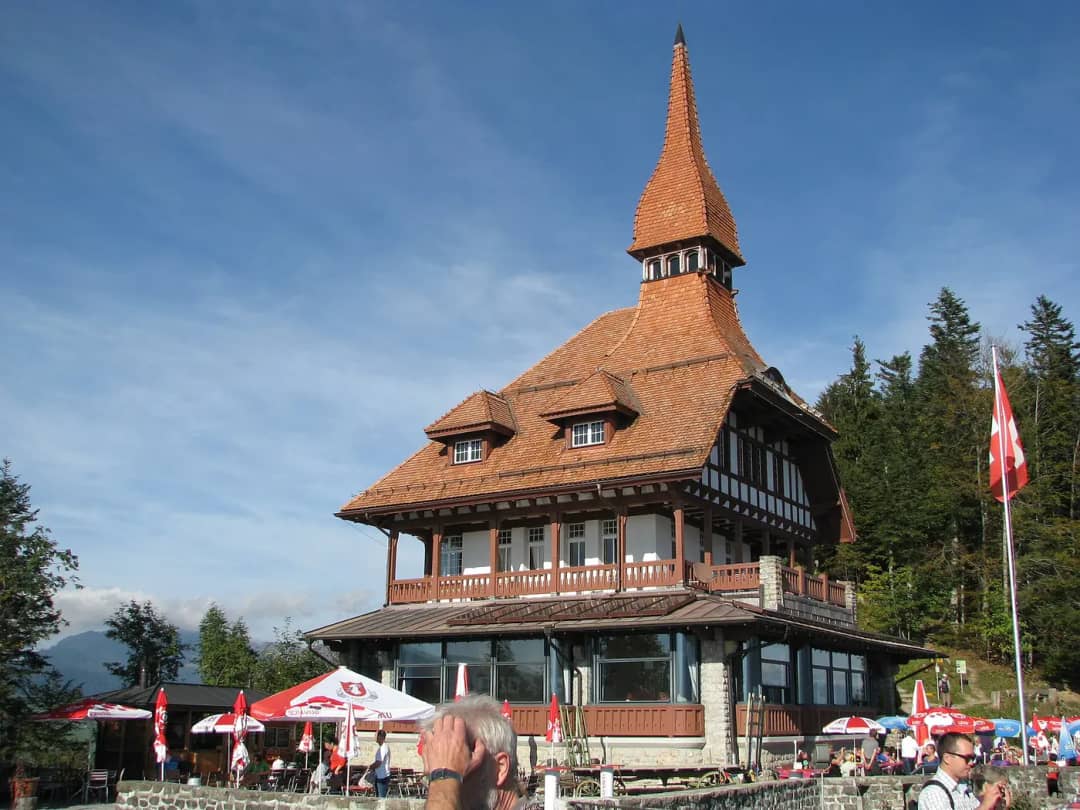
Both Lake Thun and Lake Brienz visible simultaneously from the summit platform at 1,322 metres, with the Eiger behind them. The funicular has been running since 1908.
💡Pierre's tip: Best light is late afternoon when the sun hits the mountains from the west. Arrive an hour before sunset for the panorama without the midday crowds.
17. Beatenberg and St. Beatus Caves
Getting there: Bus from Interlaken West (25 min)
Price: 19 chf caves adult
Swiss Travel Pass: Bus included
Duration: Half day
One kilometre of illuminated stalactite chambers and underground waterfalls, followed by a long-balcony view over Lake Thun from Beatenberg village. Combine with the lakeshore path walk back toward Interlaken (1h15, well-signed).
18. Spiez and the Vineyards
Getting there: Train from Interlaken West (15 min)
Price: 18 chf RT; castle museum CHF 8
Swiss Travel Pass: Included
Duration: Half day
The vines above Lake Thun have grown here since 994 AD. Most visitors pass through on the way to somewhere else. Spiez Castle sits directly above the water (grounds free, museum CHF 8). Swiss Local Adventures runs a small-group wine tour here, maximum eight people, with direct lake views from the tasting terrace. For details, see Spiez Wine Tour: What to Expect, Minute by Minute.
19. Niederhorn: A Different View of Lake Thun
Getting there: Bus from Interlaken (40 min) then gondola
Price: 65 chf RT
Swiss Travel Pass: Bus included; gondola not included
Duration: Full day
At 1,950 metres, Niederhorn gives equivalent Alpine panorama to Grindelwald First, with far fewer people. Known for ibex, marmots and golden eagles visible throughout summer, particularly in early morning and late afternoon.
💡Pierre's tip: If Grindelwald First feels too busy, this is the alternative. Consistent wildlife sightings within 200 metres of the trail.
Planning Your Day Trips: Swiss Travel Pass, Transport and Timing
Coming in winter? We rate the winter day trips from Interlaken in a separate guide.
Day Trips from Interlaken If You Don't Hike
Not every visitor wants to spend the day on a trail. The question comes up often: "We are not hikers, mainly interested in the scenery. What should we do?"
You can see extraordinary things in this region without walking more than a kilometre. Here are four destinations where the scenery comes to you.
Harder Kulm. Take the funicular from Interlaken Ost, 10 minutes, step out at 1,322m. The platform looks over both Lake Thun and Lake Brienz, with the Eiger, Mönch, and Jungfrau directly in front of you. Restaurant on site. Zero hiking required. Budget 2-3 hours. This is the best no-effort viewpoint in the area.
Thun. Twenty minutes by train from Interlaken West. Completely flat town. Walk along the Aare River, look up at the medieval castle, browse the covered rooftop arcades. No altitude, no effort. Castle museum CHF 10 if you want to go inside.
Bern. Fifty minutes by train. Six kilometres of arcaded pavements in the UNESCO old town, which means you walk the entire historic centre without rain touching you. Tram connections, museums, the Zytglogge clock tower. A full day, no hiking.
Lake Brienz boat tour. Take the BLS ferry from Interlaken directly across Lake Brienz. The water is a deep turquoise from glacial melt. You sit on the boat, the mountains move past you. Fully covered by Swiss Travel Pass. Stop in Brienz for lunch, return by ferry or train. No physical effort.
Pierre's recommendation for anyone with limited mobility or zero interest in trails: Harder Kulm in the morning, lake ferry in the afternoon. Both done before 4pm.
Mürren or Grindelwald: Which One Should You Choose?
This is the most common planning question for the Jungfrau region. Here is a direct answer.
One day, quieter experience: go to Mürren. More infrastructure and Jungfraujoch planned in the same trip: go to Grindelwald.
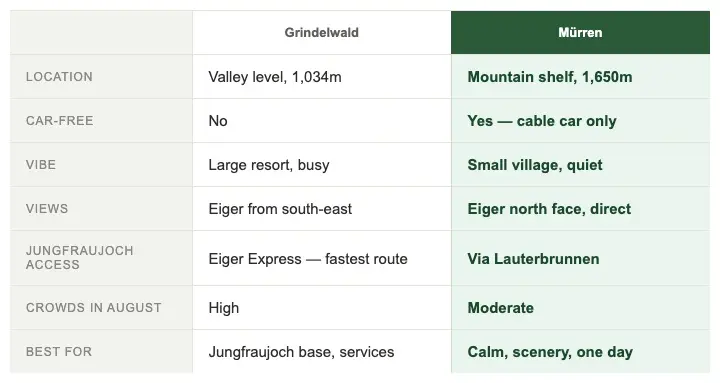
Family, not sporty, one day: Mürren wins. The village is compact, car-free, safe. Sit in a meadow with a direct view of the Eiger north face. That is a complete experience.
Jungfraujoch as the main goal: Grindelwald wins. The Eiger Express cuts travel time significantly vs the Lauterbrunnen route.
A word on Lauterbrunnen. The valley is genuinely beautiful: Staubbach Falls, 72 waterfalls, Trümmelbach tunnels inside the mountain. Worth seeing. But the village centre in summer is a different story. Visitors say it clearly: "it was jam packed", "a place to change trains and that is it."
Lauterbrunnen is a transport hub and a waterfall corridor. Pass through it, yes. Trümmelbach Falls alone is worth 90 minutes. Do not plan your day around the village itself. It is where you change trains to reach Wengen, Mürren, or Grindelwald.
If you are tight on time: pick one mountain village per day. Lauterbrunnen stop + Mürren is a solid, manageable full day. Do not add Grindelwald on top.
Train lines from Interlaken:
The BOB toward Lauterbrunnen and Grindelwald departs from Interlaken Ost. The BLS toward Thun, Kandersteg and Bern departs from Interlaken West. Interlaken Ost and West are six minutes apart by train.
Which pass should you buy?
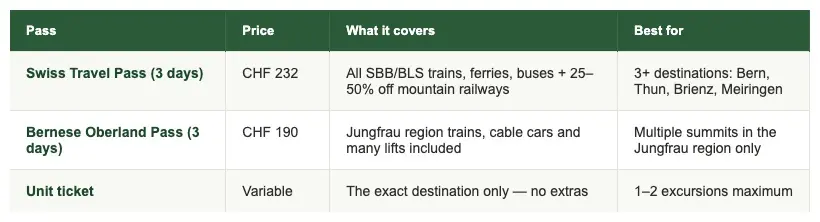
If your main goal is Jungfraujoch plus one or two other mountain trips, the Bernese Oberland Pass often works out cheaper than the Swiss Travel Pass. Run the numbers before you buy. Price calculator at jungfrau.ch.
What the Swiss Travel Pass covers (fully included):
All SBB and BLS regional trains (Bern, Thun, Kandersteg, Brienz, Meiringen)
BLS lake ferries on Lake Thun and Lake Brienz
Schynige Platte Bahn
Regional buses (Beatenberg, Ballenberg, Isenfluh)
Reductions, not free access:
Jungfraujoch: 25% reduction
Harder Kulm funicular: 50% reduction
Oeschinensee gondola: 50% reduction
Not included: Brienzer Rothorn steam railway, Schilthorn gondola above Stechelberg, Trümmelbach Falls entry.
Check the webcam before you spend. Jungfraujoch and Schilthorn are cloud-covered regularly in summer. The live webcams at jungfrau.ch and schilthorn.ch update every few minutes. This one step can save you CHF 130.
Best months:
June for clear mountain conditions and manageable crowds. September for better light and thinner visitor numbers. July and August: busiest. Plan early starts (before 9am) for popular destinations.
Your Questions About Day Trips from Interlaken
Can I do Lauterbrunnen and Grindelwald in one day?
Yes. Take the first train to Lauterbrunnen (20 min from Interlaken Ost), walk to Trümmelbach Falls, then continue to Grindelwald via Zweilütschinen (35 min from Lauterbrunnen). Allow 6-7 hours for both without rushing. Return directly from Grindelwald to Interlaken Ost in 35 minutes. Plan for one village in the morning and one in the afternoon, not both simultaneously.
Is the Swiss Travel Pass worth it for day trips?
It depends on your itinerary. The pass covers trains and BLS ferries at full value. For summit gondolas, you get 25-50% reduction, not free access. If your trip includes Bern, Thun, Brienz, Meiringen and Schynige Platte across three or more days, the pass pays for itself. If you are only going to Jungfraujoch and Grindelwald, calculate individual tickets first.
Is Jungfraujoch worth the price?
On a clear day, yes. On a cloudy day, no. Check the webcam at jungfrau.ch before booking. If the weather shows a stable high-pressure period of three or more days, go. If conditions are changeable, consider Männlichen or Schynige Platte instead, both cost significantly less and are less affected by cloud at their altitude.
What is the easiest day trip from Interlaken?
Harder Kulm: 10-minute funicular from Interlaken Ost, no booking needed, views of both lakes and the Eiger, Mönch and Jungfrau. Second easiest: Lauterbrunnen by train (20 min). Third: Thun (20 min) for a flat old town and lakeside walk with no altitude involved.
What should I do if it rains or the mountains are in cloud?
Four options that hold up in bad weather: Ballenberg Open Air Museum (buildings provide shelter), Bern (covered arcades along the main streets), St. Beatus Caves (underground, weather-independent), Meiringen and Aare Gorge (gorge walkway partly covered). Avoid summit gondolas on cloudy days.
Can I do all these day trips without a car?
Yes. Every destination on this list is reachable by train, bus or boat from Interlaken. A car is faster for Isenfluh and Niederhorn, but public transport covers both. The Swiss Travel Pass makes the economics work for visitors spending three or more days in the region.
Come Explore with a Local
If you want a local to show you the places that are not on the tourist maps, our small-group tours run through the summer. Maximum eight people, starting from Interlaken.
The Justistal valley does not appear on most tourist itineraries. That is the point. See the Swiss Alpine Farm Tour for what a Tuesday in the high Alps actually looks like.
For tours and availability: Swiss Local Adventures activities
*Written by Pierre Vetsch, founder and head guide at Swiss Local Adventures
Tags
#homepage#things-to-do-interlaken#jungfrau-region#switzerland-travel-guide#bernese-oberland#swiss-alps#day-trips-interlaken#swiss-travel-pass#interlaken-guide#mountain-summits#swiss-lakes#train-travel-switzerland
Sources & References
- •Jungfrau Railways
- •Kandersteg Tourism
- •Swiss Travel System
- •Interlaken Tourismus
- •Photo: Pixabay on Pexels
- •Photo: Leonhard Lenz, Wikimedia Commons (CC0)
- •Photo: Nikater, Wikimedia Commons (Public domain)
- •Photo: Manfred Wohlfahrt, Wikimedia Commons (Public domain)
- •Photo: Loric Roberti, Wikimedia Commons (CC0)
- •Photo: Yiftachsam, Wikimedia Commons (Public domain)
- •Brienz Rothorn Bahn, Fahrplan & Preise
- •Schilthorn, Piz Gloria (Schilthornbahn AG)
Share this article
Similar Articles
Continue your reading with these related articles

Interlaken
10/9/2026
10 min
What to Wear Snowshoeing near Interlaken
What to wear snowshoeing near Interlaken: midday was 0.9 to 5.5 °C last winter at 1,321 m. Ski pants, waterproof boots, a layer to take off.
snowshoeing-interlakenwhat-to-wear-snowshoeingsnowshoe-clothing
By Pierre VetschRead More
Interlaken
10/8/2026
9 min
How to Snowshoe for Beginners: A Guide's Steps
How to snowshoe for beginners in 4 steps: feet apart, heel lift up, knees bent on the descent. A guide's method from our loop near Interlaken.
snowshoeing-interlakenhow-to-snowshoesnowshoe-technique
By Pierre VetschRead More
Interlaken
10/7/2026
8 min
Is Snowshoeing Hard? A Guide's Answer near Interlaken
Is snowshoeing hard? Most beginners walk at ease after 10 to 15 minutes; fresh snow, not the snowshoes, is what tires you. An Interlaken guide explains.
is-snowshoeing-hardsnowshoeing-for-beginnerssnowshoeing-interlaken
By Teona GvasaliaRead More