Places & Day Trips
Oeschinensee from Interlaken: Swimming, Gondola, Best Month
P
Pierre Vetsch
Author
June 8, 2026
8 min
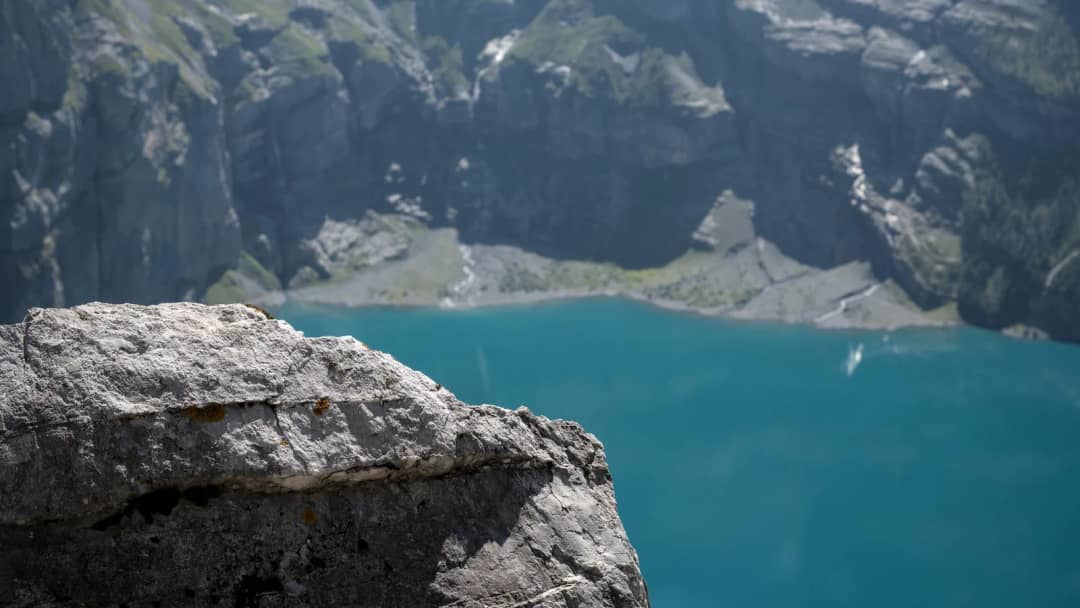
Oeschinensee Is Not Just a Lake. Here's Why It Looks Like That.
Yes, you can swim in Oeschinensee: the lake lies above Kandersteg at 1,578 m, and its operator says the water reaches up to 20 °C in summer. From the top station of the Kandersteg gondola, you walk about 30 minutes to the shore.
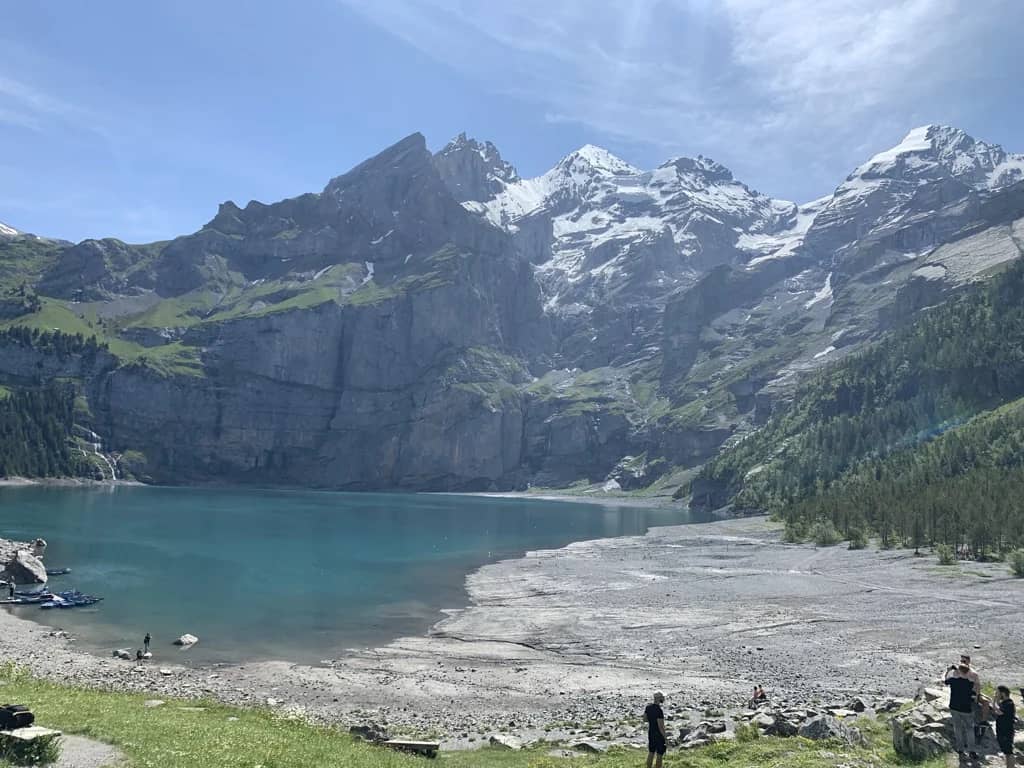
You see it before you expect to. The gondola clears the last stand of dark conifers, and suddenly there is nothing between you and a wall of cliff so tall it seems to lean toward you. Then your eyes drop. Below the cliff, below the alpine meadow, below the scatter of wooden chalets, the lake appears. Not blue. Not quite green. Something between the two that your brain takes a moment to categorize, a color that looks intentional, like someone mixed the right amount of pigment into a vast natural bowl and then left it there to be discovered.
This is your first sight of Oeschinensee. It is a lake that makes you stop talking.
For travelers who have made their way to this corner of the Bernese Oberland, the moment of arrival is often described in the same way: unexpected, despite being fully expected. You have seen the photographs. You know it is beautiful. And still, the scale and the color catch you off guard. The cliffs surrounding the basin rise more than 1,000 metres above the waterline. The water is almost perfectly still on calm mornings. The silence is complete except for the sound of distant waterfalls dropping off the walls in thin white threads.
I have been up many times, in every season, with guests, friends and family. The sharpest moment up there, for me:
"The first time you go up and see the lake, and its color."
Pierre Vetsch, guide and founder, interviewed on 8 October 2026
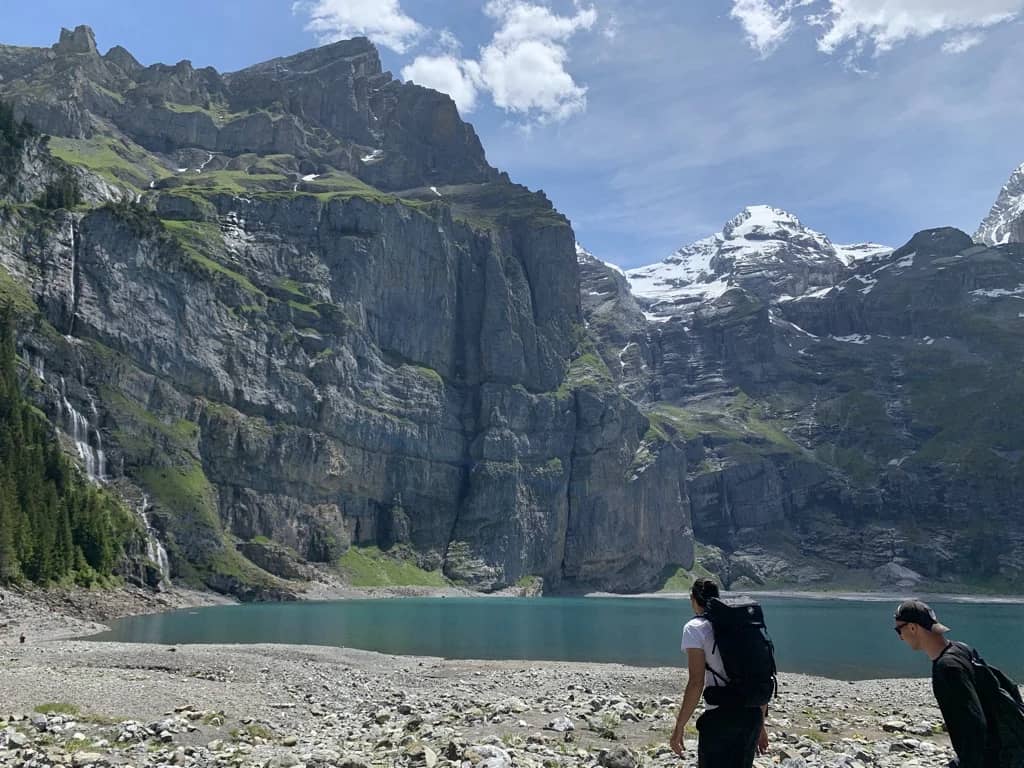
Why the Water Is That Color
Most people who see Oeschinensee for the first time assume the turquoise color is a trick of light or the sky's reflection. It is not. The answer lies inside the water itself, and understanding it makes the experience more vivid rather than less.
The lake sits at 1,578 metres above sea level, fed primarily by snowmelt and glacial runoff from the peaks above. As ice and snow grind slowly across the underlying limestone and crystalline rock, they pulverize the stone into an extraordinarily fine powder called glacial flour. These particles, each just a few micrometres wide, are suspended throughout the water column rather than sinking. When sunlight enters the lake and strikes these suspended particles, they scatter the shorter wavelengths of light, the blues and greens, while absorbing the longer red and orange wavelengths. What you see from the shore or the gondola is the result of millions of tiny collisions between light and stone dust: a color that lives somewhere between jade and glacier, shifting with the angle of the sun and the depth beneath you.
On a still morning in early July, when the snowmelt is at its peak and the water is loaded with fresh glacial flour, the color reaches its most intense. By late September, as the meltwater slows, the lake clears slightly, becoming a deeper blue. Both versions are worth seeing. They are the same lake in different moods.
One honest note: the color depends on sunlight. On overcast days, the lake turns a quiet grey-blue rather than the vivid turquoise of most photographs online. If the sky is heavy when you arrive, the experience is still worth the trip, but different from what you have seen on Instagram.
A Lake That Took Thousands of Years to Build
Glaciers carved the surrounding valley during the last ice age, and as the ice retreated thousands of years ago, the cliffs and ridges of the Blüemlisalp massif were left behind. But Oeschinensee itself is younger than the valley it sits in. Around 3,200 years ago, a series of massive landslides broke off the northern flank of the Doldenhorn above Kandersteg, releasing debris with a total volume of over 100 million cubic metres. That material formed a natural dam across the valley floor, and the lake filled behind it. The dam remains permeable, which is why the lake has no visible surface outflow: water seeps slowly through the rock into springs that feed the valley below.
The surrounding cliffs, which rise to over 3,600 metres on the Blüemlisalphorn, act as a permanent catch basin for precipitation and snowmelt.
The landscape surrounding Oeschinensee, along with the Jungfrau region that begins just over the ridge to the east, is part of the UNESCO World Heritage site Swiss Alps Jungfrau-Aletsch, one of the largest glacier regions in the Alps. UNESCO recognized this territory in 2001, and an extension in 2007 expanded the protected zone further west toward Kandersteg. What UNESCO is protecting here is not just scenery. It is one of the most scientifically significant records of alpine glaciation on Earth, a landscape shaped by forces that began before human history and are still at work today, albeit more slowly.
For the village of Kandersteg at the foot of the valley, Oeschinensee has always been the organizing fact of life: the landmark that put the village on maps, the water source that fed agriculture, the wall of cliffs that determined which routes into the mountains were possible and which were not.
Getting There From Interlaken
Oeschinensee sits above Kandersteg, about 70 minutes by train from Interlaken (66 minutes from Interlaken West, 71 from Interlaken Ost, SBB timetable checked on 8 October 2026).
The most direct route is by train. Interlaken West or Interlaken Ost both have regular services toward Spiez, where you change for the Lötschberg line heading south to Kandersteg. The train journey to Kandersteg takes about 66 to 71 minutes, including the change in Spiez, and runs through some of the best valley scenery in the Bernese Oberland, the Kander River visible most of the way, the mountains tightening around you as the valley narrows.
From Kandersteg station, the gondola to Oeschinensee runs most of the year, with breaks: daily until 8 November 2026, weekends only from 14 to 29 November, daily from 5 December 2026 to 7 March 2027, then closed until it reopens on 24 April 2027. The ride takes six minutes and saves you roughly 500 metres of vertical climb. The gondola station is an easy ten-minute walk from the train station. If you prefer to arrive on foot, the hiking trail from the valley station reaches the shore in about 90 minutes, with 450 metres of climb; the operator rates it challenging and recommends hiking boots (checked on 14 October 2026). It runs through forest and then open meadow, with the cliffs revealing themselves gradually above the trees.
From the top gondola station, it is an easy walk of about 30 minutes to the lakeside, on a path you can manage with a stroller. The lake appears on the right as the path turns the last corner, and this is the moment most photographs are taken. Let yourself stop. It deserves it.
Gondola or on foot: which is worth it?
The gondola gets you to the shore with almost no effort. The trail from the valley station takes about 90 minutes. My verdict:
"Walking up is worth the effort."
Pierre Vetsch, guide and founder, interviewed on 8 October 2026
Families with young children will find the flat path from the top station to the lake easy and manageable. The north shore swimming area and the rowboats work well with kids. Bring walking shoes or light hiking boots, the south shore path is rocky in sections. Sandals are fine at the lake itself but make the perimeter walk uncomfortable.
Insider tip: Travelling with a dog? The cable car sells a day ticket for dogs at CHF 8, and if you already hold an SBB dog pass, it is accepted on the gondola too, so you pay nothing extra for the ride up.
The Swiss Travel Pass covers the train to Kandersteg; the gondola gives 50% off to Swiss Travel Pass holders.
Note: the Berner Oberland Pass is no longer accepted at the Oeschinensee gondola as of 2026.
During the summer season, until 8 November 2026, the ascent needs a time slot booked in advance at oeschinensee.skiperformance.com, timed slots fill fast on weekends and walk-up tickets are often unavailable by mid-morning. Book the night before at the latest. The gondola costs CHF 36 round trip in shoulder season (9 May to 14 June and 22 September to 9 November 2026) and CHF 40 during peak summer (15 June to 21 September 2026). The 2027 booking rule is not published yet.
If you are coming from Interlaken as part of a longer day in the Bernese Oberland, pairing Oeschinensee with a morning visit to Kandersteg village and a late afternoon stop at the lake creates a pace that feels generous rather than rushed.
Before you board the train at Interlaken West, the large meadow across from the station is worth a few minutes of your morning: the story of why the Höhematte stayed a meadow explains how 37 farmers kept that open space from being built on, and it gives you a first view of the Jungfrau before you head toward Kandersteg.
What to Do at the Lake
Swimming. The water temperature at Oeschinensee stays cold for most of the season: in summer it reaches up to 20 degrees Celsius, according to the operator. This is not the warm, bath-like swimming of a lowland river. This is cold, clean, glacial cold that reaches through your skin and shocks your breathing into something slower and more deliberate. Most people gasp the first time they go in. Almost everyone is glad they did. On one of our private tours here, a guest from Texas stood at the edge of the dock, looked at the water, looked up at the cliffs, and didn't say a word for a full two minutes. That silence says more about Oeschinensee than anything I could tell you in advance. The clarity of the water is startling: you can see the stones on the bottom, each one distinct, as if the water is not there at all. There is a small swimming area on the north shore near the restaurant, with grass to lie on and a wooden dock. Come in the morning if you want the lake to yourself.
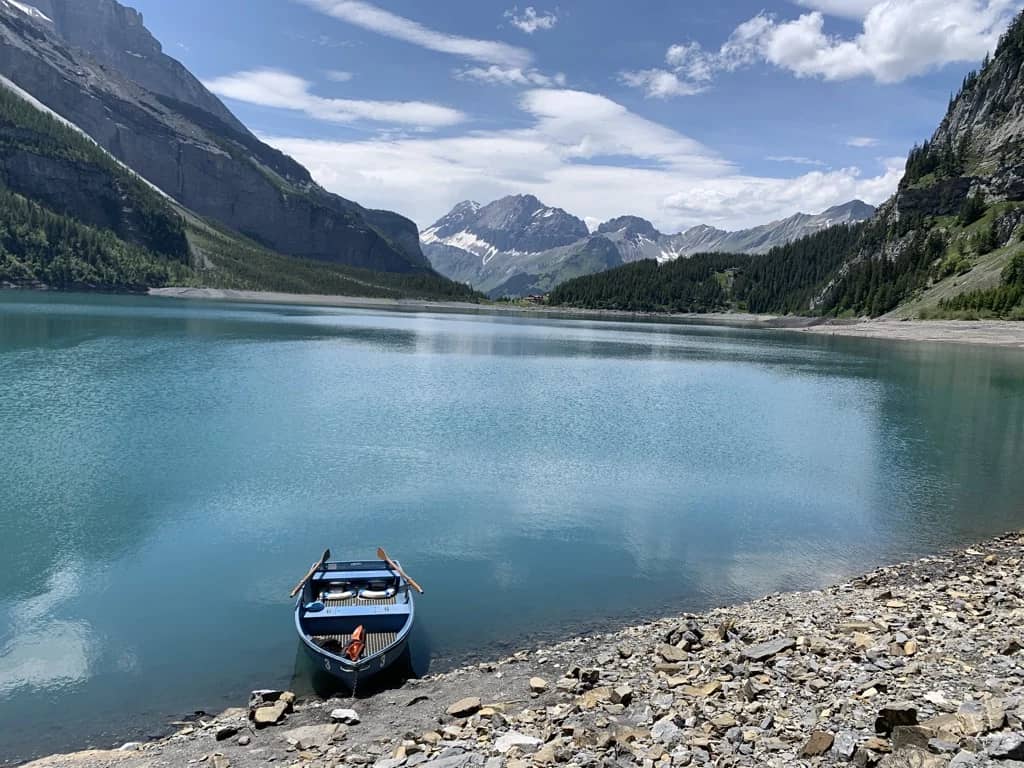
Rowboats. Wooden rowboats are available for hire at the lakeside from late spring through early autumn. A boat for two or three people can be rented by the hour and taken across the lake to the far shore, where the cliffs drop directly into the water and the scale of the surrounding walls becomes visceral in a way that standing at the edge does not convey. From the water, looking back toward the gondola station, the entire lake basin is visible at once, and the silence that gathers between the cliffs and the water surface is different from any other silence in the region.
The perimeter walk. A well-marked path circles the lake in roughly 1.5 hours at an easy pace. The north shore is more open, with meadow views toward the cliffs. The south shore runs closer to the water's edge, through denser vegetation, with stretches where you can touch the lake surface from the path. The far end of the lake, opposite the gondola, is the quietest section. Few visitors walk the full perimeter, which means the south shore is often empty even when the north shore is busy.
The upper hike to Blüemlisalp hut. For hikers who want to push higher, a marked trail continues from the east end of the lake up a steep series of switchbacks to the Blüemlisalp Hut, sitting at 2,840 metres. This hike takes approximately 2.5 to 3 hours from the lake and involves significant elevation gain over rough alpine terrain. The reward is a view back down over Oeschinensee from above, with the full cliff system laid out below you, the lake reduced to a jewel of turquoise set in grey limestone. The hut serves food and drinks and has dormitory sleeping for those who want to wake at altitude and watch the sunrise hit the peaks. Crampons are required early in the season before the snowfields melt.
Via ferrata nearby. There is no via ferrata at the lake itself. The nearest one is the Allmenalp via ferrata on the other side of Kandersteg, signposted from the Allmenalp cable car valley station. BLS rates it difficult (K4 to K5) and recommends it only for people with a head for heights and via ferrata experience. Equipment can be hired at the valley station or in Kandersteg sports shops.
Eating at the Lake
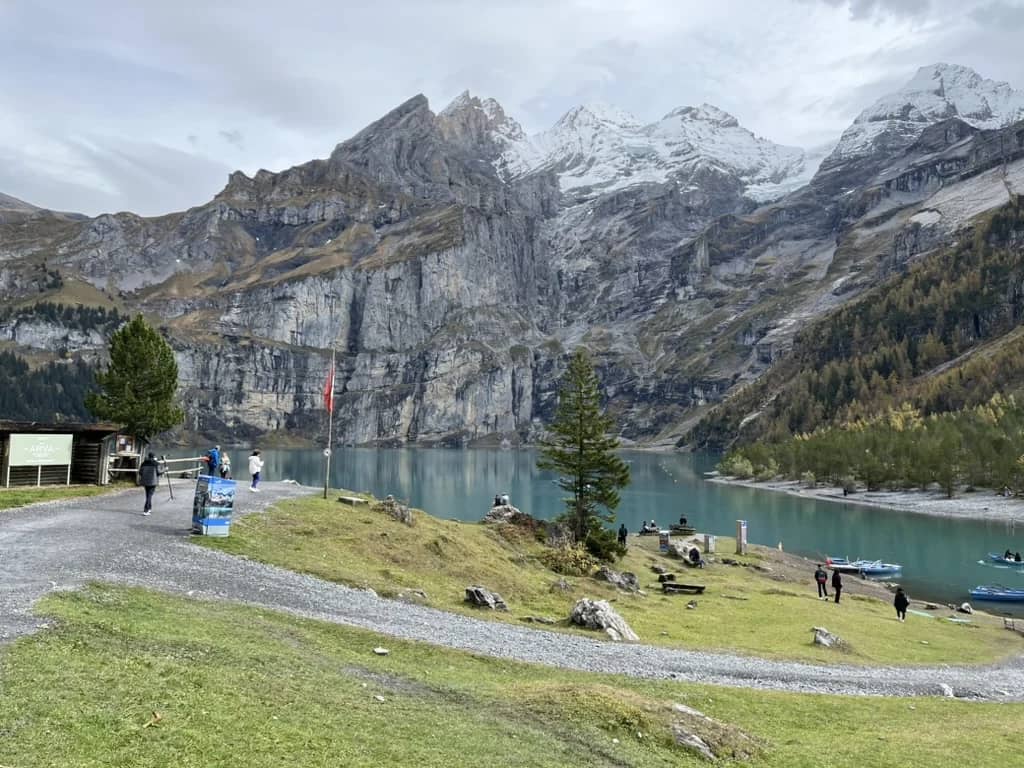
The Restaurant Oeschinensee, built in traditional chalet style and sitting directly at the lakeside, has been feeding visitors since the 19th century. The menu is alpine Swiss: rösti, cheese fondue, bratwurst, soup. The terrace faces the lake and the cliffs directly, which means most visitors spend as long looking up as eating. Service is efficient during peak hours and more relaxed in shoulder season. The restaurant is not the only food option: the self-service Bergstübli at the top station is open too, and in summer the Café-Bar on the shore, the Chalet Arva, the Sennhütte and the Berghaus Underbärgli add to the choice.
Water from the tap here, and from all sources in Kandersteg, is mountain spring water. Drinkable, cold, and clean. Fill a bottle before you arrive and you will not need to buy water at the lake.
One detail worth knowing before you go up: at the gondola ticket desk in Kandersteg, you can pay with cards, Twint or cash, and the rowboat rental takes cash or cards. The operator does not say what the lakeside restaurants accept, so carry a few Swiss francs.
For a full day, budget for the gondola round trip (CHF 36-40, 2026 fares), lunch at the restaurant, and rowboat hire if you want one (CHF 40 per boat per hour, 2026 rate, checked on 8 October 2026).
Which Month Is Best for Oeschinensee?
The person who rents out the rowboats on the lake told me when to come if you want fewer people around you: early in the morning or late in the afternoon, on a weekday rather than a weekend, and in May, June or September.
Spring (May, early June): snowmelt is at its most dramatic, waterfalls pour off every crease in the cliffs, and the wildflowers on the path from the gondola are at their peak. The lake is at its most intensely turquoise in the weeks when glacial meltwater is heaviest. Early morning visits in late May can feel like having the lake to yourself. Temperatures are cool; bring a layer for the morning.
July and August: peak season. The lake is busiest between 10 a.m. and 3 p.m., when day-trippers from Interlaken and Bern arrive on the midday trains. Swimming conditions are at their best. The rowboats are in full operation. Families, couples, school groups, hikers, and photographers all share the same lakeside path. If you arrive before 9 a.m. or after 4 p.m., the crowds thin considerably.
September: one of the three quieter months the rowboat hirer named. The light softens. The larch trees on the surrounding slopes begin to turn yellow, and by late September the cliff walls are threaded with autumn color against the grey limestone. The air is sharper and the reflections on the water are cleaner. Visitor numbers drop compared to August. The restaurant closes earlier, so plan accordingly.
October: the gondola runs daily from 8:30 a.m. to 5 p.m. until 8 November 2026, then only on weekends from 14 to 29 November, and some facilities close for the season. The lake is cold and the light is low and the cliffs are very quiet. For photographers and solitude-seekers, this is the month.
Winter: the gondola runs daily from 5 December 2026 to 7 March 2027, from 9 a.m. to 5 p.m. When the ice is thick enough and there is enough snow, the operator clears a trail on the frozen lake, the Ice Walk, and ice fishing usually starts on 1 January.
Can You Swim in Oeschinensee?
Yes. Swimming is permitted and actively encouraged. There is no lifeguard, which is standard for Swiss mountain lakes. The depth drops quickly near the middle of the lake, so weak swimmers should stay near the shallower north shore. The water is safe and clean to swim in. The temperature shock is real and worth preparing yourself for: take a breath before you go in, walk in slowly rather than jumping, and give your body 30 seconds to adjust. After that, the cold becomes almost pleasurable, a full-body awareness that makes you feel more present than almost anything else in the Alps.
The swimming dock near the restaurant provides the easiest entry point. The grass below the gondola station has space for towels and bags. Neither area has changing facilities, so come prepared.
If glacial water is too cold for you, the lakes down in the valley are warmer in August: our guide to swimming spots around Interlaken covers Thun, Brienz and three small lakes most visitors never find.
After swimming, sit in the sun on the grass and look at the cliffs. You will hear waterfalls you cannot see. You will smell wet pine and sun-warmed stone. The cold will leave your body slowly and the day will feel larger than it did before.
If that feeling makes you want more than a swim, we have listed the outdoor adventures around Interlaken we would actually do ourselves, from canyoning to paragliding, with what each one costs.
> Pierre's Insider Tip
> The best time to arrive at Oeschinensee is the first gondola of the morning, which leaves at 8:30 a.m. every day of the summer and autumn timetable (until 8 November 2026 and again from 24 April 2027, timetable checked on 8 October 2026). By 9:15 you are at the lake before the day-trippers arrive, the light is still low and angled across the water, and the reflections of the cliffs are perfectly mirrored in the surface. Bring coffee in a thermos. Sit on the dock. Give yourself 30 minutes before you do anything else. The experience at that hour is something that the midday crowd never gets to see. If you cannot make the first gondola, aim to arrive after 4:30 p.m. when the main wave has gone back down and the light starts turning the cliffs orange. Either way, avoid 11 a.m. to 3 p.m. in July and August.
Plan Your Day Around Oeschinensee
Oeschinensee is a full day on its own if you want it to be. The gondola, the perimeter walk, a swim, lunch on the terrace, a rowboat in the afternoon: you can fill seven or eight hours without repeating yourself.
The number one mistake visitors make with Oeschinensee:
"Not pairing it with Blausee."
Pierre Vetsch, guide and founder, interviewed on 8 October 2026
If you have more days in the region, our honest guide to Interlaken sorts the trips that are worth the train fare from the ones that are not.
The first objection I hear about a private day up here: "We can get there by train." You can, and everything above works on your own. Count the time before you decide. On the timetable for 15 October 2026 (checked on 14 October 2026), the train from Interlaken West reaches Kandersteg in 66 to 67 minutes, with a change in Spiez, and with the local bus you reach the gondola valley station 78 to 79 minutes after you left. Add the six-minute ride and at least 20 minutes on foot to the shore: about 1 hour 45 minutes each way, three and a half hours of your day in transit, plus a gondola time slot to book until 8 November 2026.
On a private day, it is just your group, and the guide who designs the day with you is the one who takes you up.
Plan my Oeschinensee day with Pierre
FAQ: Oeschinensee, Switzerland
How do I get to Oeschinensee from Interlaken?
Take the train from Interlaken Ost or Interlaken West toward Spiez, then change for Kandersteg. The train takes about 66 to 71 minutes, including the change (timetable checked on 8 October 2026). From Kandersteg station, walk 10 minutes to the gondola station. The gondola takes 6 minutes to the lake. Total journey from Interlaken to the top station: around 1 hour 30 minutes. The Swiss Travel Pass covers the train; the gondola gives 50% off to Swiss Travel Pass holders.
Can I pay by card at Oeschinensee?
At the gondola ticket machines and counter in Kandersteg, yes: all major credit and debit cards and Twint, plus cash (REKA cheques at the counter only). The rowboat rental takes cash or cards. The operator does not say what the lakeside restaurants accept, so carry a few Swiss francs. Besides the restaurant on the shore, you can eat at the self-service Bergstübli at the top station and, in summer, at the Café-Bar, the Chalet Arva, the Sennhütte and the Berghaus Underbärgli (cash only).
Can you swim in Oeschinensee?
Yes. Swimming is allowed and popular throughout the summer months. The water is cold: up to 20 degrees Celsius in summer, according to the operator. There is a swimming area near the restaurant with a wooden dock. No lifeguard is present. The water is clean and safe.
How cold is Oeschinensee?
In summer the water reaches up to 20 °C, according to the operator. In winter the lake freezes, and when the ice is thick enough and snow covers it, the operator clears an Ice Walk trail, open from 9 a.m. to 4 p.m.
Why is Oeschinensee so blue?
The color comes from glacial flour: ultra-fine rock particles ground from the surrounding limestone by snowmelt and glacial ice, suspended throughout the water column. These particles scatter blue and green wavelengths of light while absorbing red and orange ones. The result is the turquoise color you see from the shore or the gondola, most intense in late June and early July when meltwater is at its peak.
Is Oeschinensee a UNESCO World Heritage site?
Oeschinensee is located within the Swiss Alps Jungfrau-Aletsch UNESCO World Heritage area, designated in 2001 and extended in 2007. The area is recognized for its exceptional glacial landscapes, biodiversity, and scientific significance as a record of alpine geological processes.
What is the hike around Oeschinensee like?
The perimeter walk around the lake takes about 1.5 hours at a relaxed pace on a well-marked, mostly flat trail. The north shore is open and panoramic; the south shore is closer to the water and quieter. For a harder challenge, the trail to the Blüemlisalp Hut at 2,840 metres starts at the east end of the lake and takes 2.5 to 3 hours with significant elevation gain.
When is the best time to visit Oeschinensee?
Early morning in late June through September, or late afternoon. The lake is busiest between 10 a.m. and 3 p.m. in July and August. The rowboat hirer at the lake told me weekdays are quieter than weekends, and that May, June and September draw fewer people; in September the larches also begin to turn. The first gondola of the day (around 8:30 a.m.) is the best way to see the lake before the crowds arrive.
Oeschinensee is one of the days we recommend most in summer; the rest of our summer plans locals choose around Interlaken fill the other days of the week.
Do I need to book the gondola in advance?
Yes, during the summer season: until 8 November 2026, the ascent requires a reserved time slot on top of a valid ticket, and slots fill quickly, especially on weekends. On busy days, the operator says you have the best chance of finding a free slot before 9 a.m. or after 1 p.m. Book at oeschinensee.skiperformance.com before you leave for Kandersteg. Outside peak season, walk-up tickets are usually available, but an online booking is still recommended to avoid queues.
How we made this: facts and prices checked at the official sources on 8 October 2026, written with AI assistance.
*Written by Pierre Vetsch, founder and head guide at Swiss Local Adventures
Source:
On-site guiding experience, plus official information from Oeschinensee Bergbahnen (oeschinensee.ch) and Kandersteg Tourismus (kandersteg.ch).
Tags
#oeschinensee#kandersteg#swiss-alps#bernese-oberland#mountain-lake#switzerland-hiking#unesco#jungfrau-region#swimming-switzerland#most-beautiful-lake
Sources & References
- •site officiel Kandersteg
- •UNESCO Jungfrau-Aletsch
- •Photo: Jean-Paul Wettstein on Pexels
- •Oeschinensee Cable Car, Timetable & Fares
- •timetable.search.ch, Interlaken West to Kandersteg (Talst. Oeschinen), 15.10.2026, checked 14.10.2026
- •timetable.search.ch, Interlaken West to Kandersteg, 15.10.2026, checked 14.10.2026
- •Oeschinensee, hiking: trail A valley station to lake approx. 90 min, 450 m, challenging, hiking boots; Direttissima 20 min (checked 14.10.2026)
- •Oeschinensee FAQ: hike about 90 min, top station walk about 30 min, bus June to October, time slots (checked 14.10.2026)
- •Oeschinensee, home: time slots required until 8 November 2026 (checked 14.10.2026)
- •SLA, custom private tours (page cible du CTA, ouverte le 14.10.2026 ; « The guide who takes you out is the same person who helped design the day »)
Share this article
Similar Articles
Continue your reading with these related articles
Places & Day Trips
10/18/2026
12 min
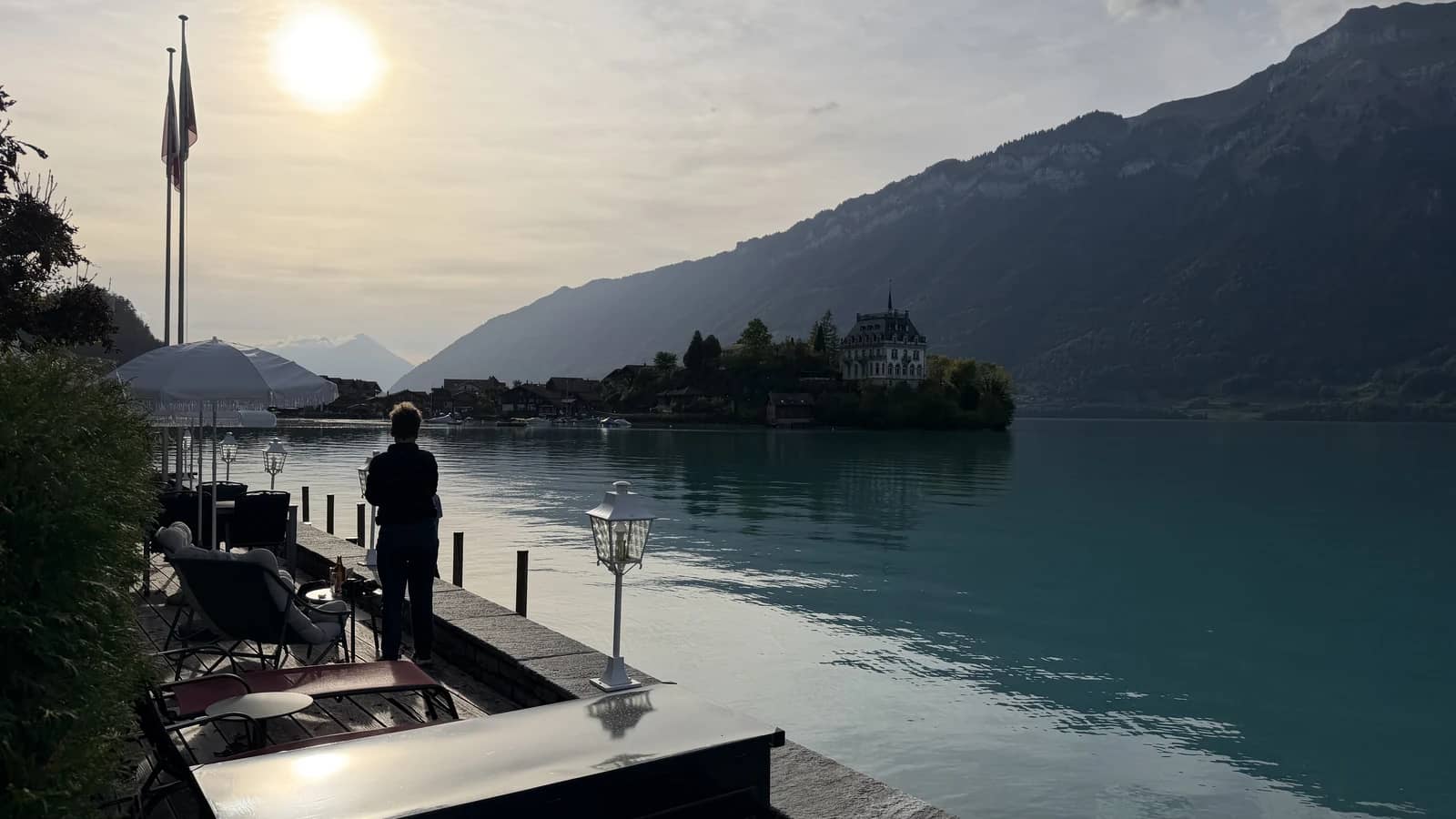
Where to Watch the Sunset in Interlaken, by Season
Where to watch the sunset in Interlaken: the town loses the sun at 15:48 in December, so take the Höhematte in winter and Harder Kulm in summer.
interlaken-sunsetsunset-spotsalpenglow-jungfrau
By Pierre VetschRead More
Places & Day Trips
9/26/2026
10 min
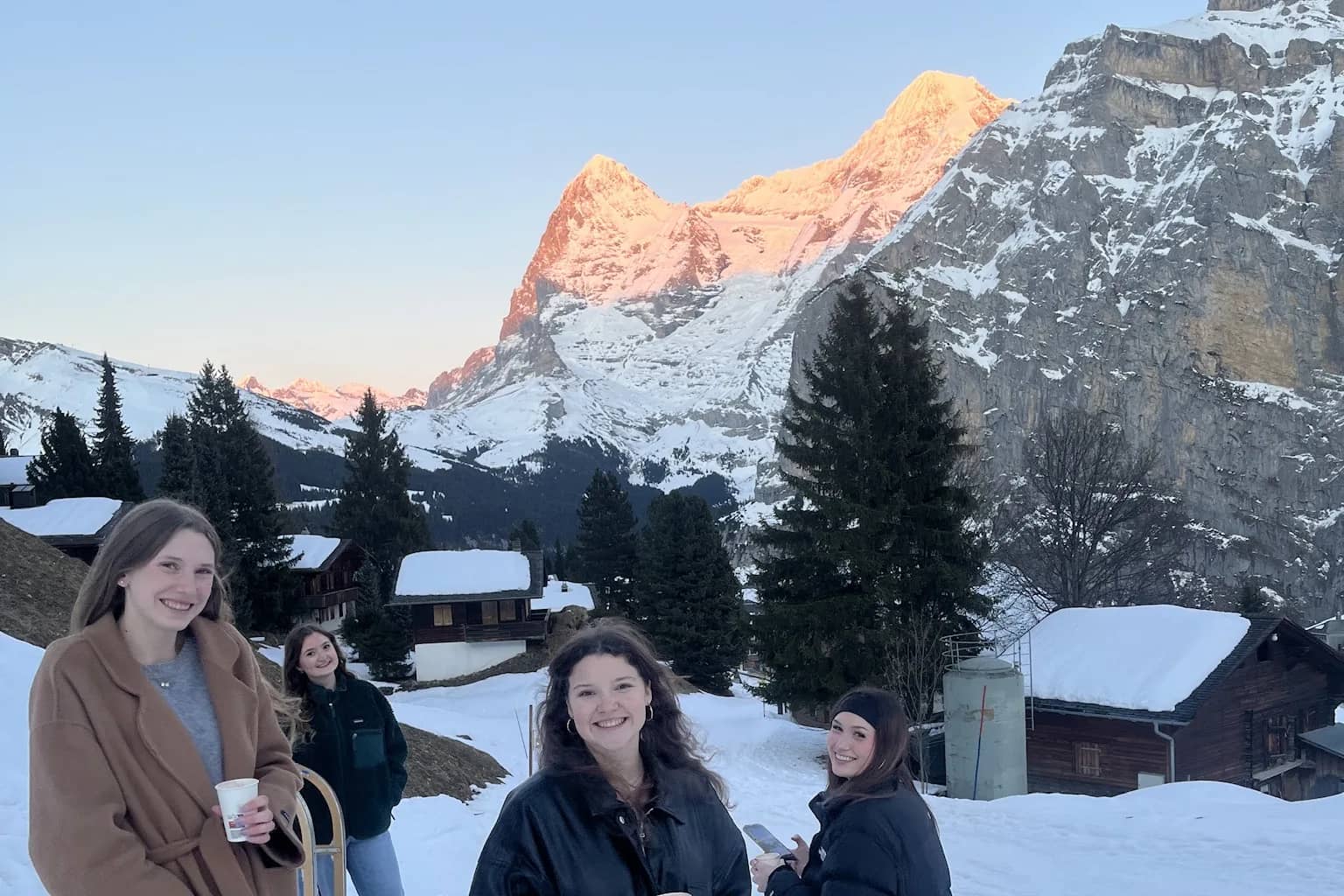
Wengen or Mürren? Wengen in Summer, Mürren in Winter
Wengen is 13 minutes closer to Interlaken and quieter at night. A local guide on where to stay, and why winter flips the answer to Mürren.
where-to-stay-jungfraulauterbrunnen-valleycar-free-villages-switzerland
By Pierre VetschRead More
Places & Day Trips
9/25/2026
12 min
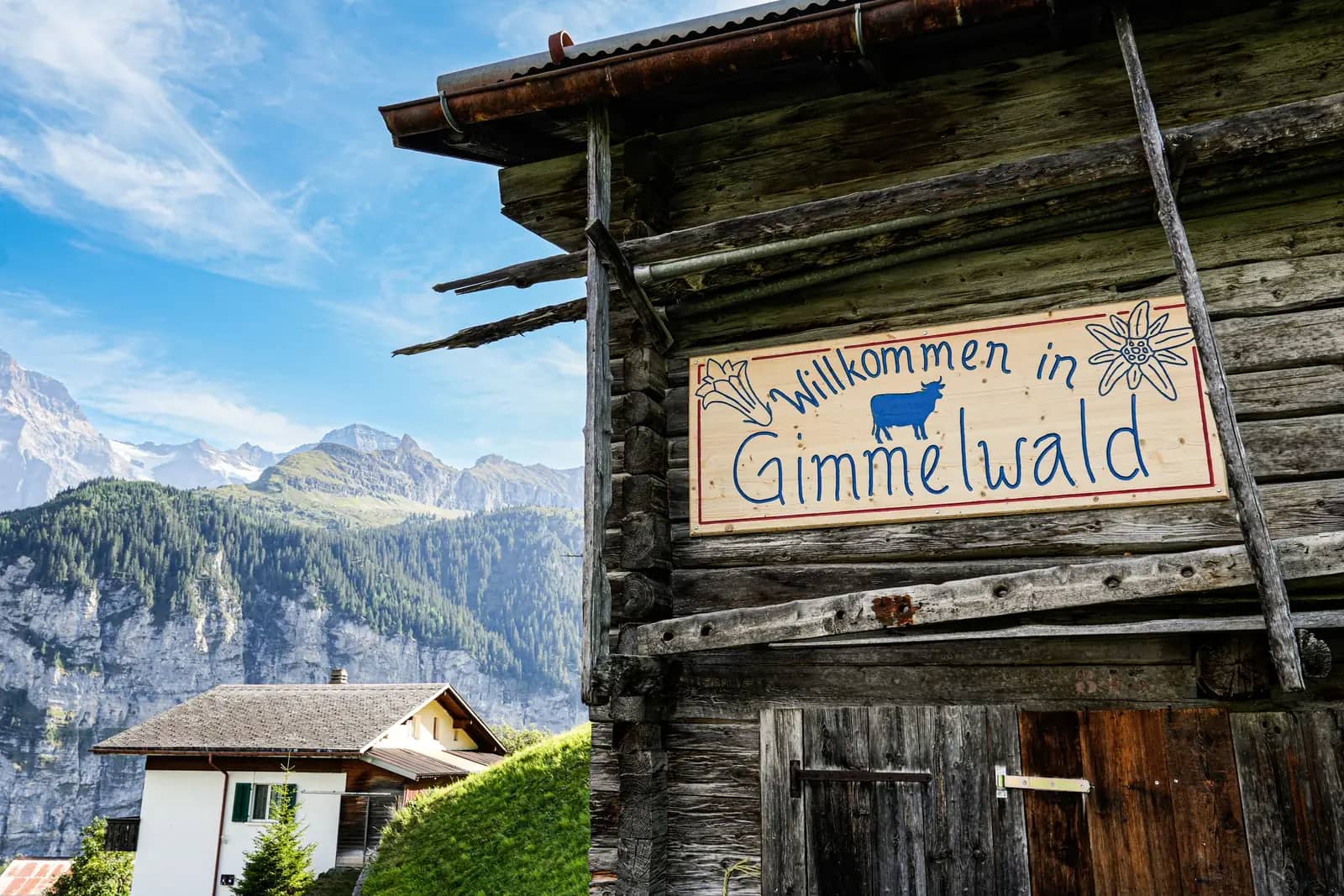
Is Gimmelwald Worth Visiting? Yes, for an Hour
Since December 2024 the fast cable car to Mürren skips Gimmelwald. A local guide on why you should still stop for an hour, and sleep in Mürren.
lauterbrunnen-valleycar-free-villages-switzerlandmurren-day-trip
By Pierre VetschRead More