Interlaken
Höhematte Interlaken: Why It Stayed a Meadow
O
Olivia Lufman
Author
May 16, 2026
4 min
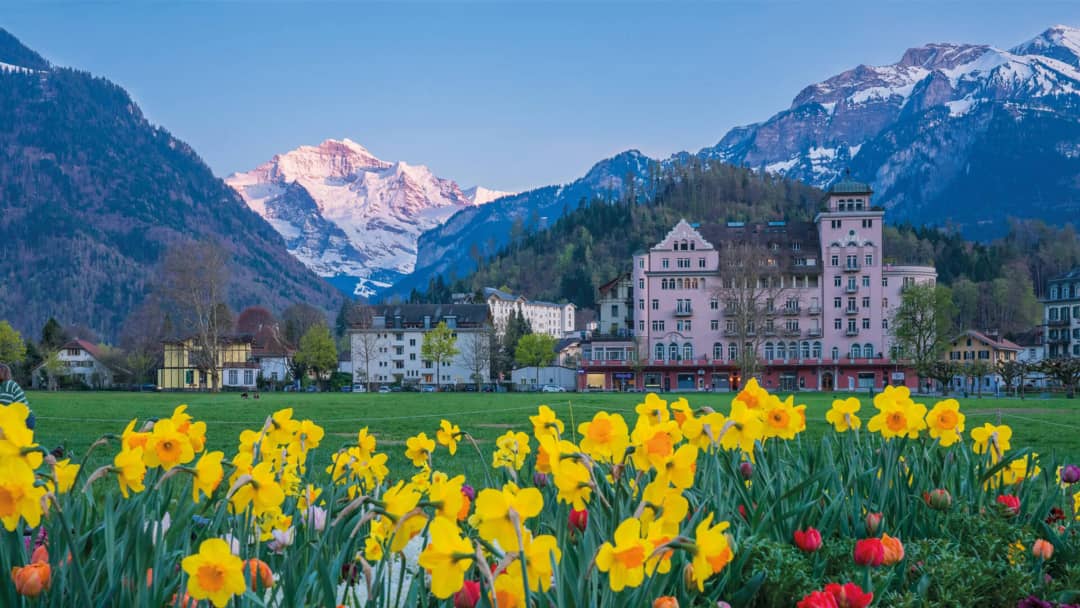
In 1864, Interlaken's Hoteliers Bought This Meadow So You Could Land a Paraglider Here Today
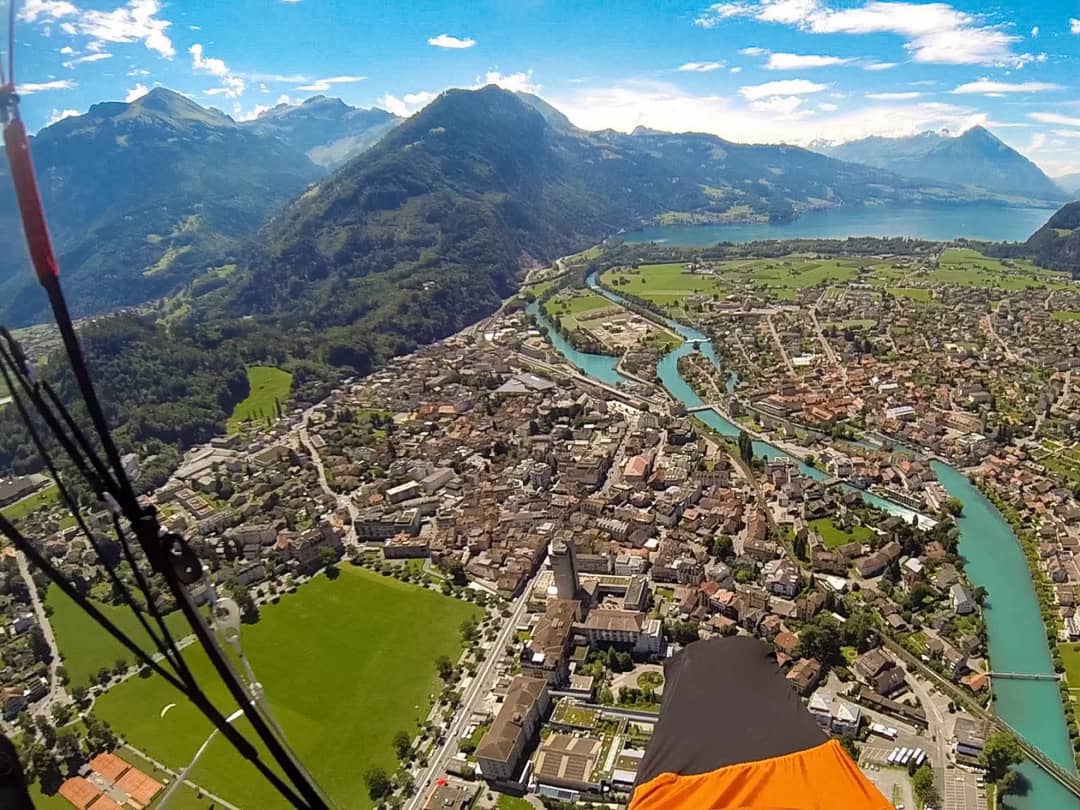
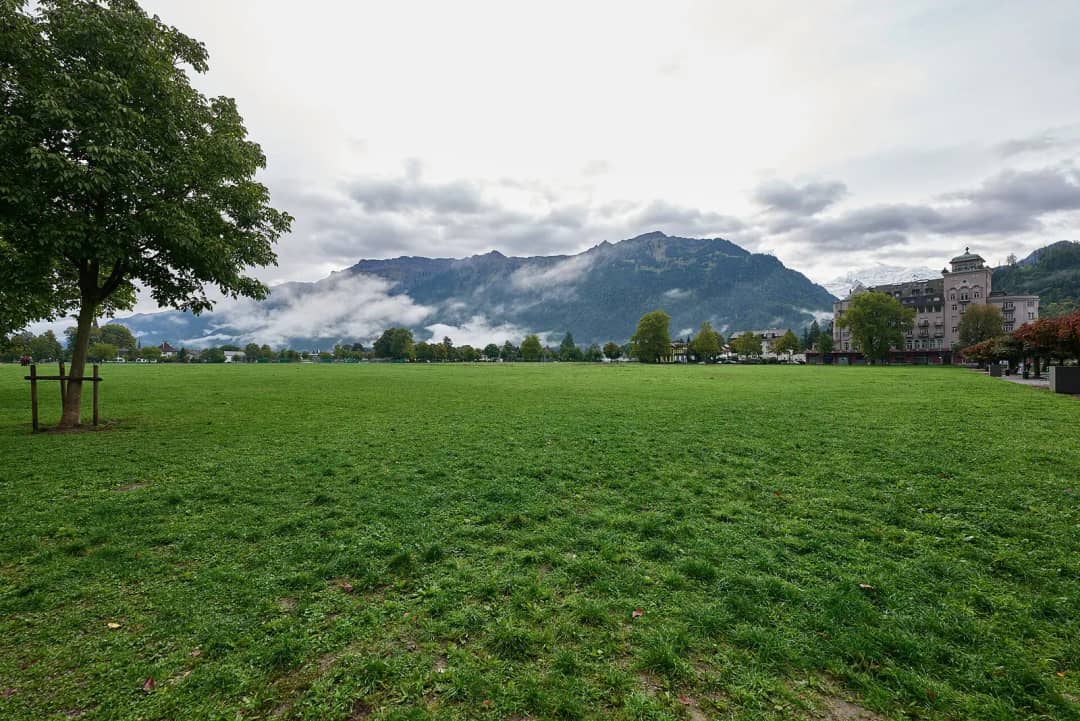
There is a 14-hectare meadow in the dead centre of Interlaken. Almost nothing is built on it. It has no fences. It has no parking. Every other Swiss town built up its core with hotels, banks and boutiques. Interlaken kept this open green field at the heart of town.
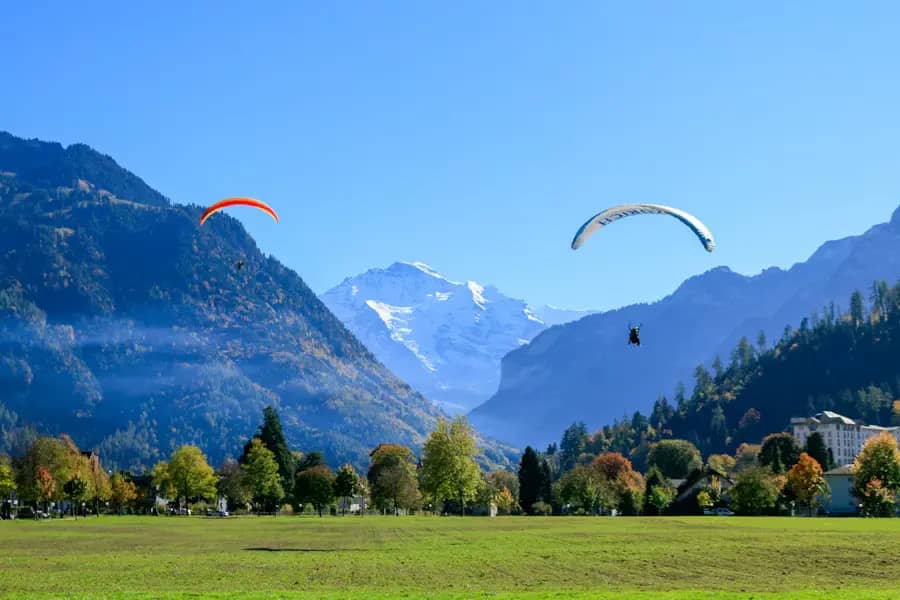
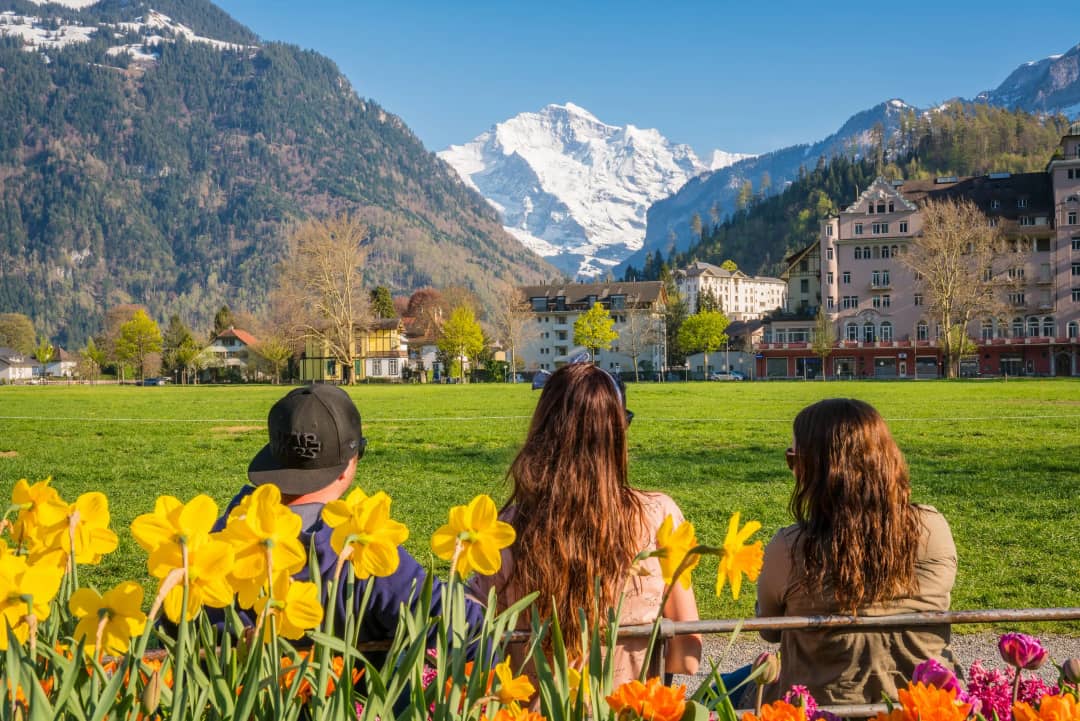
If you have visited Interlaken, you have stood on it. It is called the Höhematte, Matte being the Swiss German word for meadow, and few meadows in the Alps are better known. Paragliders land on it. Tourists eat ice cream on it. Children chase footballs on it. The Eiger, the Mönch and the Jungfrau rise behind it like a backdrop painted by someone with too much budget.
But almost nobody who walks across the Höhematte knows the story of how it survived.
This is the story of the hoteliers who bought it in 1864, the 37 co-owners who shared it, and the rules that still keep it open.
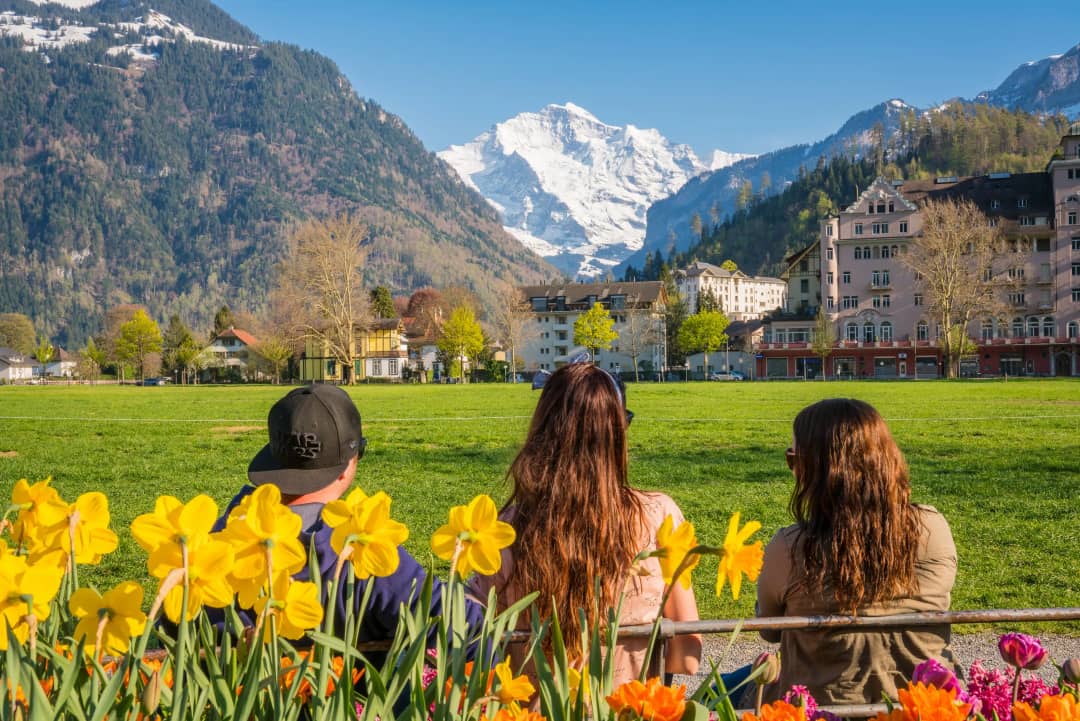
The Geography That Made the Meadow
Interlaken sits on a flat alluvial plain between Lake Thun and Lake Brienz. The plain was deposited over thousands of years by the Aare river and its tributaries, leaving behind a strip of fertile flat ground in a valley otherwise dominated by mountain walls. By the Middle Ages, this flat strip was already being farmed.
In the 12th century, the Augustinian monks of the Kloster Interlaken (the monastery from which the town takes its name, between the lakes) controlled the land. The Höhematte was used for grazing and hay. The mountains south of the meadow were too steep for agriculture, and the marshy edges of the lakes were unusable. The Höhematte itself was the central productive field of the entire valley.
After the Reformation in the 16th century, the monastery was secularised and its land passed to the Bernese state. By 1864 the Höhematte was state land, a Staatsdomäne of the canton of Bern, and had once served as a court and assembly ground.
Then came the tourists.
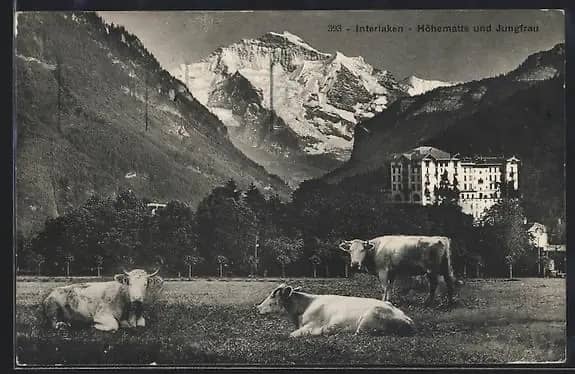
The Threat: 19th-Century Tourism
By the early 1800s, Interlaken was becoming famous in Europe. Lord Byron visited in 1816 and wrote about the views in Manfred. The first English aristocrats arrived in the 1820s, taking the long carriage ride from Bern to spend summers contemplating the Jungfrau. Hotels began opening along what is now the Höheweg, the elegant boulevard that flanks the north edge of the Höhematte.
Hotels and guesthouses kept opening along the Höheweg, and every one of them sold the same thing: the view across the meadow to the Jungfrau. State land could be sold, and a buyer could turn it into a development zone. The hoteliers knew that better than anyone.
By the standards of European urban planning at the time, a free meadow in the middle of a booming resort was an obvious place to build.
So the hoteliers made a move of their own.
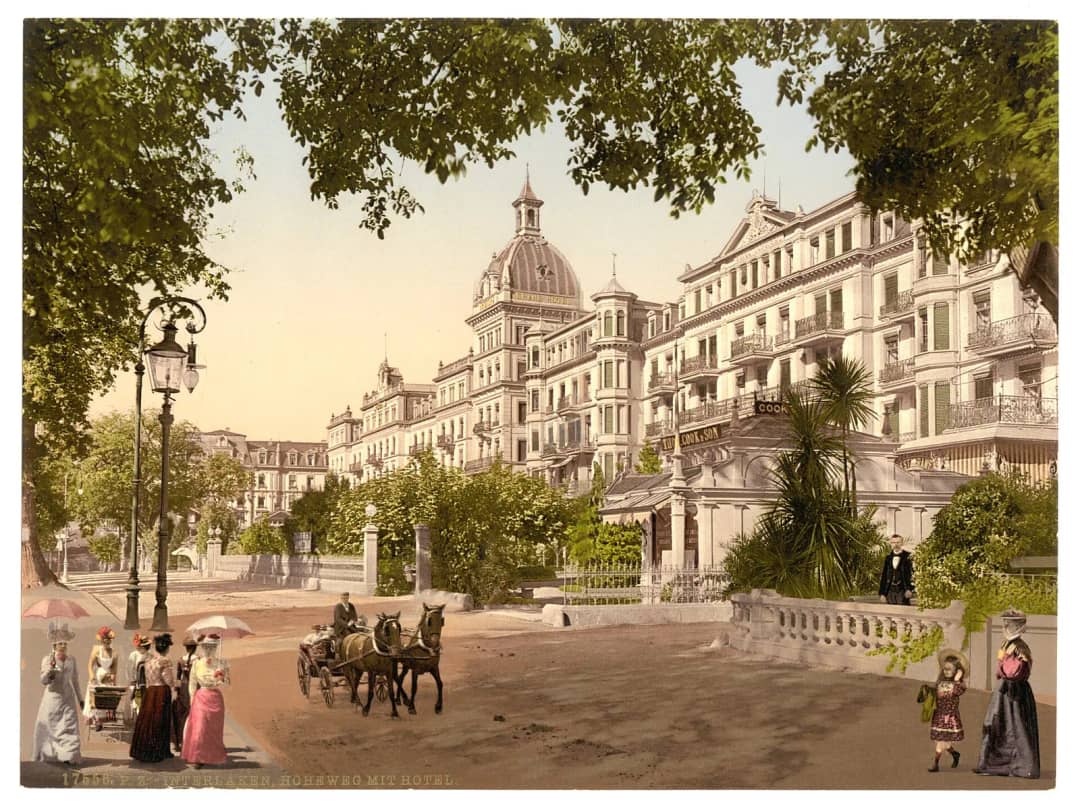
The Purchase: 1864
On 25 January 1864, the Grand Council of the canton of Bern approved the sale of the Höhematte to a private group of Interlaken personalities. Almost all the big hoteliers of the town were among the applicants, led by Peter Ober, who had run the Hotel Victoria since 1839. They raised 150,000 francs, a proud sum at the time, and the ownership was split among 37 co-owners.
Their proposal to the canton came with three rules:
No building, no splitting into parcels and no felling of trees on the Höhematte.
The clever part was who could enforce them. The owners of every property in a wide circle around the meadow received a servitude on their own land that entitled them to watch over the rules, and so did the municipality of Interlaken and the canton of Bern. Any of them could object the moment one of the three rules was broken.
The ban on splitting did the quiet work. Because the meadow could not be cut into parcels, none of the co-owners has since managed to claim a piece of it for himself.
Fun fact: Since 1864, the Höhematte in the centre of Interlaken has been protected from development.
The hoteliers of 1864 were not romantics. They sold rooms with a view of the Jungfrau, and they understood that a permanently open meadow would be worth more to their hotels and to the whole town in 100 years than any short-term real estate gain.
They were right.
160 Years Later
The Höhematte is still grass. The Jungfrau still rises above it. In 2014, when the meadow turned 150, the Jungfrau Zeitung counted ten co-owners left of the original 37.
The rules were not always respected, and that is part of the story too. In 1892 and 1893, two hoteliers from the 1864 committee, Eduard Ruchti among them, built tennis courts and a changing hut on the meadow. Nobody objected, two more courts followed in 1920 and 1921, and in 1930 the canton asked for them to go by 1935 at the latest. In 2014 they were still there. The big test came in September 1989, when Interlaken voted on an underground car park at the Höhematte and said no, 1,248 votes to 320.
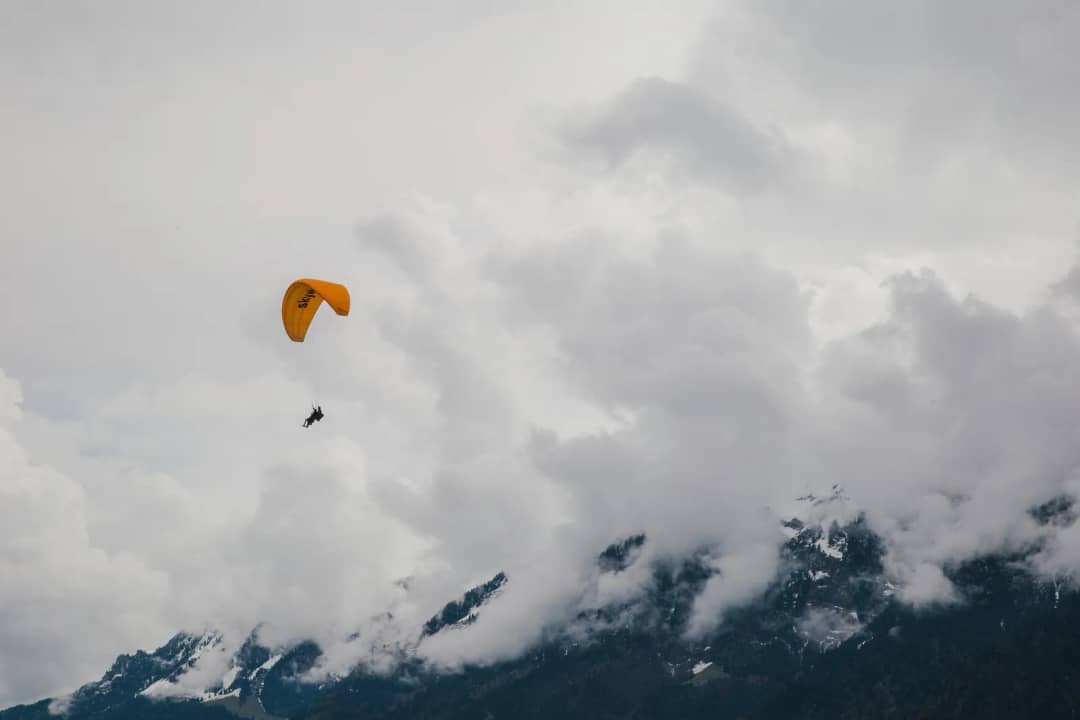
Today the meadow absorbs everything the town throws at it. Tandem paragliders touch down here all season, canopies spiralling in one after another. Temporary events are set up and cleared away again. Children play football on it. Students lie on it between classes. Paragliding pilots stretch out on it between flights. The 1864 building ban still holds through all of it.
Insider tip: To watch paragliders land, stand near the eastern edge of the meadow, roughly halfway between the Höheweg promenade and the centre of the grass, and give landing pilots a few metres of space.
What the meadow looks like in December
For several winters, the Höhematte turned into Ice Magic, a skating rink set up on the grass and taken down again. Ice Magic has since been discontinued because it did not pay, and in winter 2023 Interlaken Tourism planned a maze of 2,000 discarded fir trees on the meadow instead. For winter 2026 to 2027, the new Top of Europe Magic Park, with a rink of about 1,000 square metres, runs from 18 December to 28 February in the Kursaalgarten, not on the Höhematte. If you're visiting in October and wondering whether the trip is still worth it later in the year, the answer is yes. The mood is different, the Alps are still there, and the history under the snow hasn't gone anywhere.
Why Does the Höhematte Story Matter to Visitors?
When you stand on the Höhematte today and watch a paraglider spiral down toward the grass, you are witnessing a 160-year-old promise being kept.
That is not a small thing.
Most landscapes you visit as a tourist are accidents of geography. The Höhematte is an act of will. It exists in its current form because a group of hoteliers led by Peter Ober put 150,000 francs on the table and then tied their own hands with rules that anyone around the meadow could enforce. The grass itself never stopped being farmland: in 2014, apart from the tennis courts, it was still used for agriculture. If you want to see what that relationship between land and livestock actually looks like today, Swiss Local Adventures runs a Farm Tour into the Justistal valley, where working alpine farms are still very much the point.
Without them, the Höhematte could well be hotels today. Paragliding in Interlaken would not look the way it does, because there would be no central landing zone. The view that brings visitors to Interlaken would be partially blocked by the buildings that those tourists would have stayed in.
Olivia says: "Most landscapes you visit as a tourist are accidents of geography. The Höhematte is an act of will."
Olivia Lufman, your travel writer at Swiss Local Adventures
Visitors keep using the same words for it: the green lung of the town, Interlaken's central park, a spot you can never get tired of. One review described "the largest greens ever seen in the middle of a town," which sounds like hyperbole until you're standing there with the Jungfrau directly ahead and breathtaking alpine views in every direction, and you realise the scale is simply true.
This is the kind of detail that makes Switzerland Switzerland. Long horizons. Stubborn agreements. Rules written by hoteliers in 1864 that still bind the meadow in 2026.
How Do I Visit the Höhematte Today?
The Höhematte is open to the public year-round. You can walk across it freely. There is no entrance fee, no opening hours, no closing time.
Most visitors walk across it without knowing they are standing on 160 years of kept promises. That is the hidden history Interlaken never put on a sign.
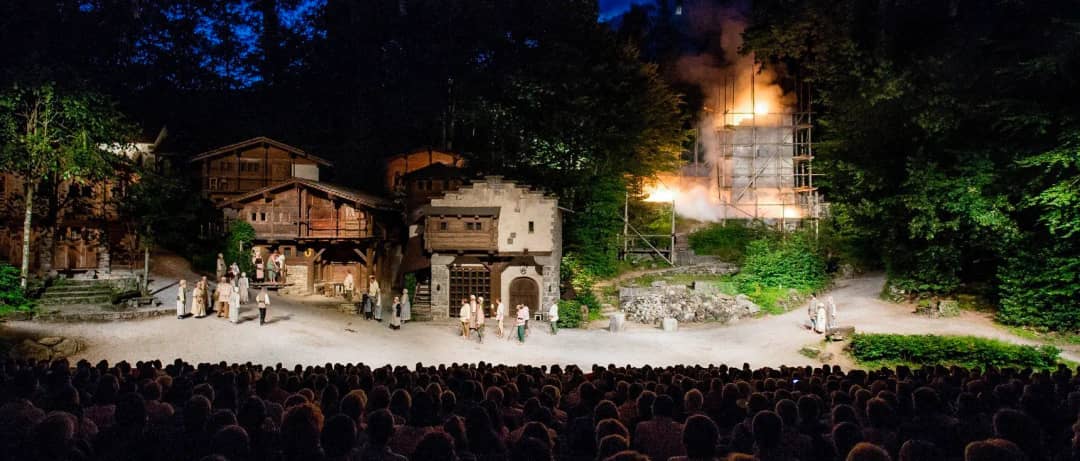
Timing matters more than people expect. The light at sunset hits the Jungfrau between 8 and 9 p.m. in July and the meadow turns gold, bring a blanket and a bottle of wine. At dawn on a still morning the meadow is empty, the mountains are pink, and you can have the entire centre of Interlaken to yourself. If you want to watch paragliders, the window between 10 a.m. and early afternoon is when traffic builds and descents come in quick succession. The Tellspiele, the William Tell open-air play, run from late July to early September on their own stage in the Rugen woods, not on the meadow (24 July to 4 September in 2027): check the schedule before you go, the open-air setting alone is worth it.
Where to stand when the paragliders come in
Position yourself near the eastern edge of the meadow, roughly halfway between the Höheweg promenade and the centre of the grass. From there you get a clear sightline to the main landing strip without standing in it. On a busy afternoon, watching 10 or 15 paragliders descend in the space of an hour is what one visitor described as "nonstop entertainment," and she wasn't exaggerating. The canopies spiral down in loose sequence, ground crew calling out positions, and if you're not paying attention you might find yourself dodging a landing pilot mid-coffee. The ground crew are generally happy to suggest where to stand for the best photos. Give landing pilots a few metres of space, and the rest is free.
💡 Insider Tip from Pierre: If you walk across the Höhematte at 7 a.m. on a clear summer morning, before the first paragliders launch and before the cafés open on the Höheweg, you have one of the most peaceful 14-hectare green spaces in the Alps to yourself. Bring a coffee from the train station kiosk. Sit on the bench at the western edge facing the Jungfrau. That is what Lord Byron would have done in 1816, and it has not changed.
FAQ - The Höhematte Story
What is the Höhematte in Interlaken?
The Höhematte is a 14-hectare meadow in the centre of Interlaken, protected from development since 1864, when a group led by the town's hoteliers bought it from the canton of Bern and tied it to a building ban. It is the main paragliding landing zone in the region and a public green space.
Why is the Höhematte protected?
In 1864, almost all of Interlaken's big hoteliers, led by Peter Ober, bought the meadow from the canton of Bern for 150,000 francs. Their proposal came with three bans: no building, no splitting into parcels, no felling of trees. Neighbouring owners, the municipality and the canton all received the right to enforce them. The aim was to keep the view of the Jungfrau open.
Can you walk on the Höhematte?
Yes. It is fully open to the public year-round. No entrance fee, no opening hours.
Where do paragliders land in Interlaken?
On the Höhematte, the central meadow of Interlaken. It is one of the most famous tandem paragliding landing zones in Europe.
What does Höhematte mean?
Matte is the Swiss German word for meadow, and Höhe means height. I have not found a reliable source that explains how the meadow got its name.
Who owns the Höhematte today?
Private co-owners. The meadow was split among 37 co-owners in 1864, and the Jungfrau Zeitung counted ten left in 2014. I have not found a published list of today's owners.
Is the Höhematte the same as Interlaken's central park?
Most people call it that, and the comparison isn't wrong, exactly. The meadow sits in the heart of town, it's open to everyone, and it functions like a park in every practical sense. But it isn't one. The Höhematte is private property, shared by a handful of co-owners, not by the municipality of Interlaken. But since 1864 the municipality, the canton and the neighbouring owners have all held the right to object if its rules are broken. That's the detail that turns a nice green space into something more interesting: the town does not own its best-known open space, and it guards it anyway.
Are dogs allowed on the Höhematte?
The meadow is accessible around the clock with no restrictions posted at the entrance, and dogs generally come and go freely. That said, the paraglider landing area creates an unpredictable environment. Canopies come in fast and low, lines trail across the grass, and ground crew move quickly. Some dogs take it in stride; others find the sudden noise and activity harder to manage. If your dog is easily startled, the eastern edge of the meadow away from the main landing strip is calmer. Keep a short lead near active landing areas and you'll be fine.
What events take place on the Höhematte?
Paragliders land here all season, and temporary events are set up and cleared away again. Ice Magic, the winter skating rink that used to fill the meadow, has been discontinued; for winter 2026 to 2027 the new Magic Park runs in the Kursaalgarten instead. The rule since 1864 has been no building, and apart from the tennis courts put up in 1892, it has held: the grass stays, everything else packs up and leaves.
How far is the Höhematte from Interlaken Ost station?
Roughly 12 minutes on foot, walking west along the Höheweg. That boulevard is Interlaken's main promenade and one of the better short walks in the Bernese Oberland, with uninterrupted views of the Jungfrau group opening up as you go. The walk itself is worth taking slowly. Most people head straight for the meadow and miss it.
Visit the Meadow That History Saved
There are more spectacular views in the Bernese Oberland. But there is no meadow with a better story. Most people who hear it say the same thing: I had no idea this existed.
The Höhematte is not the most spectacular meadow you will ever see. There are higher alpine pastures with bigger views. There are wildflowers in Lauterbrunnen and panoramas at Schynige Platte that beat it on raw beauty.
What the Höhematte has that no other meadow in the Alps has is a story. A story about how a group of hoteliers made a decision in 1864 that is still shaping the town in 2026.
If you want to experience the meadow at its best, plan around either dawn or sunset, bring a layer for the cool evening air, and stay long enough to watch a paraglider land. That moment, when a stranger drops out of the sky onto a meadow protected by a contract older than most countries, is one of the most genuinely Swiss things you can witness as a visitor.
For the experience of landing on the Höhematte yourself, read our complete guide to , or check availability directly with the operators who land here every afternoon.
Some destinations are accidents. The Höhematte is a deliberate act of preservation, signed in ink in 1864, still holding in 2026.
Written by Olivia Lufman, your travel writer at Swiss Local Adventures
Source:
on-site visit to the Höhematte, Interlaken, 2026; Historisches Lexikon der Schweiz, articles Interlaken and Peter Ober; Jungfrau Zeitung, 23 January 2014; Hochparterre, 16 May 2014; Radio BeO, 22 August 2023 and 28 August 2026.
Tags
#local-story#swiss-alps#paragliding-interlaken#switzerland-travel#jungfrau-region#bernese-oberland#swiss-history#interlaken#hohematte-interlaken#interlaken-history#interlaken-meadow
Sources & References
- •Interlaken Tourism
- •MySwitzerland
- •Photo: Photochrom Print Collection, Library of Congress, on Wikimedia Commons
- •Photo: Leonhard Lenz on Wikimedia Commons
- •MySwitzerland, Photo Spot Höhematte Interlaken
- •Photo: Tran Mau Tri Tam, CC0, via Wikimedia Commons
- •Historisches Lexikon der Schweiz, Interlaken (Gemeinde)
- •Historisches Lexikon der Schweiz, Ober, Peter
- •Jungfrau Zeitung, Auf der ganzen Welt kein zweites Mal (23.01.2014)
- •Hochparterre, Jungfräulich (16.05.2014)
- •Interlaken Tourismus, Grand Tour photo spot Höhematte
- •Radio BeO, Magic Park löst ICE MAGIC ab (28.08.2026)
- •Radio BeO, Winter in Interlaken scheinbar wieder ohne Ice Magic (22.08.2023)
- •Interlaken Tourismus, William Tell Open-Air Theatre
Share this article
Similar Articles
Continue your reading with these related articles
Interlaken
9/14/2026
10 min
1
Hinterburgseeli Hike: Catch the 17:14 Bus Down
Hinterburgseeli hike from Axalp: 6 km, 400 m of climbing, 37 min by bus from Brienz. Snow months, swim rules and the last bus down.
hinterburgseeli-hikehiking-lake-brienzwoodcarving-trail
By Timoté BailyRead More
Interlaken
9/12/2026
12 min
9
Hang Gliding or Paragliding in Interlaken?
Compare hang gliding and paragliding in Interlaken: same hill, same 20 minutes, CHF 170 against CHF 260. Here is what the extra 90 francs actually buys.
tandem-hang-glidingtandem-paraglidingadventure-sports
By Timoté BailyRead More
Interlaken
9/11/2026
15 min
12
Bönigen Historic House Trail: Free, 4 Min Away
Walk Bönigen's free historic house trail, four minutes by bus from Interlaken Ost, past carved wooden houses standing since 1549. Times and map inside.
historic-house-trailday-trip-brienzinterlaken-day-trips
By Pierre VetschRead More