Places & Day Trips
Summer in Interlaken: 14 Things Locals Do
O
Olivia Lufman
Author
June 3, 2026
4 min
Summer in Interlaken: 14 Things Locals Do When the Tourists Are Not Looking
By 11 a.m. on a July morning, the Höheweg is already full. Tour buses unload in front of Casino Kursaal, families queue at the funicular for Harder Kulm, and ice cream shops along the main street start their second wave of the day. This is the Interlaken most travelers experience.
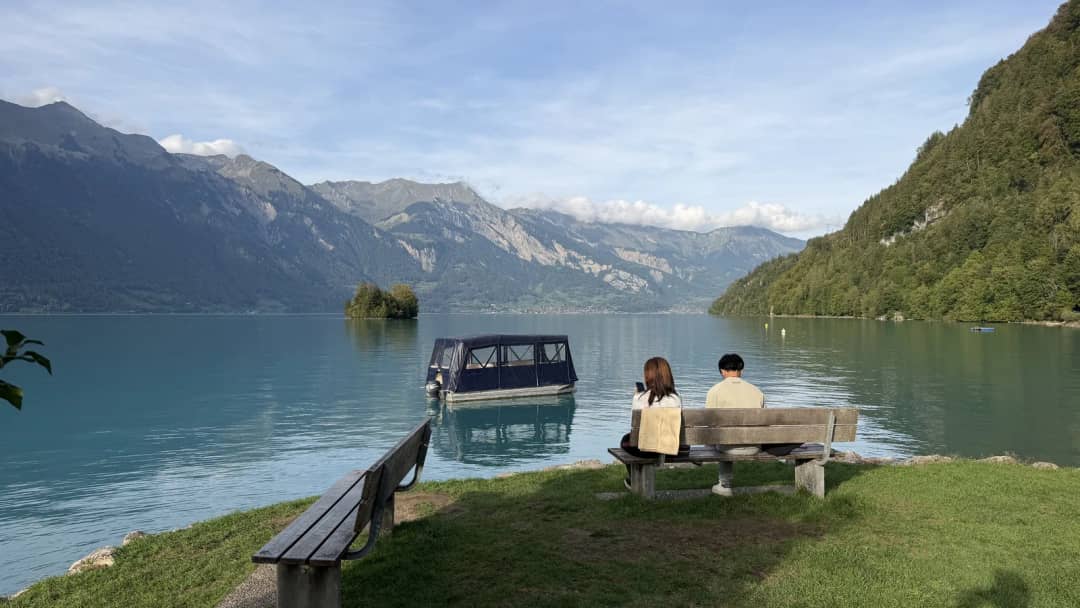
But at 6 a.m. on another morning, two kilometres away on the shore of Lake Brienz, I was alone on the water. The lake was still glass. Mist was rising off the surface. A heron lifted off without a sound. By 7:30 I had packed up and was sitting at a bakery in Bönigen with a coffee and a Schoggikipferl, watching the first tour boat of the day pass in the distance.
This is the other Interlaken, the one locals keep for themselves.
If you want a summer that feels less like a checklist and more like a place, here are 14 things locals actually do between June and September. Many of them cost little or nothing; the ones that cost a ticket say whether it is worth it. Asked what visitors who come for the adrenaline get wrong, Pierre Vetsch, who founded Swiss Local Adventures, answered in one line:
"They only do the paid stuff and never see the landscape."
Pierre Vetsch, guide and founder, interviewed on 8 October 2026
Why Summer in the Bernese Oberland Is Different
Interlaken in summer is a microclimate that surprises people. The town sits at 567 metres, low enough to feel warm during the day (often 25-28°C in July) but surrounded by 4000-metre peaks that drop the night air down to 12-15°C. You sleep with the window open, you walk in shorts at noon, you put on a wool layer at 9 p.m. on a lakeside terrace.
The two lakes (Thun on the west, Brienz on the east) act as natural thermostats. They warm slowly and cool slowly, which means lake swimming is comfortable from late June through early September.
This dual climate is what makes a single summer day in Interlaken so versatile, as long as you take it in the right order. Pierre's order: the mountain in the morning, while the weather is calm and stable, the lake in the afternoon, when the day is warmer, and the evening after that.
The paragliders you see over Interlaken all land on the same green rectangle in the middle of town, and it is not there by chance. The story of why the Höhematte stayed a meadow explains how 37 farmers blocked construction on it in 1864, which is the reason you still see the Jungfrau from the Höheweg today.
For the bigger picture, see our things to do in Interlaken local guide.
1. Sunrise Paddle on Lake Brienz
Get on the lake before the day starts. The water is still, the air is cold, the light is gold. Pierre has kayaked on Lake Brienz in summer himself: for him, the coolness of the water feels good. Asked for one moment on the water, though, he names the Burgseeli, the small lake at Ringgenberg:
"The summer morning, the flat water and the mist."
Pierre Vetsch, guide and founder, interviewed on 8 October 2026
2. Breakfast at an Alpine Farm
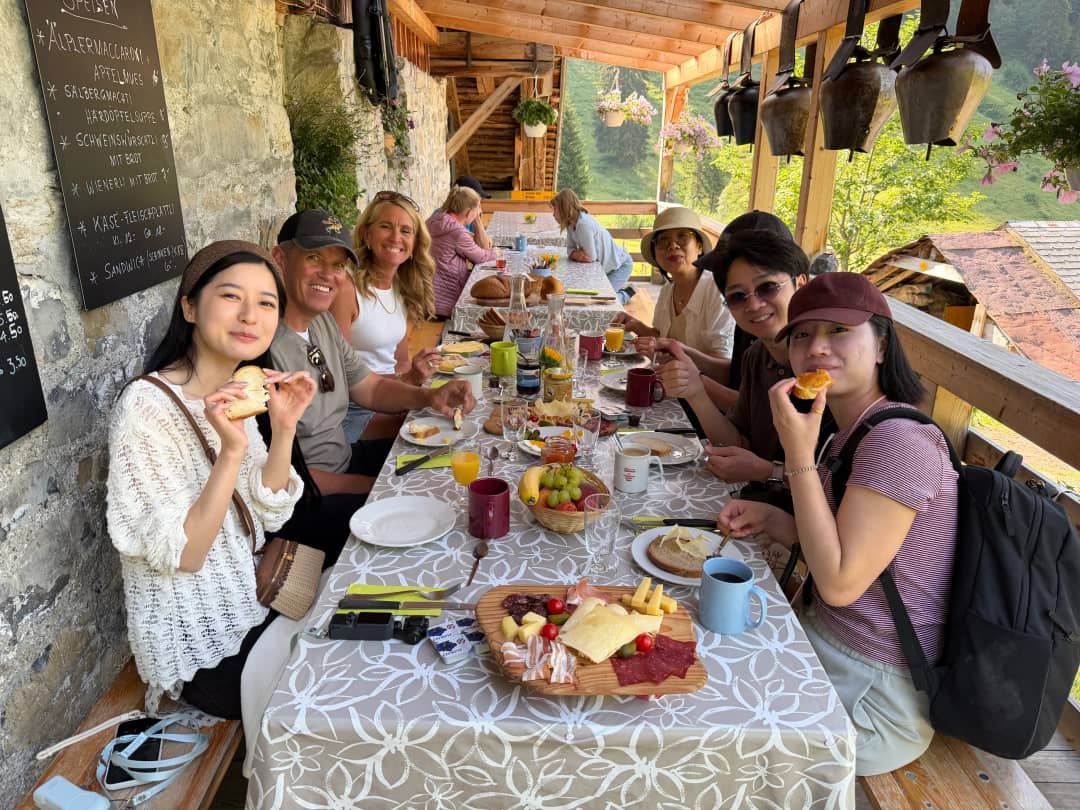
On Daniela's alp in the Justistal, above Lake Thun, breakfast is whatever her farm produced: butter she churned, eggs from her hens, her own cheeses from a few months to over a year old, cured bacon, dried sausage, bread, jam, fruit, juice, coffee and hot chocolate, with raw milk from the morning milking on request. The van gets there in 35 minutes over Beatenberg and parks at the farm, so there is no walking. Daniela sums up her days up here:
"Up at five, cheese every single day."
Daniela, farmer in the Justistal, summer 2026
After breakfast she makes her cheese and you watch, from the copper cauldron to the press. If you were hoping to make it yourself, here is Pierre's answer:
"It's her batch of the day, not a workshop: you're watching real work."
Pierre Vetsch, guide and founder, interviewed on 13 October 2026
Our farm tour with Swiss breakfast is built around this morning. It leaves Interlaken West at 8:00 on Tuesdays and Thursdays from May to mid-September and is back in Interlaken around noon, for CHF 149 per person (CHF 139 from six) and 8 guests at most.
3. Swim at the Hidden Spots
Where to swim, starting with Pierre's own spots:
Bönigen, on the Lake Brienz side. Pierre's own corner is at the far end of the village, on the road that goes to Iseltwald: pebbles and a gradual entry.
Burgseeli, the small lake at Ringgenberg, where Pierre swims often, every summer. Christine, a waitress at the Burgseeli, told him: "There are snakes around the lake!"
Faulensee on Lake Thun, a tiny tucked-away beach with a wooden jetty.
Spiez old harbor, where the water is clean and the castle watches you.
Iseltwald stone steps, opposite the famous Crash Landing on You jetty, where you can swim with a view. The village asks visitors to stay in public areas and keep off private property. I have watched visitors pay, take their photo in 90 seconds and leave; between the CHF 5 and the shore, I chose the shore. My last visit was in summer 2025.
Pierre's verdict on the jetty itself:
"The 5 CHF for the pier, we don't recommend it; better to take free photos everywhere else, in the village and from the other shores."
Pierre Vetsch, guide and founder, interviewed on 14 October 2026
4. Hike a Cogwheel Trail in Reverse
The cogwheel trains go up to Schynige Platte and the Brienzer Rothorn all summer. Tourists ride up and down. Locals ride up, walk down. The descent from Schynige Platte to Wilderswil costs only the upward train ticket. Pierre applies the same logic to the Giessbach funicular on Lake Brienz: up by funicular, down on foot.
On the Brienzer Rothorn, Timoté Baily, one of our guides, took the train up and walked all the way down to Brienz before August 2024. Today the path from Brienz to Planalp through the Milibach gorge is closed after storm damage, as the Brienz Rothorn Railway and the federal hiking closure register both said on 15 October 2026. The railway lists the walk from the summit down to Planalp at 2.5 hours. Pierre's version:
"Train to the top, on foot down to Planalp."
Pierre Vetsch, guide and founder, interviewed on 14 October 2026
Fun fact: The Brienz Rothorn steam railway opened on 16 June 1892. When the First World War broke out in 1914, the entire staff was dismissed. Trains only ran up to Rothorn Kulm again in June 1931.

5. Wine Tasting Above Lake Thun
The Spiez vineyards share the slope with Spiez Castle, above Lake Thun. Asked what visitors get wrong here, Pierre answered:
"They don't even know there's wine here."
Pierre Vetsch, guide and founder, interviewed on 9 October 2026
His own moment there is late afternoon in summer, with low light skimming over Lake Thun, and a tasting at that hour is one of the most underrated summer afternoons in the Bernese Oberland. Our wine tour above Lake Thun runs at that hour: it leaves Interlaken at 3:30 pm on Mondays, Wednesdays and Fridays from May to the end of September, with the van from Interlaken, four local wines with regional cheese and the guide, for CHF 139 per person (CHF 129 from six) and 8 guests at most. It is made for beginners and starts from zero, Pierre says, so knowing nothing about wine is no reason to skip it. The background is in our guide to Swiss wine regions near Interlaken.
6. Hang Gliding Instead of Paragliding
Asked which thrill activity in Interlaken is not worth its price, Pierre named paragliding, and he does not soften it:
"It's not worth the price, no; better to do another activity, hang gliding instead, or else kayaking or something else; keep paragliding for France, Spain or Portugal, for 70 euros."
Pierre Vetsch, guide and founder, interviewed on 14 October 2026
The 70 euros is his rough idea of a flight elsewhere, not a price list. His alternative comes from his own flight: Pierre has done a hang-gliding flight here himself, and for him it gives more of a feeling of flight, for a little more money. We set the two side by side in hang gliding or paragliding in Interlaken. If you still want to fly the classic way, read our local guide to paragliding in Interlaken.
7. Mountain Lakes Worth a Half-Day
Two high-altitude lakes are within walking distance of a cable car, and the lakes themselves have no entrance fee; the lift is the cost, unless you walk. Asked what visitors get wrong with the lakes, Pierre gave one answer: not doing Oeschinensee.
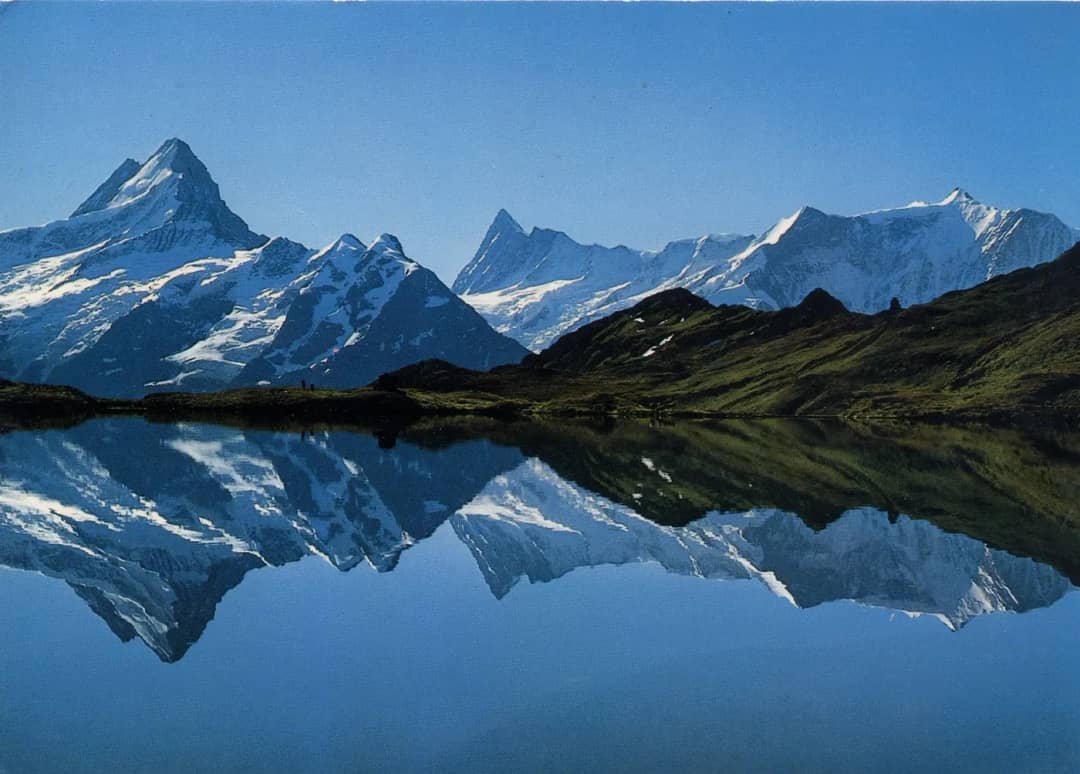
Bachalpsee above Grindelwald-First, less than an hour on foot from the First top station according to Jungfrau Railways. Mirror lake, Schreckhorn reflection. It is Pierre's pick for anyone who is not in top shape: easier, a great view, iconic, but a lot of people.
Oeschinensee above Kandersteg. Turquoise basin under sheer cliffs. Pierre's advice is to walk up rather than ride: it is worth the effort. The man who hires out the rowing boats on the lake told Pierre when it is quietest: early, late in the afternoon, on weekdays rather than at weekends, and in May, June and September.
For the full inventory, see all the lakes around Interlaken.
8. Eat Älplermagronen at an Alpine Hut
Fondue can wait for the evening. At lunchtime, take a cable car or hike up to a Berghütte (mountain hut) and order Älplermagronen with apple compote on the side. Pierre's picks, and he recommends all four: Alpenruh above Mürren, Berghaus First, Restaurant Suldtal above Aeschi, and Berghotel Niederhorn if you take the cable car from Beatenberg. When you do sit down to a fondue in town, he warns against two mistakes: no reservation, or a tourist trap.
9. The Slow Boat Across Lake Thun
The BLS lake ferries run all summer between Thun and Interlaken, stopping at Spiez, Faulensee, Oberhofen, Beatenbucht and more. Buy a one-way ticket on a clear morning, get off at Spiez, walk the vineyards, eat lunch at the harbor, take a later boat back. Total cost comes down to lunch if you have a Swiss Travel Pass, the ferry is included at no extra cost.
If you want both towns in one day, Pierre's order is Thun in the morning, Spiez in the afternoon.
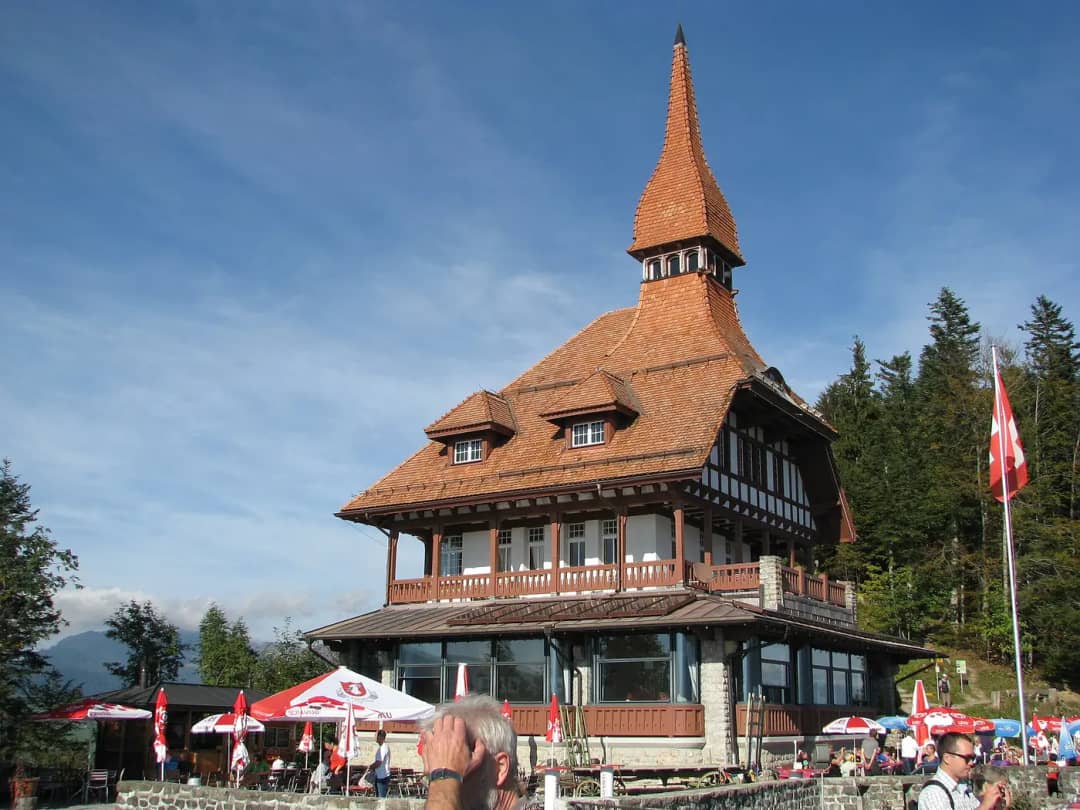
10. Sunset on Harder Kulm
The classic. Asked to choose, for the view over Interlaken, between the free Goldswil church ruin and the paid ride up Harder Kulm, Pierre is short:
"Harder Kulm: higher, it's worth the ticket."
Pierre Vetsch, guide and founder, interviewed on 14 October 2026
The funicular takes 10 minutes from Interlaken. Pierre's timing is to go up one hour before sunset, then eat at the panorama restaurant overlooking the Eiger, Mönch and Jungfrau at golden hour. Check the last descent for your date on the Jungfrau Railways timetable before you go.
For something quieter, Beatenberg and Schynige Platte are the alternatives.
Insider tip: Give yourself an hour at the top for the Botanical Alpine Garden, where around 800 alpine plant species grow at 1967 m. It only opens from 13 June to 25 October 2026, so an early-season train ride finds the gate shut.
11. Cliff Jumping at Iseltwald
For confident swimmers and on warm days only: the rocky shore east of the Iseltwald jetty has natural ledges 3-5 metres above the lake. Locals jump from there in summer. The water is glacier-cold even in August. Wear shoes you can swim in.
12. Festival Evenings
Summer evenings are when the region's festivals come alive. Look out for the Tellspiele (open-air theatre), the Greenfield Festival, which brings rock to Interlaken in June (its next edition runs from 10 to 12 June 2027), and the Unspunnenfest, the festival of Swiss wrestling, traditional costume and alpine herders, which last took place in 2017 and returns in August 2029. Check the local calendar before booking your trip: landing on a festival weekend is a different experience entirely.
13. The Eiger from the First Cliff Walk
Above Grindelwald, the First Cliff Walk is a metal walkway anchored to a vertical rock face, with the Eiger filling the entire view in front of you. Jungfrau Railways puts the visit at about 20 minutes. Go up early, then walk on to Bachalpsee and expect company: Pierre calls it iconic, but busy.
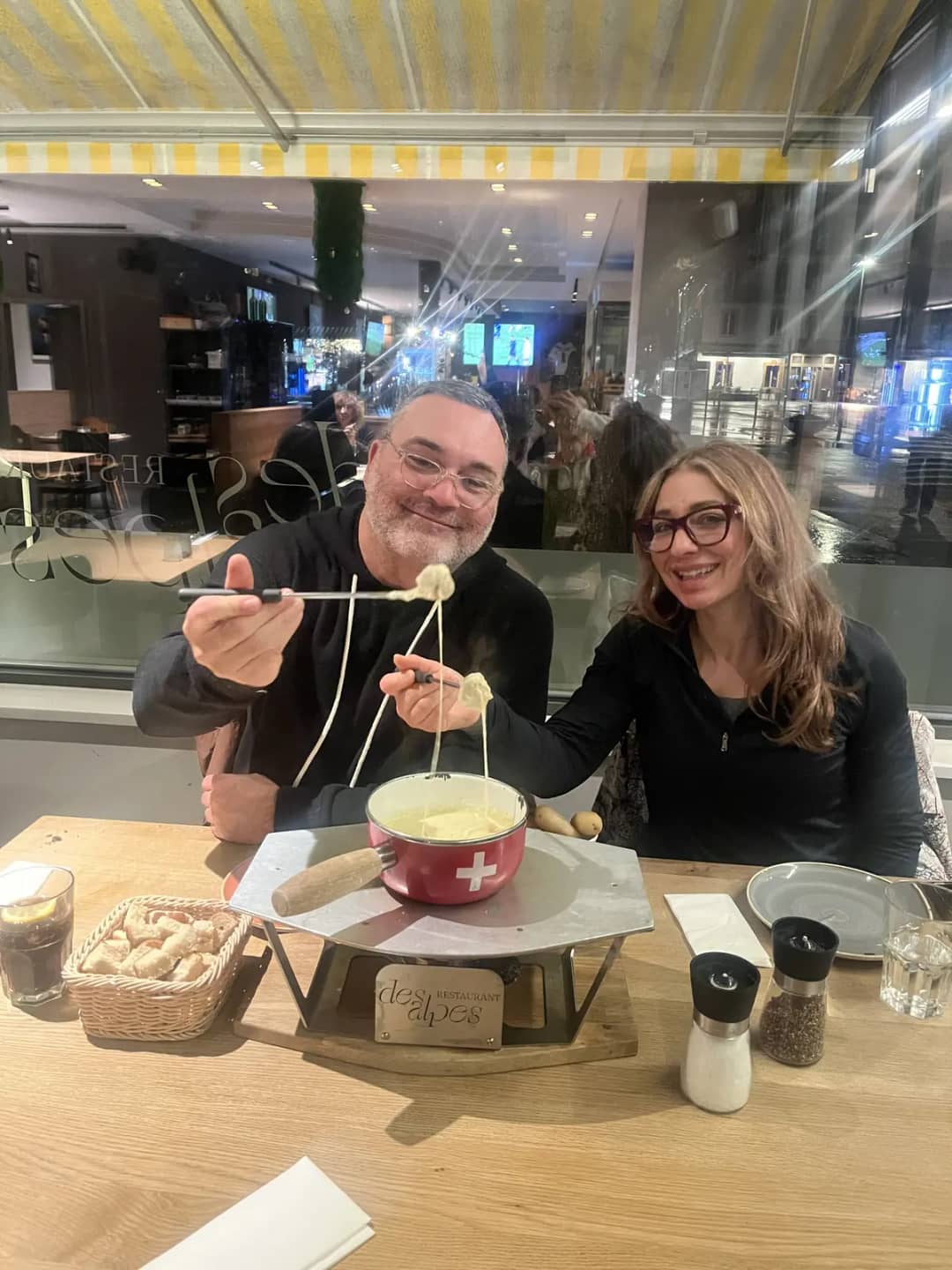
14. End the Day on a Lakeside Terrace with Fondue
Even in summer, a fondue at the end of the day is one of the most Swiss experiences you can have. The lakeside terraces Pierre recommends: Restaurant Aarburg in Bönigen, the Beatus Wellness Hotel terrace overlooking Lake Thun and the Bellevue in Iseltwald; check their summer menu if fondue is the plan. For the fondue itself, Pierre's first pick in town is the Taverne on the Höheweg, away from the lake, and our guide to the best fondue in Interlaken explains why. Share a bottle of Spiez white and watch the lake go silver.
💡 Insider Tip from Pierre Build your summer day in three temperatures. Cool mountains in the morning (hike, alpine hut), when the weather is calm and stable; the lake in the afternoon (swim, paddle), when it is warmer; a cool evening after that (fondue, wine, sunset). The contrast between the three is what makes Interlaken summers feel like four days inside one.

FAQ - Summer in Interlaken
Is Interlaken too hot in summer?
Rarely. Daytime temperatures in July and August reach 25-28°C in town but drop sharply with altitude and at night. Lake swimming is pleasant. Heat waves above 32°C happen a few days a year, mostly in late July.
Is summer the best time to visit Interlaken?
For hiking, lakes, adventure activities and outdoor festivals, yes. For lower prices and fewer crowds, May, June and late September are sweet spots.
Are the lakes warm enough to swim?
Yes, if you accept cold water. Lake Thun and Lake Brienz are comfortable for a swim from late June to early September; from mid-September, Pierre finds Lake Brienz too cold for a normal visitor. Do not count on a heat wave to warm Lake Brienz: a kayak guide there told Pierre the lake can even cool down when it is hot, because the glaciers melt and feed it. Pierre's own verdict on a swim in Lake Brienz: cold, but worth it.
Do I need a car for summer activities in Interlaken?
No. Trains, ferries, post buses and cable cars cover everything in this guide. The Swiss Travel Pass or Berner Oberland Pass makes it efficient.
For five days of summer day trips, Pierre's own pick is the Swiss Travel Pass.
What summer activities are family-friendly in Interlaken?
Lake swimming, BLS boat rides, Bachalpsee and Oeschinensee hikes, Brienz wood-carving workshops, the Trottibike and the Mountain Cart at First, the Harder Kulm funicular and the Maison Cailler chocolate factory day trip. I have visited both carving workshops in Brienz, Huggler and Jobin, and the showroom of the wood-carving school is worth the detour. Our Farm Tour welcomes children with an adult, has child seats in the van and involves no walking.
When does summer season actually start in Interlaken?
Roughly mid-May (lakes warm, lower hikes open, restaurants put terraces out) through late September. High alpine cable cars sometimes run into October.
What do you do in Interlaken when it rains?
For a grey day: the Bödelibad Interlaken has an indoor pool and a wellness area, Lauterbrunnen's waterfalls look spectacular in low cloud, and the direct train from Interlaken West reaches Bern in about 50 minutes (51 to 52 minutes on the timetable we checked on 15 October 2026), which puts you in one of the most walkable old towns in Switzerland. A rainy morning at a Bönigen bakery with a coffee and the lake to yourself is also a perfectly valid plan.
How many days do you need in Interlaken in summer?
Two days is the minimum to feel the difference between tourist Interlaken and local Interlaken. Build each day in Pierre's order: the mountain in the morning, while the weather is calm and stable, the lake in the afternoon, when the day is warmer. Day one: on a Tuesday or Thursday, the Farm Tour fills the morning and has you back in Interlaken around noon, then a swim or a boat in the afternoon. Day two: Oeschinensee or Grindelwald-First in the morning, the lake after lunch, and Harder Kulm an hour before sunset, followed by fondue. The wine tour above Spiez runs on Mondays, Wednesdays and Fridays at 3:30 pm, so it goes on another day. Three days lets you slow down enough to stop checking a list. With five nights or more, Pierre's advice is to keep Interlaken as your base and do day trips: Grindelwald with First and the Eiger; Lauterbrunnen with Mürren and Wengen; Kandersteg with Blausee and Oeschinensee; Brienz and Iseltwald, the Rothorn and Meiringen; and Interlaken itself.
If you pick Oeschinensee for your mountain day, read our guide to Oeschinensee above Kandersteg first: it covers the train and cable car from Interlaken, the quieter trails around the lake and the hours when the crowds thin out.
Do you need to be sporty to enjoy Interlaken in summer?
No. Most of the experiences on this list work for anyone: boat across Lake Thun, wine tasting above Spiez, farm breakfast in the Justistal valley, where the van parks at the farm and there is no walking, Harder Kulm by funicular, fondue on a lakeside terrace. The ones that ask for real effort say so: walking up to Oeschinensee, walking down from the Rothorn summit to Planalp, the jump at Iseltwald and a paddle at dawn. The local version of Interlaken is slower and more human than the adventure sports version that fills most travel guides.

Plan Your Slow Summer in the Bernese Oberland
The 14 ideas above are not a checklist. They are a list of starting points. Pick three. Combine them across one day. Repeat for as many days as you have. By the time you leave, you will know Interlaken the way locals know it, by its rhythms more than by its landmarks.
When you combine them, follow Pierre's order: the mountain in the morning, the lake in the afternoon.
If what holds you back is a summer plan that is already full, Pierre's answer fits in one line:
"Half a day with a local, and you understand the region."
Pierre Vetsch, guide and founder, interviewed on 14 October 2026
That half day can be a morning at Daniela's farm in the Justistal: breakfast at her table, her cheese of the day made in front of you, and back in Interlaken around noon with the afternoon free for the lake. The Farm Tour runs from May to mid-September, on Tuesdays and Thursdays at 8:00 from Interlaken West, at CHF 149 per person with 8 guests at most, and we ran more than ten of them at Daniela's in 2026. I'll give one summer morning to Daniela's farm, or ask us on WhatsApp; we usually reply within the hour.
How we made this: facts and prices checked at the official sources on 8 October 2026, written with AI assistance.
*Written by Olivia Lufman, your travel writer at Swiss Local Adventures
Source:
on-site local knowledge as guides in the Bernese Oberland, 2026.
Tags
#summer-interlaken#things-to-do-interlaken#interlaken#bernese-oberland#jungfrau-region#swiss-alps#lake-brienz#lake-thun#swiss-summer
Sources & References
- •MySwitzerland.com
- •Interlaken Tourismus
- •Photo: Iter1, Wikimedia Commons (Public domain)
- •Photo: Manfred Wohlfahrt, Wikimedia Commons (Public domain)
- •Botanischer Alpengarten Schynige Platte, official site (alpengarten.ch), consulted 07.10.2026
- •Brienz Rothorn Bahn, Bahngeschichte (official site), consulted 07.10.2026
- •Swiss Local Adventures, Farm Tour: CHF 149 (CHF 139 from 6), Tuesdays and Thursdays, 8:00 AM, back around noon, max 8, May to mid-September, 35 min over Beatenberg, no walking, breakfast list ("Breakfast is whatever this farm produced"), "Sit at her table", copper cauldron, cauldron to press, Daniela awake since five, children accompanied by an adult and child seats; calendar 01.06-15.09.2026 Tue/Thu, opened 15.10.2026
- •Swiss Local Adventures, Wine Tour: CHF 139 (CHF 129 from 6), 3:30 PM, max 8, 4 local Swiss wines with regional cheese, pick-up Interlaken; calendar Mon/Wed/Fri 18.05-30.09.2026 (text says May to October), opened 15.10.2026
- •timetable.search.ch, Interlaken West to Bern on 16.10.2026: IC 81 10:04-10:56 and IC 61 10:34-11:25 direct, 51 to 52 min, opened 15.10.2026
- •Jungfrau Railways, Harder Kulm: funicular, 10 minutes from Interlaken, opened 15.10.2026
- •Jungfrau Railways, Grindelwald-First: Bachalpsee less than an hour on foot from First, Cliff Walk about 20 minutes, Mountain Cart and Trottibike, opened 15.10.2026
- •Niesenbahn: the Niesen is reached by funicular (Standseilbahn), not a cogwheel train, opened 15.10.2026
- •Brienz Rothorn Bahn, Wandern: Brienz-Planalp path via the Milibachgraben still closed after storm damage; Brienzer Rothorn to Planalp 2.5 h, opened 15.10.2026
- •Federal hiking closure register (ASTRA, geo.admin.ch): Brienz Milibach, closure with detour, until further notice, storm damage, opened 15.10.2026
- •Gemeinde Iseltwald, tourism: CHF 5 entrance fee for the boat pier; stay in public areas, no private property, opened 15.10.2026
- •Unspunnenfest: 10th edition in 2017, next in August 2029 (so not every six years), opened 15.10.2026
- •Greenfield Festival: 10 to 12 June 2027, Interlaken, opened 15.10.2026
- •Bödelibad Interlaken: indoor pool (Hallenbad) and wellness, opened 15.10.2026
- •geo.admin.ch search: official bus stop Ringgenberg, Anhöhe-Burgseeli (Burgseeli at Ringgenberg), opened 15.10.2026
- •geo.admin.ch search: no lake named Hintergeseeli or Hinterer Geltensee in the federal gazetteer, opened 15.10.2026
Share this article
Similar Articles
Continue your reading with these related articles
Places & Day Trips
10/18/2026
12 min
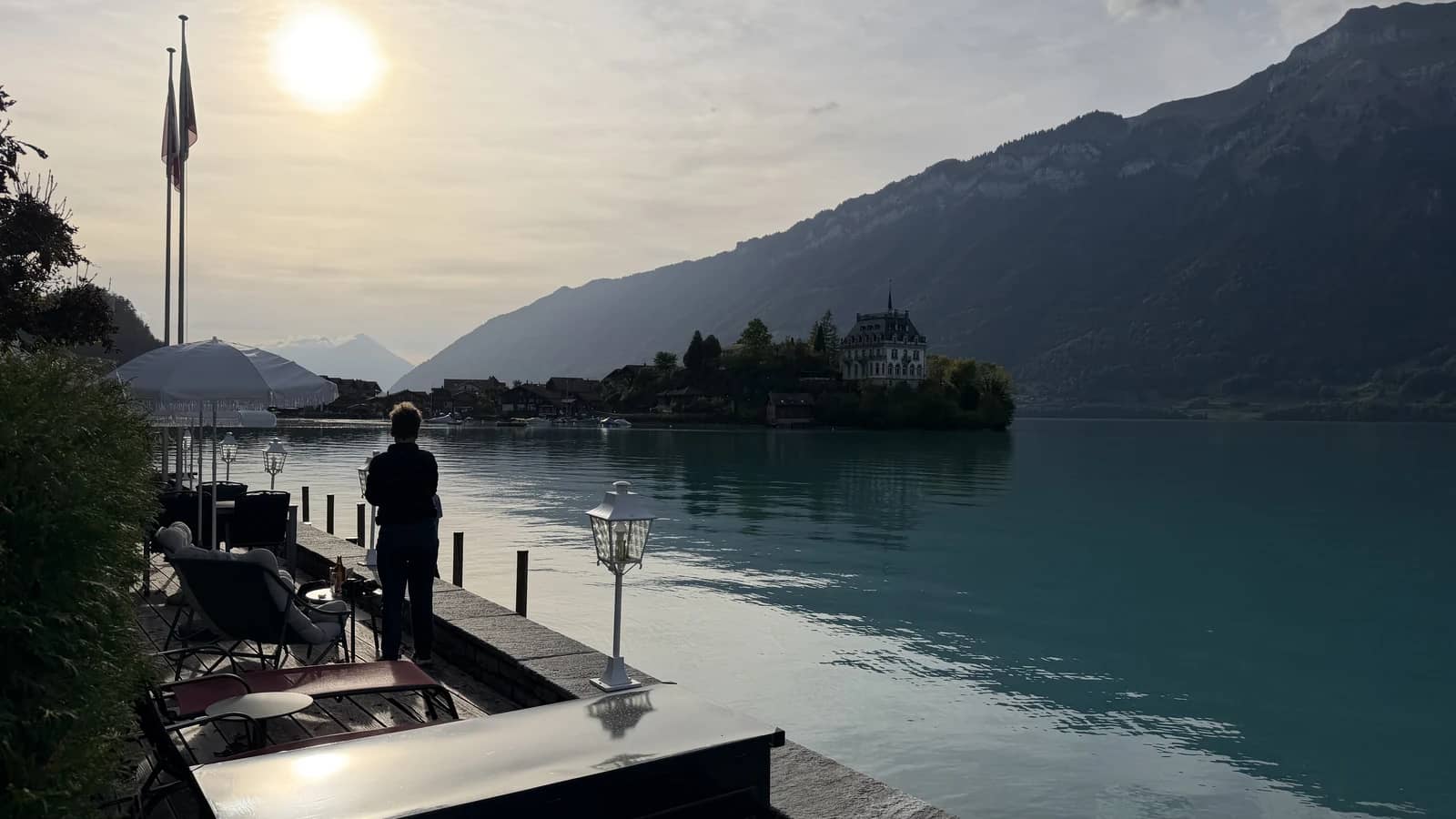
Where to Watch the Sunset in Interlaken, by Season
Where to watch the sunset in Interlaken: the town loses the sun at 15:48 in December, so take the Höhematte in winter and Harder Kulm in summer.
interlaken-sunsetsunset-spotsalpenglow-jungfrau
By Pierre VetschRead More
Places & Day Trips
9/26/2026
10 min
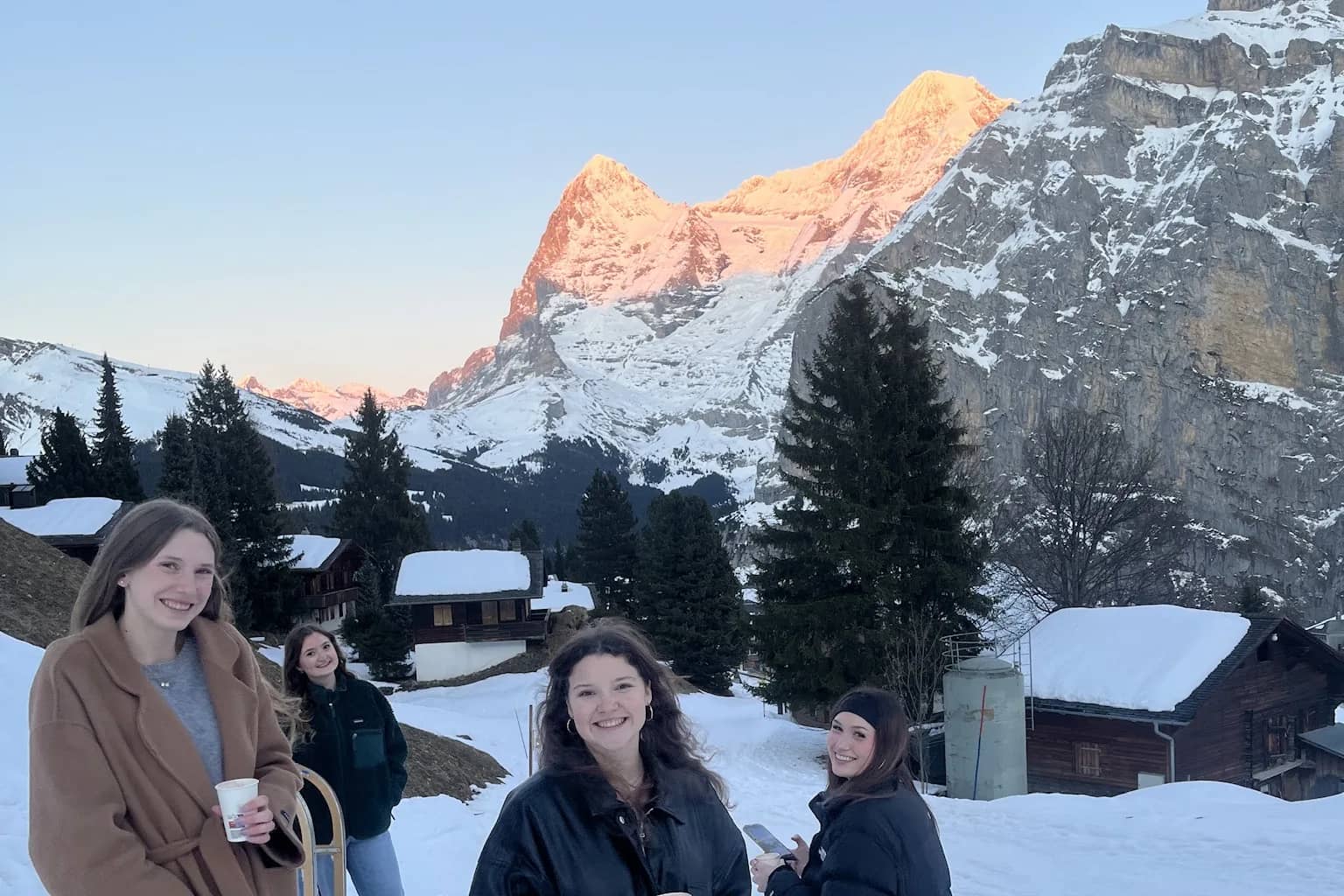
Wengen or Mürren? Wengen in Summer, Mürren in Winter
Wengen is 13 minutes closer to Interlaken and quieter at night. A local guide on where to stay, and why winter flips the answer to Mürren.
where-to-stay-jungfraulauterbrunnen-valleycar-free-villages-switzerland
By Pierre VetschRead More
Places & Day Trips
9/25/2026
12 min
Is Gimmelwald Worth Visiting? Yes, for an Hour
Since December 2024 the fast cable car to Mürren skips Gimmelwald. A local guide on why you should still stop for an hour, and sleep in Mürren.
lauterbrunnen-valleycar-free-villages-switzerlandmurren-day-trip
By Pierre VetschRead More