Lakes, Water & Air
Kayaking on Lake Brienz: What the Boat Misses
T
Timoté Baily
Author
August 25, 2026
13 min
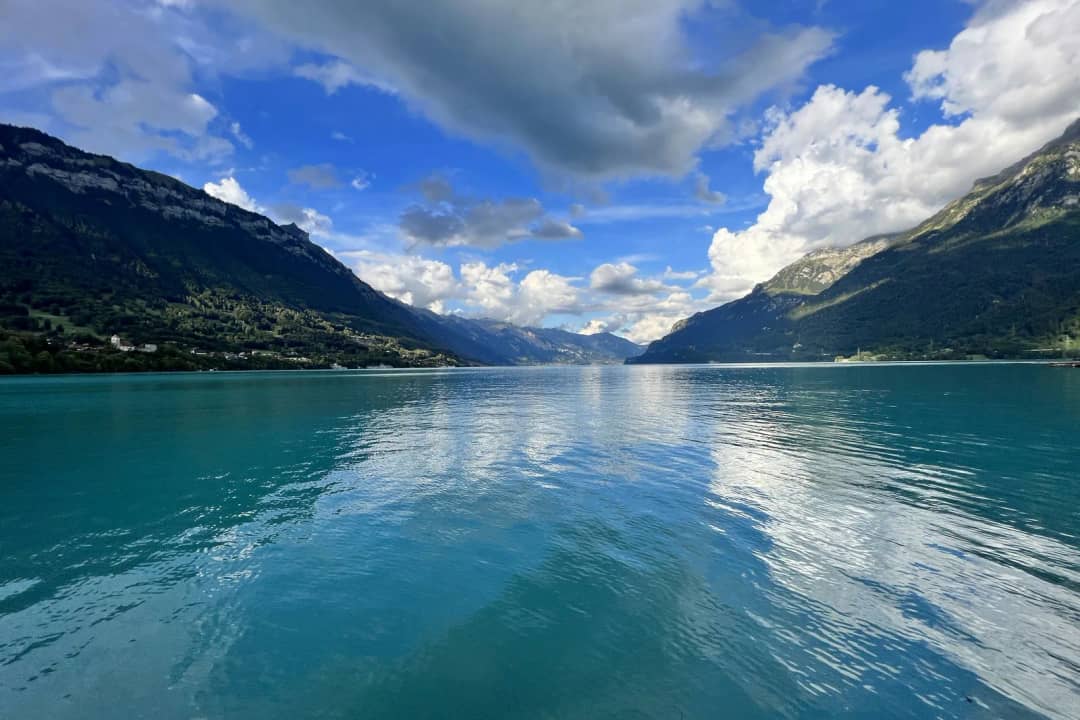
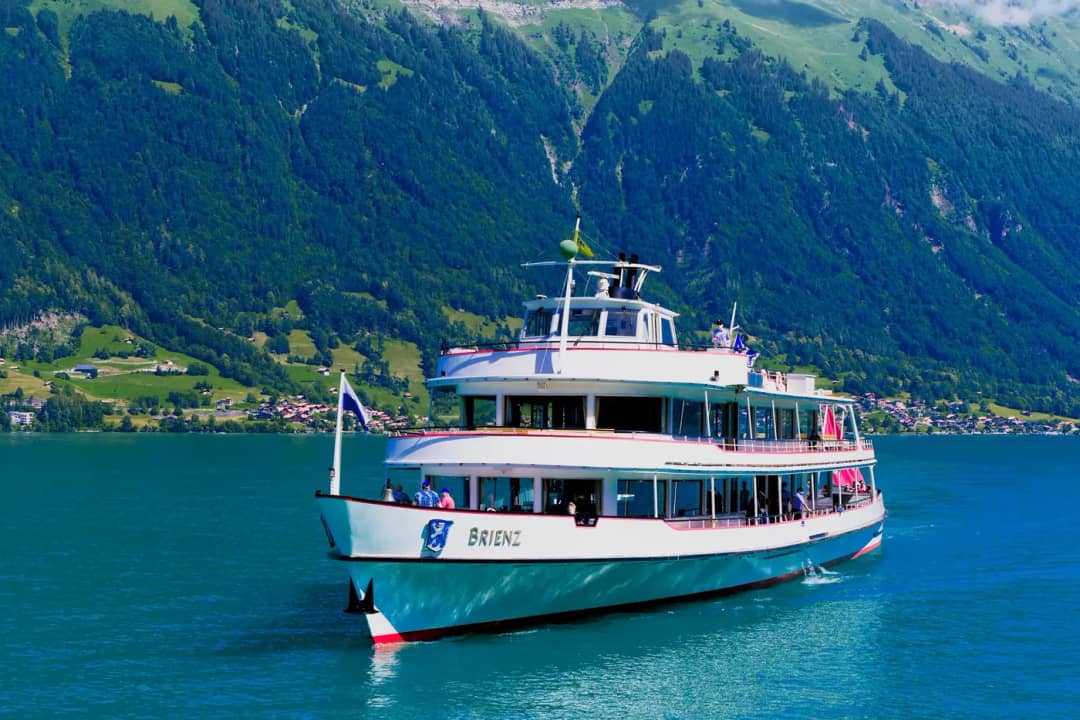
In summer the BLS boat crosses this lake in 73 minutes (summer 2026 timetable, checked on 8 October 2026). It calls at up to five piers on the way, it zigzags from shore to shore, and from the top deck the water looks like a postcard someone printed too blue.
Sit in a kayak instead and the lake stops being scenery. Your eyes drop to 20 centimetres above the surface. The cliffs on the north shore go from a background texture to something that leans over you. The colour stops being a colour and becomes depth: around 260 metres of it, which makes this one of the five deepest lakes in Switzerland.
There is a second thing the boat cannot do. It cannot stop where there is no pier. On the stretch of north shore the guided tour follows, between Bönigen and Ringgenberg, small coves sit between the cliffs with no footpath down to them, and the only way in is under your own paddle.
Here is what a summer paddle on Lake Brienz actually costs in 2026, what you see from the water, and the four rules that govern this water and appear on neither the operator's booking pages nor ours, read on 15 October 2026.
What do you see from a kayak that you miss from the boat?
You see the north shore between Bönigen and Ringgenberg at arm's length: the sunbaked cliffs that drop straight into the water, the shingle coves with no path to them, and Ringgenberg castle church from below. The scheduled boat crosses to the far side long before any of it comes close.
The route almost every guided tour follows starts at the quay in Bönigen, crosses the outlet of the Lütschine, and turns left along the north shore. That first crossing is the interesting part, and it is the part nobody explains.
The Lütschine arrives here straight from the Grindelwald and Lauterbrunnen valleys carrying rock flour into the lake. Pierre Vetsch, our guide and founder, has felt a band of colder water under the hull at its mouth himself, in winter.
Then the cliffs start. They face south and they hold heat all afternoon. Between them sit small coves that no footpath reaches, and this is where the guide stops the group for a swim.
Above you, two buildings mark the corner of the lake. Ringgenberg castle church, built inside the ruins of its own castle, and further west the square bell tower of the Goldswil church ruin on its rock spur. Both are covered properly in their own guides, the Ringgenberg castle church and the Goldswil church ruin climb. From the water you see both from below, from the lake side.
At the western end of the lake sits the outflow of the Aare, the point where the lake stops being a lake and starts being a river heading for Interlaken. There is a federal gauging station sitting exactly there. It is the reason this article can tell you the water temperature to one decimal place.
What does a kayak tour on Lake Brienz cost in 2026?
CHF 115 for an adult on the standard guided tour, CHF 80 for a child aged 12 to 15, and CHF 125 and CHF 90 on the October departures, sold as an autumn tour. The operator and Swiss Local Adventures charge the same: we checked both on 15 October 2026. The same tour sold through a booking platform came out at USD 143 per person when we checked on 27 August 2026, displayed in US dollars in our session.
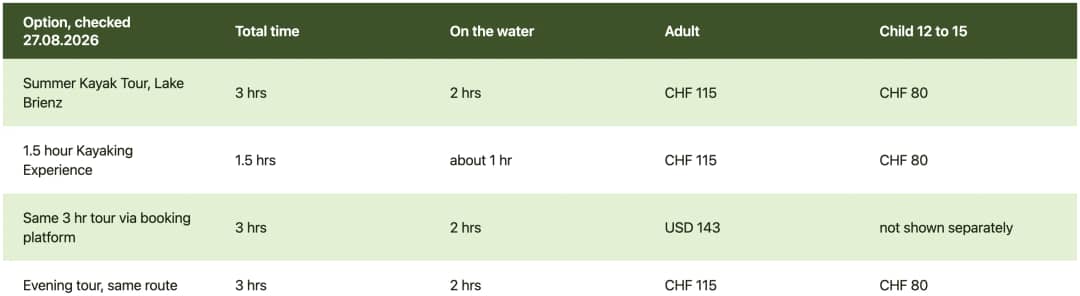
Operator prices from hightide.ch, platform price from the GetYourGuide product page, both read on 27 August 2026.
Three things that table decides for you.
Same price with us or with the operator. The tour is identical either way. The platform adds a currency conversion and, on the day we looked, a higher headline number for the same three hours.
The 1.5 hour session is not half the tour. It stays near the base and gives you about one hour on the water rather than two, for CHF 85 an adult and CHF 60 a child aged 5 to 15. It exists for families and for people testing whether they like a kayak at all. If you want the cliffs, book the long one.
Who runs it. Hightide Kayak School organises and guides the tour from Am Quai 1 in Bönigen, opposite the Bönigen See bus stop. Swiss Local Adventures sells the same tour at the same price, as an intermediary on Hightide's behalf.
Insider tip: Tours leave the Bönigen quay at 9:15 or 9:20 and 13:15 or 13:20. The 17:15 evening start runs on request with Hightide only, and the October autumn tour has none. Bus 103 from Interlaken Ost, direction Iseltwald, drops you at Bönigen See in 5 to 7 minutes, leaving at :05 and :35 past the hour (timetable for 16 October 2026, checked on 15 October 2026). Skip the EXP103 express: it does not stop there.
Do you need experience, and can you go if you cannot swim?
No experience is needed. If you cannot swim, ask before you book: the operator's pages call its tours "perfectly suited for beginners and non-swimmers", but its terms and conditions require swimming skills on every programme, so write to info@hightide.ch with your date first. A buoyancy aid is provided and the tour starts with coaching on land. The limits that do bite are age and weight: minimum 12 years, maximum 120 kg, or 265 lbs.

The reviews back this up more usefully than any brochure line. First-timers write that they had never been kayaking and that the instructor was a real help, and that the tour works for all levels. Another reviewer puts the real value plainly: it suits people who do not want to work things out for themselves once they reach the lake.
Group size is the quiet reason it works. The tour caps at 6 participants, which one reviewer found ideal for beginners who would get lost in the crowd on a bigger tour.
Weather is the doubt everybody arrives with, and the answer is more relaxed than you expect. Tours run in most conditions including rain. One reviewer went out on a rainy day and still got on the lake, kitted out with jackets and wetsuits. If a tour cannot run, you reschedule or get a full refund.
What are the rules on Lake Brienz that the booking pages skip?
Four. Small craft under 2.5 metres may only travel inside the inner shore zone, up to 150 metres from the bank. Scheduled passenger boats have absolute right of way. Your board or paddle boat must carry the owner's name and address. And the delta at Bönigen is a nature reserve you may not enter.
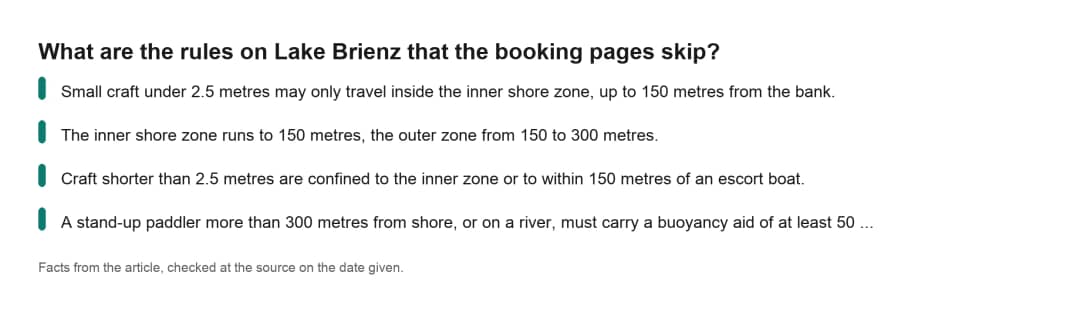
These come from the cantonal police leaflet on inland waterways and from the Bern nature reserve register, not from anybody's booking page. They matter more than they sound.
The 150 metre zone. The inner shore zone runs to 150 metres, the outer zone from 150 to 300 metres. Craft shorter than 2.5 metres are confined to the inner zone or to within 150 metres of an escort boat. Check the length of a hired kayak before you set out. On a lake 14 kilometres long, staying near the bank is not a hardship, and it is where everything worth seeing is anyway.
Right of way. The official order puts scheduled and priority vessels first, then cargo, then professional fishing boats, then sailing craft, then rowing boats and stand-up paddles in fifth place, and only then motor boats. So a kayak outranks a speedboat and yields to the steamer. When a priority vessel approaches, you clear its line. That is not politeness, it is the rule.
Marking. Stand-up paddles and paddle boats must be clearly labelled with the owner's name and address, ideally with a phone number. A stand-up paddler more than 300 metres from shore, or on a river, must carry a buoyancy aid of at least 50 newtons. Inside 300 metres the leaflet only recommends one. Guided tours hand you one regardless.
Lütschisand. The nature reserve at the mouth of the Lütschine, protected since 1983, sits immediately beside the Bönigen base. Entering the water surface and the bank vegetation is prohibited, along with letting dogs run loose. It shelters one of the largest populations of yellow-bellied toad in the canton of Bern. This is why guided routes cross the outlet and head for the north shore instead of nosing around the delta.
When does the wind get up on Lake Brienz?
Afternoons. The operator's own description gives it away: its evening tours "start when the lake calms down and the sun starts to dip behind Interlaken". Its FAQ describes the day in the same spirit: mornings often quieter, afternoons usually warmer and sunnier, evenings calmer, depending on the weather.
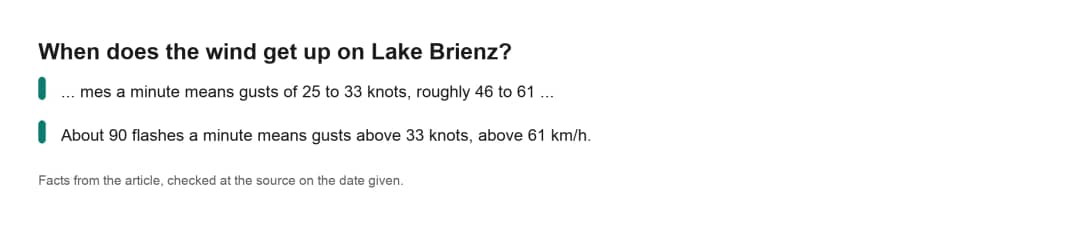
That gives you three windows and they are not equal.
First thing in the morning. Often the quietest water, lowest boat traffic, and the north shore cliffs still in shadow. Reviewers who went first thing in the morning call it beautiful, and that is the timing comment that comes up most in the reviews.
Early afternoon. The colour peaks because the sun is high enough to light the suspended sediment, which is what makes this lake turquoise in the first place. It is also the warmest stretch, before the lake calms down for the evening.
Evening. Same route, same coaching, golden light and a quieter lake, but the 17:15 start runs on request with Hightide only, and not on the October autumn tour. If you want photographs rather than a workout, ask for this one.
Then there is the part that is not a preference. Lake Brienz is covered by the canton of Bern's storm warning service. Its warning status is separate from Lake Thun. You can check the live status for Lake Brienz at be.stwarn.ch before you set out, checked on 12 September 2026.
How cold is the water, and how much effort is two hours of paddling?
Cold enough to matter, light enough for anybody. On 27 August 2026 at 11:10, near the seasonal peak, the federal gauge at the Aare outflow read 16.8 °C, with a 24 hour maximum of 19.4 °C and a minimum of 16.1 °C. That gauge measures the Aare where it leaves the lake, not the shallow coves, so treat the 23 °C quoted by aggregator sites as unconfirmed.
Pierre Vetsch has kayaked here in summer himself, and he sees the cold the other way round:
"In summer, the coolness of the water does you good."
Pierre Vetsch, guide and founder, interviewed on 14 October 2026

The effort is low. The operator says the group will "paddle steadily, take plenty of breaks, and pause at beautiful spots", and time on the water is around two hours. Reviewers describe drifting, swimming stops and picking blackberries, not distance. One wrote that they did not notice the time go by, which is the honest measure of the pace.
What tires people is not the paddling, it is the sitting. Two hours in a kayak with your legs out in front of you asks something of your lower back and your hip flexors, especially if you drive a desk. Asked who the winter kayak tour does not suit, Pierre named people who cannot sit for two hours, and the summer tour keeps you seated on the water for about as long. If that is you, take the swimming stops.
Insider tip: Ask for a backrest at the Bönigen base before you launch. Hightide has them on request.
Two practical points. Reviewers mention that the guides help with loading and unloading the kayaks, which is the bit that catches people who expect to carry one themselves. And think about your feet: the operator says footwear is optional and barefoot is fine, but the shore here is shingle, not sand, so bring sport sandals or water shoes if you have them.
The 16.8 °C figure is also the number to weigh before you accept the swim stop. That water is fed by glacial melt and it is deep. A kayak guide on the lake told Pierre that it does not necessarily warm up in a heatwave and can even get colder, because the glacier melts and fills the lake. Enter slowly. The Swiss lifesaving society's third bathing rule exists for exactly this: never jump in overheated, the body needs time to adjust.
Late in the season, think twice before you swim. The summer tour runs until the end of October, but from mid-September Pierre finds the water at the spot where he swims, at the end of Bönigen on the road to Iseltwald, too cold for a normal visitor. Our guide to how cold Lake Brienz is for swimming has the detail.
Can you kayak on Lake Brienz in winter?
Yes, and it is a different activity rather than the same one in a coat. Winter trips use the same stable sea kayaks as the three-hour summer tour, with an expedition drysuit, neoprene boots and paddle mitts, on an empty lake with snow on the slopes above. The standard summer tour runs from May to October, with a wetsuit and jacket on cold days, and the winter tour takes over from 1 November to 30 April.

We have written that one up separately in the winter kayaking guide for Interlaken, which covers the safety question, the kit and who it suits. There is no point repeating it here.
The gap between the two is worth naming. In summer you get warm cliffs, swimming stops and other boats. In winter you get a shoreline with nobody on it and a lake that does not freeze: on Pierre's own winter outing, the Hightide guide on the water told him it does not get cold enough for long enough for the lake to ice over. Pierre's verdict on winter ice:
"Never any ice."
Pierre Vetsch, guide and founder, interviewed on 4 October 2026
Kayak, boat, or both?
Both, on the same day if you can, because they answer different questions. The scheduled boat shows you the whole lake in 73 minutes in summer (2026 timetable, checked on 8 October 2026) and puts you at Giessbach or Iseltwald. The kayak shows you one stretch of shore up close in two hours and brings you back to where you started.
"I have paddled here myself, and I prefer the kayak to the boat."
Timoté Baily, mountain photographer at Swiss Local Adventures
The guided summer tour from Bönigen costs CHF 115 for an adult. About two of its three hours are on the water.
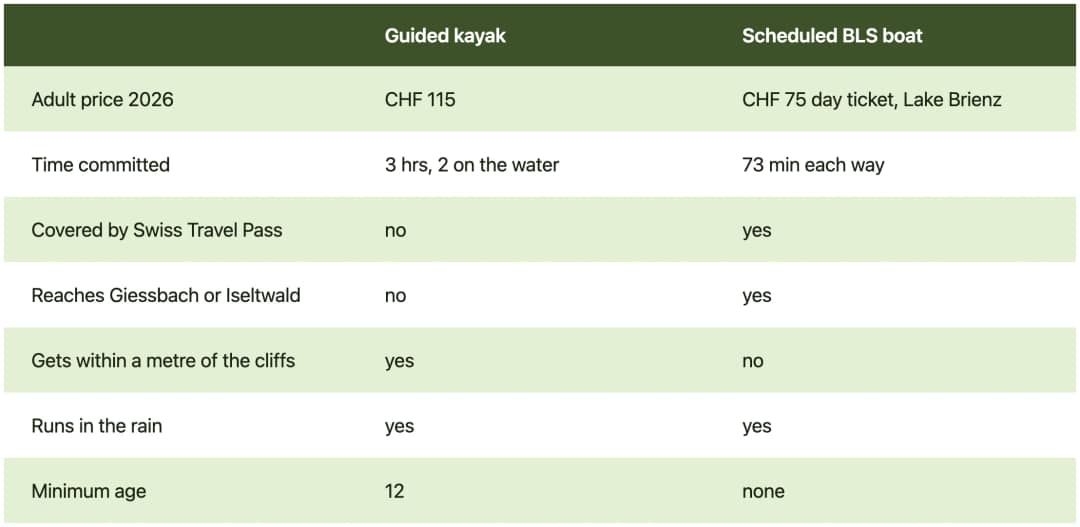
Boat fares read on bls-schiff.ch on 24 August 2026, kayak prices on hightide.ch on 27 August 2026.
Asked what to do with a single day on Lake Brienz, kayak or boat, Pierre does not pick one:
"Both, on the same day."
Pierre Vetsch, guide and founder, interviewed on 14 October 2026
The kayak tour takes three hours from Bönigen, which leaves the rest of the day for the boat while the boats are running: check the timetable for your date before you plan both. The Interlaken to Brienz boat guide tells you which side to sit on.
Your questions about kayaking on Lake Brienz
Can you rent a kayak on Lake Brienz without a guide?
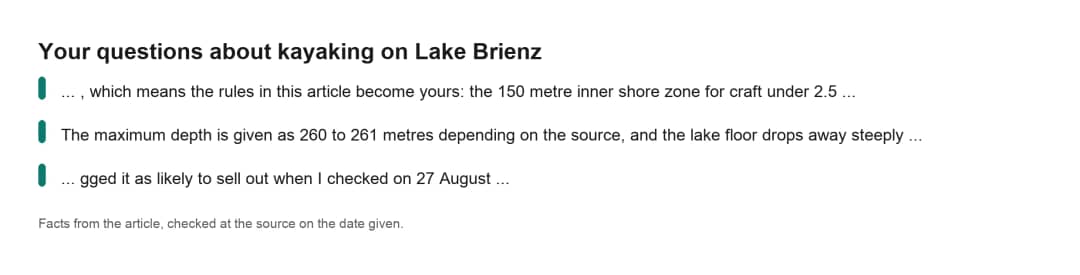
Yes. The Hightide base at Bönigen rents sit-on-top kayaks and stand-up paddles alongside its guided tours, from mid-April to October, weather permitting, with no booking needed. Renting is cheaper and it makes you the skipper, which means the rules in this article become yours: the 150 metre inner shore zone for craft under 2.5 metres, right of way for scheduled boats, the owner's name and address on the hull, and no entry to the Lütschisand reserve. If you have never paddled on a big cold lake, take the guided tour first and rent afterwards.
How deep is Lake Brienz where you paddle?
Very deep, very close in. The maximum depth is given as 260 to 261 metres depending on the source, and the lake floor drops away steeply from most of the shoreline rather than shelving out. You will be over water far deeper than you can see through within a few paddle strokes of the bank. This is one more reason the buoyancy aid stays on, and one more reason the inner shore zone is a sensible place to be rather than a restriction.
Do you have to book in advance?
In July and August, yes. The tour caps at 6 participants, which is what makes it good and also what makes it fill. The platform listing showed the tour as booked 3 times the day before and flagged it as likely to sell out when we checked on 27 August 2026. Check the cancellation terms before you pay: Hightide's terms list no fee more than 96 hours before the start. Our booking calendar shows the open slots for each date.
What happens if the weather turns?
Tours go ahead in rain and even in snow, with wetsuits and jackets provided. What stops a tour is wind, not water falling out of the sky. If the operator cancels, you reschedule or take a full refund. If you are out on rented kit and the wind rises, head for the nearest bank rather than the base: on this lake the fastest way to get into trouble is to try to punch back across open water into a headwind.
Can you kayak from Bönigen to Iseltwald or Giessbach?
Not on the standard guided tour, which follows the north shore towards Ringgenberg and crosses the open lake on the way back to the base. Iseltwald and Giessbach sit further east along the south shore, well beyond the stretch the tour paddles. Reach both by boat instead. The Iseltwald pier guide and the Giessbach funicular guide cover how to get there and what each one costs.
The lake is better from 20 centimetres up
The water changes when your eyes are level with it, and the coves that no footpath reaches are the part of the shore most visitors never see. The mistake Pierre sees most often with this lake in summer:
"Only doing the boat."
Pierre Vetsch, guide and founder, interviewed on 14 October 2026

For more time on and around the water, see our guide to the lakes around Interlaken, best outdoor adventures in Interlaken and summer in Interlaken.
If what still holds you back is "I've never been kayaking", that is the objection Pierre hears most before people book a kayak tour on this lake. His answer:
"The kayaks are stable, almost nobody falls in."
Pierre Vetsch, guide and founder, interviewed on 8 October 2026
The summer tour runs from May to October, and the winter kayak tour takes over in November. Save me a seat on the summer kayak tour: three hours from Bönigen, CHF 115 for an adult, CHF 125 in October. Questions first? Message us on WhatsApp, we reply within the hour.
Source: Hightide Kayak School, Summer Kayak Tour, Vorschriften auf Binnengewässern, Kantonspolizei Bern, Naturschutzgebiet Lütschisand, Canton of Bern, Aare Ringgenberg gauging station, Swiss Federal Office for the Environment, the storm warning service on Swiss lakes, MeteoSwiss and the bathing rules of the Swiss Life Saving Society, all checked on 27 August 2026.
How we made this: facts and prices checked at the official sources on 8 October 2026, written with AI assistance.
*Written by Timoté Baily, your mountain photographer at Swiss Local Adventures
Tags
#guided-kayak-tours#beginner-kayaking#water-activities-interlaken#lake-brienz-kayaking#lake-brienz-day-trip#interlaken-outdoor-adventures
Sources & References
- •Hightide Kayak School, Summer Kayak Tour
- •Hightide Kayak School, 1.5 hour Kayaking Experience
- •Kantonspolizei Bern, Vorschriften auf Binnengewässern
- •Canton of Bern, Naturschutzgebiet Lütschisand
- •FOEN, Aare Ringgenberg gauging station
- •MeteoSwiss, storm warning service on Swiss lakes
- •Kantonspolizei Bern, current storm warnings
- •SLRG, bathing rules
- •Photo: Faizan Sheikh on Unsplash
- •Photo: Jean-Paul Wettstein on Pexels
- •Hightide Kayak School, Summer Kayak Tour on Lake Brienz
- •Swiss Local Adventures, Summer Kayak Lake Brienz : CHF 115 / 80 (12-15), octobre (autumn tour) CHF 125 / 90, départs 09:15 ou 09:20 et 13:15 ou 13:20, 17:15 on request with Hightide only, saison May to October, sea kayak, traversée du lac au retour, chaussures facultatives, aucun frais au-delà de 96 h, SLA intermédiaire de Hightide Kayak School GmbH, opened 15.10.2026
- •Swiss Local Adventures, Winter Kayak : 1 November to 30 April, stable sea kayaks, Palm Bora drysuit, neoprene boots et paddle mitts, parcours le long de la Lütschine, CHF 139 / 119, opened 15.10.2026
- •Hightide Kayak School, Summer Kayak Tour : CHF 115 / 80, 3 h en professional Sea Kayaks contre Sit-On-Top pour le 1,5 h, « perfectly suited for beginners and non-swimmers », « very stable », evening tours « when the lake calms down », FAQ matins plus calmes, après-midi plus chauds, soirs plus calmes, chaussures facultatives, Evening 5:15, opened 15.10.2026
- •Hightide Kayak School, Autumn Kayak Tour : CHF 125 / 90 (12-15), départs 9:15 / 9:20 et 1:15 / 1:20, pas de départ du soir, opened 14.10.2026 et 15.10.2026
- •Hightide Kayak School, Terms and Conditions : savoir nager exigé au minimum pour tous les programmes, opened 15.10.2026
- •Hightide Kayak School, Kayak and SUP Rental : sit-on-top kayaks et SUP (P&H Sea Kayaks réservés aux pagayeurs expérimentés), aucun pédalo, « Mid-April » à « October », « Weather dependent », « No reservations », « drop in », opened 15.10.2026
- •Hightide Kayak School, 1.5 hour Kayaking Experience : CHF 85 adulte, CHF 60 enfant 5-15, sit-on-top (pour refaire le tableau des prix), opened 15.10.2026
- •timetable.search.ch API, bus 103 Interlaken Ost, Bahnhof vers Bönigen, See le 16.10.2026 : départs :05 (5 min) et :35 (5 à 7 min), requête du 15.10.2026
- •timetable.search.ch API, stationboard Interlaken Ost (See) le 16.10.2026 : bateaux vers Brienz (See) à 11:40 et 15:10, saison BLS en cours, requête du 15.10.2026
- •Canton de Berne, Naturschutzgebiet Lütschisand : interdiction d'entrer dans l'eau et la végétation de rive, chiens, sonneur à ventre jaune ; décret lié « 143_Sb_Luetschisand_1983.pdf », opened 15.10.2026
Share this article
Similar Articles
Continue your reading with these related articles
Lakes, Water & Air
9/12/2026
12 min
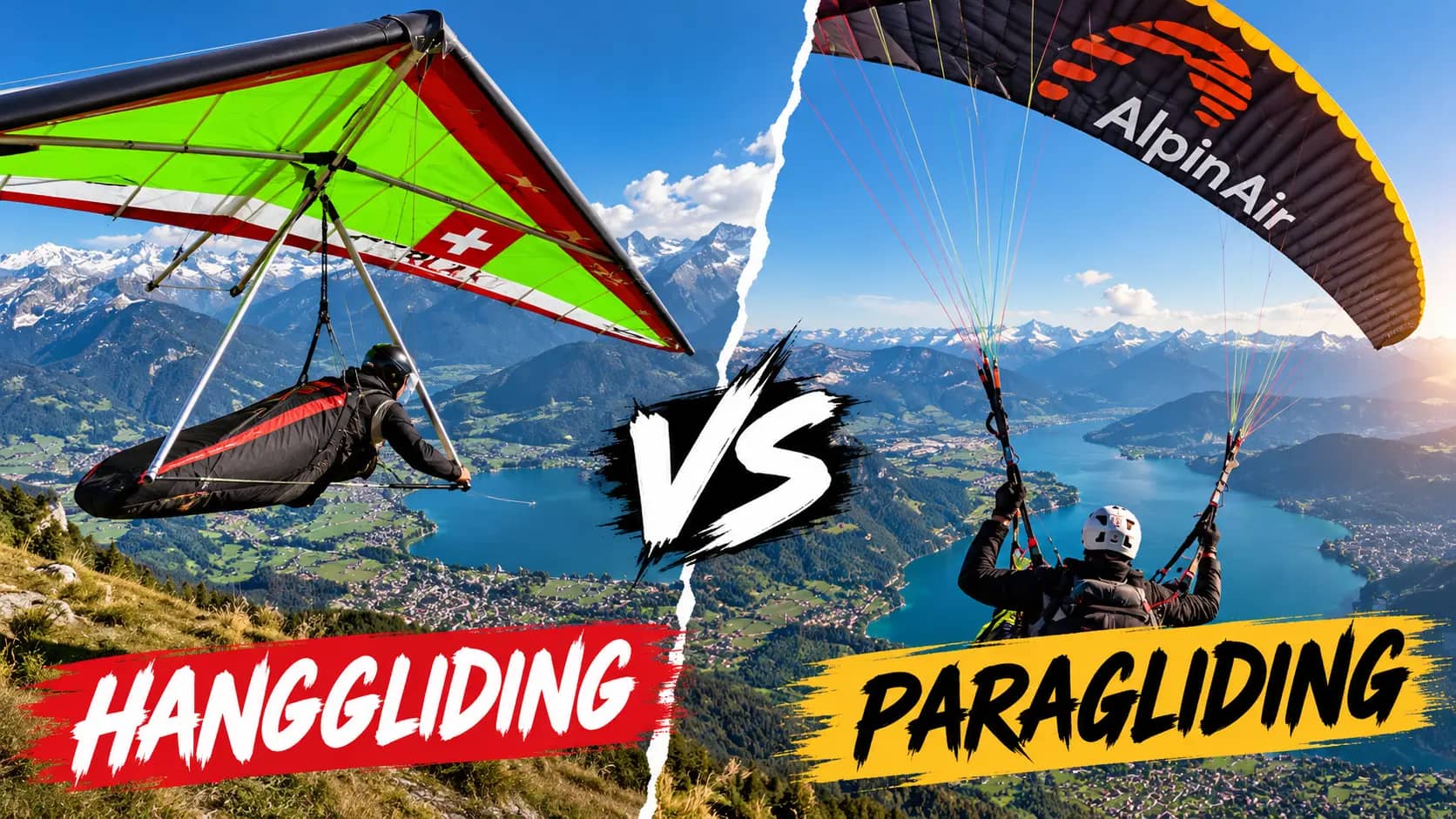
Hang Gliding or Paragliding in Interlaken?
Compare hang gliding and paragliding in Interlaken: same hill, same 10 to 20 minutes, CHF 180 to 199 against CHF 260. What the extra 61 to 80 francs buy.
tandem-hang-glidingtandem-paraglidingadventure-sports
By Timoté BailyRead More
Lakes, Water & Air
9/6/2026
13 min
Iseltwald Crash Landing on You Pier: What CHF 5 Buys
See what the CHF 5 turnstile at the Iseltwald pier actually buys you, how to get there by bus or boat, and when the Crash Landing on You crowds thin out.
korean-drama-locationsfilming-locations-switzerlandlake-brienz-villages
By Olivia LufmanRead More
Lakes, Water & Air
9/5/2026
14 min
Giessbach Falls Legend: 14 Heroes, No Nymph
Meet the 14 Bernese heroes the Giessbach falls have been named after since 1830, and learn why the popular nymph legend has no source behind it.
swiss-legendsswiss-folklorebernese-history
By Olivia LufmanRead More