Orte & Ausflüge
Was tun in Interlaken: der ehrliche Guide 2026
P
Pierre Vetsch
Autor
17. Mai 2026
6 Min
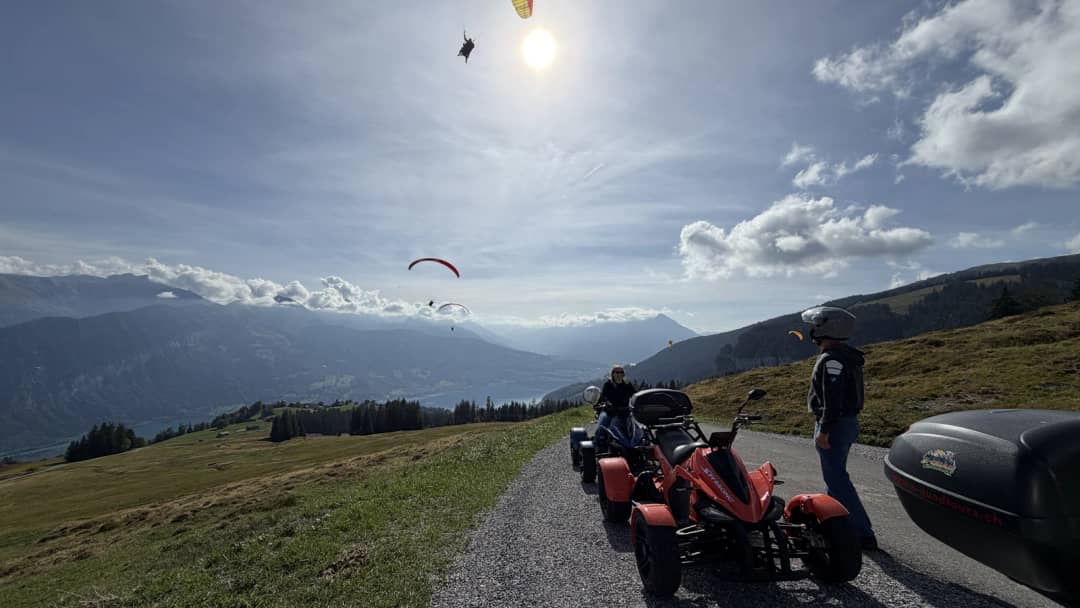
Was tun in Interlaken: der ehrliche Guide eines Einheimischen für 2026
Fragen Sie mich nach einem einzigen Moment in Interlaken selbst, und ich nenne keinen Gipfel:
«Die Höhematte bei Sonnenuntergang, die Jungfrau, die sich rosa färbt.»
Pierre Vetsch, Guide und Gründer, Interview vom 14. Oktober 2026
Gäste haben mir gesagt, dass zwei Tage hier zu wenig waren.
Ich führe in dieser Region Abenteuertouren in kleinen Gruppen. Nach über 300 Guidingtagen im Berner Oberland kenne ich den Unterschied zwischen dem, was auf jedem Reiseplan landet, und dem, was den Leuten wirklich bleibt. Manche Klassiker dieser Reisepläne verdienen ihren Ruf. Manche sind Touristenfallen in schöner Verpackung. Und einige der besten Momente im Berner Oberland schaffen es auf gar keine Liste.
Hier kommt die ehrliche Version.
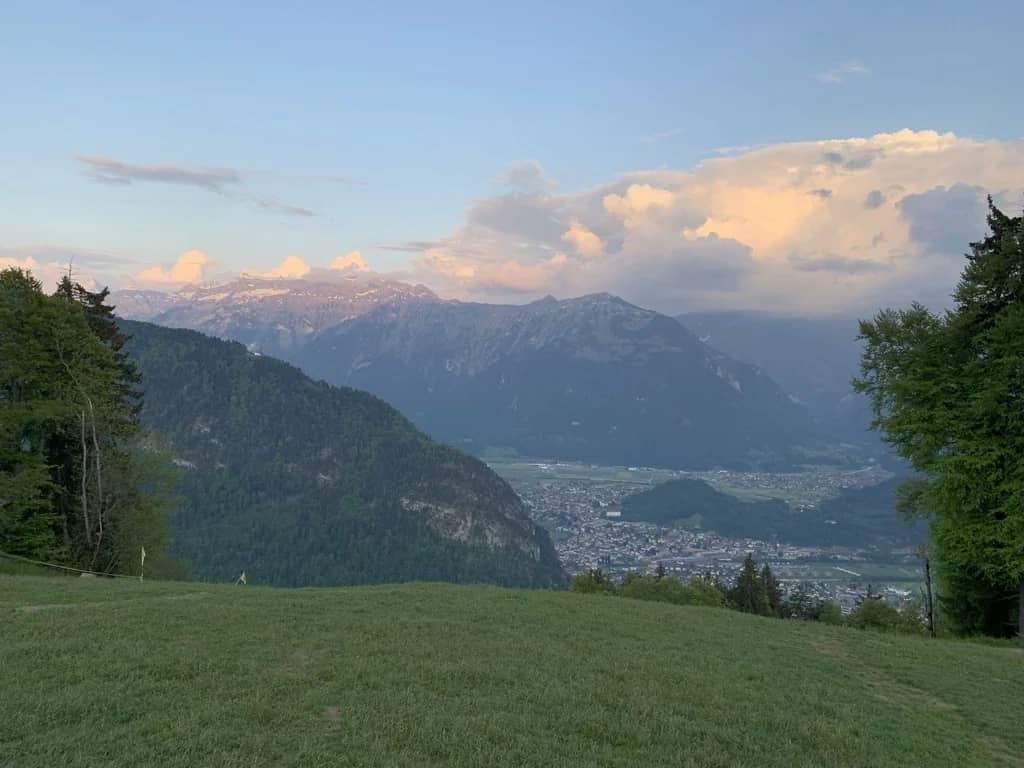
Lohnt sich Interlaken?
Ja, Interlaken lohnt sich. Einige meiner Gäste befürchteten, es sei nur eine weitere überlaufene Schweizer Stadt, und die Realität hat sie überrascht. Die Stadt selbst ist ruhig, sobald man den einen Quadratkilometer Souvenirläden verlässt. Die Region drumherum, zwei Seen, drei Berge und Dutzende Dörfer, macht den Ruf aus.
Andere haben mir gesagt, die Stadt sei hübsch, aber weniger eindrücklich als erwartet. Sie messen am falschen Massstab. Interlaken ist kein Ziel, das man von der Strasse aus bewundert. Es ist eine Plattform für das, was es umgibt.
Interlaken liegt zwischen dem Thunersee im Westen und dem Brienzersee im Osten, in einer flachen Schwemmebene, umgeben vom höchsten Gebirge Mitteleuropas. Der Name heisst wörtlich zwischen den Seen. Diese Geografie gibt der Stadt ihr Herzstück: die Höhematte, eine 14 Hektar grosse Wiese mitten in der Stadt, grün geblieben, seit die Hoteliers von Interlaken sie 1864 kauften und jede Überbauung verboten. Dieses Verbot hält bis heute. Deshalb können Sie mitten in einer Stadt auf Gras stehen und die Jungfrau direkt über sich aufragen sehen.
Lord Byron kam im September 1816 durch und speiste in «Interlachen», wie sein Alpentagebuch festhält. Mark Twain erreichte den Ort bei Sonnenuntergang, auf der Wanderreise durch Europa, die er 1878 antrat und in A Tramp Abroad beschrieb. Interlaken empfängt seit zwei Jahrhunderten Reisende, und man merkt es.
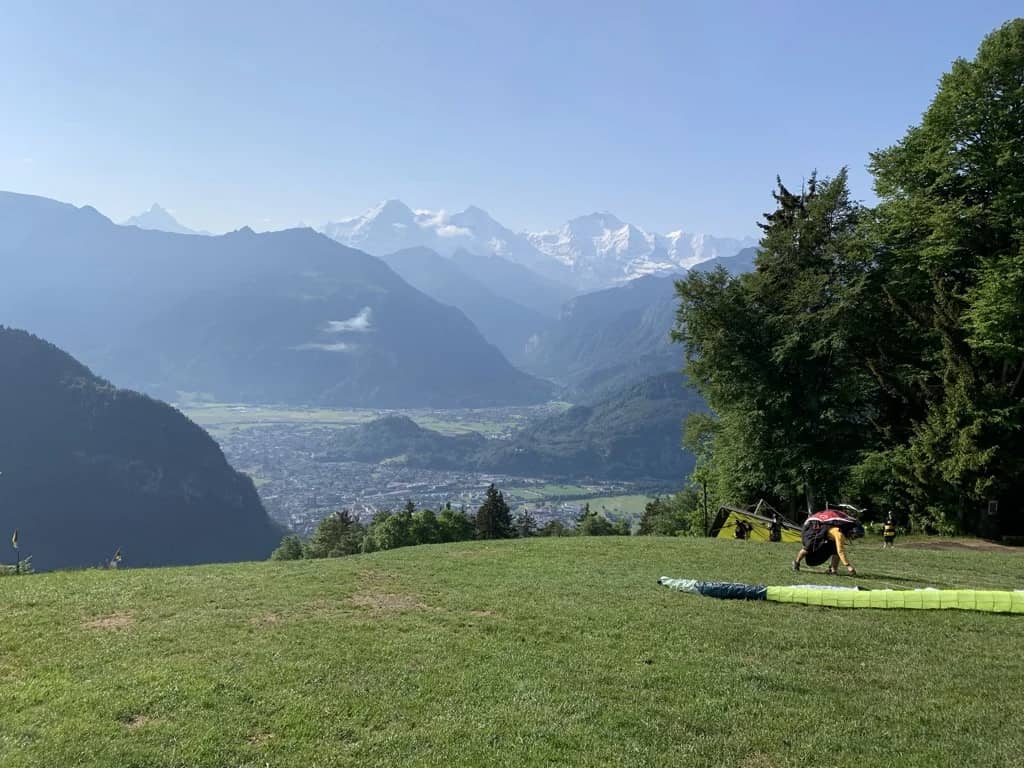
Wofür ist Interlaken bekannt?
Interlaken ist vor allem als Abenteuerhauptstadt der Schweiz und als Tor zur Jungfrau Region bekannt. Gleitschirmfliegen, Fallschirmspringen, Canyoning und der Zug zum höchsten Bahnhof Europas haben es seit den 1990er-Jahren auf jede Wunschliste gebracht. Aber die Seen, die Bergdörfer und die Schweizer Esskultur ziehen genauso viele Leute an, die mit Adrenalin nichts zu tun haben wollen.
Die 25 besten Dinge, die man 2026 in Interlaken tun kann
Sie sind nach Art gruppiert. Innerhalb jeder Gruppe gehen sie vom Bekanntesten zum am meisten Übersehenen.
Bergabenteuer
Gleitschirmfliegen ab Beatenberg (CHF 180-199): Die Tandemflüge starten oberhalb der Waldgrenze und landen auf der Höhematte. Was der Start von Ihnen verlangt:
«Man rennt, man springt nicht, und kein Schwindel.»
Pierre Vetsch, Guide und Gründer, Interview vom 14. Oktober 2026
Einige meiner Gäste hatten oben grosse Angst und nannten es danach trotzdem eines der besten Erlebnisse ihres Lebens. Mein Urteil zum Preis fällt dennoch so aus:
«Es ist den Preis nicht wert, nein. Besser eine andere Aktivität machen: stattdessen Deltafliegen, sonst Kajak oder etwas anderes. Den Gleitschirm für Frankreich, Spanien oder Portugal aufheben, für 70 Euro.»
Pierre Vetsch, Guide und Gründer, Interview vom 14. Oktober 2026
Die 70 Euro sind meine grobe Vorstellung von einem Flug dort, kein veröffentlichter Tarif. Wenn Sie hier trotzdem fliegen möchten, finden Sie alles im vollständigen Guide zum Gleitschirmfliegen in Interlaken.
Jungfraujoch, Top of Europe (Retourbillett ab CHF 129.60): Der Zug steigt auf 3454 Meter, den höchsten Bahnhof Europas. Eispalast, Gletschersteg und, ja, ein Lindt-Stand. Oft überlaufen und teuer für das, was es ist: Ich empfehle es nicht, und für einen einzigen bezahlten Gipfel ziehe ich das Schilthorn vor. Wenn es trotzdem auf Ihrer Liste bleibt, dann nur an einem klaren Tag.
Fallschirmspringen über Interlaken (CHF 425): Vom Sprungplatz Reichenbach im Kandertal steigt das Flugzeug in höchstens 15 Minuten über Thuner- und Brienzersee auf 4000 Meter. Dann 45 Sekunden freier Fall mit 180 km/h und rund fünf Minuten am Schirm, mit Eiger, Mönch und Jungfrau rundherum.
Canyoning im Saxetenbach oder am Grimsel (CHF 100-150): Abseilen an Wasserfällen in smaragdgrüne Gumpen. Die Saxetenbach-Schlucht dauert 2.5 Stunden und funktioniert für Einsteiger. Siehe Abenteuer in Interlaken: ehrliches Ranking (lokaler Guide).
Wildwasser-Rafting auf der Lütschine (CHF 80-120): Stromschnellen der Klasse II-III, von Juni bis September befahrbar. Kurz, knackig, gut für Gruppen mit gemischter Erfahrung.
Eiger-Express-Gondel zum Eigergletscher (CHF 60-80): Die schnellste Seilbahn der Alpen erreicht den Eigergletscher in 15 Minuten. Gletscherblick und die Eiger Nordwand auf Augenhöhe, ohne die Höhe des Jungfraujochs.
Zahnradbahn auf die Schynige Platte (CHF 60-75 retour, oder im Swiss Travel Pass inbegriffen): der lokale Favorit beim Verhältnis von Preis zu Magie. Eine Zahnradbahn aus dem 19. Jahrhundert klettert durch Blumenwiesen zu einem botanischen Garten auf 1987 Metern. Das Panorama auf alle drei Gipfel vom Grat aus versteht man in zehn Sekunden und vergisst es viel langsamer.
Gratwanderung auf dem Augstmatthorn: der Klippen-Selfiepunkt, den die meisten Instagram-Konten taggen, ohne das Land zu nennen. 2.5 Stunden ab Habkern, im Sommer ohne Guide machbar.
Erlebnisse auf dem Wasser
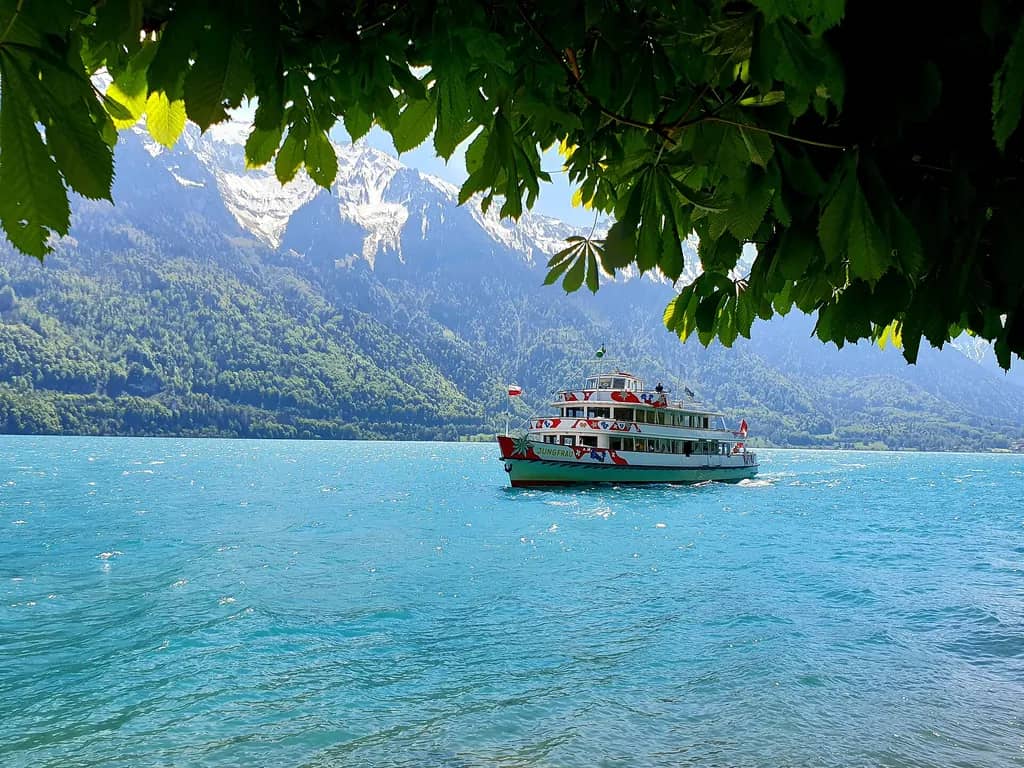
Kajakfahren auf dem Brienzersee (CHF 115 pro erwachsene Person, mit Guide): Der See liegt kalt und smaragdgrün da, und Gletscherwasser hält die Farbe den ganzen Sommer. Geführte Touren gibt es von Mai bis Oktober, mit Start um 09.15 oder 09.20 Uhr und um 13.15 oder 13.20 Uhr; im Oktober kosten sie CHF 125.
BLS-Schiff von Interlaken nach Spiez (im Swiss Travel Pass inbegriffen): Schlossufer, Reben über dem Wasser, das Städtchen Spiez mit seinem Schloss aus dem 9. Jahrhundert. Eine Rundfahrt von zwei Stunden, die die meisten Gäste auslassen.
Baden in Bönigen (CHF 6 im Jahr 2026): So viel kostet der Tageseintritt für Erwachsene im Strandbad Bönigen am Brienzersee, das 2026 vom 16. Mai bis 13. September offen war und jetzt bis 2027 geschlossen ist. Mein eigener Platz ist gratis und liegt ausserhalb des Strandbads:
«Am Ende von Bönigen, an der Strasse Richtung Iseltwald. Kiesel, ein sanfter Einstieg.»
Pierre Vetsch, Guide und Gründer, Interview vom 13. September 2026
Ab Mitte September ist der See für die meisten Gäste zu kalt. Heben Sie sich dieses Bad also für den Sommer auf.
Steg von Iseltwald (CHF 5 Zutritt): weltberühmt geworden durch die koreanische Serie Crash Landing on You. Die Gemeinde verlangt die Gebühr, um den Schiffssteg zu betreten. Mein Urteil:
«Die CHF 5 für den Steg empfehlen wir nicht. Lieber überall sonst gratis Fotos machen, im Dorf und an den anderen Ufern.»
Pierre Vetsch, Guide und Gründer, Interview vom 14. Oktober 2026
Olivia Lufman aus unserem Team entscheidet gleich: «Meine Wahl ist das Foto vom Ufer aus.» Die Details stehen in unserem Guide zum Steg von Iseltwald aus Crash Landing on You.
Giessbachfälle am Brienzersee (gratis, Schiff zusätzlich): vierzehn Fälle, die direkt in den See stürzen, erreichbar mit der ältesten Standseilbahn der Schweiz (1879). Die Gischt erreicht die Aussichtsplattformen.
St. Beatus-Höhlen am Thunersee (CHF 19): unterirdische Flussgalerien, Kalktropfsteine und eine in den Fels gehauene Kapelle aus dem 14. Jahrhundert. An Regentagen besser als jede Einkaufsstrasse.
Bergdörfer und Kultur
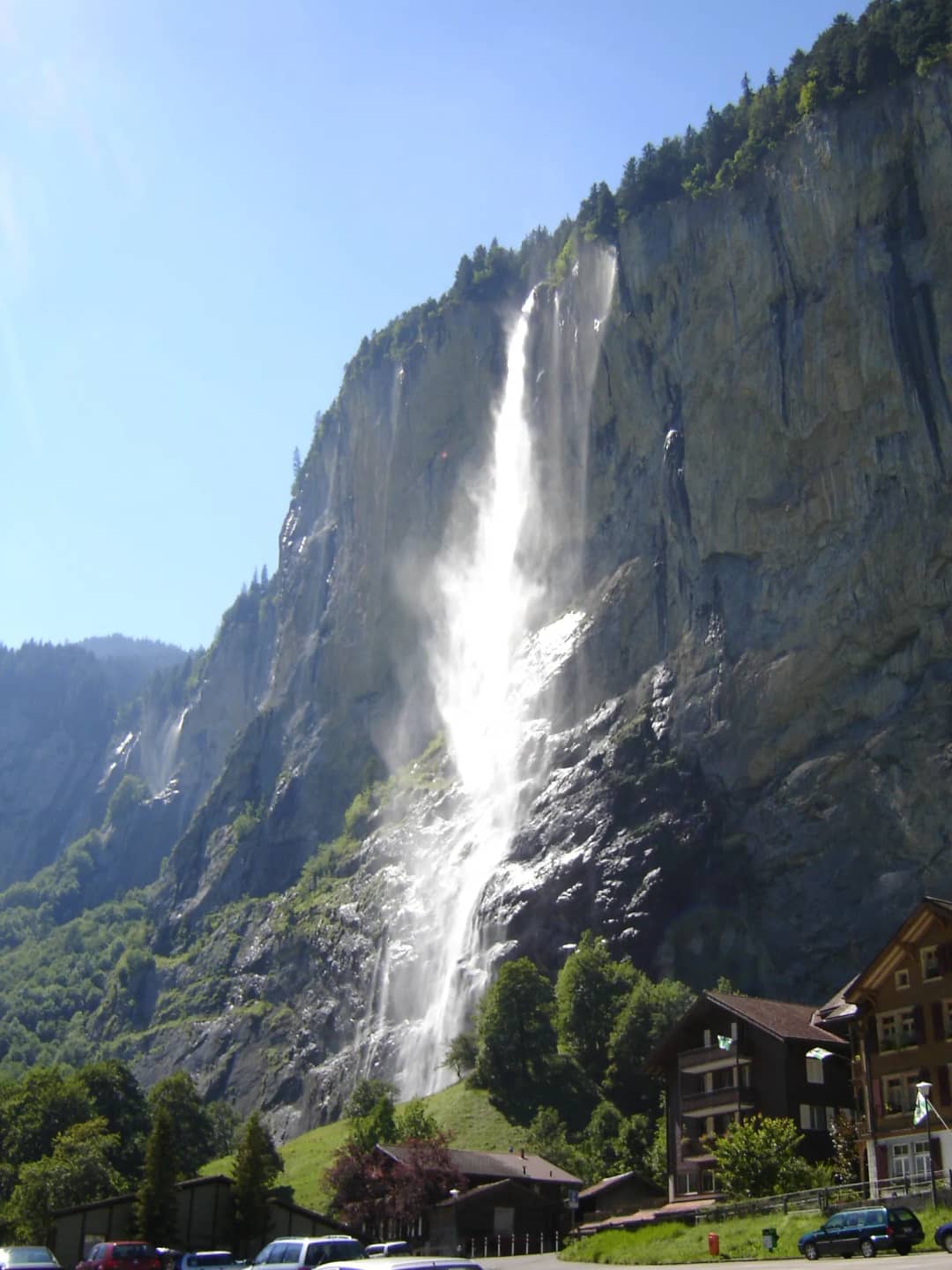
Lauterbrunnental (Zutritt gratis): 72 Wasserfälle, darunter der Staubbachfall, der 300 Meter in einem einzigen Strang fällt. Gehen Sie zwei Stunden durch den Talboden, ohne etwas zu bezahlen.
Der Fehler, den ich im Tal sehe:
«Nicht im Tal laufen, beim Staubbach stehen bleiben.»
Pierre Vetsch, Guide und Gründer, Interview vom 20. September 2026
Mürren mit Seilbahn und Bahn (CHF 45-60 ab Lauterbrunnen): autofrei auf 1650 Metern. Blumenkästen an den Chalets. Das Schilthorn darüber kam 1969 im Bond-Film Im Geheimdienst Ihrer Majestät vor. Das Restaurant Piz Gloria auf dem Gipfel serviert immer noch Fondue.
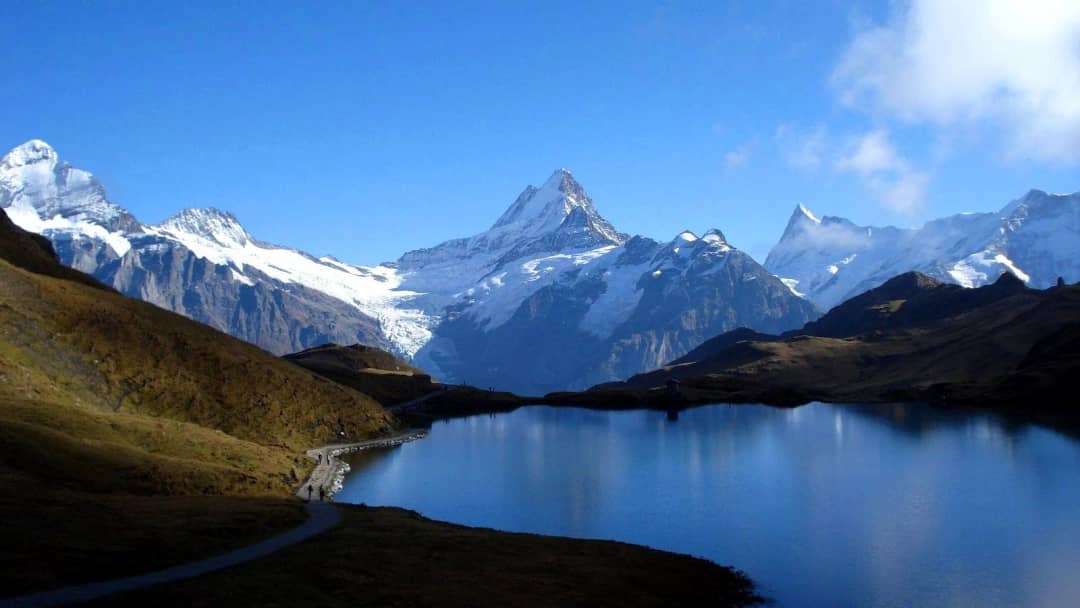
Grindelwald und die Wanderung zum Bachalpsee: mit der Bahn nach Grindelwald-First (CHF 55 retour), dann 45 Minuten zum Bachalpsee. Der See spiegelt das Schreckhorn so perfekt, dass es manipuliert aussieht. Rechnen Sie mit Gesellschaft:
«Der Bachalpsee für Leute, die nicht fit sind: einfacher, eine grossartige Aussicht, ikonisch, aber viele Leute.»
Pierre Vetsch, Guide und Gründer, Interview vom 29. September 2026
Justistal, das Käsetal über Beatenberg: eine Hochweide, auf der jeden September noch der Chästeilet stattfindet. Die Bauern teilen den Alpkäse des Sommers nach jahrhundertealtem Brauch auf und führen dann, in Tracht, das geschmückte Vieh ins Tal hinunter. 2026 war das am 18. September, und ich war dabei. Die Touristenkarten lassen es aus. Die Einheimischen nicht.
Reichenbachfall über Meiringen (Standseilbahn CHF 15 retour): der Ort, an dem Sherlock Holmes in Conan Doyles Geschichte starb. Das Sherlock-Holmes-Museum in Meiringen ist charmanter, als es sein müsste.
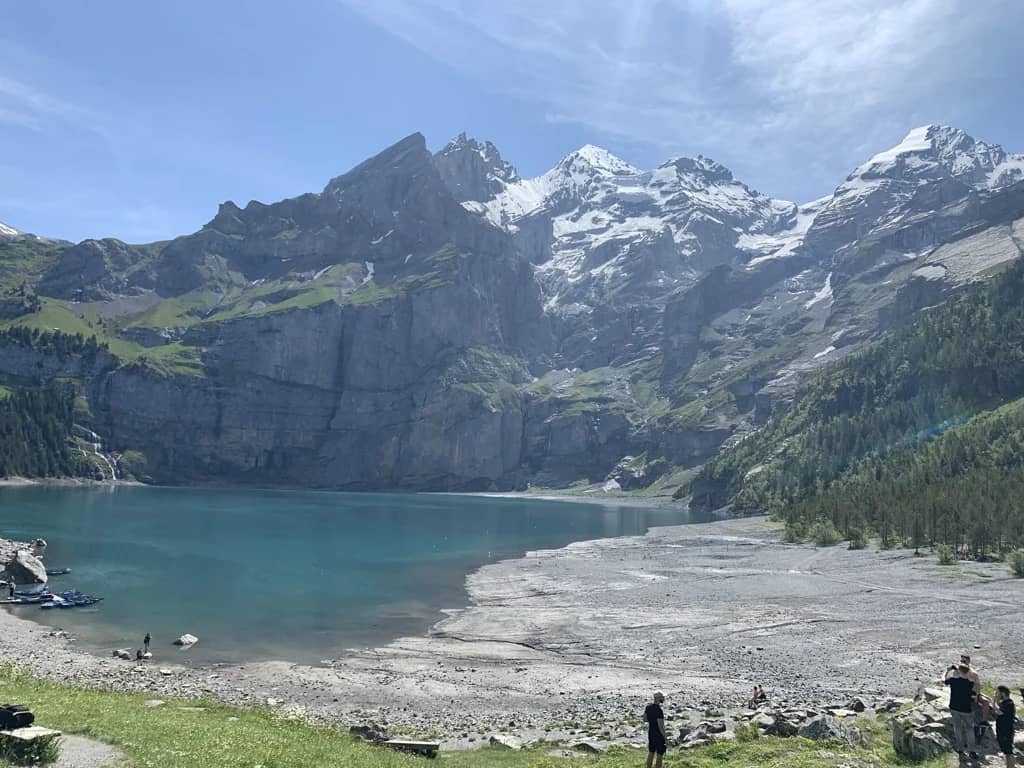
Oeschinensee, der schönste Bergsee der Schweiz (CHF 36-40 Gondel retour): tiefblauer See auf 1578 Metern, hinterlegt von Felswänden und Gletscher. Für die Bergfahrt ist während der ganzen Sommersaison, bis und mit 8. November 2026, ein reserviertes Zeitfenster nötig. Buchen Sie es online oder, solange Plätze frei sind, am Ticketautomaten. Swiss Travel Pass: 50% Ermässigung. Wichtig: Der Berner Oberland Pass wird am Oeschinensee seit Januar 2026 nicht mehr akzeptiert.
Bevor Sie im Sommer hinfahren, lohnt sich ein Blick in unseren Guide zum Oeschinensee: Er erklärt die Gondelreservation, den Abstieg zu Fuss ans Ufer und die Stunden, in denen die Farbe des Sees am schönsten ist.
Die Gondel ist der bequeme Weg hinauf. Mein Urteil:
«Zu Fuss hochgehen, das ist die Mühe wert.»
Pierre Vetsch, Guide und Gründer, Interview vom 8. Oktober 2026
Der Fehler Nummer eins, den ich dabei sehe: den Oeschinensee nicht mit dem Blausee zu kombinieren, am selben Tag im Kandertal.
Essen und Kultur
Alpfrühstück auf dem Sigriswiler Bärgli im Justistal (CHF 149): Daniela führt die Produktion auf 1370 Metern, in dem Tal, das die Touristenkarten auslassen. Ihr Tag, in ihren Worten: «Um fünf aufstehen, jeden einzelnen Tag Käse.» Unsere Farm Tour startet dienstags und donnerstags um 8.00 Uhr in Interlaken, das Frühstück an ihrem Tisch gibt es gegen 9.00 Uhr: frische Milch, Käse und Brot vom selben Morgen. CHF 149 pro Person, CHF 139 ab sechs Gästen, höchstens acht Gäste, von Mai bis Mitte September. 2026 habe ich mehr als zehn dieser Morgen bei Daniela geführt, und Gäste haben mir gesagt, das hätten sie gern schon am ersten Tag gemacht.
Der Zweifel, den ich höre: Es sei eine Vorführung, und Sie würden lieber selbst mit anpacken. Meine Antwort:
«Es ist ihr Käse des Tages, kein Kurs: Sie schauen bei echter Arbeit zu.»
Pierre Vetsch, Guide und Gründer, Interview vom 13. Oktober 2026
Die Saison 2026 ist vorbei; die Tour läuft wieder von Mai bis Mitte September.
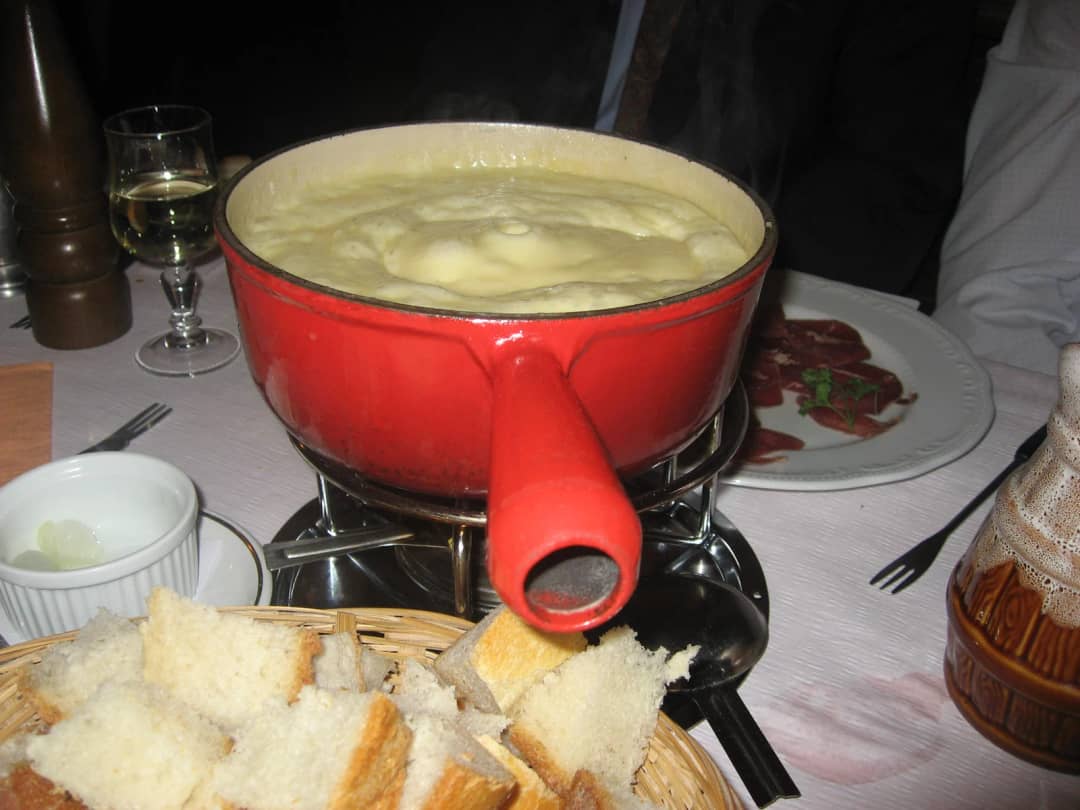
Fondue-Abend in Interlaken: Die Berner Variante nimmt Gruyère und Vacherin Fribourgeois, geschmolzen mit Weisswein und einem Schuss Kirsch. Fällt Ihr Brot in den Topf, schulden Sie laut Tradition eine Runde. Bestellen Sie das mindestens einmal.
Workshop im Funky Chocolate Club (CHF 45-65): Schokolade selbst machen, mitten in Interlaken. Besser als jede Boutique-Degustation und klein genug, um persönlich zu bleiben.
Weinwanderung über Spiez am Thunersee (Wandern gratis, Degustation zusätzlich): Die Reben über Spiez bringen einen lokalen Pinot Noir und einen Chasselas hervor, den kaum ein Gast je findet. Ein Nachmittag, der fast nichts kostet. Gratis und günstig
Die Höhematte bei Sonnenuntergang (gratis): Setzen Sie sich ins Gras. Schauen Sie zu, wie die Jungfrau rosa wird, dann orange, dann wieder weiss. Die Hoteliers, die die Wiese 1864 kauften und jede Überbauung verboten, haben diese Aussicht jedem Gast geschenkt. Sie wirkt immer noch.
Wer wissen möchte, wer diese Hoteliers waren und weshalb die Wiese bis heute frei geblieben ist, findet die ganze Geschichte in unserem Beitrag warum die Höhematte Wiese blieb. Sie sehen den Platz danach mit anderen Augen.
Was kann man in Interlaken an nur einem Tag machen?
Ein voller Tag reicht, wenn Sie in einem Tal bleiben. Für einen ersten Besuch im Sommer ist das mein Plan:
«Lauterbrunnen zu Fuss, dann Mürren und das Schilthorn.»
Pierre Vetsch, Guide und Gründer, Interview vom 14. Oktober 2026
Der beste einzelne Tag in Interlaken:
Morgen: mit dem Zug von Interlaken Ost nach Lauterbrunnen (22 Minuten), dann zu Fuss durch den Talboden am Staubbachfall vorbei
Mittag: mit Seilbahn und Bahn hinauf nach Mürren, ins autofreie Dorf an der Felskante
Nachmittag: mit der Seilbahn von Mürren aufs Schilthorn und ins Restaurant Piz Gloria
Abend: zurück in Interlaken, Fondue zum Abendessen. Bestellen Sie einen Weisswein aus Spiez dazu
Sonnenuntergang: auf der Höhematte sitzen und zuschauen, wie das Licht die Jungfrau verlässt
Sie werden gut schlafen und aufwachen mit dem Wunsch, die Reise zu verlängern.
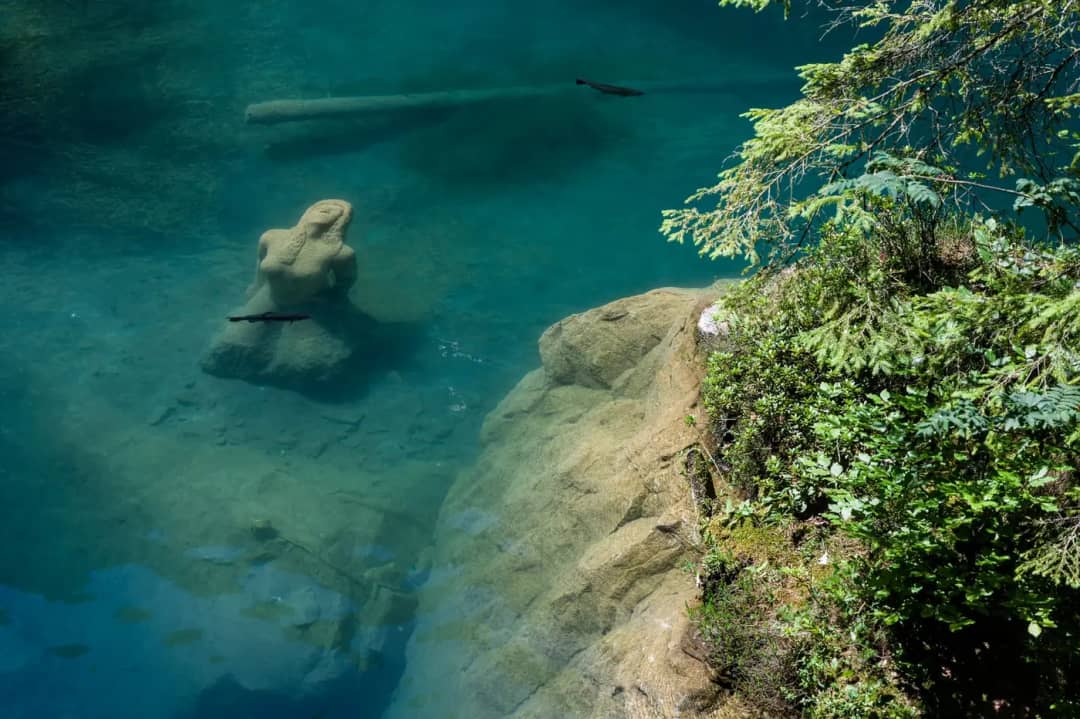
Ist Interlaken auch etwas für Leute ohne Abenteuersport?
Vollkommen. Die Outdoor-Aktivitäten bekommen die Aufmerksamkeit im Marketing, aber zwei Seen, drei Bergdörfer, eine Bahn von 1893 und eine der besten Käse- und Weinregionen der Schweiz existieren völlig ausserhalb der Adrenalinwirtschaft.
Wer kein Abenteuer sucht, fährt gut mit: Schifffahrten der BLS, dem botanischen Garten auf der Schynigen Platte, den St. Beatus-Höhlen, dem Lauterbrunnental zu Fuss, einem Fondue-Abend, einer Weinwanderung über Spiez und dem Alpfrühstück auf dem Sigriswiler Bärgli. Nichts davon braucht einen Gurt.
Wie viele Tage braucht man in Interlaken?
Zwei Tage: genug für einen grossen Berg (Schynige Platte oder Schilthorn), ein Abenteuer (Deltafliegen oder Kajak statt Gleitschirm) und einen Nachmittag am See. Sie reisen ab und wollen mehr. Das ist das absolute Minimum.
Drei bis vier Tage: das richtige Mass beim ersten Mal. Nehmen Sie das Lauterbrunnental dazu, einen Abend in Grindelwald, Iseltwald und den Bachalpsee und mindestens ein richtiges Käseessen. Drei Tage fühlen sich vollständig an. Vier Tage fühlen sich luxuriös an.
Fünf bis sieben Tage: die richtige Investition, wenn Sie Abenteuer, Ausflüge und einen ganzen Ruhetag mischen. Meine eigene Liste für einen so langen Aufenthalt:
«Interlaken als Basis für Tagesausflüge: Grindelwald mit First und Eiger; Lauterbrunnen mit Mürren und Wengen; Kandersteg mit Blausee und Oeschinensee; Brienz und Iseltwald, Rothorn und Meiringen; und Interlaken.»
Pierre Vetsch, Guide und Gründer, Interview vom 23. September 2026
Für fünf Tage davon ist der Swiss Travel Pass mein Billett. Weiter weg liegt Bern mit dem Direktzug 56 bis 57 Minuten entfernt, Luzern 1 Stunde 51 Minuten (Fahrplan am 15. Oktober 2026 für einen Werktag im Januar 2027 geprüft; während der Bauarbeiten in diesem Herbst kostet ein Ersatzbus zwischen Interlaken Ost und Interlaken West zusätzlich Zeit).

Was kann man in Interlaken gratis machen?
Mehrere der besten Erlebnisse kosten nichts:
Über die Höhematte spazieren bei Sonnenuntergang
Der Talboden von Lauterbrunnen (72 Wasserfälle, kein Eintritt)
Die Gratwanderung auf dem Augstmatthorn ab Habkern
Das Justistal über Beatenberg
Die Weinwanderung über Spiez am Thunersee
Zuschauen, wie das Schiff in irgendein Seedorf an der BLS-Linie einfährt Der Swiss Travel Pass deckt Züge und BLS-Schiffe und gibt 50% Ermässigung auf die meisten Bergbahnen. Mit dem Pass sinken die effektiven Kosten eines Bergtags deutlich.
Der Fehler, den ich bei Gästen sehe, die wegen des Adrenalins kommen:
«Sie machen nur die bezahlten Sachen und sehen nie die Landschaft.»
Pierre Vetsch, Guide und Gründer, Interview vom 8. Oktober 2026
Welche Tagesausflüge kann man ab Interlaken machen?
Interlaken ist ein echter Knotenpunkt. Das sind die besten Tagesausflüge, alle mit dem Zug erreichbar:

Für die genaue Logistik siehe den ganzen Guide zu den besten Tagesausflügen ab Interlaken 2026.
💡 Insidertipp von Pierre Ein voller Tag im Sommer, erster Besuch? Bleiben Sie in einem Tal: «Lauterbrunnen zu Fuss, dann Mürren und das Schilthorn.» (Interview vom 14. Oktober 2026). Schliessen Sie auf der Höhematte mit einem Fondue und einem Glas Weisswein aus Spiez ab.
Lohnt sich das Jungfraujoch?
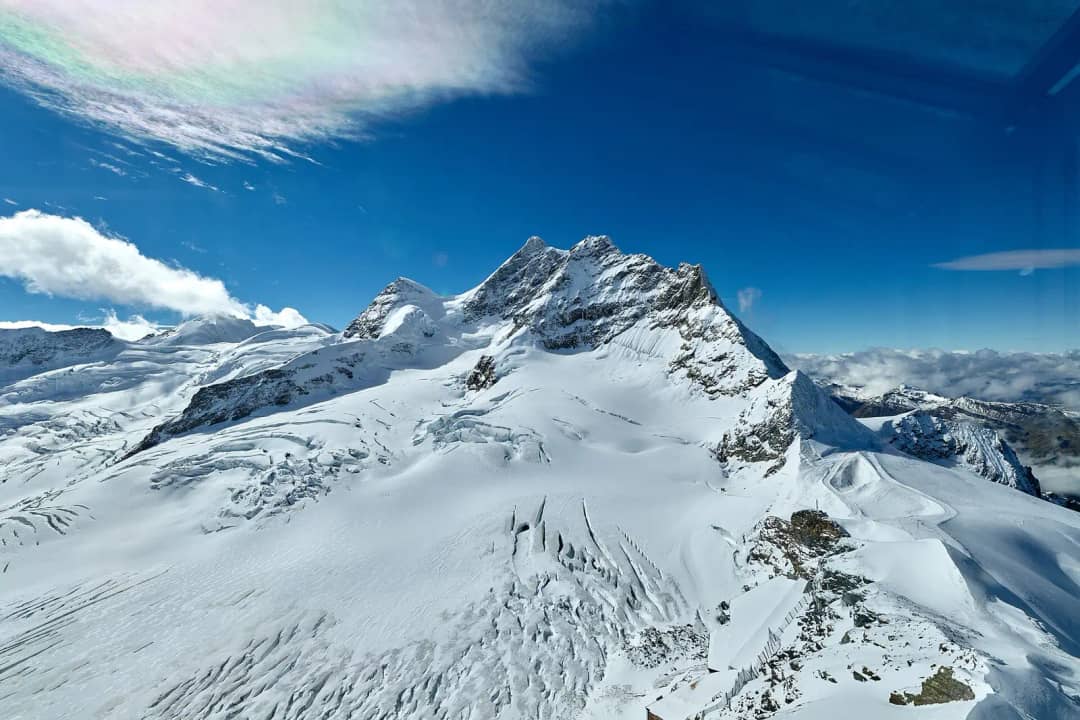
Meiner Meinung nach nicht. Der Zug steigt auf 3454 Meter, zum höchsten Bahnhof Europas, und die Jungfraubahnen nennen für das Retourbillett einen Preis ab CHF 129.60 (geprüft am 15. Oktober 2026). Ich schicke Gäste trotzdem nicht hinauf:
«Ich empfehle das Jungfraujoch nicht. Es ist oft sehr überlaufen, die Aussicht ist schön, aber teuer für das, was man bekommt, und manchmal steckt es in den Wolken, dann gibt es keine Aussicht. Ich bevorzuge das Schilthorn, Piz Gloria.»
Pierre Vetsch, Guide und Gründer, Interview vom 26. September 2026
Wenn es dennoch auf Ihrer Liste bleibt, entscheidet das Wetter.
An einem bedeckten Tag: lassen Sie es. Weichen Sie auf Grindelwald-First oder die Schynige Platte aus. Schauen Sie am Vorabend die Gipfelwebcam an. Blauer Himmel oben: los. Wolkendecke: sparen Sie das Geld.
Das ist der klassische Fehler, den ich sehe:
«Das Jungfraujoch bei bedecktem Himmel bezahlen.»
Pierre Vetsch, Guide und Gründer, Interview vom 24. September 2026
Für einen einzigen bezahlten Gipfel nehmen Sie stattdessen das Schilthorn über Mürren, am selben Tag wie das Lauterbrunnental.
Die zwei Seen, mit denen alles begann
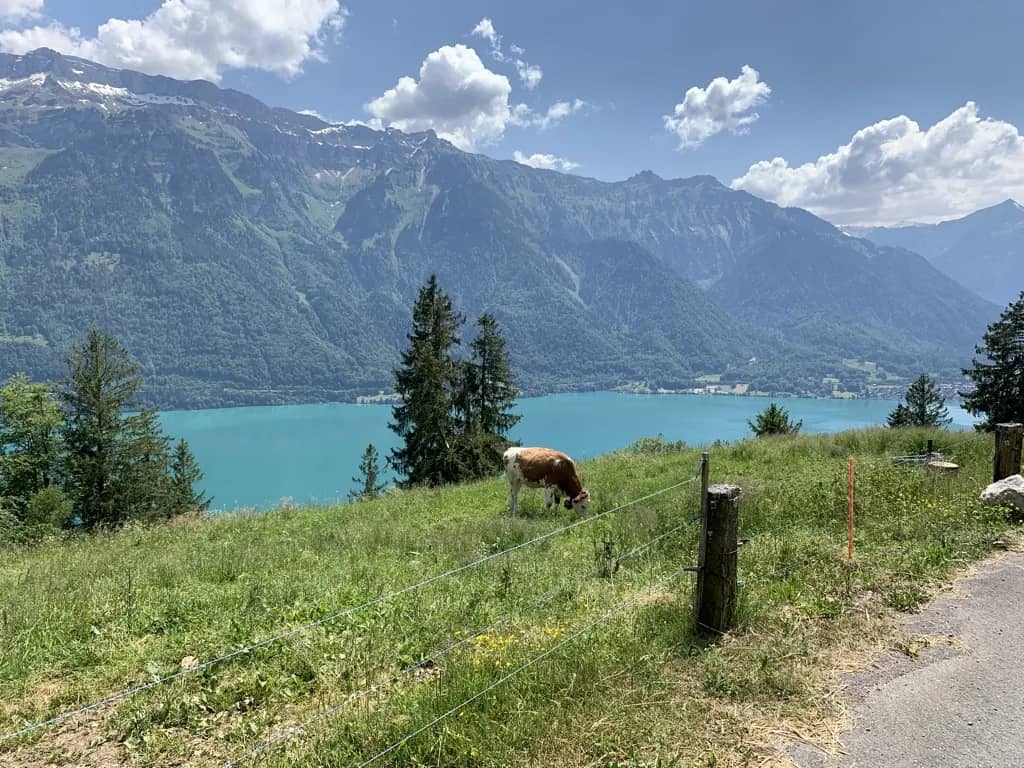
Thunersee und Brienzersee sind nicht derselbe See. Behandeln Sie sie als zwei getrennte Entscheidungen.
Der Thunersee ist breiter, ruhiger, dichter besiedelt. Schlösser säumen sein Ufer: Spiez, Oberhofen, Thun. Die BLS-Schiffe pendeln zwischen den Dörfern nach einem Fahrplan, um den man einen Tag herum bauen kann. Das Wasser wird im Morgenlicht mineralblau und um 19 Uhr golden. Das ist der See fürs langsame Reisen: Rebwanderungen über Spiez, ein Picknick an Bord, ein Sprung vom Holzsteg in einem Dorf, in dem niemand hetzt.
Der Brienzersee ist kälter und smaragdgrüner. Weniger bebaut. Gletscherwasser hält die Farbe den ganzen Sommer fast künstlich wirkend. Iseltwald liegt an seinem Westufer und wurde durch eine koreanische Serie über Nacht weltberühmt. Die Giessbachfälle stürzen vierzehnmal in sein Ostende. Das Dorf Brienz selbst ist für handgeschnitzte Holzobjekte bekannt, ein Handwerk, das in echten Werkstätten überlebt, die man besuchen kann.
Klarer Himmel: Beginnen Sie am Brienzersee wegen der Farbe. Bedeckt: Das Schlossland am Thunersee braucht weniger Licht.
Für die ganze Übersicht zu Badeplätzen, Schiffsrouten und versteckten Buchten siehe alle Seen rund um Interlaken.
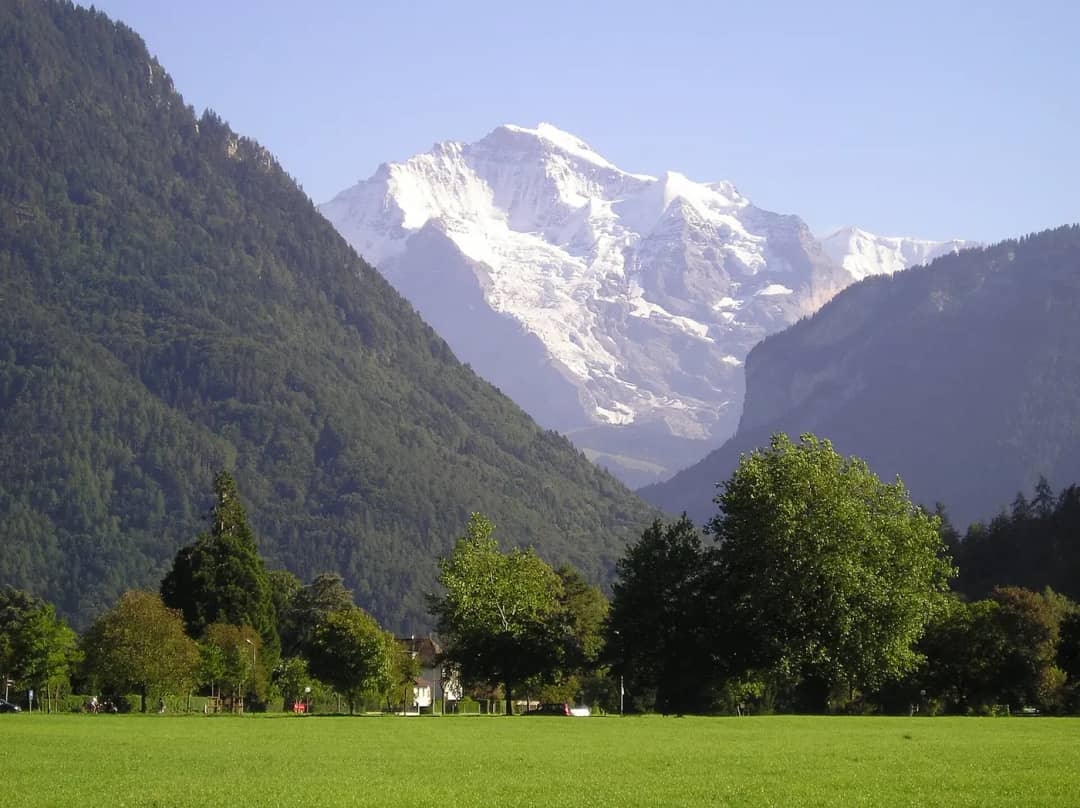
Die drei Berge, die die Silhouette bestimmen
Stellen Sie sich auf die Höhematte und schauen Sie nach Süden. Drei Gipfel füllen das Bild.
Der Eiger (3967 m) steht links, eine dunkle Wand. Seine Nordwand ist eine der bekanntesten und gefährlichsten der Alpingeschichte. Dreizehn Expeditionen scheiterten vor der Erstbesteigung 1938. Sie müssen ihn nicht besteigen. Ihn anzuschauen erledigt das meiste.
Der Mönch (4107 m) steht in der Mitte. Die Geschichte dazu: Der Mönch steht zwischen dem Eiger (dem Oger) und der Jungfrau (der Maid), um sie zu schützen. Die Schweizer Alpensagen sind älter als der Alpinismus selbst.
Die Jungfrau (4158 m) erhebt sich rechts. Einer von vier UNESCO-Welterbegipfeln in der Region Jungfrau-Aletsch. Das Wahrzeichen des Berner Oberlands. Elf Monate im Jahr liegt Schnee auf dem Gipfel.
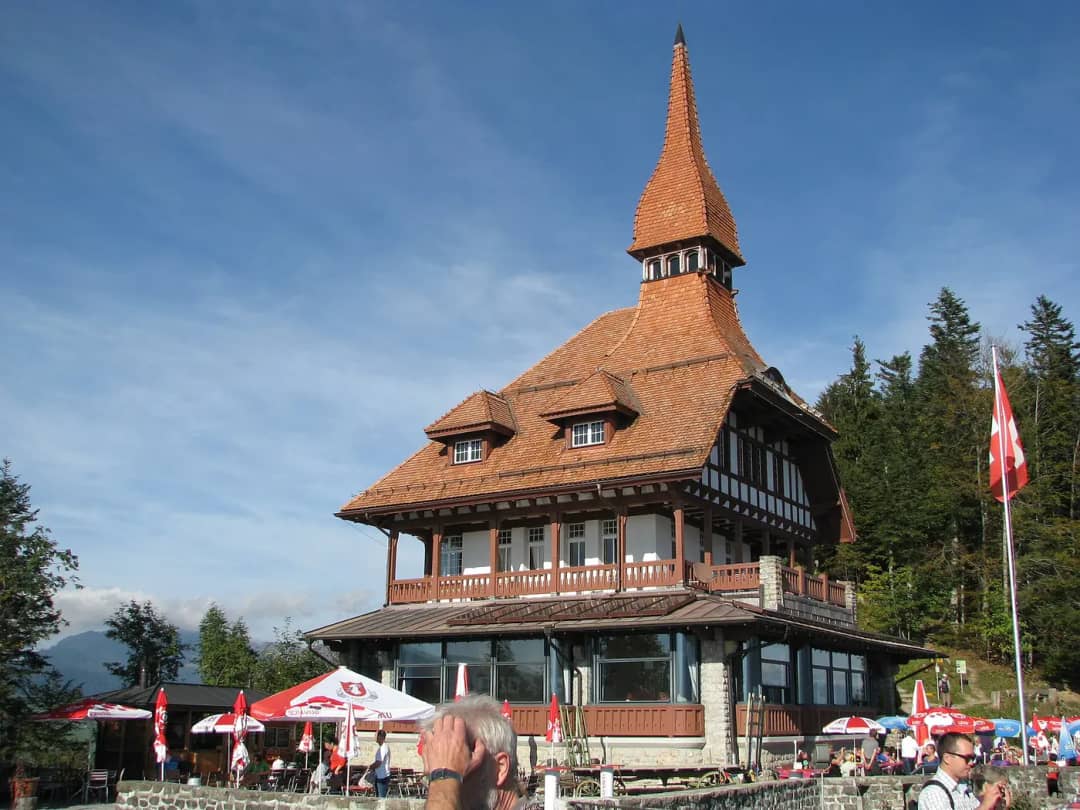
Fun Fact: Interlakens Hausberg rahmt diesen Blick seit über einem Jahrhundert: Die Harderbahn und das Gipfelrestaurant wurden Mitte Mai 1908 eröffnet, und die 1447 Meter lange Strecke überwindet 755 Höhenmeter bei einer Steigung von bis zu 640 Promille.

Wohin gehen Einheimische in Interlaken wirklich?
Die überlaufene Version von Interlaken liegt auf einem Quadratkilometer rund um die Höheweg. Treten Sie heraus, und die Region verändert sich vollständig.
Die Orte, die sich Gleitschirmpiloten, Kajakguides von Hightide und Wirte oder Hoteliers aus der Gegend bei einem Bier gegenseitig nennen:
Das Justistal über Beatenberg: eine Hochweide, auf der die traditionelle Alpwirtschaft noch läuft. Kühe mit Glocken, Heu, eine arbeitende Alp.
Der Augstmatthorn-Grat: ein Weg über einen schmalen Felsrücken mit Tiefblicken wie im Film. Nicht versteckt, aber nicht vermarktet.
Spiez: der Schlosshof und die Reben über dem Thunersee.
Zwei weitere sind meine eigenen. Das Ende von Bönigen, an der Strasse Richtung Iseltwald, ist der Ort, an dem ich im Brienzersee bade, gratis und abseits des Strandbads. Das Burgseeli ist mein anderer Badeplatz, oft, jeden Sommer, und das ist mein Moment dort:
«Der Sommermorgen, das glatte Wasser und der Dunst.»
Pierre Vetsch, Guide und Gründer, Interview vom 8. Oktober 2026
Was kostet Interlaken? Ein realistisches Budget
Das ist die Schweiz. Rechnen Sie entsprechend.
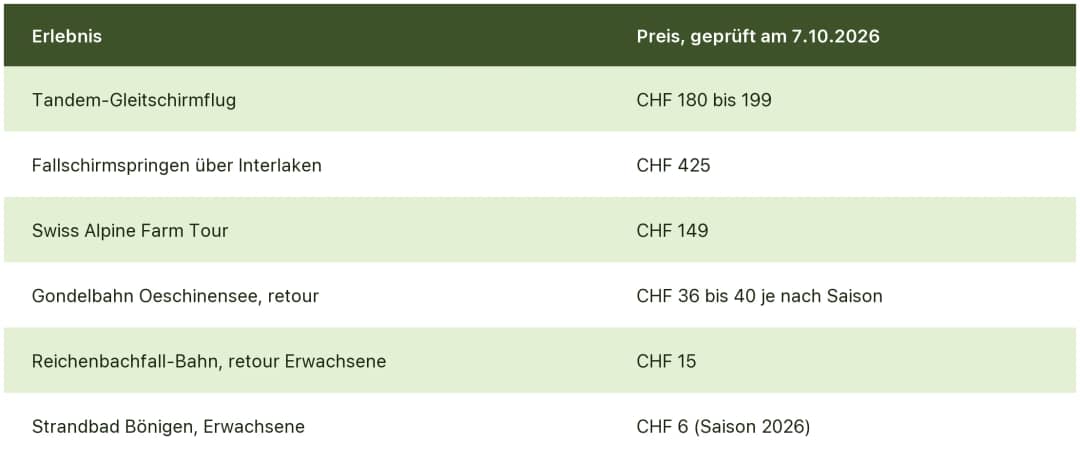
Der Swiss Travel Pass rechnet sich, sobald Sie drei oder mehr Tage mit Zug oder Bergbahn im Berner Oberland planen.
Wo übernachten und wie herumkommen
Zur Basis: Interlaken deckt jede Preisklasse ab, vom Schlafsaal bis zum Viersternehotel an der Höheweg. Ruhigere Alternativen sind Wilderswil (5 Minuten mit dem Zug, günstiger, lokaler), Bönigen (am Brienzersee, zu Fuss zum Strand) und Beatenberg (Höhenblick über beide Seen, eine Busverbindung). Zum Verwöhnen: Mürren und Wengen liegen autofrei an den Felsen über Lauterbrunnen, erreichbar nur mit Seilbahn oder Bergbahn.
Sie brauchen kein Auto. Die BLS-Züge fahren pünktlich. Die Schiffe fahren pünktlich. Der Bus nach Beatenberg fährt pünktlich. Das ist die Schweiz, und der öffentliche Verkehr ist die Infrastruktur, die diese Region funktionieren lässt. Ein Gast mit dem Swiss Travel Pass erreicht mehr vom Berner Oberland als die meisten Autobesitzer.
Insider-Tipp: Für den klassischen Blick auf beide Seen gehen Sie vom Bahnhof Interlaken Ost zu Fuss zur Talstation der Harderbahn: Der Weg ist kurz, Parkplätze gibt es dort keine, die Bahn fährt alle 30 Minuten und der Schalter ist von 09.00 bis 21.10 Uhr offen. Eine späte Fahrt passt also noch nach einem vollen Tag. Im Winter ist der Harder Kulm geschlossen: Die Standseilbahn fährt vom 30. November 2026 bis 25. März 2027 nicht (Fahrplan am 15. Oktober 2026 geprüft).
Ihre Fragen zu den Dingen, die man in Interlaken tun kann
Wofür ist Interlaken bekannt?
Interlaken ist vor allem als Abenteuerhauptstadt der Schweiz und als Tor zur Jungfrau Region bekannt. Gleitschirmfliegen, Fallschirmspringen, Canyoning und die Bahn zum höchsten Bahnhof Europas (Jungfraujoch, 3454 m) haben es auf internationale Wunschlisten gebracht. Die zwei Seen und die drei Gipfel rund um die Stadt vervollständigen das Bild.
Lohnt sich ein Besuch in Interlaken?
Ja. Einige meiner Gäste waren anfangs nicht besonders begeistert und reisten überzeugt ab. Das Stadtzentrum ist unauffällig. Die Region drumherum, die Seen, die Bergdörfer, die Alpbetriebe und die Gletscherblicke, rechtfertigt die Reise.
Wie viele Tage braucht man in Interlaken?
Zwei Tage sind das Minimum, um einen Berg und einen See richtig zu sehen. Drei bis vier Tage decken das Wesentliche ohne Hetze ab. Fünf bis sieben Tage funktionieren gut, wenn Sie Interlaken als Basis für Ausflüge in die Schweizer Alpen nutzen.
Wann ist die beste Zeit für Interlaken?
Juni bis September für Abenteueraktivitäten, Wandern und Baden. Juli und August sind Hochsaison: teurer, voller, aber alle Angebote laufen. Juni und September bringen bessere Preise und weniger Leute. Der Winter (Dezember bis März) eignet sich zum Skifahren über Grindelwald und Mürren und für Schneeschuhtouren im Lauterbrunnental.
Ist Interlaken teuer?
Ja. Die Schweiz gehört zu den teuersten Ländern Europas. Rechnen Sie mit CHF 100-150 pro Tag für Unterkunft auf Hostel- oder Budgethotelniveau, plus CHF 50-80 fürs Essen. Ein ganzer Bergtag kommt je nach Ziel mit CHF 60-150 dazu. Der Swiss Travel Pass senkt die Transportkosten, wenn Sie mehrere Bahn- oder Gondeltage planen.
Was kann man in Interlaken gratis machen?
Die Höhematte bei Sonnenuntergang. Das Lauterbrunnental (72 Wasserfälle, kein Eintritt). Die Gratwanderung auf dem Augstmatthorn ab Habkern. Das Justistal über Beatenberg. Der Weinweg über Spiez am Thunersee. Die BLS-Schiffe sind im Swiss Travel Pass inbegriffen.
Ist Interlaken auch ohne Abenteuersport gut?
Vollkommen. Schifffahrten, der botanische Garten auf der Schynigen Platte, die St. Beatus-Höhlen, das Lauterbrunnental zu Fuss, Fondue-Abende, Rebwanderungen über Spiez und das Alpfrühstück auf dem Sigriswiler Bärgli funktionieren alle ohne Gurt. Der Abenteuersport ist nur ein Teil dessen, was die Region bietet.
Was macht man in Interlaken an einem Tag?
Bleiben Sie in einem Tal. Für einen ersten Besuch im Sommer lautet mein Plan: Lauterbrunnen zu Fuss, dann Mürren und das Schilthorn. Nehmen Sie den Zug von Interlaken Ost nach Lauterbrunnen (22 Minuten), gehen Sie durch den Talboden am Staubbachfall vorbei, fahren Sie dann mit Seilbahn und Bahn hinauf nach Mürren und mit der Seilbahn weiter aufs Schilthorn zum Piz Gloria. Zurück in der Stadt essen Sie Fondue mit einem Glas Chasselas aus Spiez und setzen sich danach bei Sonnenuntergang auf die Höhematte.
Welche Tagesausflüge kann man ab Interlaken machen?
Die stärksten Tagesausflüge mit dem Zug, mit Reisezeiten ab Interlaken, geprüft am 15. Oktober 2026 für einen Werktag im Januar 2027: Bern (56 bis 57 Min. direkt), Luzern (1 Std. 51 Min. direkt), Zermatt (2 Std. 7 Min. bis 2 Std. 18 Min.), Kandersteg für den Oeschinensee (67 bis 68 Min. ab Interlaken West, dann die Gondel) und Gruyères (2 Std. 22 Min. bis 2 Std. 50 Min.). Während der Bauarbeiten in diesem Herbst kostet ein Ersatzbus zwischen Interlaken Ost und Interlaken West zusätzlich Zeit. Für keinen davon braucht es ein Auto. Für die genaue Logistik siehe die besten Tagesausflüge ab Interlaken.
Lohnt sich das Jungfraujoch ab Interlaken?
Meiner Meinung nach nicht. Ich empfehle das Jungfraujoch nicht: Es ist oft sehr überlaufen, teuer für das, was man bekommt, und manchmal in den Wolken, ganz ohne Aussicht. Die Jungfraubahnen nennen für das Retourbillett einen Preis ab CHF 129.60 (geprüft am 15. Oktober 2026). Für einen einzigen bezahlten Gipfel ab Interlaken ziehe ich das Schilthorn und Piz Gloria über Mürren vor. Wenn das Jungfraujoch auf Ihrer Liste bleibt, dann nur bei blauem Himmel: Schauen Sie am Vorabend die Gipfelwebcam an, und weichen Sie an einem bedeckten Tag auf Grindelwald-First oder die Schynige Platte aus.
Braucht man in Interlaken ein Auto?
Nein. Das Netz aus Zug, Bus und Schiff erreicht jedes wichtige Ziel im Berner Oberland. Ein Swiss Travel Pass oder Einzelbillette decken alles ab.
Wo halten sich die Einheimischen in Interlaken auf?
Ausserhalb des einen Quadratkilometers Läden an der Höheweg. Im Justistal über Beatenberg. Am Ende von Bönigen, an der Strasse Richtung Iseltwald, wo ich im Brienzersee bade. Auf dem Augstmatthorn-Grat. Beim Schloss Spiez und in den Reben über dem Thunersee. Auf der Höhematte am Abend, wenn die Gleitschirme noch landen und das Licht die Jungfrau verlässt.
Bereit, Ihre Reise nach Interlaken wie ein Einheimischer zu planen?
Die meisten Gäste planen ab einer Liste. Einige wenige planen aus einem Gespräch mit jemandem, der die Region so kennt, wie ein Guide sie kennt: welche Gondel um diese Jahreszeit den besseren Winkel hat, welches Tal man besser zu Fuss geht als fährt, welcher Gipfel sein Billett wert ist.
Für den ganzen Saisonkalender siehe den Guide zu den Sommeraktivitäten. Für ehrliche Einschätzungen zu jeder Aktivität siehe das Ranking der Outdoor-Abenteuer.
Sie zögern noch? Sie sind wegen der berühmten Sache nach Interlaken gekommen und wollen sie zuerst erleben. Meine Antwort:
«Machen Sie morgens das Gleitschirmfliegen, abends unsere Tour.»
Pierre Vetsch, Guide und Gründer, Interview vom 8. Oktober 2026
Im Winter ist diese Abendtour unser Sunset-Schlitteln & Käsefondue, und es ist auch meine eigene Wahl für einen Wintertag ohne Ski:
«Isenfluh, das Schlitteln am Abend.»
Pierre Vetsch, Guide und Gründer, Interview vom 30. September 2026
Vor jeder Tour prüfen wir beide Schlittelwege, Mürren und Isenfluh, nehmen den in besserem Zustand und teilen danach zurück in Interlaken ein Käsefondue. Abfahrt in Interlaken um 15.30 Uhr, Mittwoch bis Sonntag, vom 15. Dezember 2026 bis 11. April 2027, für CHF 139 pro Person (CHF 129 ab sechs Gästen), mit höchstens acht Gästen. Kostenlose Stornierung bis 48 Stunden vor der Abfahrt; sagen wir wegen Wetter oder Sicherheit ab, wählen Sie zwischen voller Rückerstattung und einem anderen Datum. Die Saison hat noch nicht begonnen, aber die Winterdaten sind schon buchbar.
Halten Sie sich einen Winterabend frei für das Licht auf der Jungfrau kurz vor der Schlittelabfahrt: meinen Platz beim Schlitteln bei Sonnenuntergang mit Fondue sichern, oder fragen Sie mich zuerst auf WhatsApp, wo ich innerhalb einer Stunde antworte.
So ist dieser Artikel entstanden: Fakten und Preise am 8. Oktober 2026 bei den offiziellen Quellen geprüft, mit KI-Unterstützung geschrieben.
*Geschrieben von Pierre Vetsch, Gründer und leitendem Guide bei Swiss Local Adventures
Quelle:
geführte Touren vor Ort im Berner Oberland, 2026.
Schlagwörter
#things-to-do-interlaken#interlaken#bernese-oberland#jungfrau-region#swiss-alps#switzerland-travel#lake-thun#lake-brienz#swiss-travel-guide
Quellen & Referenzen
- •Interlaken Tourism
- •Jungfrau Railways
- •MySwitzerland
- •Photo: Loric Roberti, Wikimedia Commons (CC0)
- •Photo: Jean-Paul Wettstein on Pexels
- •Photo: Johnw, Wikimedia Commons (Public domain)
- •Photo: Leonhard Lenz, Wikimedia Commons (CC0)
- •Photo: Kenwbar at en.wikipedia, Wikimedia Commons (Public domain)
- •Photo: Manfred Wohlfahrt, Wikimedia Commons (Public domain)
- •Photo: Yiftachsam, Wikimedia Commons (Public domain)
- •Jungfrau.ch, Talstation Harderbahn
- •Jungfrau.ch, Harderbahn AG (Jungfraubahn Holding corporate pages)
- •Swiss Local Adventures, Sunset Sledding & Cheese Fondue: season 15 December 2026 to 11 April 2027, Wednesday to Sunday, 3:30 pm, CHF 139 (CHF 129 from 6), eight guests at most, Mürren or Isenfluh, 48 h free cancellation, opened 15.10.2026
- •Swiss Local Adventures, Farm Tour: Start 8:00 AM, Tuesdays and Thursdays, May to mid-September, CHF 149 (CHF 139 from 6), maximum 8 guests, opened 15.10.2026
- •Swiss Local Adventures, Kayaking on Lake Brienz: adults CHF 115, October CHF 125, departures 09:15/09:20 and 13:15/13:20, May to October, opened 15.10.2026
- •timetable.search.ch, Interlaken Ost to Lauterbrunnen 22 min (train R) on 13.01.2027, same on 21.10 and 04.11.2026, opened 15.10.2026
- •timetable.search.ch, Interlaken Ost to Bern 56 to 57 min direct on 13.01.2027 (64 to 71 min with EV1 replacement bus on 04.11.2026), opened 15.10.2026
- •timetable.search.ch, Interlaken Ost to Luzern 111 min direct on 13.01.2027 and 04.11.2026, opened 15.10.2026
- •timetable.search.ch, Interlaken Ost to Zermatt 127 to 138 min on 13.01.2027 (150 to 156 min with EV1/EV4 on 04.11.2026), opened 15.10.2026
- •timetable.search.ch, Interlaken Ost to Gruyères 142 to 170 min on 13.01.2027, opened 15.10.2026
- •timetable.search.ch, Interlaken West to Kandersteg 67 to 68 min on 13.01.2027 (66 to 67 min on 04.11.2026), opened 15.10.2026
- •timetable.search.ch, Harderbahn: funicular every 30 min on 29.11.2026 and 26.03.2027, walk only (126 min) on 30.11.2026 and 25.03.2027, opened 15.10.2026
- •Strandbad Bönigen, Preise: Tageseintritt Erwachsene CHF 6.-, opened 15.10.2026
- •Strandbad Bönigen, home page: 2026 opening 16 May to 13 September, Winterpause, See you in 2027, opened 15.10.2026
- •Gemeinde Iseltwald, filming location: CHF 5.- entrance fee for the boat pier, coins or credit card, opened 15.10.2026
- •Jungfraubahnen, Jungfraujoch Top of Europe: return ticket from CHF 129.60, no Interlaken Ost fare shown, opened 15.10.2026
- •Thunersee Tourismus, Chästeilet Justistal: 18 September 2026, cheese divided by centuries-old custom, farmers in traditional costume lead adorned cattle down, opened 15.10.2026
- •Project Gutenberg, Mark Twain, A Tramp Abroad: tour decided March 1878, arrival in Interlaken just about sunset, Jungfrau Hotel; cow-bells passage is in the Gasterntal, opened 15.10.2026
- •Project Gutenberg, Thomas Moore, Life of Lord Byron Vol. 3: Alpine journal September 1816, passed Interlachen 22 September, Dined at Interlachen, opened 15.10.2026
- •Swiss Local Adventures, best-outdoor-adventures-interlaken: objection and answer wording, CTA anchor reused, opened 15.10.2026
- •Swiss Local Adventures, wengen-or-murren: published translation of lauterbrunnen.md 24 Q4 (Jungfraujoch), opened 15.10.2026
- •Swiss Local Adventures, oberhornsee-hike-stechelberg: published translation of 26 Q8 (Bachalpsee), opened 15.10.2026
- •Swiss Local Adventures, Oeschinensee article: published wording of 41 Q4 and 41 Q5, opened 15.10.2026
- •Swiss Local Adventures, iseltwald-crash-landing-pier: Olivia Lufman "My choice is the photo from the shore.", opened 15.10.2026
Diesen Artikel teilen
Ähnliche Artikel
Setzen Sie Ihre Lektüre mit diesen verwandten Artikeln fort
Orte & Ausflüge
18.10.2026
12 Min
Sonnenuntergang in Interlaken: wohin, je nach Saison
Sonnenuntergang in Interlaken: Im Dezember ist die Sonne um 15.48 Uhr weg. Im Winter auf die Höhematte, im Sommer auf den Harder Kulm.
interlaken-sunsetsunset-spotsalpenglow-jungfrau
Von Pierre VetschMehr Lesen
Orte & Ausflüge
26.9.2026
10 Min
Wengen oder Mürren? Wengen im Sommer, Mürren im Winter
Wengen liegt 13 Minuten näher an Interlaken und ist abends ruhiger. Ein Ortsguide zur Unterkunftswahl, und warum der Winter die Antwort dreht.
where-to-stay-jungfraulauterbrunnen-valleycar-free-villages-switzerland
Von Pierre VetschMehr Lesen
Orte & Ausflüge
25.9.2026
12 Min
Lohnt sich ein Besuch in Gimmelwald? Ja, für eine Stunde
Seit Dezember 2024 überspringt die schnelle Seilbahn Gimmelwald. Ein Guide erklärt, warum sich eine Stunde lohnt, und wo Sie übernachten sollten.
lauterbrunnen-valleycar-free-villages-switzerlandmurren-day-trip
Von Pierre VetschMehr Lesen