Farm Tour
Meet the Alpine Farmer Who Makes 348 Wheels a Summer
T
Teona Gvasalia
Author
June 19, 2026
7 min
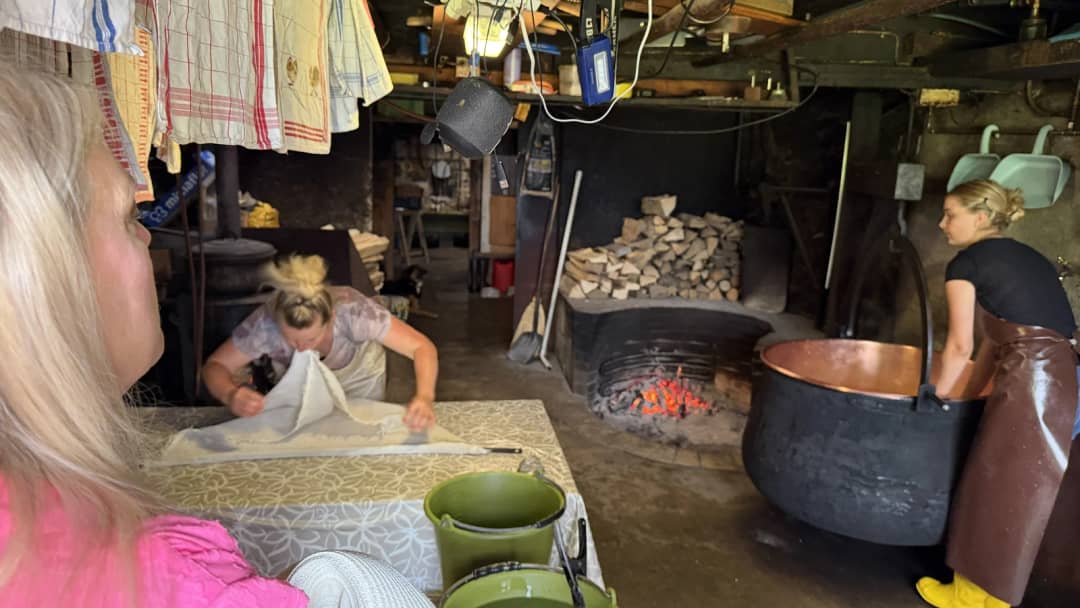
She Makes 348 Wheels of Cheese Every Summer. We Asked Her How
I spent a Tuesday morning with Daniela in July 2026, at 1,370 metres in the Justistal, a side valley above Interlaken that does not appear on most tourist itineraries. Daniela runs Sigriswiler Bärgli, a working alpine dairy where she tends 21 Brown Swiss cows from May to the end of September and transforms their milk into 348 wheels of cheese each summer. She has been doing this since 2009. I asked her every question I had. She answered the same way she makes cheese: without shortcuts.
How Did You End Up Running This Dairy?
Daniela did not come to the Justistal by accident. She grew up in the Bernese Oberland with cattle around her, and by the time she arrived at Sigriswiler Bärgli, she already understood the language of the place.
"When I came here in 2009, I was not starting from zero. I understood the animals, I understood the work, and I had enough stubbornness to manage a cooperative operation at altitude. The cooperative structure means the milk comes from 21 Brown Swiss cows owned by different farming families in the valley. I do not own every cow. I am responsible for what happens to their milk once it arrives here. That responsibility suits me."
Daniela, Sigriswiler Bärgli
What Makes an Alpine Cheese Dairy Different From a Regular Swiss Factory?
"The most obvious difference is the milk. In a factory, milk can travel for hours before it reaches the vat. Up here, the cows finish milking and the milk goes into the copper cauldron within two hours, sometimes less. It is still warm. It carries everything from the pasture: the wild herbs, the altitude, the morning air. You cannot replicate that at a lower elevation or on a different schedule. The season matters too. We work from late May to late September and then the alp closes. That constraint forces quality. Every wheel counts because we only have so many weeks to make them. A factory can run year-round and average things out. We cannot afford to average anything out."
Daniela
For a side-by-side breakdown of what separates this kind of production from lowland cheesemaking, see Alpine Farm vs Cheese Factory.
Sigriswiler Bärgli Is a Working Farm. What Does That Mean for a Visitor?
"It means the farm does not wait for the guests. I am up before dawn whether anyone is coming or not. The cows need milking early in the morning because that is when they need milking, not because it fits a tour schedule. When visitors arrive, the first milking is already done. They step into something that is already in motion."
Daniela
That is the difference from a show dairy, where the demonstration is staged around the visitors' arrival. Here, you see the real sequence because there is only one sequence. People sometimes tell her afterwards that they did not expect it to feel so alive.
If you are weighing a morning on this alp against a visit to a lowland dairy, our comparison of an alpine farm versus a cheese factory sets out what each one shows you and what it costs.
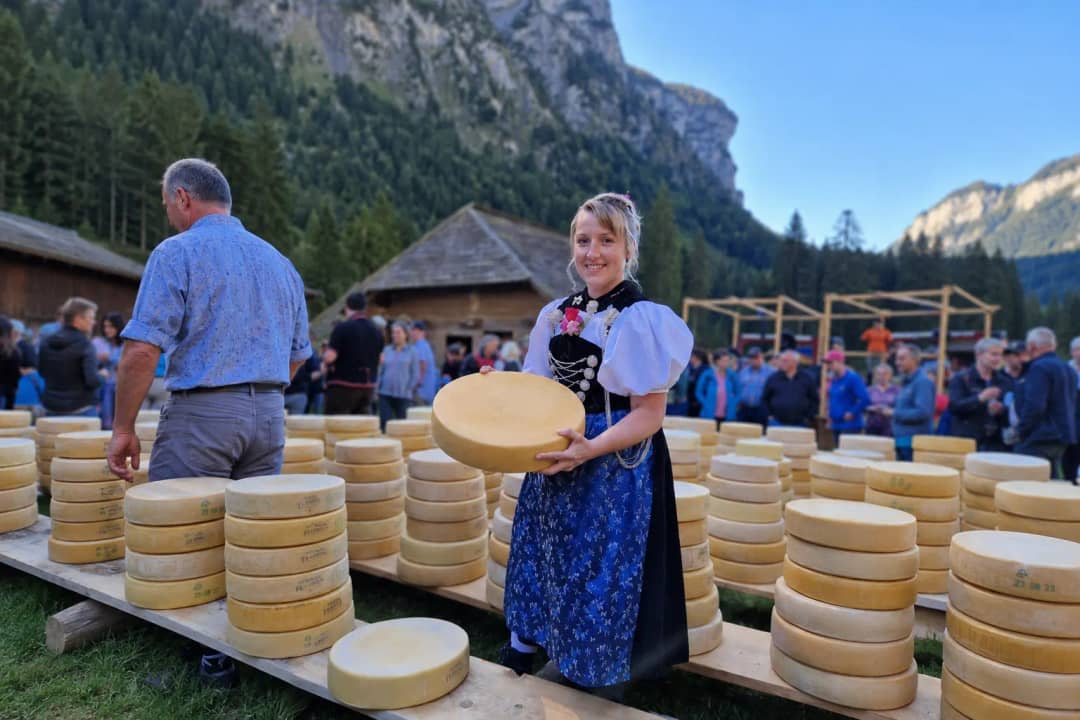
Walk Me Through the Cheesemaking Process From the First Milking.
I asked Daniela to walk me through every step, from the first milking to the cave. She did not skip anything.
Teona says: "I asked her every question I had. She answered the same way she makes cheese: without shortcuts."
Teona Gvasalia, your alpine guide at Swiss Local Adventures
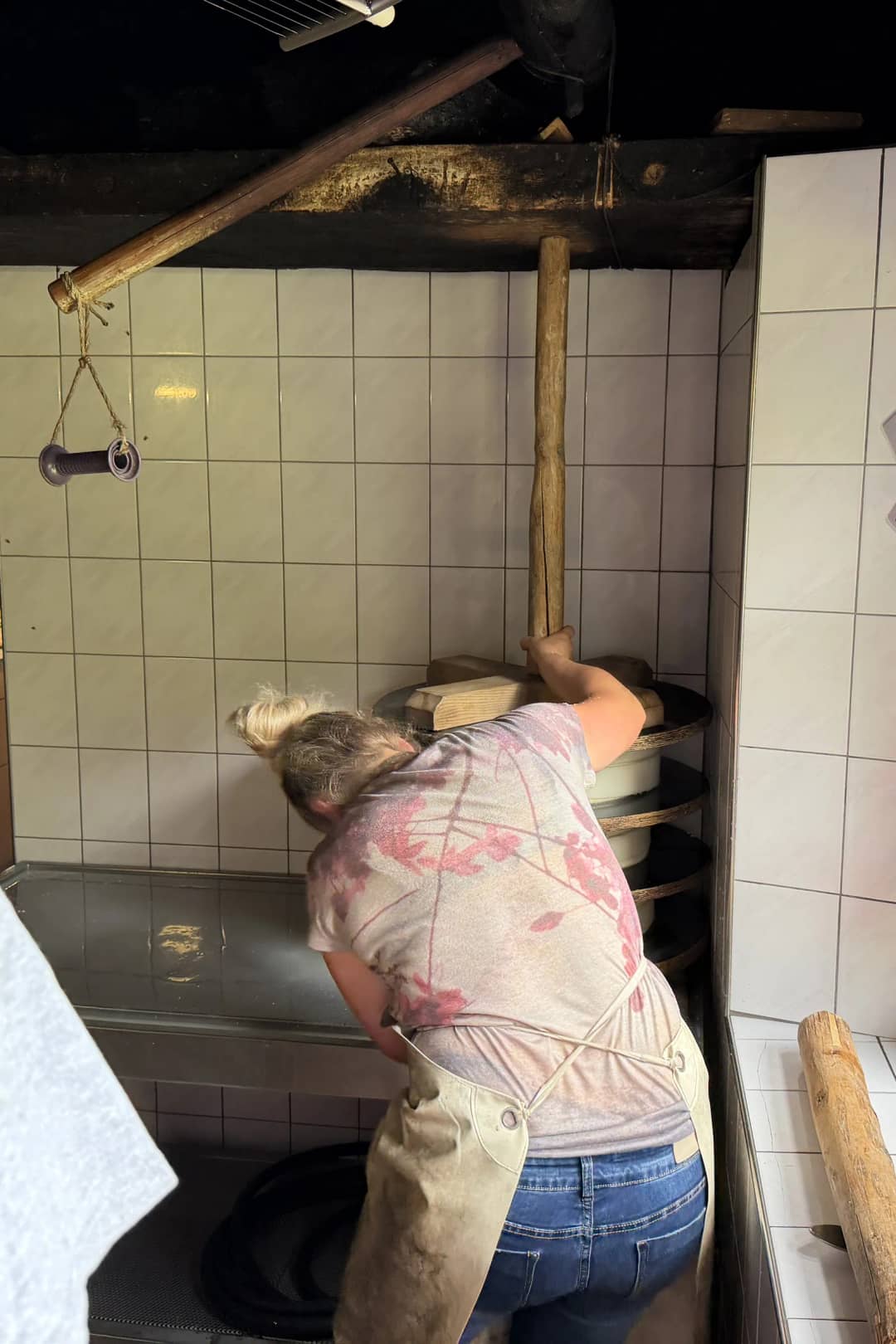
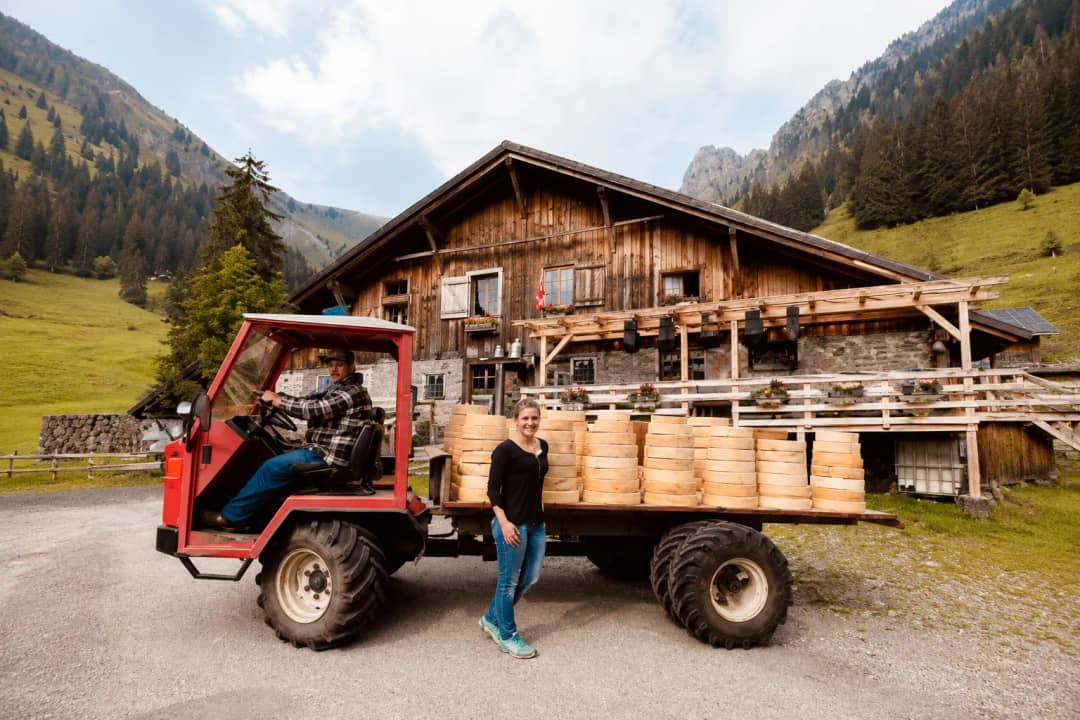
"The cows are milked starting early in the morning. The fresh milk goes into the copper cauldron over a wood fire within two hours. We add rennet to start the coagulation. Once the milk has set into a gel, we cut it with the curd harp to break it into small pieces. The size of those pieces determines the final texture: smaller cut means a firmer, drier wheel, larger cut means something softer. Then the curd is cooked and stirred, pressed into moulds, turned, and stamped with the date and the farm name. After that, the wheels go into the cave, onto spruce wood planks, and they are turned by hand every few days. A young wheel is pale, almost white. A wheel made in June has already started turning golden by July: the rind has hardened, the flavour has concentrated. You can read the season in the colour."
Then she said the thing that has stayed with me since:
"The curd tells you when it is ready. You feel it in your hands, not on a screen."
What Animals Live on the Alp Besides the Dairy Cows?
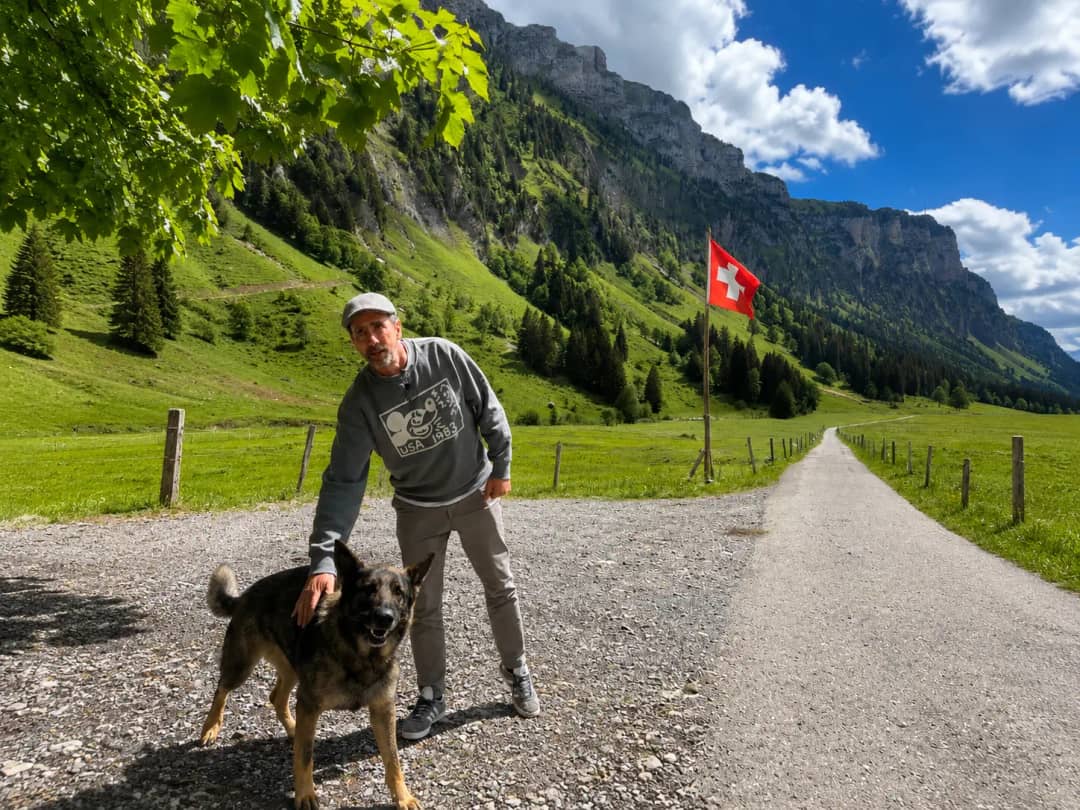
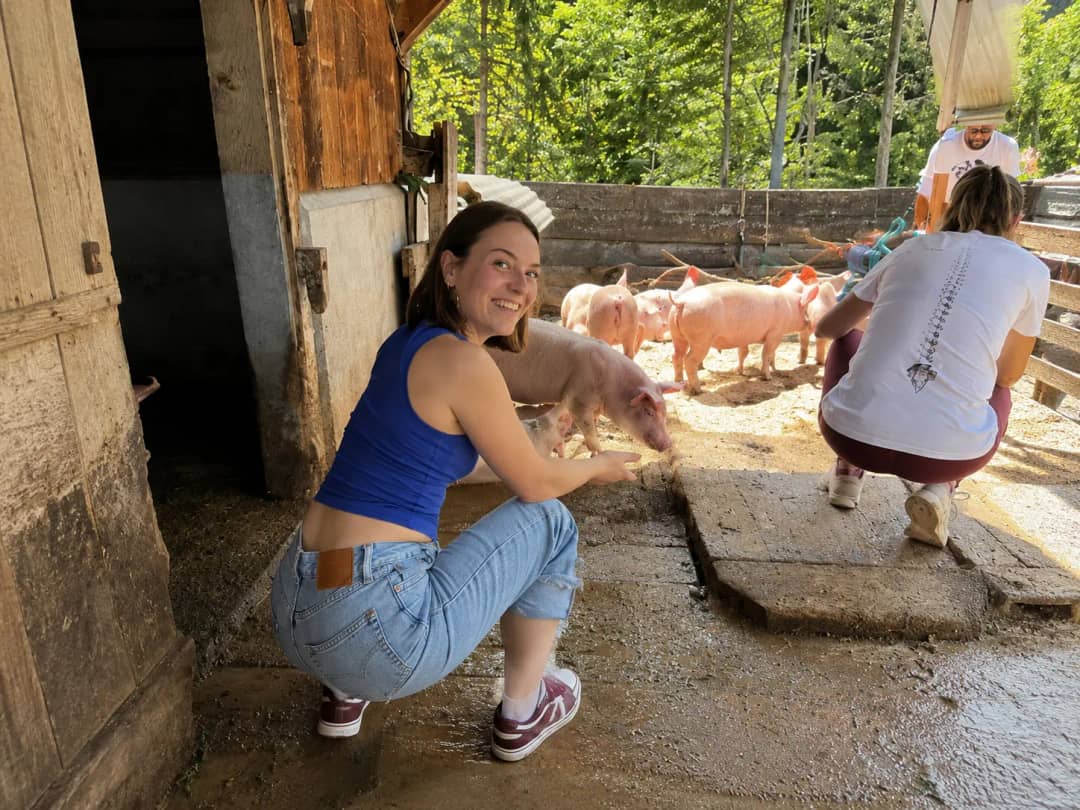
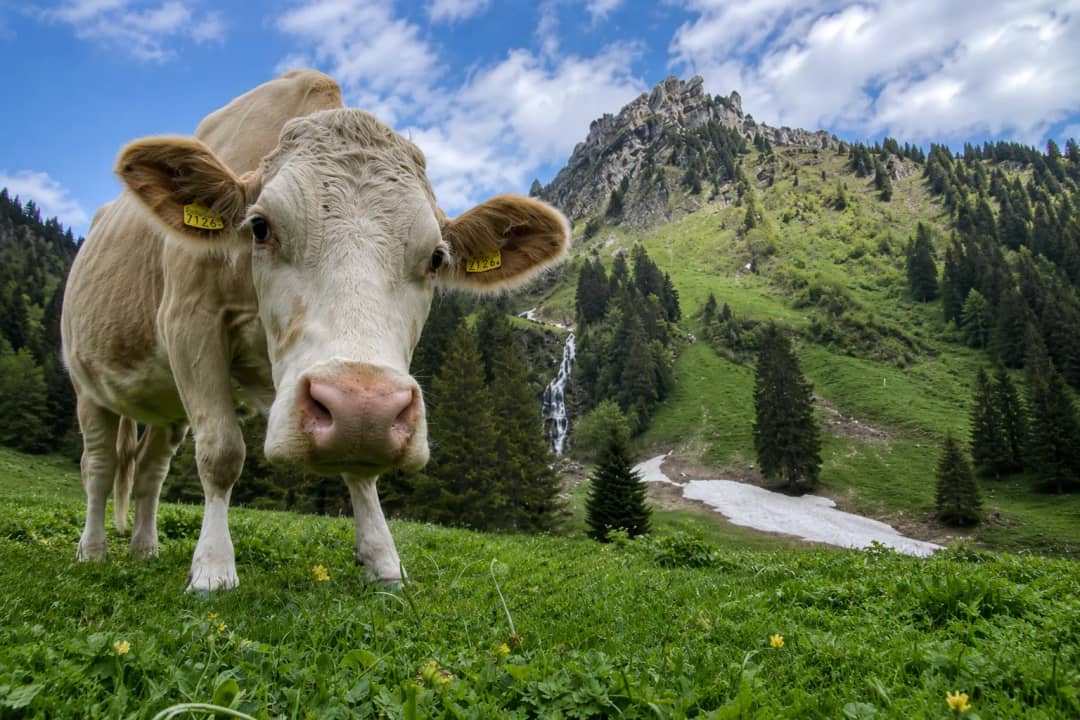
"A working alp is not a single-species operation. We have pigs, because the whey from cheesemaking needs to go somewhere useful and pigs are the traditional answer to that. We have goats and sheep, and chickens for eggs. There is also a dog, which is not decorative. The Brown Swiss cows are the centre of everything here. They are a very old breed, well adapted to altitude and to the temperature swings you get in a mountain summer. By the end of a summer, you know each cow individually. Their moods, their rhythms. You notice when something is off before any other sign appears."
Teona asked a farmer: "Why do so many alps keep pigs?"
"For the whey. Cheesemaking leaves a lot of it, and the pigs get what is left. On a working alp, nothing goes to waste."
Teona Gvasalia, your alpine guide at Swiss Local Adventures
What Do You Serve for Breakfast on the Farm?
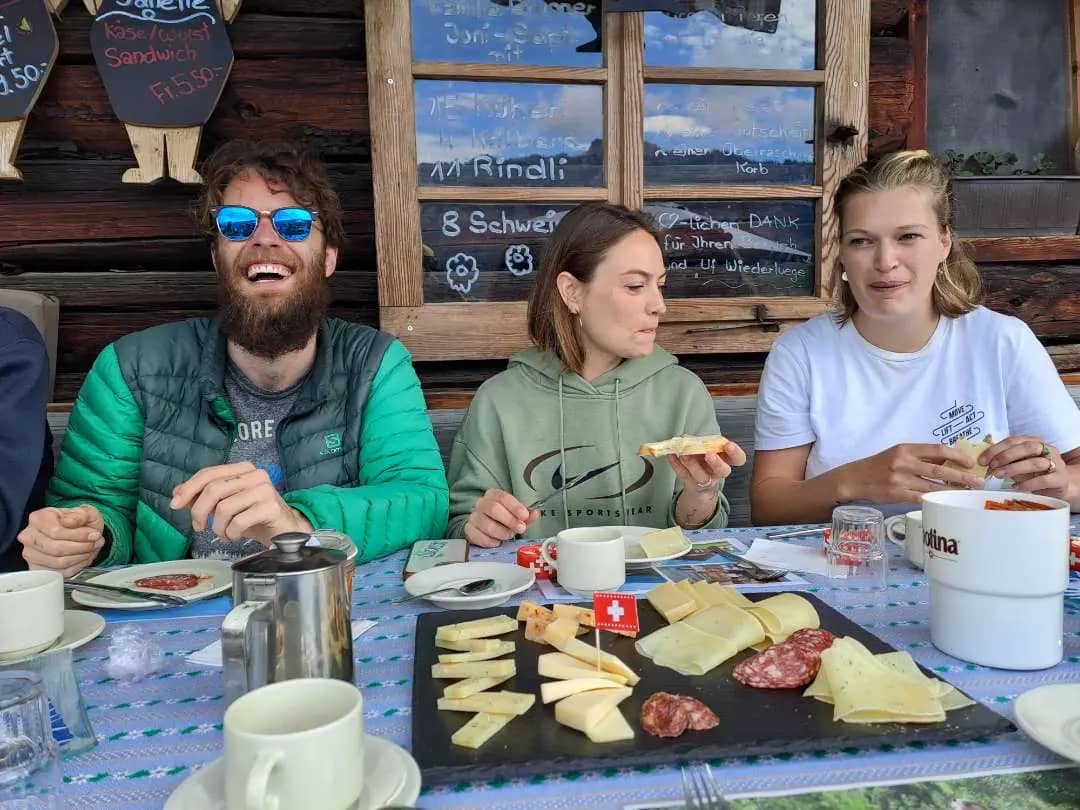
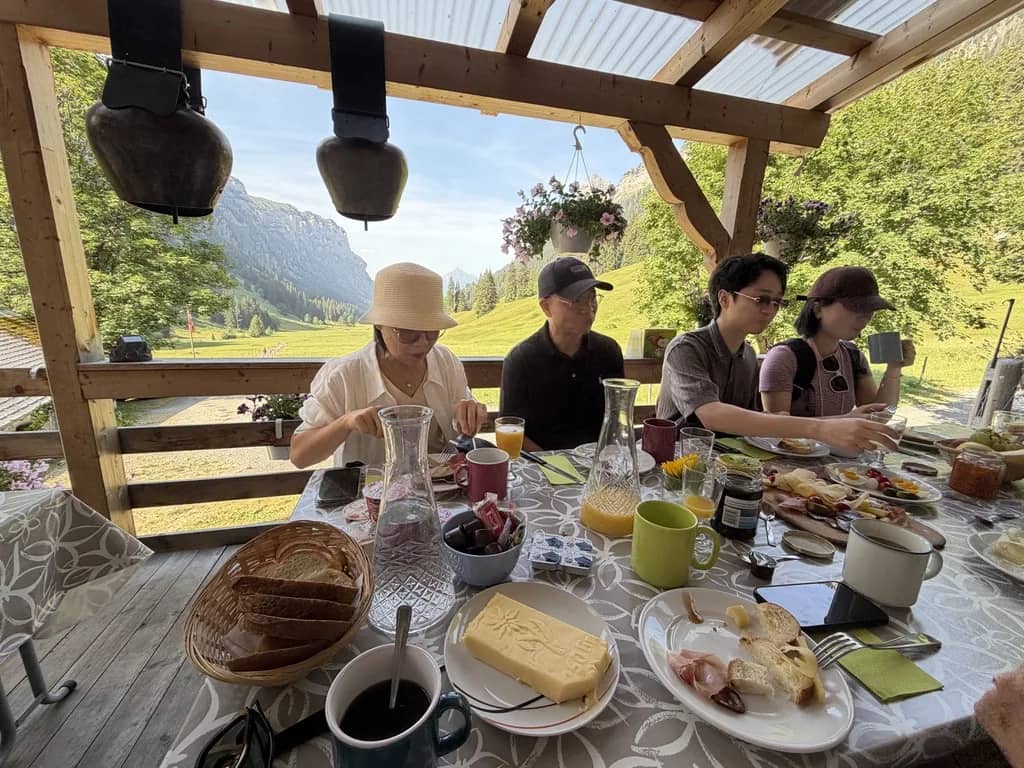
Breakfast comes first, around nine, shortly after guests arrive and an hour before the cheesemaking.
If you want to know exactly what lands on the table, from the day-old cheese to the butter that changes colour with the pasture, our guide to the Swiss alpine farm breakfast walks through each item and where it comes from.
Teona says: "Save your big questions for the breakfast table. At the cauldron she explains while she works. At the table, there is finally time for the long answers."
Teona Gvasalia, your alpine guide at Swiss Local Adventures
"Everything on the table comes from what you can see around you. The cheese comes from the cellar, from a few months to more than a year old. The butter comes from the same cows you watched in the pasture. The bread is baked the same morning. The yoghurt is made from fresh milk. The jams are local. One thing guests often notice is the butter. It changes depending on what the cows grazed on the day before. When they are on the north-facing slopes, the butter is deeper yellow and more fragrant. Most people have never tasted butter that moves like that."
Daniela
More on what the table looks like and how the morning meal is structured: Alpine Farm Tour Near Interlaken, Switzerland
Fun fact: The Chästeilet has been documented in the Justistal since 1739: at the end of the season, the summer's cheese is shared out according to how much milk each family's cows gave.
How Do Guests Get to the Justistal?
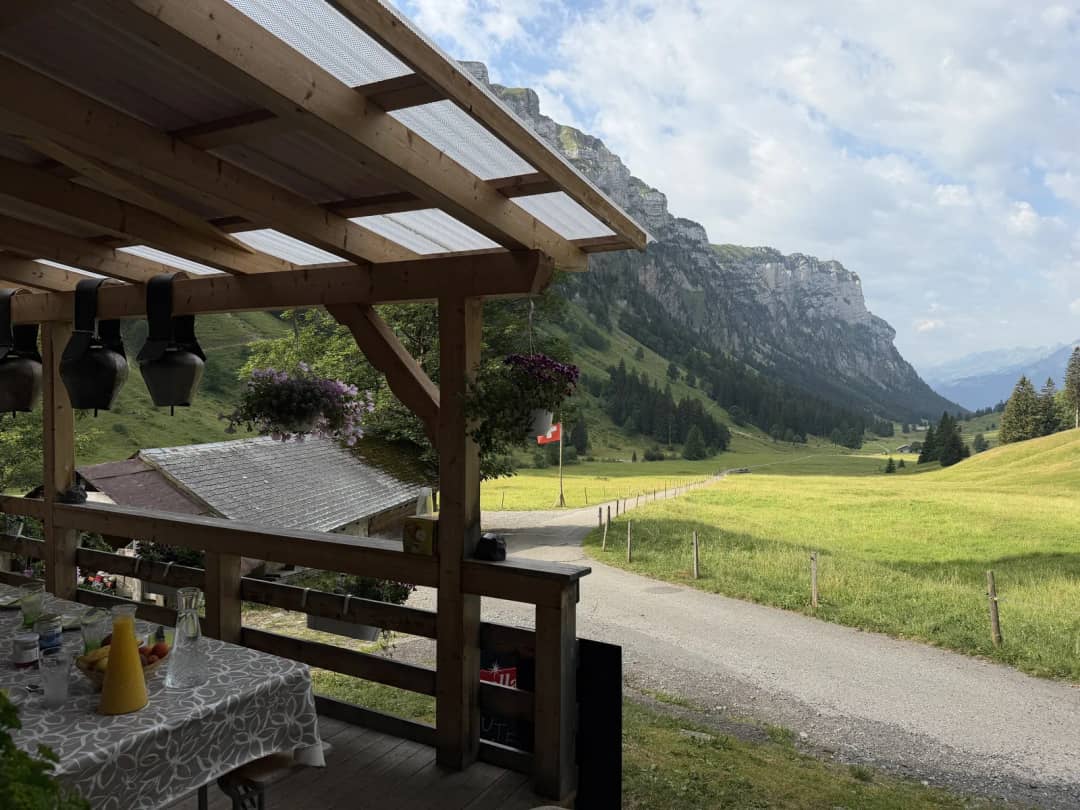
"The road comes over Beatenberg, and guests park right at the farm. There is no walk. Families come, older guests come, people who have never hiked a day in their life. What surprises people more than the drive is the valley itself. The Justistal is one of those places that the tourist maps seem to skip. Some guests tell me that arriving in this valley is the moment they finally exhale after days of organised tourism."
Daniela
Swiss Local Adventures guests are driven 35 minutes from Interlaken West, over Beatenberg, directly to the farm.
What Is the Chästeilet and Why Does It Matter?
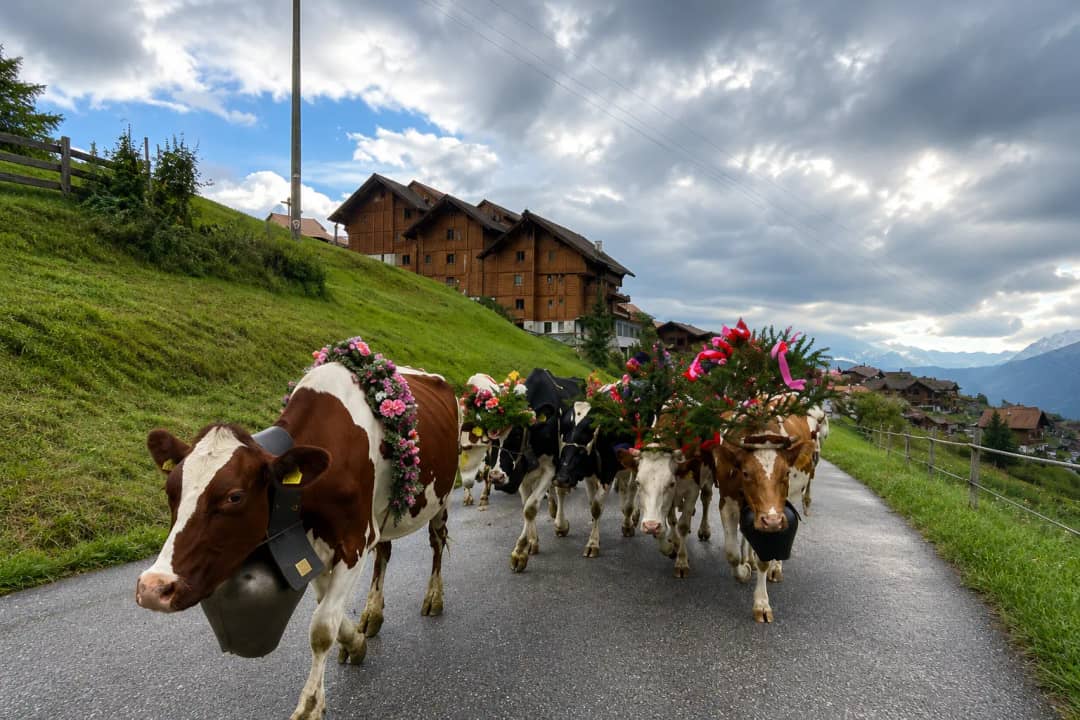
"The Chästeilet is the event at the end of the alpine season when the cheese produced over the summer is distributed among the farming families according to how much milk each of their cows contributed. The tradition has been documented in the Justistal since 1739, which makes it one of the oldest recorded examples of this kind of alpine accounting. Every family gets back a share proportional to what their animals gave. It is a closing of accounts, but also a celebration. The cows come down decorated with flowers and large bells for the Alpabzug, the descent. For us it is not a tourist event. It is the moment the summer formally ends and the cooperative settles its books."
Daniela
Details and dates:
What Do Most Visitors Get Wrong When They Arrive?
"They expect calm. They have the postcard version in mind: a quiet mountain scene, gentle cows, everything arranged for the eye. The reality is that the farm is already deep into its morning by the time they arrive. I cannot pause the process to give a lecture. So I explain while I work, and guests follow along. People adjust quickly, usually within twenty minutes. They stop expecting the postcard and start paying attention to what is actually happening. And by the end of the morning, the ones who were most surprised by the pace are often the ones who ask the most questions. That shift is the part I find most satisfying."
More than one guest has told us afterwards it was a highlight of their European trip. Not for the scenery. For a Tuesday morning that gave them a different perspective on Swiss life than anything they had planned.
Your Questions About Daniela and Sigriswiler Bärgli
How Do You Get to Sigriswiler Bärgli From Interlaken?
The alp sits in the Justistal above Interlaken, at 1,370 metres, and is reached by a mountain road over Beatenberg. Swiss Local Adventures guests are driven 35 minutes from Interlaken West and park at the farm, so there is no walk. The valley has no public transport connection, which is part of what keeps it quiet.
Can You Visit the Farm Without Booking a Tour?
Sigriswiler Bärgli is a private working farm and is not open for drop-in visits. The runs on Tuesdays and Thursdays at 8:00, with a maximum of eight guests per session, at CHF 149 per person, from May to 15 September.
When Is the Best Time of the Season to Visit?
June through mid-August is when production is at its peak: the cauldron runs daily, the cave fills with new wheels, and the farm is at full activity. July tends to be the most active month. By late August the pace begins to slow as the season draws toward the Chästeilet.
How Many Wheels Are Produced and What Happens to Them?
348 wheels per summer, sold through local markets, direct from the farm, and to nearby households in the valley. None enters supermarket distribution. Guests can purchase portions on site at around CHF 20 per kilogram. More detail on what makes this cheese distinct: What Is Alpkäse?
Can Kids Come on the Farm Tour?
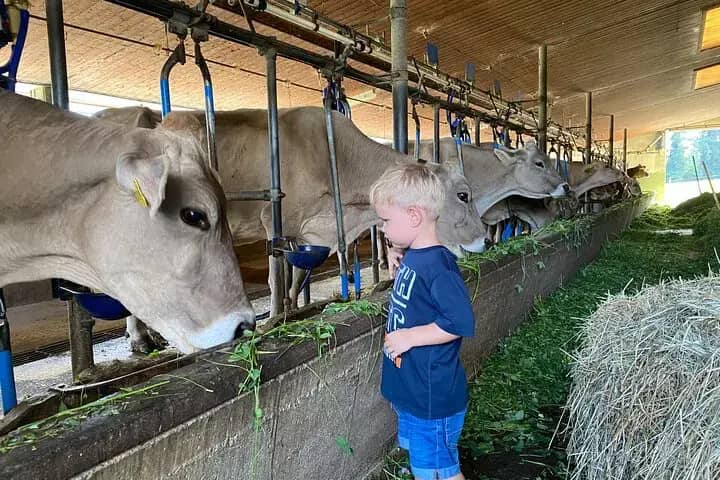
Yes. There is no walk, because we park at the farm, and younger guests tend to engage immediately once they arrive. The farm keeps goats, sheep, and chickens alongside the dairy cows, and the animals are approachable. There is no minimum age. Parents supervise throughout. Watching the cheesemaking up close holds children's attention, and the farm breakfast gives everyone something concrete to finish with.
What Should I Wear?
Closed shoes are required on a working farm. No sandals. Wear clothes you do not mind marking. At 1,370 metres, a summer morning at 8:00 can be noticeably cooler than Interlaken felt the evening before, so bring a warm layer regardless of the valley forecast. The farmyard is uneven in places. For a full packing list: What to Wear on the Farm Tour.
Shoes, layers and what to leave in the hotel: our checklist on what to wear on a farm tour covers the morning at Daniela's alp item by item, so you can pack the night before.
Is the Farm Tour Worth CHF 149?
For someone who wants an experience outside the standard Interlaken circuit, yes. CHF 149 covers return transport from Interlaken, exclusive access to a private working alp that does not take drop-in visitors, Daniela's real cheesemaking, watched up close, a farm breakfast made from the farm's own produce, and a guaranteed maximum of eight guests. The small group size is not a marketing detail: Daniela cannot run a real production morning with a crowd. Booking directly with Swiss Local Adventures means no OTA commission added on top. Full breakdown: Is the Farm Tour Worth CHF 149?.
Come Visit Before the Season Closes
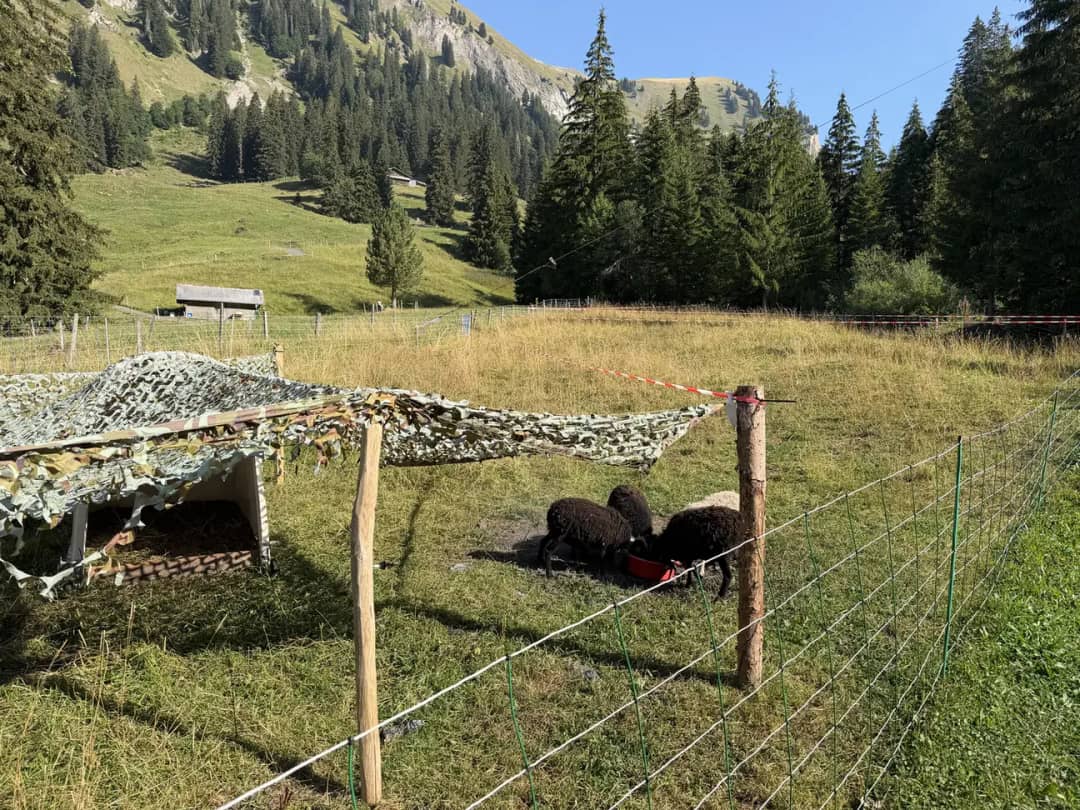
The runs until 15 September. Eight guests maximum, twice a week, starting early. If you want to understand how 348 wheels of cheese come together in a single summer, this is where to start.
Also read: and What to Wear on the Farm Tour
*Written by Teona Gvasalia, your alpine guide at Swiss Local Adventures
Source:
interview with Daniela in Justistal, 2026.
Tags
#farm-tour-interlaken#swiss-dairy-farm#alpine-cheese#swiss-alpine-cheese#bernese-oberland#justistal#cheese-farm-interlaken#interlaken-activities#alp-sigriswiler
Sources & References
Share this article
Similar Articles
Continue your reading with these related articles
Farm Tour
8/17/2026
6 min
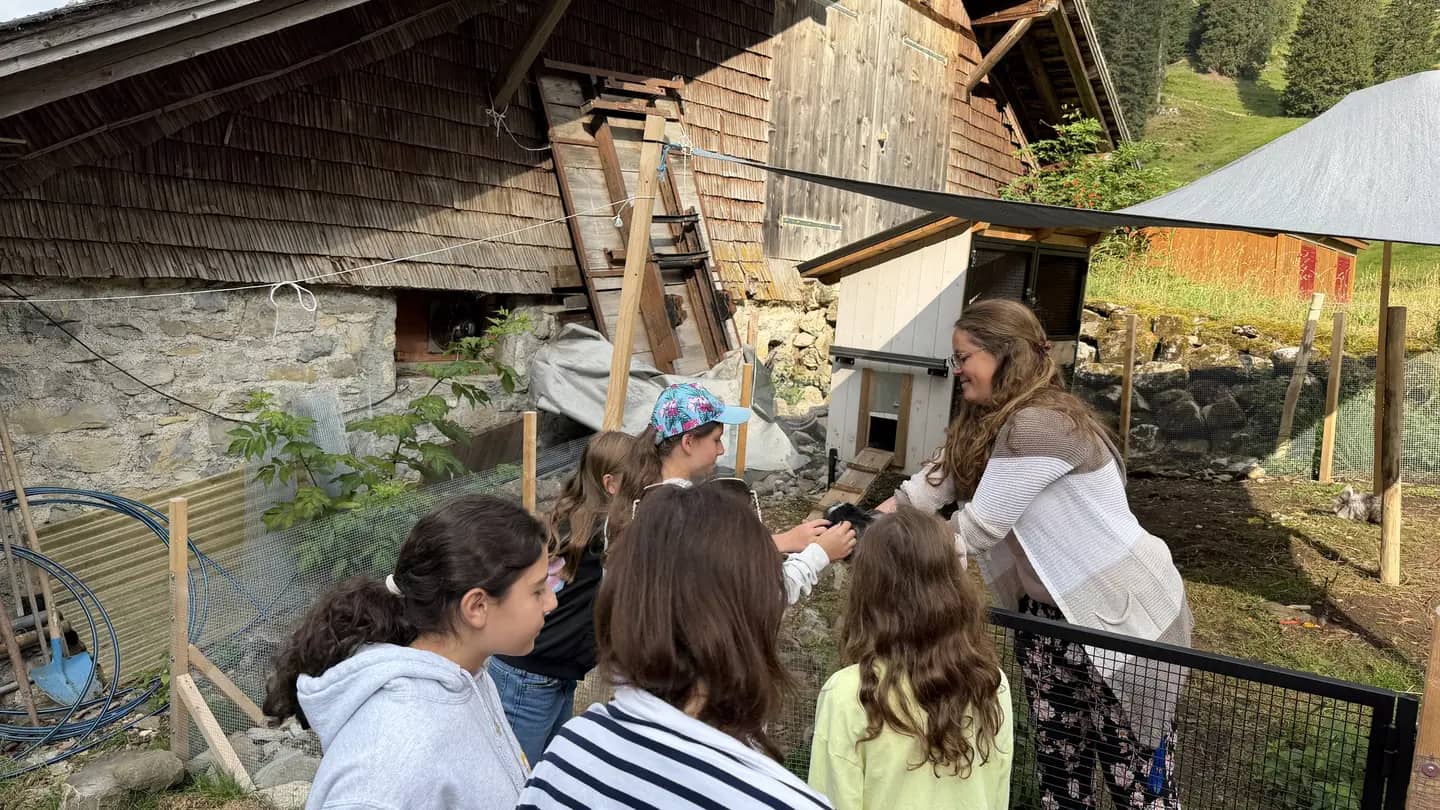
Chästeilet Justistal: Cheese Shared by Lottery Since 1739
Each September the Justistal divides its cheese by drawing tokens from a sack. Free, no bus into the valley: how the date is set and how to get there.
farm-tour-interlakenswiss-dairy-farmalpine-cheese
By Teona GvasaliaRead More
Farm Tour
8/4/2026
6 min
Interlaken Farm Tour Itinerary: 8am to Noon
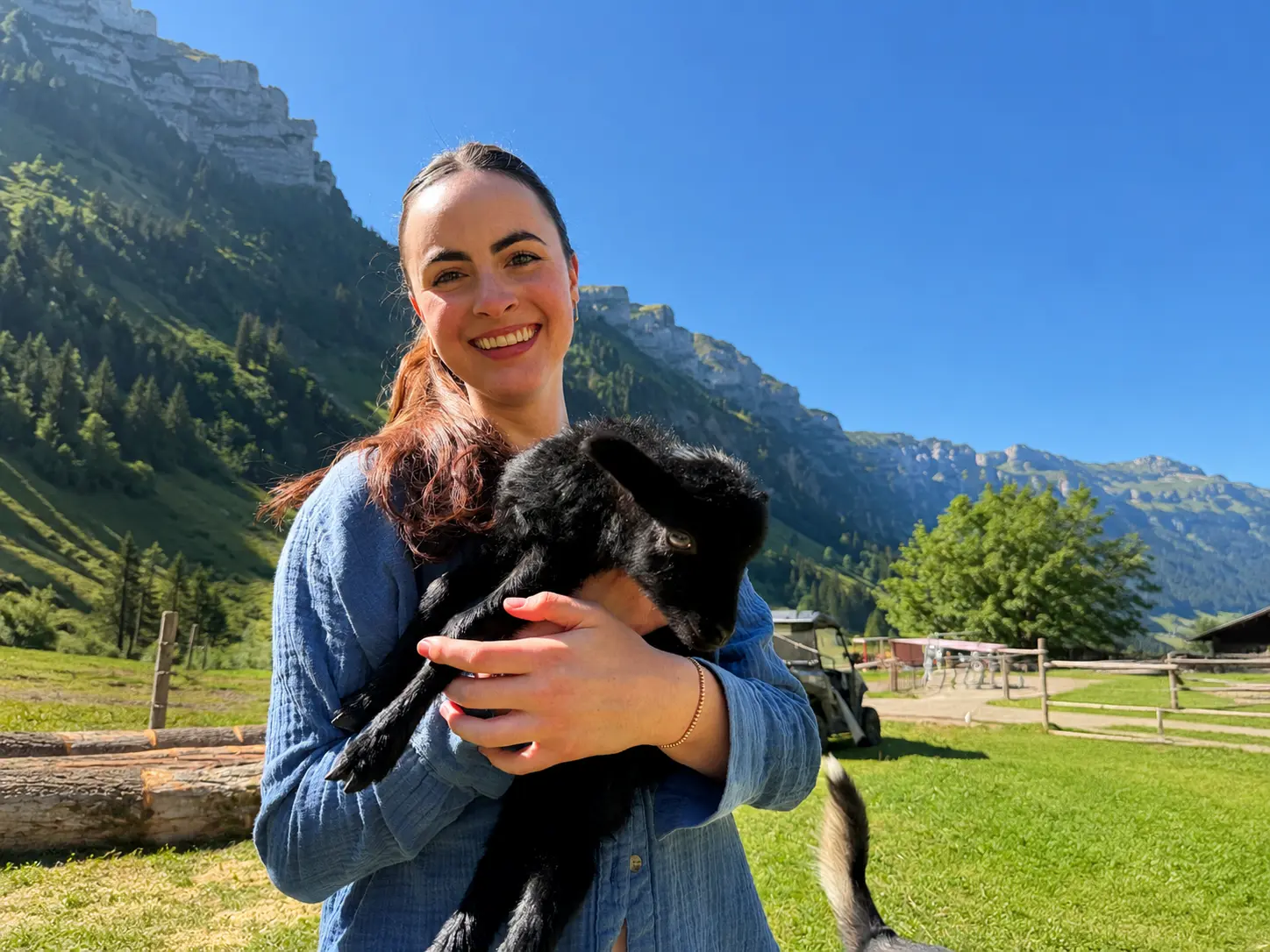
The full schedule of our alpine farm morning, from the 08:00 pickup at Interlaken West to being back in town close to noon. Zero walking, a real cheese batch you watch rather than make, and a farm breakfast that surprises most guests. Written by the founder who drives the van.
farm-tour-interlakenswiss-dairy-farmalpine-cheese
By Teona GvasaliaRead More
Farm Tour
7/22/2026
5 min
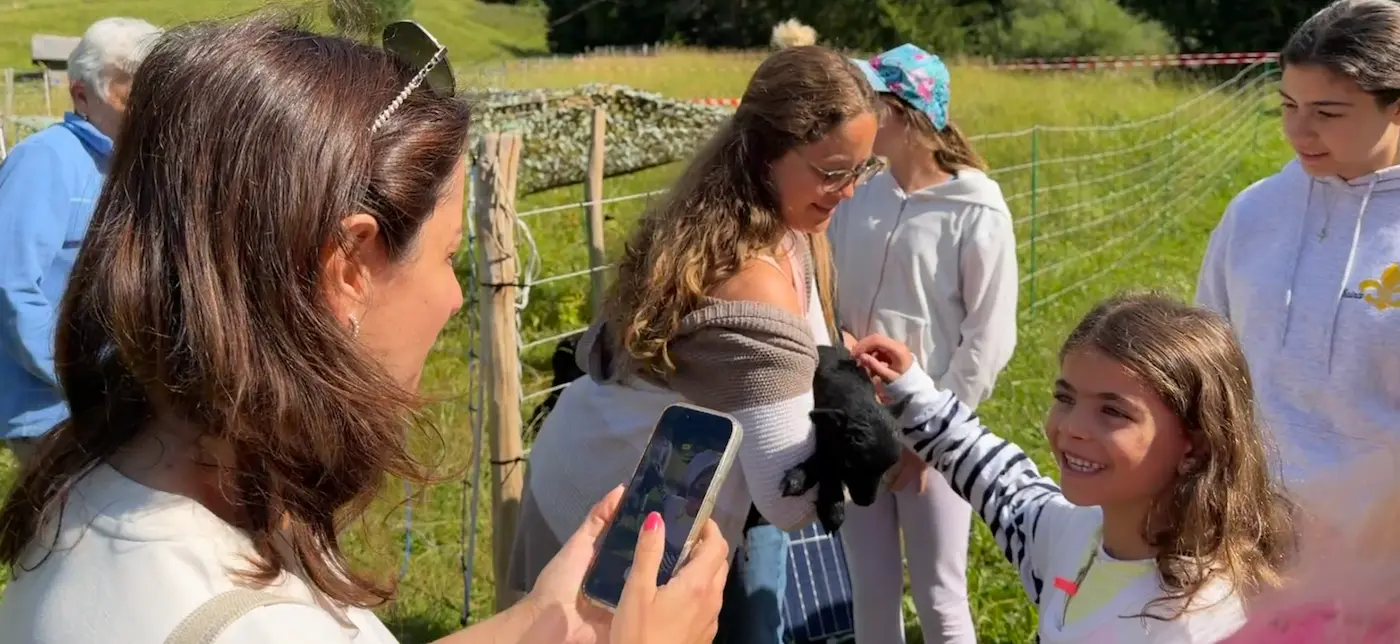
Farm Tour with Kids in Interlaken: A Parent's Guide
No strict minimum age, no walk to reach the farm, a car seat on request, and a breakfast even picky eaters will finish. Here is exactly how the Interlaken Farm Tour works with kids, based on the real family of six who took our very first tour.
farm-tour-interlakenswiss-dairy-farminterlaken-with-kids
By Teona GvasaliaRead More