Farm, Wine & Fondue
Swiss Food Experiences: What to Try and Where It Is Made
P
Pierre Vetsch
Author
August 20, 2026
7 min
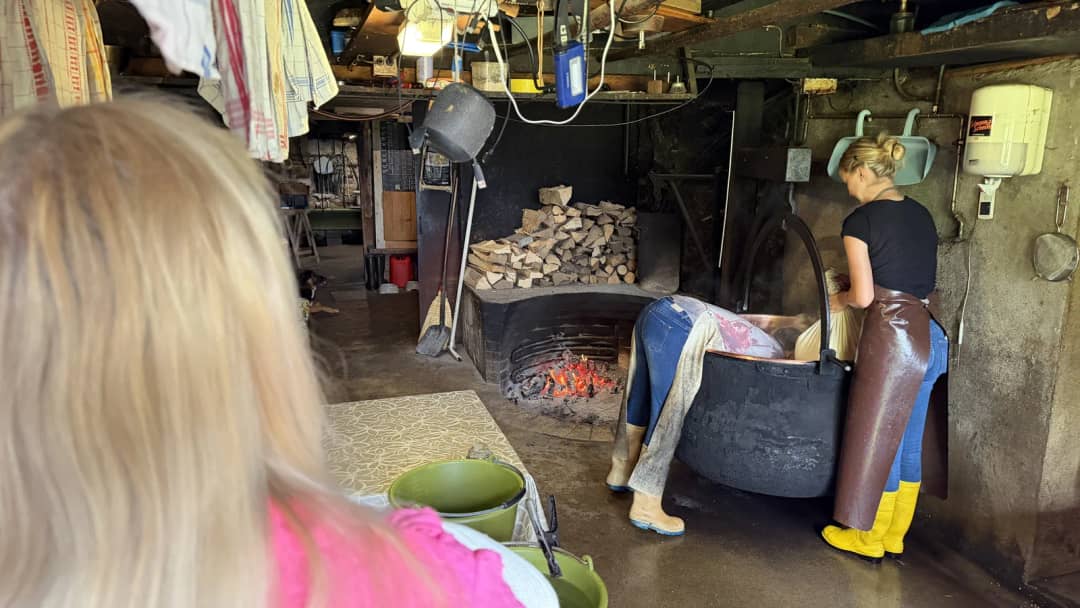
The Swiss food worth trying is the food you can watch being made: alpine cheese, made in a copper kettle on a working alp between May and September, then fondue or raclette in winter and wine where it grows above Lake Thun. Four of Switzerland's 25 AOP products are alpine cheeses made only on summer pastures.
Most guides to Swiss food give you a list of dishes. Fondue, raclette, rösti, chocolate, done. That list answers a question nobody is really asking, because you can eat all four in an airport lounge.
The better question is where you can watch food being made, and by whom. Ask me what hits you first when our Farm Tour group arrives at Daniela's alp in the Justistal around 8:45, and my answer is not a dish:
"The smoke from the wood fire under the cauldron."
Pierre Vetsch, guide and founder, interviewed on 13 October 2026
That is what this guide is about: food made in front of you, not food served to you. Switzerland ate 23.71 kg of cheese per person in 2025 and protects 25 products with an AOP seal, four of them alpine cheeses made only on summer pastures. Almost none of that reaches a tourist menu.
From May to the end of September I drive guests to the vineyard cooperative in Spiez, above Lake Thun, and in summer to a working alp in the Justistal on Tuesdays and Thursdays. So rather than rank restaurants, we went to the people who make the food. Daniela, who runs that alp, answered our guide Teona Gvasalia in an interview in 2026, and her words run through this guide, along with what each experience costs and when it happens.
A Swiss food experience or just a meal: the three-question test
A meal is something you order. An experience is a moment of production you are allowed to stand inside. The test is simple: can you see the food being made, can you speak to the person making it, and does it only happen at a certain time of year? Two out of three is usually enough.
A working alp passes all three, and it still draws the objection I hear most about our Farm Tour: it is a demonstration, and people would rather be hands-on. My answer:
"It's her batch of the day, not a workshop: you are watching real work."
Pierre Vetsch, guide and founder, interviewed on 13 October 2026
That test rules out a lot of what gets sold as culinary tourism here, and it rules in things that cost nothing.
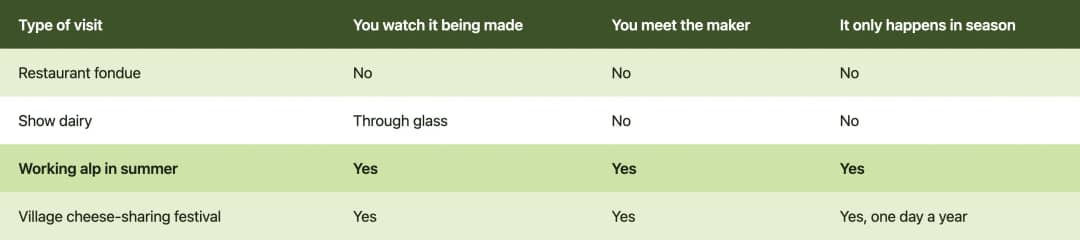
The distinction matters more in Switzerland than almost anywhere, because the country industrialised its food story early. There are excellent visitor centres with viewing windows, and they are honest about what they are. The trouble starts when a traveller books one believing it is the other.
Daniela, who runs Sigriswiler Bärgli in the Justistal above Lake Thun, put the difference in one line in her interview with our guide Teona in 2026.
"The curd tells you when it is ready. You feel it in your hands, not on a screen."
That is the whole thing. Everything below is an attempt to get you close to somebody's hands.
Swiss food beyond cheese and potatoes
Swiss food is far more than cheese and potatoes, even if the tourist version is just that. Switzerland has four language regions and a food map that changes every valley: 252 grape varieties, twenty-five AOP products, saffron in Valais, chestnuts in Ticino, freshwater fish on every lake. What flattens it is the restaurant menu written for visitors, which reduces four regions to one melted pot.
The numbers behind that variety are unusually concrete. Four AOP cheeses can only be made on summer pastures, in summer: L'Etivaz, Berner Alp- und Hobelkäse, Formaggio d'alpe ticinese and Glarner Alpkäse.
More than 6,000 alpine farms operate each summer. Over a third of Swiss farmland is alpine pasture, and roughly one cow in five spends the summer at altitude eating hundreds of different plants rather than a few dozen.
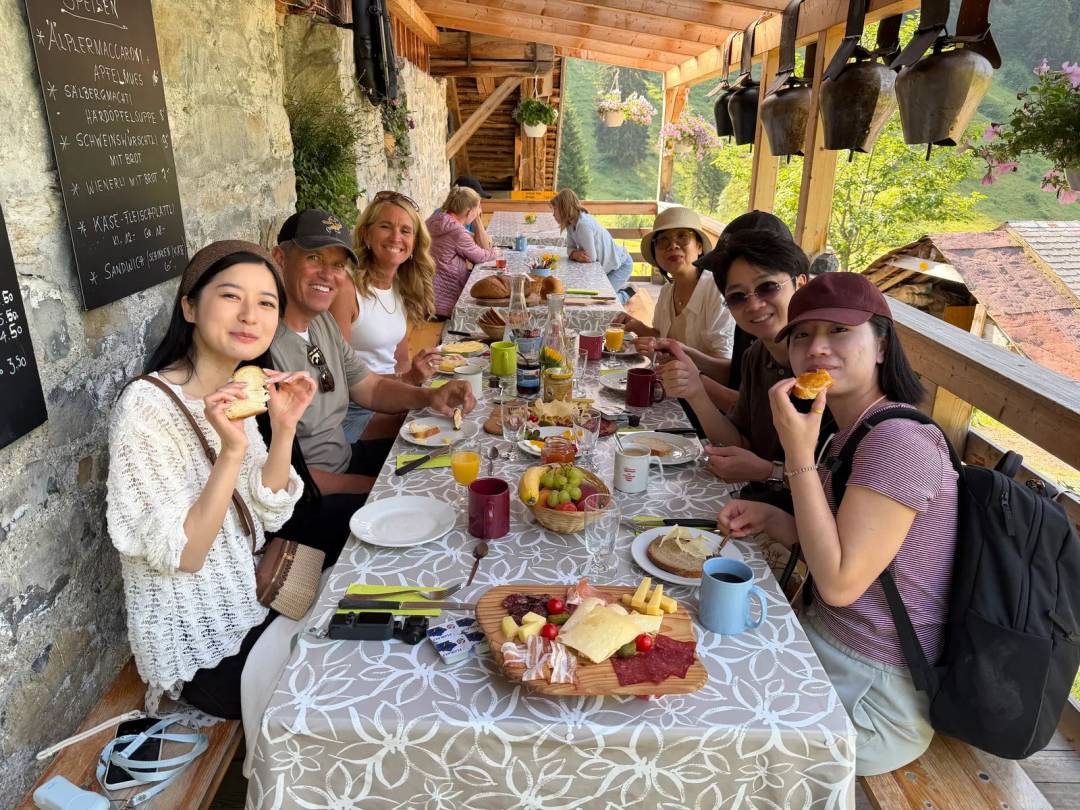
That is why the same cheese name tastes different in July and September, and why one of the most Swiss things you can taste is butter. Daniela again, in the same interview, on what guests often notice at her breakfast table:
"It changes depending on what the cows grazed on the day before. When they are on the north-facing slopes, the butter is deeper yellow and more fragrant. Most people have never tasted butter that moves like that."
If your Swiss food memory is a heavy plate in a tourist street, you have eaten the flattened version. The one we mean is the cheese you cannot buy in a supermarket, made in a copper cauldron over a wood fire for about four months a year.
If you want to know exactly what that cheese is, why it is called Alpkäse and why it never reaches a shop shelf, we explain what Alpkäse actually is in a separate article.
The people who make it: farming families on the alps
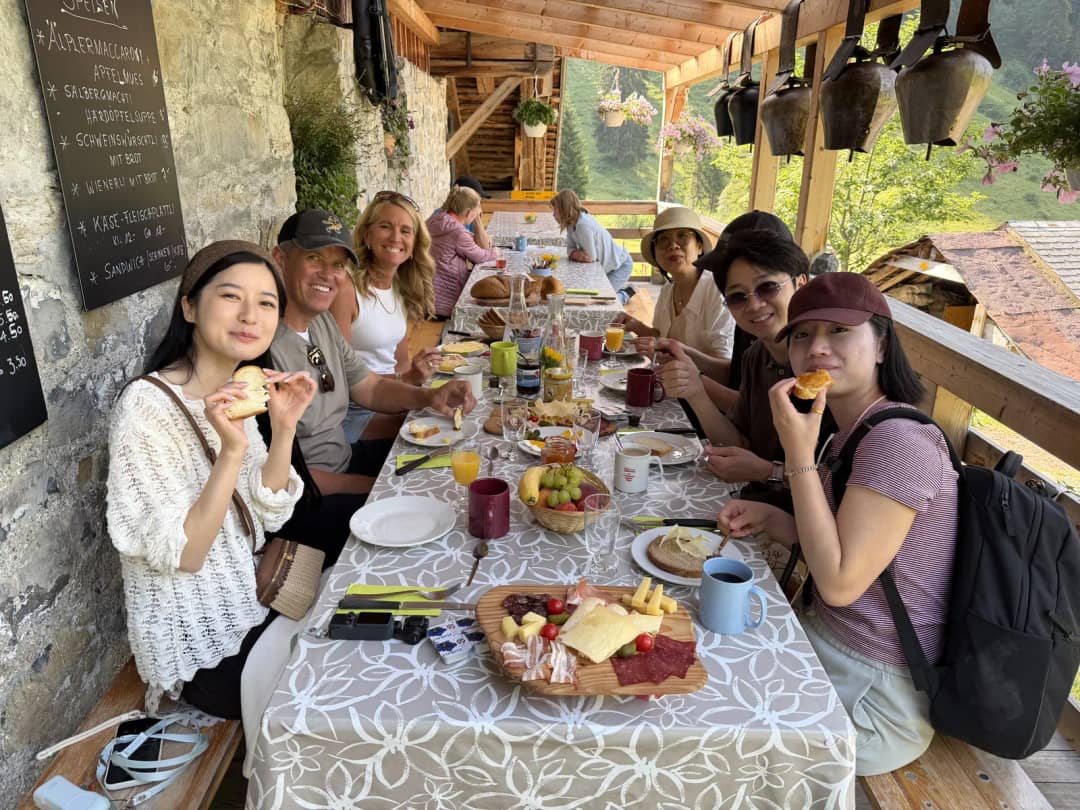
Farming families make it on the alps, for about four months a year. Alpine cheesemaking runs from late May to late September and then stops, because the herds come down. The people doing it are not hospitality workers. They are farmers who agree, in some cases, to let a small number of visitors stand in their working morning.
One of the easiest ways to stand in that morning is to sit at the breakfast table afterwards. We wrote down what an alpine farm breakfast includes, dish by dish, so you know what to expect before you book.
Daniela has run the dairy at Sigriswiler Bärgli since 2009. The milk comes from 21 cows owned by several farming families in the valley, and she makes cheese from it every day of the season, three wheels a day.
Her explanation to Teona of why altitude changes the product is not romantic. It is about time.
"In a factory, milk can travel for hours before it reaches the vat. Up here, the cows finish milking and the milk goes into the copper cauldron within two hours, sometimes less. It is still warm. It carries everything from the pasture: the wild herbs, the altitude, the morning air."
And on the season, which is the constraint every alpine producer builds around:
"We work through the summer and then the alp closes. That constraint forces quality. Every wheel counts because we only have so many weeks to make them. A factory can run year-round and average things out. We cannot afford to average anything out."
The part visitors find hardest is that none of it pauses for them. The cows are milked early because that is when they need milking, and Daniela summed up her days to me in summer 2026: "Up at five, cheese every single day." In her interview with Teona, she described what visitors get wrong when they arrive:
"They expect calm. They have the postcard version in mind: a quiet mountain scene, gentle cows, everything arranged for the eye. The reality is that the farm is already deep into its morning by the time they arrive."
There is more about Daniela and her alp in a separate article.
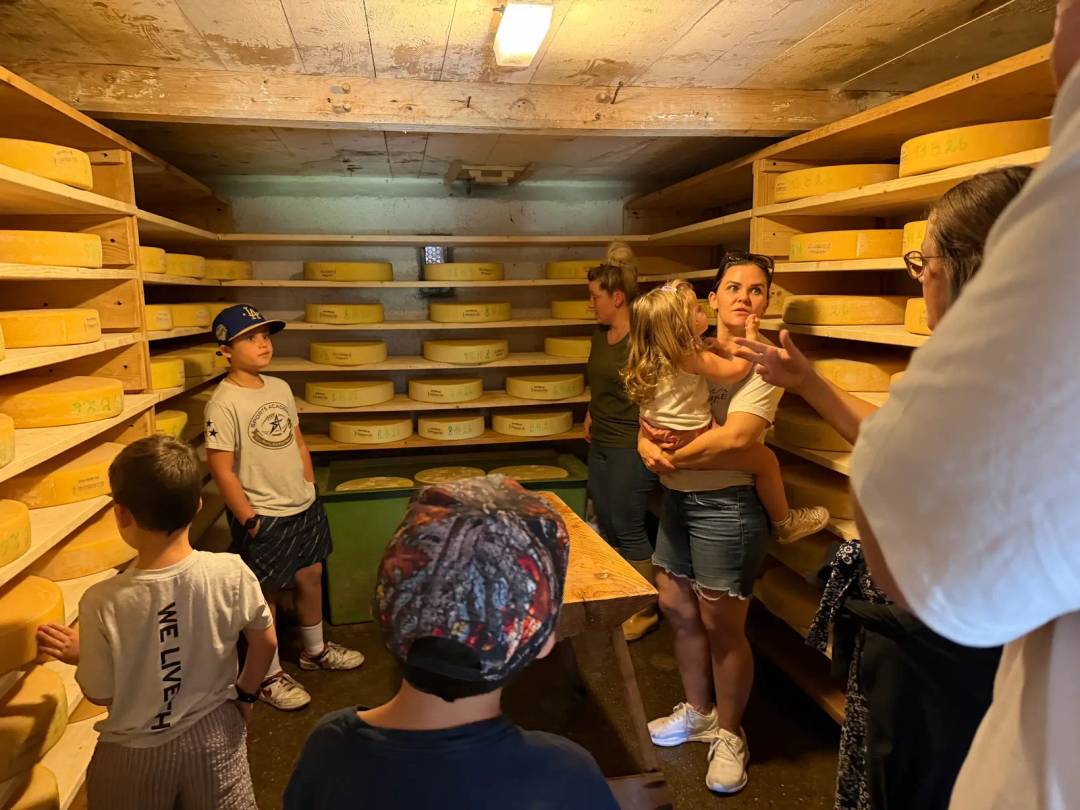
Where to watch alpine cheese being made: working alp or show dairy
You can watch it on a working alp between late May and late September, or through a window at a show dairy year round. Those are two different products, and the price gap is not small: CHF 8 for an adult at La Maison du Gruyère, CHF 149 for a morning with us at Daniela's alp, van and breakfast included. If you can only do one:
"The alp, without hesitation: a real batch, a real family."
Pierre Vetsch, guide and founder, interviewed on 13 October 2026
The show dairies are good at what they do. La Maison du Gruyère is free with a Swiss Travel Pass. The Appenzeller Schaukäserei charges CHF 13 and makes cheese daily between 9:00 and 15:00.
One correction that most English guides have not caught up with: the Emmentaler Schaukäserei in Affoltern stopped producing cheese at the end of June 2025. The site is still open as a visitor attraction and restaurant, but there is no longer cheesemaking to watch there. It is still recommended as an active dairy all over the internet.
For the full comparison of which farms and dairies accept visitors, with prices, seasons and travel times, we did that separately: farm tours in Switzerland: seven alpine farms and dairies compared. And if you only want to understand the difference in principle, show dairy versus working alp covers it.
The one thing worth knowing before you choose: a working alp cannot be booked at scale. Eight visitors is a lot. Sixty is impossible. That is the whole reason the show dairies exist.
Insider tip: At La Maison du Gruyère the cheese is made every day from 9:00 to 12:30, two to four batches depending on the season. Arrive inside that window if you want to see the vats working, not just the room where they stand.
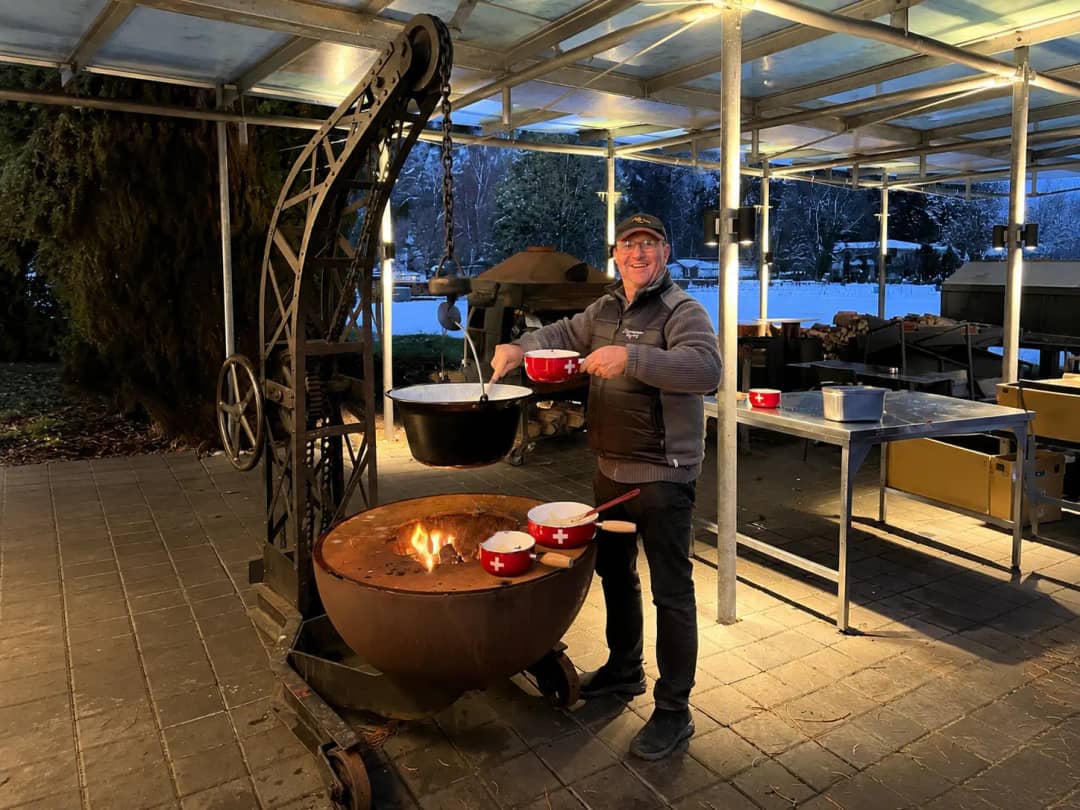
Fondue or raclette: which to order, and when
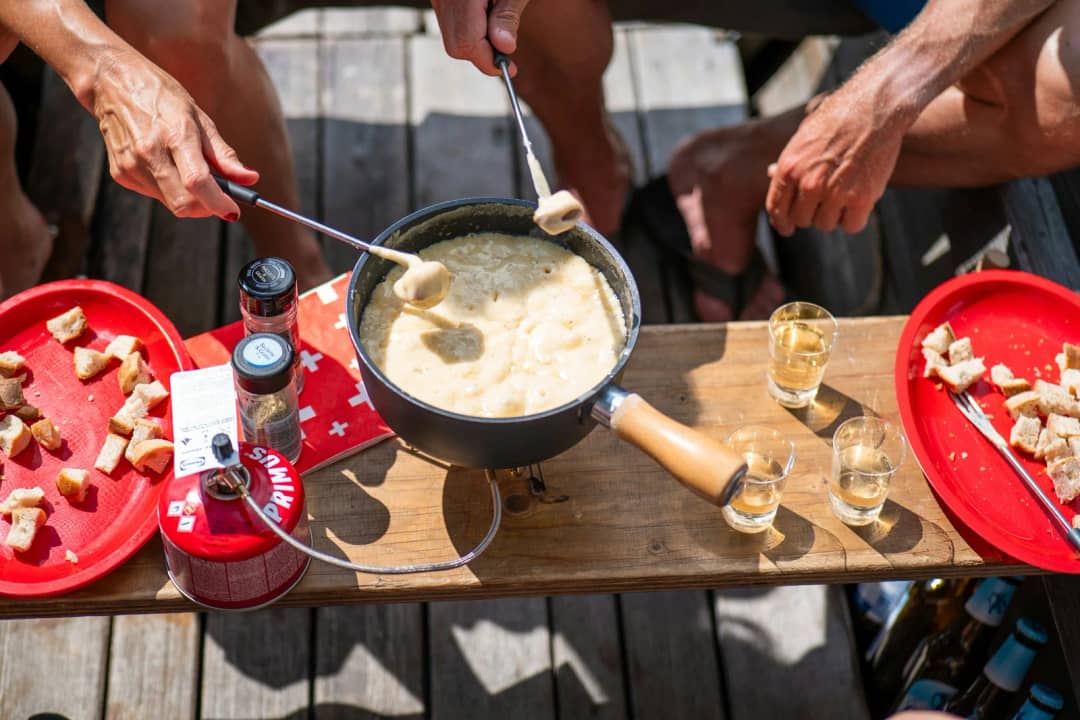
Fondue is a shared pot of melted cheese and wine that everybody dips into, and it is made for two people or more. Raclette is a single serving, scraped hot off a half wheel onto your plate with potatoes and pickles. If you are eating alone, the choice is made for you. For where to order one in town, read where to find the best fondue in Interlaken. First time at the pot? Read how to eat cheese fondue.
If you only eat one fondue on this trip, my advice is about where you eat it:
"After the sledding, or in the mountains."
Pierre Vetsch, guide and founder, interviewed on 3 October 2026
In other words, a fondue in town is worth it at the end of a winter sledding evening, the way our Sunset Sledding evening ends back in Interlaken. Otherwise, have it in the mountains.
Then there is the season. In Switzerland, fondue and raclette are more typically eaten in winter. You can still order fondue in summer, and nobody will refuse to serve you. In the Oberland in August you may simply notice you are the only table having it.
Budget, because everyone asks and few guides answer: expect CHF 25 to 35 for a main course in a normal restaurant, and around CHF 30 to 40 for a fondue for one person's share in a tourist centre.
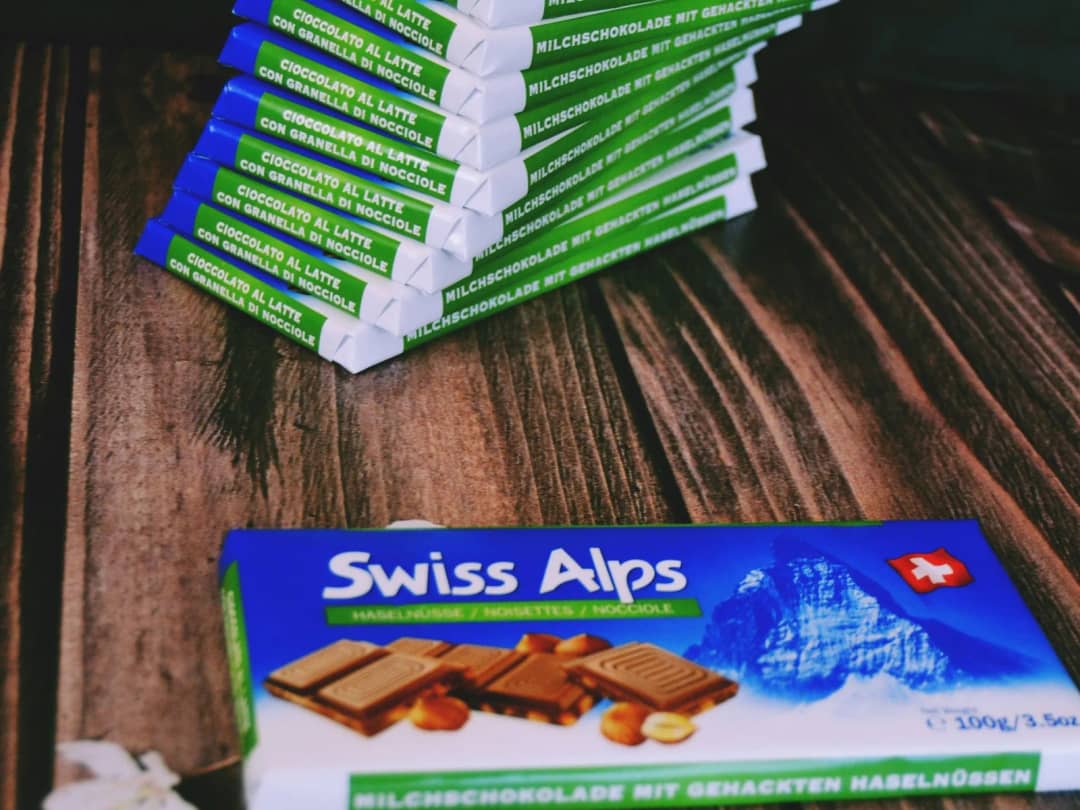
Swiss chocolate factory visits: a museum with tastings
A chocolate factory visit is worth it if you treat it as a museum with tastings rather than as a workshop. The Swiss ate 10.3 kg of chocolate per person in 2025 and the industry sold 192,548 tonnes, so the visitor centres are polished, large and well funded. What they are not is a small producer letting you watch. Entry runs CHF 14 to 17.
Lindt Home of Chocolate near Zurich charges CHF 14 for an adult and CHF 10 for ages 8 to 15. Maison Cailler in Broc charges CHF 17, and is free with a Swiss Travel Pass.
One note that saves confusion: Maison Cailler is chocolate, not cheese, even though a lot of day trips sell it in the same package as Gruyères. If you book a combined excursion, you are visiting two unrelated industries in one bus day, which is exactly the trip behind a complaint I often see in reviews: the day was rushed.
If chocolate is your priority, go to one place and stay there. If it is a nice-to-have, buy a bar from a town chocolatier and spend the day somewhere the food is still being made by the person handing it to you.
Fun fact: The chocolate fountain at Lindt Home of Chocolate in Kilchberg stands over 9 metres tall, with 1,500 kg of chocolate flowing through it, according to Lindt. That is a three-storey column of chocolate in constant motion.
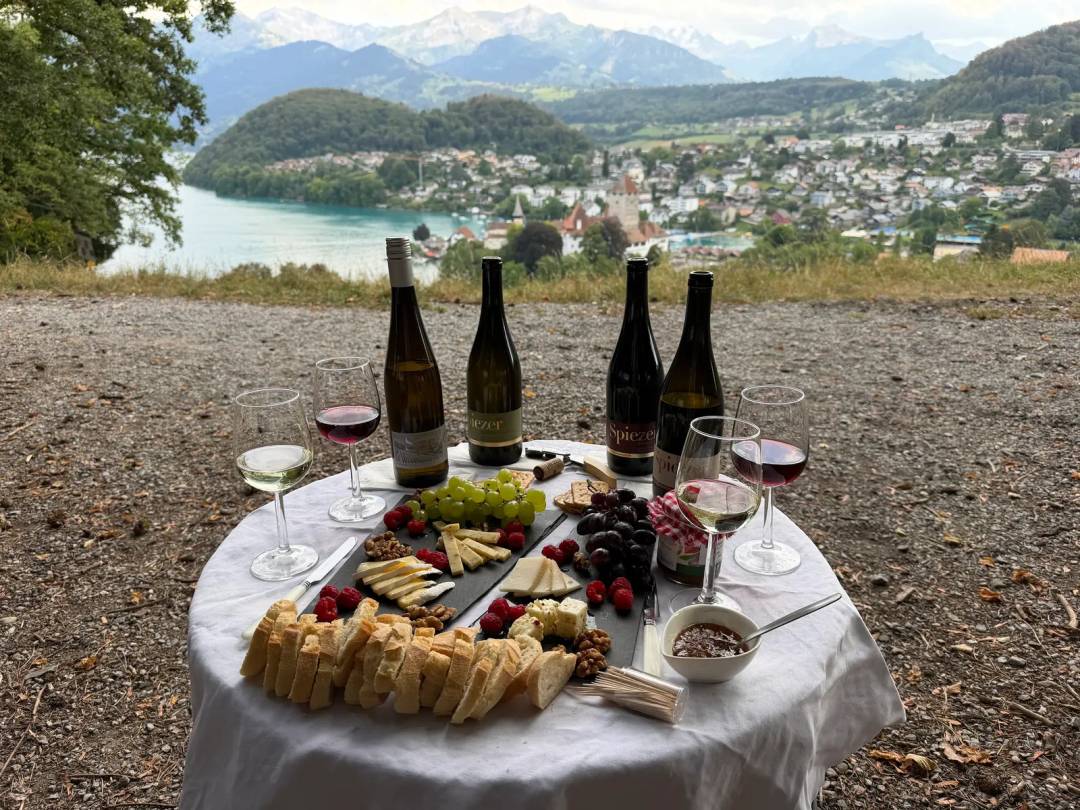
Tasting Swiss wine where it grows: almost the only place you can
You can taste Swiss wine almost only where it grows. Switzerland grows 252 grape varieties across all 26 cantons, and roughly 98% of it never leaves the country. There is no export shelf to find it on later, which makes drinking it here less of a nice idea and more of a one-off.
The mistake I see visitors make with Swiss wine, and my verdict on Lavaux or Valais for a short stay:
"They don't even know there is wine here."
"Neither of the two if you only have three days: do Spiez."
Pierre Vetsch, guide and founder, interviewed on 9 October 2026
Swiss wine's scarcity is not marketing. It is arithmetic. The vineyards are small, steep and hand-harvested on terraces machines cannot reach, paying Swiss wages, with no volume to spread the cost across.
It also creates a practical problem nobody warns visitors about: Swiss tastings are usually a preamble to buying cases, not a product you can walk in and pay for. Cellar doors keep short hours, often a couple of afternoons a week in season. Turning up on a Tuesday rarely works.
Around Interlaken the picture is a little easier, because a few addresses are set up for visitors who simply want to taste. We checked them one by one in six wine tasting options near Interlaken, with hours and prices. Our own tastings, on our wine tour in Spiez, are with the Rebbau Spiez cooperative, where our contact Sebastian, who handles logistics and sales, made the partnership possible.
Which regions are worth the journey, and how they differ, we covered in full: the five Swiss wine regions compared. And the grape that confuses everyone, Riesling-Sylvaner, is neither Riesling nor Sylvaner.
Swiss food events: the end of the alp season
The alpine food calendar follows the alp season. Cheese is made on the alps from late May to late September, and the events that matter cluster at the end of that window, when the herds come down and the summer's production gets divided up. Most of these are free.
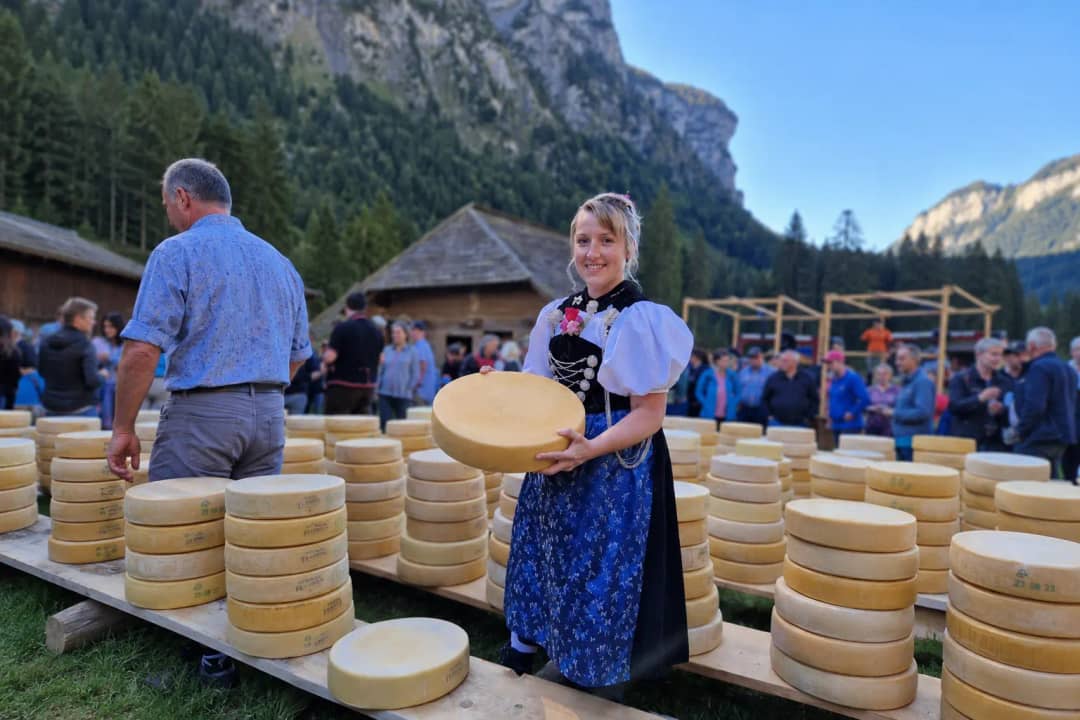
The one we know best is the Chästeilet in the Justistal, where the summer's wheels are shared out by drawing lots. I was there on 18 September 2026. Our guide to the Chästeilet in the Justistal covers when it takes place, how the lottery works and how to get there.
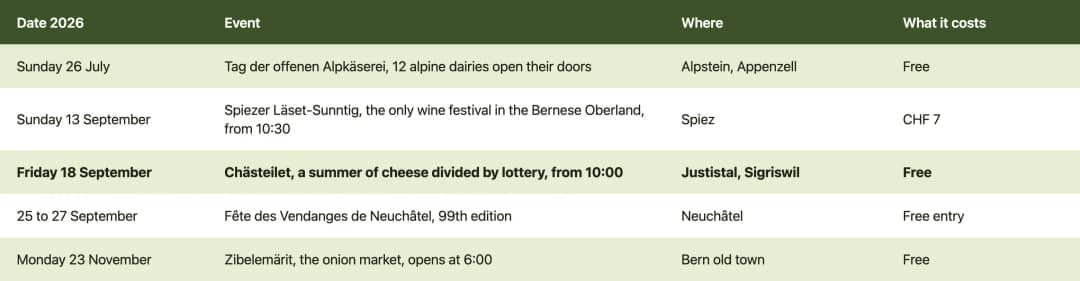
Two of those deserve a note. The Chästeilet in the Justistal has been documented since 1739 and is not a show. Daniela, whose valley it happens in, is precise about that:
"For us it is not a tourist event. It is the moment the summer formally ends and the cooperative settles its books."
And the Zibelemärit in Bern genuinely opens at six in the morning, with stalls trading from four. Arriving at ten means arriving at the end.
Between early September and early October, dozens of villages also hold a Désalpe or Alpabzug, the decorated descent of the herds. Dates are set locally and often confirmed only weeks ahead, which is why they rarely appear in guidebooks. Ask the local tourist office the week before rather than trusting a list published in spring.
Avoiding a tourist trap without overpaying: three tests
Use three tests, in order. How far is it from the attraction, who is standing behind the counter, and what time do locals eat there. A restaurant beside a cable car station serving fondue at 15:00 in five languages is not lying to you, it is simply not aimed at you. Walk ten minutes and the price falls while the quality rises.
With fondue in Interlaken, the mistakes I see visitors make come down to two:
"No reservation, or a tourist trap."
Pierre Vetsch, guide and founder, interviewed on 3 October 2026
Price is not the only thing to watch. With excursions, the complaint I often see in reviews is the one from the cheese and chocolate days above: the day was rushed.
So the practical rules:
Count the minutes, not the stops. An excursion that visits three producers in a day gives you about twenty-five minutes at each. That is a photo, not an experience.
Eat where the working day eats. Lunch between 11:30 and 13:00 in a village restaurant is the cheapest good meal in the country.
Free beats booked, often. A cheese-sharing festival, a village market or an alp descent costs nothing and is entirely real.
Small numbers are the signal. If a producer can take sixty people, you are visiting a venue. If they can take eight, you are visiting a farm.
Matching a Swiss food experience to your trip
Match it to how much time you have and what season you arrive in, not to what sounds most Swiss. The alpine experiences exist for about four months. Everything else runs year round and will still be there next time. If you have only half a day for Swiss food and you are here between May and mid-September, my answer is short:
"The morning at Daniela's alp."
Pierre Vetsch, guide and founder, interviewed on 14 October 2026
For every other trip, start from the profiles below.
Two days, summer. One morning on a working alp, one evening meal in a village rather than a resort centre. Skip the combined bus excursions entirely. And pack a warm layer for the alp: asked on 13 October 2026 what guests get wrong up there, I answered "Underestimating the cold at the alp."
Two days, winter. The alps are closed. Go to a show dairy, a chocolate house, and eat fondue while it is in season.
Travelling with children. A working farm beats a museum by a distance, because there are animals and nobody is asked to be quiet.
You do not drink. Skip the wine regions and spend the budget on cheese and chocolate, both of which are more interesting here anyway.
You want one thing that is unrepeatable. Time your trip to the end of September and go to a Chästeilet or a Désalpe. It costs nothing, and it is the only version of this that has not been arranged for anyone's benefit but the farmers'.
If you are already based near Interlaken, the two we run ourselves are a morning at Daniela's alp and an afternoon at the Spiez vineyard cooperative, both capped at eight people. I guided more than ten Farm Tours at Daniela's in 2026.
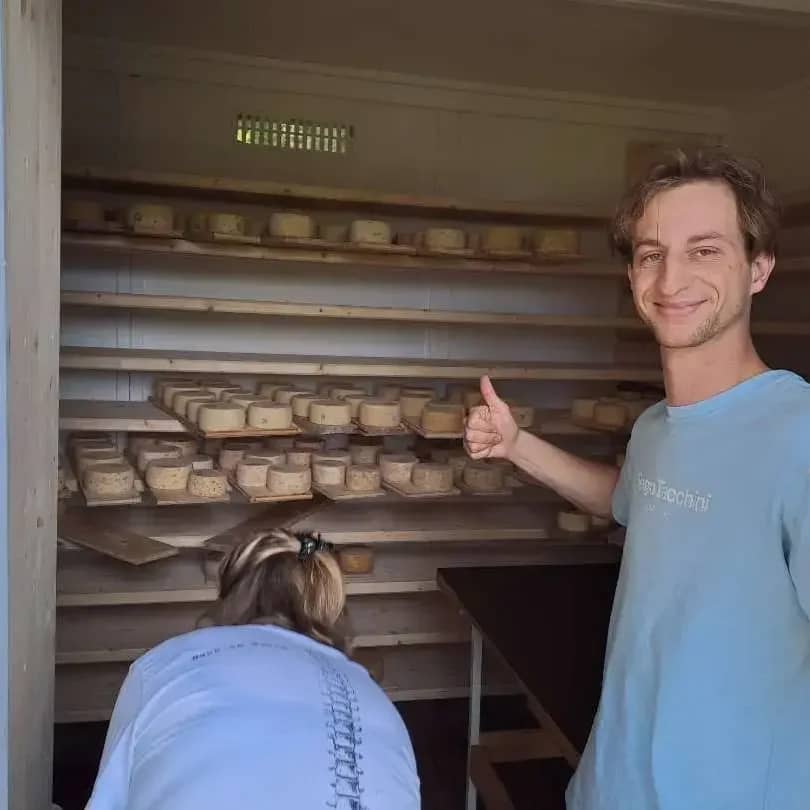
Your Questions About Swiss Food Experiences
What is the most authentic food experience in Switzerland?
A working alpine dairy during the summer season, between late May and late September. The milk goes into a copper cauldron over a wood fire within two hours of milking, and the person making the cheese is the person who owns the problem if it goes wrong. Nothing is staged, which also means nothing waits for you. The free alternative is a village Chästeilet or Désalpe at the end of September, where the cheese and the herds come down and the whole valley turns up.
Can you visit a real working dairy farm in Switzerland?
Yes, but in small numbers and only in summer. Some alps accept visitors directly, some through the local tourist office, and some through small operators. Numbers are the giveaway: a working alp can host a handful of people without stopping work, so anything selling sixty seats is a visitor centre rather than a farm. Show dairies such as La Maison du Gruyère (CHF 8) and the Appenzeller Schaukäserei (CHF 13) are open year round and are honest about being exhibitions.
How much does a meal cost in Switzerland?
Budget CHF 25 to 35 for a main course in an ordinary restaurant, and more in resort centres. A fondue for one person's share in a tourist street runs CHF 30 to 40. The cheapest good meal in the country is lunch in a village restaurant between 11:30 and 13:00. Tap water is free and safe everywhere, including from village fountains unless marked otherwise.
Should you order fondue in summer?
You can, and nobody will mind. In Switzerland, fondue and raclette are more typically eaten in winter, so in an Oberland village in August you may be the only table having it.
When is alpine cheese made in Switzerland?
In summer only, usually between late May and late September. The herds move up when the snow clears and come down before the first serious cold. The AOP rules set the window cheese by cheese: L'Etivaz is made on its summer pastures from 10 May to 10 October, Glarner Alpkäse no earlier than 1 May and no later than 30 September. Outside that season you can still watch cheesemaking at valley show dairies, which run all year.
Is the Emmentaler Schaukäserei still making cheese?
No. The show dairy at Affoltern stopped producing cheese at the end of June 2025. The site remains open as a visitor attraction with a restaurant and shop, but there is no longer cheesemaking on site to watch. Many English-language guides still list it as an active dairy. If watching production is the point of your visit, La Maison du Gruyère and the Appenzeller Schaukäserei are both still producing daily.
Do you need to book Swiss food experiences in advance?
For working farms and small-group tours, yes, often days ahead, because capacity is tiny. For show dairies and chocolate houses, no, though timed entry is worth reserving in high season. For festivals such as the Chästeilet, the Läset-Sunntig or a village Désalpe, there is nothing to book at all: you turn up. What does need planning for those is transport, since several take place in valleys with limited or no public transport on the day.
What food should you bring home from Switzerland?
Alpine cheese, and buy it from the producer rather than the airport. A wheel bought at the alp costs a fraction of what an equivalent costs abroad, where it usually is not sold at all. Swiss wine is the other candidate for the same reason: with around 98% consumed domestically, the bottle you carry home is genuinely unavailable elsewhere. Check your own country's import rules first, since several restrict raw milk cheese.
What is the most famous food in Switzerland?
Fondue, rösti, raclette and Birchermüesli are the four national dishes on the About Switzerland site of the Federal Department of Foreign Affairs, which calls rösti one of the best known. Fondue and raclette are more typically eaten in winter, rösti and muesli all year round. In summer, the food to seek out is fresh alpine cheese on a working alp.
What is a must eat in Switzerland?
Alpine cheese at the source, if you come between May and September. Four Swiss AOP cheeses, Berner Alpkäse among them, may only be made on summer pastures, and Berner Alpkäse is made daily from raw alpine milk in a copper kettle. Taste it with the butter at an alp breakfast, which changes with what the cows grazed the day before. In winter, make it fondue.
Why pay CHF 149 for the Farm Tour when Gruyères costs CHF 8?
Because you are not buying the same morning. CHF 8 is the adult entry to La Maison du Gruyère, a show dairy you still have to get to on your own. CHF 149 is a morning at Daniela's alp in the Justistal: the van leaves Interlaken at 8:00 and has you back around noon. What the difference pays for:
"Transport, breakfast and the cheesemaker in person included."
Pierre Vetsch, guide and founder, interviewed on 14 October 2026
The Farm Tour runs on Tuesdays and Thursdays from May to mid-September, for 8 guests at most, at CHF 149 per person or CHF 139 each for groups of 6 or more. The 2026 season ended in mid-September, and no 2027 dates are open yet. Everything the morning includes is on the Farm Tour: Swiss Breakfast & Cheese Making page. Want to hear first? Message us on WhatsApp: Tell me when Daniela's 2027 mornings open. We reply within the hour.
For more things to do in Interlaken, see the 25 picks of our local guide.
In summer, from May to October, our Sunset Walk with a fondue backpack carries the cheese, the white wine and everything for the fondue to the shore of Lake Thun, past the Weissenau castle ruin.
How we made this: facts and prices checked at the official sources on 8 October 2026, written with AI assistance. Opening answer, the AOP register, the alpine cheese rules and the national dishes answer checked on 10 November 2026 at the Swiss PDO-PGI Association and the About Switzerland site of the FDFA.
*Written by Pierre Vetsch, founder and head guide at Swiss Local Adventures
Source:
conversations with the producers behind our own tours in the Bernese Oberland, 2026.
Tags
#swiss-food-experiences#alpine-cheese#swiss-dairy-farm#swiss-wine#swiss-chocolate#swiss-traditions#food-travel-switzerland
Sources & References
- •Swiss PDO-PGI Association
- •Switzerland Tourism
- •Chocosuisse
- •Photo: Duygu Kamar on Pexels
- •La Maison du Gruyère, Gruyère AOP Fabrikation Uhrzeit
- •Lindt Home of Chocolate, official site
- •Swiss Local Adventures, fiche Farm Tour: Tuesdays and Thursdays, start 8:00, back around noon, season May to mid-September, CHF 149 (CHF 139 from 6), max 8, round-trip van and breakfast included, booking data 01.06-15.09.2026 only, no 2027 date, opened 15.10.2026 (01:00, HTTP 200)
- •La Maison du Gruyère, Tarifs et offres spéciales: adult entry CHF 8, opened 15.10.2026
- •Interlaken Tourism, Chästeilet in the Justistal: 18 September 2026, from 10.00, Spycherberg, opened 15.10.2026
- •Swiss PDO-PGI Association, register 2025: 25 AOP products (41 entries, 16 IGP), opened 15.10.2026
- •Swiss PDO-PGI Association, L'Etivaz AOP: alpine cheese made only during the summer pasture period, 10 May to 10 October, opened 15.10.2026
- •Swiss PDO-PGI Association, Glarner Alpkäse AOP: made only in summer on summer pastures, not before 1 May, not after 30 September, opened 15.10.2026
- •Swiss PDO-PGI Association, Berner Alpkäse / Hobelkäse AOP: made daily from alpine milk on the summer pastures, opened 15.10.2026
- •Swiss PDO-PGI Association, Formaggio d'alpe ticinese AOP: summer pastures, 1 June to 30 September, opened 15.10.2026
- •Schweizer Milchproduzenten SMP, press release of 2 April 2026: 23.71 kg of cheese per person in 2025 (provisional), opened 15.10.2026
- •FDFA About Switzerland, Switzerland's national dishes: fondue and raclette are more typically eaten in winter, opened 15.10.2026
- •Swiss Local Adventures, fiche Scenic Wine Tour: vineyards below Spiez Castle above Lake Thun, start 15:30, group 1-8, opened 15.10.2026
Share this article
Similar Articles
Continue your reading with these related articles
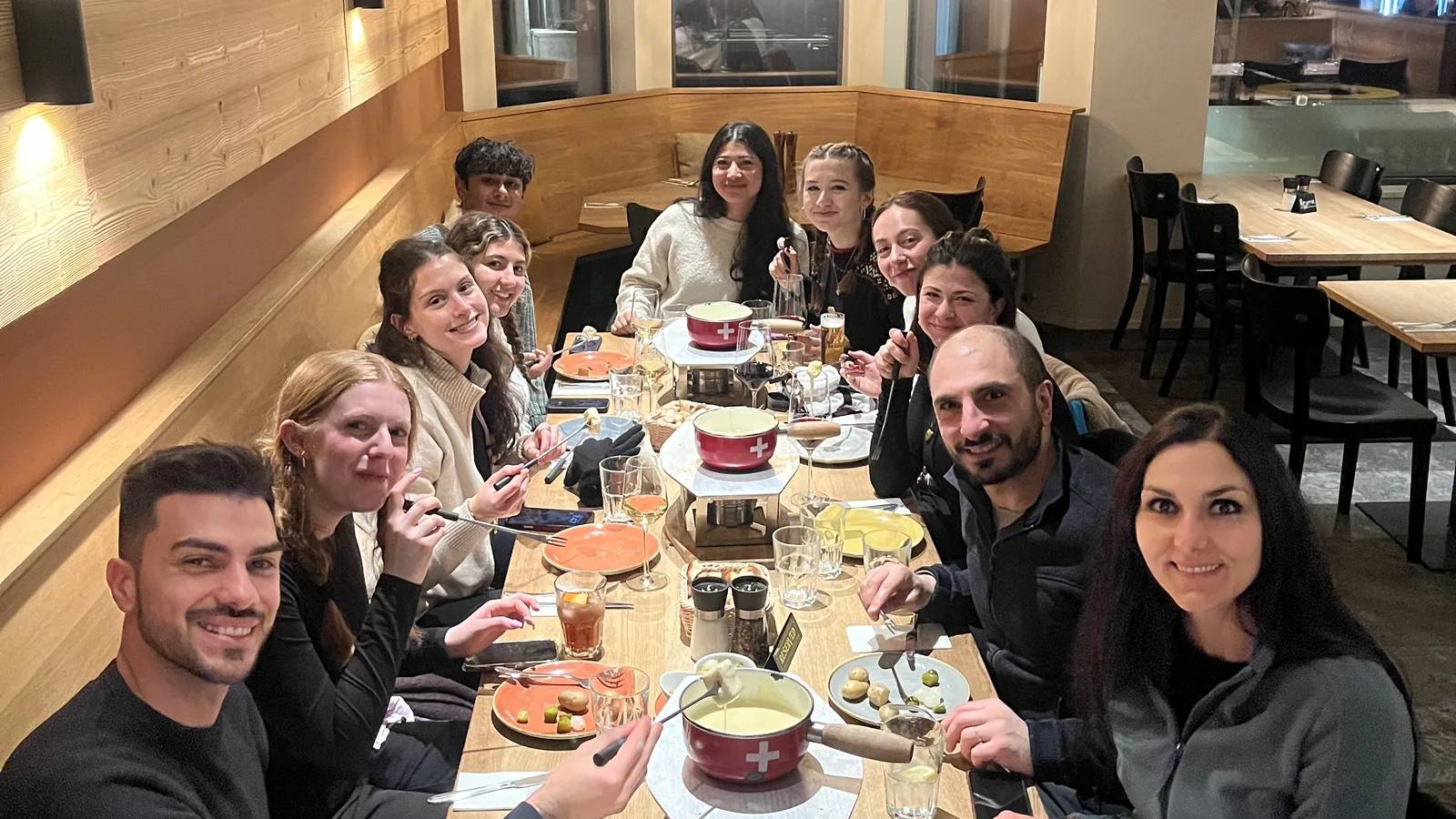
Farm, Wine & Fondue
11/13/2026
9 min
How to Eat Cheese Fondue: Swiss Rules, Tea Wins
How to eat cheese fondue: bread through the crust, fork off your lips, crust last. In a 2010 BMJ trial, tea beat white wine on digestion.
how-to-eat-fondueswiss-fondue-etiquettecheese-fondue
By Pierre VetschRead More
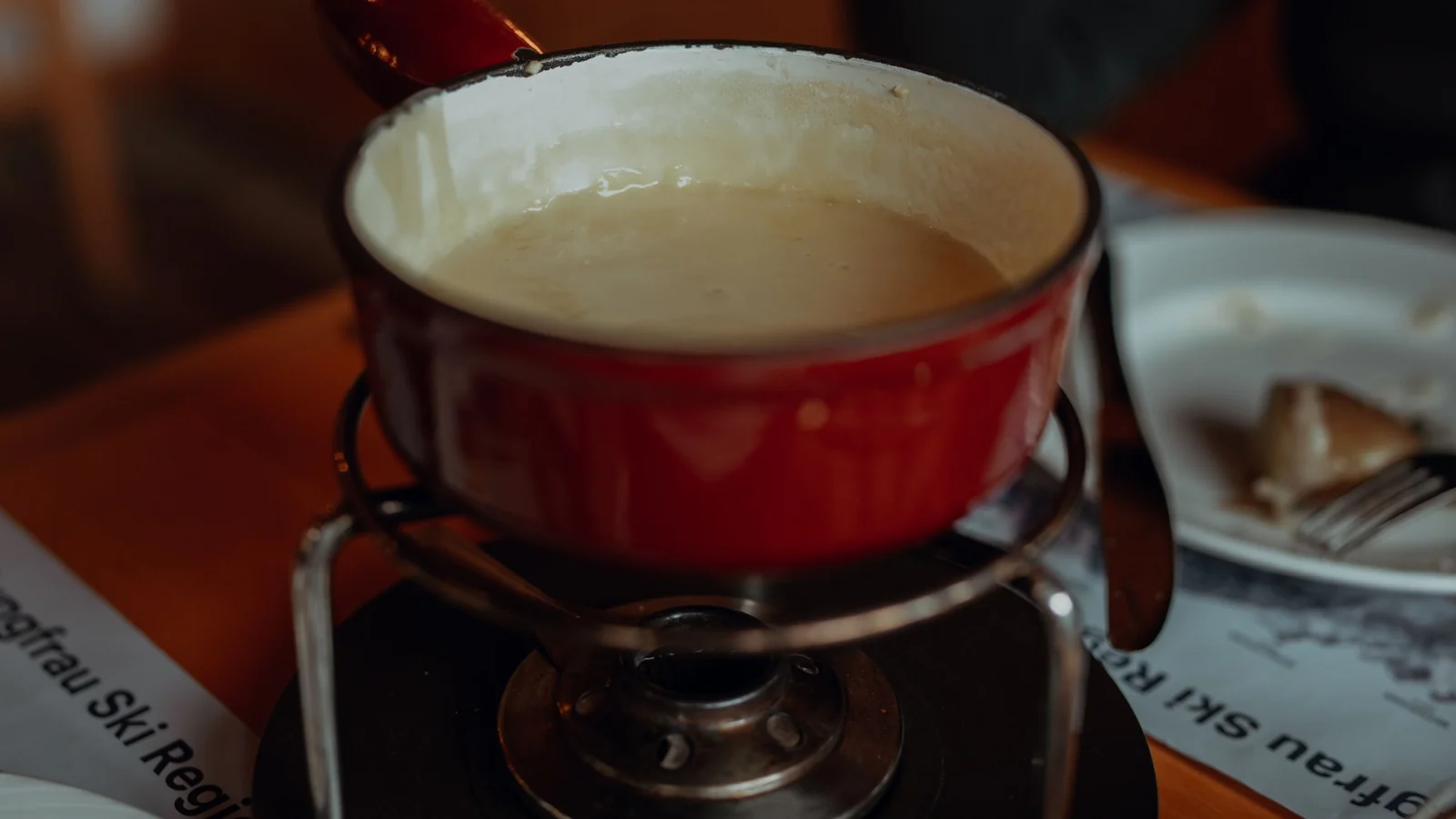
Farm, Wine & Fondue
10/3/2026
12 min
Best Fondue in Interlaken: Where a Local Guide Eats
Best fondue in Interlaken: a local guide's pick is the Taverne at CHF 30 per person. Where our groups eat, what to order, how to skip the traps.
best-fondue-interlakencheese-fondue-interlakenwhere-to-eat-interlaken
By Pierre VetschRead More
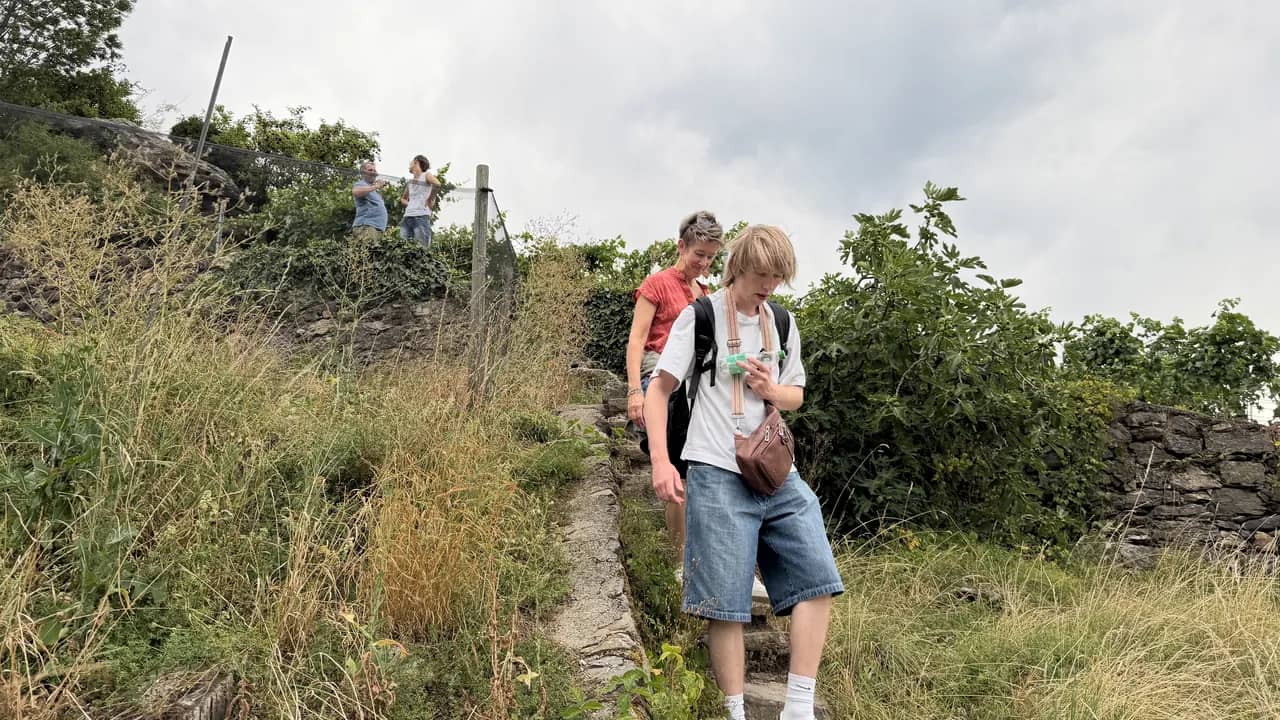
Farm, Wine & Fondue
8/19/2026
5 min
Is the Spiez Wine Tour Worth CHF 139?
Yes for most: CHF 139 for 3 hours from Interlaken, 4 Spiez wines with cheese, 8 guests max, May to October. Two doing it alone save about CHF 50 each.
wine-tour-interlakenwine-tasting-cost-switzerlandswiss-wine
By Olivia LufmanRead More