Farm Tour
What Is Alpkäse? Swiss Alpine Cheese Made Only in Summer
T
Teona Gvasalia
Author
June 22, 2026
6 min
What Is Alpkäse? The Alpine Cheese You Can't Buy Anywhere Else
Alpine cheese (Alpkäse) is made on a Swiss alp in summer, from the milk of the summer pastures, and Swiss law reserves the word "Alp" for exactly that. Mountain cheese (Bergkäse) needs milk from the mountain zone or the summer pastures, and it must be made in a mountain municipality.
Switzerland has more than 450 varieties of cheese. Most of them never leave the country. Alpkäse is the most extreme case: made only in summer, on the alp, from raw milk that goes from cow to copper kettle the same morning. One alpine farm in the Justistal produces 348 wheels per season. When the cows come down in September, production stops entirely. The cheese sitting in a cellar in October was made in July.
That is not a marketing story. It is a calendar constraint.
If you have tasted Alpkäse near Interlaken and wondered what made it different from every other Swiss cheese you had tried, this guide explains exactly that.
What Is Alpkäse, and Where Does It Come From?
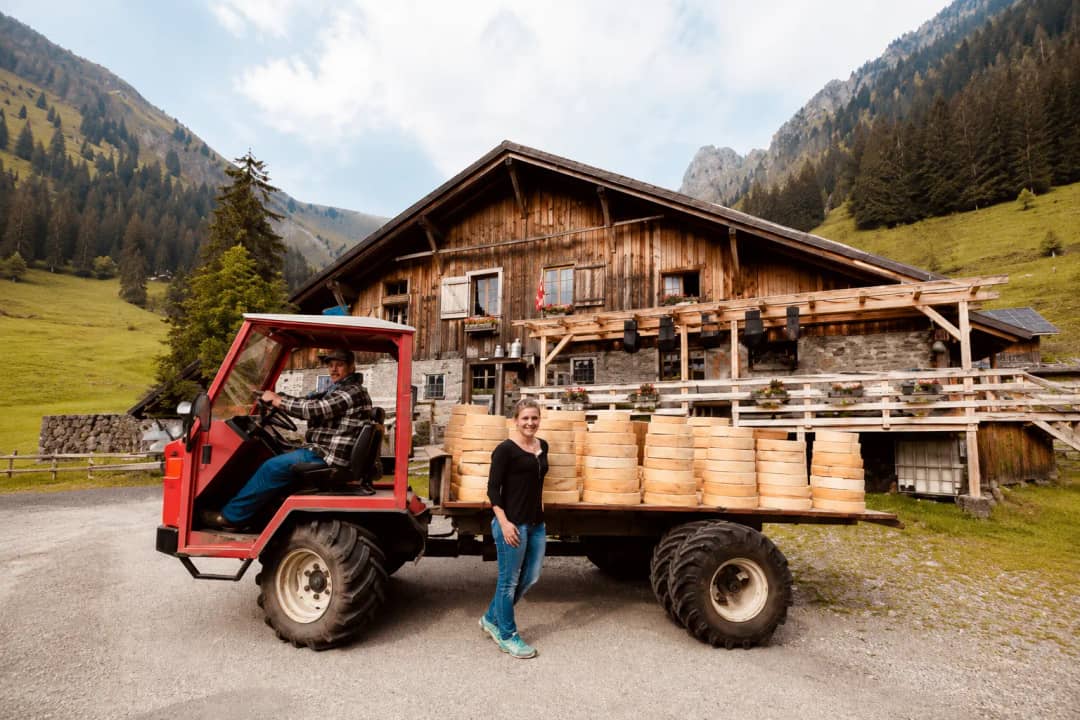
Alpkäse is a raw-milk hard cheese produced on high-altitude Swiss farms between June and September. It is made exclusively on the alp, from milk of cows that graze on alpine pastures, and it is never industrially processed. One farmer, one herd, one summer season.
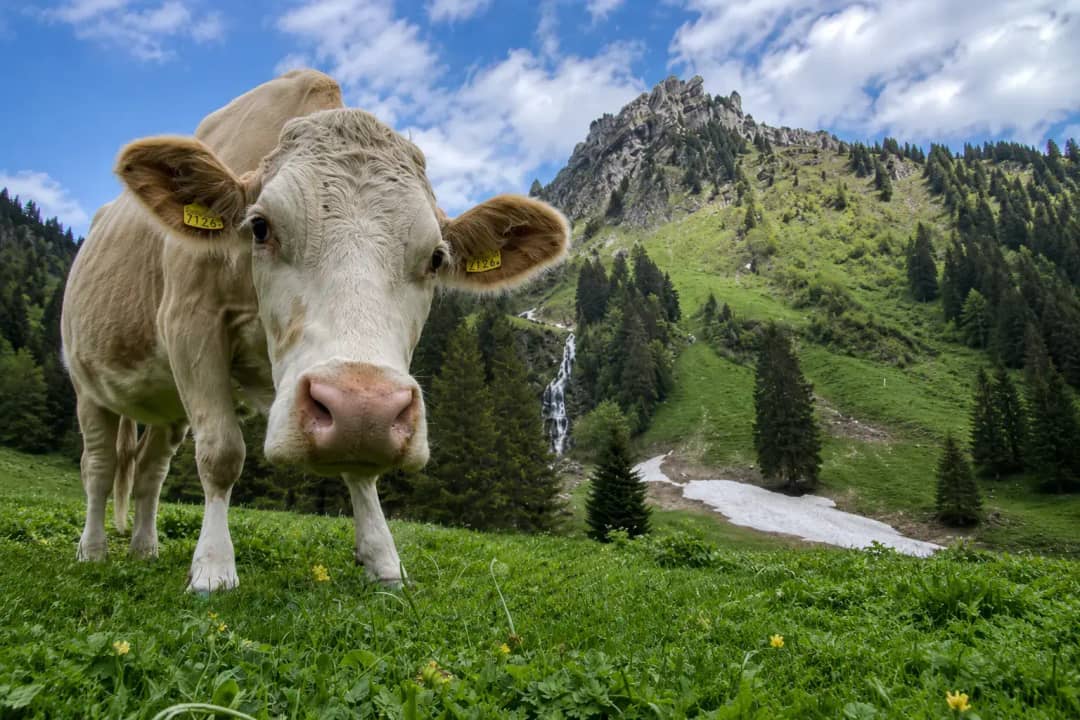
The name means "alpine cheese" in Swiss German. The legal definition matters: to carry the name, the cheese must be made on an alp (a seasonal mountain farm), not in a valley dairy. The milk comes from cows that eat hundreds of wild plants, dandelions, clover, wild thyme, mountain herbs that grow only at this altitude. That feed is what gives the cheese its character. The flavor comes from the pasture, not from a recipe.
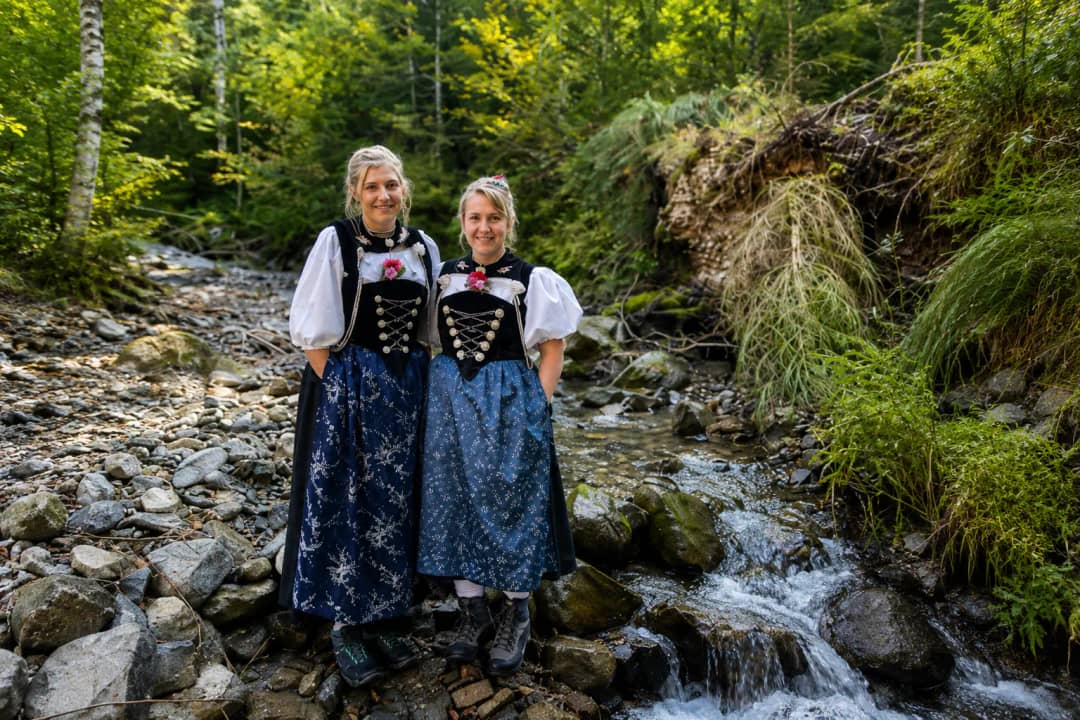
Teona says: "The flavor comes from the pasture, not from a recipe."
Teona Gvasalia, your alpine guide at Swiss Local Adventures
Swiss regulations require a minimum aging of 4.5 months. Most wheels reach 6 to 12 months before they are sold.
How Is Alpkäse Made Differently From Other Swiss Cheeses?
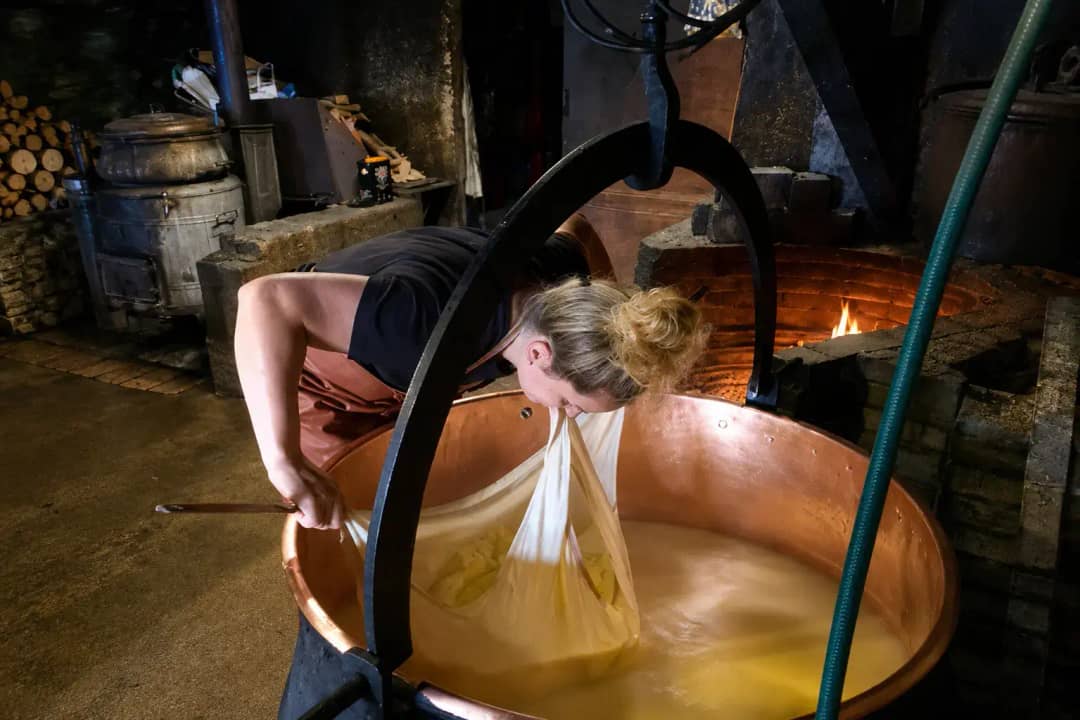
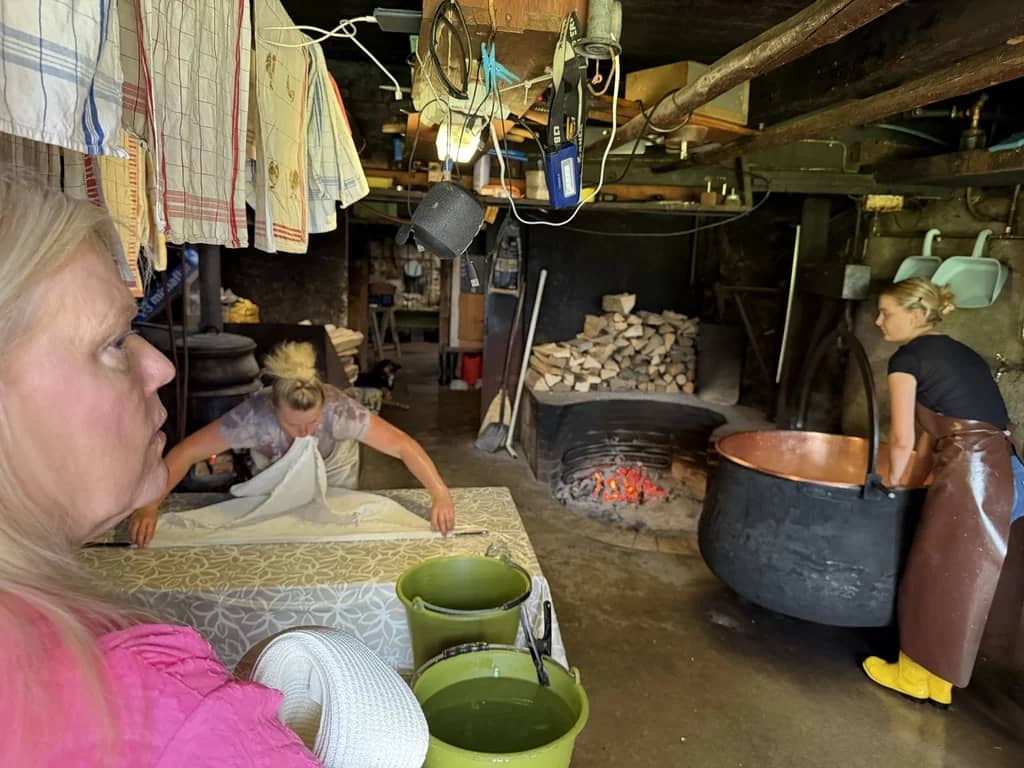
Alpkäse is made in a Chäschessi, a large copper kettle, heated over an open wood fire. Not an electric resistance, not a gas burner. A wood fire. That direct flame is one of the details visitors to the farm most often describe as a surprise: the smell of the fire, the sound of the milk beginning to move, the farmer stirring by hand.
If you want to see that kettle at work rather than read about it, the farm tour itinerary from 8am walks through the morning hour by hour, including when the milk goes in and when the curd comes out.
The raw milk is used immediately after milking. It is never pasteurised, never standardised, never stored. The cultures that develop in unpasteurised alpine milk are specific to that mountain, that season, that herd. They cannot be replicated in a valley dairy.
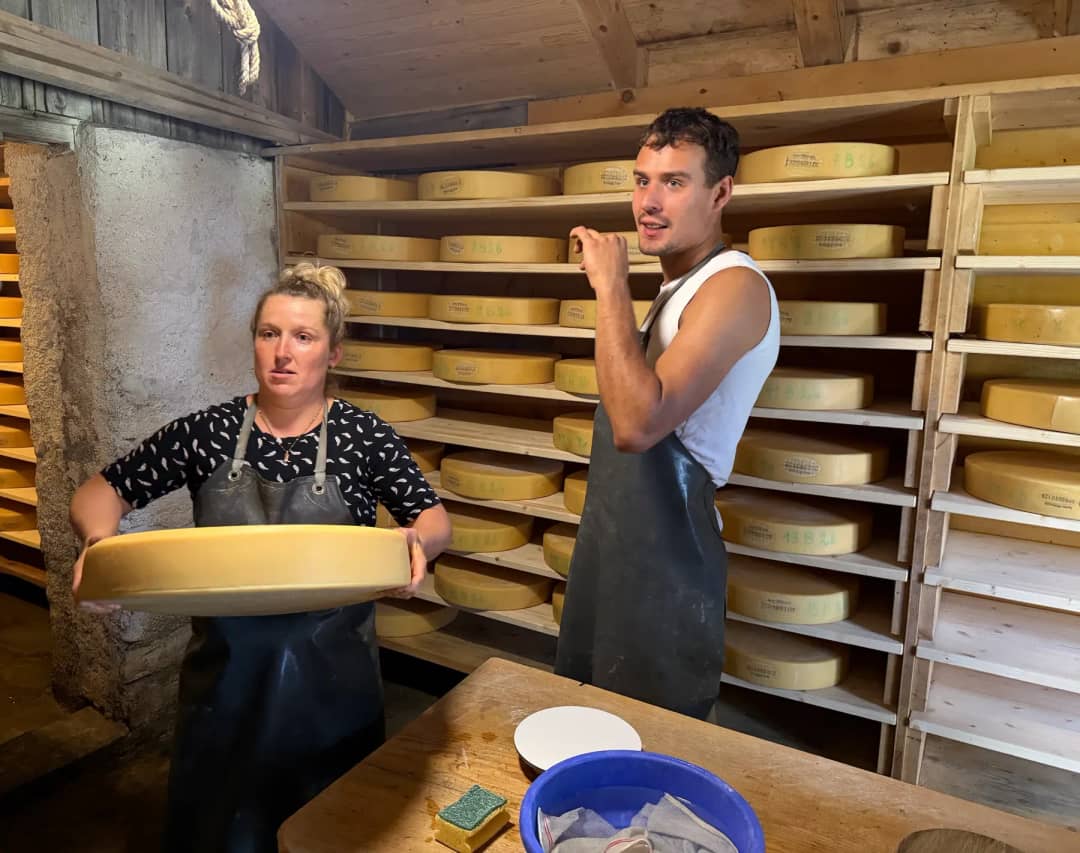
Once pressed and salted, each wheel is moved to a cellar and turned regularly over months. The rind forms naturally. The interior firms gradually. Older wheels develop a stronger, nutty, herbaceous flavor. Younger wheels (2 to 3 months) are milder, almost buttery.
Fun fact: Alpkäse is made in a Chäschessi, a large copper kettle heated over an open wood fire. Not an electric element, not a gas burner.
Each wheel is stamped with the farm name, alp number, and production date. Swiss traceability rules mean you can identify which cow, on which mountain, in which week of summer produced the milk in your hand.
What Is the Difference Between Alpkäse and Bergkäse?
This is the question that confuses most English-speaking visitors. Both names appear on cheese boards across Switzerland.
Alpkäse is made on the alp itself, during summer only, exclusively from raw milk. The farmer lives on the mountain with the herd for the entire season.
Bergkäse (mountain cheese) is produced in village dairies in the mountain zone, year-round. The milk may be pasteurised. The production is larger and more standardised. It can be excellent cheese, but it is not subject to the same altitude, seasonality, or raw-milk constraints.
Teona asked a farmer: "How do I tell a real Alpkäse from a Bergkäse in a shop?"
"Read the label. Look for Alp or AOP and a farm name. No farm name, and you are most likely holding a Bergkäse."
Teona Gvasalia, your alpine guide at Swiss Local Adventures
The confusion is frequent in English-language reviews because both terms translate loosely to "mountain cheese." They are not the same thing. If the label does not say "Alp" or "AOP" and does not show a farm name, it is most likely a Bergkäse.
What Does "Berner Alpkäse AOP" Mean?
AOP stands for Appellation d'Origine Protégée, a European legal certification that guarantees the cheese comes from a defined territory and follows a strict production specification. The AOP label on a wheel of Berner Alpkäse means it was made in the Bernese Alps, from raw milk, on a high-altitude alp, during summer only. No valley dairy can use this label.
In practical terms: if you see "Berner Alpkäse AOP",Berner Alpkäse AOP you are looking at a cheese whose entire production chain, from pasture to cellar, is traceable and audited. It is the same system that protects Gruyère AOP and Champagne. Not a marketing badge. A legal boundary.
How Does Alpkäse Compare to Gruyère?
Both are Swiss. Both are hard cheeses. Both are made with raw milk. The differences are significant.
Gruyère AOP is produced in the Gruyères region by dairies that operate all year. The process is standardised for consistency. The result is excellent and available in 40 countries.
Alpkäse is made by one farmer, on one mountain, from one herd, for one summer. The taste changes week by week depending on what the cows ate that morning. A wheel made in mid-July is not identical to one made in late August from the same farm. No two wheels are exactly alike.
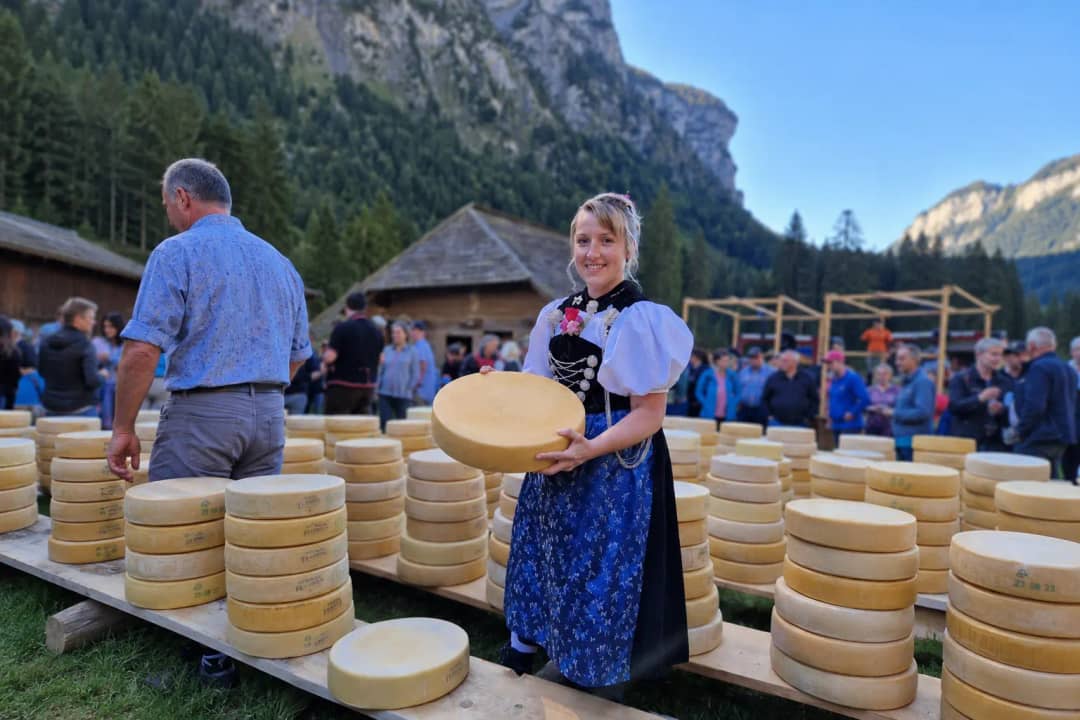
When the summer ends, those wheels are shared out among the farmers who sent cows up the mountain. In the Justistal valley near Interlaken this happens in public, by drawing lots, and our guide to the Chästeilet cheese lottery in Justistal explains how the day works and how to attend.
Teona says: "Taste two wheels with different dates stamped on them, side by side. Same farm, same herd, and you can still taste the week each one was made."
Teona Gvasalia, your alpine guide at Swiss Local Adventures
You can find Gruyère at Heathrow. The quantities are too small to export real Alpkäse, and the distribution system was never built for industrial volumes. It does not leave.
Why Can't You Find Real Alpkäse in a Supermarket?
A seasonal product like Alpkäse, produced between 200 and 700 wheels per farm per summer, is too small in volume to supply a supermarket chain. And most of it is already allocated before it reaches any open market.
Part of the reason is the Chästeilet: the traditional end-of-summer ceremony where each farming family receives cheese in proportion to how much milk their cows contributed to the cooperative. This system has worked in the Justistal since 1739. Most of the cheese goes directly from the farm to families and their local networks before it ever reaches a stall.
What you find labelled "Alpkäse" in Swiss supermarkets is often valley-produced cheese made to resemble the alpine version. Legal under Swiss labelling rules. Not the same thing.
Insider tip: Take Alpkäse out of the fridge 30 minutes before serving. It travels well in a carry-on in a sealed bag, but keep it out of checked luggage on long-haul flights.
You can't find this in a supermarket because the real version requires going to the source.
Why Does the Milk From Alpine Cows Taste Different?
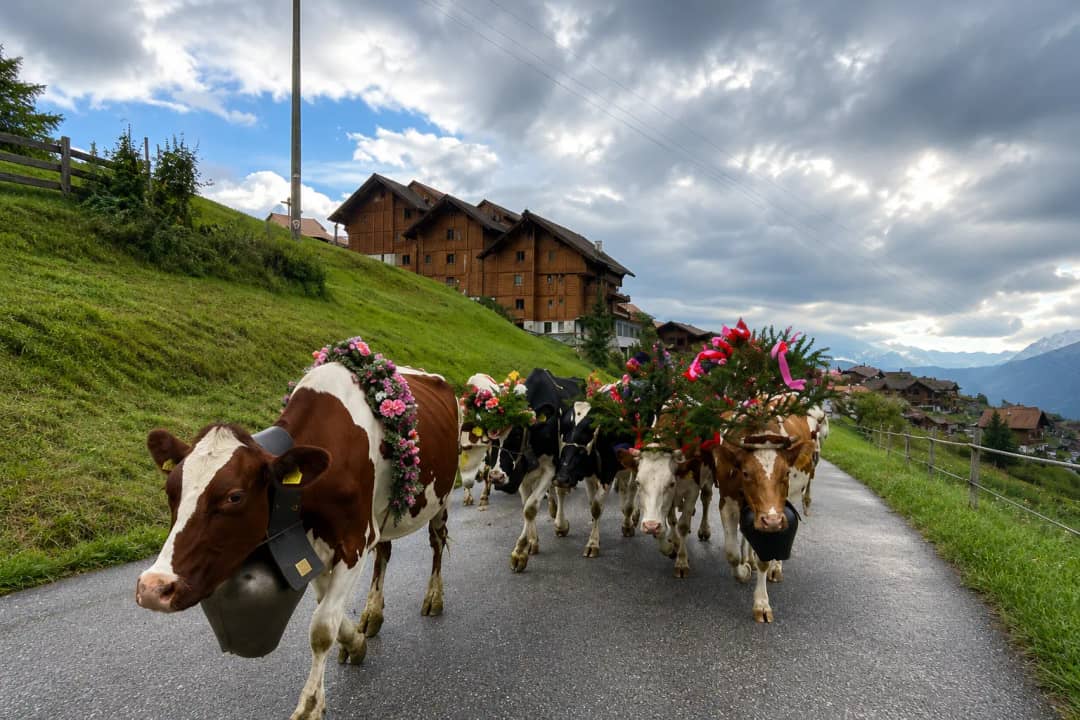
Milk from cows that graze on alpine herbs is measurably different in composition from lowland dairy. Alpine pastures contain hundreds of plant species that do not grow at lower elevations, including wild thyme, mountain dandelion, and clover varieties specific to altitude.
Cows eating this diversity of plants produce milk significantly richer in omega-3 fatty acids and conjugated linoleic acid than standard lowland milk. The same cow, eating different grass, produces milk with a completely different fat and protein profile.
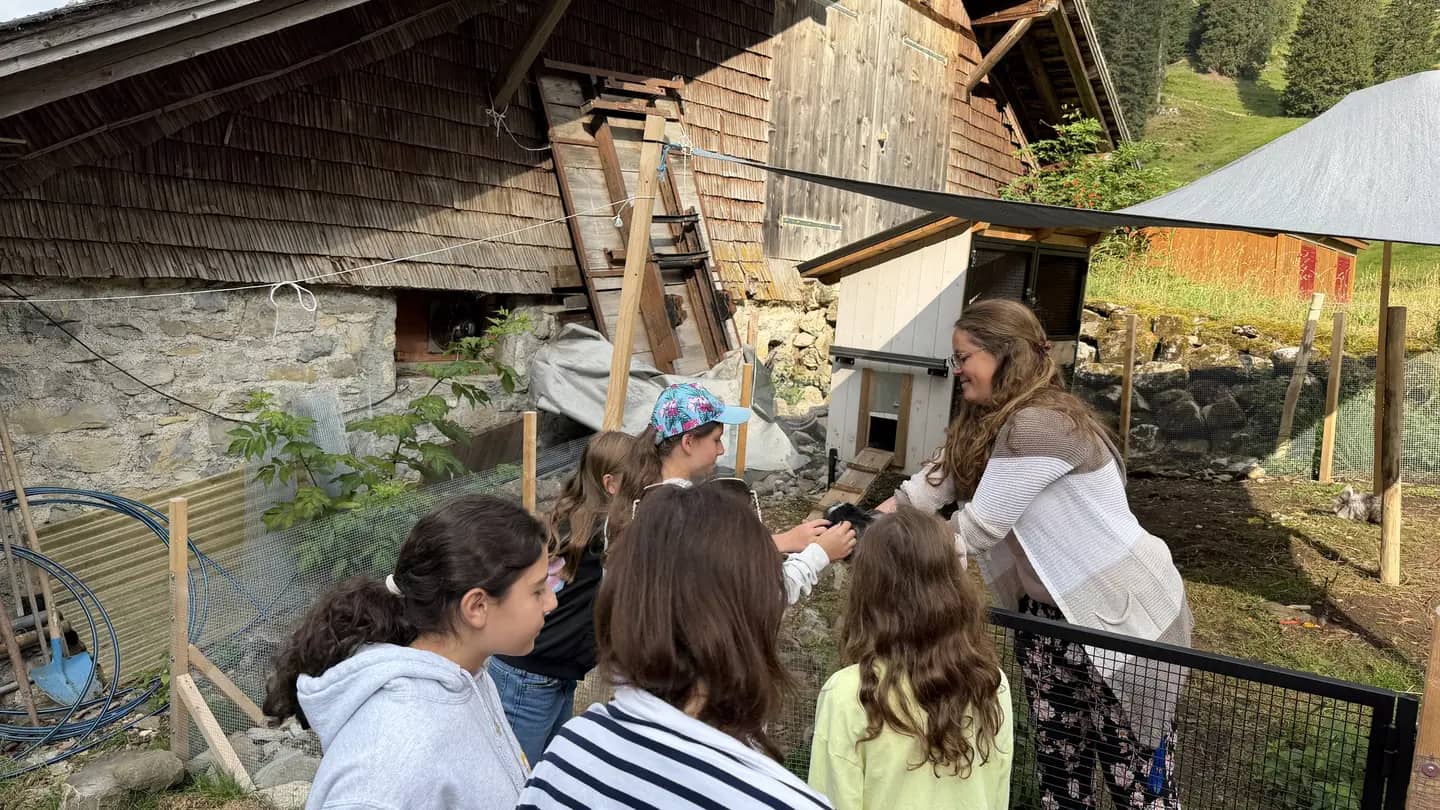
Children rarely care about fatty acid profiles, but they do remember the cows and the grass. If you are travelling as a family, our parent's guide to the farm tour covers what works at which age and what to bring.
Cheesemakers use the word terroir for this: the same term winemakers use for grapes. A wheel of Alpkäse from the Justistal tastes different from a wheel made twenty kilometres away on a different mountain. Same breed. Different pasture.
Your Questions About Alpkäse
Is Alpkäse safe to eat if it is made from raw milk?
Yes. Swiss regulations require a minimum aging of 4.5 months for Alpkäse. During that time, natural fermentation eliminates harmful bacteria. Berner Alpkäse AOP must meet strict hygiene and traceability standards audited by Swiss cantonal authorities. Raw-milk hard cheeses aged over 60 days are recognised as safe by food safety authorities in Switzerland, the EU, and the UK.
Can I eat Alpkäse if I am lactose intolerant?
Most people with lactose intolerance can eat Alpkäse without a problem. The minimum aging of 4.5 months means the lactose is naturally broken down during fermentation. By the time the cheese reaches your plate, the lactose content is negligible. Hard aged cheeses are generally the most tolerable category for lactose-sensitive individuals.
What is the difference between Alpkäse and Bergkäse?
Alpkäse is made on the alp itself, in summer only, exclusively from raw milk. Bergkäse is produced in village dairies in the mountain zone, year-round, and the milk may be pasteurised. Both are marketed as "mountain cheese" in English, which causes frequent confusion. The key distinction is altitude, seasonality, and raw-milk requirement: Alpkäse meets all three, Bergkäse does not.
What does alpine milk mean?
In Switzerland, "Alp" milk has to come from the summering area, the alpine pastures that herds graze for 90 to 120 days a year, between about 1,200 and 2,400 m. The law lets a dairy turn that raw milk into drinking milk outside the area, and Alp cheese may also ripen outside it. The broader word "Alpen" (alpine) may only go on Swiss milk that meets the rules for "Alp" or for "Berg" (mountain).
Where can I buy real Alpkäse near Interlaken?
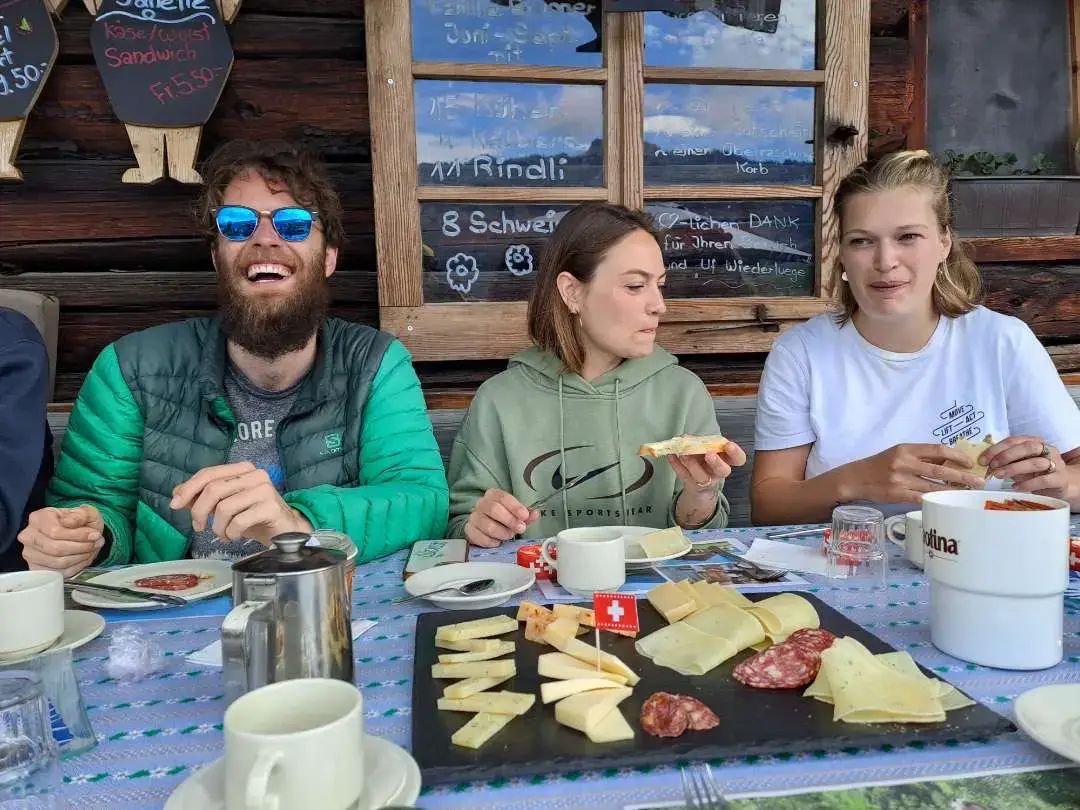
The most reliable source is directly from a working alpine farm. On the Farm and Alpine Breakfast Tour, you taste and buy cheese cut from Daniela's cellar at Sigriswiler Bärgli in the Justistal: CHF 20 per kilo, cash only. Regional markets in Interlaken occasionally carry it in summer, but availability is not guaranteed.
How long does Alpkäse keep after purchase?
A properly aged wheel keeps 3 to 4 weeks refrigerated once cut. It tastes better at room temperature: remove it from the fridge 30 minutes before serving. It travels well in a carry-on in a sealed bag. Avoid checked luggage on long-haul flights.
Is Alpkäse only available in summer?
Production is seasonal: June to September only. But aged wheels are available year-round from farms and regional markets because the cheese continues to mature in cellars through autumn and winter. What you cannot find after September is fresh-made Alpkäse. A wheel available in January was made in July and has been aging for six months. That is part of what makes it taste the way it does.
Where Can You Taste Alpkäse Near Interlaken?
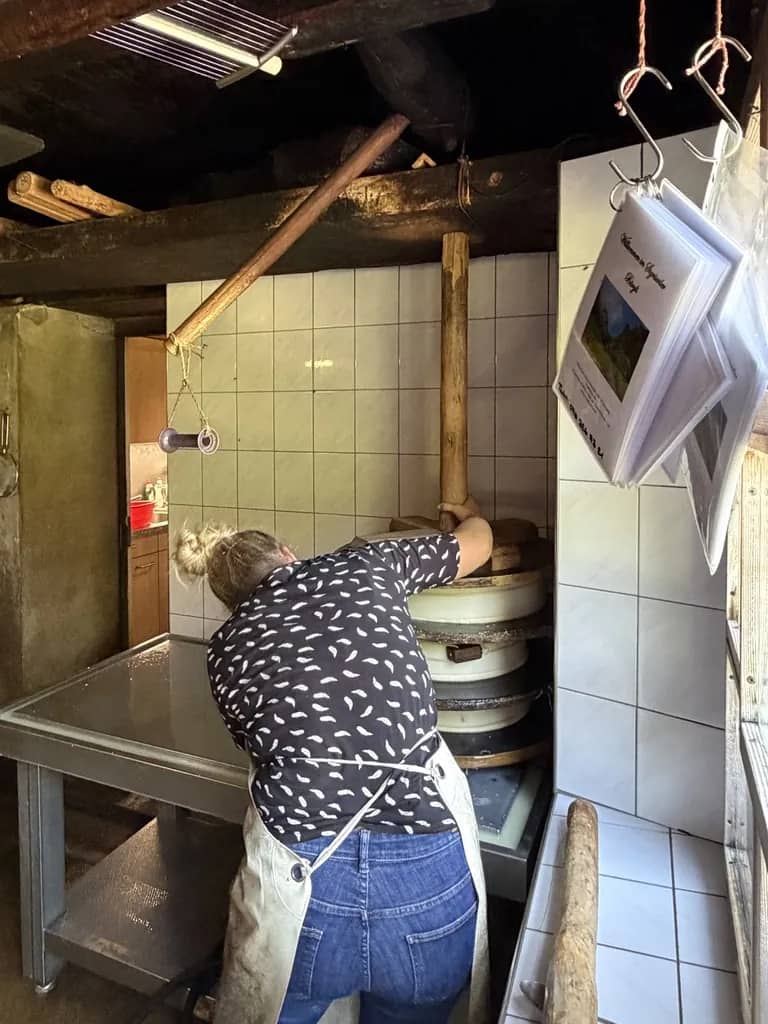
Daniela's farm, Sigriswiler Bärgli, sits in the Justistal valley above Interlaken. Every summer, she produces 348 wheels of Berner Alpkäse AOP before the season ends. The Chästeilet in September, observed in this valley since 1739, distributes the cheese to the cooperative families before any surplus reaches local markets.
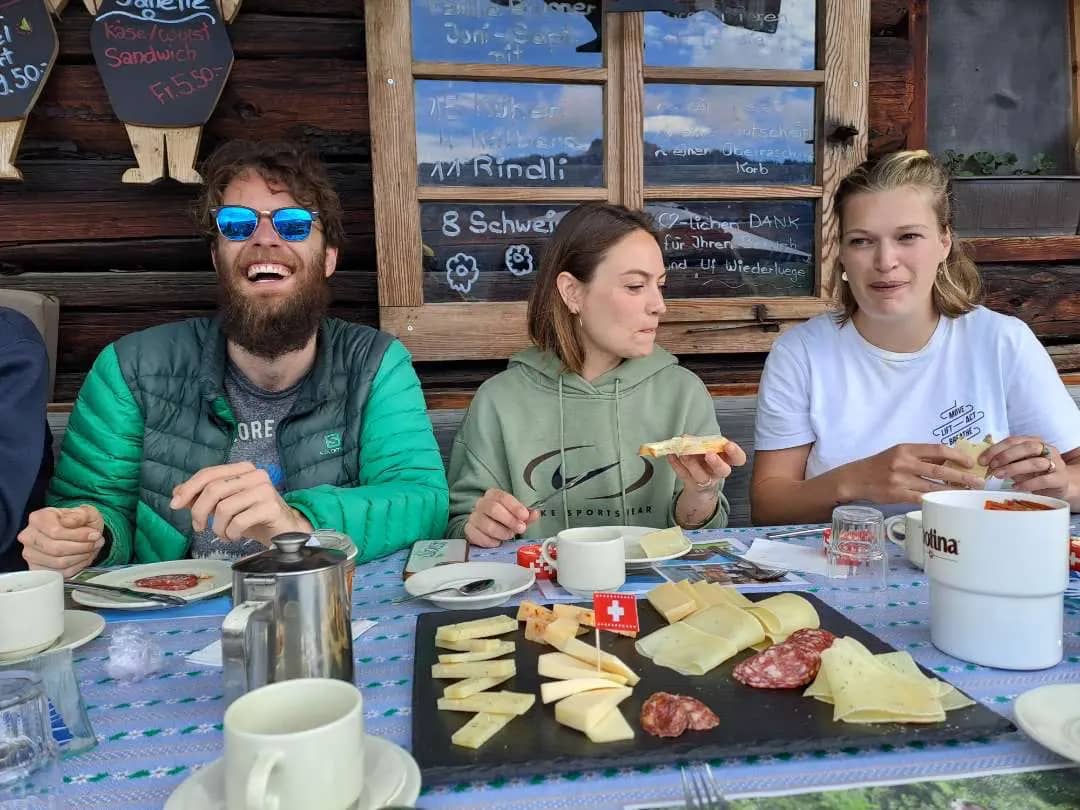
On the Farm and Alpine Breakfast Tour, you taste this cheese at the source: cut the morning it is served, not pre-packaged. You visit the cellar, meet Daniela, and see the process directly. Groups are capped at 8 people. Tours run on Tuesdays and Thursdays. You can buy wheels to take home at CHF 20 per kilo, cash only.
Also read:
348 wheels. One summer. No intermediary.
*Written by Teona Gvasalia, your alpine guide at Swiss Local Adventures
Source:
, and an on-site visit to Sigriswiler Bärgli, Justistal, 2026.
Tags
#swiss-mountain-cheese#farm-tour-interlaken#alpine-cheese-switzerland#interlaken-food#justistal#swiss-cheese-guide#swiss-dairy-farm#alpine-cheese#cheese-making-workshop-interlaken#interlaken-activities
Sources & References
Share this article
Similar Articles
Continue your reading with these related articles
Farm Tour
8/17/2026
6 min
Chästeilet Justistal: Cheese Shared by Lottery Since 1739
Each September the Justistal divides its cheese by drawing tokens from a sack. Free, no bus into the valley: how the date is set and how to get there.
farm-tour-interlakenswiss-dairy-farmalpine-cheese
By Teona GvasaliaRead More
Farm Tour
8/4/2026
6 min
Interlaken Farm Tour Itinerary: 8am to Noon
The full schedule of our alpine farm morning, from the 08:00 pickup at Interlaken West to being back in town close to noon. Zero walking, a real cheese batch you watch rather than make, and a farm breakfast that surprises most guests. Written by the founder who drives the van.
farm-tour-interlakenswiss-dairy-farmalpine-cheese
By Teona GvasaliaRead More
Farm Tour
7/22/2026
5 min
Farm Tour with Kids in Interlaken: A Parent's Guide
No strict minimum age, no walk to reach the farm, a car seat on request, and a breakfast even picky eaters will finish. Here is exactly how the Interlaken Farm Tour works with kids, based on the real family of six who took our very first tour.
farm-tour-interlakenswiss-dairy-farminterlaken-with-kids
By Teona GvasaliaRead More