Interlaken
Is Night Sledding Dangerous? Interlaken Guide Answers
P
Pierre Vetsch
Author
September 30, 2026
13 min
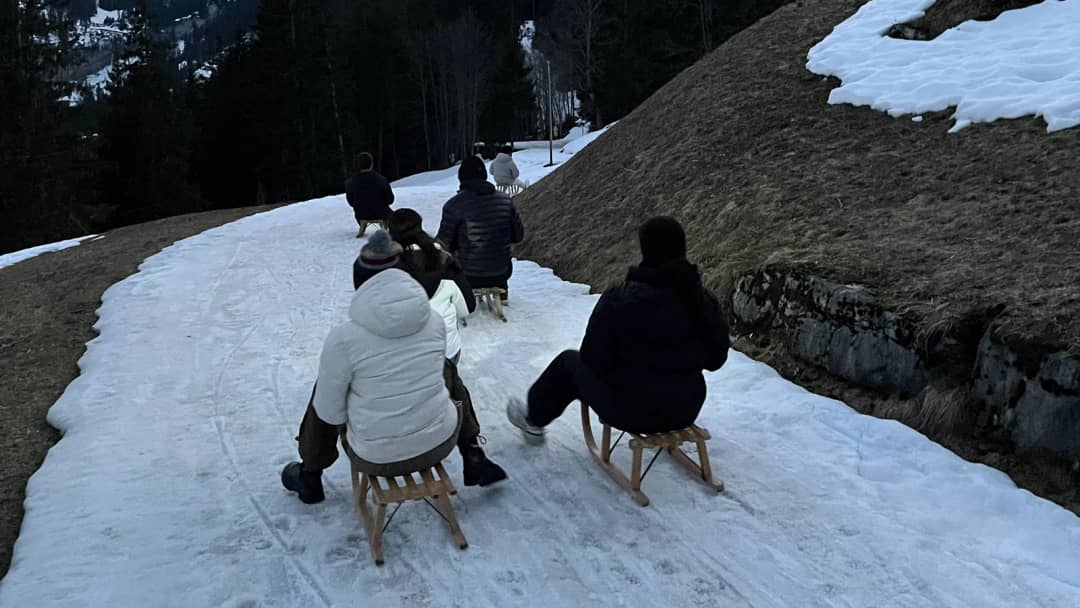
Is night sledding dangerous? It carries a real risk, and most of it sits under your own two heels. In Switzerland, about 6,400 sled rides a year end at the doctor, according to the BFU, the national accident prevention office. On the run I guide above Interlaken, the worst thing that has happened to one of my guests is a fall in the snow.
Both numbers are true. One counts a whole country sledding on every kind of slope. The other counts small groups on one forest road, with a headlamp on every head and a guide riding behind them.
Below you will find the Swiss accident figures, how fast a sled goes, how sledding compares with skiing, night against day, the helmet question, and who should stay in the valley. Every figure was checked at the official source on 30 September 2026.
Is night sledding in Interlaken dangerous?
Yes, a little, and less than the dark suggests. Sledding injures people every winter in Switzerland, through speed and through collisions with fixed objects. On a guided run with a gentle gradient, a headlamp and a small group, most of the risk comes down to your own speed. It never drops to zero.
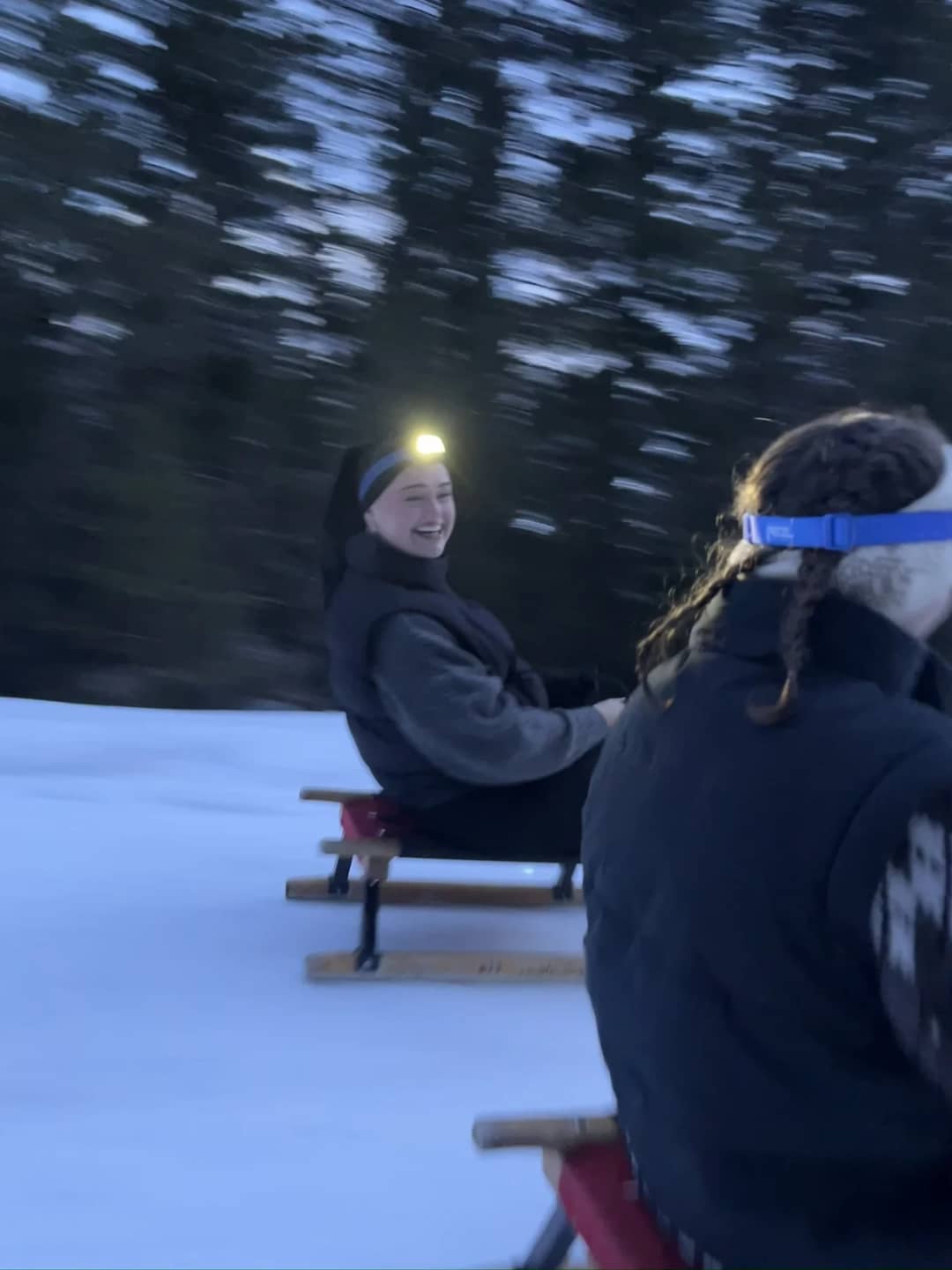
Asked about the worst thing that has happened to a guest on my sledding tours, I have a short answer.
Pierre says: "A fall in the snow."
Pierre Vetsch, founder and head guide at Swiss Local Adventures
The fear is normal, and travellers write about it. In March 2020, on the TripAdvisor page of another Interlaken night sledding tour, a first-timer described being nervous and scared, and riding at the end of the pack at their own pace. In December 2021, another guest on the same page noted that sledding in the USA is for children, and that in Switzerland the sleds went fast.
The national picture is less gentle. The BFU sledding guide counts about 6,400 sled rides a year that end at the doctor, and its snow sports dossier rounds the figure to 6,000 injured sledders. Legs, arms and trunk take most of the injuries, and the BFU adds that severe head and back injuries also happen. About one accident in five involves a child or teenager under 16.
How fast do you really go on a sled?
Faster than you expect: more than 40 km/h, even as a beginner. In BFU test rides, inexperienced sledders passed 40 km/h on an easy sled path. Their average speeds stayed clearly lower. Bumps lifted some sleds off the ground, and a sled in the air no longer steers or brakes.
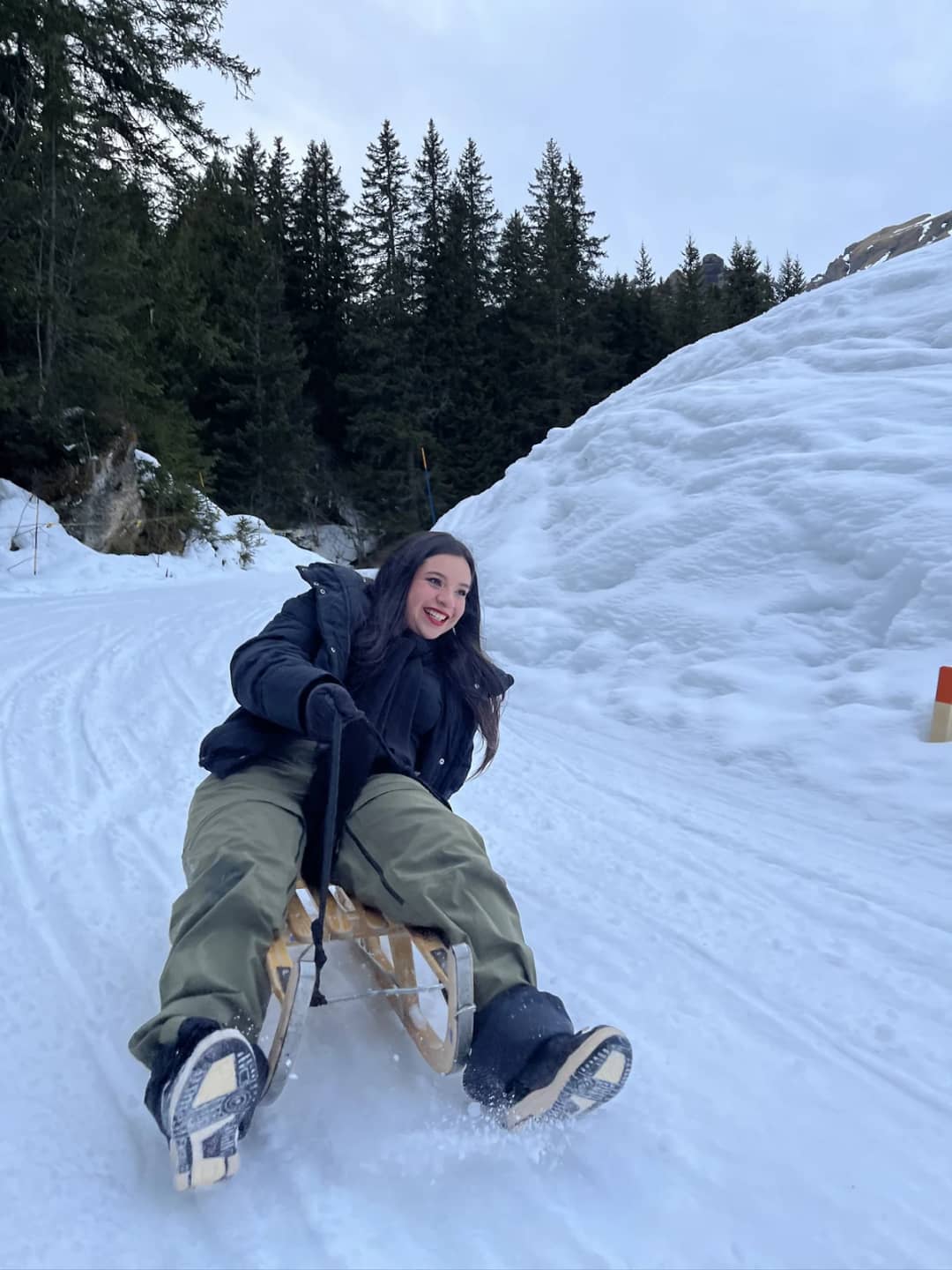
Those figures come from a BFU study on sledding helmets published in 2021. The researchers measured speeds and accelerations in test rides. Their conclusion: in sledding, collisions cause most injuries, and head injuries come above all from hitting fixed objects.
Now the run we use. The Sulwald top station stands at 1,520 metres and the Isenfluh valley station at 1,095 metres on the federal terrain model: 425 metres of descent. The forest road from Sulwald to Isenfluh measures 4.7 km on OpenStreetMap. That gives an average gradient of 9%. The cable car company does not publish a length, so these are measurements made for this article on 30 September 2026.
Nine metres down for every hundred metres forward. Asked where people fall between Sulwald and Isenfluh, I say this.
Pierre says: "Almost nobody falls."
Pierre
The run itself, the red cable car and the last bus are covered in our guide to Isenfluh sledding.
Fun fact: Official sled runs in Switzerland carry a purple sign. The BFU advises sledding only on these marked runs, on paths free of obstacles, or on slopes with a clear run-out. Sledding on ski pistes is forbidden as a rule.
Is sledding more dangerous than skiing?
Swiss data cannot settle it. The BFU counts about 53,000 injured skiers, 9,000 injured snowboarders and 6,400 sledders at the doctor each year. For skiing it also publishes a risk per day: about three injured per 1,000 skier days. For sledding no such figure exists, so nobody can compare the two fairly.
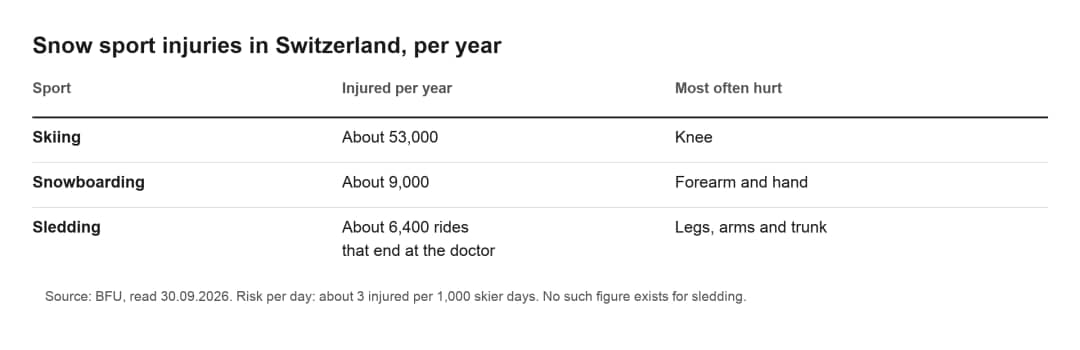
Here are the numbers in the table, read on the BFU website on 30 September 2026. Skiing: about 53,000 injured residents a year, most often at the knee. Snowboarding: about 9,000, most often at the forearm and hand. Sledding: about 6,400 rides that end at the doctor, with legs, arms and trunk hit most often.
The forums have already decided. One Reddit thread in r/Switzerland is titled "Why didn't anyone warn me sledding is so hardcore in Switzerland?!", and a reply calls sledding much more dangerous than skiing, because it happens on a narrow trail with less control over speed and direction. That is an opinion. The BFU has no figure behind it.
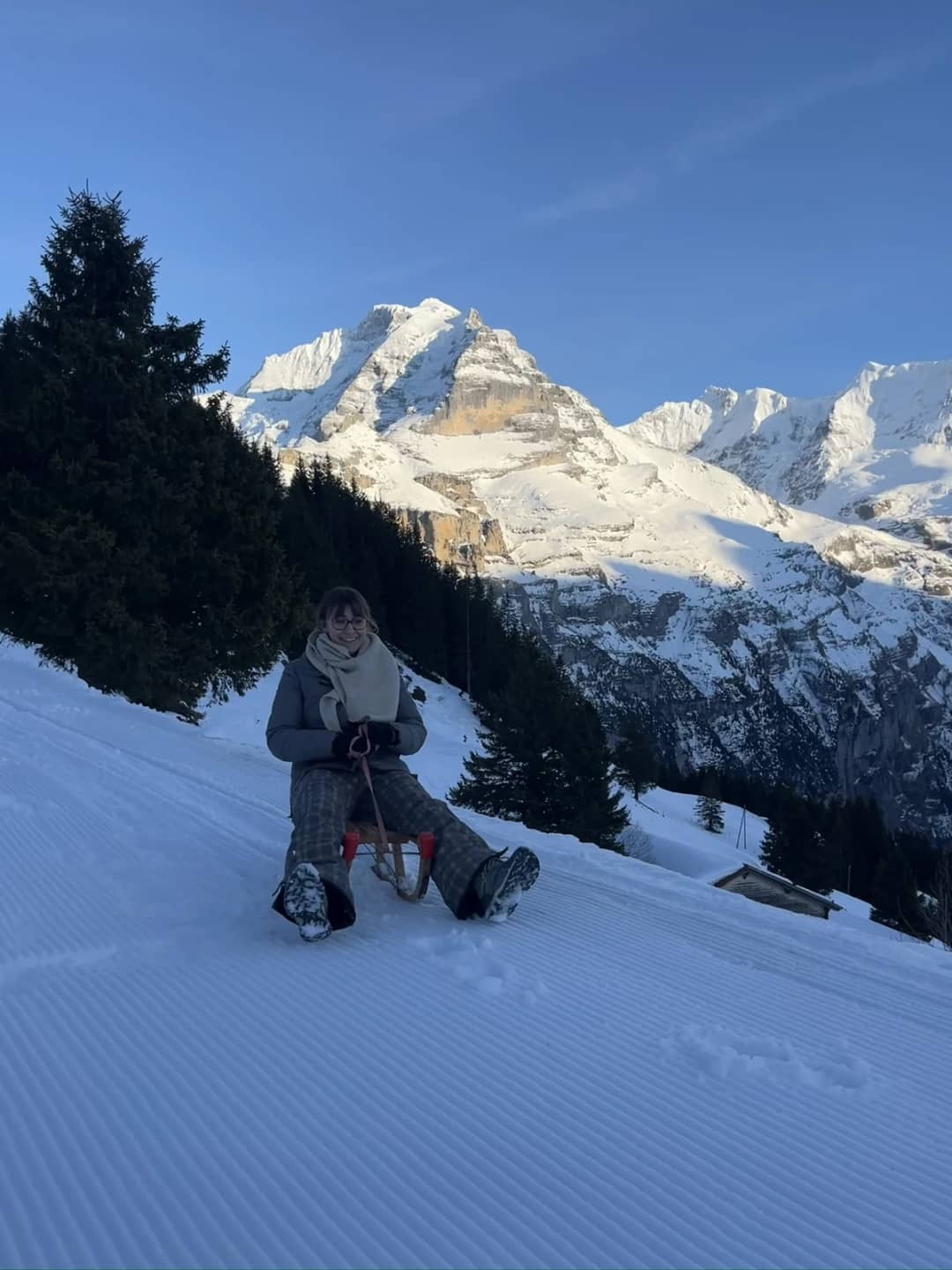
The two sports hurt people in different ways. On ski pistes, more than 90% of accidents involve nobody else, and the knee pays. On a sled, the danger is the tree, the post or the wall you did not brake for.
The verdict: a sled asks for less skill than skis on the first day, and that is the trap. You sit down, it moves, and nobody has taught you to stop. Learn the brake before the first bend. If skiing is your plan, here is where to ski near Interlaken.
Night sledding or day sledding: which is riskier?
On paper, night: you see less. On my tours, people ride slower at night. The BFU publishes no separate figure for sledding after dark. What changes is your field of view, which shrinks to the beam of your headlamp, and with it the speed people dare to carry.
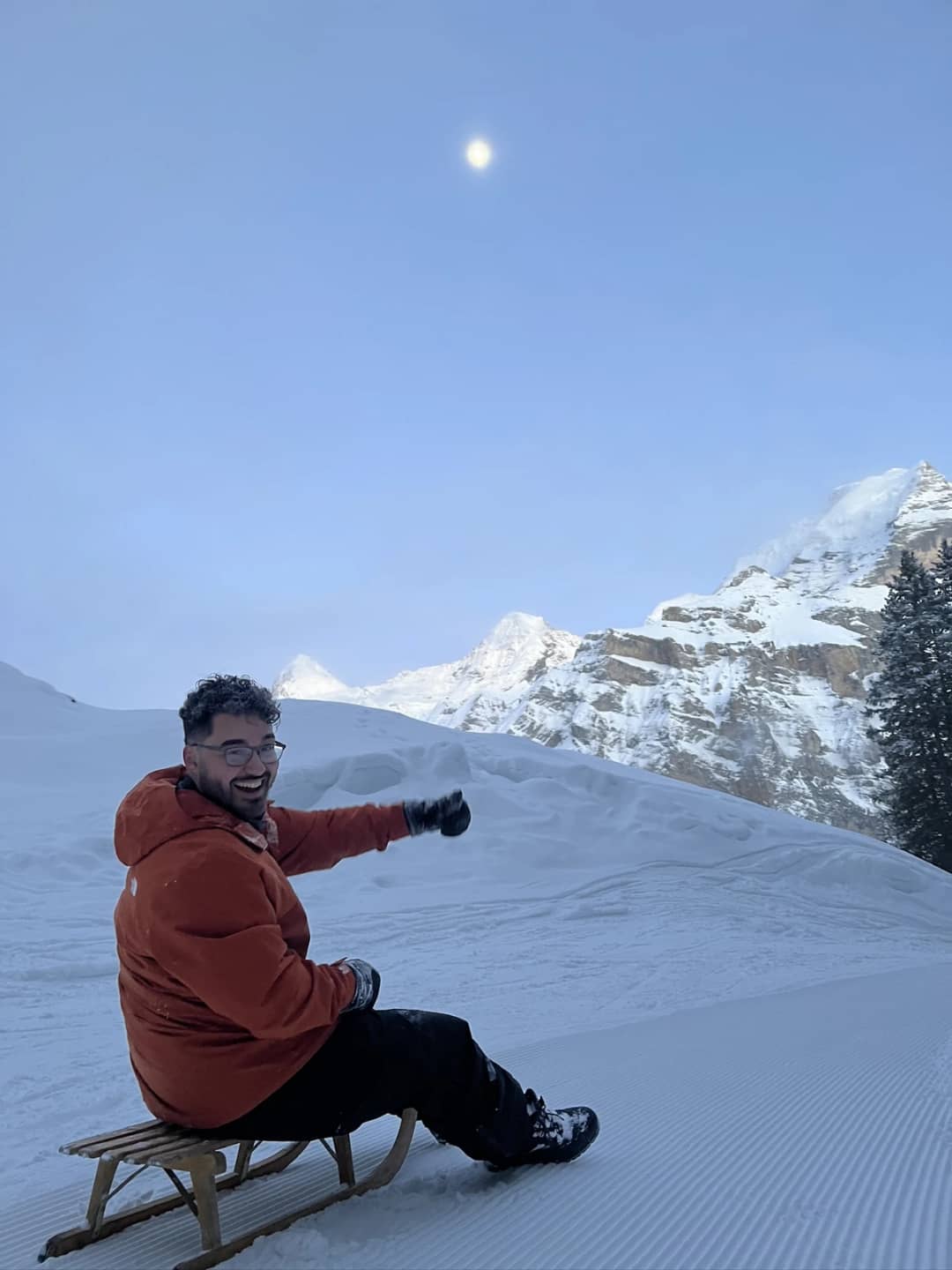
Asked how guests ride by headlamp compared with daytime, I answer with one word: "Slower."
The light depends on the month. By the almanac, the sun sets at Isenfluh at 17:08 on 15 January and civil twilight ends at 17:40. On 15 February sunset comes at 17:54, and on 15 March at 18:34. Our Sunset Sledding tour leaves Interlaken at 15:30, so you ride the cable car up in daylight and the light fades during the descent. Our Night Sledding tour leaves at 17:00, and in mid-January the run happens in the dark, by headlamp.
Pierre says: "The sunset at the top, the ride down through the forest by headlamp, and the little Isenfluh cable car."
Pierre
That is what guests talk about afterwards. A traveller on TripAdvisor, in February 2020, wrote that there was not a lot of light on the Isenfluh run, but enough to feel safe the whole way.
The verdict: if the dark worries you, take the sunset departure. You ride up in daylight, and the light fades during the descent.
Do you need a helmet for night sledding?
The BFU says yes. On my tours, nobody wears one. The accident prevention office puts a helmet and a back protector at the top of its five sledding tips. Its 2021 study found that a ski helmet and a bike helmet both suit sledding. Our tour provides a sled and a headlamp, and no helmet.
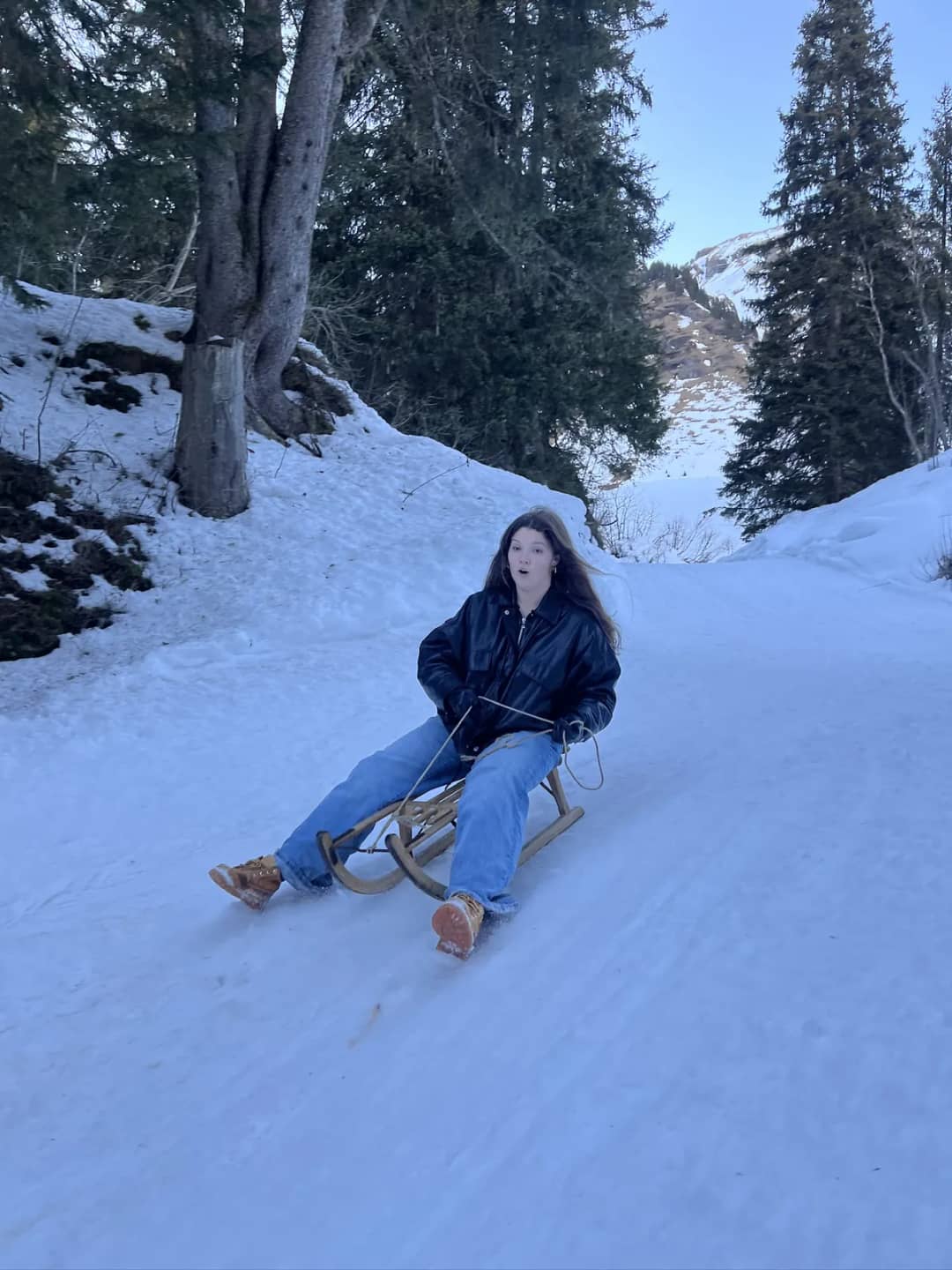
Pierre says: "Nobody wears one."
Pierre
The BFU gives its reasons. A fall from a sled can end with a blow to the head, and the head injuries in its study came mostly from collisions with fixed objects. The average speeds measured on an easy run match the speeds used to test ski and bike helmets. Both protect you, as long as the helmet sits properly.
Insider tip: Pack the helmet you already own. A ski helmet works, and so does a bike helmet with a thin beanie under it: the BFU says so in its sledding guide. No guide can brake for you.
What does a guide do on a night sledding run?
Teach you to stop, then watch the group from behind. Before anyone sits down at the top, I give a briefing. It has one rule that matters more than the others, and it is about braking. Then I ride last, on a tour limited to eight guests.
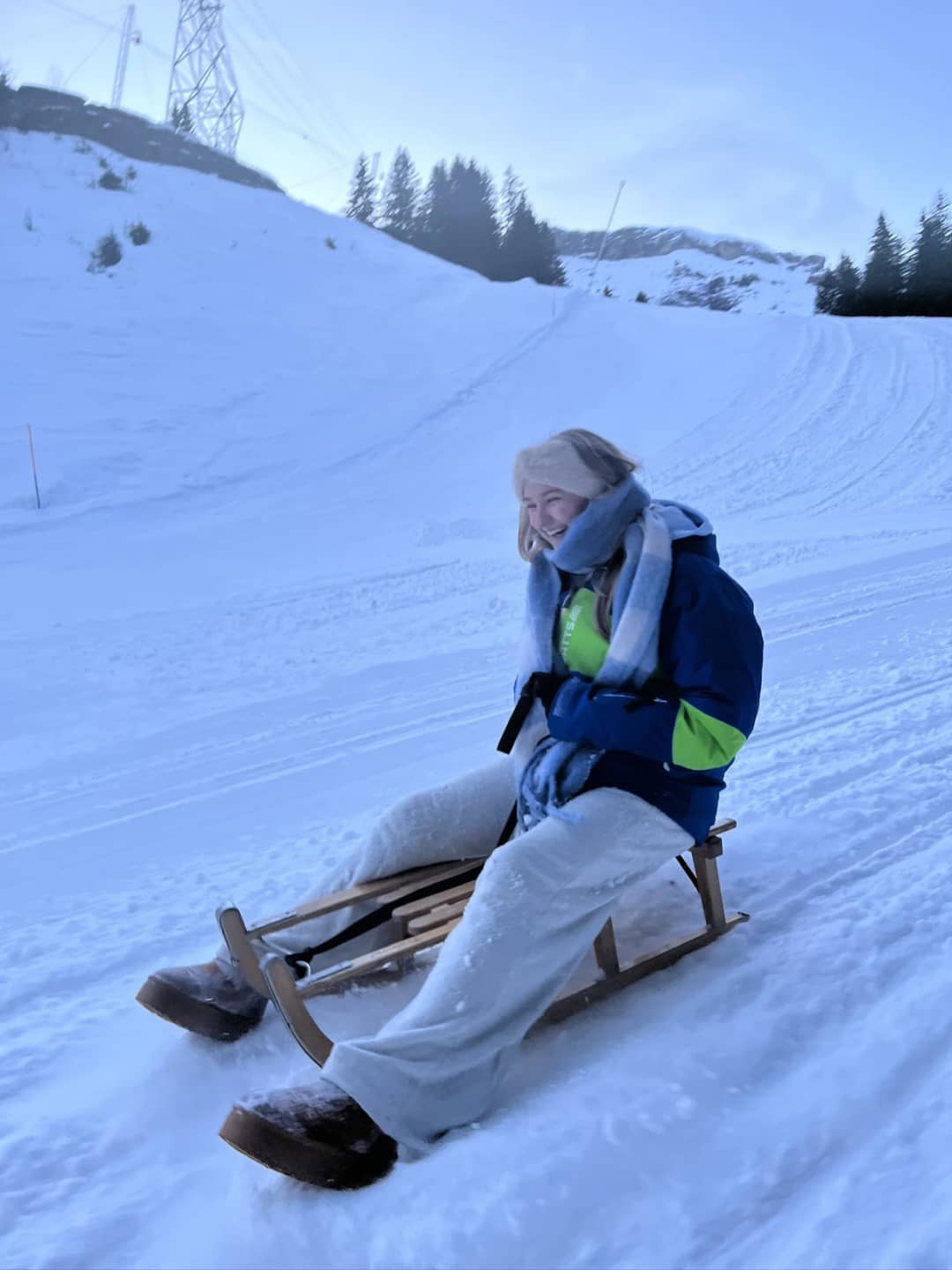
Pierre says: "Brake with both heels."
Pierre
The BFU describes the same move. Press both feet flat into the snow right beside the runners. To brake harder, lift the front of the sled. Keep your knees bent. To steer, shift your weight to the inside of the turn and press the inside foot into the snow.
Asked where I ride in the group, I answer: "At the back." Group size matters as well. One Interlaken night sledding listing on TripAdvisor allows up to 75 people per group. Ours stops at 8, guaranteed.
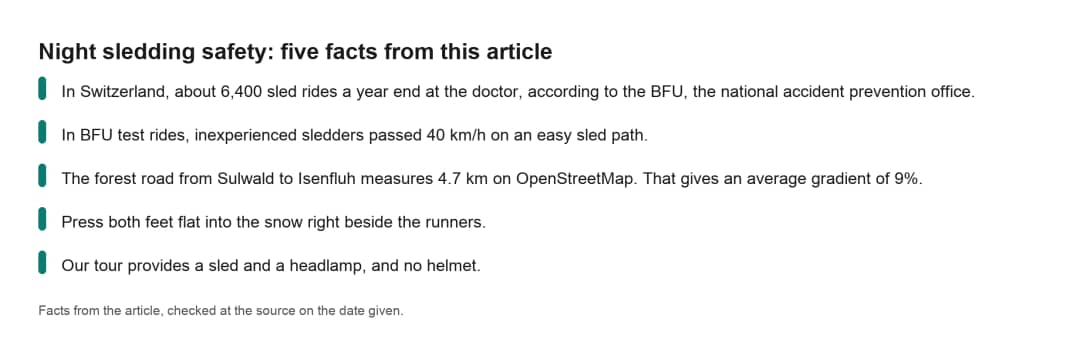
The person who talks to me about the run and the snow is the cable car attendant at Isenfluh. The wider rules come from the BFU. Its snow sports expert Benedikt Heer said in February 2024 that everyone should know and follow the ten sledding rules, which the BFU wrote with the Swiss cable car association and Swiss Sliding. Three of them: adapt your speed to your ability, respect the line of the sledder in front, and stop only at the edge, where others can see you.
A guest wrote on GetYourGuide in February 2026 that I took care of the whole group of friends on the night sledding and fondue tour. Our Google profile showed 5.0 stars from 54 reviews on 30 September 2026.
Who should skip night sledding, and when is it cancelled?
Our tour pages ask for good health and a minimum age: 8 years on the Night Sledding tour, 10 on the Sunset Sledding tour. The snow has a say too: it varies a lot at Isenfluh, and we often move the tour to Mürren, higher up the valley.
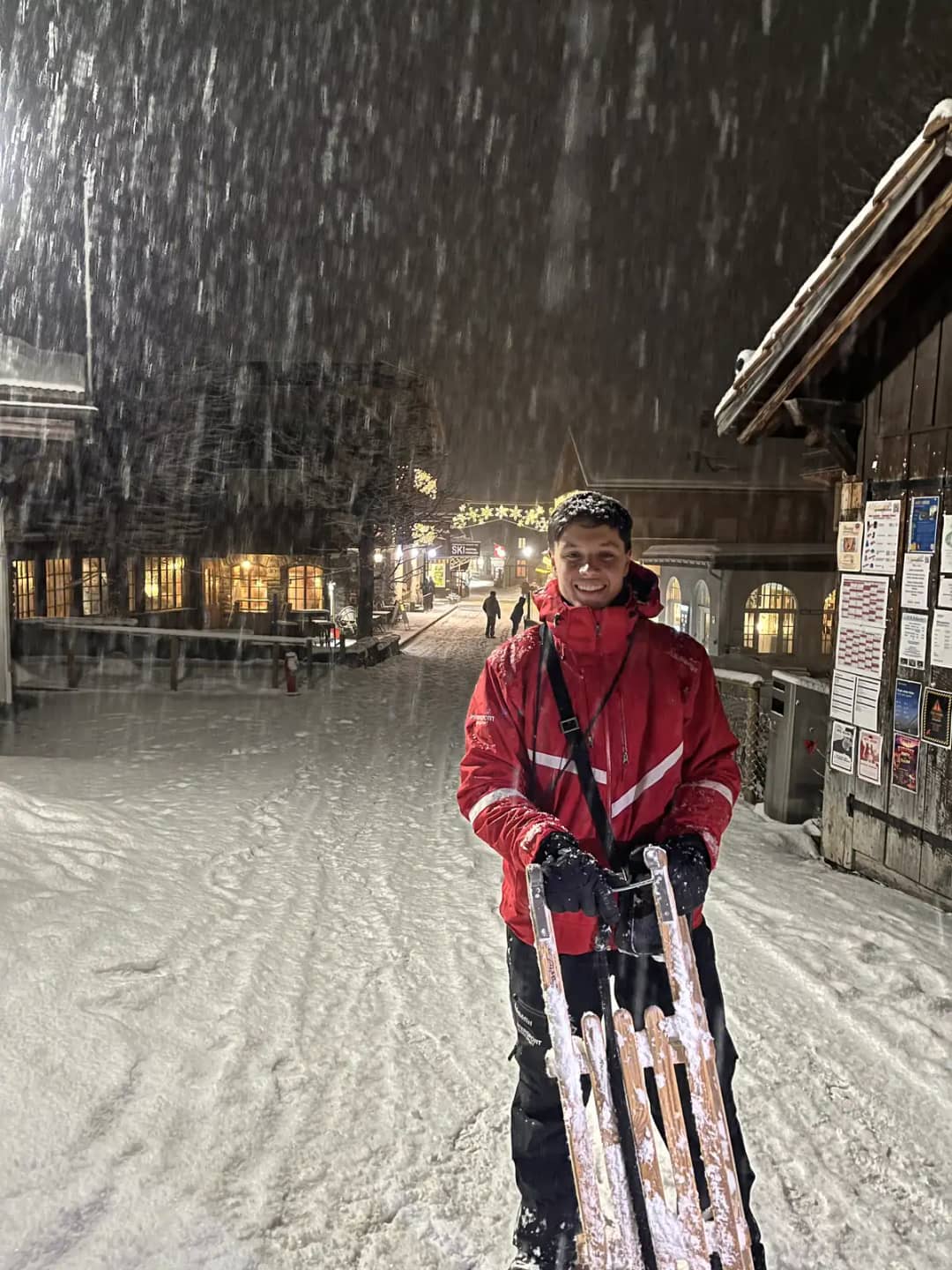
Asked who I refuse for night sledding, I answer: "Nobody." The written conditions still apply, and they are there for you. Sledding is a workout. You brake with your legs for 4.7 km, and a TripAdvisor reviewer wrote in March 2020 that their legs burned during the ride and all the next day. If your back or knees are fragile, a snowshoe walk suits you better. I put it this way: sledding for the young and for families, snowshoes for the calm ones. Both are in our guide to snowshoeing around Interlaken.
Season and weather. We run sledding tours from December to March, depending on the snow. Snow at Isenfluh varies a lot from year to year. If we cannot run your tour, we offer another date, another activity or a full refund. When we do move to Mürren, how to get to Mürren explains the cable cars.
Ice. On hard or icy snow, the BFU advises brake aids under your shoes: slip-on soles with spikes, above all under the heel. It also notes that on hard or icy ground only a Rodel, the steerable sled, steers properly. The classic wooden sled is rigid.
Your Questions About Night Sledding
Short answers first: in Switzerland sledding is called Schlitteln, high boots with a good tread are the right shoes, a tour without snow is moved or refunded, children can join from age 8 or 10 depending on the tour, and the evening lasts three to four hours.
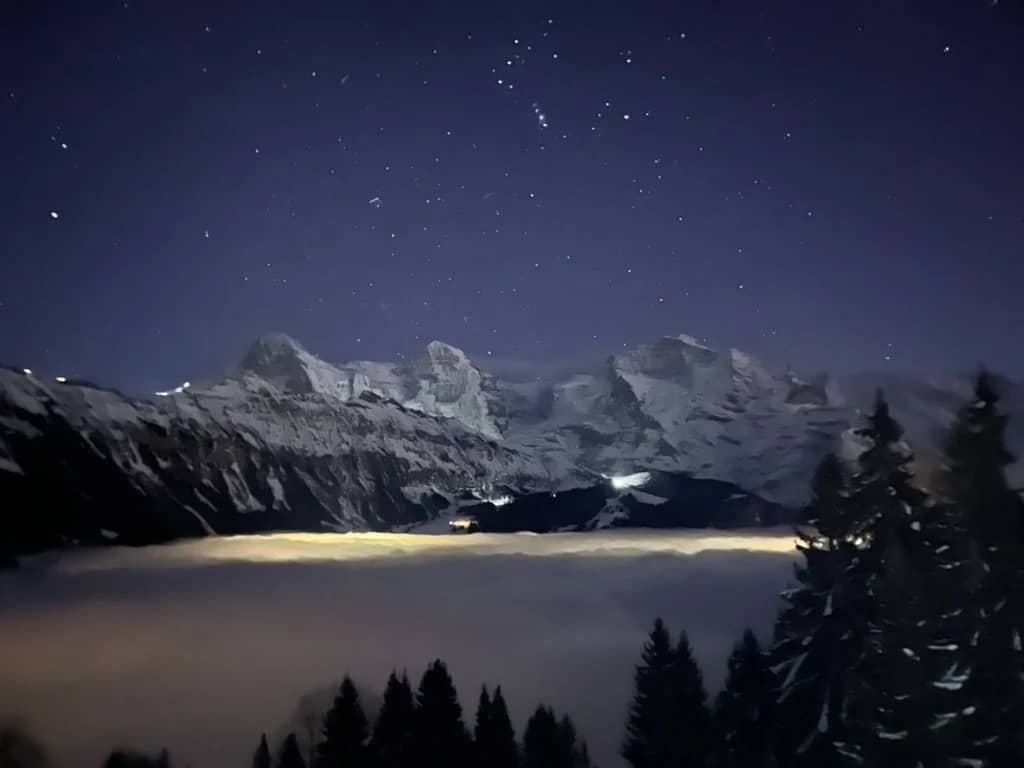
What is sledding called in Switzerland?
Schlitteln. The Swiss German word covers everything from a child's slope to a run of several kilometres, and British English calls it sledging. The sled itself has several names. A Schlitten is the classic rigid wooden sled. A Rodel is the steerable one, and the BFU calls it the only sled that steers properly on hard or icy ground. A Bob is the plastic one, which the BFU rates as fast and hard to brake on firm ground. At Isenfluh you will also meet the Velogemel, a wooden sled with a bike-style frame. The cable car company rented one for CHF 8 a day when we checked its price list on 28 September 2026.
What shoes should you wear for night sledding?
High, firm boots with a good tread. Your feet are your brakes, so the BFU lists sturdy shoes among its five tips, next to the helmet. Our tour page asks for waterproof shoes or winter boots, warm gloves, ski trousers, a jacket and a beanie. If you travel light, we rent a set of jacket, trousers and gloves for CHF 5, on request by email before the tour and subject to availability. On hard or icy snow, the BFU recommends slip-on soles with spikes under the heels.
What happens if there is no snow at Isenfluh?
We move the tour or refund it. The Isenfluh run sits between 1,095 and 1,520 metres, and its snow varies a lot from one winter to the next. When the road is too thin to sled, we take the group to Mürren, which lies higher, at 1,649 metres on the federal map. If no run works on your date, our tour page gives three options: another date, another activity or a full refund. We contact you if the plan changes, so give us contact details that reach you during your trip.
Can children go night sledding?
Yes, from age 8 on our Night Sledding tour and from age 10 on the Sunset Sledding and Fondue tour, according to our tour pages on 30 September 2026. Children under 12 on the first and under 15 on the second must come with an adult. Braking takes leg strength over 4.7 km, and that is a lot to ask of a small child. The BFU counts about one sledding accident in five among children and teenagers under 16, often because they misjudge danger or show off in a group. For younger children, the BFU advises a gentle slope with a clear run-out that you can see in full.
How long does a night sledding tour take?
Three to four hours, door to door. Our Night Sledding tour leaves Interlaken at 17:00 and lasts three hours. The Sunset Sledding and Fondue tour leaves at 15:30 and lasts four hours, fondue included. The evening has four parts: the drive to Isenfluh, the ride up in the small red cable car, one descent of 4.7 km to the village, and the drive back to Interlaken. On the fondue tour, the cheese is served back in Interlaken, indoors, once the sledding is done. We do one descent.
Try night sledding with a guide behind you
The fear behind the question is getting hurt in the dark, on holiday, far from home. Here is what stands against it on our run: a forest road at 9%, a headlamp, one braking rule learned at the top, eight guests at most and a guide riding last. The worst so far is a fall in the snow.
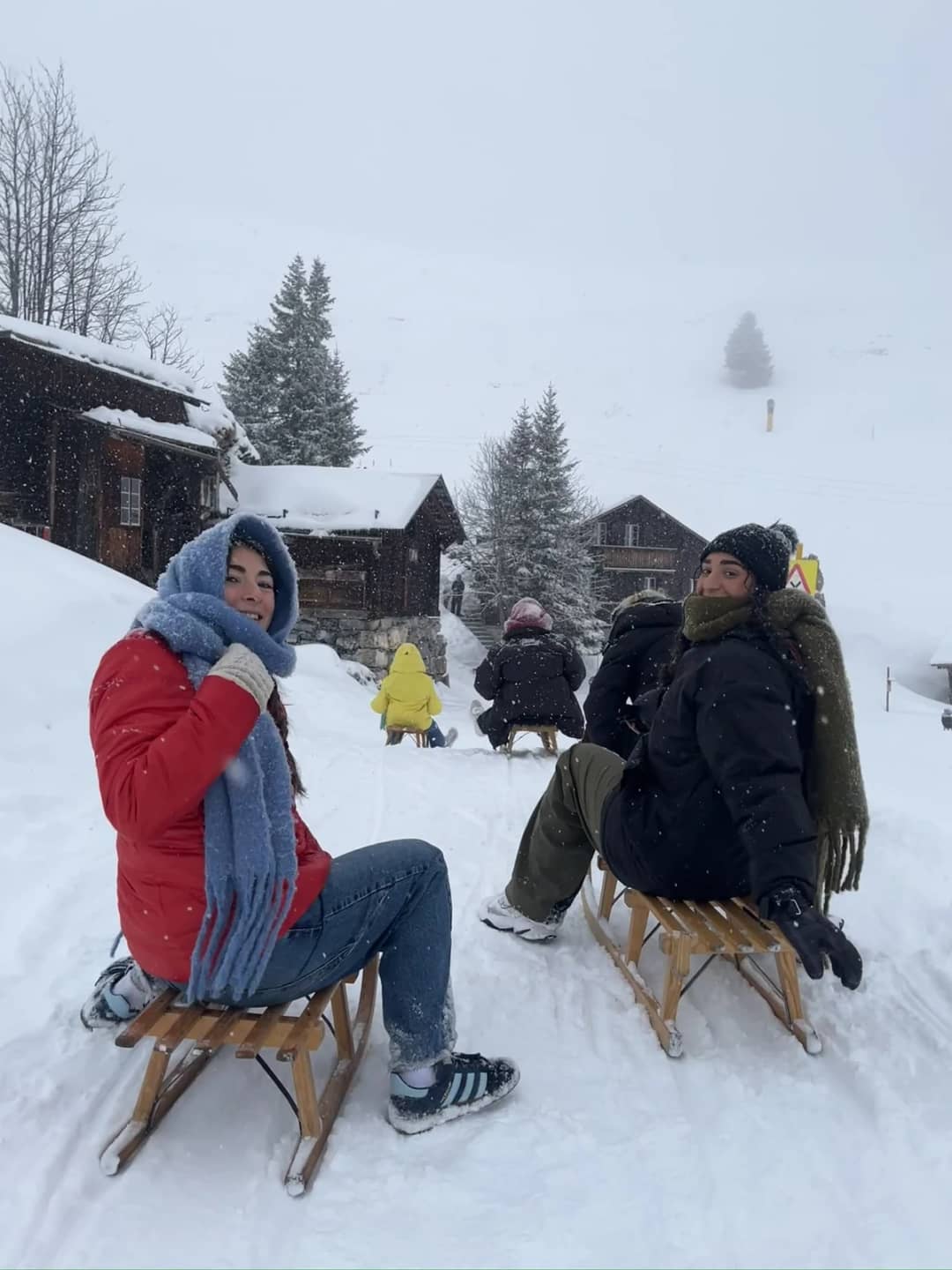
It remains a sport. Bring a helmet, wear real boots and keep your heels ready. If you would like to see the wider choice of runs first, read our overview of sledding in Interlaken, or find out whether Interlaken is worth visiting in winter.
If you want the sunset at the top, the forest by headlamp and a fondue afterwards, reserve your place on the Sunset Sledding and Fondue tour. Tell us if it is your first time on a sled: the briefing at the top starts with the brake.
How we made this: based on Pierre's interviews of 24, 28 and 30 September 2026, facts and prices checked at the official sources on 30 September 2026, written with AI assistance.
Source: BFU, snow sports on the slopes, the BFU sledding guide and helmet study, and guided sledding tours at Isenfluh and Mürren with Swiss Local Adventures, 2025-2026.
*Written by Pierre Vetsch, founder and head guide at Swiss Local Adventures
Tags
#night-sledding-interlaken#sledding-safety#winter-activities-interlaken#sledding-for-beginners#swiss-sledding-tips
Sources & References
- •BFU, Schlitteln ohne Unfall (sledding guide), read 30.09.2026
- •BFU, Schneesport auf der Piste (injury figures), read 30.09.2026
- •BFU, Welche Helme eignen sich zum Schlitteln (study, 2021)
- •BFU media release, Sicher schlitteln, 6 February 2024
- •BFU media release, Sicherheit beim Skifahren und Snowboarden, 16 December 2025
- •swisstopo terrain model (altitudes) and OpenStreetMap (road length), measured 30.09.2026
- •TripAdvisor, Night Sledding from Interlaken (reviews read 30.09.2026)
- •Swiss Local Adventures, Night Sledding tour page, read 30.09.2026
- •Photos: Swiss Local Adventures, Isenfluh and Mürren, 2025-2026
Share this article
Similar Articles
Continue your reading with these related articles
Interlaken
9/29/2026
13 min
25
Oberhornsee Hike: 1,243 m Up From Stechelberg
The Oberhornsee hike climbs 1,243 m from Stechelberg to a glacier lake. A local guide's route, the 2026 trail closures and when to go.
hiking-interlakenlauterbrunnen-valleymountain-lake-hike
By Pierre VetschRead More
Interlaken
9/28/2026
11 min
23
Isenfluh Sledding: The Egg Cable Car to Sulwald
A CHF 16 cable car for 8 people or one cow, a forest run with nobody on it: a guide's plan for Isenfluh sledding and snowshoeing.
sledding-interlakensnowshoeing-interlakenlauterbrunnen-valley
By Pierre VetschRead More
Interlaken
9/26/2026
10 min
37
Wengen or Mürren? Wengen in Summer, Mürren in Winter
Wengen is 13 minutes closer to Interlaken and quieter at night. A local guide on where to stay, and why winter flips the answer to Mürren.
where-to-stay-jungfraulauterbrunnen-valleycar-free-villages-switzerland
By Pierre VetschRead More