Interlaken
What to Wear Sledding in Switzerland: Dry Beats Warm
P
Pierre Vetsch
Author
October 2, 2026
12 min
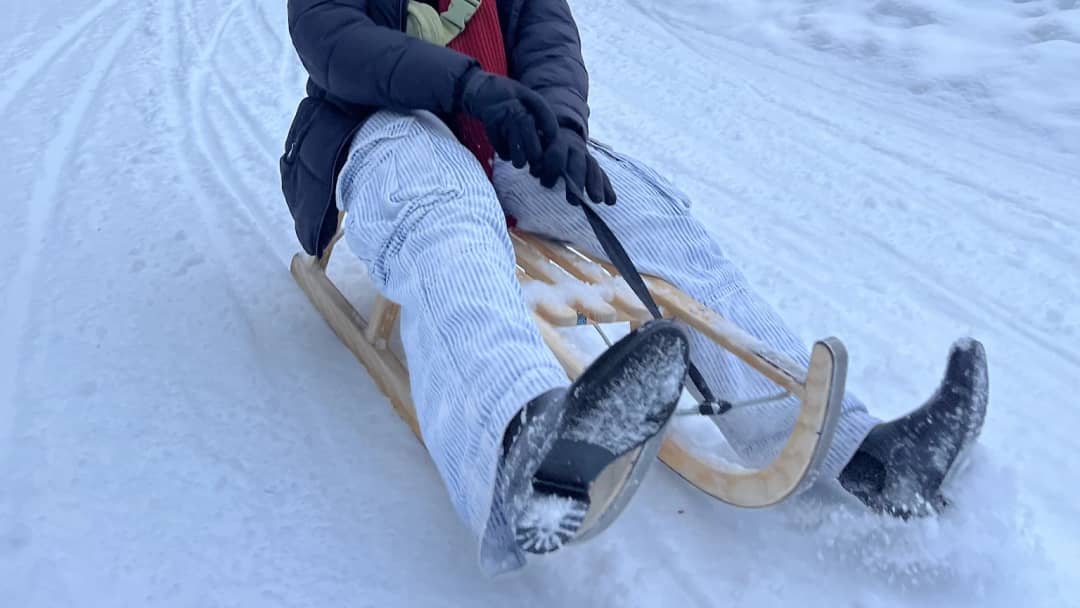
What to wear sledding in Switzerland comes down to two things: waterproof pants and real boots. Everything else is probably already in your suitcase. I guide sledding evenings above Interlaken, and last winter five guests wrote to me before their tour with the same worry: they had no snow gear.
They were right to ask, and the weather records show why. At sledding altitude, late afternoons were below 0 °C on only 32 of 107 evenings last winter. On most evenings the air sits around freezing point, the snow is damp, and you ride a few centimetres above it. What gets you is the wet, more often than the cold.
Below: the full list, how cold it really gets, the jeans question, shoes, where to rent and what it costs, and the small things. Temperatures and prices were checked at the source on 2 October 2026.
What should you wear sledding in Switzerland?
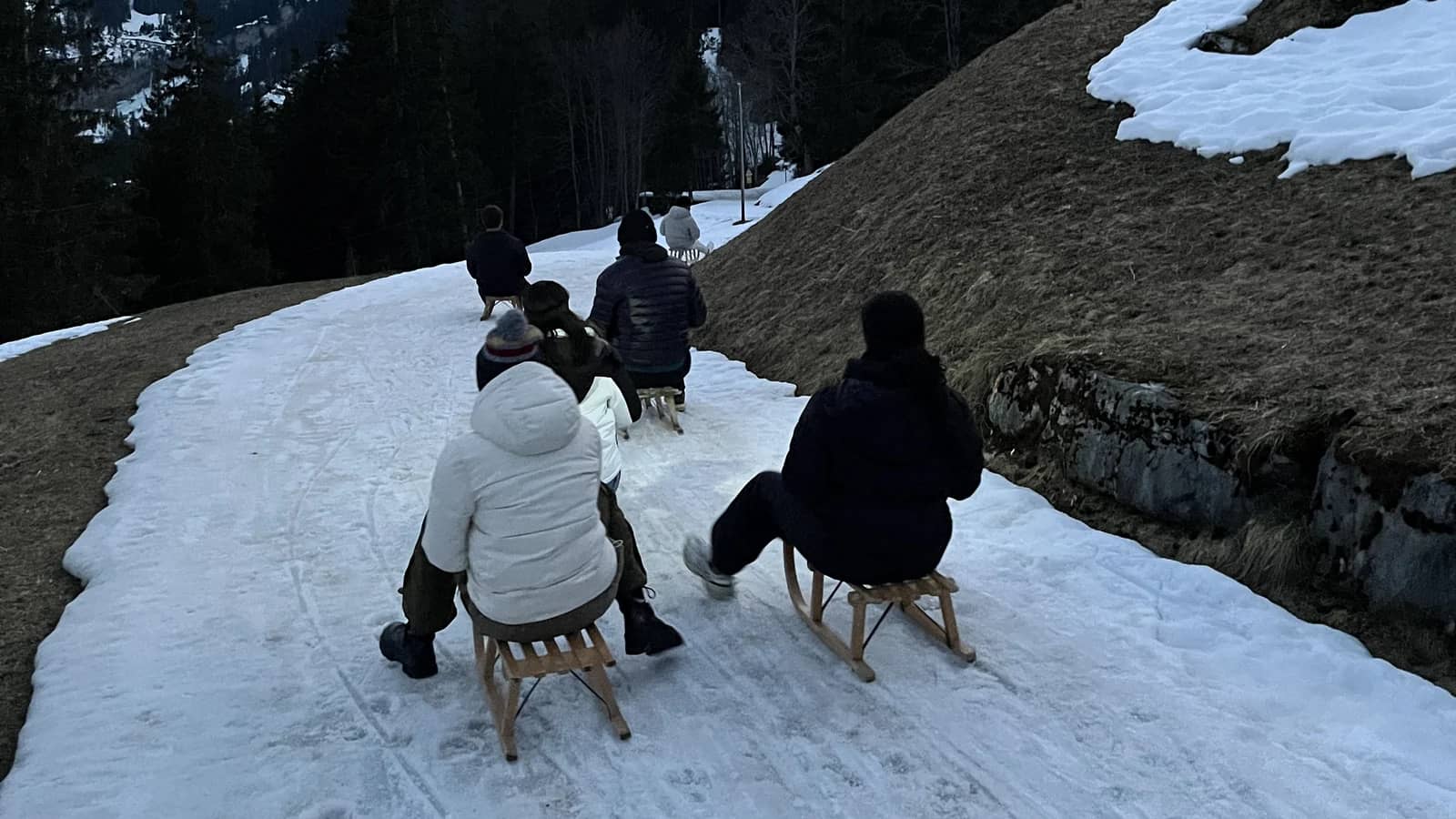
Waterproof pants, a warm jacket, high boots with a good tread, gloves and a hat. That is the list the Swiss accident prevention office, the BFU, gives for sledding, and it matches what our tour page asks for. Ski gear works. So does a rain shell over warm layers, as long as the outside layer keeps water out.
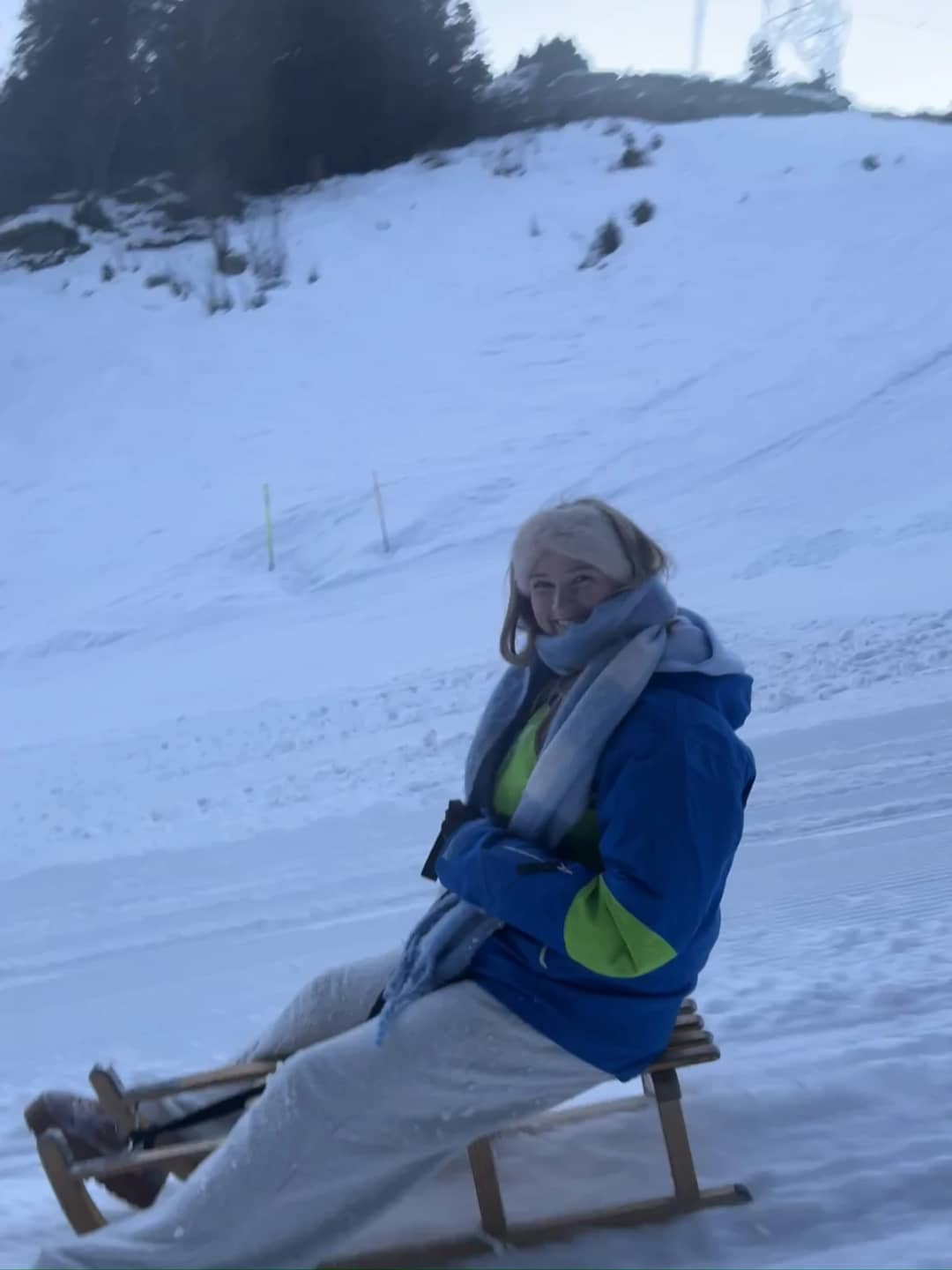
From the skin out, this is what works on a sled:
Base: a long-sleeved thermal top and leggings or tights. Wool or synthetic, no cotton against the skin.
Middle: a fleece or a light down jacket.
Outside: ski pants or waterproof trousers, and a winter jacket.
Feet: high winter boots or hiking boots, with warm socks.
Hands and head: waterproof gloves or mittens, a beanie, a scarf or neck warmer.
Before we leave Interlaken, I check three things on every guest: gloves, warm layers, shoes.
Asked what I wear myself on a sledding evening, my list is short.
Pierre says: "Ski pants and a ski jacket, big shoes that keep the water out, and a pair of gloves."
Pierre Vetsch, founder and head guide at Swiss Local Adventures
How cold is it on a sledding evening near Interlaken?
Milder than most guests expect: around 0 to 4 °C at sledding altitude in the late afternoon. We took the hourly MeteoSwiss readings for 15 December 2025 to 31 March 2026, between 16:00 and 19:00, the hours of our tour. The speed of the sled makes it feel colder.
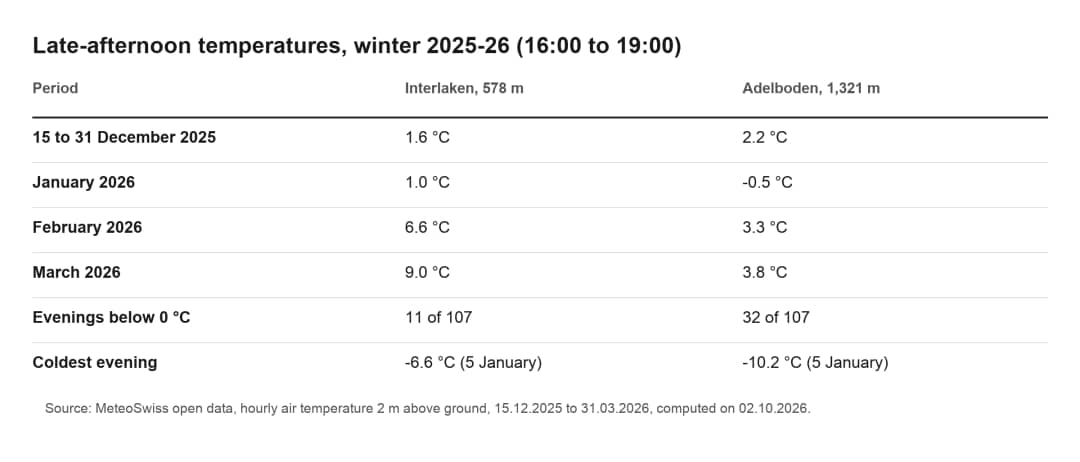
The table in words. In Interlaken, at 578 metres, the late-afternoon average was 1.6 °C in the second half of December, 1.0 °C in January, 6.6 °C in February and 9.0 °C in March. Adelboden, at 1,321 metres, is the nearest MeteoSwiss automatic station at sledding altitude. It averaged 2.2 °C in late December, -0.5 °C in January, 3.3 °C in February and 3.8 °C in March.
At Adelboden, the average of those three hours fell below zero on 32 of 107 evenings, against 11 in Interlaken. The coldest evening was 5 January 2026: -10.2 °C up there, -6.6 °C in town. The figures come from the MeteoSwiss open data for the two stations.
Two things push the feeling below the thermometer. The first is speed. In BFU test rides, beginners passed 40 km/h on an easy sled path. At 0 °C and 40 km/h, the standard wind chill index gives a felt temperature of about -7 °C. The second is altitude. The Bob Run in Mürren starts at 1,907 metres, almost 600 metres above the Adelboden station. As a rule of thumb, count 3 to 4 °C less up there.
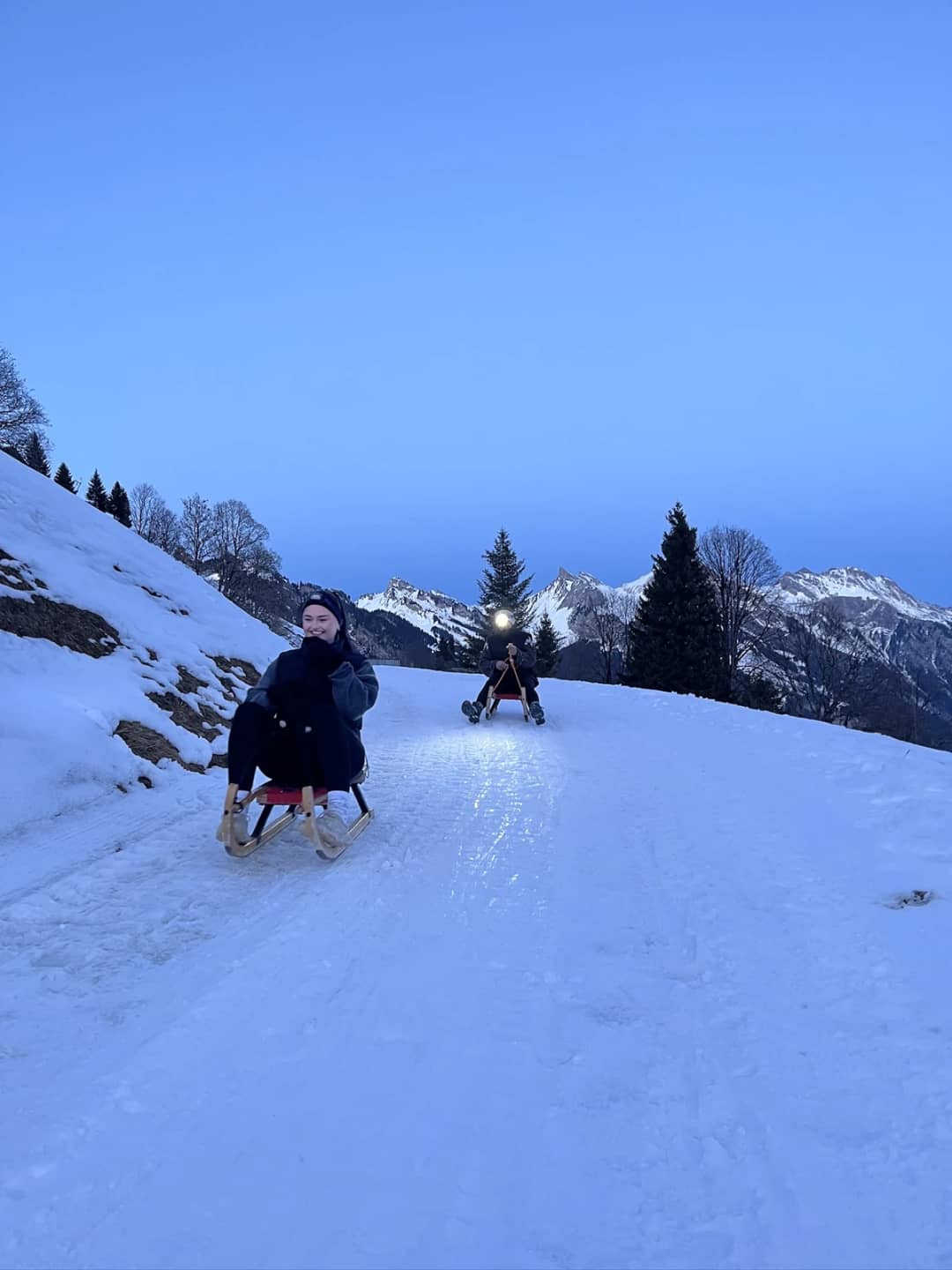
Fun fact: From 15 to 31 December 2025, late afternoons were milder at 1,321 metres (2.2 °C) than in Interlaken (1.6 °C). Cold air settles on the valley floor in winter, so "higher" does not always mean "colder".
When do my guests feel the cold most? During the descent. The light plays its part too. From mid-December to the end of January the sun sets between about 16:40 and 17:30, during the tour, and the top of the Isenfluh run is already in the shade when we arrive.
Can you go sledding in jeans, without snow pants?
You can, and you will finish wet. You sit a few centimetres above the snow and you brake with your feet, so snow sprays up your legs every time you slow down. Denim soaks it up, and wet cotton stops keeping you warm. My verdict: jeans alone, no. Jeans under a pair of snow pants, yes.
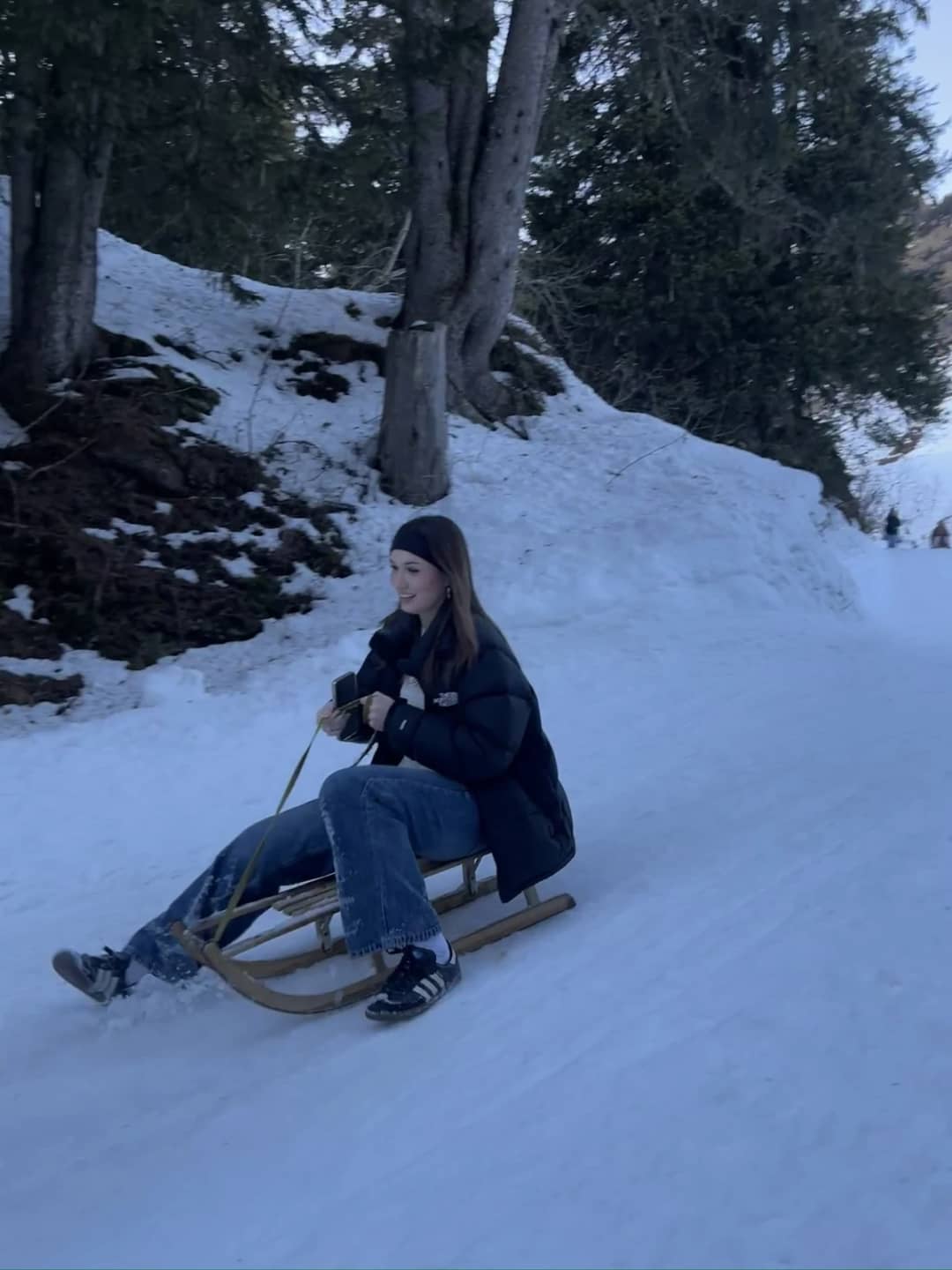
This is the clothing question my guests write about most. Between 31 January and 1 April 2026, five of them wrote before their tour to ask for clothes, and four of the five named snow pants. One group needed five pairs for the next day. Another wrote on the morning of the tour: nobody in the group had any snow gear.
The mistake I see most often comes as a pair.
Pierre says: "Jeans or trousers that take in water, and low trainers that take in water too."
Pierre
A guest who turns up in jeans is not sent home: we rent them a pair of snow pants. Trainers are another matter, because we have no boots to lend.
Insider tip: No snow pants in your suitcase? Wear leggings and your jeans, and pull a rented pair of snow pants over them. On our tour that costs CHF 5. A pair of rain trousers over warm leggings does the same job.
What shoes should you wear sledding?
High, firm boots with a good tread: winter boots or hiking boots. The BFU puts sturdy shoes second in its five sledding tips, right after the helmet, because on a sled your feet are your brakes. Low trainers let the snow in at the ankle, and a flat sole has little to bite with.
At the top of the run, my first instruction is about feet.
Pierre says: "Brake with both heels."
Pierre
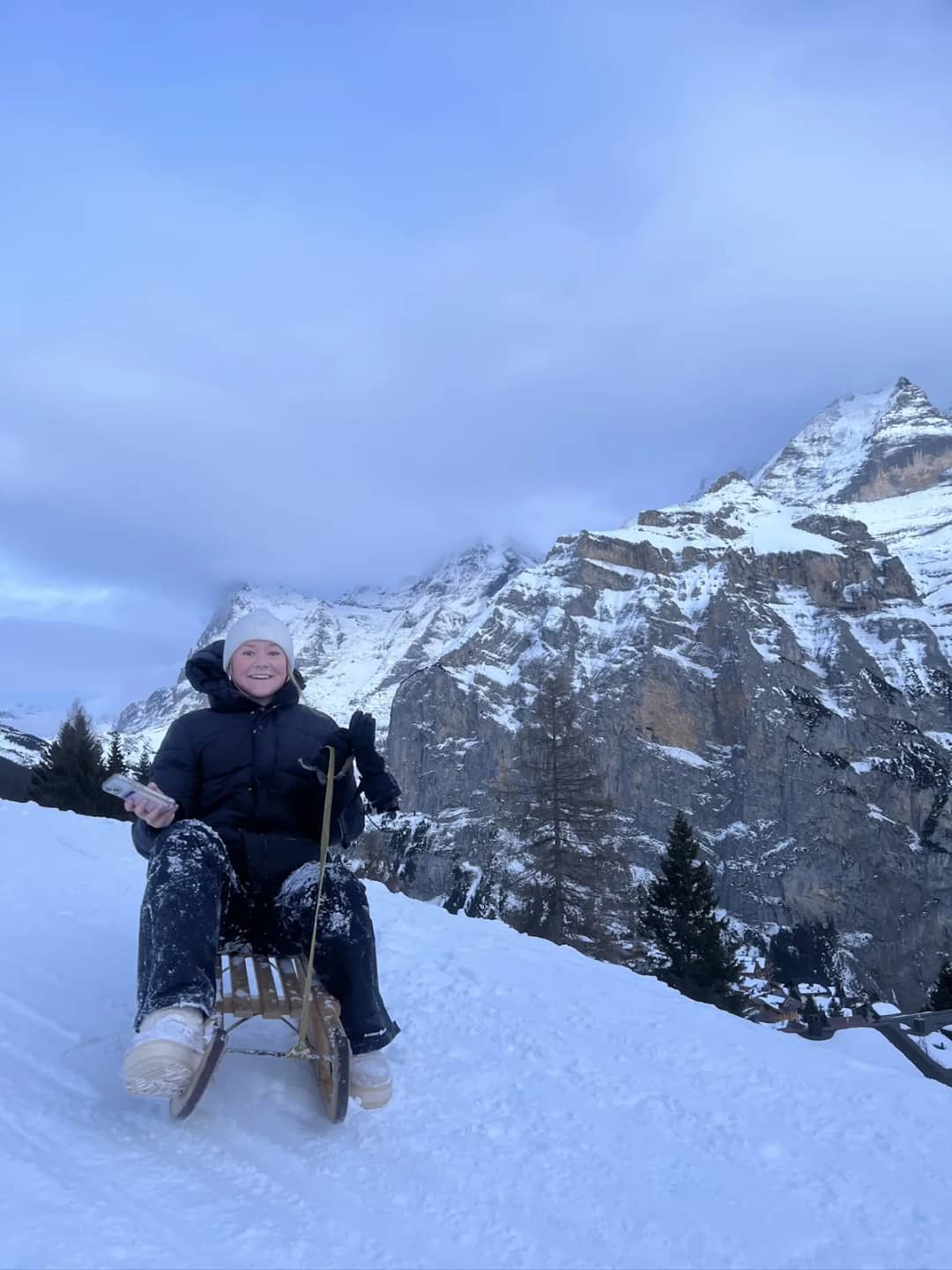
That one rule explains the whole shoe question. A heel with a deep tread bites into the snow. A flat sole skates over it. A high shaft keeps the spray out of your socks, and a low shoe lets it in.
Ice changes things. On hard or icy snow, the BFU sledding guide recommends slip-on soles with spikes, and says the spikes matter most under the heel. I do not guess the conditions. In Mürren, the man who rents skis at the Intersport shop is the one who gives me the weather and the state of the runs. At Isenfluh, the cable car attendant tells me the state of the trail before I ride up with a group.
Rent from the tour or from a ski shop: which is cheaper?
From the tour, if you sled with us. From a shop, if you sled on your own or our sizes run out. On our Sunset Sledding and Fondue tour, a jacket or a pair of snow pants costs CHF 5 per item, and we lend gloves free. I keep that price low on purpose: I would rather nobody be cold.
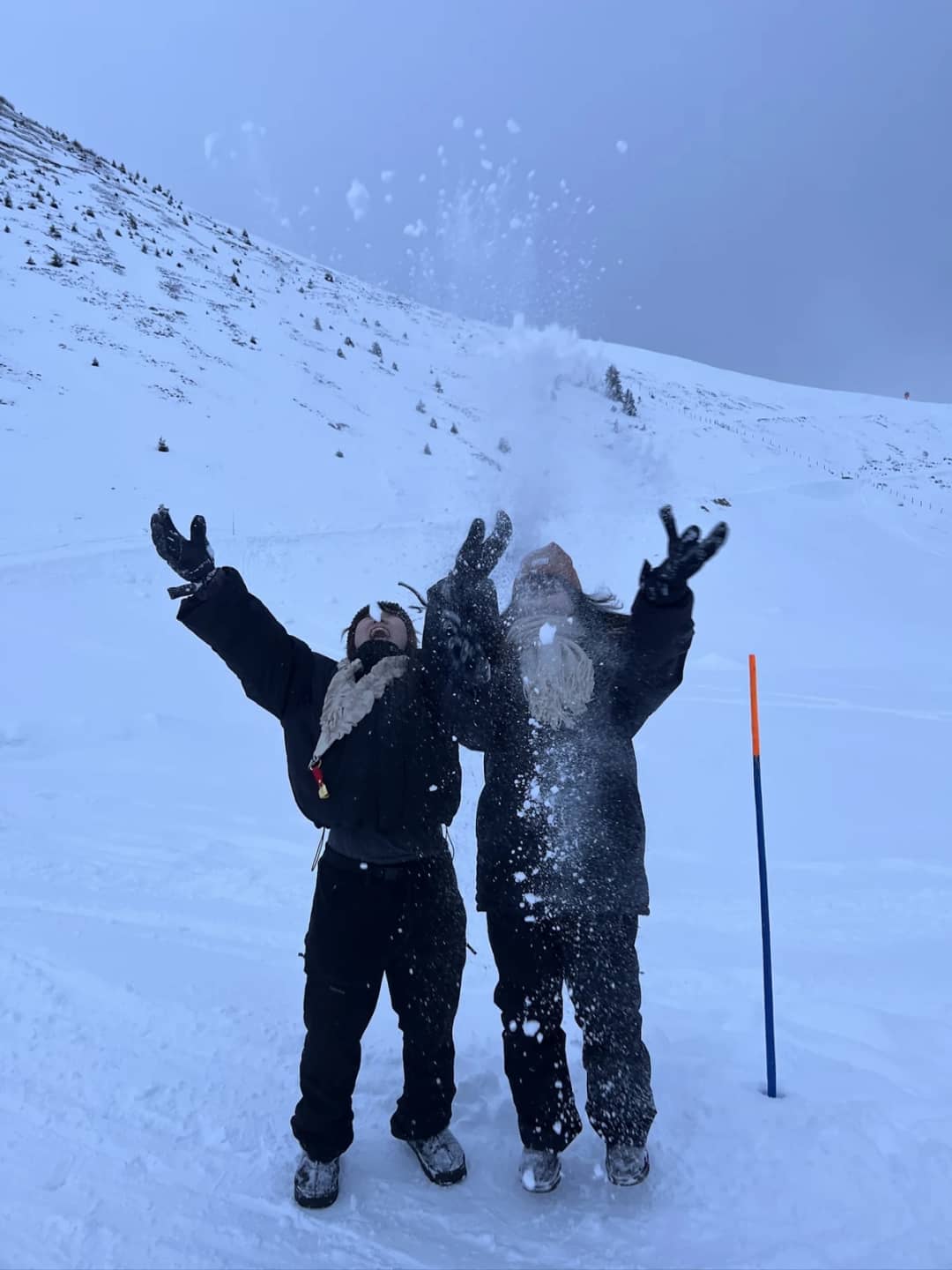
Here is the comparison for one evening, jacket, pants and gloves:
With us: CHF 5 for the jacket, CHF 5 for the pants, gloves lent free. CHF 10 in total.
At a ski shop: OUTDOOR's price list for winter 2026/27 gives CHF 20 for a jacket, CHF 20 for pants and CHF 10 for gloves for one day. CHF 50 in total.
The shop wins when our sizes run out, when you sled on your own, or when you want goggles or a helmet, which it rents at CHF 10 each for a day. The INTERSPORT Rent Network also rents clothing and sleds, with shops in Lauterbrunnen and Grindelwald, and shows no clothing prices online.
How our rental works: email us your sizes before the day, and come 15 minutes early to try things on. Sizes are limited, so the earlier you write, the better. I collect the borrowed clothes at the end of the evening. One thing we do not have is boots: bring your own, warm and waterproof.
Do you need a helmet, goggles or a headlamp?
A helmet: the BFU says yes, and we do not provide one. A headlamp: we give you one. Goggles: useful when it snows. Bring the ski or bike helmet you already own. The BFU confirms that both suit sledding, with a thin beanie under a bike helmet.
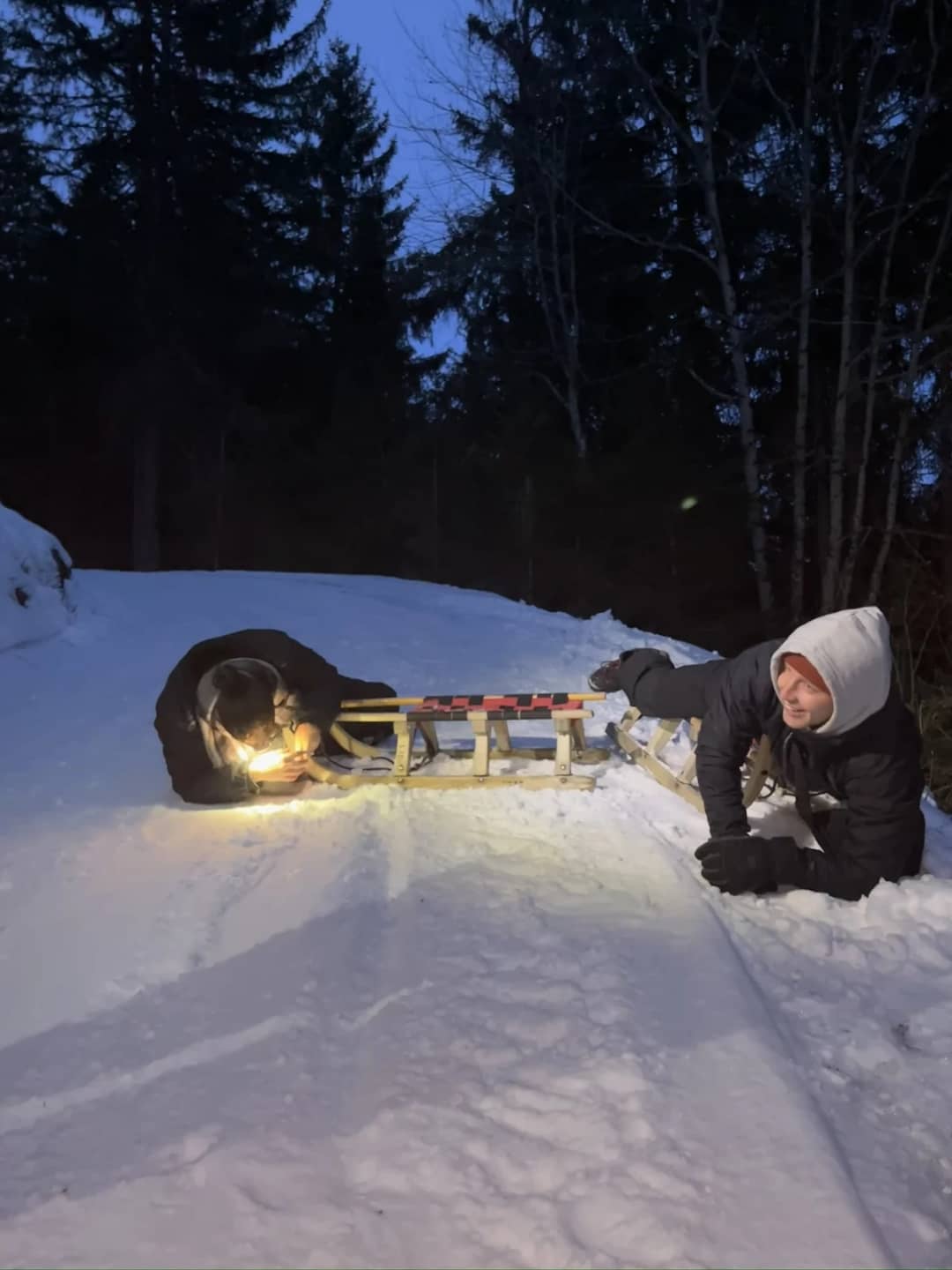
On my tours nobody wears a helmet, and I wrote about that choice in my answer on whether night sledding is dangerous. Your head is the one part of you that a rental pair of pants cannot fix.
The headlamp matters for what you wear on your head. It sits on a strap, so it goes over a beanie or a helmet.
Goggles sit in the middle. The BFU lists them with the back protector, and our tour page does not ask for them. My own view: useful when it snows.
Which gloves, hat and layers keep you warm?
Waterproof gloves or mittens, a beanie that covers your ears, and one layer more than you think. Your hands hold the rope and touch the snow each time you stop or get back on the sled. Knitted gloves soak through in wet snow. Ski gloves or lined waterproof mittens stay dry.
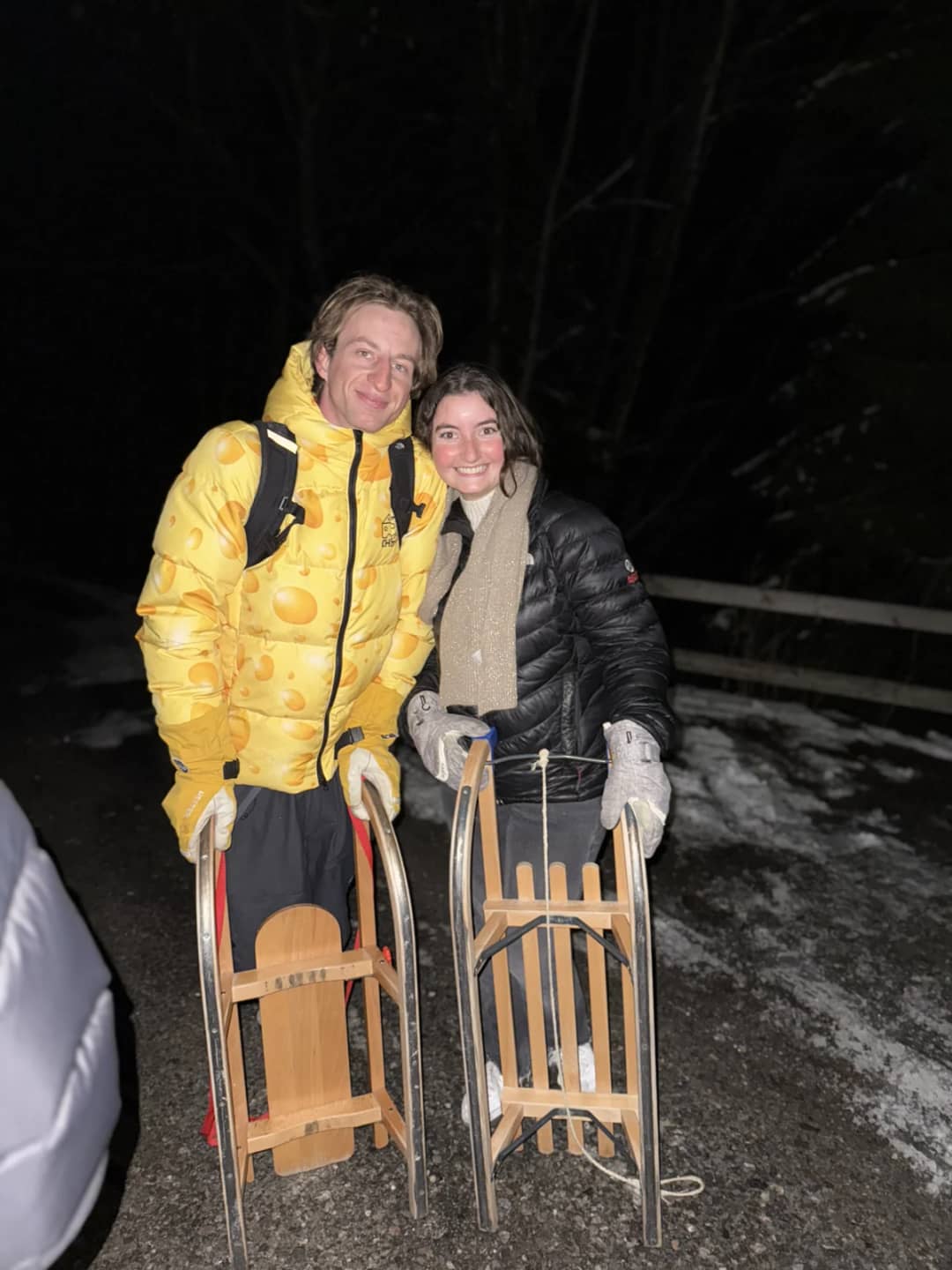
Layers beat one thick coat, because the evening has three temperatures: the wait at the top, the descent with the wind on your face, and a warm fondue table back in Interlaken.
Halfway down, there is a cup of hot mulled wine for the adults. A scarf or a neck warmer earns its place at 40 km/h.
Asked where my guests get cold first, I name two places.
Pierre says: "The hands and the feet."
Pierre
Gloves are the one thing we lend for free, and boots are the one thing you must bring.
Your Questions About What to Wear Sledding
Short answers first: ask for rental clothes by email before the day, dress for wet snow in March, bring your own helmet and a spare pair of socks, and dress children exactly like adults.
Can you rent snow pants on the day of the tour?
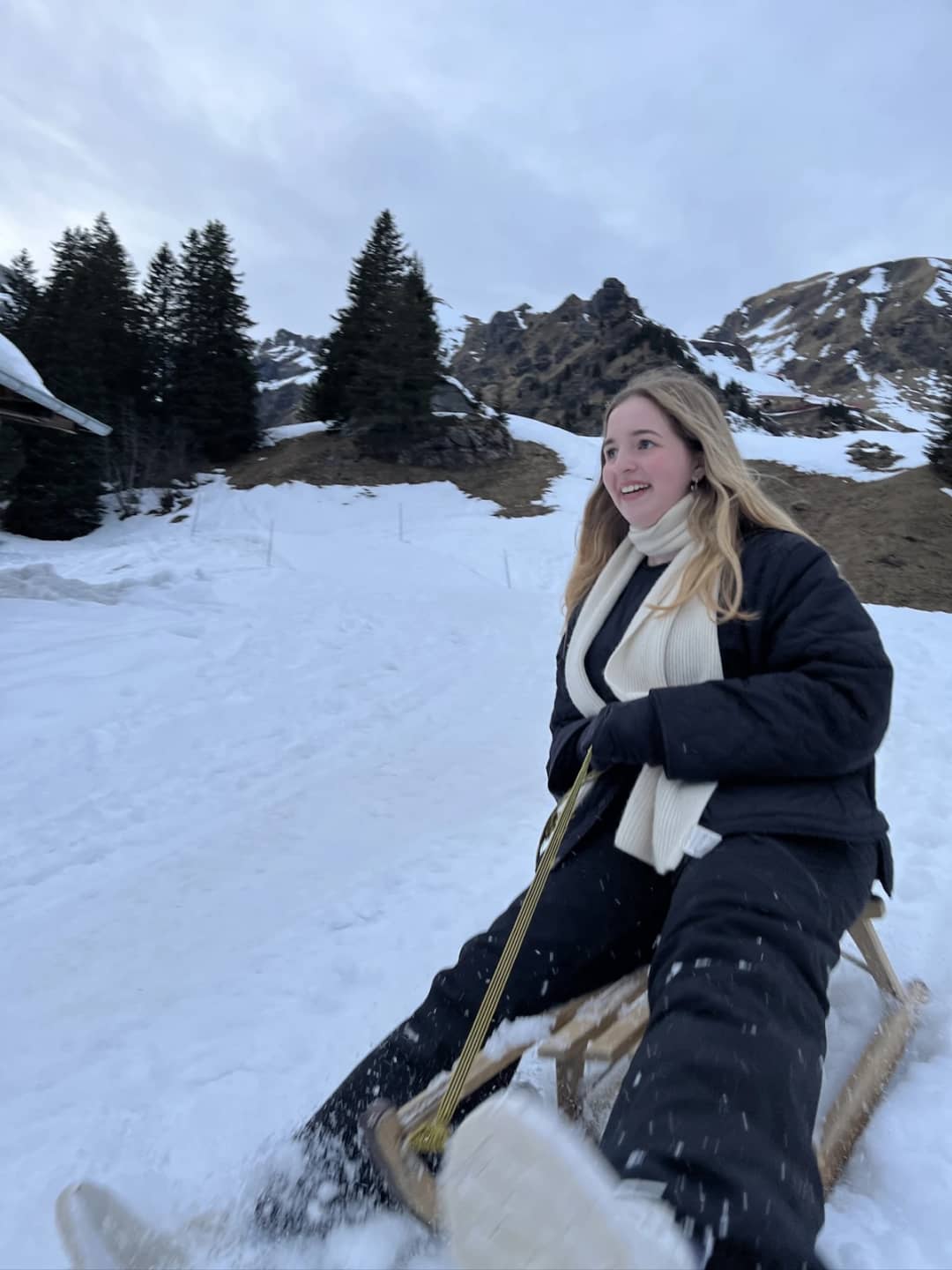
Sometimes, and it is a gamble. Sizes are limited, so the rule on our tour page is to email your sizes before the day. Guests do write at the last minute. On 31 January 2026, one asked at midday for the same evening. On 4 March 2026, a group asked the night before for five pairs of snow pants and a jacket, and I had to answer that we were limited and would bring what we had. The earlier you write, the better the odds on your size. Come 15 minutes early to try them on. The price stays the same: CHF 5 per item, gloves free.
What should you wear sledding in March compared with December?
The same outer layer, with less under it. In March 2026 the late-afternoon average at 1,321 metres was 3.8 °C, against 2.2 °C in late December and -0.5 °C in January. Spring snow is wetter, so waterproof pants and gloves matter even more in March than in January. What changes is the light. In mid-March the sun sets around 18:30, so most of the run happens in daylight, and sunglasses are worth packing. In December and January the sun sets during the tour, and you finish by headlamp. Drop the middle layer in March if you run warm. Keep the gloves in any month.
What should you bring sledding, besides clothes?
Very little. On our tour the sled, the headlamp, the cable car ticket and the fondue are included, so your pockets can stay light. I would bring four things. Your own helmet, since we do not provide one. A phone or camera with a full battery, kept in an inside pocket: cold drains batteries. A spare pair of socks for the fondue table. And a card or some cash for extra drinks, which are not included. A small backpack is enough: leave large bags at your hotel.
What should children wear sledding?
Exactly what adults wear, with more care for hands and head. The BFU list makes no difference by age: winter jacket, snow pants, gloves, high firm shoes with a good tread, and a helmet. Mittens keep small hands warmer than gloves, and a one-piece snow suit keeps snow out of the waist when a child falls. On our tours the minimum age is 10, and under-15s come with an adult. If you need rental clothes for a child, write to us with the size before you book the evening, because our sizes are limited. For a younger child on a village slope, the same list applies.
Sled dry with a local guide
The worry behind the question is simple: being cold and wet for an evening you paid for, because your suitcase holds no ski gear. Here is what stands against it. Late afternoons at sledding altitude averaged between -0.5 and 3.8 °C last winter. A jacket and snow pants cost CHF 10 with us, and the gloves are free.
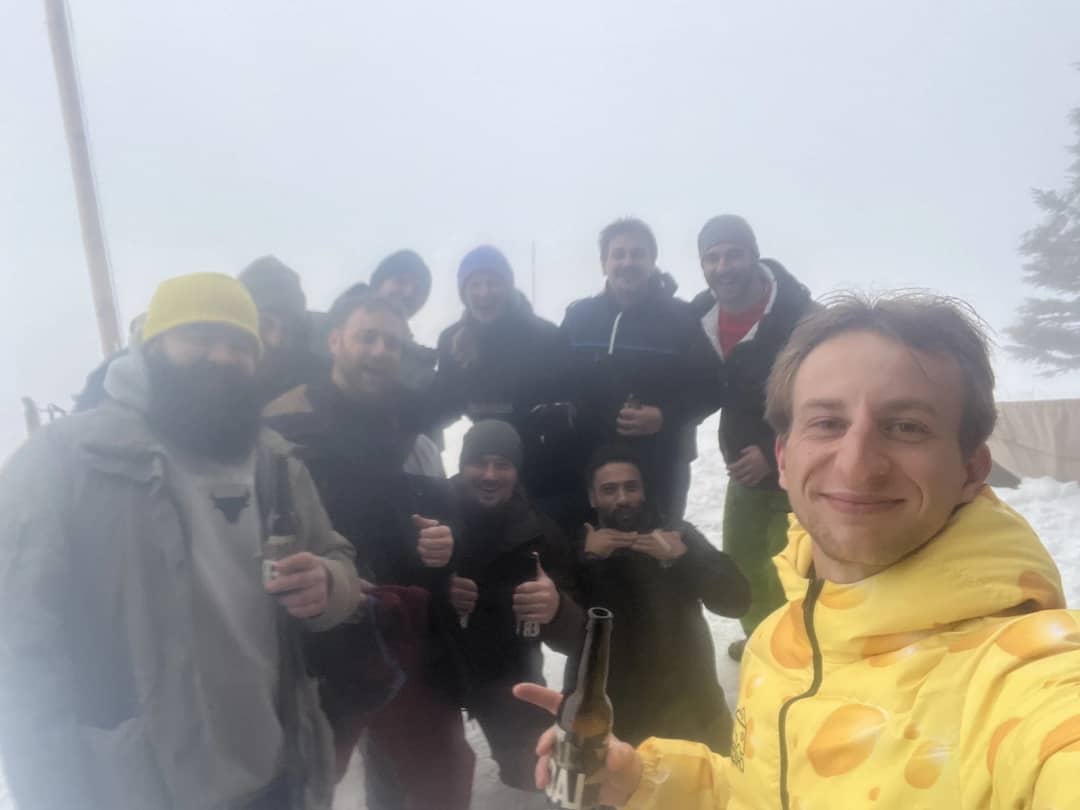
You do need real boots, and we cannot lend you those. Pack them, or buy a pair before you buy anything else. For the runs themselves, read the nine sled runs around Interlaken and how the small cable car at Isenfluh works. If sledding is one evening in a longer stay, my ranking of winter activities in Interlaken shows what else is worth the cold, and the summer version of this question is in what to wear on a Swiss farm tour.
Eight guests at most, one guide, a sled, a headlamp and a fondue back in Interlaken: book the Sunset Sledding and Fondue evening, then send me your sizes.
How we made this: based on Pierre's interviews of 24, 29 and 30 September and of 1 and 2 October 2026, facts and prices checked at the official sources on 2 October 2026, written with AI assistance.
Source: MeteoSwiss open data, the BFU sledding guide, and guided sledding tours at Mürren and Isenfluh with Swiss Local Adventures, winter 2025-2026.
*Written by Pierre Vetsch, founder and head guide at Swiss Local Adventures
Tags
#what-to-wear-sledding#sledding-interlaken#night-sledding-interlaken#winter-clothing-switzerland#winter-activities-interlaken
Sources & References
- •MeteoSwiss, Open Data: automatic weather stations Interlaken and Adelboden, hourly values
- •BFU, Ratgeber Schlitteln
- •OUTDOOR, Ski Rental Prices 2026/27 (PDF)
- •INTERSPORT Rent Network Grindelwald
- •Swiss Local Adventures, Sunset Sledding & Cheese Fondue
- •Photos: Pierre Vetsch / Swiss Local Adventures, Mürren and Isenfluh, 2025-2026
Share this article
Similar Articles
Continue your reading with these related articles
Interlaken
9/30/2026
13 min
17
Is Night Sledding Dangerous? Interlaken Guide Answers
Is night sledding dangerous? About 6,400 sled rides a year end at the doctor in Switzerland. A guide's numbers, the helmet question and who should skip it.
night-sledding-interlakensledding-safetywinter-activities-interlaken
By Pierre VetschRead More
Interlaken
9/29/2026
13 min
33
Oberhornsee Hike: 1,243 m Up From Stechelberg
The Oberhornsee hike climbs 1,243 m from Stechelberg to a glacier lake. A local guide's route, the 2026 trail closures and when to go.
hiking-interlakenlauterbrunnen-valleymountain-lake-hike
By Pierre VetschRead More
Interlaken
9/28/2026
11 min
27
Isenfluh Sledding: The Egg Cable Car to Sulwald
A CHF 16 cable car for 8 people or one cow, a forest run with nobody on it: a guide's plan for Isenfluh sledding and snowshoeing.
sledding-interlakensnowshoeing-interlakenlauterbrunnen-valley
By Pierre VetschRead More