Sledding
Sunset or Night Sledding in Interlaken? Month by Month
P
Pierre Vetsch
Author
October 13, 2026
10 min
Sunset or night sledding in Interlaken: on our evenings in January you get both, because the group starts down around 16:45 and switches the headlamps on at the mulled wine, halfway down. The name of the tour matters less than the month you book. I guide these evenings every winter, and below is the light you will actually ride in, from the US Naval Observatory tables and from what I see on the run.
What is the difference between sunset and night sledding?
The departure time. A sunset tour leaves Interlaken in the afternoon so you reach the top in daylight and ride down as the light goes. A night tour leaves after dark, and you ride by headlamp from the first metre.
Two prices, checked on 13 October 2026: our Sunset Sledding & Cheese Fondue leaves at 15:30 for about 4 hours and costs CHF 139, fondue included. OUTDOOR Interlaken runs a Night Sledding at 18:00 for 3 hours at CHF 119, without fondue, and a sunset version at 15:30 for CHF 149.
We used to run a night departure too. We stopped it, and today we only sell the sunset evening, at Mürren or Isenfluh depending on where the snow is best.
Pierre Vetsch, founder and head guide, says: "The sunset at the top, the ride down through the forest by headlamp, and the little Isenfluh cable car."
On a 15:30 evening in midwinter, the dark comes to you during the ride.
What light do you get on a sunset sledding tour, month by month?
It depends on the date more than on anything you can book. At Isenfluh, the sun sets at 16:41 on 15 December and at 20:09 on 10 April, by the US Naval Observatory tables for a flat horizon. The mountains around the run hide it earlier.
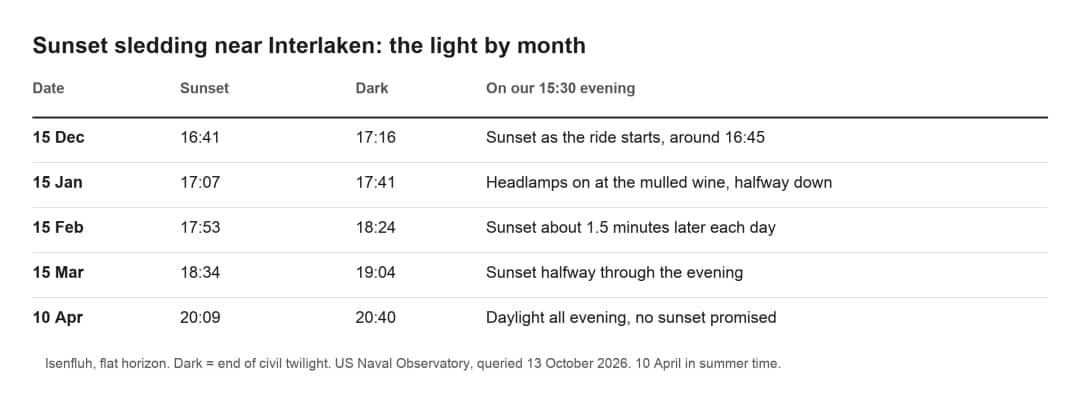
The table in figures: on 15 December, sunset 16:41 and dark (end of civil twilight) 17:16. On 15 January, 17:07 and 17:41. On 15 February, 17:53 and 18:24. On 15 March, 18:34 and 19:04. On 10 April, in summer time, 20:09 and 20:40.
Fun fact: between 15 December and 15 March, sunset at Isenfluh moves from 16:41 to 18:34, almost two hours later. Across February it moves about 1.5 minutes a day.
Our departure stays at 15:30 all season, from 15 December 2026 to 11 April 2027, Wednesday to Sunday. Fixed departure, moving sun: that is why two guests on the same tour, one in December and one in March, describe two different evenings.
When do the headlamps go on?
In December and January, halfway down. Asked when the group starts down in midwinter, my answer is around 16:45. On 15 December that is four minutes after sunset; on 15 January the sun sets at 17:07, while you are on the sled.
Pierre says: "At the mulled wine, halfway down."
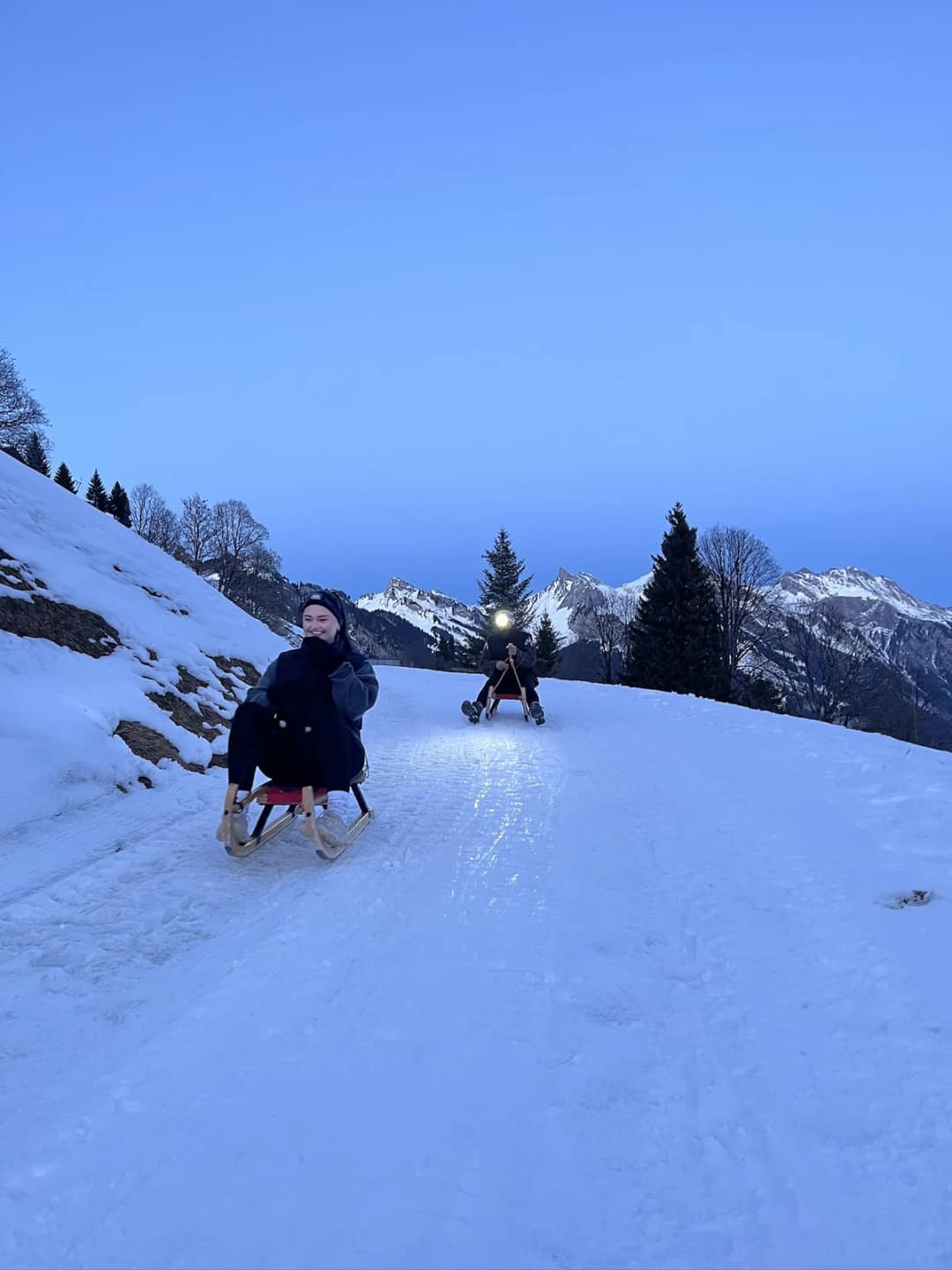
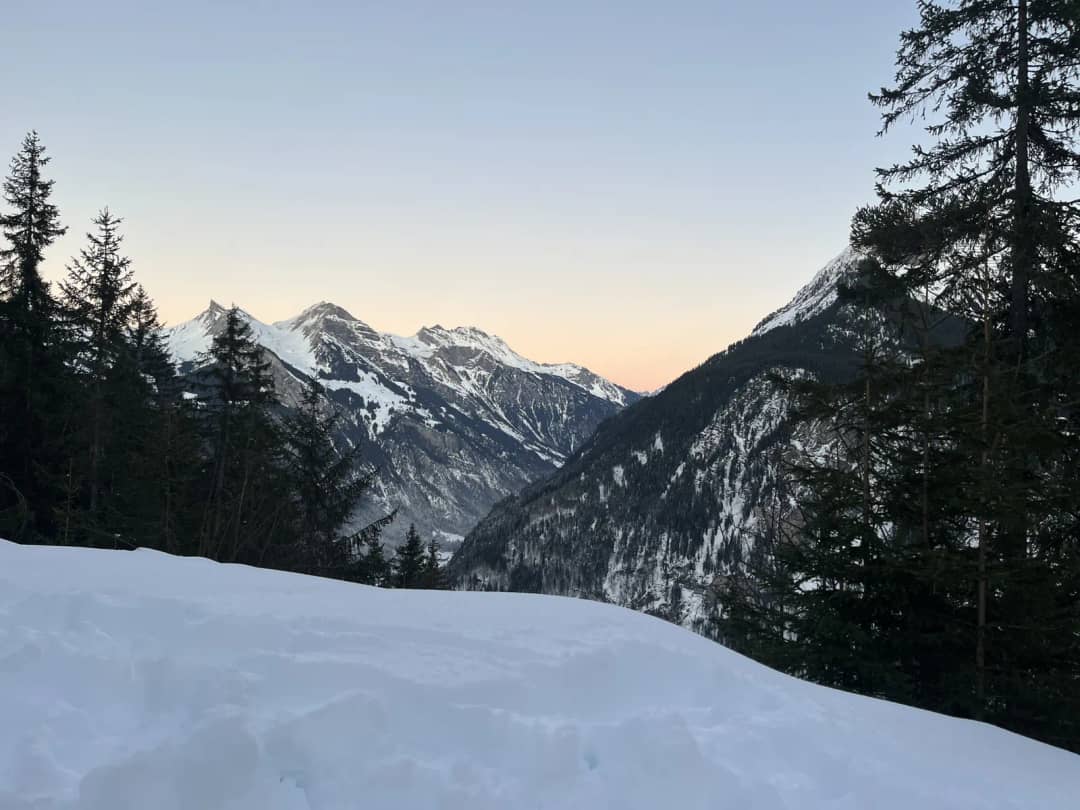
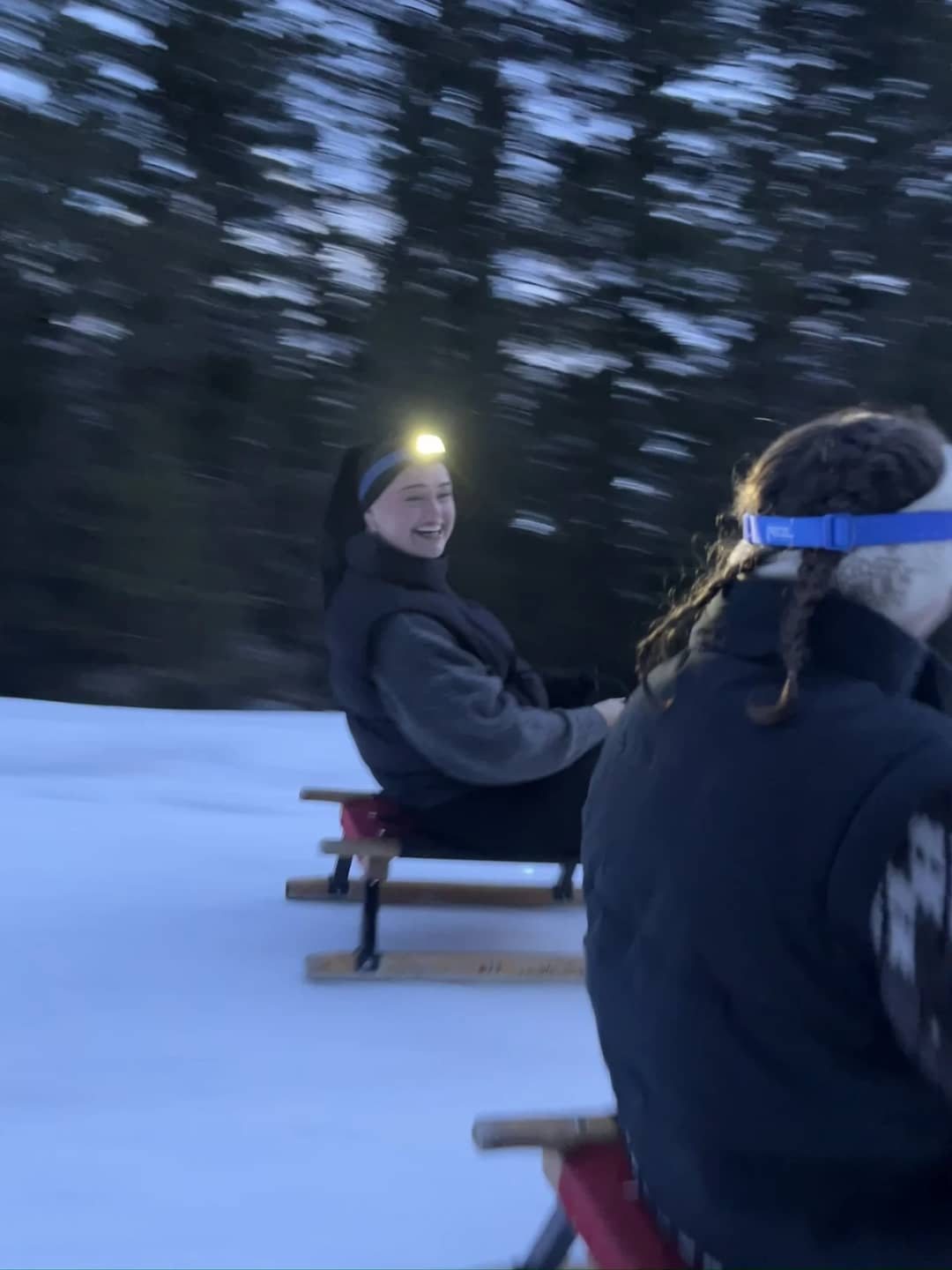
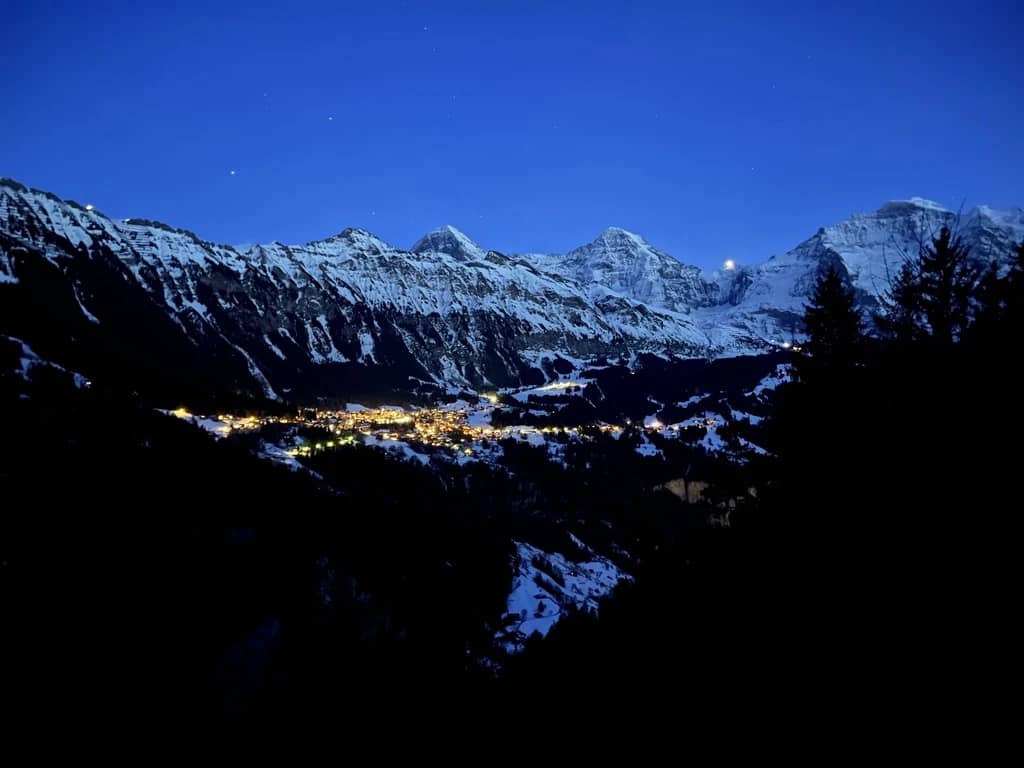
That is where the headlamps go on in January. The first half of the run is in fading daylight, with the peaks across the valley turning pink. The second half is the forest by headlamp, the snow in the trees sparkling in the beam.
If the dark worries you, read whether night sledding is dangerous: on my tours, people ride slower by headlamp. Steering does not change after sunset. The briefing at the top covers it, and how to steer a sled explains it in detail.
Why does it get so cold once the sun goes?
Because the run loses its sun long before the sky goes dark. Peter, who works the Isenfluh cable car, told me that once the sun passes to the other side of the mountain, temperatures drop fast, and the snow that melted during the day turns to ice.
Pierre says: "The sun is behind the Schilthorn when we're at the top, and it sets halfway through the tour in March."
So you often start the ride in shade, even when the sky above is still bright. That is the moment your hands and feet feel it. Dress for the ride down, not for the wait at the top: ski pants, a warm jacket, gloves, and waterproof boots. We rent pants and jackets for CHF 5 per item and lend gloves for free. For the full list, see what to wear sledding in Switzerland.
The ice Peter describes is also why the bottom of the Isenfluh run is the stretch where I tell people to brake for real.
Can you go sledding by moonlight?
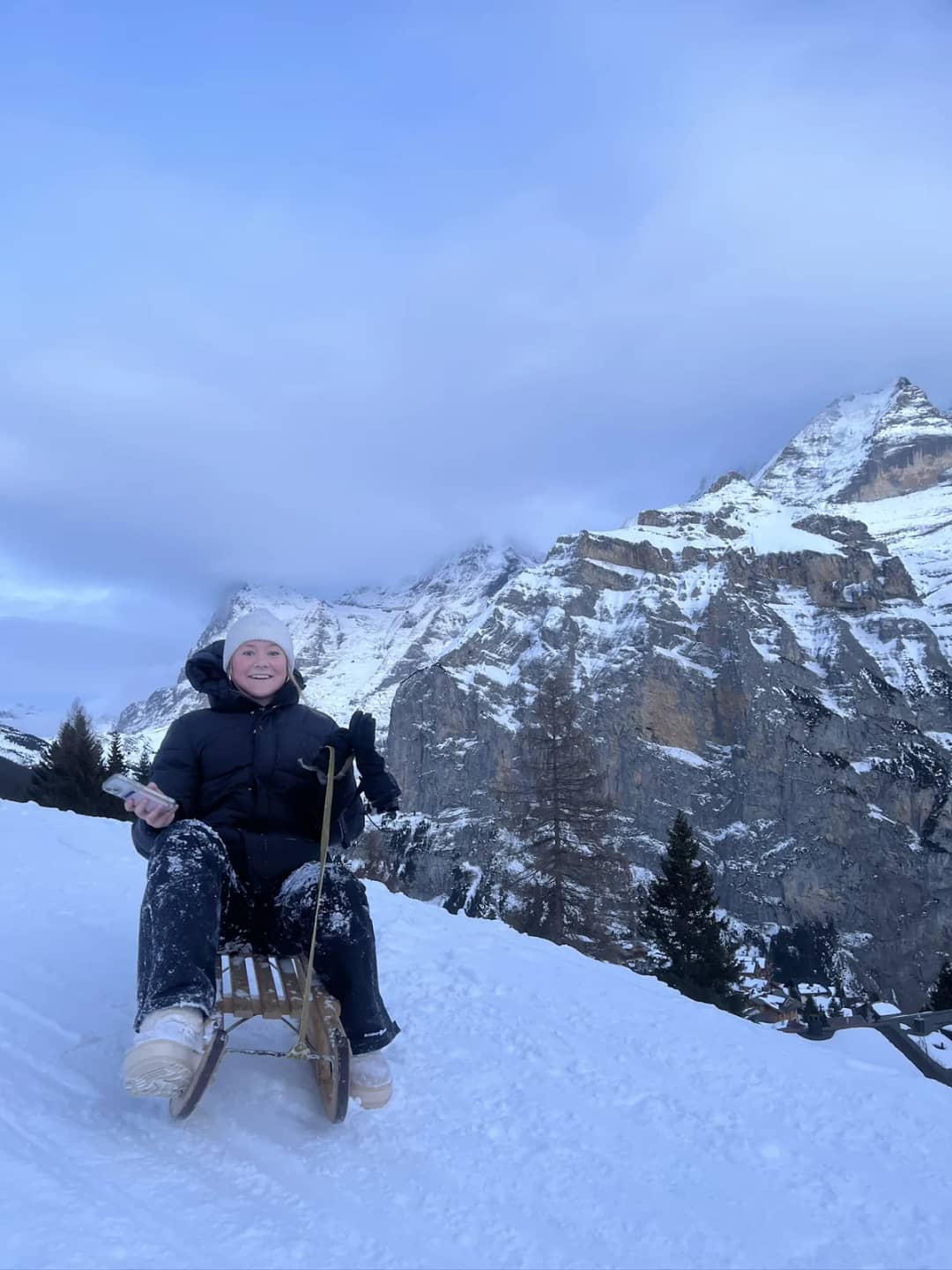
Yes, if you pick the date. On a clear evening with a full moon, the snow lights up enough that I have ridden down with the headlamps switched off. A guest on another operator's night run near Interlaken wrote on Tripadvisor in February 2020 that a full moon showed them every mountain around the track.
The full moons of the coming season, by the US Naval Observatory (Swiss time): 24 December 2026 at 02:28, 22 January 2027 at 13:17, 21 February 2027 at 00:23, 22 March 2027 at 11:44 and 20 April 2027 at 00:27.
Insider tip: book one of the evenings just before a full moon. On 19, 20 and 21 January 2027, the moon rises at Isenfluh at 13:23, 14:30 and 15:52, so it is already in the sky when the light goes, and 86 to 98% lit.
The new moons fall on 9 December, 7 January, 6 February, 8 March and 7 April. Those are the darkest evenings, with the most stars if the sky is clear, and the forest is pitch black outside your beam.
Clouds decide the rest. No moon table can promise a clear sky in the Bernese Oberland.
Is March the best month for sunset sledding?
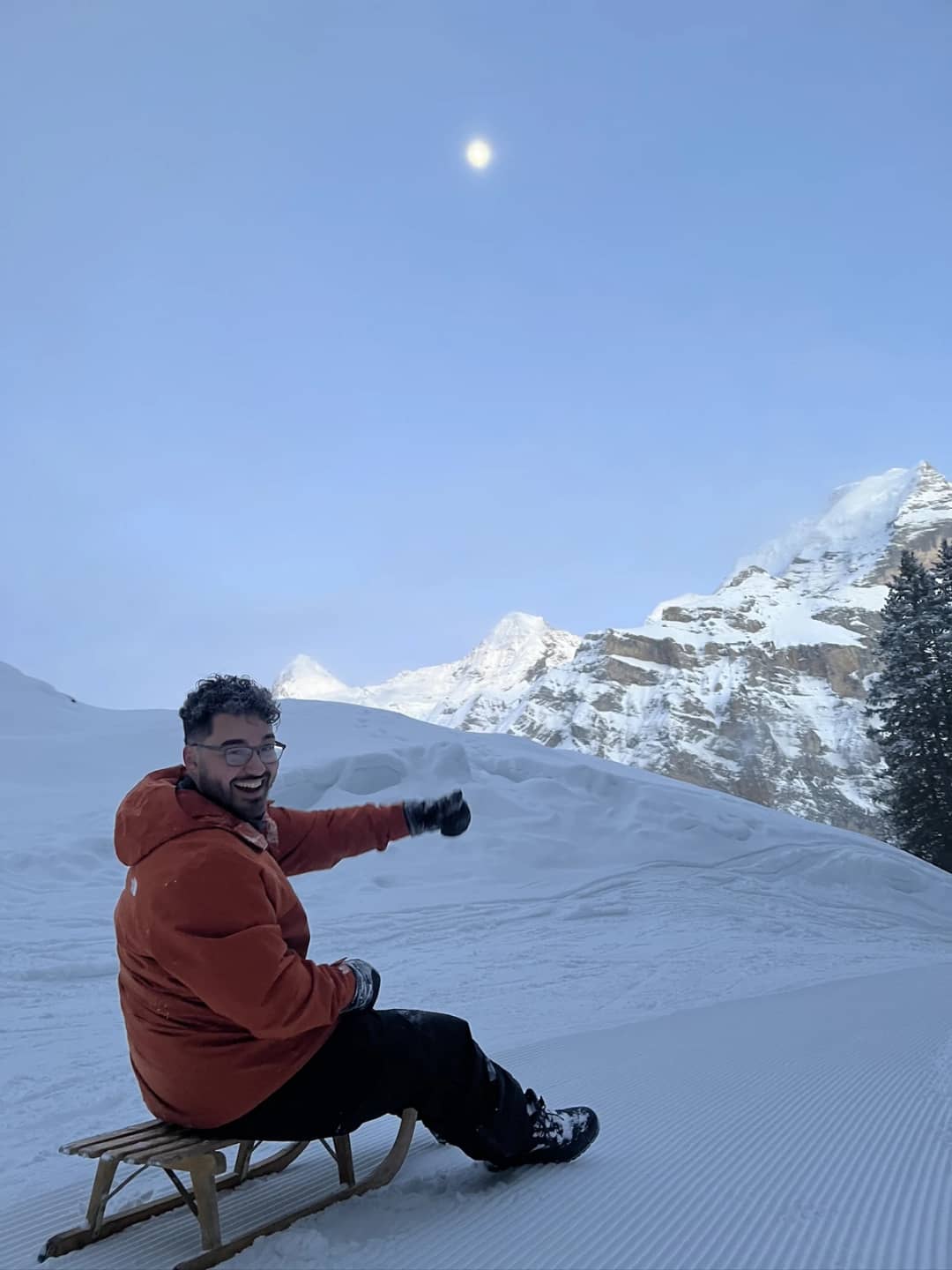
For light and photos, yes; for speed, no. Our tour page names March as our favourite month, with fewer people and more sun, and in March the sun sets halfway through the evening, so most of the ride is in daylight.
The trade-off is the snow. After a sunny day, the surface softens in the afternoon.
Pierre says: "Softer, it slides less."
That is my answer for the snow at the end of the afternoon in March and April. Expect a slower, gentler run, and more pushing on the flat parts. If speed is what you came for, take January.
April has its own limit: on 10 April the sun sets at 20:09, long after the fondue starts. We say it plainly on the tour page: in April we cannot promise the sunset. For the rest of the winter around Interlaken, see whether Interlaken is worth visiting in winter.
Sunset or night sledding: which should you book?
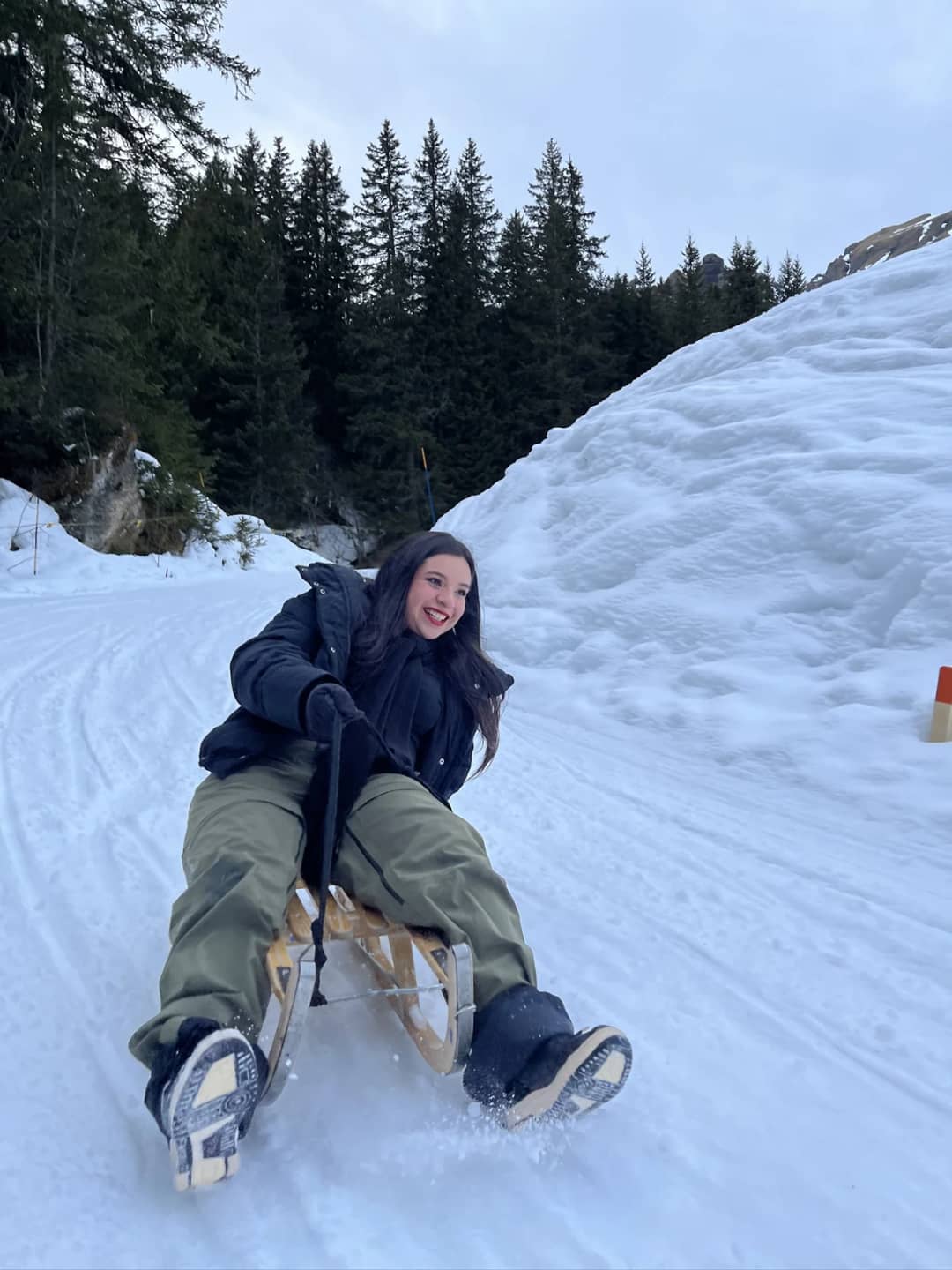
Book the sunset departure, and choose your month for the light you want. A night departure at 18:00 gives you darkness from the start, a shorter evening and no fondue; a 15:30 departure gives you the change of light, which is the part guests talk about afterwards.
Darkness and stars: a sunset evening in December or early January, near a new moon
A moonlit ride: an evening just before a full moon
Daylight and photos: late February or March
Pierre says: "We can do it privately, or early in the season, yes."
That was my answer to guests who ask for the real night and the stars. Early in the season, the dark comes on the ride. A private evening costs CHF 894 for your own group of up to 8.
My verdict: for a first time, the 15:30 departure in January. You see the pink peaks from the top, the valley lights come on below you, and you finish the forest by headlamp. Price check for comparison: CHF 139 with us, fondue and a glass of wine included, or CHF 129 per person from 6; CHF 119 for OUTDOOR's night run without fondue. Then pick a fondue in Interlaken if you go without one.
Your Questions About Sunset and Night Sledding
What is night sledding?
Night sledding means riding a sled down a prepared winter road or run after dark, with a headlamp on your head. Near Interlaken, it usually happens on snowy forest roads, at Isenfluh above Lauterbrunnen or at Mürren. A van takes you from Interlaken, a lift takes you up, and you ride down in one long descent. You sit on a wooden sled, steer with your feet and brake with your heels. No skiing experience is needed. On our evenings, the run comes first and the fondue follows, back in Interlaken. For where else to ride, see our guide to sledding near Interlaken.
Can you see the stars on a sledding tour?
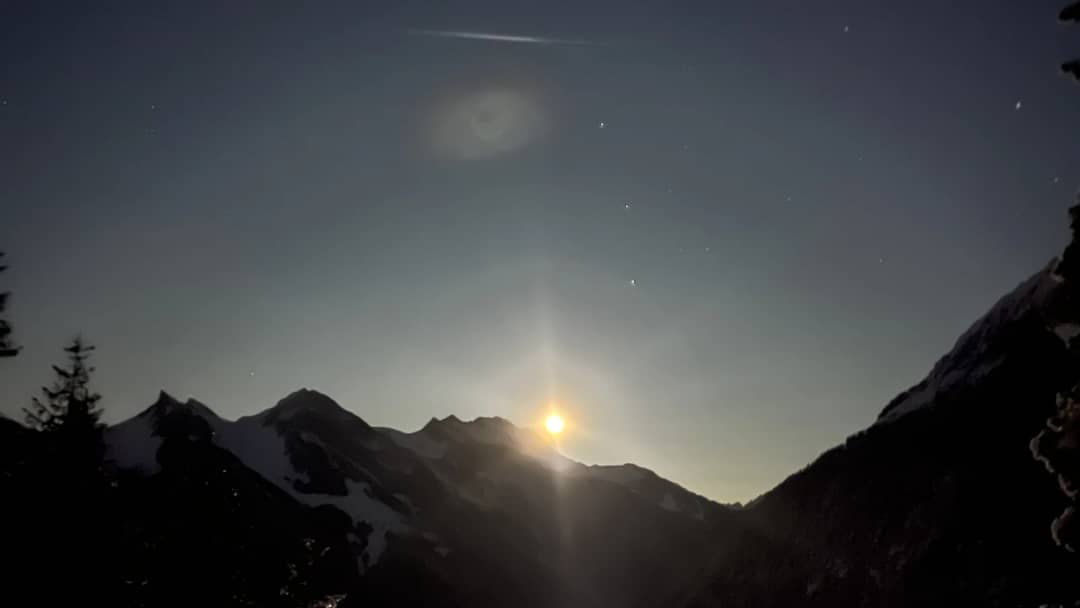
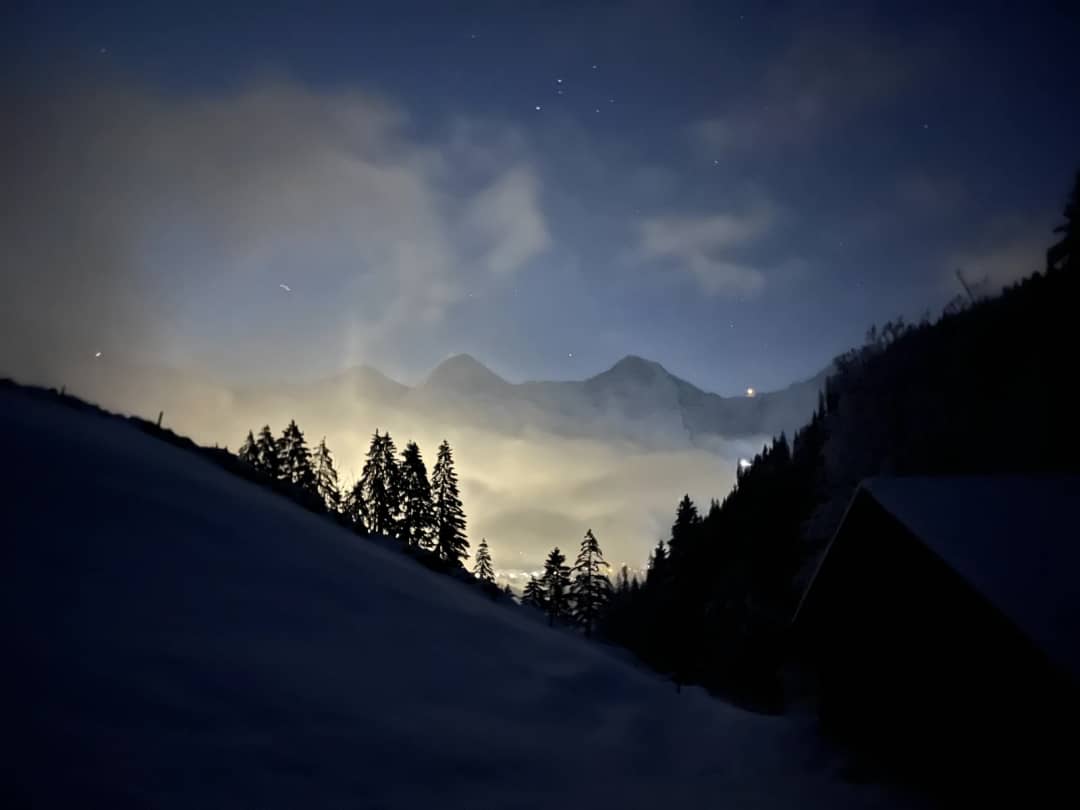
On a clear evening, yes, once you are past the end of civil twilight: 17:16 on 15 December and 17:41 on 15 January at Isenfluh. Before that, the sky is still blue. The best stars come on evenings near a new moon, such as 9 December or 7 January, because there is no moonlight to wash them out. A full moon does the opposite: fewer stars, but the snow and the peaks light up. Switch off your headlamp when the group stops, and look up. The photo below shows the sky above the Isenfluh run on 14 February 2025.
What time does a sunset sledding evening end?
Ours lasts about 4 hours from the 15:30 departure, so plan to finish around 19:30. The fondue is the last part, at a restaurant in Interlaken, and the evening ends there: we do not drop you back at your hotel. OUTDOOR's night run leaves at 18:00 and lasts 3 hours without fondue, so it finishes around 21:00. If you have a train the next morning, either works. If you want dinner included, the sunset evening covers it: cheese fondue with sides and a glass of white wine or another drink. Booking stays open online until 2 hours before departure, on Wednesday to Sunday evenings.
What if it is cloudy at sunset?
Then you get a grey dusk instead of pink peaks, and the ride is the same. Our tour page says it: whether you see the sunset depends on the weather and the season. What a cloudy evening keeps: the forest by headlamp, the mulled wine halfway down, the silence when the sled stops. What it takes away: the colours on the Eiger, Mönch and Jungfrau and the stars. If the weather or the snow makes the run unsafe, we cancel and you choose between a new date and a full refund. Look at the forecast two days ahead and move your date if you can: free cancellation runs up to 48 hours before departure.
Pick your month, then your sled
The worry behind this question is paying for a sunset and riding in the dark, or the reverse. The table settles it: December and January give you sunset and headlamps on the same ride, late February and March give you daylight and softer snow, and the full moon dates give you a moonlit run if the sky clears.
Pick the date first. Then book the Sunset Sledding and Cheese Fondue evening: CHF 139 per person, CHF 129 from 6, transport, cable car, sled, headlamp, mulled wine and fondue included, never more than 8 guests. Not sure about going alone or with a guide? Read sledding with a guide or on your own.
How we made this: based on Pierre's interview of 13 October 2026, facts and prices checked at the official sources on 13 October 2026, written with AI assistance.
Source: US Naval Observatory, Isenfluh cable car, and on-site sledding evenings at Isenfluh and Mürren, 2025 and 2026.
*Written by Pierre Vetsch, founder and head guide at Swiss Local Adventures
Tags
#sunset-sledding#night-sledding#sledding-interlaken#full-moon-sledding#winter-activities-interlaken
Sources & References
- •US Naval Observatory, sun and moon data for one day (Isenfluh, queried 13 October 2026)
- •US Naval Observatory, phases of the Moon 2026-2027
- •Isenfluh-Sulwald cable car
- •OUTDOOR Interlaken, Night Sledding (prices and times, 13 October 2026)
- •OUTDOOR Interlaken, Sunset Sledding with Fondue (13 October 2026)
- •Sunset Sledding & Cheese Fondue, tour page
- •Photos: Swiss Local Adventures (Pierre Vetsch), Isenfluh and Mürren, 2024 to 2026
Share this article
Similar Articles
Continue your reading with these related articles
Sledding
10/12/2026
11 min
Sledding in Interlaken: With a Guide or on Your Own?
Interlaken sledding tour or on your own? Alone costs CHF 23 at Isenfluh, but the last bus leaves at 17:13. A guide's verdict on when to pay.
interlaken-sledding-toursledding-interlakenguided-sledding
By Pierre VetschRead More
Sledding
10/5/2026
10 min
Sledding with Kids near Interlaken: Ages and Runs
Sledding with kids near Interlaken: from 8 on their own sled, under-6s free on the Niederhorn gondola. Which run fits which age, from a local guide.
sledding-with-kidsfamily-winter-activitiessledding-interlaken
By Pierre VetschRead More
Sledding
10/4/2026
9 min
How to Steer a Sled: A Swiss Guide's Brake Method
How to steer a sled: lean in, brake with both heels. On a 9% run above Lauterbrunnen, a Swiss guide shows when to slow down and which sled to rent.
how-to-steer-a-sledsledding-for-beginnerssledding-interlaken
By Pierre VetschRead More