Wine Tour
Dégustation de vin à Interlaken: 6 options réelles
O
Olivia Lufman
Auteur
18 août 2026
4 min
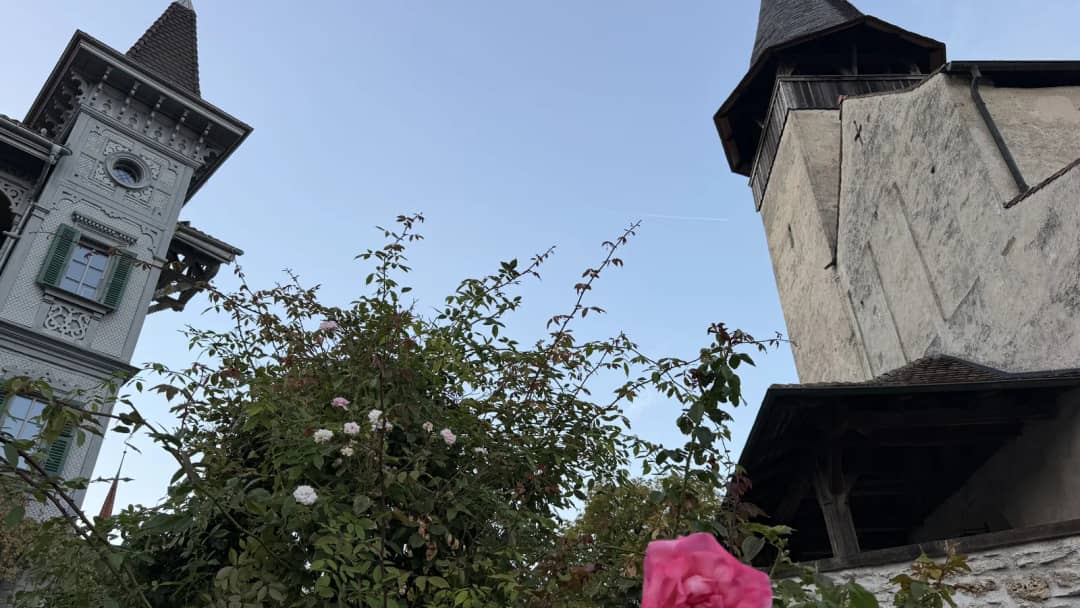
Dégustation de vin à Interlaken: où aller vraiment
Cherchez « wine tasting Interlaken » et vous obtenez deux types de réponses. Des plateformes qui vendent des excursions à Lavaux, à trois heures de route. Ou des annuaires qui listent un bar à vin de la Höheweg comme un « domaine ».
Les deux passent à côté de ce qui existe ici. À 25 minutes d'Interlaken, trois coopératives en activité cultivent la vigne sur les rives du lac de Thoune, et environ 2% du vin suisse quitte le pays. Ces bouteilles, vous ne les goûterez nulle part ailleurs.
Le hic: aucune ne fonctionne comme une salle de dégustation de Napa. L'une ouvre le mercredi soir. L'autre le jeudi, pendant nonante minutes. La troisième demande un coup de fil et une marche depuis un parking forestier.
Voici donc la vraie carte: six façons de déguster du vin à Interlaken et autour, avec le jour d'ouverture réel, le prix et le profil de visiteur. Y compris les quatre que nous n'organisons pas.
Y a-t-il vraiment un vignoble près d'Interlaken?
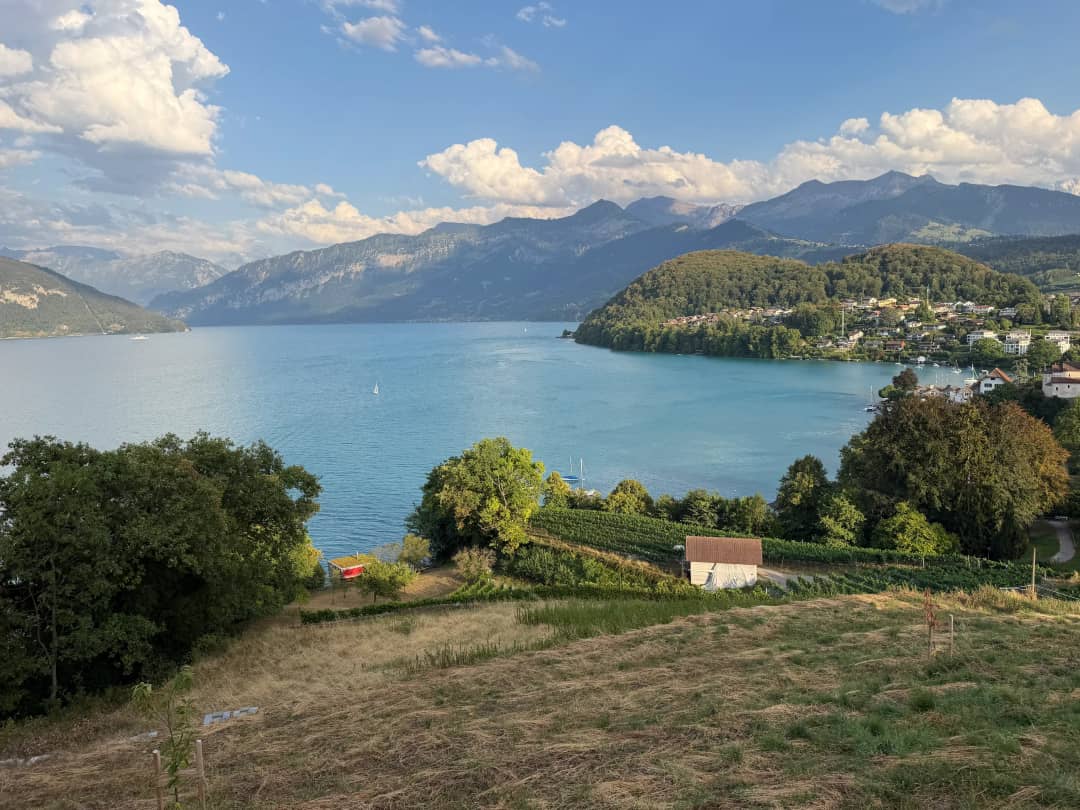
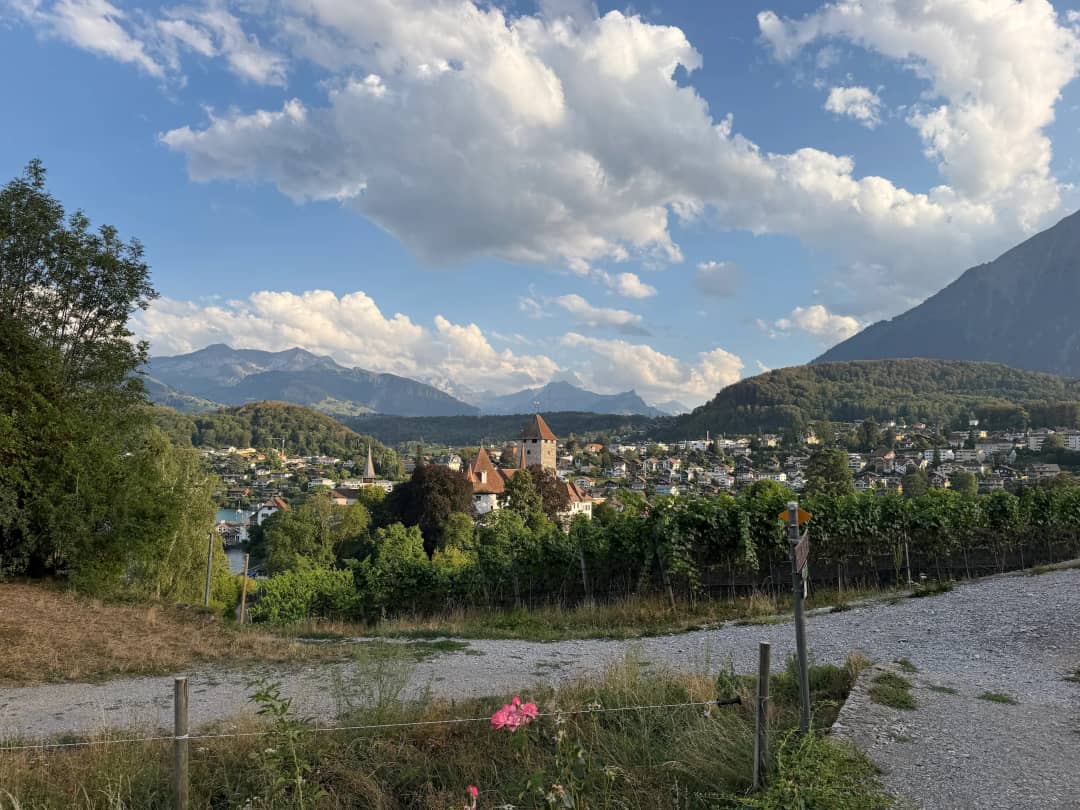
Oui, trois. Les rives du lac de Thoune abritent des coopératives viticoles en activité à Spiez, Oberhofen et Hilterfingen, toutes à environ 25 minutes d'Interlaken. Spiez est la plus grande, avec 13 hectares répartis sur trois sites, 14 cépages et près de 80 000 bouteilles par an.
C'est l'une des viticultures les plus hautes au nord des Alpes, et elle tient grâce à l'eau. Le lac renvoie la lumière sur les coteaux, et le Föhn qui descend des montagnes garde les rangs au sec.
Le saviez-vous ? Spiez cultive 14 cépages sur 13 hectares et produit près de 80 000 bouteilles par an, parmi les vignobles les plus hauts au nord des Alpes.
Les vins ne ressemblent pas à ce que la plupart des visiteurs attendent de la Suisse. À côté du Riesling-Sylvaner et du Pinot Noir, les vignerons produisent du Solaris, du Diolinoir, du Regent et des cépages résistants plus récents comme le Cabernet Jura.
Rien n'est exporté en quantité réelle. Les déguster ici reste la seule façon pratique de les goûter.
Où déguster sans quitter la ville?
Deux adresses, toutes deux accessibles à pied depuis le centre d'Interlaken, toutes deux ouvertes sans tour organisé ni billet de train.
Weinhandlung Ritschard, Aarmühlestrasse 17, se trouve à deux minutes de la gare d'Interlaken West et vend du vin ici depuis 1840. Entrez et dégustez, du lundi au jeudi de 8h à 12h et de 13h30 à 18h, le vendredi jusqu'à 17h, en groupes de six personnes maximum.
La dégustation est offerte si vous repartez avec une bouteille. Si vous goûtez sans rien acheter, comptez CHF 20 à 50 selon le nombre de bouteilles ouvertes. À partir de six personnes, réservez plutôt une dégustation guidée: CHF 10 pour quatre vins, jusqu'à CHF 25 pour dix, eau, pain et fiches de dégustation compris. Téléphone +41 33 822 45 45.
WYVA, le bar à vin et à apéro de la Höheweg 92, couvre la soirée. Bouteilles suisses au verre, environ 60 places plus une terrasse, ouvert lundi, jeudi et dimanche de 16h à 23h30, vendredi et samedi jusqu'à 0h30. Fermé le mardi et le mercredi, ce qui prend beaucoup de monde de court.
Conseil d'initié : Chez Weinhandlung Ritschard, la dégustation est offerte si vous repartez avec une bouteille. À partir de six personnes, réservez plutôt une dégustation guidée : CHF 10 pour quatre vins.
Une correction, puisque plusieurs annuaires se trompent: WYVA est un excellent bar à vin, pas un domaine. Les vignes sont de l'autre côté du lac.
Quels vignobles du lac peut-on visiter, et quand?
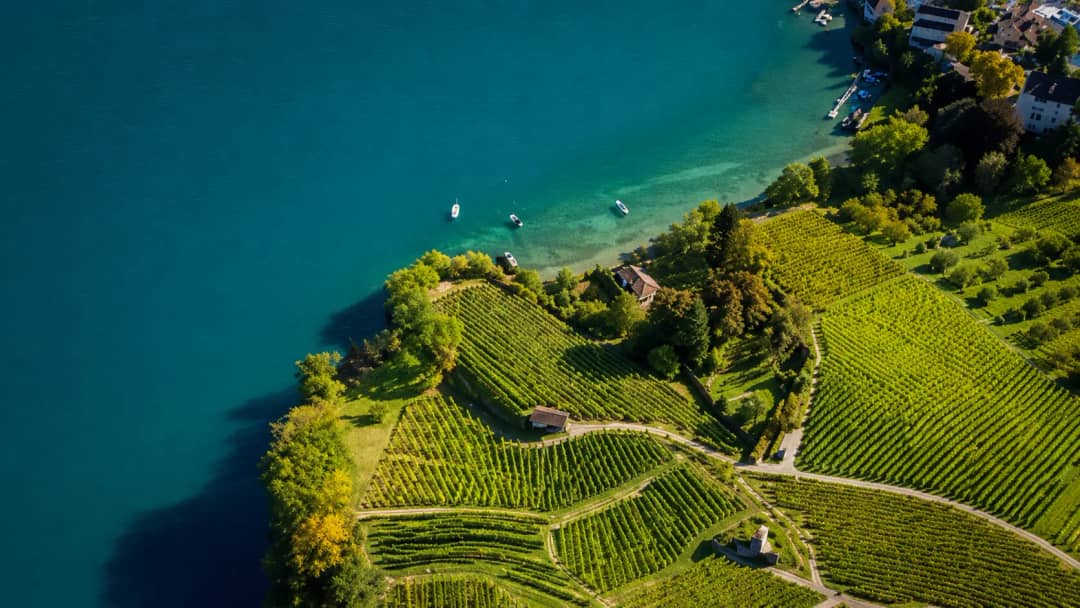
C'est là que la plupart des plans s'écroulent. Ce sont des coopératives tenues par des vignerons, pas des salles de dégustation avec du personnel qui attend. Chacune ouvre une fenêtre étroite, et en dehors, la porte est fermée.
Olivia a demandé à un vigneron : « Pourquoi votre cave n'ouvre-t-elle que sur des créneaux si courts ? »
« Nous sommes d'abord des vignerons. Les vignes ont besoin de nous, alors la porte ouvre à heures fixes et reste fermée le reste du temps. »
Olivia Lufman, votre rédactrice voyage chez Swiss Local Adventures
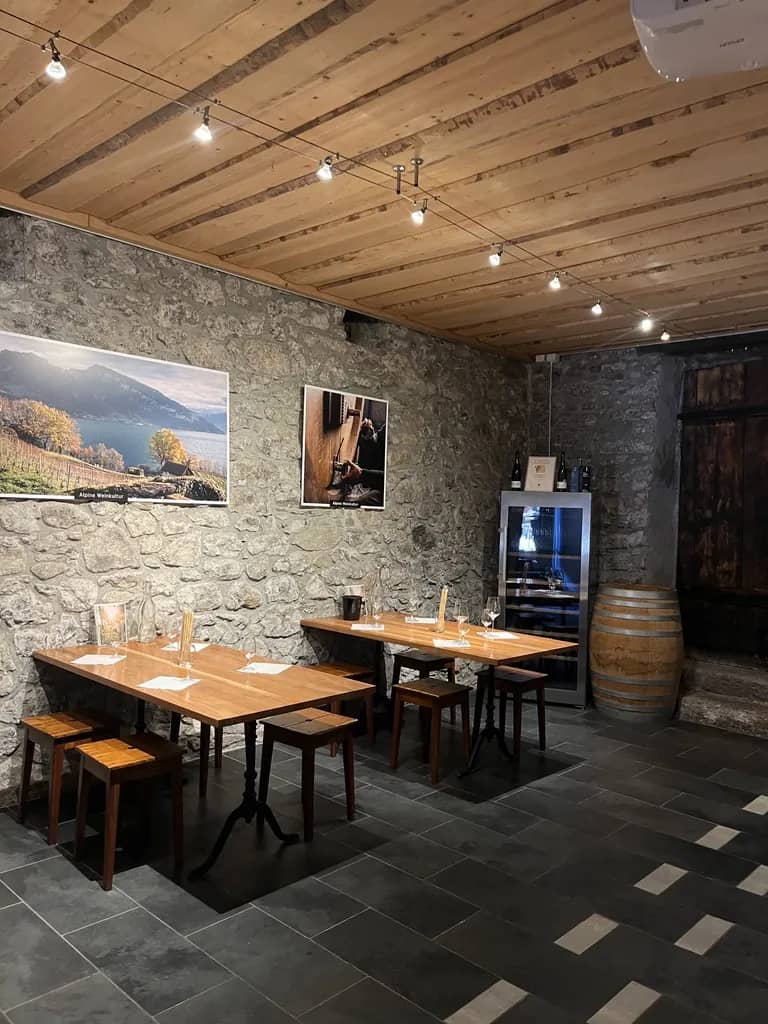
Spiezer Alpine Weinkultur, Schlossstrasse 8, sous le château de Spiez. Vente de vin du lundi au vendredi, 8h à 11h30, toute l'année. Dégustations le mercredi de 17h à 19h, de mai à décembre, plus le samedi de 9h à 11h30 en mai et juin. Réservez au +41 33 654 63 94.
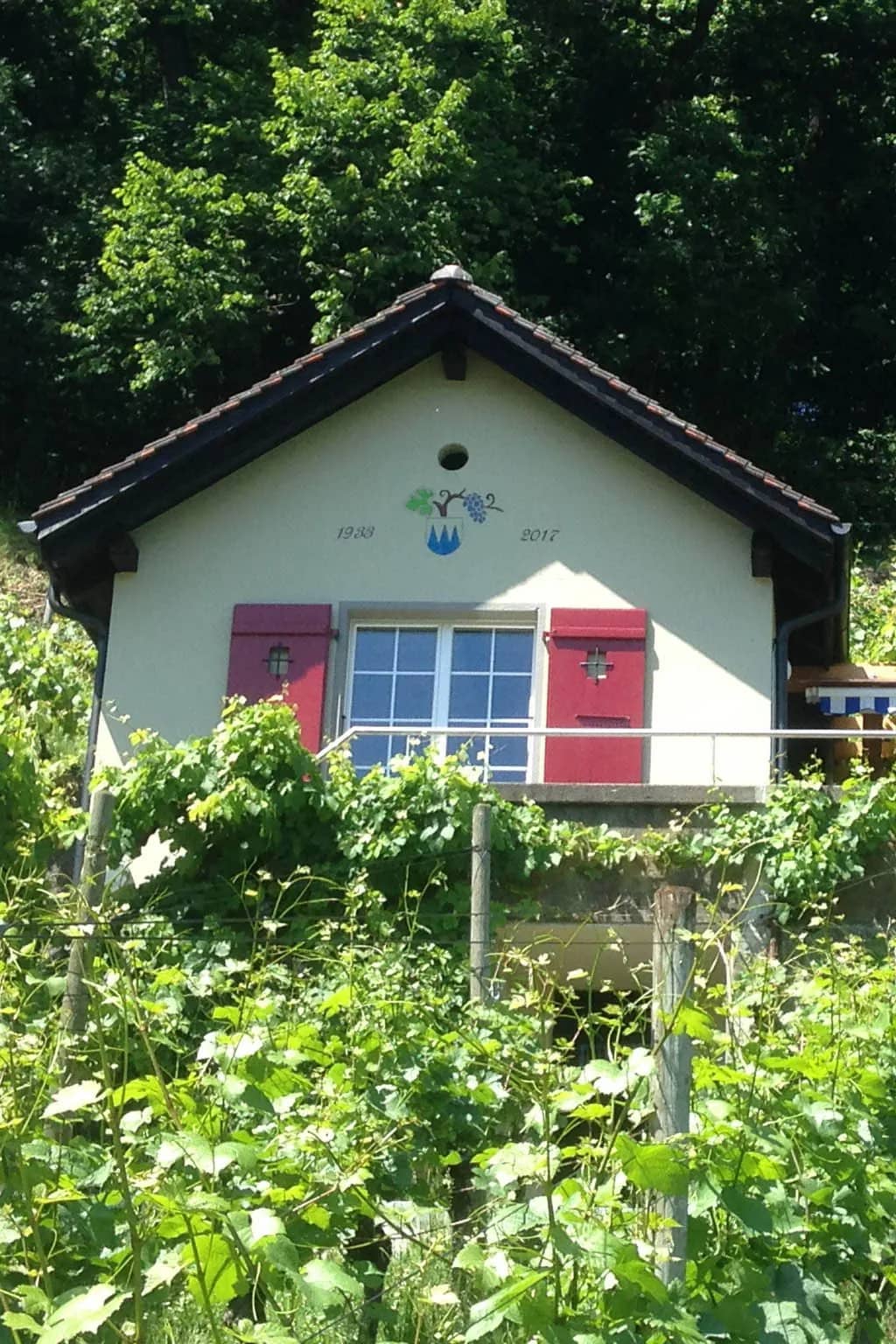
Rebbaugenossenschaft Oberhofen, dans la Heidenhaus historique, Alter Oberländerweg 1. Vente publique de vin chaque jeudi, de 17h à 18h30. La coopérative exploite cette parcelle en terrasses, appelée « I de Müüre », depuis 1933, et la Heidenhaus en contrebas servait le monastère d'Interlaken au 15e siècle. Les bouteilles vont d'environ CHF 16 à CHF 36. Les groupes doivent s'annoncer à l'avance: +41 33 243 15 65.
Rebbaugenossenschaft Hilterfingen, sur le coteau au-dessus de Hünibach. Regent, Divico et Riesling-Sylvaner, avec des dégustations guidées sur rendez-vous uniquement. Il n'y a pas d'accès routier direct: on se gare au Forsthaus Burech et on monte à pied. Contactez-les avant de partir.
Trois caves, trois jours différents. Vérifiez le calendrier avant de construire un après-midi autour de l'une d'elles.
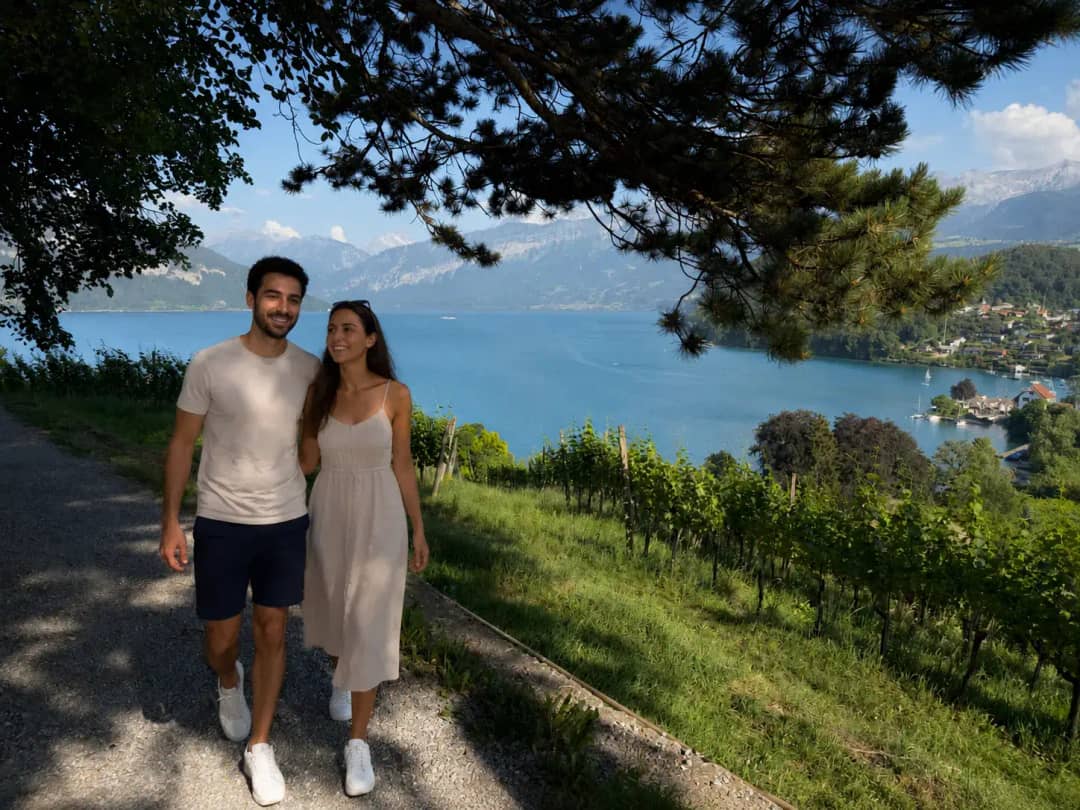
Peut-on traverser les vignes gratuitement?
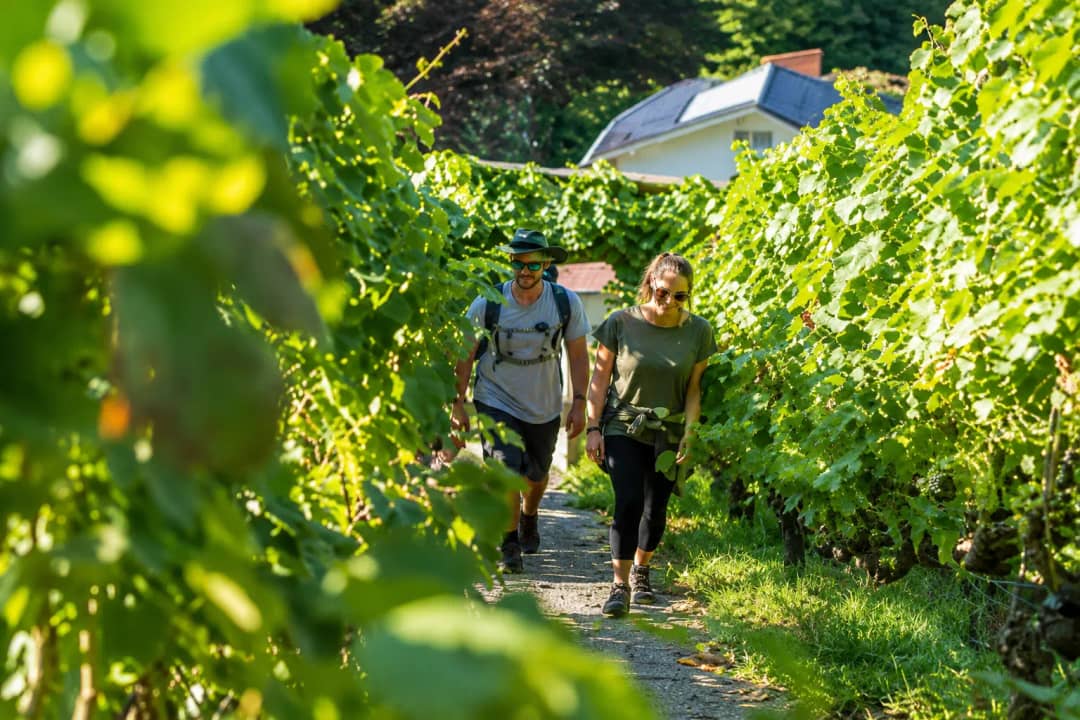
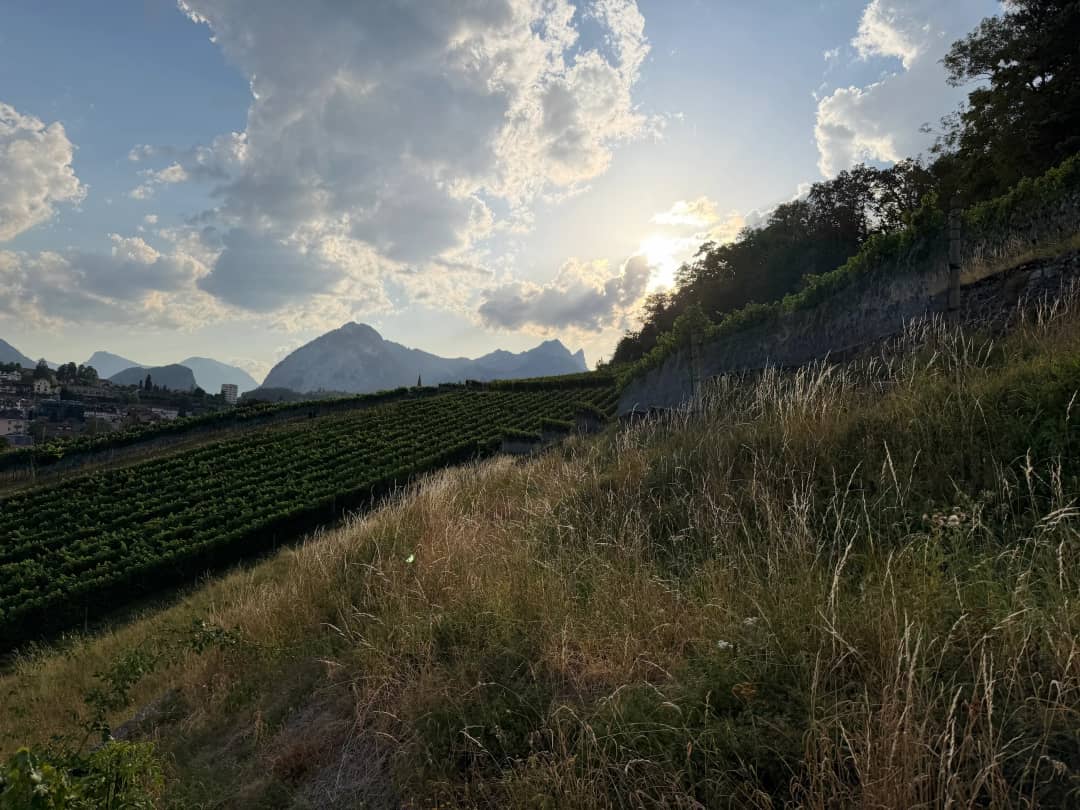
Oui. Le Rebbau-Erlebnisweg traverse les rangs en exploitation au-dessus de Spiez, avec douze panneaux d'information sur l'année du vigneron, dont plusieurs avec de courtes vidéos. Il ne coûte rien, ne demande aucune réservation, et les vignes commencent à environ 15 minutes à pied de la gare de Spiez.
Olivia dit : « Faites le sentier avant une dégustation, pas après. Douze panneaux sur l'année du vigneron, et le premier verre aura plus de sens. »
Olivia Lufman, votre rédactrice voyage chez Swiss Local Adventures
Vous avez la vue pour laquelle les cars ne s'arrêtent jamais: des rangs en terrasses qui tombent vers l'eau turquoise, le château sur sa pointe, le Niesen en face. Vous n'avez pas de verre, parce que le sentier est pédagogique et que la cave garde ses propres horaires.
Combinez le sentier et la dégustation du mercredi et vous avez le tout pour le prix d'un billet de train. Nous avons présenté le vignoble et la coopérative qui le fait vivre dans notre article sur Alpine Weinkultur à Spiez.
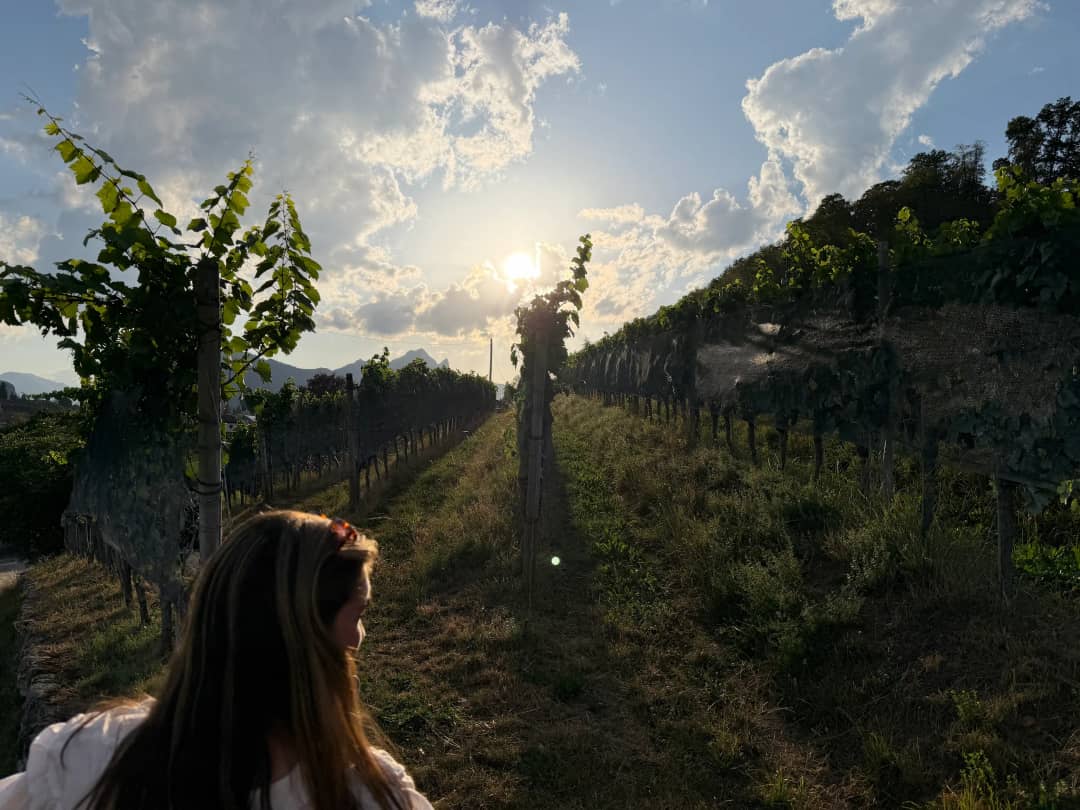
Et si vous préférez ne rien organiser?
C'est exactement à quoi sert notre Scenic Wine Tour. Nous venons vous chercher à Interlaken à 15h30, nous roulons jusqu'au vignoble de Spiez, nous marchons dans les rangs, et nous servons quatre vins locaux avec du fromage régional, du pain et des spécialités bernoises pendant que la lumière dore le lac. Vous rentrez environ trois heures plus tard.
CHF 139 par personne en réservation directe, CHF 129 chacun dès six personnes, maximum huit participants, âge minimum 18 ans.
Vous achetez trois choses que vous ne pouvez pas assembler vous-même: le transport dans les deux sens, l'accès au vignoble un après-midi où la cave n'ouvre pas aux visiteurs de passage, et quelqu'un capable d'expliquer pourquoi un Riesling-Sylvaner cultivé à cette altitude n'a rien à voir avec son cousin allemand. Le déroulé complet de l'après-midi est dans notre itinéraire du wine tour minute par minute.
Olivia dit : « Si vous avez une voiture, un mercredi libre et de la patience avec les horaires, faites-le vous-même. Nous préférons que vous buviez du bon vin plutôt que de réserver le mauvais produit. »
Olivia Lufman, votre rédactrice voyage chez Swiss Local Adventures
Si vous avez une voiture, un mercredi libre et de la patience avec les horaires, faites-le vous-même. Nous préférons que vous buviez du bon vin plutôt que de réserver le mauvais produit.
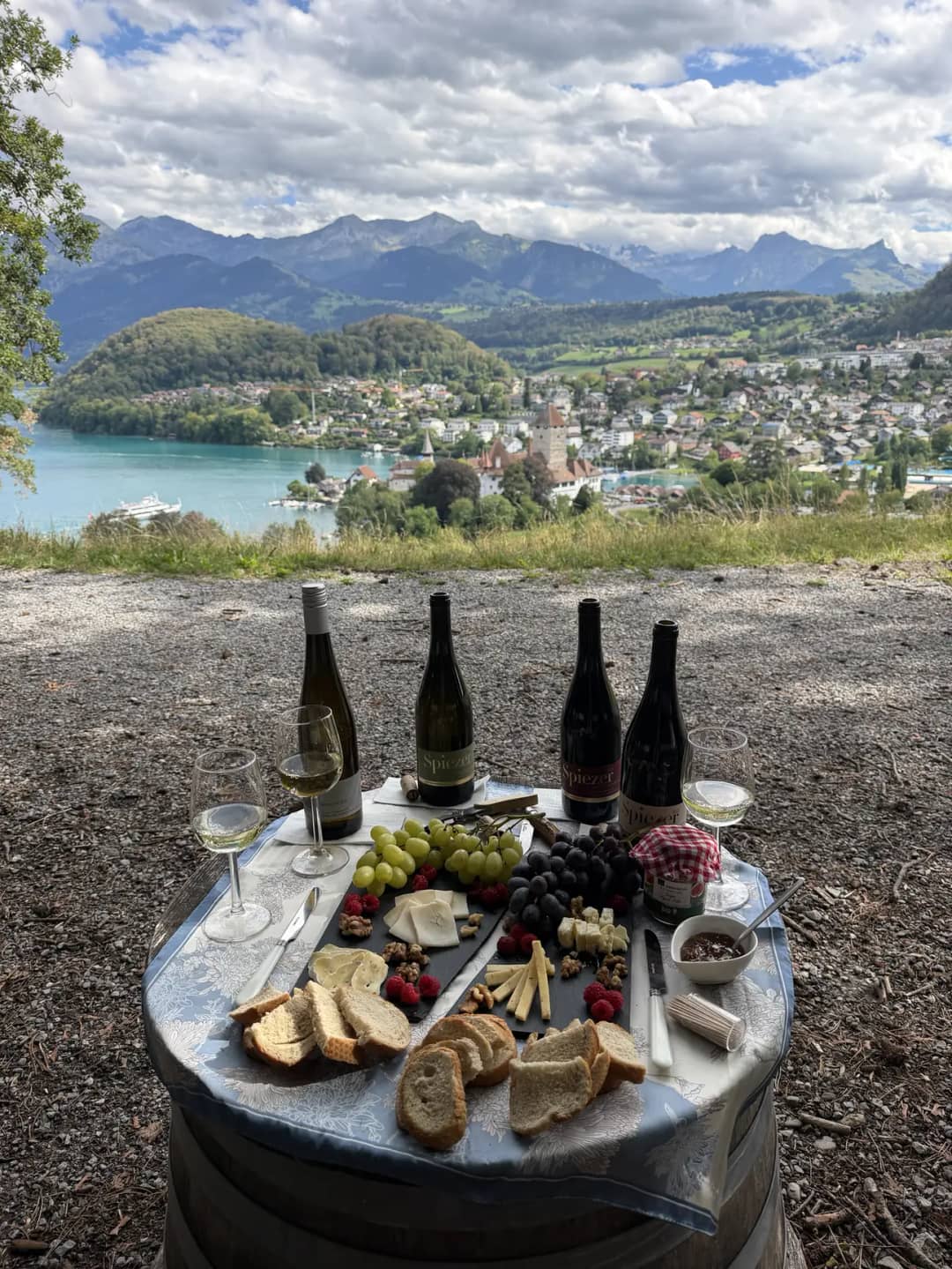
Quelle option correspond à votre après-midi?
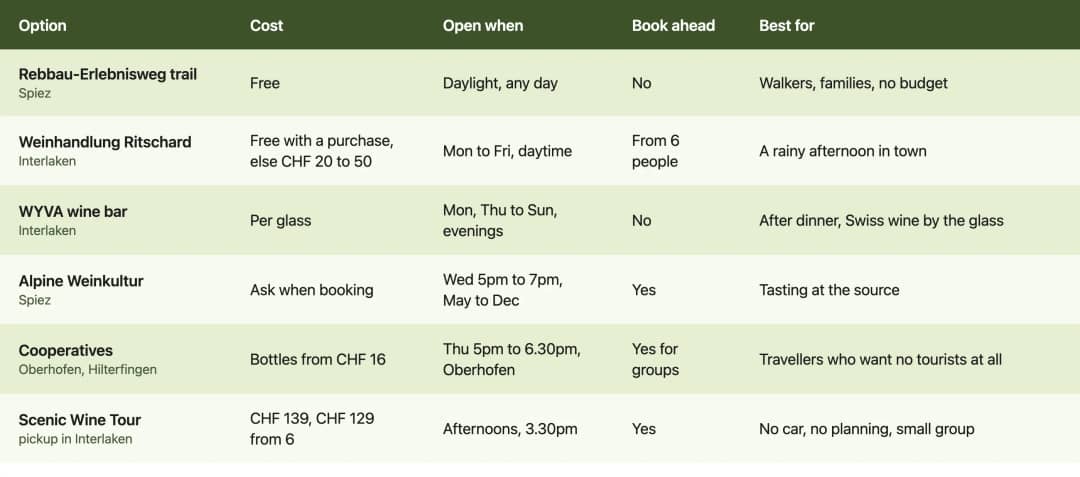
Le Spiezer Wine Stroll mérite-t-il qu'on s'organise autour?
Si votre séjour tombe à la mi-septembre, oui. C'est la meilleure journée vin de l'année sur ce lac.
Le Spiezer Wine Stroll a lieu le samedi 12 septembre 2026 dès 9h30: un circuit panoramique de 3,5 kilomètres à travers les vignes, neuf haltes, chacune associant un vin régional à quelque chose à manger, musique le soir. CHF 65 dès 16 ans.
Les organisateurs sont le Verein Spiezer Läset Sunntig, l'association derrière le cortège des vendanges Läset-Sunntig du dimanche, suivi du marché de Spiez le lundi. Le week-end existe depuis plus de 50 ans. C'est une fête de village où les touristes sont bienvenus, pas un événement touristique.
Neuf haltes et une seule date, ça ne s'étire pas. Réservez tôt.
Vos questions sur la dégustation de vin à Interlaken
Faut-il une voiture pour aller déguster près d'Interlaken?
Non. Spiez est à un train direct d'Interlaken West, environ 20 minutes, et les vignes commencent à quelque 15 minutes à pied de la gare de Spiez. Oberhofen et Hilterfingen sont sur la rive de Thoune et s'atteignent en bateau ou en bus, ce qui transforme la sortie en demi-journée. À Interlaken même, Ritschard et WYVA sont tous deux au centre. La seule option qui demande vraiment une voiture est Hilterfingen, où une route forestière fermée oblige à se garer au Forsthaus Burech et à finir à pied. Si vous préférez éviter les horaires, un tour guidé avec prise en charge règle tout.
Pourquoi mes recherches affichent-elles des domaines des Finger Lakes?
Parce qu'il existe deux Interlaken. Interlaken, dans l'État de New York, se trouve dans la région viticole des Finger Lakes, et plusieurs grands annuaires mélangent les deux. D'où des avis sur des dégustations en dollars au milieu des résultats suisses. Si vous êtes ici pour l'Oberland bernois, ajoutez « Switzerland » ou « Lake Thun » à votre recherche. À savoir aussi: les caves suisses près d'Interlaken ont des horaires bien plus courts qu'une salle de dégustation américaine, les habitudes ne se transposent pas.
Le vin suisse est-il cher comparé au français ou à l'italien?
En général, oui. Les coûts de main-d'œuvre suisses et les coteaux raides travaillés à la main poussent la plupart des bouteilles au-dessus d'un vin français équivalent, et les rouges locaux tournent entre CHF 21 et CHF 36 à la porte de la coopérative. C'est la rareté qui change le calcul: avec environ 2% de la production exportée, un Riesling-Sylvaner de Spiez ne se boit réellement qu'en Suisse. La dégustation est l'entrée bon marché. Quatre vins en groupe chez Ritschard coûtent CHF 10, moins qu'un billet de téléphérique.
Et si mon partenaire ne boit pas de vin?
Choisissez honnêtement. Le sentier viticole est gratuit et convient à tout le monde, et un bar à vin a toujours autre chose derrière le comptoir. Une dégustation guidée, c'est différent: la dégustation est l'expérience, et il n'y a pas de programme parallèle. Nous avons traité la question à fond dans un non-buveur peut-il apprécier le wine tour de Spiez.
Quel vin faut-il demander?
Le Riesling-Sylvaner, le nom suisse du Müller-Thurgau, qui n'est ni un Riesling ni un assemblage. C'est le blanc qui définit ces coteaux: léger, sec, légèrement floral, cultivé ici parce qu'il mûrit de façon fiable en altitude. Ensuite le Pinot Noir local, étiqueté Blauburgunder, et si vous voulez voir où va la viticulture suisse, demandez un vin Piwi comme le Solaris ou le Cabernet Jura. Nous avons démonté ce cépage dans ce qu'est vraiment le Riesling-Sylvaner.
Vaut-il mieux aller à Lavaux?
Seulement si la carte postale UNESCO compte plus que l'après-midi. Lavaux est à environ deux heures de trajet dans chaque sens depuis Interlaken, ce qui transforme une dégustation en journée de transport, alors que le lac de Thoune vous donne un vignoble alpin en activité en vingt minutes. Pour comparer sérieusement, nous avons classé tout le pays dans les meilleures régions viticoles de Suisse.
La version courte
Une heure libre et aucun plan, marchez le Rebbau-Erlebnisweg. Mercredi soir, réservez la cave de Spiez. Jeudi, allez à la Heidenhaus d'Oberhofen. Il pleut, allez chez Ritschard. Tard, allez au WYVA. Le 12 septembre, faites le Wine Stroll.
Et si vous voulez le vignoble, quatre vins, un plateau de fromage et la conduite prise en charge, notre Scenic Wine Tour part d'Interlaken à 15h30 avec huit participants maximum. Si vous voulez d'abord comprendre le tour, commencez par notre guide du wine tour de Spiez.
Quoi que vous choisissiez, vous boirez quelque chose que vous ne pouvez pas acheter chez vous. C'est plus rare qu'il n'y paraît.
*Écrit par Olivia Lufman, votre rédactrice voyage chez Swiss Local Adventures
Source:
visites répétées des vignobles du lac de Thoune, 2026.
Mots-clés
#wine-tour-interlaken#swiss-wine#spiez-vineyard#lake-thun#wine-tasting
Sources & Références
Partager cet article
Articles Similaires
Continuez votre lecture avec ces articles connexes
Wine Tour
19/08/2026
5 min
Le tour des vins de Spiez vaut-il ses CHF 139 ?
Comparez : une dégustation seule coûte CHF 30 à 70 en Suisse, et peu de domaines en vendent. Voici ce que CHF 139 achètent à la place.
wine-tour-interlakenwine-tasting-cost-switzerlandswiss-wine
Par Olivia LufmanLire Plus
Wine Tour
10/07/2026
6 min
Le Riesling-Sylvaner, le vin rare de la Suisse
Comprenez le Riesling-Sylvaner : ce n'est pas un assemblage de deux cépages, mais le blanc suisse le plus mal compris. Et où le goûter à Spiez.
riesling-sylvanermuller-thurgauswiss-wine
Par Olivia LufmanLire Plus
Wine Tour
08/07/2026
4 min
Tour des vins de Spiez pour ceux qui ne boivent pas
Voyez ce que vaut le tour des vins de Spiez si vous ne buvez pas : prix identique, eau à table et aucun examen de dégustation.
Par Olivia LufmanLire Plus