Wine Tour
Tour du vin à Spiez: le vin suisse au lac de Thoune
O
Olivia Lufman
Auteur
13 mai 2026
8 min
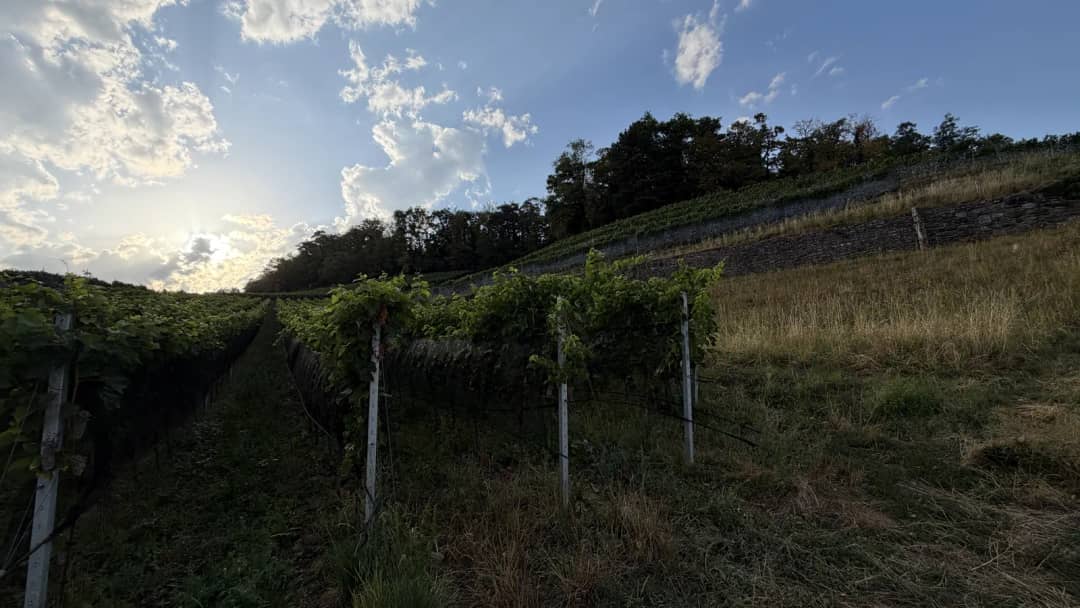
Tour du vin à Spiez: dégustez le vin suisse au-dessus du lac de Thoune
98% du vin suisse ne quitte jamais le pays. Il n'apparaît pas dans les rayons de Londres ou de New York. Il reste ici, dans les cantons où il a poussé, bu par les gens qui vivent à côté des vignes.
Ce que cela signifie pour vous est concret. Un verre de Riesling-Sylvaner du coteau au-dessus du lac de Thoune est un vin que vous ne trouverez pas chez vous. Il n'existe pas hors de Suisse. Ce n'est pas un argument marketing. C'est une réalité d'approvisionnement.
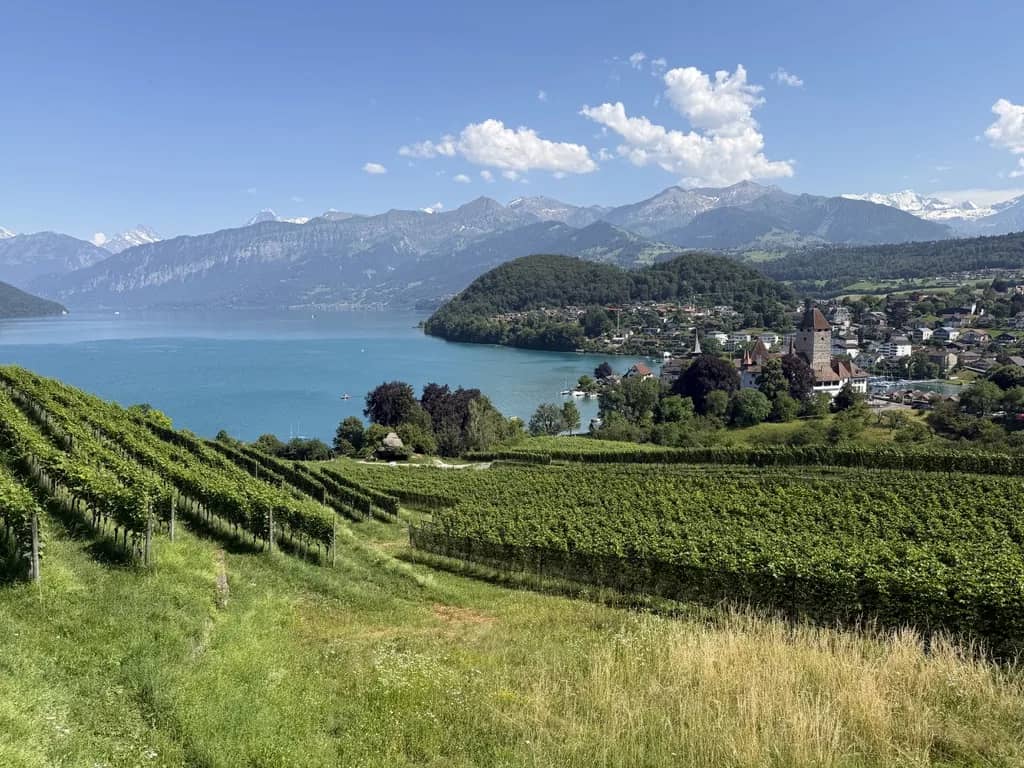
Spiez est à 20 minutes en train direct depuis Interlaken. Les vignes descendent vers le lac, avec un château médiéval d'un côté et les Alpes bernoises de l'autre. La plupart des visiteurs viennent pour la vue. Ils restent pour le vin. Ce guide explique à quoi s'attendre, ce que vous buvez, quand venir, et pourquoi ce tour ne ressemble à rien d'autre au départ d'Interlaken.
Qu'est-ce qui rend un tour du vin à Spiez différent?
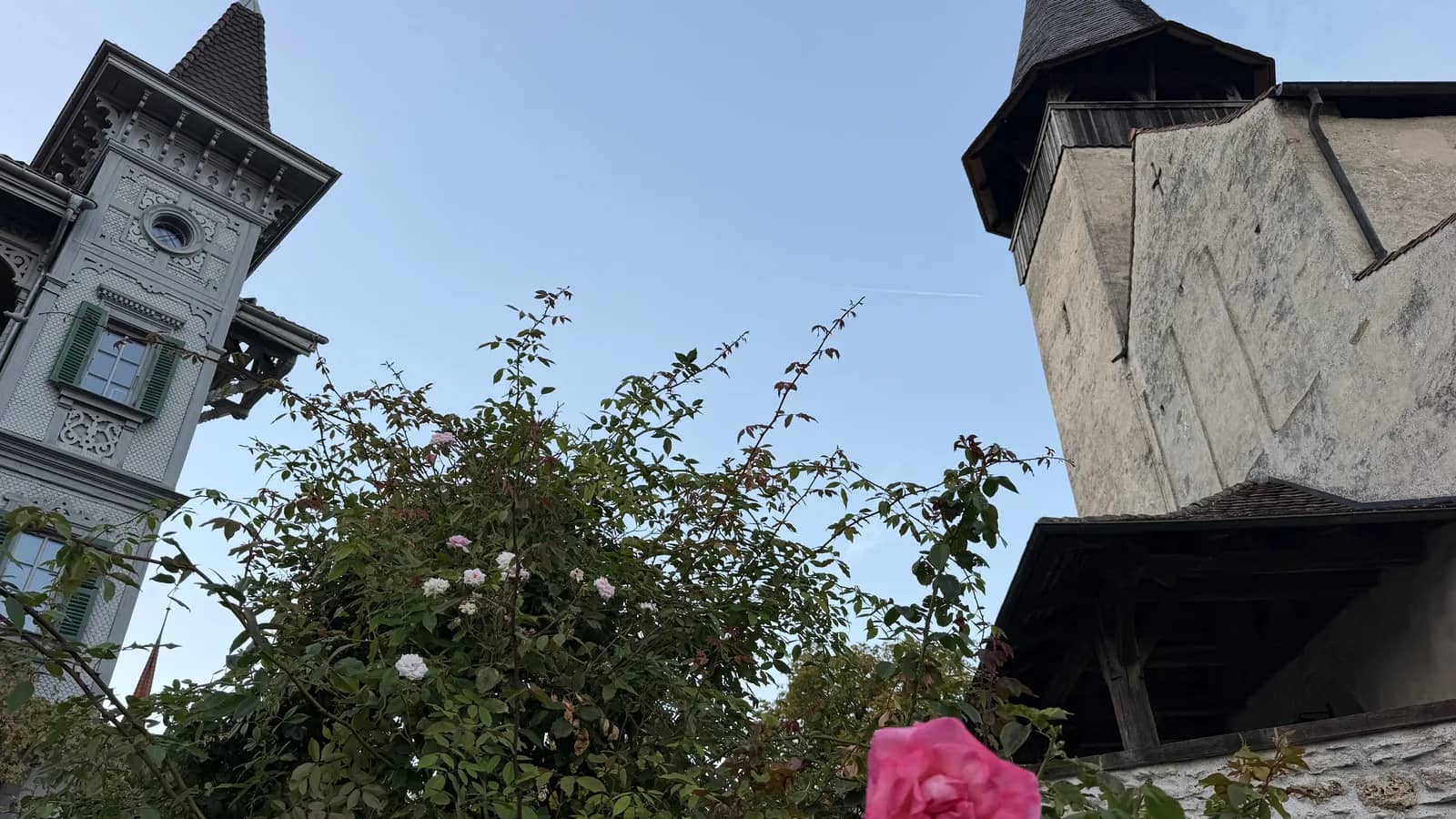
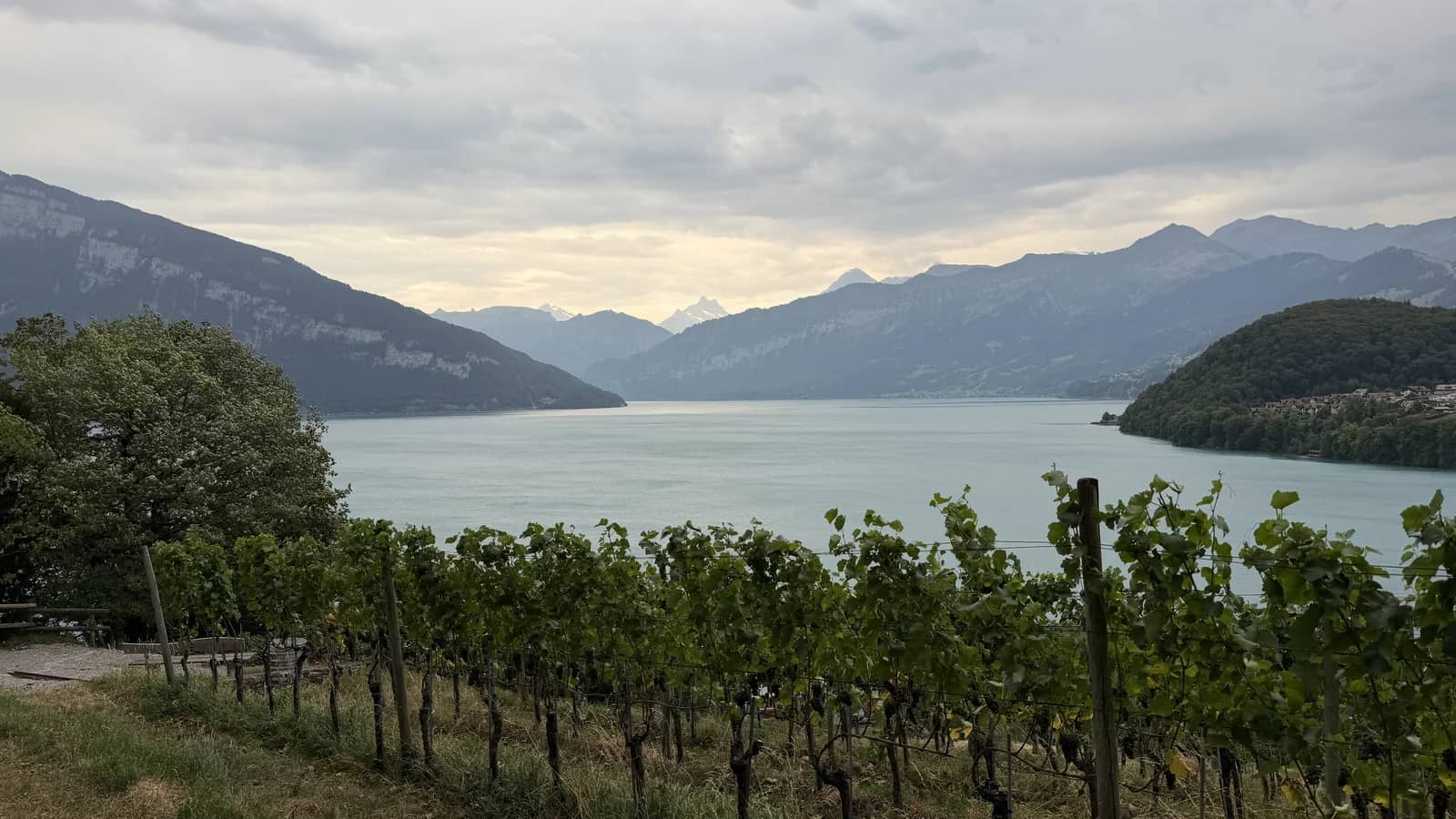
Un tour du vin à Spiez est différent parce qu'il est petit, local, et pas construit pour les foules. Le groupe est limité à 8 personnes. Les vins viennent d'un seul domaine qui ne vend pas au public. La vue depuis le vignoble réunit un lac turquoise, un château médiéval et des Alpes enneigées dans un seul cadre.
La plupart des régions viticoles que visitent les touristes travaillent à grande échelle. Il y a des cars, des salles de dégustation avec des menus plastifiés, une impression de chaîne de production. Spiez n'a rien de tout ça. Le domaine du Rebbau Spiez produit du vin en petites quantités pour un marché local. L'accès à ce domaine, et à une dégustation sur le coteau au-dessus du lac de Thoune, existe grâce à un partenariat direct avec Swiss Local Adventures. Vous ne pouvez pas organiser cette visite de votre côté.
Le résultat ressemble davantage à une visite chez un ami qui fait du vin qu'à un tour commercial. La nuance compte si vous avez déjà fait des dégustations ailleurs et les avez trouvées oubliables.
Les vignes de Spiez: une histoire qui commence en 994
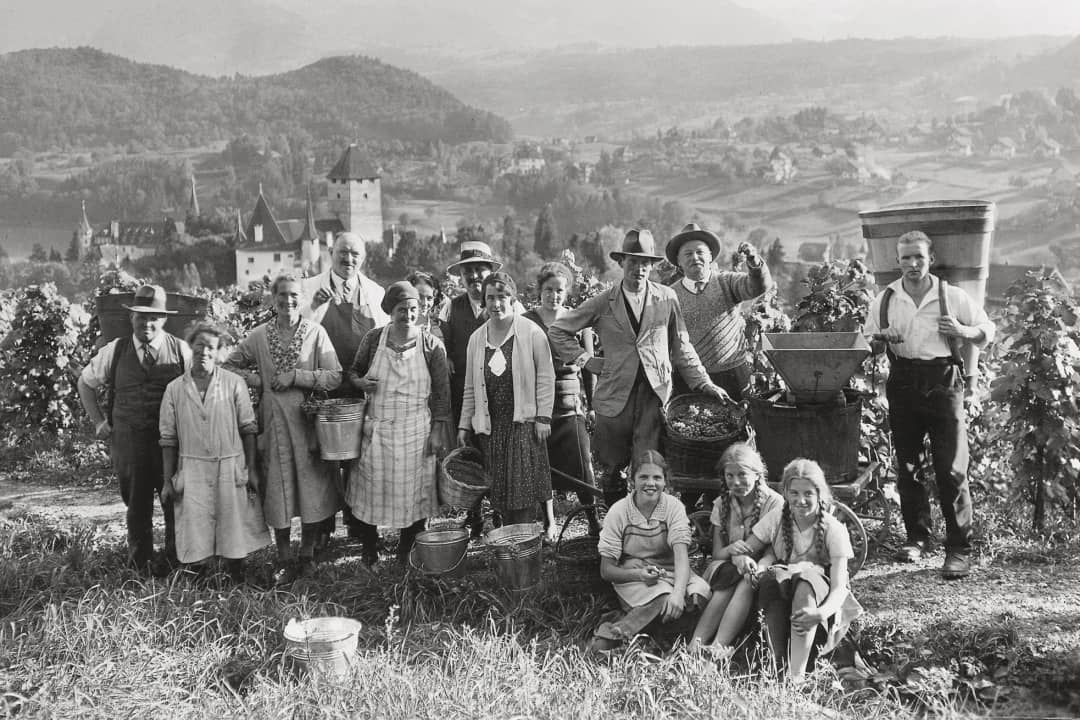
La viticulture à Spiez est documentée depuis 994 apr. J.-C. Cela précède la plupart des régions viticoles célèbres de France. Les premières traces écrites de vignes sur ces coteaux apparaissent dans des documents médiévaux liés aux moines bénédictins, qui avaient vu le potentiel des pentes exposées au sud au-dessus du lac de Thoune.
L'aristocratie suisse a affiné les techniques au fil des siècles suivants. Les vins produits ici n'étaient pas destinés à la consommation courante. Ils étaient réservés aux maisons nobles et aux occasions diplomatiques, ce qui maintenait un niveau de qualité tiré par le prestige plutôt que par le volume.
Comment une vigne de monastère fondée en 994 est devenue la coopérative qui cultive encore ces pentes aujourd'hui, c'est ce que raconte notre portrait d'Alpine Weinkultur Spiez, le partenaire derrière chaque dégustation du tour.
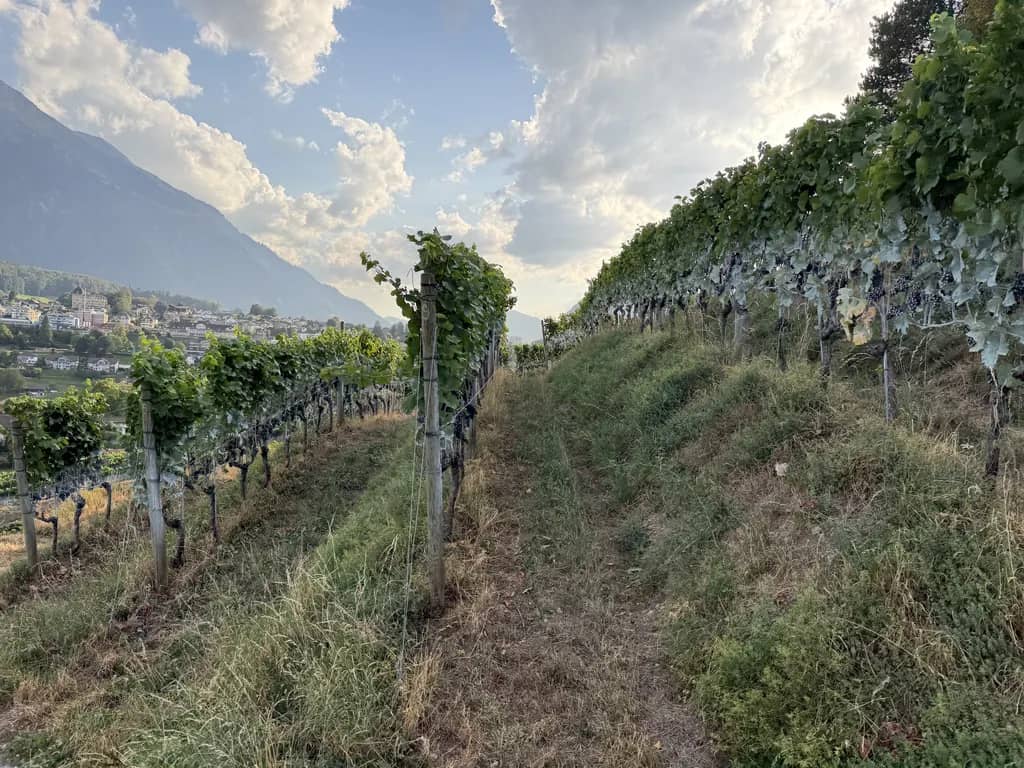
Le domaine actuel du Rebbau Spiez poursuit cette tradition. Les vignes sont classées en viticulture héroïque: des pentes assez raides pour imposer un travail entièrement manuel. Aucune machine ne peut circuler sur ces terrasses. La taille, le suivi et les vendanges se font à la main, comme depuis plus de mille ans.
Olivia a demandé à un vigneron : « Quelle part du travail une machine peut-elle faire sur ces terrasses ? »
« Aucune. Les pentes sont trop raides. On taille, on surveille les vignes et on vendange chaque rang à la main. »
Olivia Lufman, votre rédactrice voyage chez Swiss Local Adventures
Spiez compte aussi parmi les vignobles les plus hauts au nord des Alpes. L'altitude ralentit la maturation et laisse plus de temps aux arômes de se former. Le lac renvoie la lumière sur les ceps, ce qui prolonge la saison de croissance jusqu'en automne. Il en sort des vins d'une précision et d'une fraîcheur que la viticulture de plaine ne reproduit pas.
Que goûte-t-on sur le tour du vin de Spiez?
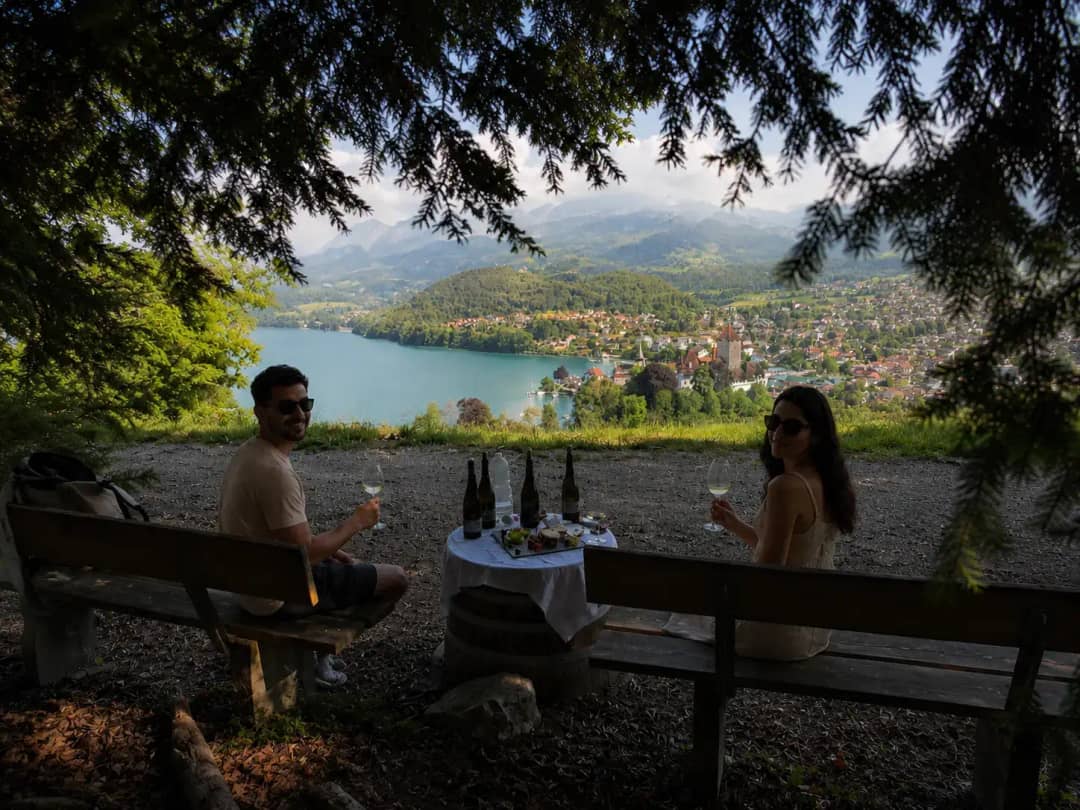
La dégustation comprend quatre vins du Rebbau Spiez, accompagnés de fromages suisses AOP et de pain artisanal. Les deux cépages principaux du domaine sont le Riesling-Sylvaner et le Pinot Noir.
Le Riesling-Sylvaner (Müller-Thurgau) est le cépage blanc principal de Spiez. Il donne un vin frais et aromatique, avec des notes florales, un caractère d'agrume et une acidité alpine nette. En bouche: pomme verte, fleurs blanches, zeste d'agrume et une finale légèrement herbacée. Il s'accorde naturellement avec les pâtes dures douces du plateau, en particulier l'Emmentaler AOP, où l'acidité du vin tranche le gras et relève la finale.
Le Pinot Noir (Blauburgunder) est le rouge du domaine. Plus léger qu'un Bourgogne ou qu'un Pinot du Nouveau Monde, avec des arômes de fruits rouges, de cerise et de sous-bois. Les tanins sont soyeux, la finale est fraîche. Il va bien avec un fromage affiné et les viandes séchées typiques de l'Oberland bernois.
Olivia dit : « Quelqu'un a resservi un deuxième verre avant que j'aie fini de demander quel était le cépage. »
Olivia Lufman, votre rédactrice voyage chez Swiss Local Adventures
Le choix de fromages et de pain est ajusté aux vins servis ce jour-là. Le vin comme le fromage sont produits en quantités trop faibles pour l'export. Vous goûtez une combinaison qui n'existe pas en dehors de cette géographie précise.
Si quelqu'un dans votre groupe ne boit pas, le fromage, le pain et la marche dans les vignes suffisent à remplir l'après-midi. Nous détaillons ce qui change et ce qui reste identique dans notre article sur le tour de Spiez sans alcool.
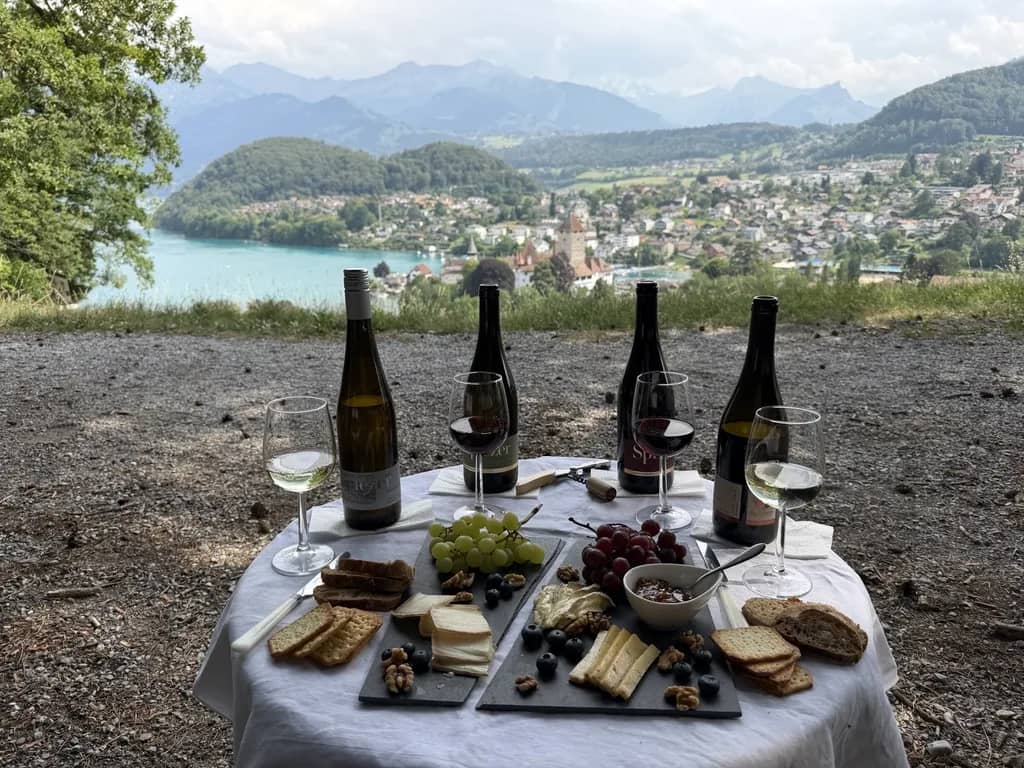
À quoi ressemble un tour du vin à Spiez
J'ai visité des régions viticoles qui ressemblent à des aéroports. Groupes en car, menus plastifiés, verres au logo du domaine. Spiez, c'est l'inverse. Nous étions six autour de la table. Le lac était juste là. Quelqu'un a resservi un deuxième verre avant que j'aie fini de demander quel était le cépage. Voilà la version spiezoise de l'accueil autour du vin.
Le tour part d'Interlaken et dure environ 3,5 heures au total:
Prise en charge à Interlaken
Trajet jusqu'à Spiez (20 minutes)
Marche guidée dans les terrasses de vigne
Dégustation assise de quatre vins avec fromages et pain
Retour à Interlaken
Le domaine et le partenariat
Au Rebbau Spiez, Sebastian est le contact qui a rendu ce partenariat possible. Il gère la relation entre SLA et le domaine, donc l'accès dont vous bénéficiez pendant le tour ne se réserve nulle part ailleurs. La dégustation n'est pas au calendrier public. Elle existe grâce à cet accord précis.
Comment s'habiller
Des chaussures confortables qui accrochent sont l'essentiel. Les chemins du vignoble montent et le terrain est irrégulier par endroits. Habillez-vous selon la météo: des couches au printemps et en automne, plus léger en juillet et en août. Lunettes de soleil et crème solaire comptent en été. Il n'y a pas de code vestimentaire pour la dégustation.
Olivia dit : « Laissez les chaussures de soirée à l'hôtel. Les chemins du vignoble sont en pente et irréguliers, et entre les rangs l'adhérence compte plus que le style. »
Olivia Lufman, votre rédactrice voyage chez Swiss Local Adventures
Spiez ou Lavaux: quel tour du vin depuis Interlaken?
Si vous hésitez entre les deux principales options d'œnotourisme au départ d'Interlaken, voici la comparaison honnête.
Lavaux est classé à l'UNESCO, emblématique, et à environ 90 minutes d'Interlaken en train. Les terrasses au-dessus du Léman forment l'un des paysages viticoles les plus saisissants d'Europe. Le voyage en vaut la peine si vous avez une journée entière. Le cépage principal est le Chasselas, qui donne un blanc minéral et délicat, sans équivalent ailleurs.
Spiez est à 20 minutes d'Interlaken en train direct. Pas de cars. Huit personnes maximum. La vue depuis la terrasse du vignoble réunit le lac de Thoune, le château de Spiez et les Alpes bernoises dans le même cadre. Cela tient dans une demi-journée sans courir.
Le saviez-vous ? Spiez compte parmi les vignobles les plus hauts au nord des Alpes.
Si vous avez une demi-journée: Spiez. Accessible, intime, et visuellement exceptionnel.
Si vous avez une journée entière: Lavaux récompense le déplacement.
Pour une comparaison complète des cinq régions viticoles suisses avec les temps de trajet depuis Interlaken, le guide des meilleures régions viticoles de Suisse détaille chacune d'elles.
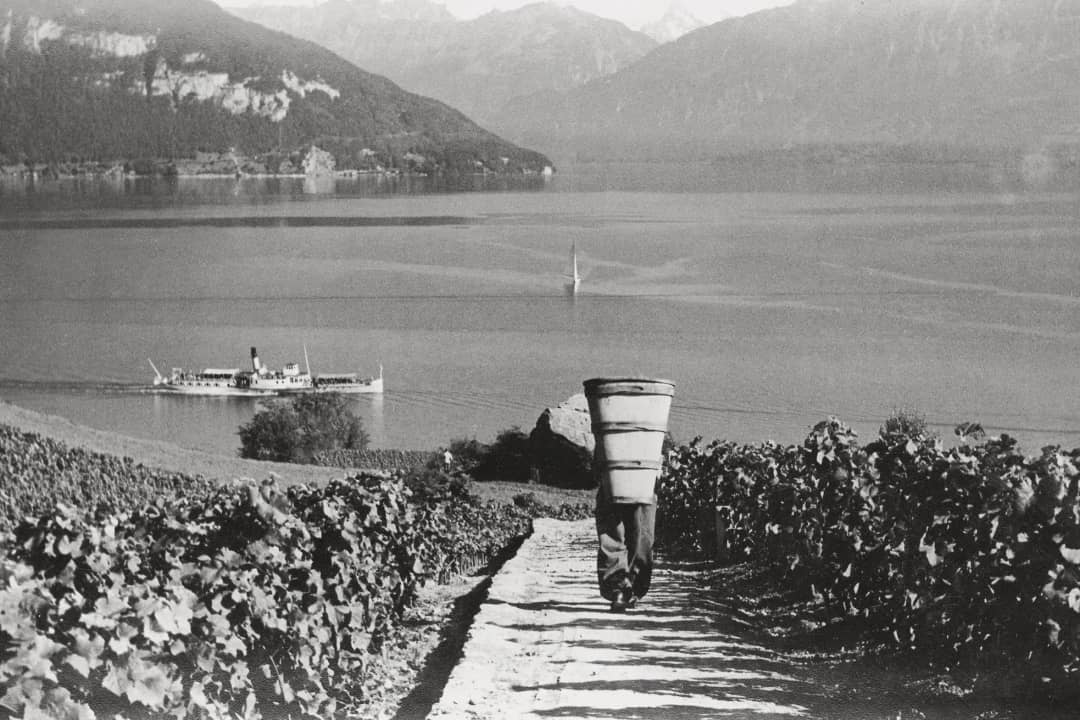
Quel est le meilleur moment pour visiter les vignes de Spiez?
Les vignes sont ouvertes aux visites de mai à octobre. Chaque période a son caractère.
Conseil d'initié : Le château que vous voyez depuis les vignes suit la même saison : le château de Spiez ouvre du 1er mai au 31 octobre, du mardi au dimanche dès 10 h, le lundi seulement dès 14 h, jusqu'à 17 h (18 h en juillet et août). Prévoyez-le le matin avant le tour, pas un lundi.
Mai et juin apportent des vignes d'un vert neuf, des fleurs sauvages entre les rangs et des conditions plus calmes. La lumière de fin d'après-midi est belle pour la photo et les températures sont agréables pour marcher. Une à deux semaines de réservation à l'avance suffisent en général.
Juillet et août sont la haute saison. Les vignes sont en pleine pousse, le lac est à sa couleur la plus intense, et les soirées sont longues. Réservez deux à trois mois à l'avance pour ces mois-là. La limite de 8 personnes fait que le tour se remplit vite.
Septembre et octobre sont les mois de vendanges. Les vignes passent du vert à l'or et au rouge. Les raisins sont prêts et l'air porte l'odeur du moût en fermentation.
Le Spiezer Läset-Sunntig (dimanche des vendanges de Spiez) est une fête annuelle qui a lieu fin septembre ou début octobre. Les producteurs ouvrent leurs caves et les vendanges battent leur plein. Si vos dates sont flexibles, cette fenêtre mérite la priorité.
💡 Le conseil de Pierre:
« Pour l'expérience la plus marquante, réservez le tour du vendredi soir pendant les vendanges, fin septembre. La lumière dorée sur le lac au coucher du soleil, combinée à l'énergie des vendanges, c'est le genre de chose qu'on n'oublie pas. »
Vos questions sur le tour du vin de Spiez
Combien de temps dure le tour du vin?
L'expérience complète dure environ 3,5 heures depuis Interlaken, prise en charge, trajet jusqu'à Spiez, marche dans les vignes, dégustation assise et retour compris. La dégustation elle-même dure environ 90 minutes. Organisez le reste de votre journée autour d'un retour à Interlaken en fin d'après-midi.
Pour savoir comment ces 3,5 heures se répartissent, de la prise en charge au dernier verre, nous avons décrit le déroulé minute par minute du tour, avec les moments de marche, de pause et de dégustation.
Combien coûte le tour du vin?
Le tour est à CHF 139 par personne. Cela comprend le transport guidé depuis Interlaken, la marche dans les vignes, la dégustation de quatre vins, et l'accord avec les fromages suisses AOP et le pain. Le groupe est limité à 8 personnes. C'est une expérience au feeling privé, pas un tour en car partagé.
Quels vins dégustez-vous?
La dégustation se concentre sur les deux cépages principaux du Rebbau Spiez: le Riesling-Sylvaner et le Pinot Noir. Les deux sont produits en petites quantités et ne se trouvent pas hors de Suisse. La sélection peut varier légèrement selon la saison et le millésime.
Le vin suisse est-il vraiment bon?
Systématiquement meilleur que ce que les visiteurs attendent. La Suisse produit un vin qui reste presque entièrement dans le pays, ce qui crée une fausse impression de qualité moyenne. Le Riesling-Sylvaner de Spiez et le Chasselas Grand Cru de Lavaux rivalisent tous deux avec des régions viticoles européennes établies. La plupart des clients décrivent la même réaction après le premier verre: « Je ne savais pas que la Suisse faisait des vins comme ça. »
Si le nom sur l'étiquette ne vous dit rien, notre article sur le Riesling-Sylvaner, ce vin rare explique le cépage, pourquoi il ne quitte presque jamais la Suisse et ce que vous trouverez dans le verre avant d'arriver à Spiez.
Faut-il réserver à l'avance?
Oui. Les groupes sont limités à 8 personnes, donc le tour se remplit vite de juillet à octobre. Réserver deux à trois mois à l'avance est recommandé pour septembre et octobre. Hors haute saison, une à deux semaines suffisent en général.
Peut-on faire un tour du vin en autonomie à Spiez?
Le sentier sensoriel du vignoble de Spiez est un chemin public à travers les vignes, ouvert toute l'année et gratuit. Il n'inclut ni dégustation ni accès au domaine du Rebbau Spiez. Si vous voulez marcher dans les vignes par vous-même, ce sentier est une bonne option. Si vous voulez une dégustation avec des vins locaux et un guide, le tour organisé est le seul moyen d'accéder directement au Rebbau Spiez.
À quelle distance est Spiez d'Interlaken?
Spiez est à environ 30 kilomètres d'Interlaken. En train direct depuis Interlaken Ost, le trajet prend 20 minutes. Le transport aller-retour est compris dans le prix du tour.
Les vignerons parlent-ils anglais?
Votre guide sur le tour SLA est bilingue et assure toutes les explications en anglais. Les vignerons du Rebbau Spiez donnent des informations de base en anglais, mais le format guidé fait que vous ne perdez jamais le fil pendant la dégustation. Si vous voulez découvrir d'autres expériences en petit groupe au départ d'Interlaken, le tour du vin se combine naturellement avec une demi-journée sur le lac ou une visite de ferme le lendemain matin.
Prêt à goûter le vin que la Suisse garde pour elle?
Les vignes au-dessus du lac de Thoune produisent du vin depuis 994 apr. J.-C. Le domaine du Rebbau Spiez fait son vin pour un marché local qui absorbe tout ce qui sort. Le vin que vous goûtez ici n'existe qu'à cet endroit précis, dans cette saison précise.
La plupart des visiteurs d'Interlaken passent leur temps à regarder les montagnes vers le haut. Le tour du vin à Spiez, c'est ce qu'on fait quand on veut regarder au loin sur un lac, tenir un verre de quelque chose qu'on ne peut pas acheter chez soi, et passer un après-midi dans un endroit qui n'a pas changé de nature en mille ans.
Scenic Wine Tour - Wine and Cheese Tasting Interlaken. Limité à 8 participants par départ.
*Écrit par Olivia Lufman, votre rédactrice voyage chez Swiss Local Adventures
Source:
visites sur place des vignes du Rebbau Spiez Genossenschaft, 2026.
Mots-clés
#homepage#interlaken#spiez#wine-tours#swiss-wine#lake-thun#swiss-vineyards#bernese-oberland#wine-tour-interlaken#interlaken-activities
Sources & Références
Partager cet article
Articles Similaires
Continuez votre lecture avec ces articles connexes
Wine Tour
19/08/2026
5 min
Le tour des vins de Spiez vaut-il ses CHF 139 ?
Comparez : une dégustation seule coûte CHF 30 à 70 en Suisse, et peu de domaines en vendent. Voici ce que CHF 139 achètent à la place.
wine-tour-interlakenwine-tasting-cost-switzerlandswiss-wine
Par Olivia LufmanLire Plus
Wine Tour
18/08/2026
4 min
Dégustation de vin à Interlaken: 6 options réelles
Dégustez du vin suisse près d'Interlaken: trois vignobles à 25 minutes, les vrais jours d'ouverture et les prix. 2% du vin suisse s'exporte.
wine-tour-interlakenswiss-winespiez-vineyard
Par Olivia LufmanLire Plus
Wine Tour
10/07/2026
6 min
Le Riesling-Sylvaner, le vin rare de la Suisse
Comprenez le Riesling-Sylvaner : ce n'est pas un assemblage de deux cépages, mais le blanc suisse le plus mal compris. Et où le goûter à Spiez.
riesling-sylvanermuller-thurgauswiss-wine
Par Olivia LufmanLire Plus