Farm, Wine & Fondue
Spiezer Alpine Weinkultur: Spiez Wine, Tastings and History
P
Pierre Vetsch
Author
June 18, 2026
4 min
Spiezer Alpine Weinkultur, the growers' cooperative of Spiez, makes its wine in a cellar inside Spiez Castle and sells it at Schlossstrasse 8, with public tastings on Friday evenings and Saturdays from May to October, as its website showed on 10 November 2026. The four wines on our wine tour come from its cellar.
Most people don't think of Switzerland when they think of wine.
They're wrong. And the winemakers of Spiez have been proving it for over a thousand years.
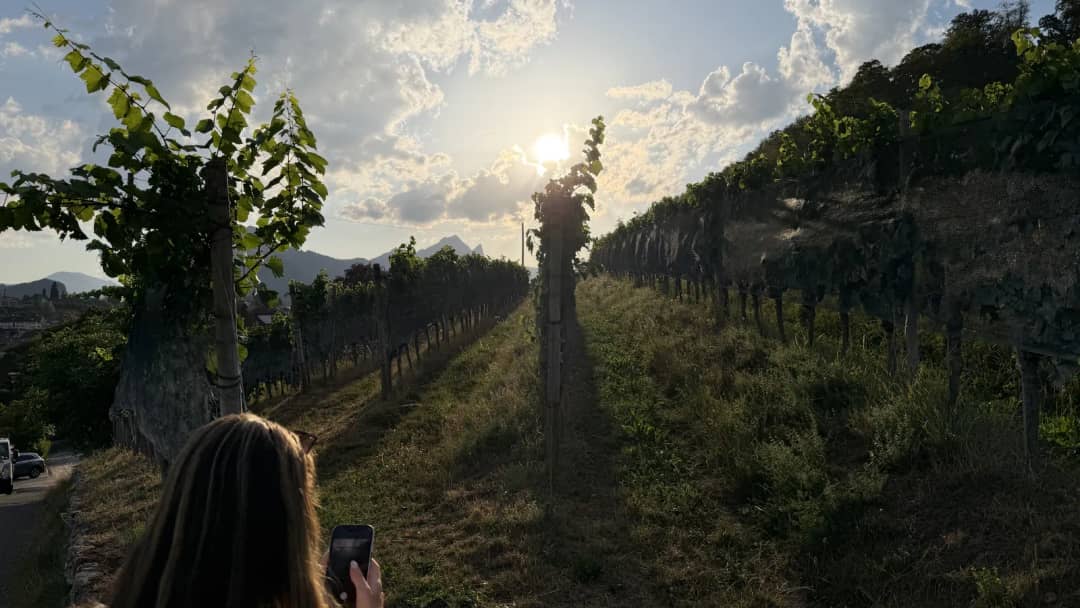
Their vineyards are carved into steep slopes, the kind of terrain that requires hand-harvesting because no machine can grip the hillside. Below, Lake Thun reflects the light back up onto the vines. Above, the Eiger, Mönch and Jungfrau watch in silence.
This is Spiezer Alpine Weinkultur. A cooperative of local winegrowers, founded as an association in 1927 and a cooperative since 1942, on hillsides where vines have grown for over a thousand years. And for our Wine & Cheese Tasting Tour, this is where we take you.
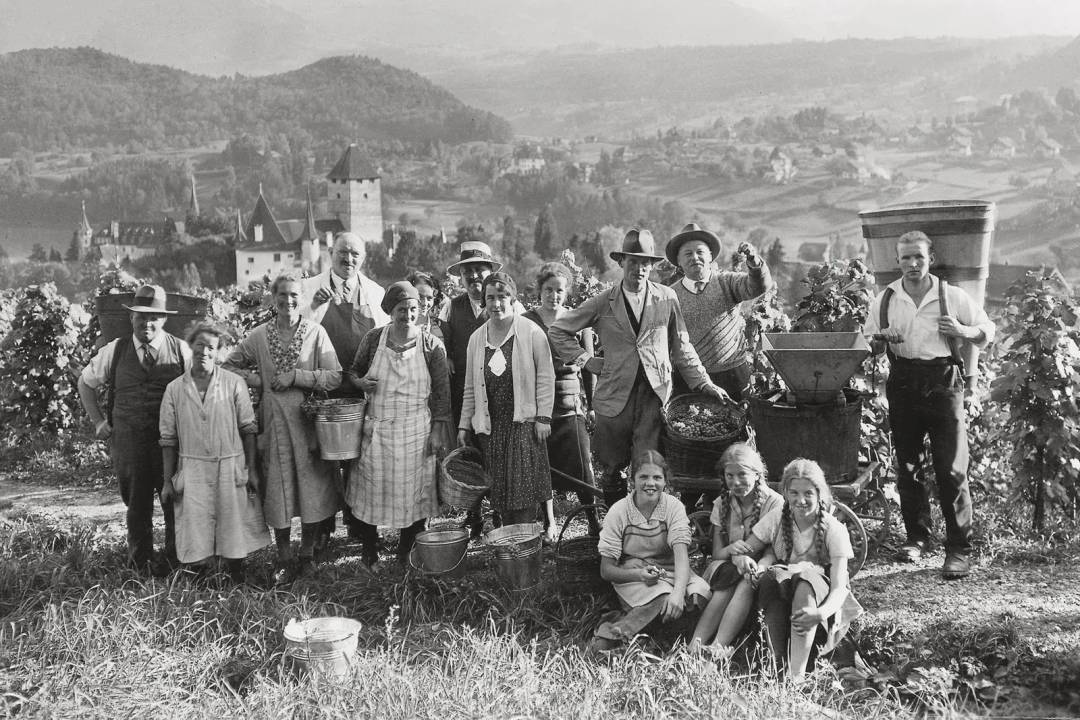
A thousand years of wine in a place you've never heard of
Wine has been made in Spiez for over 1,000 years, and documented since the 13th century. Not 100 years. Not 200. Over a thousand years of vines planted in the same soil, by the same lake, under the same mountain light.
Pierre asked a winemaker: "What does the Föhn do for your grapes?"
"It ripens them. That warm wind comes down from the Alps, the lake keeps the winter frost away, and the altitude keeps the wine fresh."
Pierre Vetsch, founder and head guide at Swiss Local Adventures
While the world debated whether Swiss wine was 'real wine,' the winemakers of Spiez kept growing.
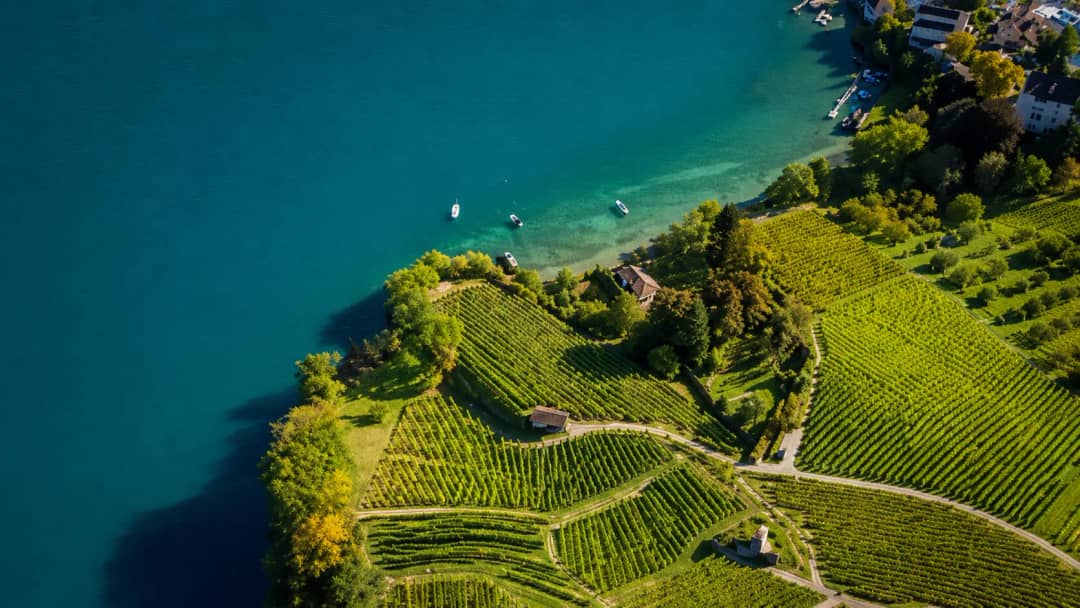
Fun fact: The Spiez vineyards cover around 13 hectares, the second-largest winegrowing area in the canton of Bern.
Vineyards on the Spiezberg and around it, spread across around 13 hectares. And one consistent result: wines of remarkable freshness you won't find at an airport duty-free.
The reason comes down to geography. Lake Thun acts as a natural climate buffer, keeping winter frosts at bay, reflecting summer warmth back onto the grapes. The Föhn, the warm southerly wind that sweeps down from the Alps, ripens the fruit. The altitude keeps the acidity fresh. The result: white wines that taste like the mountain air they grew in.
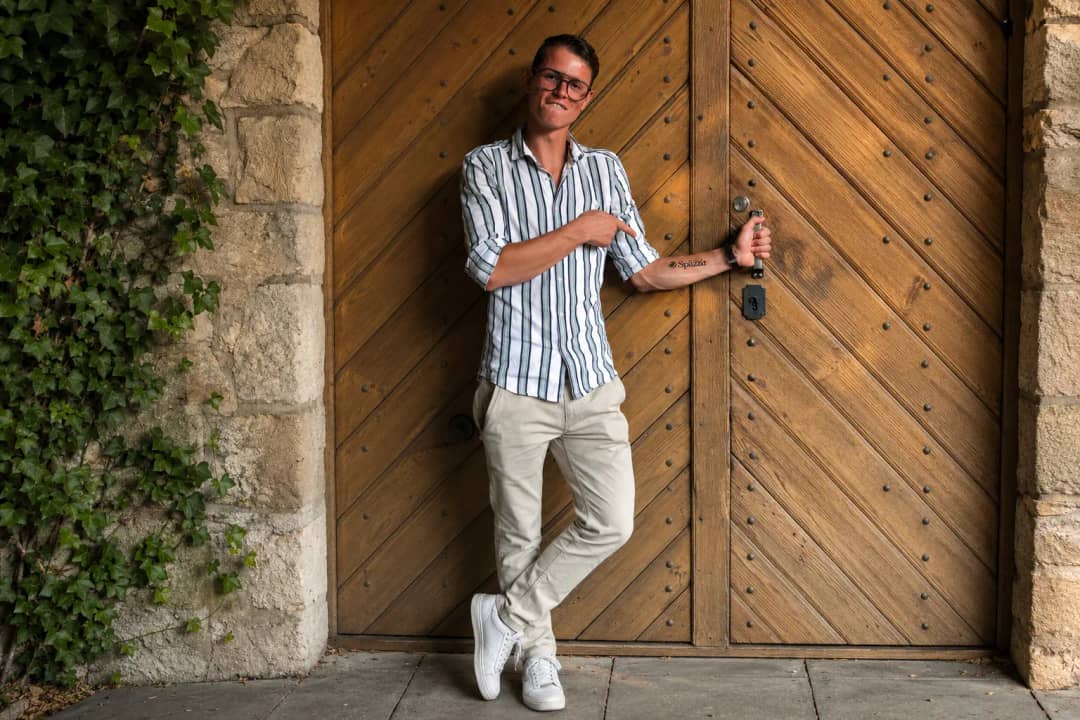
Our partner at the cooperative
Sebastian is our contact at Spiezer Alpine Weinkultur, the person who opens the doors most visitors never find.
Pierre says: "Answer the guide's first question out loud, even if the only word you find is citrus. The explanation that follows lands better once you have said what you taste."
Pierre Vetsch, founder and head guide at Swiss Local Adventures
He knows what he has, and on the tour our guide pours and walks you through it.
When you stand in the vineyard above the lake with a glass of something made from grapes grown on these very slopes, our guide doesn't give a speech. You are asked what you taste, then told what you're actually tasting. Somehow, those are two very different things.
Insider tip: Want a bottle to take home? The tour does not stop at a shop, so ask your guide where to buy the wines afterwards.
That's the moment most of our guests say they understood wine for the first time.
Your Questions About the Wine Tour
Do I need to know about wine to enjoy the tour?
No wine knowledge required. Most guests arrive without any background, and the tasting is designed exactly for that. Our guide doesn't run through grape varieties: the guide pours, asks what you notice, then tells you what's actually happening in the glass. The conversation goes from there. Several guests with no wine background have told us it became the clearest explanation of wine they had ever had.
What wines do we actually taste?
Four Spiez wines from the cooperative's slopes above Lake Thun: a Souvignier Gris, a Souvignier Gris and Sauvignac blend, a Cabernet Jura and a Pinot Noir, as our tour page listed them on 10 November 2026. The Spiez vineyards cover around 13 hectares. The tour does not stop at a shop, so ask your guide where to buy the bottles afterwards.
Spiez also grows Riesling-Sylvaner, which the tour does not pour; our short guide to Riesling-Sylvaner, Switzerland's rare wine explains the grape behind many Swiss whites and what to expect in the glass.
Is the cheese included in CHF 139?
Yes. CHF 139 per person covers transport from Interlaken by minivan, access to the tasting position above the estate, the guided wine tasting, and four cheeses with bread and fruit. The only extra cost is any bottles you choose to take home.
How do we get from Interlaken to Spiez?
We drive you by minivan. Spiez is a short drive from Interlaken along the south shore of Lake Thun. The vineyard sits above the town on a slope steep enough that the view opens with every step. By the time you reach the tasting position, Lake Thun is below you and the Alps are across the water.
If you want to know what happens between the minivan door and the last glass, our Spiez wine tour itinerary lays out the afternoon minute by minute, from pick-up in Interlaken to the walk back down.
Can someone who doesn't drink alcohol join the tour?
Yes, but the tour is designed for wine drinkers and has no alcohol-free option: guests who skip the wine get still water. They still get the vineyard, the cheese, the view and the guide's explanation of how these wines are made. Several guests have come along to support a partner who was the wine enthusiast.
If you would rather compare before choosing, our overview of wine tasting options in Interlaken lists six real ways to taste Swiss wine around town, so you can see how this tour sits next to the alternatives.
What are the opening hours of Rebbau Spiez?
The cooperative sells wine at Schlossstrasse 8, Spiez, from Monday to Friday, 8am to 11.30am, and holds wine sales with tastings on Fridays from 5pm to 7pm and Saturdays from 11am to 2pm, May to October, according to its website on 10 November 2026. Outside those hours, its online shop lists its wines, and groups can call +41 33 654 63 94.
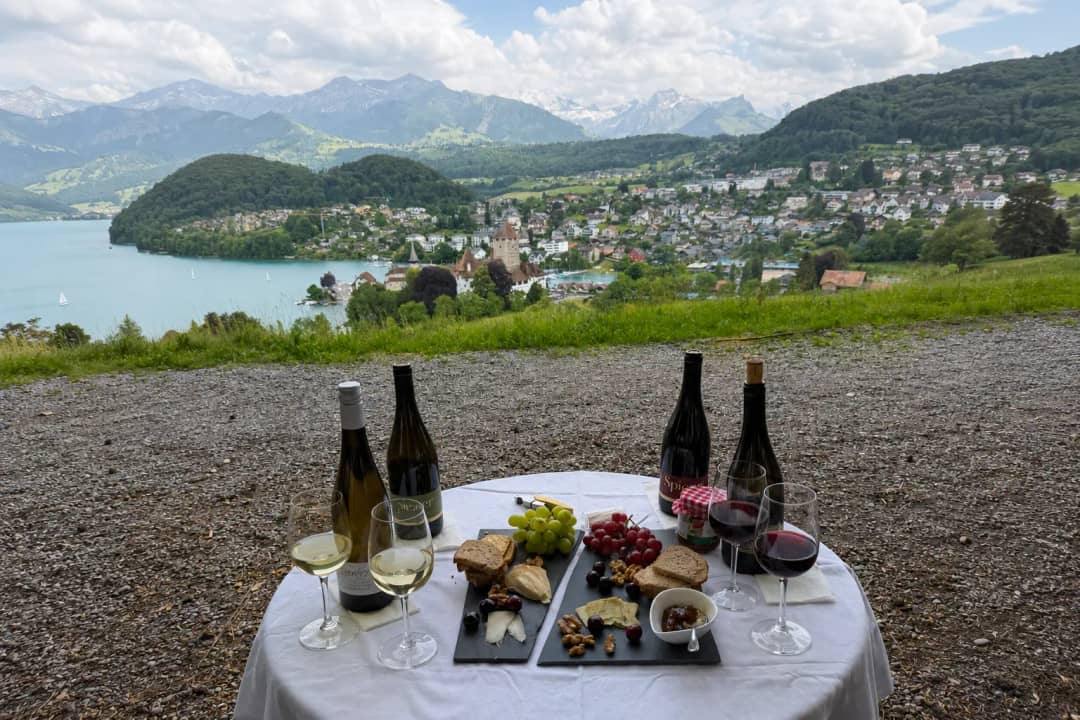
What you experience on our Wine Tour
Our Wine & Cheese Tasting Tour (CHF 139, max 8 guests, 3 hours) is not a winery tour. It's an access tour.
Pierre says: "We taste. We explain. You ask questions. We answer them honestly."
Pierre Vetsch, founder and head guide at Swiss Local Adventures
We take you to the tasting spot above the estate, a position you cannot reach without someone who knows the cooperative and who the cooperative trusts. From here, the view of Lake Thun is unobstructed. The cheese is local. The wine is from the vines you're looking at.
We taste. We explain. You ask questions. We answer them honestly.
No numbered paddle. No group of forty.
Book your Wine & Cheese Tasting Experience
Season: May to October
Duration: 3 hours | Price: CHF 139/person
Group size: Maximum 8 | Language: English + French
Meeting point: Interlaken West station, Adventure Hostel or Balmers; departure by minivan to Spiez
Bring: Light layers, comfortable shoes, an appetite
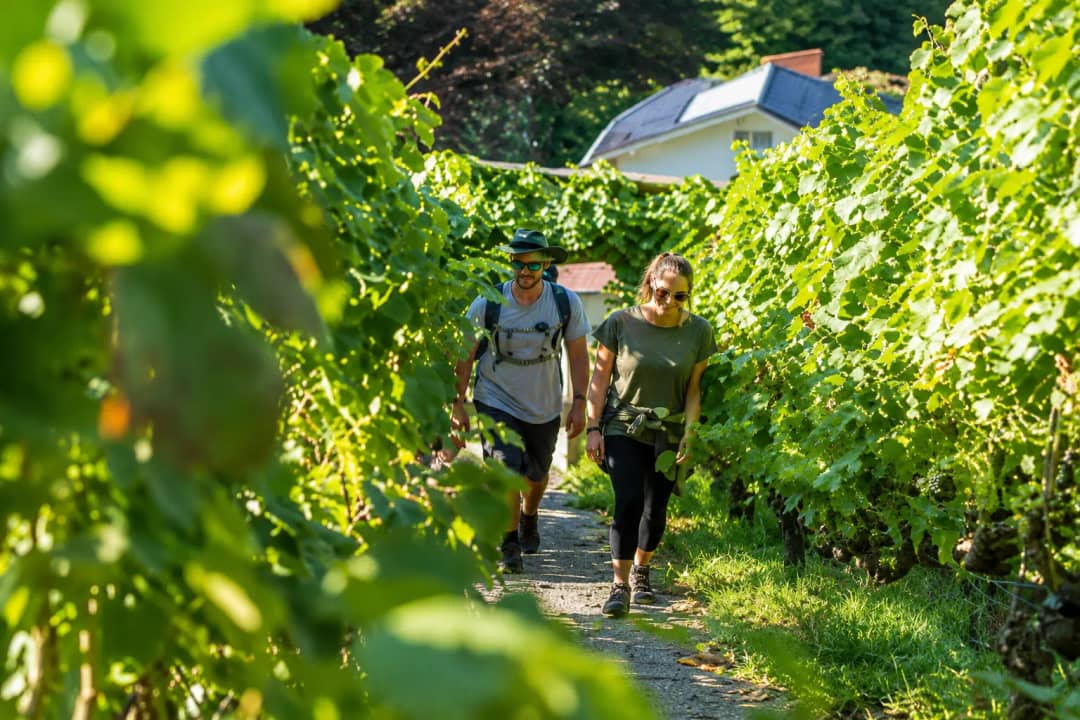
The Spiez Sensory Trail (self-guided option)
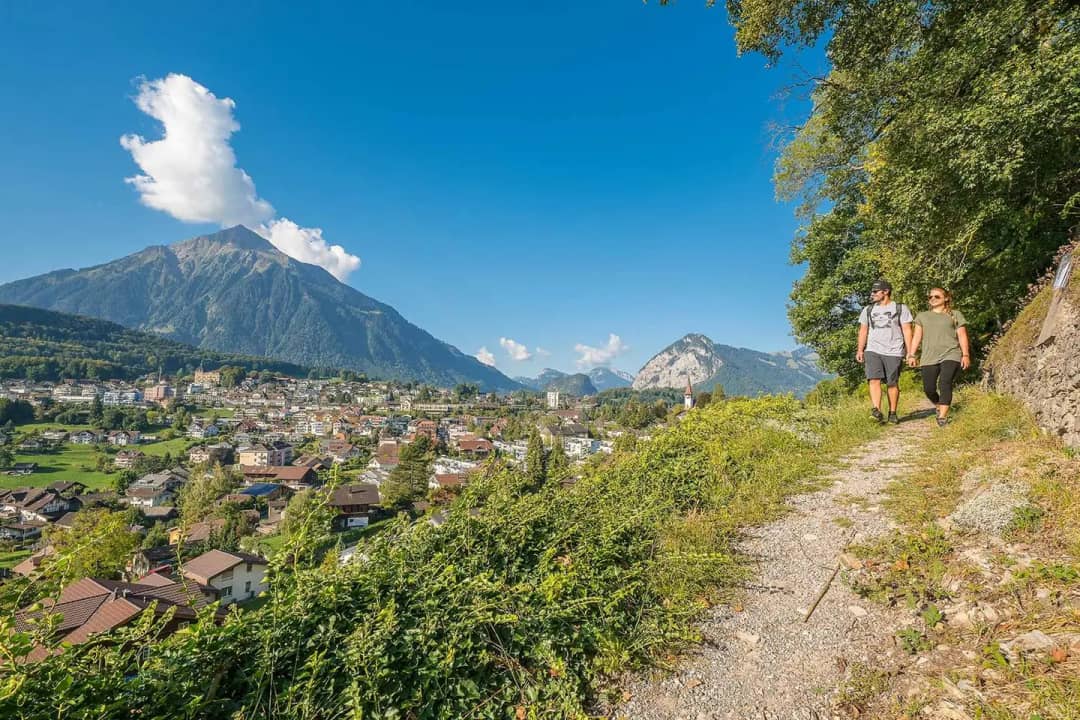
If you want to explore the wine region on your own time, Spiez offers a public Sensory Adventure Trail: a walk of about one hour starting at the lower Rebhüsli, with 12 panels, one for each month, and QR codes linking to a short film for each month. Free, scenic, and a good complement to the guided experience.
For the private access, the cheese, and the insider knowledge: you need us.
Next, read our wine tour Spiez guide, then compare the Swiss wine regions you can visit from Interlaken.
Wondering about other things to do in Interlaken? Our local guide picks 25, the free ones included.
How we made this: facts and prices checked at the official sources on 8 October 2026, written with AI assistance. Opening answer, cellar hours, the wines poured on our tour, the meeting points and the new FAQ answer checked on 10 November 2026 against the cooperative's website and our tour page.
*Written by Pierre Vetsch, founder and head guide at Swiss Local Adventures
Source:
On-site visit with Sebastian Moser, Spiezer Alpine Weinkultur, Spiez, 2026.
Tags
#wine-tour-interlaken#wine-tour-spiez#swiss-wine#lake-thun-wine#spiez-vineyard#alpine-weinkultur#wine-tasting-interlaken#rebbau-spiez#bernese-oberland-wine#interlaken-wine-experience
Sources & References
Share this article
Similar Articles
Continue your reading with these related articles
Farm, Wine & Fondue
11/13/2026
9 min
How to Eat Cheese Fondue: Swiss Rules, Tea Wins
How to eat cheese fondue: bread through the crust, fork off your lips, crust last. In a 2010 BMJ trial, tea beat white wine on digestion.
how-to-eat-fondueswiss-fondue-etiquettecheese-fondue
By Pierre VetschRead More
Farm, Wine & Fondue
10/3/2026
12 min
Best Fondue in Interlaken: Where a Local Guide Eats
Best fondue in Interlaken: a local guide's pick is the Taverne at CHF 30 per person. Where our groups eat, what to order, how to skip the traps.
best-fondue-interlakencheese-fondue-interlakenwhere-to-eat-interlaken
By Pierre VetschRead More
Farm, Wine & Fondue
8/20/2026
7 min
Swiss Food Experiences: What to Try and Where It Is Made
What Swiss food to try, and where to watch it made: alpine cheese on summer pastures from May to September, fondue in winter, 25 AOP specialities.
swiss-food-experiencesalpine-cheeseswiss-dairy-farm
By Pierre VetschRead More