Lacs, eau et air
Lacs d'Interlaken : Thoune ou Brienz, et où se baigner
P
Pierre Vetsch
Auteur
6 mai 2026
7 min
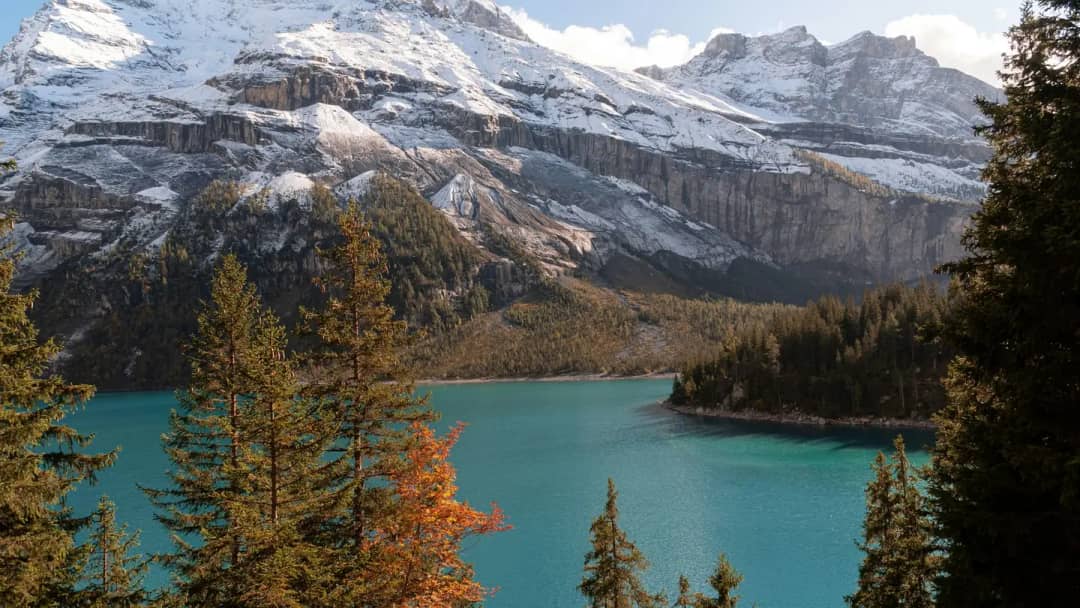
L'eau avait une couleur que je n'avais vue que dans les publicités pour dentifrice. J'avais vingt ans, j'étais debout au bord du lac de Brienz à la mi-juin, et je ne comprenais sincèrement pas comment une étendue d'eau pouvait être aussi turquoise sans colorant artificiel.
Trois ans plus tard, je me suis tenu au bord de presque tous les lacs de l'Oberland bernois et je ne comprends toujours pas complètement. La science derrière est intéressante (on y vient). Mais l'expérience est autre chose : une forme d'irréalité, le sentiment que celui qui a dessiné cette région voulait en mettre plein la vue.
Autour d'Interlaken, il y a deux grands lacs, deux lacs alpins célèbres, un petit lac de tourbière à l'eau chaude et trois vasques alpines cachées que la plupart des voyageurs n'atteindront jamais. Voici le guide local de tous ces lacs.
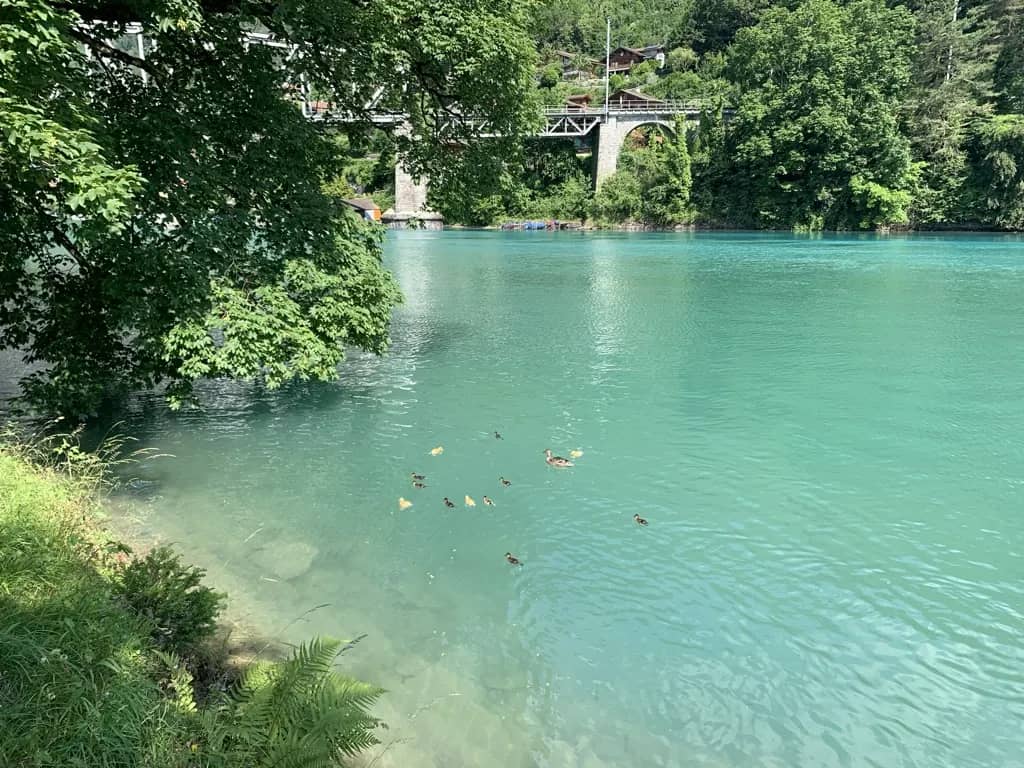
Pourquoi les lacs autour d'Interlaken sont-ils si turquoise ?
Petit point scientifique. Les lacs autour d'Interlaken sont turquoise parce qu'ils sont alimentés par la fonte des glaciers. L'eau arrive chargée de particules microscopiques de roche broyée, la farine glaciaire, qui diffuse les longueurs d'onde bleues et vertes de la lumière. Plus le lac est froid et glaciaire, plus la couleur est spectaculaire.
Le lac de Brienz est le plus purement glaciaire des grands lacs. Sa couleur reste vive tout l'été. Le lac de Thoune reçoit une eau plus mélangée de l'Aare et des rivières environnantes, il tire donc vers un bleu plus sombre. Les lacs de haute montagne (Bachalpsee, Oeschinensee) sont les plus proches de la source et virent à l'émeraude le plus profond en juillet, quand la neige a fondu mais que la farine de roche est encore en suspension.
C'est aussi pour cela que le lac de Brienz reste froid même en août. La baignade au lac de Brienz est pour les courageux ou les brièvement fous. Le kayak, la voile et les croisières sont pour tout le monde.
Lac de Thoune : la grande sœur
Surface : 48 km² · Profondeur : jusqu'à 217 m · Couleur : bleu minéral, doré au coucher du soleil
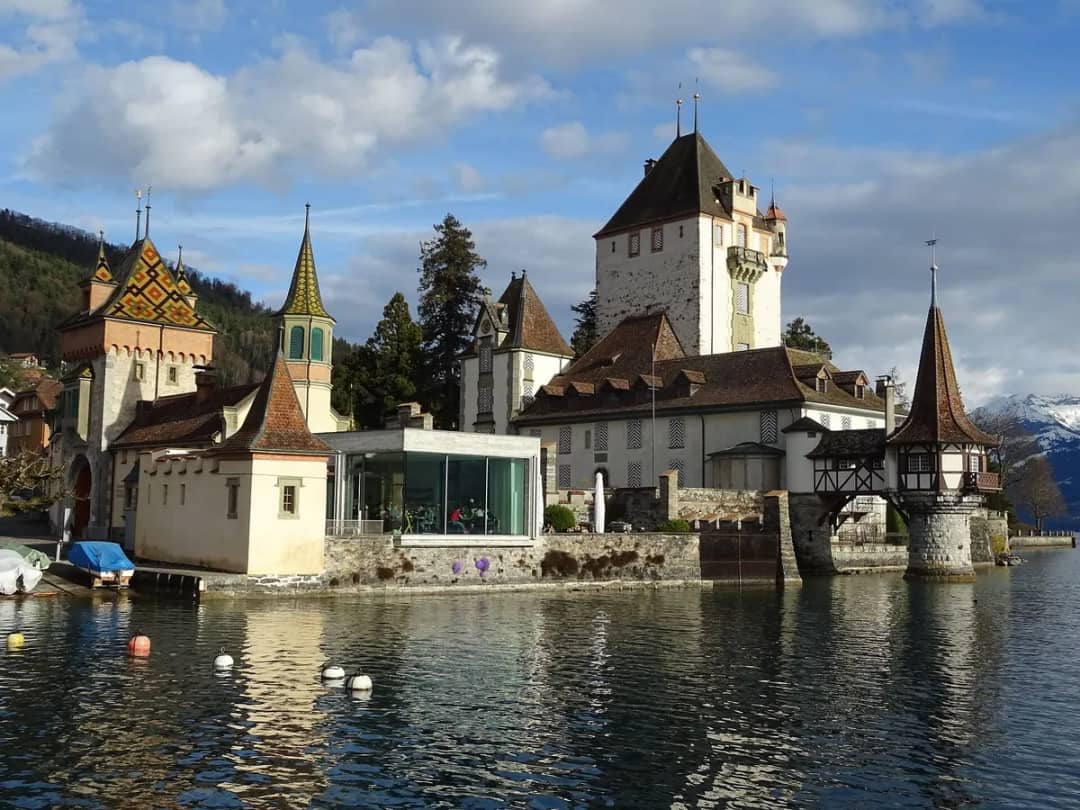
Le lac de Thoune est l'aîné des deux lacs d'Interlaken. Il s'étire vers l'ouest sur 17 kilomètres depuis la ville, jusqu'à la cité médiévale de Thoune. Ses rives sont ponctuées de châteaux (Spiez, Oberhofen, Thoune, Schadau, tous visibles depuis l'eau) et les hauteurs de sa rive sud abritent les vignes de Spiez.
C'est le lac des journées lentes. Les bateaux BLS circulent fréquemment entre les villages. Vous achetez une carte journalière et vous montez et descendez à votre guise, vous mangez dans des villages différents, sans autre plan qu'être rentré à Interlaken West avant le coucher du soleil . C'est l'une des meilleures façons que je connaisse de passer une journée dans l'Oberland bernois.
Que faire sur le lac de Thoune ?
Croisière fondue sur le bateau fondue de BLS (dates sur bls.ch)
Visiter Spiez : château, vignes et promenade au bord du lac, pour un après-midi tranquille au-dessus de l'eau.
S'arrêter au château d'Oberhofen : forteresse du 13e siècle avec l'une des tours au bord de l'eau les plus photographiées de Suisse.
Faire du kayak depuis Faulensee ou Spiez : la rive sud est plus calme et plus silencieuse que la rive nord.
Se baigner au Strandbad Thun ou au Strandbad Hilterfingen : les plages publiques les plus fréquentées en été.
Meilleure saison : de mai à septembre. Meilleur moment de la journée : la fin d'après-midi, pour l'heure dorée sur les vignes.
Lac de Brienz : le jumeau plus discret
Surface : 30 km² · Profondeur : jusqu'à 260 m · Couleur : turquoise émeraude intense
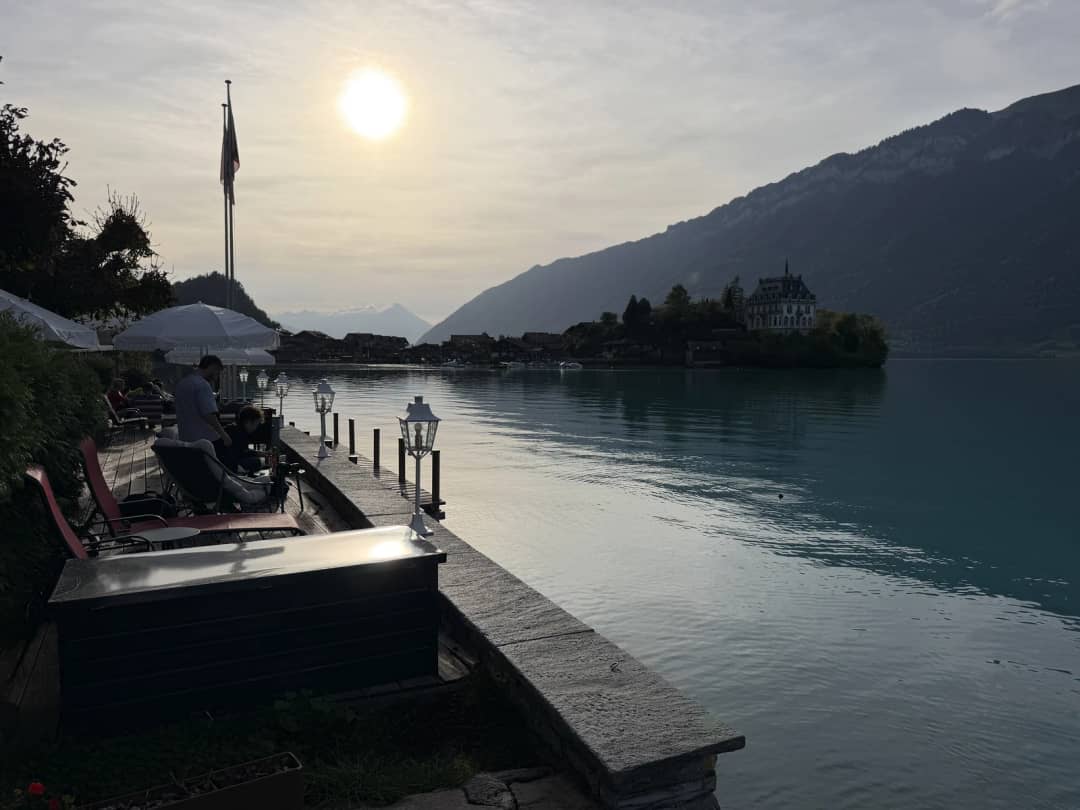
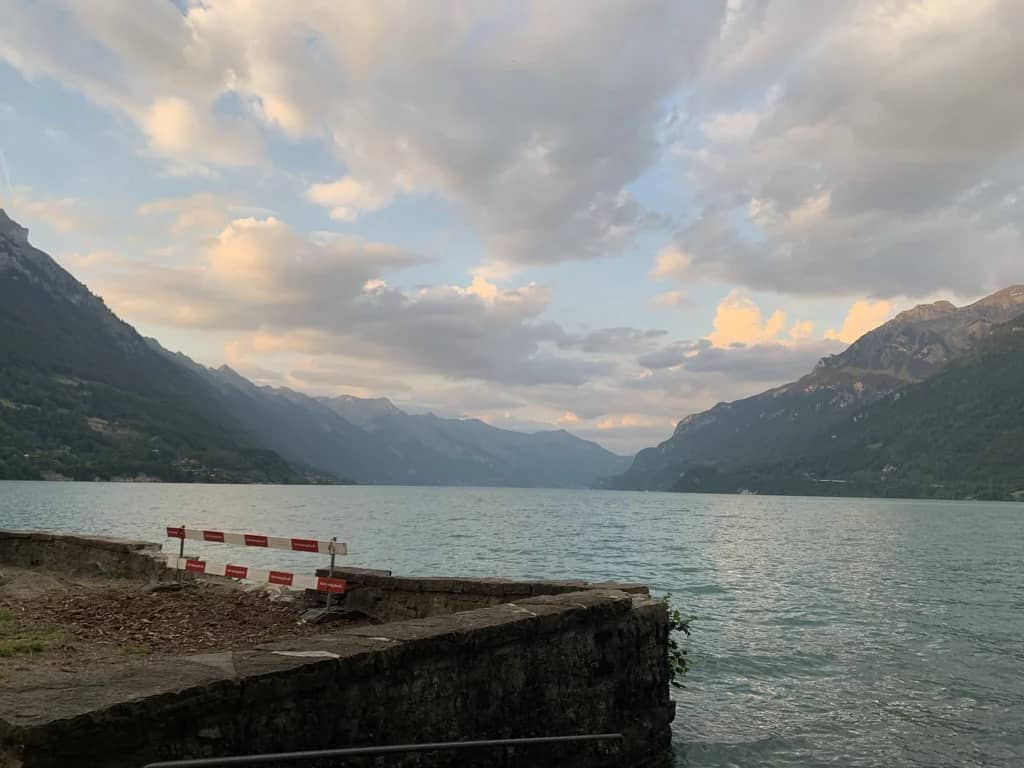
Le lac de Brienz est l'autre moitié d'Interlaken. Plus petit, plus étroit, plus profond, et beaucoup plus spectaculaire. Des falaises raides montent directement depuis l'eau. La rive sud est largement non bâtie. Les voitures se concentrent sur la rive nord, que suit l'autoroute, laissant le sud aux villages, aux pontons et aux marcheurs.
C'est le lac de l'aventure. Le froid garde son turquoise intact, et depuis un kayak, cette couleur vous entoure. Hightide, l'école de kayak de Bönigen avec laquelle nous travaillons, emmène des groupes de six personnes au plus le long de la rive nord, sous des falaises chauffées par le soleil, devant de petites plages inaccessibles à pied, avec le château de Ringgenberg sur sa colline au-dessus de l'eau.
Le saviez-vous ? Le petit funiculaire qui monte du débarcadère de Giessbach jusqu'aux chutes a ouvert en juillet 1879 : premier funiculaire à câble construit pour les touristes et première ligne ferroviaire fonctionnant par système hydraulique. Il n'a été électrifié qu'en 1948.
Le kayak n'est qu'une façon de passer la journée sur l'eau. Notre guide des aventures en plein air à Interlaken compare les activités de lac avec la randonnée, le parapente et le canyoning, avec des repères honnêtes sur le prix et l'effort.
Que faire sur le lac de Brienz ?
Kayak depuis Bönigen : environ deux heures sur l'eau le long de la rive nord, sous les falaises et devant des plages cachées, puis retour par le lac ouvert. Les sorties d'une demi-journée sont le bon format.
Visiter Iseltwald : le village rendu célèbre par la série coréenne Crash Landing on You . La scène du ponton a transformé ce petit hameau du bord du lac en destination TikTok mondiale du jour au lendemain. Des centaines de fans, surtout de Corée du Sud et d'Asie du Sud-Est, arrivent chaque matin dès l'ouverture du village. L'accès au ponton coûte CHF 5 (relevé le 8 octobre 2026). Si vous voulez la photo sans la foule : avant 9h ou après 16h. Lisez notre guide du ponton d'Iseltwald.
Prendre le bateau à vapeur Lötschberg sur le lac de Brienz : un bateau à roues de 1914 toujours en service. La traversée complète d'Interlaken Ost à Brienz dure 73 minutes à l'horaire du 10 octobre 2026.
Visiter les chutes du Giessbach : 14 cascades qui tombent de 400 mètres directement dans le lac. Accessibles en bateau puis en funiculaire.
Le village de Brienz lui-même : la capitale suisse de la sculpture sur bois, avec des ateliers à visiter et le train à vapeur du Brienzer Rothorn qui part du village.
Conseil d'initié : Les bateaux BLS du lac de Brienz ne circulent que du 3 avril au 6 décembre 2026, puis de nouveau à partir du 26 mars 2027 : vérifiez donc le calendrier avant de prévoir une croisière hivernale. La carte journalière pour les deux lacs coûte CHF 83 en deuxième classe, ou CHF 41.50 avec le demi-tarif.
Meilleure saison : de fin mai à octobre. Meilleur moment : le kayak du matin (l'eau est calme avant midi).
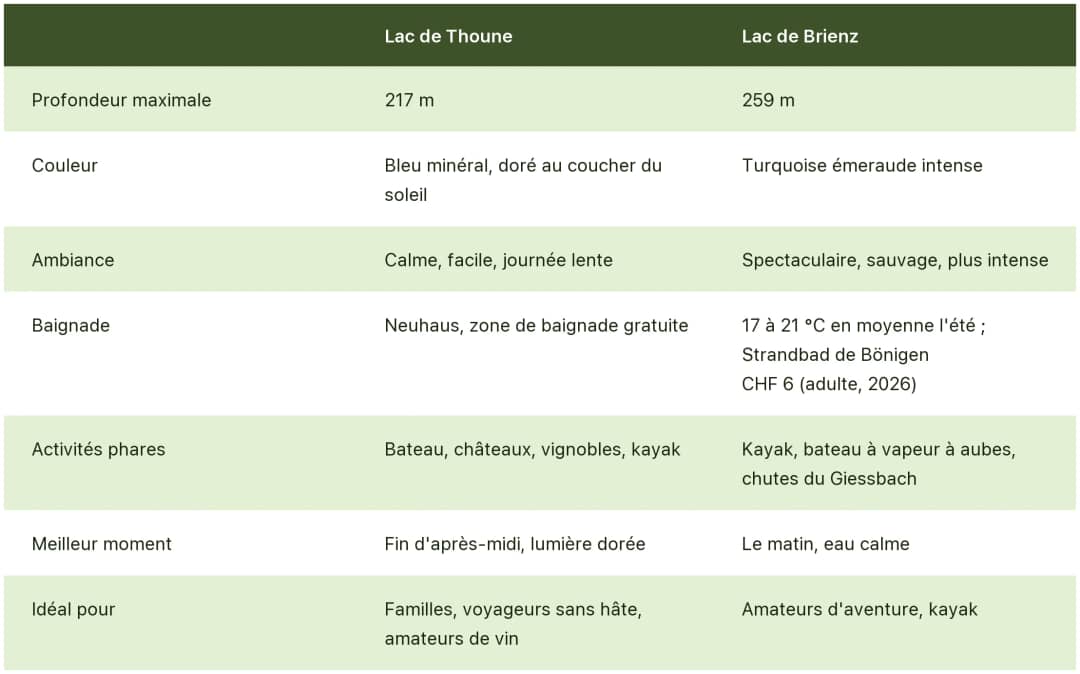
Lac de Thoune ou lac de Brienz : lequel choisir ?
La réponse honnête : cela dépend de ce que vous cherchez.
Le lac de Thoune est plus grand, plus calme et plus simple à parcourir. Il y a des châteaux sur ses rives, des arrêts de bateau toutes les heures, et les sommets de la Jungfrau visibles depuis l'eau par temps clair. C'est le lac où l'on emmène une famille.
Le lac de Brienz est plus intense. La couleur est plus saturée, les falaises plongent directement dans l'eau, et la rive sud est presque entièrement non bâtie. C'est le lac où l'on va quand on veut avoir l'impression que personne ne l'a encore trouvé. Si vous n'avez qu'une journée : lac de Brienz le matin, lac de Thoune en fin d'après-midi.
La lumière ne fait pas la même chose avec l'un et avec l'autre.
Où se baigner : les meilleurs spots près d'Interlaken
Les meilleurs spots de baignade près d'Interlaken vont des plages des lacs de Thoune et de Brienz à un petit lac de tourbière que presque aucun visiteur ne trouve. La température de l'eau varie énormément : Interlaken Tourismus donne 17 à 21°C de moyenne en été pour le lac de Brienz, et jusqu'à 26°C pour le Burgseeli.
Lac de Thoune
Le plus chaud des deux lacs principaux. Les meilleurs endroits :
Plage de Neuhaus (gratuite, à 6 minutes en bus 21 depuis la gare d'Interlaken West, horaire du 15 octobre 2026) : le choix évident pour un après-midi plage complet sans prendre la voiture.
Strandbad Hilterfingen : une plage classique au bord du lac, idéale pour les familles.
Lac de Brienz (17-21°C en été)
Plus froid que le lac de Thoune à cause de ses sources glaciaires. On s'y baigne quand même, mais la différence se sent.
Bönigen (plage aménagée, entrée CHF 6 par adulte en 2026, village à 2 km d'Interlaken) : la baignade la plus accessible côté Brienz.
Strandbad Brienz : installations aménagées, entrées dans l'eau plus propres.
Burgseeli : le secret des locaux (jusqu'à 26°C)
À cinq minutes d'Interlaken, le Burgseeli est un petit lac de tourbière, qui n'est pas alimenté par les glaciers. Interlaken Tourismus annonce une eau jusqu'à 26°C en été, ce qui est rare dans cette région.
C'est aussi mon propre spot de baignade : j'y vais souvent, chaque été. Le moment que j'en garde :
« Le matin d'été, l'eau plate et la brume. »
Pierre Vetsch, guide et fondateur, interview du 8 octobre 2026
L'endroit a une plateforme de saut et une corde de Tarzan. L'entrée coûte CHF 6 par adulte. Et c'est là que les locaux vont vraiment quand ils veulent nager sans le choc du froid.
Christine, serveuse au Burgseeli, a sa propre mise en garde pour les baigneurs : « Il y a des serpents autour du lac ! »
Adresse : Burgseeli, Goldswil, Ringgenberg.
Si vous êtes ici pour la baignade et pas pour le décor, allez d'abord au Burgseeli. Gardez l'Oeschinensee pour les photos.
Les deux icônes alpines : Bachalpsee et Oeschinensee
Bachalpsee : le lac miroir
Altitude : 2 265 m · Surface : 0,08 km² · Couleur : émeraude alpin pur, miroir parfait les jours calmes
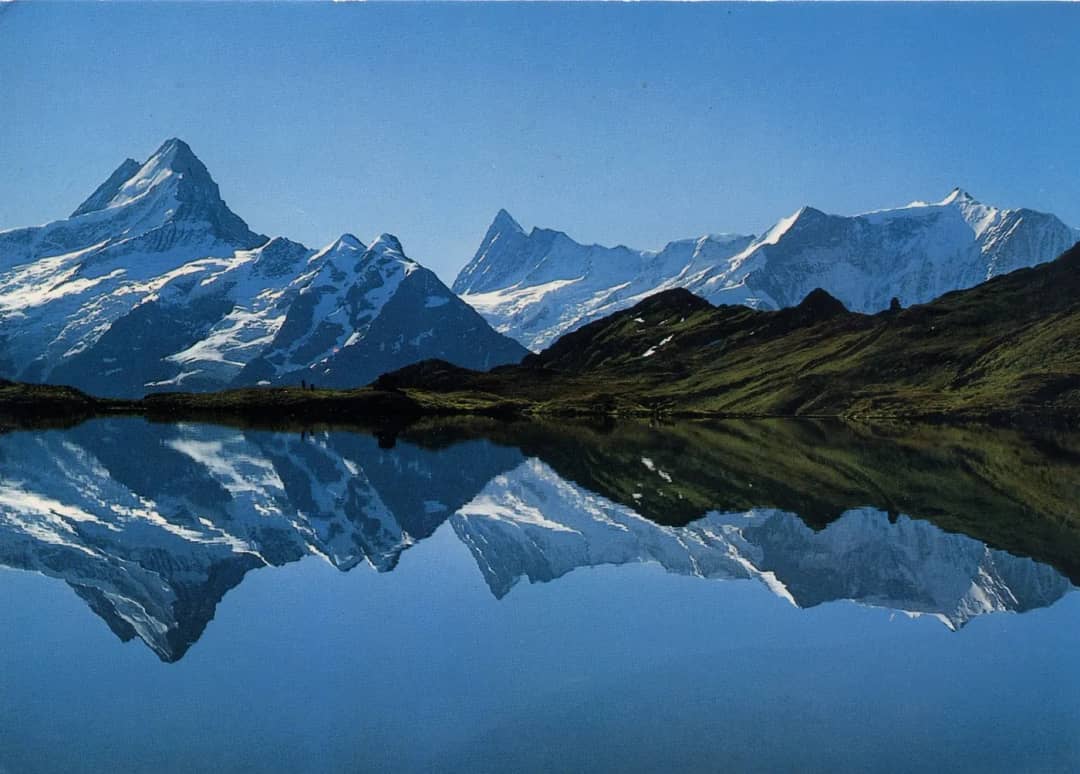
Le Bachalpsee est l'un des lacs alpins les plus connus de l'Oberland bernois. Il se trouve au-dessus de Grindelwald, accessible par une marche facile de 50 minutes depuis le téléphérique de First. Par un matin sans vent, le lac reflète parfaitement tout le massif du Schreckhorn et du Wetterhorn. L'image est tellement usée que les voyageurs refusent de croire qu'elle est réelle tant qu'ils ne sont pas sur place.
Comment se rendre au Bachalpsee ?
Prenez le téléphérique Grindelwald First (dates d'exploitation à vérifier sur jungfrau.ch).
Suivez le sentier bien balisé le long de la crête pendant environ 50 minutes.
Meilleure lumière : entre 7h et 9h, avant que le vent ne se lève. L'effet miroir exige un calme parfait.
Combinez avec le Cliff Walk à First et la descente en Mountain Cart pour une journée complète.
Prenez des couches. Même en juillet, il fait 10°C de moins à 2 265 m qu'à Interlaken.
Oeschinensee : le plus beau lac de Suisse (paraît-il)
Altitude : 1 578 m · Surface : 1,1 km² · Couleur : turquoise électrique, entouré de parois de 3 000 mètres
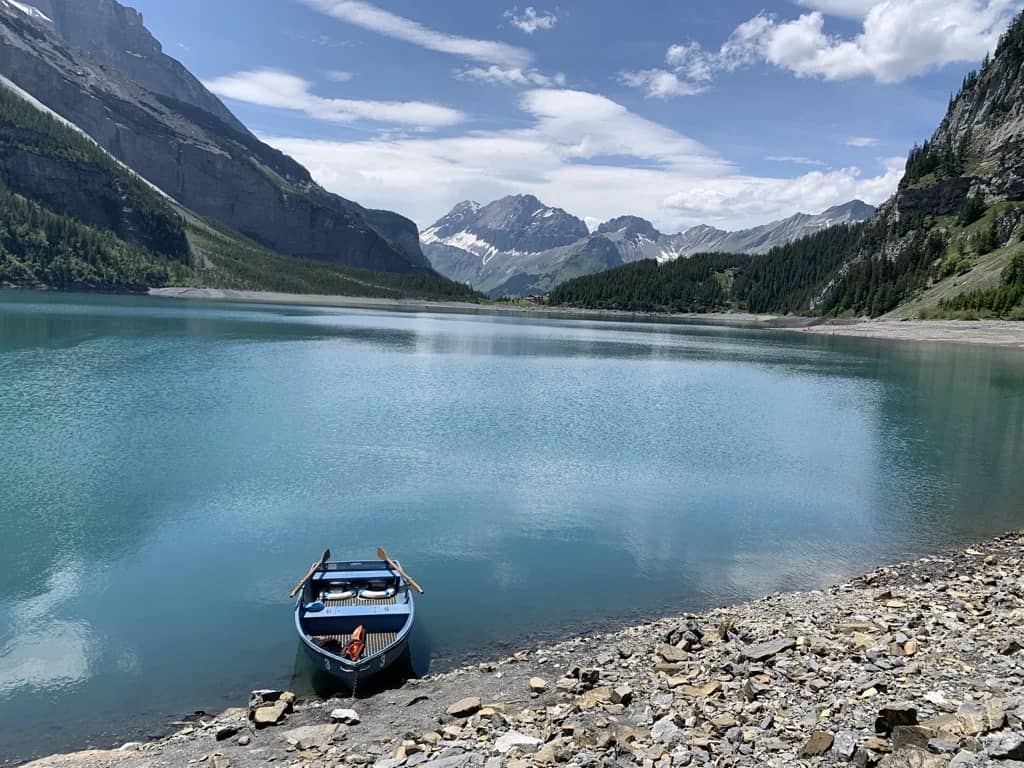
L'Oeschinensee occupe un amphithéâtre naturel de parois verticales au-dessus de Kandersteg, et son eau vient directement des névés du massif de la Blümlisalp. La couleur est presque turquoise de dessin animé. Depuis Interlaken West, le train jusqu'à Kandersteg met 66 à 67 minutes avec un changement à Spiez (horaire du 15 octobre 2026), puis la télécabine monte jusqu'à la station Oeschinen, et environ 30 minutes de marche mènent au lac.
L'erreur des visiteurs avec les lacs autour d'Interlaken, en une ligne :
« Ne pas faire Oeschinensee. »
Pierre Vetsch, guide et fondateur, interview du 8 octobre 2026
Important pour 2026 : la télécabine se réserve obligatoirement à l'avance jusqu'au 8 novembre, sur oeschinensee.ch. L'aller-retour coûte CHF 36 (9 mai au 14 juin et 22 septembre au 9 novembre 2026) ou CHF 40 (15 juin au 21 septembre 2026), tarifs relevés le 8 octobre 2026. Le Swiss Travel Pass donne 50% de réduction, pas la gratuité, et le Berner Oberland Pass n'est plus accepté depuis janvier 2026.
Première télécabine : 8h30. En hiver, la télécabine fonctionne tous les jours du 5 décembre 2026 au 7 mars 2027, de 9h à 17h.
Si l'Oeschinensee est la raison principale de votre venue, nous avons écrit un guide complet de l'Oeschinensee avec les horaires de la télécabine, les heures les plus calmes et les meilleurs points de vue autour de la rive.
Bachalpsee ou Oeschinensee : quel lac alpin si vous n'avez qu'une journée ?
Les deux lacs méritent une journée entière. Mais ce sont deux expériences différentes, et la logistique diffère assez pour compter.
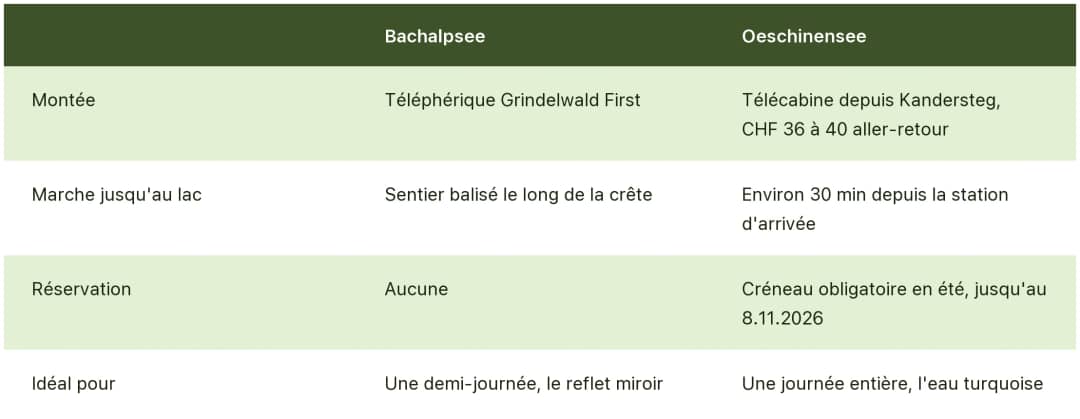
Réservation : le Bachalpsee ne demande aucune réservation. La télécabine de l'Oeschinensee en demande une (saison d'été, jusqu'au 8 novembre 2026) sur oeschinensee.ch.
L'avis de Pierre : si vous avez une demi-journée, le Bachalpsee est le meilleur choix. La marche est courte, la lumière à 8h est exceptionnelle, et en juin ou en septembre vous l'aurez presque pour vous. Si vous avez une journée entière et que vous voulez le lac le plus photogénique de l'Oberland bernois, l'Oeschinensee vaut la logistique. N'essayez pas de faire les deux le même jour.
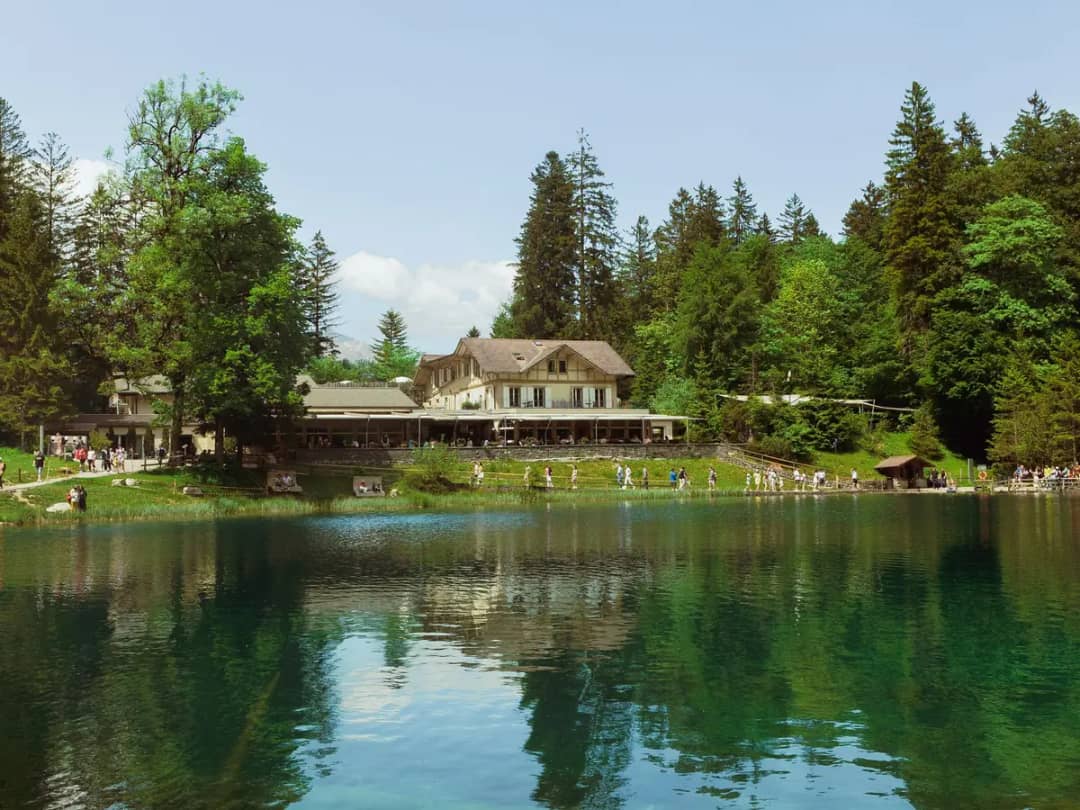
Les lacs cachés : Hinterer Geltensee et les vasques au-dessus
Au-delà des quatre lacs célèbres, l'Oberland bernois abrite un réseau de petites vasques alpines que la plupart des voyageurs ne verront jamais.
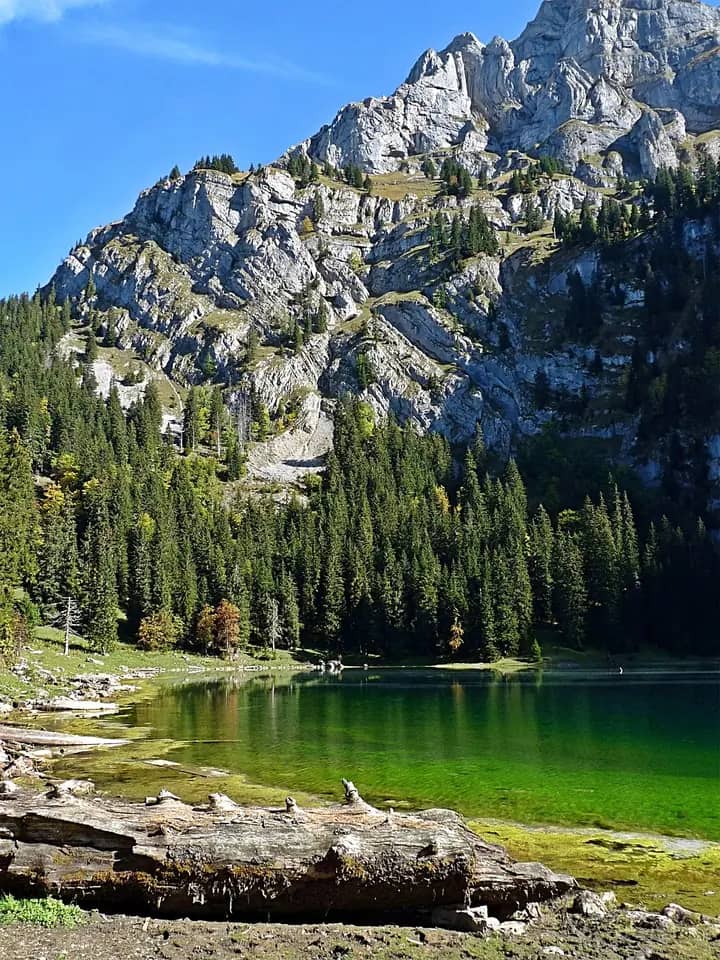
Hinterer Geltensee se trouve haut au-dessus du fond de la vallée. La montée prend environ 4 heures à l'aller. La récompense est le silence. La plupart des jours de semaine, vous avez le lac entièrement pour vous.
Iffigsee, au-dessus de Lenk, s'atteint par une marche de 2h30. Une vasque turquoise entourée de formations karstiques. Moins célèbre que l'Oeschinensee, moins fréquentée, tout aussi photogénique.
Hinterstockensee, sous la crête du Stockhorn, s'atteint par une marche plus facile d'une heure. Un petit lac sombre, d'une ambiance très différente de celle des géants turquoise. Il vaut le détour rien que pour cette ambiance.
J'ai emmené deux clients au Hinterstockensee lors de tours privés. Les deux fois, nous avons eu le lac entièrement pour nous. L'un d'eux s'est assis au bord et n'a rien dit pendant environ quatre minutes. C'est en général le signe qu'on a emmené quelqu'un dans un endroit vrai.
Ces lacs ne sont pas pour les visiteurs occasionnels. Ils demandent de la forme, du temps et l'envie de marcher. Ils offrent aussi quelques-uns des après-midis les plus paisibles du tourisme suisse.
Comment combiner les lacs sur un seul séjour
Si vous avez une journée pour les lacs, choisissez un lac et une altitude. La balade dans les vignes de Spiez le matin plus un bateau sur le lac de Thoune l'après-midi est une combinaison parfaite, douce pour les jambes et qui finit sur un coucher de soleil au bord de l'eau.
Si vous avez deux jours, faites le lac de Thoune le premier jour (basse altitude, vignes, châteaux) et le Bachalpsee ou l'Oeschinensee le second (altitude, lac miroir alpin).
Si vous avez trois jours ou plus, mélangez les quatre grands lacs. Ajoutez un après-midi de kayak sur le lac de Brienz, une marche vers un lac alpin caché, et une traversée tranquille en bateau pour récupérer.
💡 Le conseil de Pierre Si vous n'avez qu'une matinée pour un lac alpin et que vous n'arrivez pas à choisir entre le Bachalpsee et l'Oeschinensee, allez au Bachalpsee. La marche est deux fois plus courte, le reflet est plus fiable, et vous finissez votre matinée avec tout l'après-midi libre pour un parapente ou une balade dans les vignes à Spiez. L'Oeschinensee mérite une journée entière, pas une demi-journée pressée.
FAQ - Les lacs autour d'Interlaken
Quel est le plus beau lac près d'Interlaken ?
C'est subjectif. Le lac de Brienz pour la couleur et l'accessibilité, l'Oeschinensee pour la puissance alpine, le Bachalpsee pour le reflet. La plupart des locaux choisiraient le lac de Brienz au coucher du soleil comme réponse de tous les jours, et l'Oeschinensee comme grande sortie du séjour.
Peut-on se baigner dans les lacs autour d'Interlaken ?
Oui. Sur les lacs de Thoune et de Brienz, la baignade est permise partout où un panneau ne l'interdit pas, selon Interlaken Tourismus, mais l'eau est froide. Le lac de Brienz est en moyenne à 17-21°C en été (froid mais faisable), et l'eau de l'Oeschinensee peut atteindre 20°C, selon son exploitant. La baignade la plus chaude du coin est le Burgseeli, jusqu'à 26°C.
Pourquoi les lacs autour d'Interlaken sont-ils si turquoise ?
La fonte des glaciers transporte des particules de roche microscopiques, la farine glaciaire, qui diffuse la lumière bleue et verte. Plus le lac est proche du glacier qui l'alimente, plus la couleur est vive. Le lac de Brienz reçoit cette farine glaciaire par l'Aar et la Lütschine. Le Bachalpsee et l'Oeschinensee sont des lacs de montagne alimentés par des torrents.
Iseltwald vaut-il le déplacement ?
Oui. Le village lui-même est petit mais charmant, et le ponton, rendu célèbre par la série coréenne Crash Landing on You, est l'un des spots photo les plus partagés de Suisse. Venez au lever du soleil pour éviter la foule.
Peut-on visiter tous les lacs autour d'Interlaken sans voiture ?
Oui. Les trains et les bateaux couvrent le lac de Thoune et le lac de Brienz. Les téléphériques et les crémaillères atteignent le Bachalpsee (via First) et l'Oeschinensee (via Kandersteg). Les vasques alpines cachées demandent de plus longues marches, mais elles restent accessibles en transports publics plus randonnée.
Quelle est la meilleure période de l'année pour les lacs ?
De fin juin à début septembre pour les lacs de haute altitude (sans neige, accessibles, jours les plus longs). De fin mai à mi-octobre pour les lacs d'en bas (Thoune, Brienz). Évitez la mi-juillet à la mi-août à l'Oeschinensee, sauf si vous partez très tôt.
L'eau est-elle assez chaude pour se baigner en été ?
Cela dépend de l'endroit où vous allez. Le lac de Brienz est en moyenne à 17-21°C en été, selon Interlaken Tourismus. Pour la baignade la plus chaude près d'Interlaken, allez au Burgseeli (Goldswil, Ringgenberg) : l'eau de ce petit lac de tourbière peut atteindre 26°C en été, et l'entrée coûte CHF 6 par adulte. L'eau de l'Oeschinensee peut atteindre 20°C, selon son exploitant. Possible, mais pas une baignade où vous vous attardez.
Faut-il réserver la télécabine de l'Oeschinensee à l'avance ?
Oui, pendant toute la saison d'été et jusqu'au 8 novembre 2026, la réservation à l'avance est obligatoire. Sans réservation, vous pouvez arriver devant une télécabine complète pour la journée. Réservez sur oeschinensee.ch. Le premier départ est à 8h30. Si vous n'obtenez pas de créneau, l'alternative est de monter à pied depuis Kandersteg (environ 1h30, +450 m de dénivelé). Le Swiss Travel Pass donne 50% de réduction. Le Berner Oberland Pass n'est plus accepté.
Quel est le meilleur mois pour les lacs autour d'Interlaken ?
Juin pour les lacs alpins : la neige est partie, la foule n'est pas encore là, et la lumière dure longtemps. Juillet et août pour la température de l'eau maximale sur le lac de Thoune et le lac de Brienz, mais avec nettement plus de monde. Septembre est le meilleur compromis global : l'eau est encore chaude de l'été, les lacs alpins sont encore accessibles, l'affluence baisse nettement, et les premières couleurs d'automne apparaissent sur les versants.
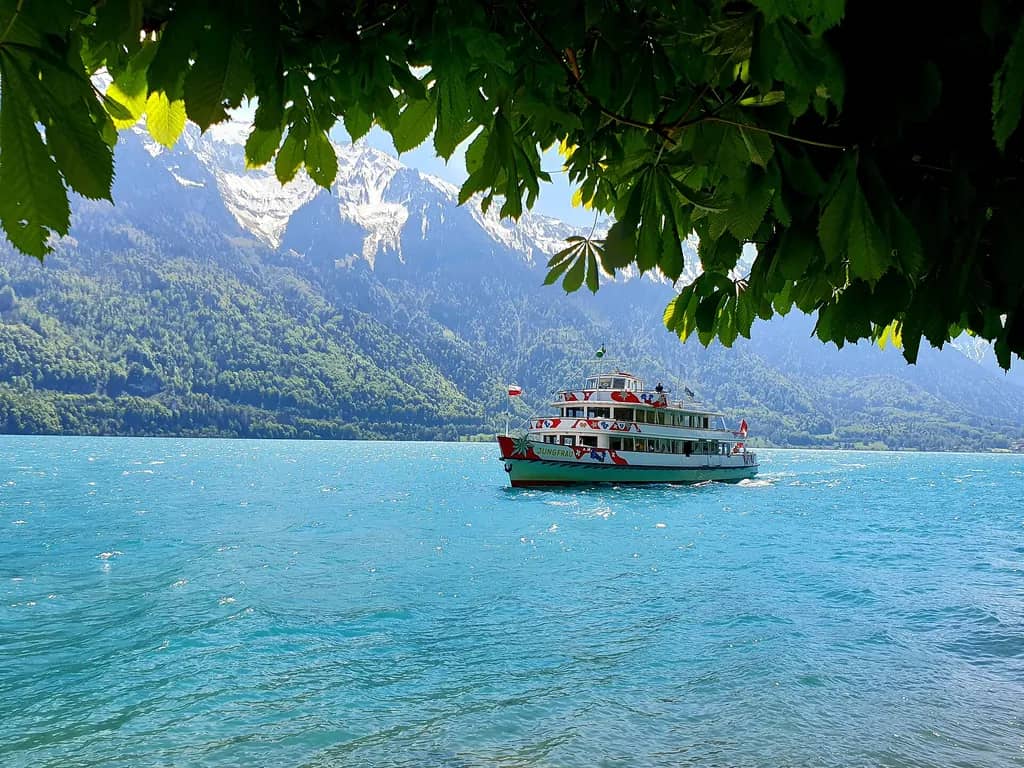
Préparez votre journée lacs et pagayez sur le lac de Brienz
Planifiez vos journées de lac le matin si vous voulez le calme, et en fin d'après-midi si vous voulez la lumière dorée. Le milieu de journée est fait pour la crémaillère et le téléphérique.
De retour en ville entre les deux lacs, le grand pré au centre d'Interlaken a sa propre histoire. Trente-sept paysans ont décidé il y a longtemps que la Höhematte resterait un pré, et c'est pour cela que la Jungfrau se voit encore depuis le centre.
Si vous ne faites qu'une chose sur l'eau, que ce soit le lac de Brienz en kayak. La sortie que nous réservons avec Hightide Kayak School part de leur base de Bönigen, à environ 10 minutes d'Interlaken Ost en bus 103. Vous partez pour environ trois heures, dont deux sur l'eau : le long de la rive nord sous les falaises, devant de petites plages inaccessibles à pied, puis retour par le lac ouvert, avec jusqu'à 260 mètres d'eau sous vous. Groupes de six personnes au plus, dès CHF 115 par adulte, et votre guide vous envoie gratuitement les photos et vidéos de votre sortie.
Le doute que j'entends avant une réservation : « Jamais fait de kayak. » Ma réponse :
« Les kayaks sont stables, presque personne ne tombe. »
Pierre Vetsch, guide et fondateur, interview du 8 octobre 2026
Aucune expérience n'est requise : votre guide vous montre les premiers coups de pagaie avant de partir, et le groupe avance à un rythme tranquille, avec des pauses. Prenez un maillot de bain ou des vêtements de sport à séchage rapide (pas de coton) et une serviette ; les jours plus frais, vous recevez une combinaison néoprène et une veste de pagaie. La sortie d'été a lieu de mai à octobre, et dès novembre, le lac a son propre tour d'hiver, en combinaison étanche.
Réserver ma sortie en kayak sur le lac de Brienz
Comment cet article est fait : faits et prix vérifiés aux sources officielles le 8 octobre 2026, rédigé avec l'aide de l'IA.
*Écrit par Pierre Vetsch, fondateur et guide principal chez Swiss Local Adventures
Mots-clés
#lakes-around-interlaken#lake-brienz#lake-thun#bachalpsee#oeschinensee#swiss-alps#bernese-oberland#jungfrau-region#switzerland-travel#iseltwald
Sources & Références
- •Photo: Willian Justen de Vasconcellos on Pexels
- •Photo: Andrea Einaudi from Cuneo, Italy, Wikimedia Commons (CC0)
- •Photo: Iter1, Wikimedia Commons (Public domain)
- •Photo: Denner Trindade on Pexels
- •Photo: Loric Roberti, Wikimedia Commons (CC0)
- •Oeschinensee cable car, fares and timetable
- •BLS, paddle steamer Lötschberg
- •Giessbach, the waterfall
- •BLS, Lake Brienz boat trips
- •Grandhotel Giessbach, Giessbach funicular
- •Swiss Local Adventures, Kayak Tour on Turquoise Lake Brienz (page produit, ouverte le 14.10.2026 : CHF 115 adulte, 125 en octobre ; 3 h dont environ 2 sur l'eau ; base Hightide à Bönigen, bus 103 depuis Interlaken Ost, environ 10 min ; 6 personnes max ; rive nord, falaises, petites plages, château de Ringgenberg ; jusqu'à 260 m d'eau sous le kayak ; photos et vidéos offertes ; combinaison et veste les jours frais ; mai à octobre, Winter Kayak de novembre à avril en combinaison étanche)
- •timetable.search.ch, Interlaken West vers Kandersteg, 15.10.2026 : 66 à 67 min avec changement à Spiez, IC 61 ou RE9 puis RE1 (requête du 14.10.2026, revérifiée le 14.10.2026)
Partager cet article
Articles Similaires
Continuez votre lecture avec ces articles connexes
Lacs, eau et air
12/09/2026
12 min
Deltaplane ou parapente à Interlaken : CHF 260 ou 180 à 199
Deltaplane ou parapente à Interlaken : même colline, mêmes 10 à 20 minutes, CHF 180 à 199 contre CHF 260. Ce qu'achètent les 61 à 80 francs d'écart.
tandem-hang-glidingtandem-paraglidingadventure-sports
Par Timoté BailyLire Plus
Lacs, eau et air
06/09/2026
13 min
Ponton d'Iseltwald : ce que valent vraiment CHF 5
Ce que les CHF 5 du tourniquet d'Iseltwald achètent vraiment, comment y aller en bus ou en bateau, et à quelle heure la foule disparaît.
korean-drama-locationsfilming-locations-switzerlandlake-brienz-villages
Par Olivia LufmanLire Plus
Lacs, eau et air
05/09/2026
14 min
Légende du Giessbach : 14 héros, pas de nymphe
Les 14 héros bernois qui donnent leur nom aux chutes du Giessbach depuis 1830, et pourquoi la légende de la nymphe n'a aucune source.
swiss-legendsswiss-folklorebernese-history
Par Olivia LufmanLire Plus