Wine Tour
What Is Riesling-Sylvaner? Switzerland's Rare Wine
O
Olivia Lufman
Author
July 10, 2026
6 min
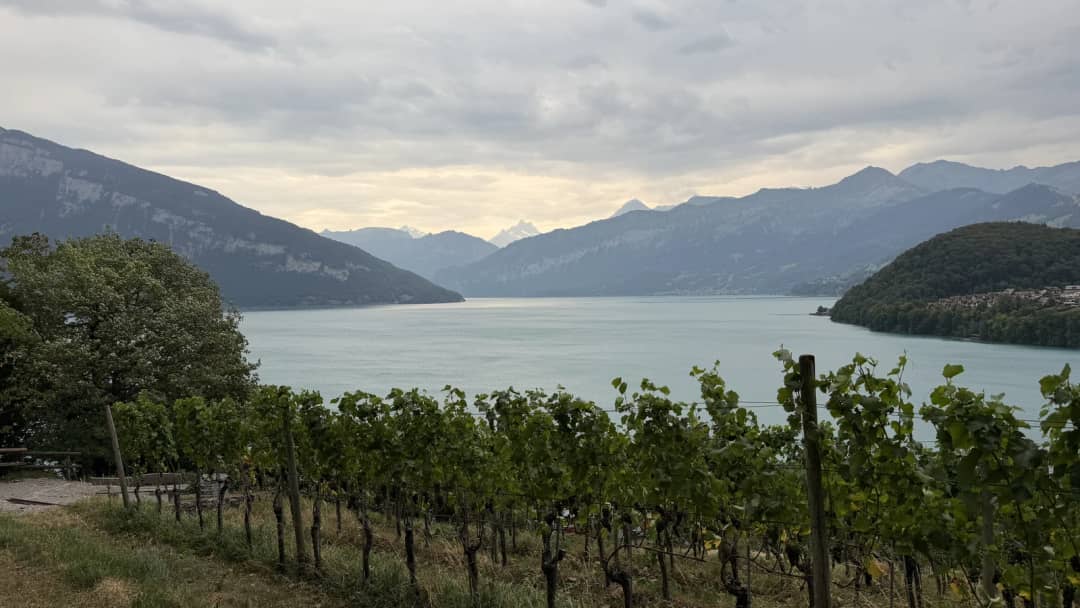
What Is Riesling-Sylvaner? Switzerland's Rare Wine
You will see Riesling-Sylvaner on almost every wine list in Spiez. Most visitors assume it's a blend of two grapes. It isn't. The mix-up is common enough that EU wine labeling rules only recognize the grape's other name, Müller-Thurgau, for bottles sold across most of the continent.
98% of Swiss wine never leaves the country, so most wine drinkers abroad never get the chance to learn the truth.
This article clears up the confusion. You'll learn what Riesling-Sylvaner really is, what it tastes like, and where to try a glass yourself in the hills above Lake Thun.
Is Riesling-Sylvaner a Blend of Riesling and Sylvaner?
No. Riesling-Sylvaner is the Swiss name for a single grape variety, Müller-Thurgau, not a blend of two different grapes.
The confusion is understandable. The name suggests two parent grapes mixed together in the glass.
Müller-Thurgau itself is a cross, bred in 1882 by Hermann Müller, a botanist from the Swiss canton of Thurgau. He created it at the Geisenheim research institute in Germany, and the grape carried both his name and his home canton with it. The first vines only reached Switzerland, in Wädenswil, in 1891. DNA testing later confirmed its parentage: Riesling and Madeleine Royale, not Sylvaner.
Swiss winemakers kept calling it Riesling-Sylvaner anyway, out of habit and regional pride. The name stuck in Switzerland, Austria, and parts of northern Italy.
Fun fact: Riesling-Sylvaner, or Müller-Thurgau, was bred in 1882 at Geisenheim by Hermann Müller from Thurgau. DNA testing later showed its parents are Riesling and Madeleine Royale, not Sylvaner.
EU wine regulations recognize only Müller-Thurgau as the official grape name for labeling, which is why you'll rarely see "Riesling-Sylvaner" printed on a bottle outside Swiss borders.
What Grape Is Riesling-Sylvaner Really Made From?
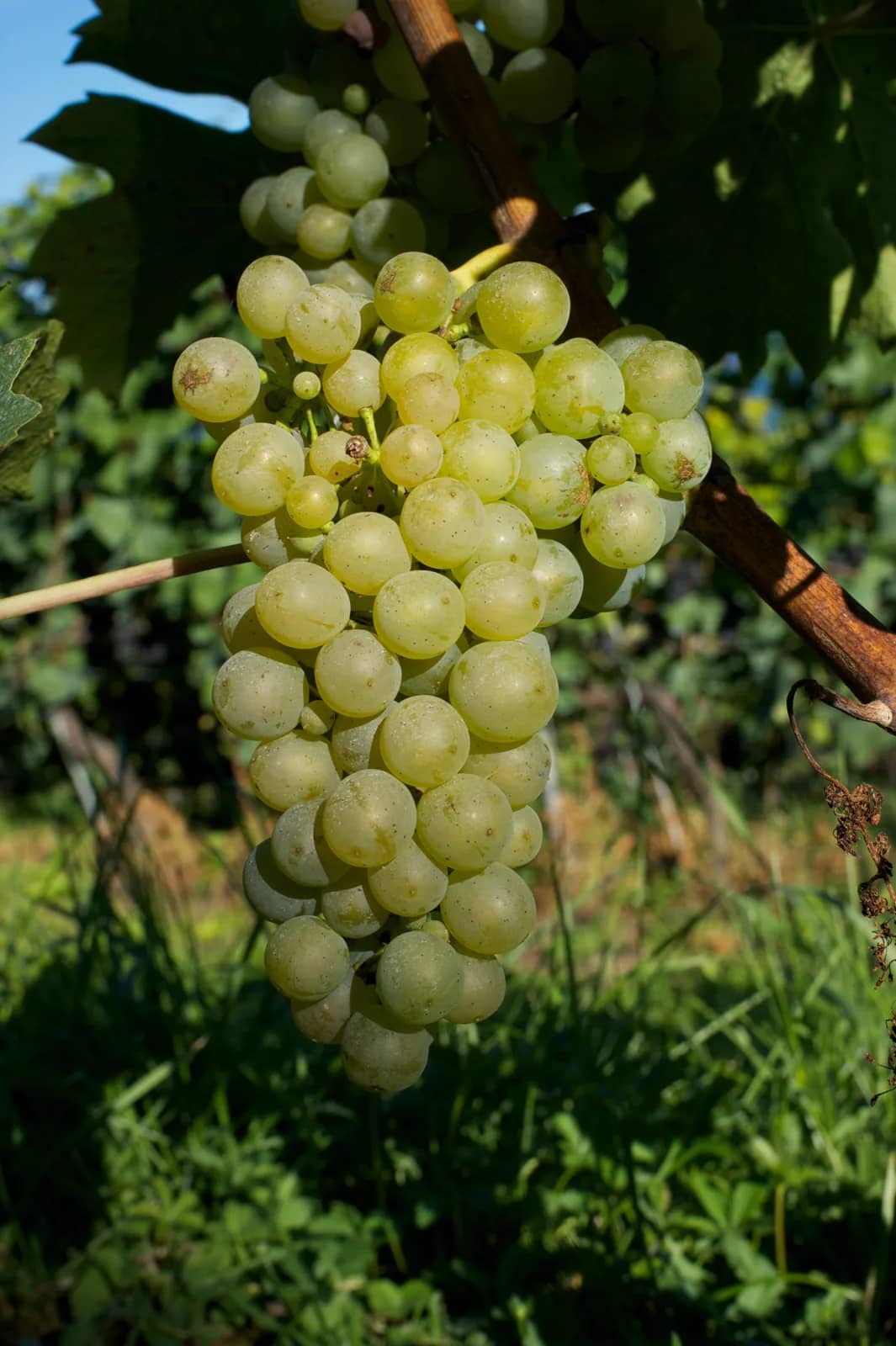
Riesling-Sylvaner is made from Müller-Thurgau, a grape bred for cooler climates. It ripens early and handles altitude and lake-cooled air far better than true Riesling.
That's why it thrives around Spiez.
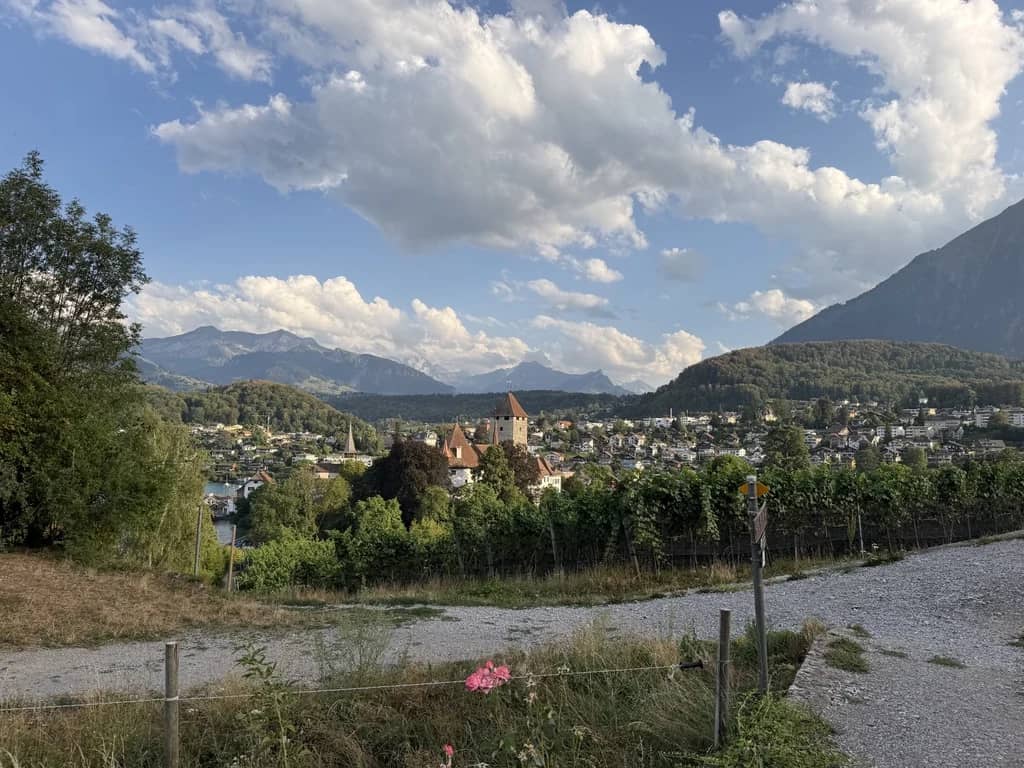
The vineyards there sit above Lake Thun, where cool air drifts down from the surrounding peaks even in summer. Müller-Thurgau suits this spot well.
You'll also find it grown in Germany, where it's called Müller-Thurgau, and in parts of Austria and New Zealand under different local names. Same grape, different passport.
What Does Riesling-Sylvaner Taste Like in Spiez?
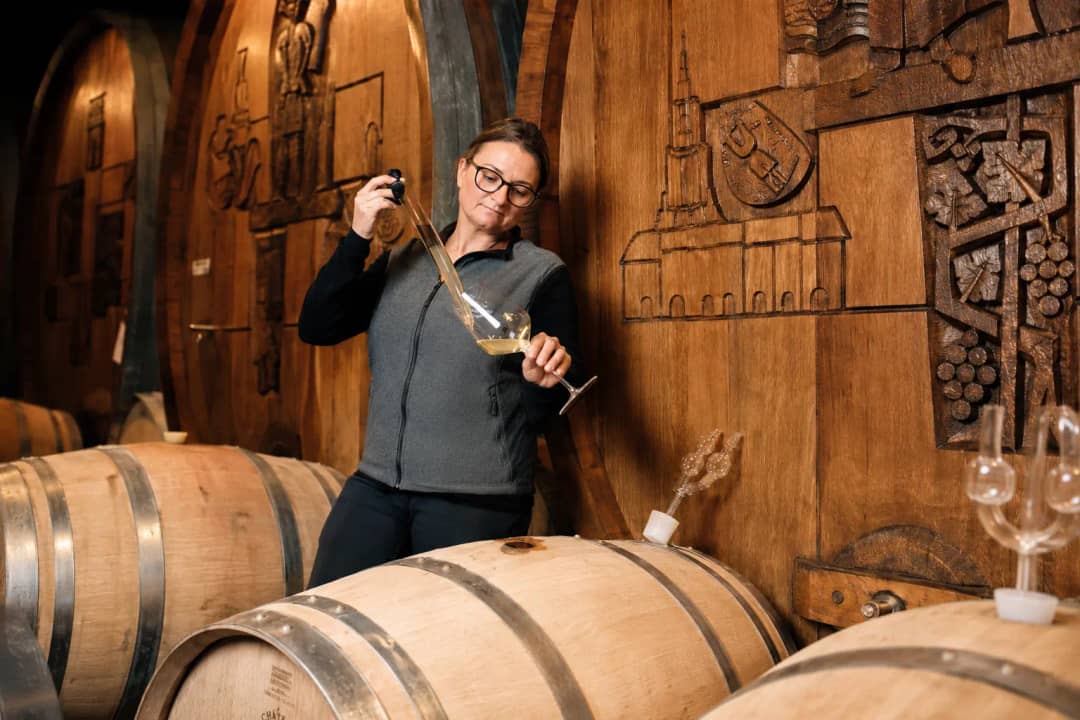
At Spiez, Riesling-Sylvaner is vinified dry, thanks to the cool climate around Lake Thun. Expect elderflower aromas, green apple, pear, and a light mineral edge.
The body stays light to medium, never heavy.
Acidity runs bright and lively, which keeps the wine feeling fresh rather than flat. Alcohol content stays modest too, usually lower than many other whites.
Olivia says: "The wine in my glass suddenly smelled like the air around me: cool, faintly floral, almost green."
Olivia Lufman, your travel writer at Swiss Local Adventures
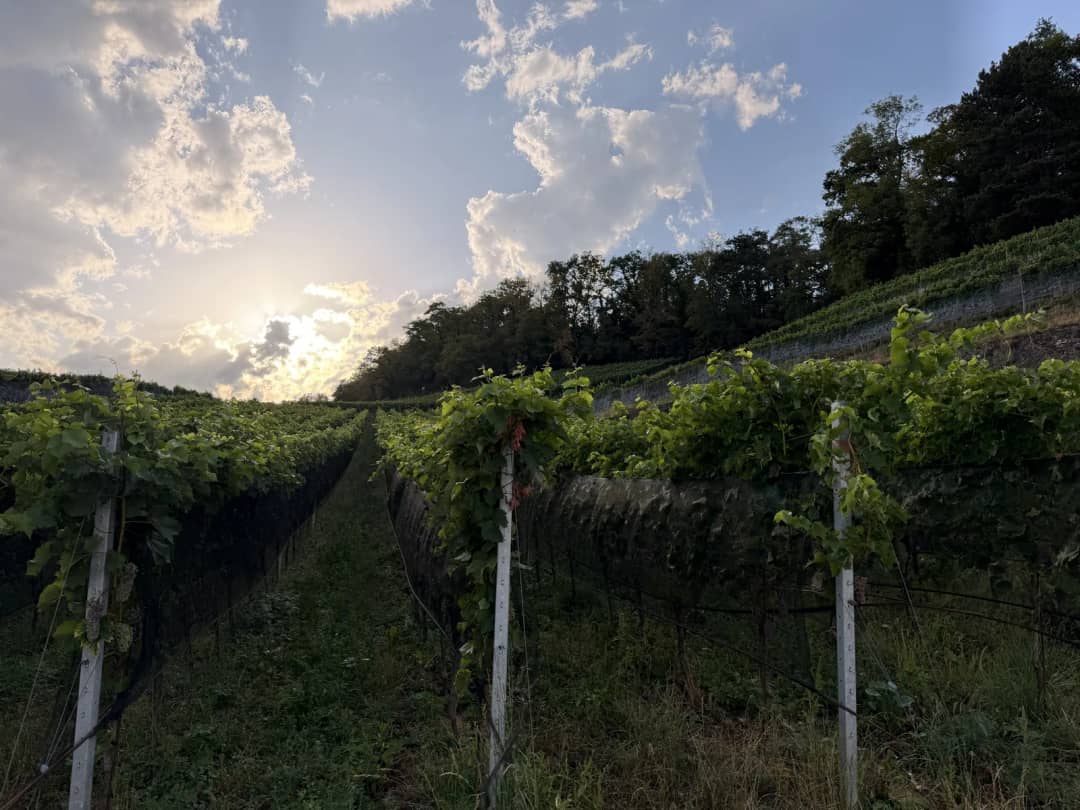
I remember standing at the edge of a Spiez vineyard row in early autumn, glass in hand, when the wind shifted off the lake. The wine in my glass suddenly smelled like the air around me: cool, faintly floral, almost green. That's the moment I understood why this grape belongs exactly where it grows.
If you've tried other Swiss whites, this one leans lighter and more floral than a Chasselas.
Why Do Swiss Winemakers Still Call It Riesling-Sylvaner?
Swiss winemakers kept the name Riesling-Sylvaner out of tradition and regional identity, long before DNA testing revealed the grape's true parentage.
The name predates the science.
Winegrowers in German-speaking Switzerland adopted it decades ago, and it became part of the local wine vocabulary passed down through generations.
Changing a name that customers already recognize is risky business. Many small producers, including the growers around Spiez, never saw a reason to switch labels once the truth came out.
Insider tip: You'll hear both names locally. Ask for Müller-Thurgau in a shop and staff will point you straight to the Riesling-Sylvaner shelf.
For visitors, that means you'll hear both names locally. Ask for Müller-Thurgau in a shop and staff will likely nod and point you straight to the Riesling-Sylvaner shelf.
How Old Are the Vineyards Where Riesling-Sylvaner Grows Near Spiez?
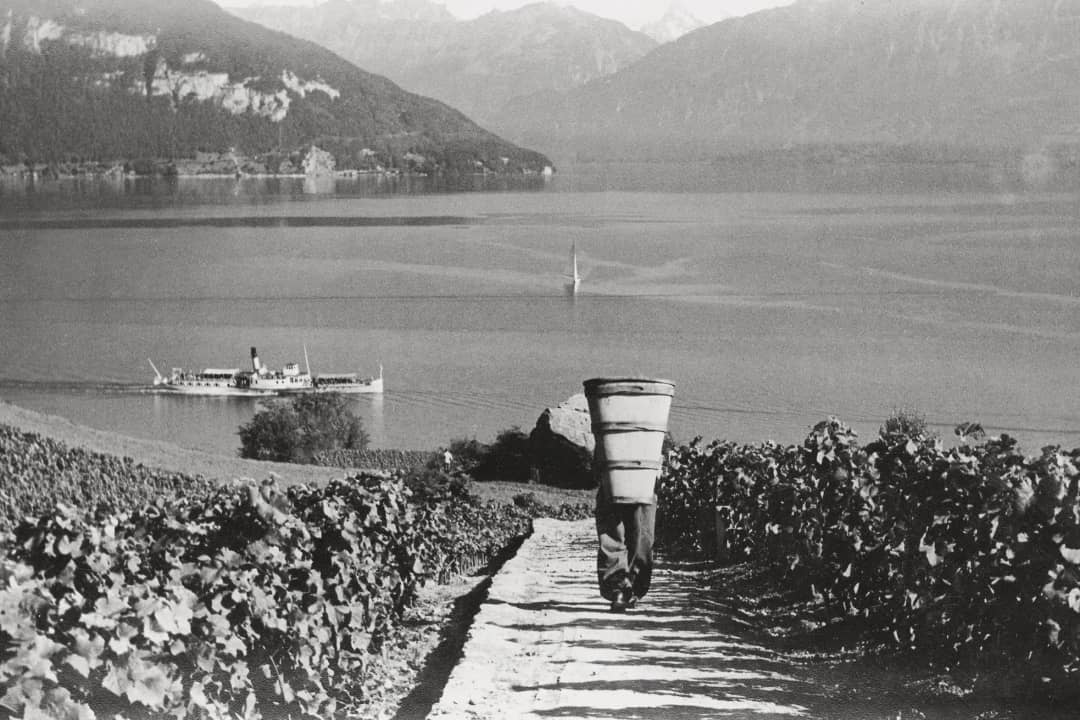
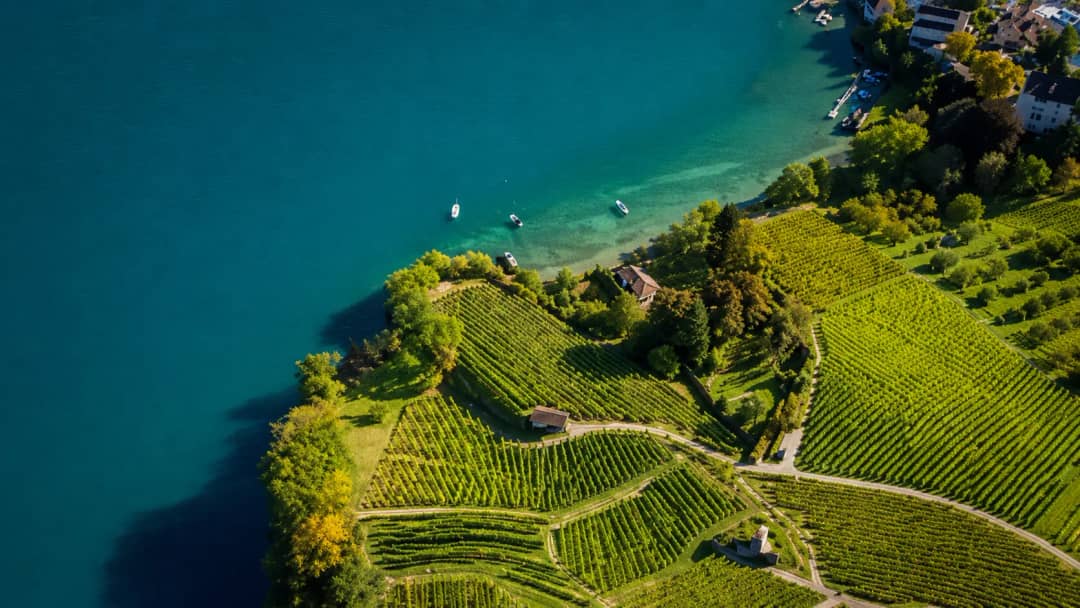
The vineyards around Spiez are documented as far back as 994 AD, making them among the oldest wine-growing sites in Switzerland.
That's over a thousand years of continuous winemaking on the same slopes.
The terraces climb steeply above the lake, catching sun during the day and cool lake air at night. That daily swing is part of what gives the local Riesling-Sylvaner its crisp character.
Olivia asked a winemaker: "Do you water these steep rows?"
"Nobody does. Look at the exposed soil: the roots go deep enough to find their own water."
Olivia Lufman, your travel writer at Swiss Local Adventures
If you want the deeper history of these terraces and the people farming them today, the covers that story in full.
Where Does Riesling-Sylvaner Fit Among Switzerland's Wine Regions?
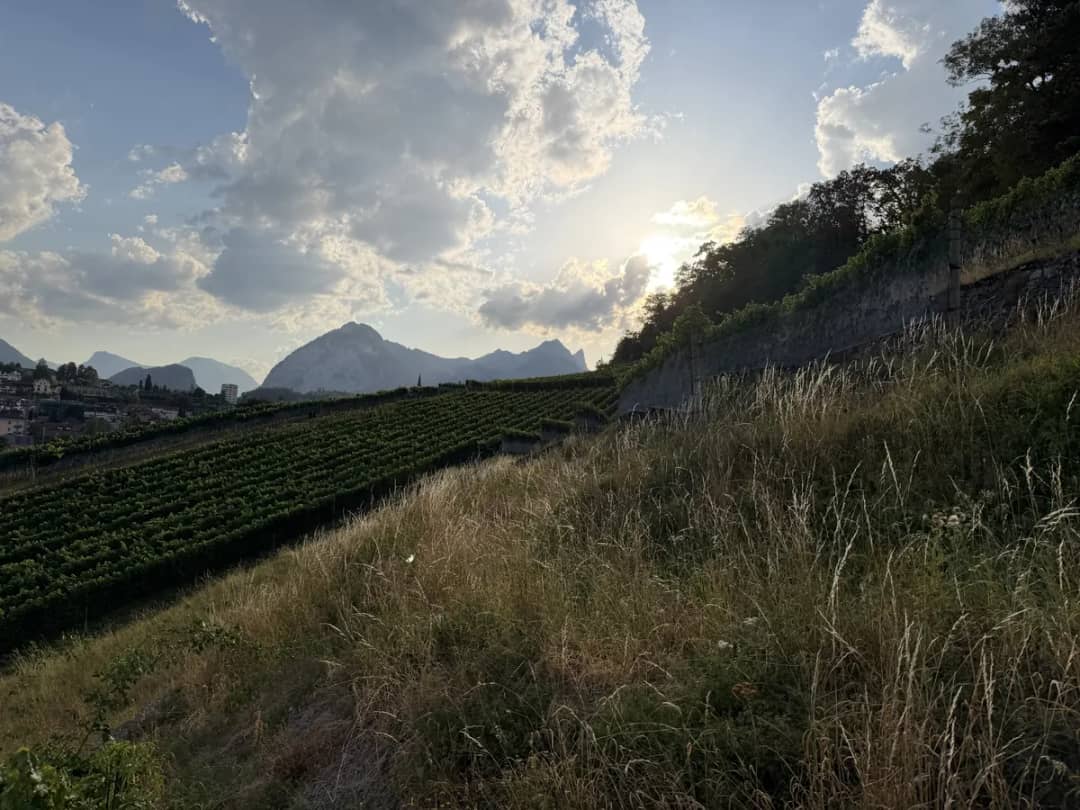
Riesling-Sylvaner is one of two main grapes grown around Spiez, alongside Pinot Noir for reds. Together they define the local wine identity above Lake Thun.
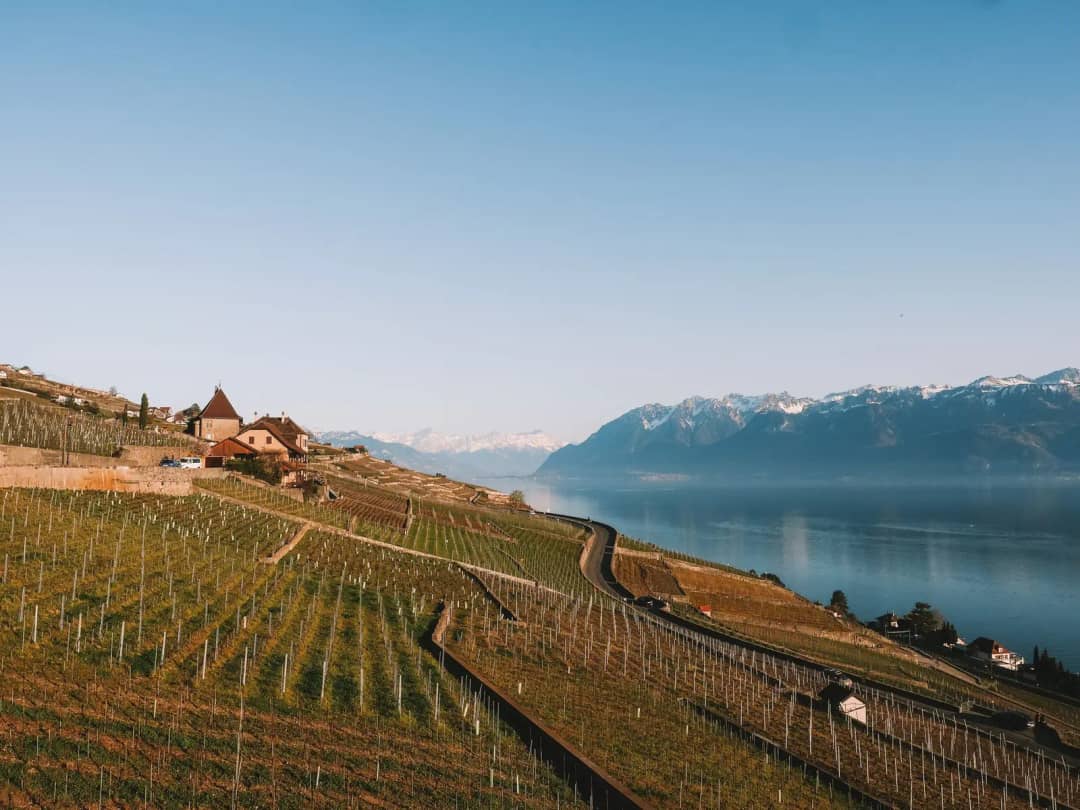
Switzerland has several distinct wine regions, from Lavaux to Valais to the shores of Lake Thun.
Each region favors different grapes based on climate, soil, and altitude. Spiez leans toward cooler-climate whites precisely because of its lake-moderated microclimate.
For a full regional comparison, including where Riesling-Sylvaner sits next to Chasselas and other Swiss varieties, read .
Can You Only Taste Riesling-Sylvaner in Switzerland?
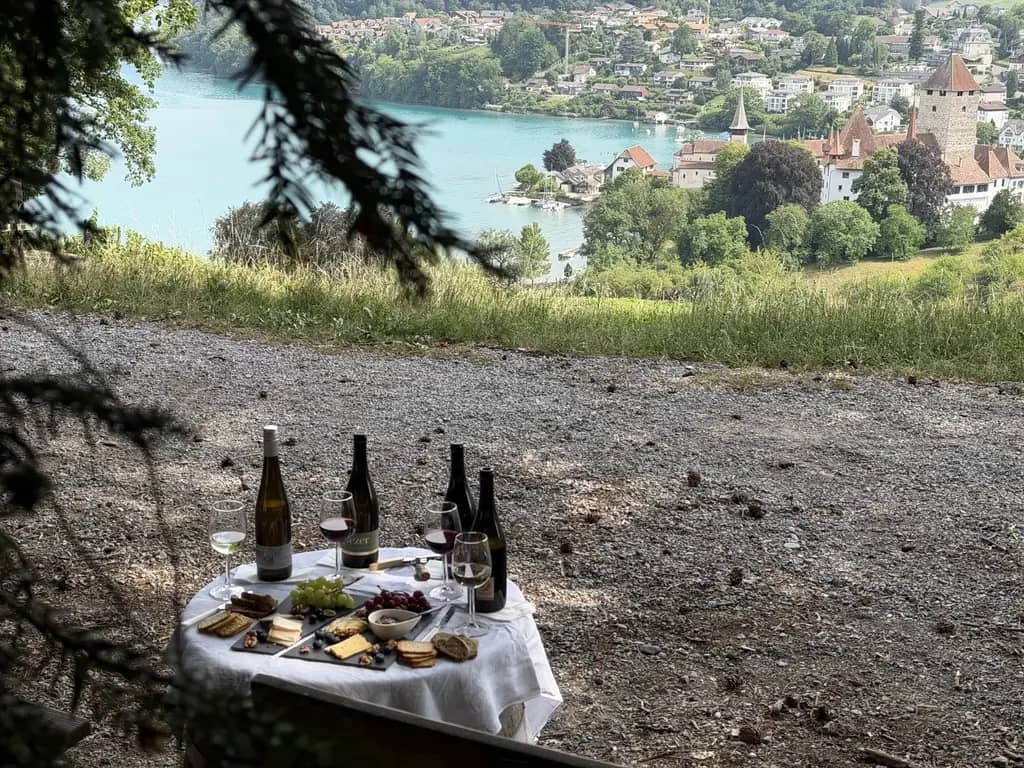
You can find Müller-Thurgau grown elsewhere, but tasting the Swiss Riesling-Sylvaner style specifically means visiting Switzerland, since almost none of it gets exported. Here's the irony: it's the most planted white grape in German-speaking Switzerland, and still almost impossible to find abroad.
The stat bears repeating: 98% of Swiss wine never leaves the country.
Swiss vineyards are small, production is limited, and domestic demand absorbs nearly everything that's bottled. Exporting isn't a priority for most growers.
Olivia says: "My rule for Riesling-Sylvaner: drink it where it grows. A Müller-Thurgau from Germany at home is the same grape, and it will not taste of that slope above Lake Thun."
Olivia Lufman, your travel writer at Swiss Local Adventures
That makes tasting it on-site less of an option and more of a requirement, if you want to try the real thing.
Your Questions About Riesling-Sylvaner
Is Riesling-Sylvaner the Same as Müller-Thurgau?
Yes, Riesling-Sylvaner and Müller-Thurgau are the same grape. Riesling-Sylvaner is the traditional Swiss, Austrian, and northern Italian name for the variety.
The grape itself was bred in 1882 by Hermann Müller, a botanist from the canton of Thurgau, though he actually created it at the Geisenheim institute in Germany. DNA analysis later confirmed its true parentage as Riesling crossed with Madeleine Royale, not Sylvaner as the older name implies.
EU labeling rules only recognize the name Müller-Thurgau, so the traditional "Riesling-Sylvaner" label is restricted to Switzerland, Austria, and northern Italy. That's why bottles sold internationally almost always say Müller-Thurgau instead. In Switzerland, though, both names circulate freely, and locals use them interchangeably without a second thought.
Is Riesling-Sylvaner Sweet or Dry?
Riesling-Sylvaner can be made either sweet or dry depending on the region and winemaker, but around Spiez it's typically vinified dry.
The cool air rolling off Lake Thun keeps sugar levels in check during ripening, which favors a crisper, drier style over a sweeter one.
Expect notes of elderflower, green apple, and pear, with a light mineral finish and bright acidity. The alcohol content tends to stay on the lower side too.
In warmer regions or countries where Müller-Thurgau grows, you may occasionally find off-dry or semi-sweet versions, but that's not the Spiez tradition.
Isn't Müller-Thurgau Just a Cheap Bulk Grape?
It carries that reputation, but mostly from Germany, where it was once planted for high-volume, low-cost wine. Switzerland went the other way. It's the most planted white grape in German-speaking Switzerland, yet the plots above Spiez are small, steep and hand-worked, with yields kept deliberately low.
The result tastes nothing like the bulk version: dry, mineral, and tied to the exact slope it grew on. Same grape, opposite philosophy.
Can I Buy Riesling-Sylvaner Outside Switzerland?
Buying genuine Swiss Riesling-Sylvaner outside Switzerland is very difficult, largely because 98% of Swiss wine never leaves the country.
Swiss vineyards are small compared to major wine-producing nations, and most of what they produce gets consumed domestically, often within the same region it was grown.
You might find Müller-Thurgau from Germany or New Zealand on international shelves, and that's the same grape genetically. But the specific Swiss growing conditions, lake-cooled climate, and centuries-old terraces around Spiez don't translate to a bottle you can order elsewhere.
If you want to taste the authentic version, visiting the source is really the only reliable option.
Where Can I Taste Riesling-Sylvaner Near Interlaken?
The vineyards around Spiez, roughly 20 minutes from Interlaken by train, are the closest place to taste authentic Riesling-Sylvaner straight from the source.
Spiez is not the only choice, though. If you want to weigh it against a bar in town or a cellar visit, this comparison of six wine tasting options near Interlaken lists what each one costs and what you actually get to drink.
These terraced slopes overlook Lake Thun and have grown wine grapes since 994 AD, giving the region deep, documented winemaking roots.
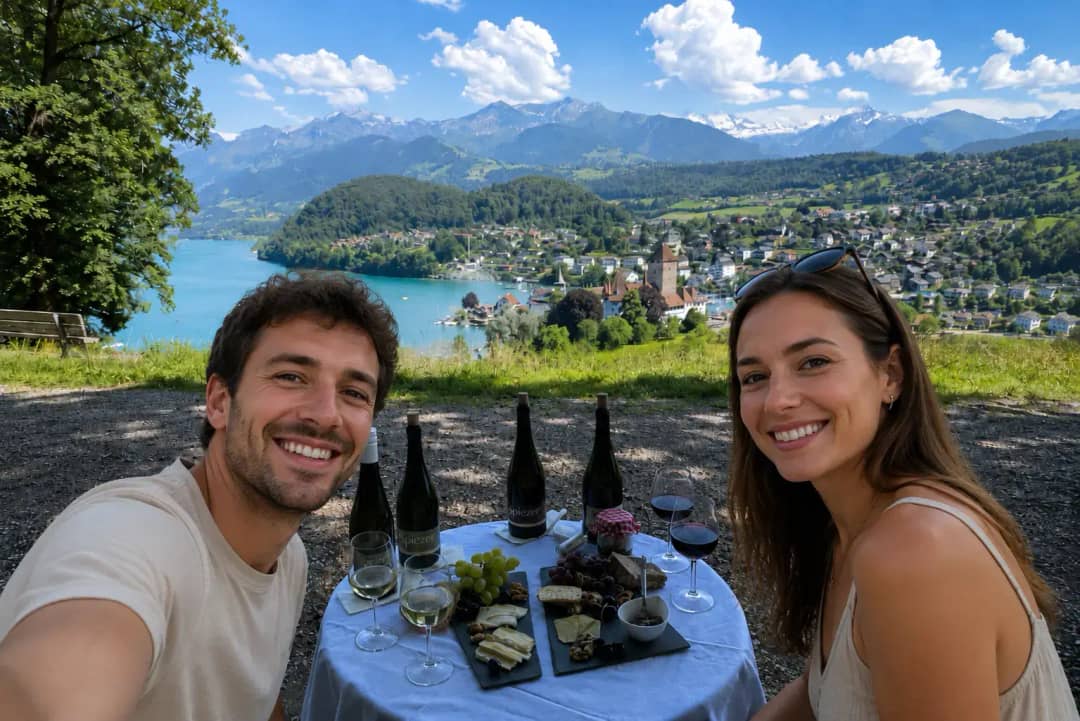
Local tastings let you compare the dry, floral Riesling-Sylvaner against the region's Pinot Noir reds, side by side, with the vineyard views right in front of you.
A guided afternoon in those vineyards costs CHF 139 per person. Before you book, read our honest breakdown of what the Spiez wine tour includes and who tends to find the price fair.
It's a short trip from Interlaken but a completely different pace, quiet rows of vines instead of mountain crowds.
Ready to Taste It Yourself?
Riesling-Sylvaner is Müller-Thurgau under a Swiss name, grown on some of the country's oldest vineyard slopes.
Reading about it only gets you so far. The real difference shows up in the glass, with the lake breeze still on your skin.
And if someone in your group skips alcohol altogether, the walk through the terraces, the cheese and the lake views still carry the afternoon. Here is what non-drinkers get in Spiez, in plain terms.
Our Wine Tour runs 3 hours, costs CHF 139 per person, and stays capped at 8 guests for a relaxed, unhurried pace above Lake Thun.
Book your spot on the Wine Tour to Spiez.
*Written by Olivia Lufman, your travel writer at Swiss Local Adventures
Source:
on-site tasting at Spiez, 2026.
Tags
#riesling-sylvaner#muller-thurgau#swiss-wine#spiez#wine-tasting#interlaken
Sources & References
Share this article
Similar Articles
Continue your reading with these related articles
Wine Tour
8/19/2026
5 min
Is the Spiez Wine Tour Worth CHF 139?
A standalone tasting in Switzerland costs CHF 30 to 70, and most vineyards will not sell you one. Here is what CHF 139 buys instead, priced line by line against every Swiss alternative, plus the exact case where doing it yourself is cheaper.
wine-tour-interlakenwine-tasting-cost-switzerlandswiss-wine
By Olivia LufmanRead More
Wine Tour
8/18/2026
4 min
Wine Tasting in Interlaken: 6 Real Options
Around 2% of Swiss wine ever leaves the country, and three working vineyards sit within 25 minutes of Interlaken. Here is where to taste, on which day each cellar actually opens, and what it costs.
wine-tour-interlakenswiss-winespiez-vineyard
By Olivia LufmanRead More
Wine Tour
7/8/2026
4 min
Wine Tour Spiez for Non-Wine-Drinkers
I get this question once a week. Usually from someone booking with a partner who picked the tour. The honest answer has two parts, and neither involves pretending to be a wine expert.
By Olivia LufmanRead More