Winter
What to Wear in Interlaken in Winter: A Guide's List
P
Pierre Vetsch
Author
November 1, 2026
13 min
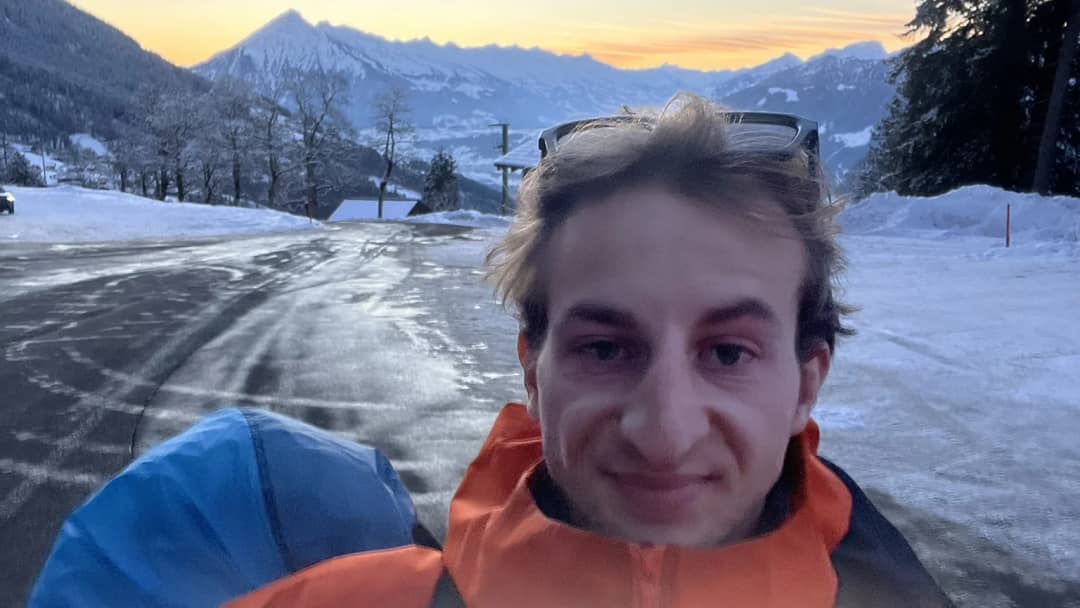
What to wear in Interlaken in winter depends on where you stand, not on the month. Down in town the thermometer sits around 0 to 3 °C and the ground is wet more often than white. Ride up to the Jungfraujoch and the same afternoon runs at -12 °C with wind. Most visitors pack for one of those two places and get caught by the other.
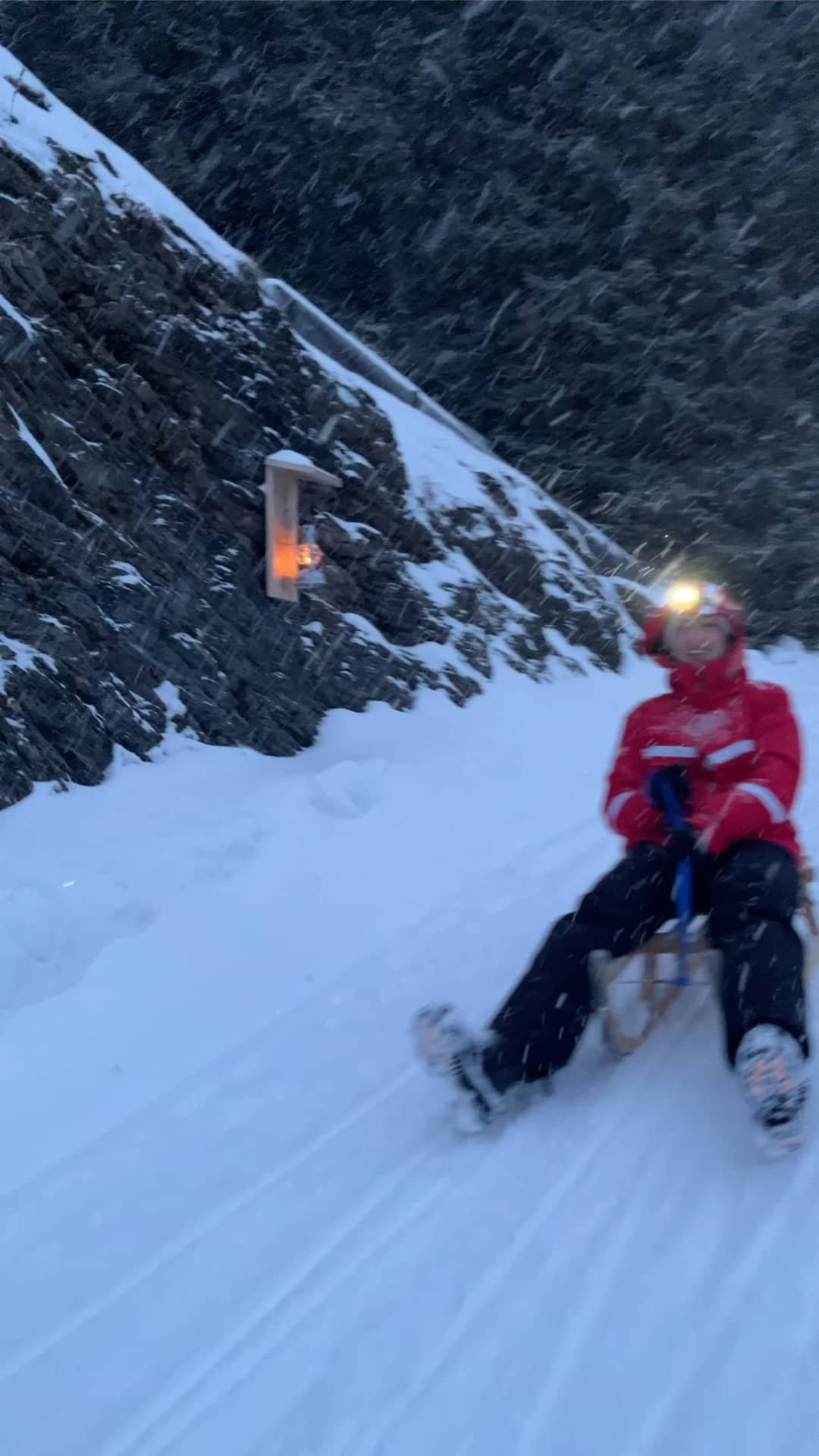
I guide winter evenings above Interlaken every week from December to April, and I rent out jackets and trousers, CHF 5 each, to guests who arrived in jeans. So this list is not a shop's list. It is what I see on people's feet at the cable car, what works, and what we hand out when it does not.
What should you wear in Interlaken in winter?
Three layers on top, one waterproof pair of shoes, gloves and a hat. In town you need waterproof shoes and a jacket that keeps rain out more than a parka that keeps cold out. For a day on a summit or an evening in the snow, add a warm mid layer, proper gloves and sunglasses. That covers December to March.
The town itself is mild for the Alps. At the MeteoSwiss station in Interlaken, the January average over the ten years 2016 to 2025 was 0.7 °C, with daily lows around -2 °C. Snow falls on the streets some days, then disappears.
Pierre says: "Rare, it melts fast." > Pierre Vetsch, founder and head guide at Swiss Local Adventures, on snow in the streets of Interlaken
What catches people out is the mix. You walk out of a warm train onto a platform at about 570 m, then step into a gondola and out again high up. The outfit has to open and close as the day goes. That is why layers beat one big coat, and why the shoes matter more than the coat. For what to do once you are dressed, my ranking of things to do in Interlaken in winter shows what is worth the cold.
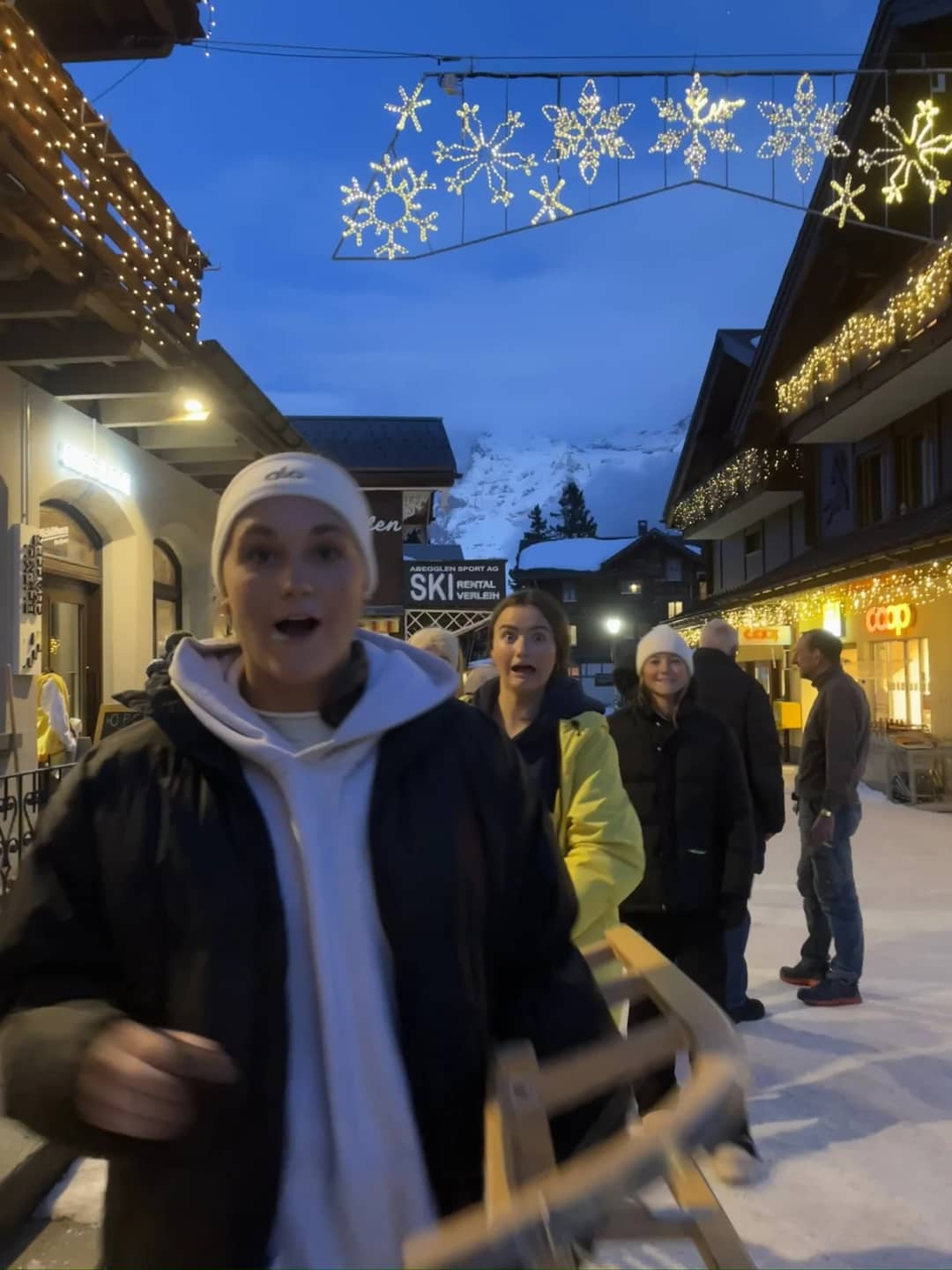
How cold is it really: Interlaken town or the Jungfraujoch?
About 13 °C apart on an average winter day. I pulled the MeteoSwiss daily records for 2016 to 2025: Interlaken (578 m) averaged 1.6 °C in December and 0.7 °C in January, the Jungfraujoch station (3,571 m) -10.5 °C and -12.6 °C. Up there the average wind runs near 30 km/h, which is what makes the terrace feel brutal.
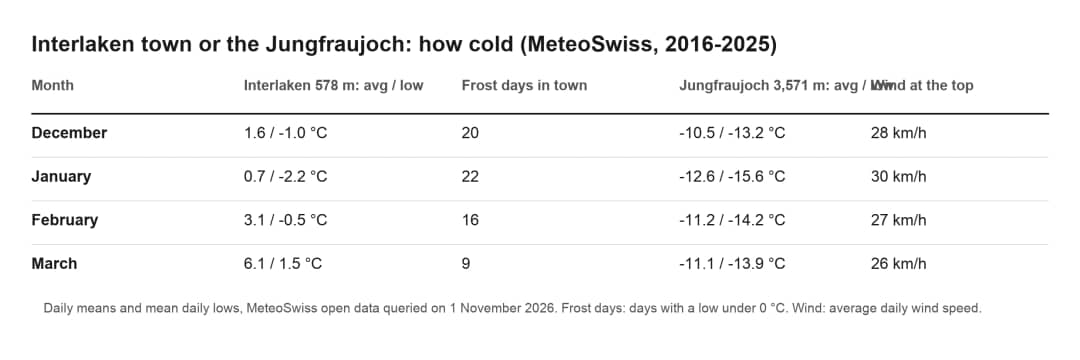
The numbers in the table, in words: Interlaken averages 1.6 °C in December, 0.7 °C in January, 3.1 °C in February and 6.1 °C in March, with daily lows of -1.0, -2.2, -0.5 and 1.5 °C. The town has about 20 frost days in December and 22 in January. The Jungfraujoch averages -10.5, -12.6, -11.2 and -11.1 °C over the same months, with daily lows near -13 to -16 °C and a coldest reading of -28 °C in that decade.
The middle ground is where most of your days happen. Grindelwald, Wengen and Mürren sit between 1,000 and 1,650 m. There the ground is white most of January, the sun is out more than in town, and a normal ski jacket is right.
Fun fact: in those ten winters the Interlaken station never dropped below -12.5 °C, while the Jungfraujoch spent its coldest January night at -27.8 °C. Same ticket, two climates.
Which shoes work for Interlaken in winter: sneakers, hiking boots or snow boots?
One pair of waterproof hiking shoes, mid or high cut, and that is the whole answer for a non-skier. I asked myself the question again this November for a visitor spending a week between the town, the trains, the Jungfraujoch and the Schilthorn, and I landed where I always land.
Pierre says: "A pair of waterproof hiking shoes, because in Interlaken there is usually no snow. Maybe in Grindelwald, when he goes up to look, there will be a bit of snow. But better one pair of hiking shoes than boots he will never use." > Pierre, on the one pair of shoes to pack
Shoes are the one item I would not compromise on, because they are the thing that goes wrong first. The most common mistake I see at the cable car is not a thin jacket, it is low shoes that soak through.
Pierre says: "Jeans or trousers that soak up water, and low sneakers that soak up water too." > Pierre, on the clothing mistake he sees most often
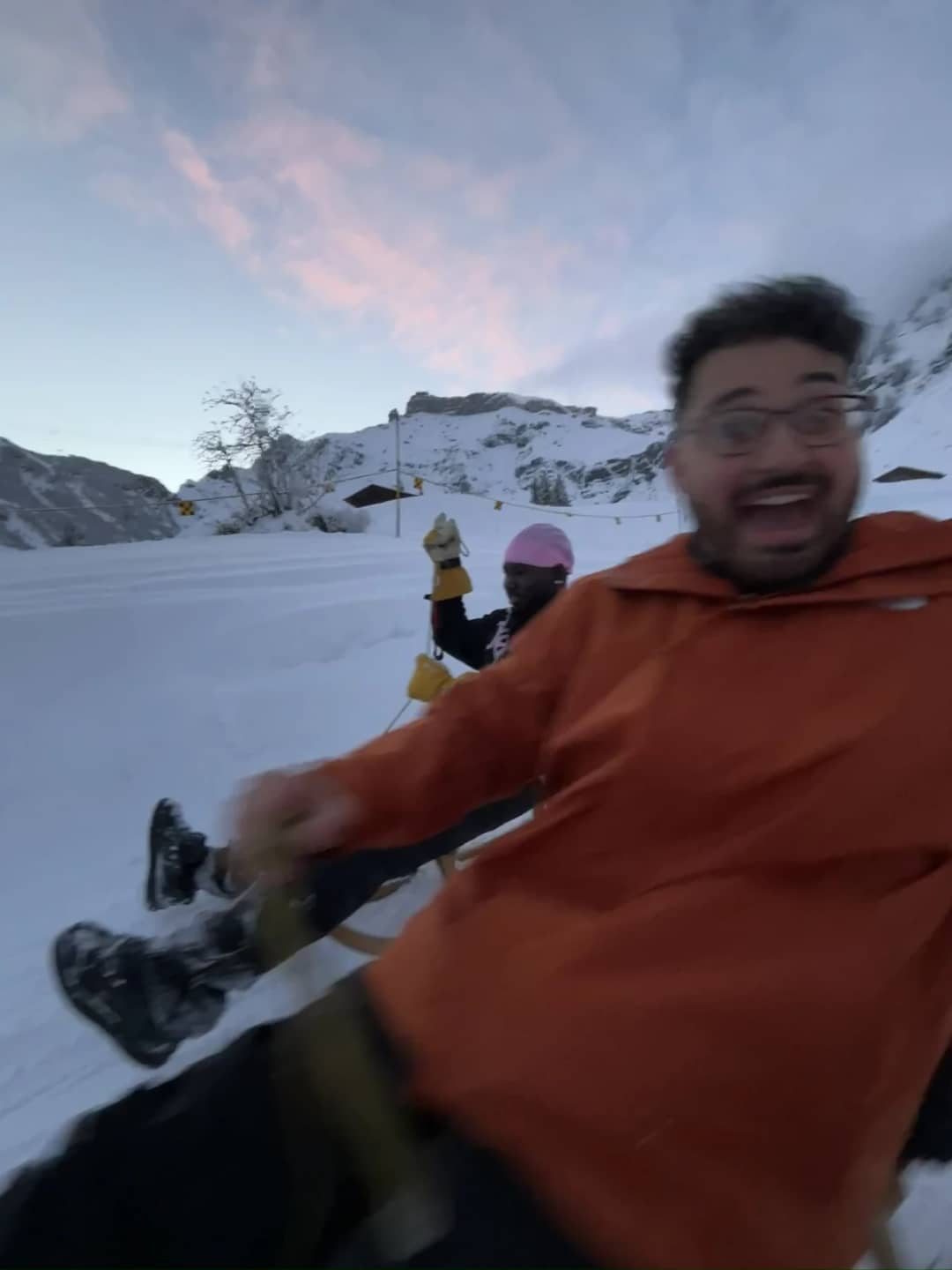
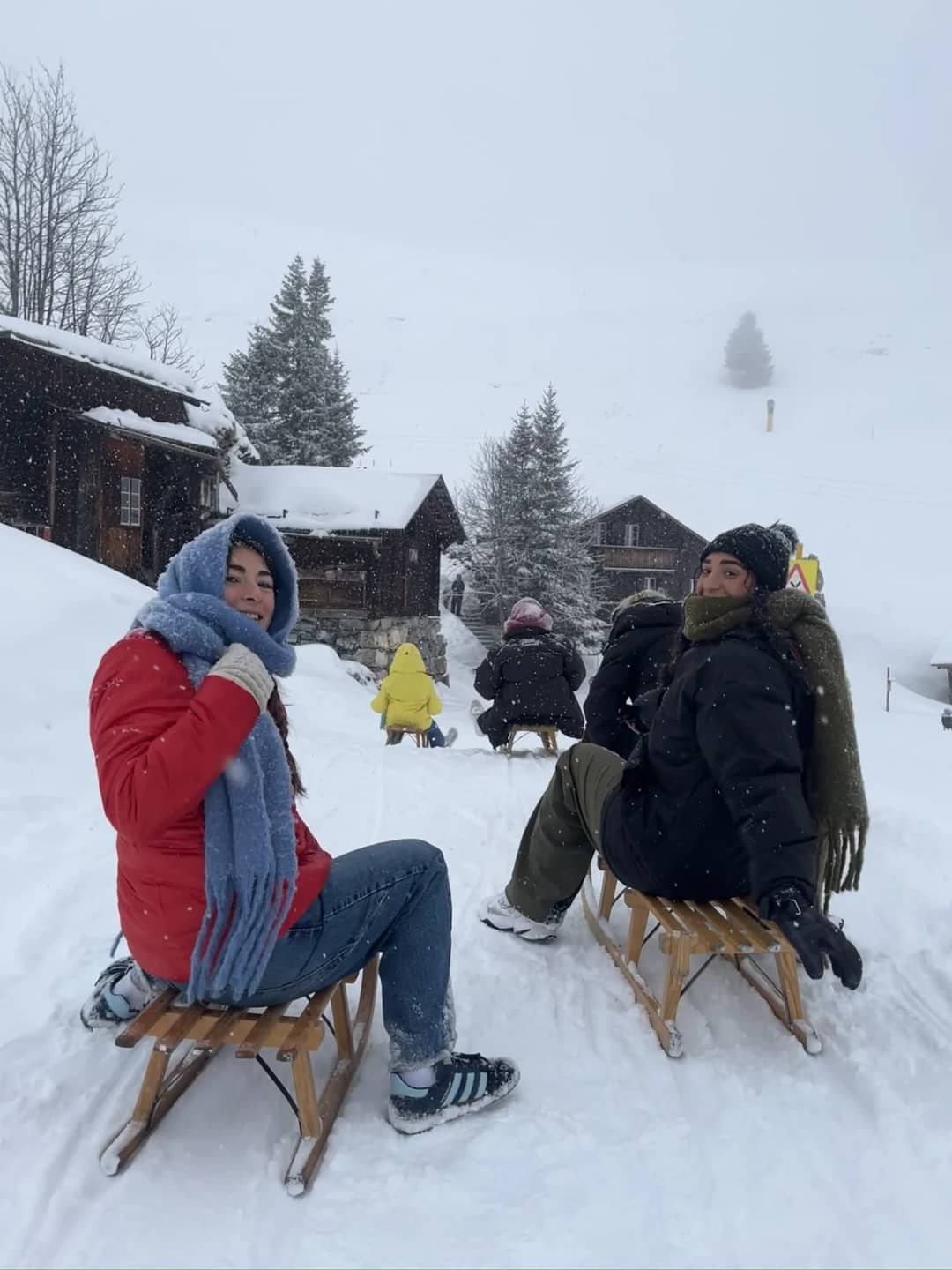
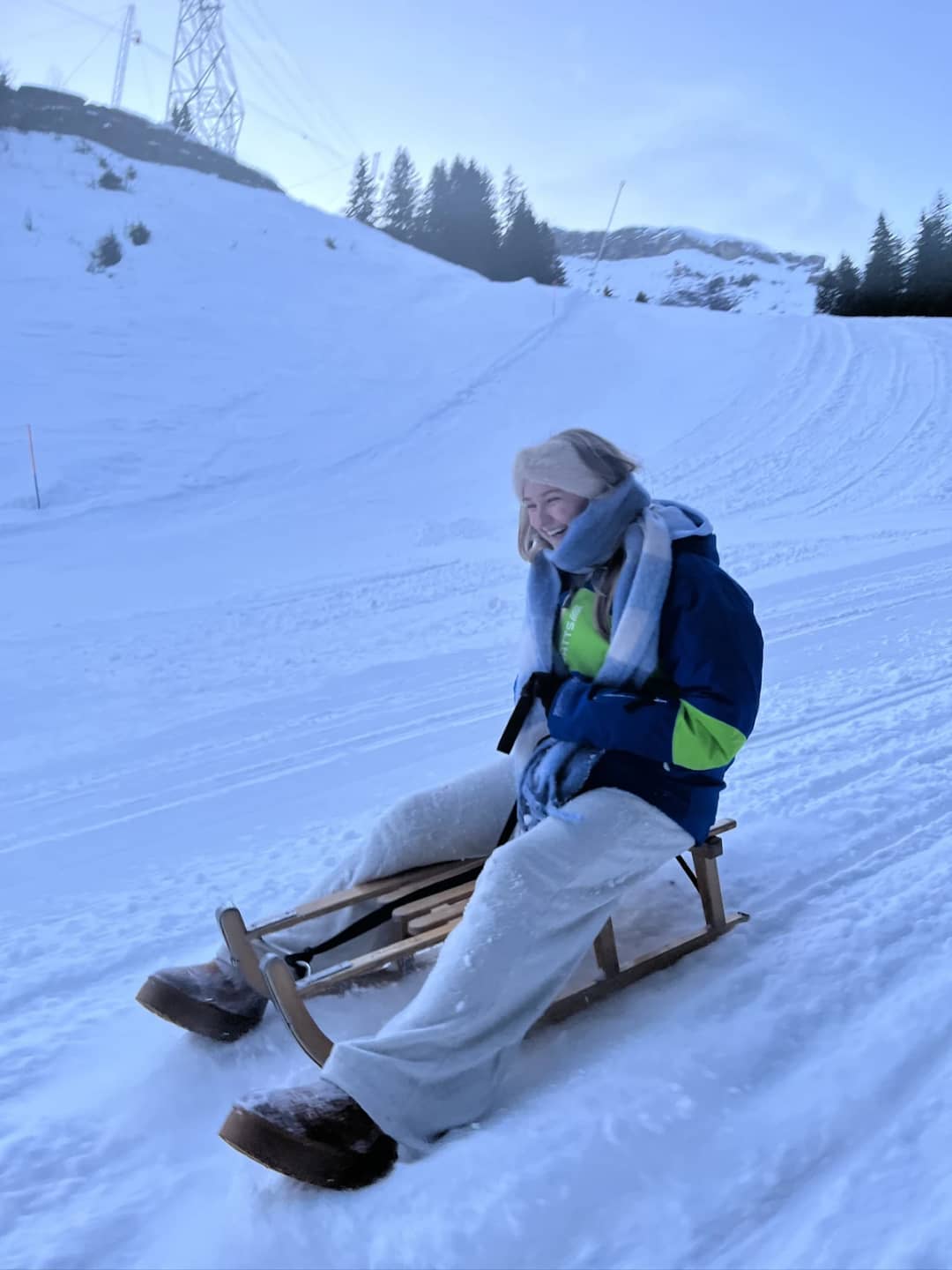
Low canvas sneakers on a February afternoon in Mürren, like the guest in the photo below: the snow on the path is wet, the shoe is soaked well before the end of the walk, and the walk back to the cable car is cold. Guests in waterproof hiking shoes do not make this mistake.
Can you wear jeans in Interlaken in winter?
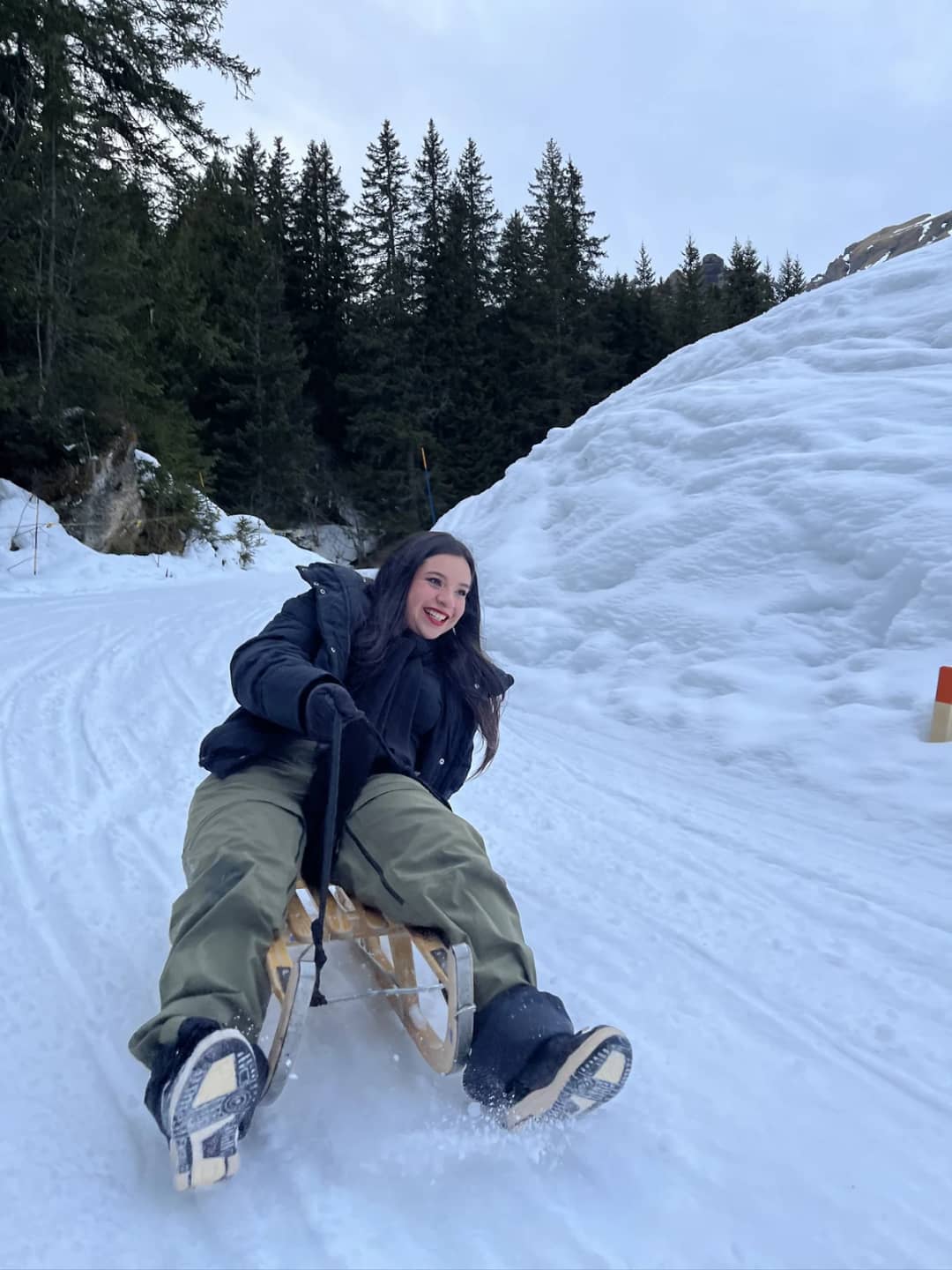
In town, yes. On the snow, no. Jeans are fine for the train, the streets of Interlaken and a café in Grindelwald, because the town is around freezing and mostly dry underfoot. Once you sit on a sled or walk a snowy path, denim soaks up meltwater and stays cold against your legs for the rest of the evening.
I see this every winter. Someone arrives for an evening in the snow wearing the jeans they travelled in, and we solve it on the spot.
Pierre says: "We rent them one." > Pierre, on what happens when a guest shows up in jeans or sneakers
For a day out that mixes town and mountain, the simple fix is a pair of waterproof overtrousers in the bag. They weigh nothing and go over jeans in a minute. If you want the sledding-specific version of this answer, I wrote it in what to wear sledding in Switzerland, and the snowshoe version in what to wear snowshoeing.
Ski jacket or town coat: what do people actually wear?
Pierre says: "Normal trousers, a jumper and a light jacket, usually, or a windbreaker. It is not that cold, we are only at 600 metres." > Pierre, on what he wears on a January day in town, with no tour
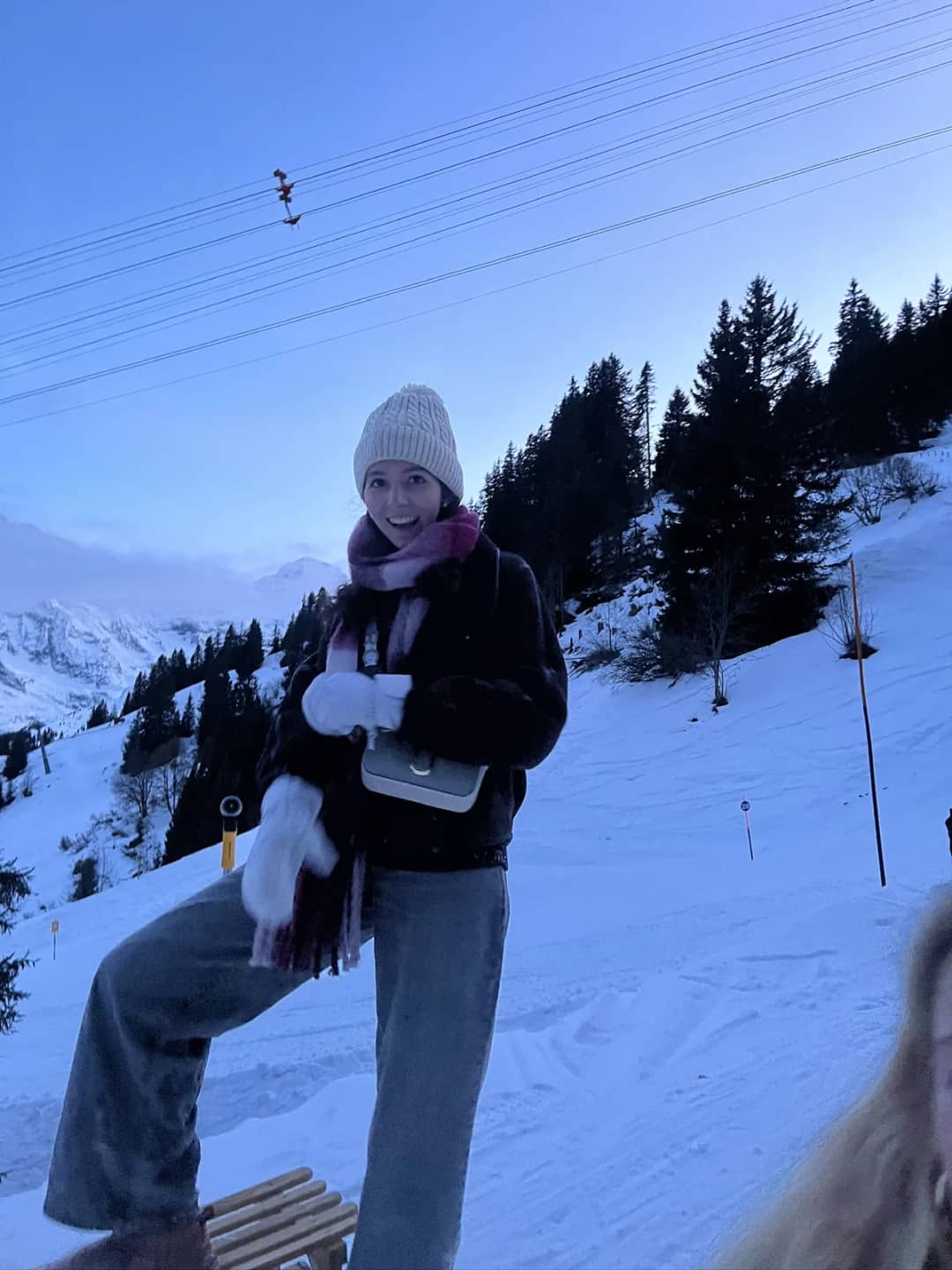
My verdict: a waterproof shell with a warm layer under it beats both. A ski jacket does the job everywhere but looks like a ski jacket at dinner. A wool town coat looks right in Interlaken and fails the first time it rains or you sit on a sled. A shell plus a fleece or a light down jacket covers the train, the summit and the restaurant.
What I see on our evenings is both, side by side. One guest in a proper ski jacket, the next in a long coat with a scarf.
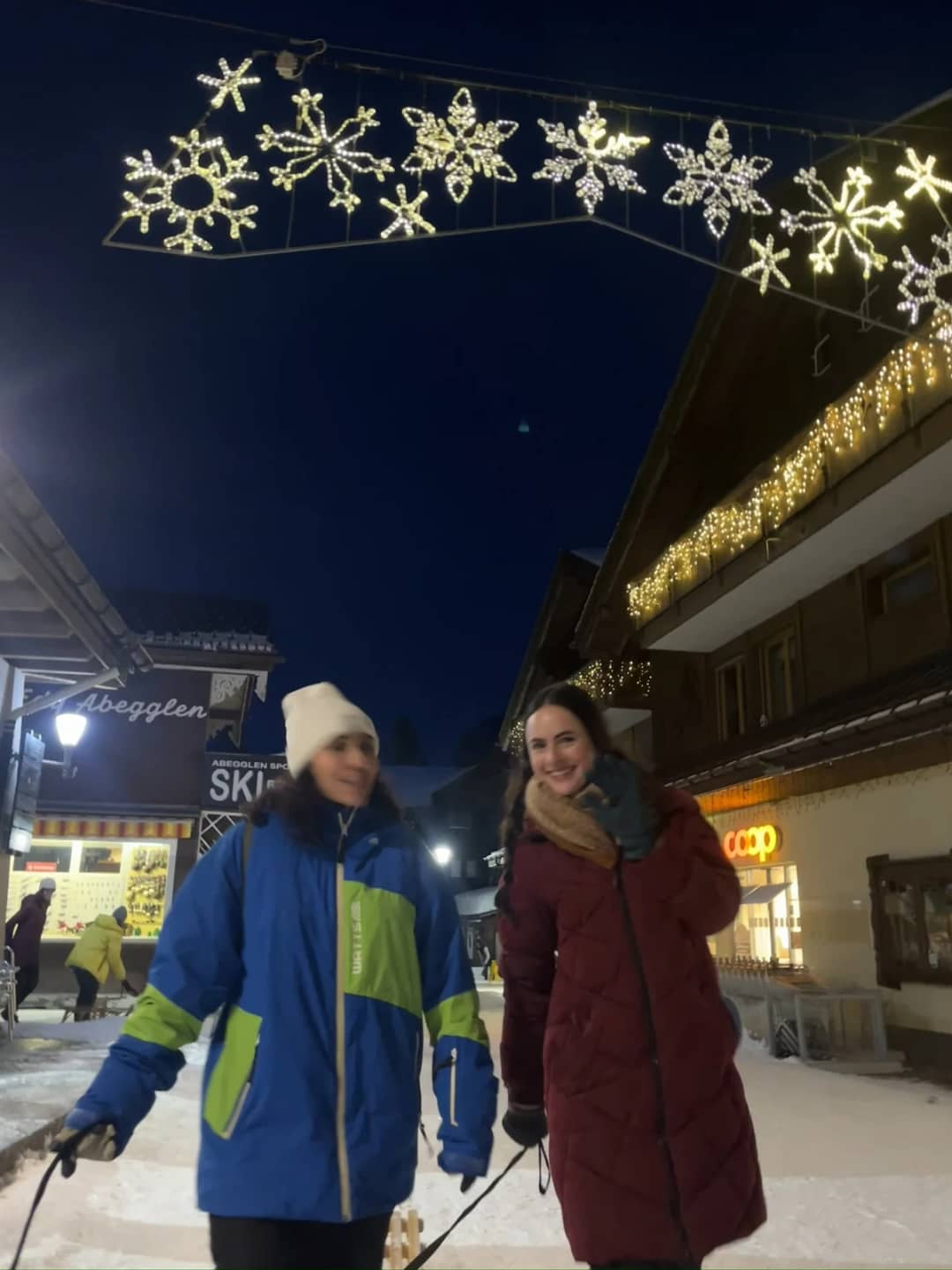
Insider tip: pack the warm layer in your day bag, not on your body. The train is heated to summer, the platform is not. Put it on at the top station, not at the hotel.
What do visitors forget, and where do you buy or rent it in Interlaken?
Gloves. Not boots, not a parka: gloves. The town is not bitterly cold, which is exactly why people leave them in the hotel room, and the first evening in the snow finds them out.
Pierre says: "It is not necessarily very cold, but it is a little cold, so people quickly forget the gloves. We often have people arriving on the tour without gloves. It is the most classic one."
The shops see the same thing from the other side of the counter.
Pierre says: "The salesman at Decathlon, or at the shop in the terminal, tells me the same. Often people forget the gloves and end up renting gloves for the day."
We lend gloves and rent trousers and jackets. On our tours the ski trousers and jackets cost CHF 5 per item, on request when you book, and the gloves are free. We have more than 10 sets in the van, because the gap between what people pack and what the snow needs is that regular.
Pierre says: "5 francs per item, gloves free."
If you want to buy rather than borrow, the closest sports shop to the station is Decathlon at Bahnhofstrasse 31, open Monday to Friday 9 to 19, Saturday 9 to 17, closed Sunday, as listed on their store page on 1 November 2026. Our guide to ski clothes rental in Interlaken compares the shops that rent full outfits for skiing days.
What should you wear for the Jungfraujoch, the Schilthorn or a sledding evening?
Bare hands. No gloves is the mistake I see most at the top, the same one as in the valley.
The coldest moment of a winter day is not the summit terrace at noon. It is the minute the sun leaves.
Pierre says: "When the sun goes behind the mountain, the cold drops straight away, and if there is wind it can really freeze."
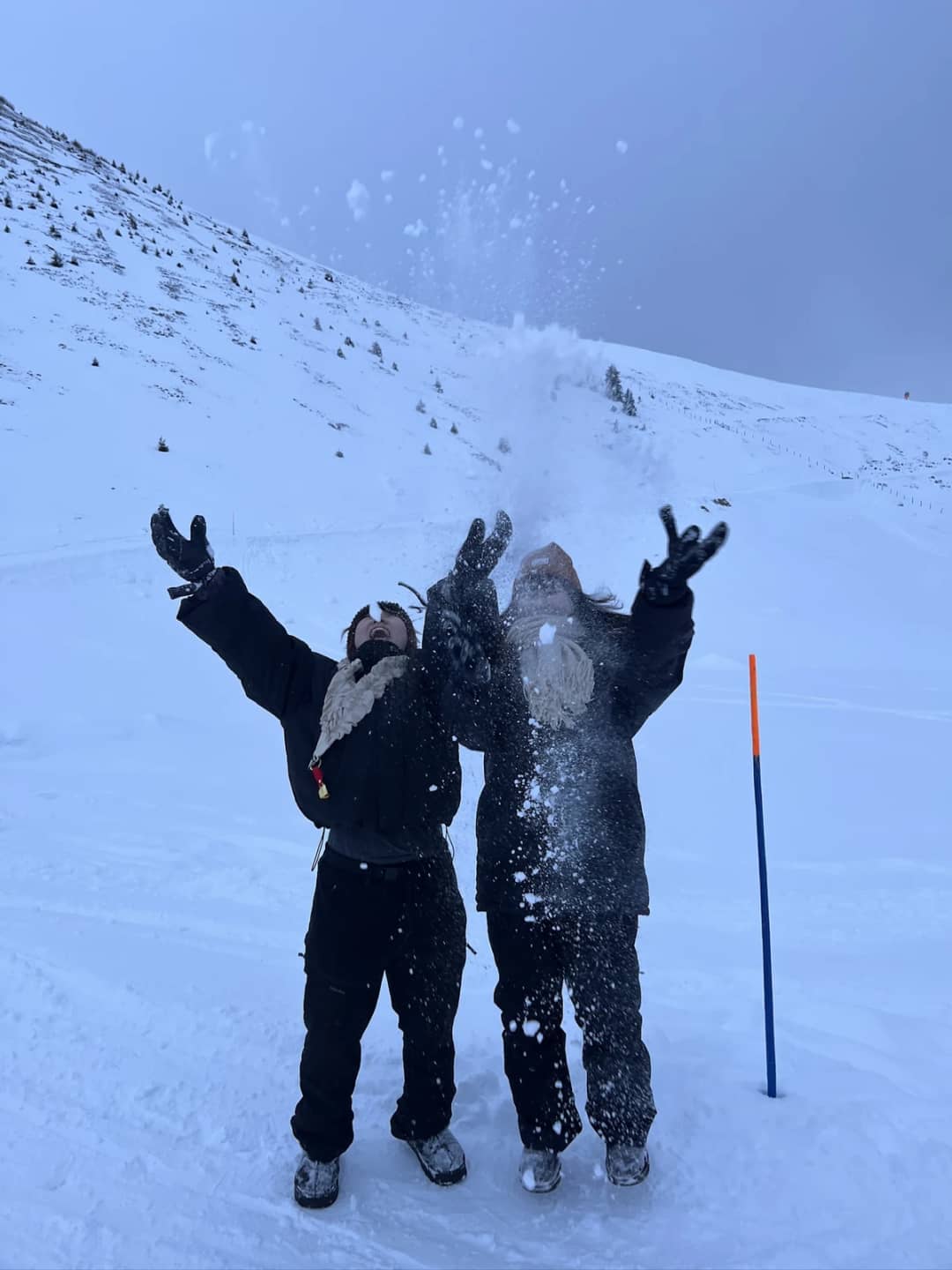
For a summit, dress for -12 °C and wind: warm layer, shell, gloves, hat and sunglasses, then take half of it off inside. For a sledding evening, the shoes are yours to bring, waterproof and high; waterproof trousers and a jacket we rent for CHF 5 each, and the headlamp is included. The two days ask for different things, and the trousers are the difference.
Sunglasses belong on the list too. Snow at altitude throws the light back at you even under thin cloud.
Which summit to pick, and what runs when, is in my guide to winter day trips from Interlaken. If you are deciding whether the trip is worth it at all, start with Interlaken in winter, worth it if you go up.
Your Questions About What to Wear in Interlaken in Winter
These are the questions that come up on the Interlaken forums and in the Google results for this search, answered with the MeteoSwiss records I pulled on 1 November 2026 and what I see on our evenings.
Is Switzerland too cold in December?
Not in Interlaken. The December average over 2016 to 2025 was 1.6 °C at the town station, with daily lows around -1 °C: cold enough for gloves, mild enough for a normal winter coat. The cold is up high, at -10 °C on the Jungfraujoch, and you choose how long you stand in it. The darker problem in December is light, not temperature: about 54 hours of sunshine for the whole month in town, so go up to find the sun.
Do you need snow boots for Interlaken?
No, unless you plan to walk long distances in deep snow. Waterproof hiking shoes with a grippy sole do everything a visitor does here: streets, trains, gondolas, viewing terraces and our sledding runs. Snow boots are warmer but heavy to pack. What does not work is a low canvas sneaker, which soaks through on the first wet path. Clear January nights drop to about -2 °C, so the sole matters as much as the upper. If you already own insulated winter boots, bring them: they are not wrong, only heavier. My answer for a week-long non-skier is one pair of waterproof hiking shoes.
What is the 3-layer rule for winter?
A base layer against the skin that wicks sweat, a mid layer that holds warmth such as a fleece or light down, and a shell that stops wind and water. The point is to take one off when you walk into a heated train and put it back on at the top. One thick coat cannot do that, and in Interlaken you change temperature several times a day. For this region the three layers are: a thin merino or synthetic top, a fleece or light down jacket, and a waterproof shell. Jeans do not fit the rule, which is why we lend trousers on our evenings.
What should you not wear in Switzerland in winter?
Cotton next to the skin, because it stays wet; low sneakers in the snow; jeans on a sled; and nothing on your hands. On the practical side, nobody will judge a ski jacket in a restaurant here. This is a mountain town, and the person next to you came down from the slopes an hour ago. Two more to avoid: brand-new shoes on day one, because blisters end a walk faster than cold does, and thin fashion gloves, which get wet at the first snowball. A pair of real ski gloves is the easy fix and fits in a coat pocket.
Umbrella or hood for Interlaken rain?
Umbrella in town. My answer for the wet days in town is the umbrella, and I carry one. On the mountain, a hood: an umbrella is no use in wind, and on a sled you need both hands. Pack the small folding one and leave it in the day bag. A hood on a shell is enough for the walk from the station to the hotel. For a wet afternoon of shops and cafés on the Höheweg, the umbrella keeps the camera and the map dry as well, and folds away when you go up.
I have never seen snow. What should I bring?
We get this guest every winter, often from a country where it never snows, and the pattern is the same: surprise at the cold, a last-minute shop, and sometimes a jacket far too warm for a town at 1 °C.
Pierre says: "Often they are a bit surprised, or they buy at the last minute, and sometimes they buy very warm things too. What we tell them is: take a hat just in case, a pair of gloves, a good jacket and waterproof shoes."
Four items, then come and borrow the trousers from us. The snow itself surprises more than the cold: it is wet when it melts under you, bright at noon and slippery at dusk. Sit on something waterproof and keep the sunglasses within reach.
Bring the shoes, we rent the rest
The worry I hear most before a winter booking is the clothes: no ski trousers, no proper jacket, and no wish to buy them for one evening. Tell us your sizes when you book and we bring trousers and a jacket for CHF 5 per item, gloves free, as far as our sets allow. The headlamp is part of the evening.
What you need to bring is the pair of shoes that keeps water out. The rest we have. If that sounds like your evening, come sledding in Interlaken with us at sunset, fondue included, CHF 139 per person when you book with us.
How we made this: based on Pierre's interview of 1 November 2026, facts and prices checked at the official sources on 1 November 2026, written with AI assistance.
Source: MeteoSwiss open data, Decathlon Interlaken, and guided winter evenings above Interlaken, 2024 to 2026.
*Written by Pierre Vetsch, founder and head guide at Swiss Local Adventures
Tags
#what-to-wear-interlaken-winter#winter-packing-list-switzerland#winter-shoes-switzerland#interlaken-in-winter#winter-activities-interlaken
Sources & References
- •MeteoSwiss open government data, daily values 2016-2025, stations Interlaken (578 m) and Jungfraujoch (3,571 m): monthly means, daily lows, frost days, sunshine, wind (queried 1 November 2026)
- •Decathlon Interlaken, Bahnhofstrasse 31: opening hours Monday to Friday 9:00-19:00, Saturday 9:00-17:00, Sunday closed (read 1 November 2026)
- •Sunset Sledding with Swiss Cheese Fondue, Swiss Local Adventures: CHF 139 per person, season 15 December 2026 to 11 April 2027, winter clothing rental CHF 5 per item on request (read 1 November 2026)
- •Featured photo: Swiss Local Adventures, Pierre Vetsch, road above Beatenberg, 13 January 2025
- •Photos: Swiss Local Adventures, Pierre Vetsch, sledding evenings above Mürren, January to March 2026; temperature table made by Swiss Local Adventures from MeteoSwiss open data
Share this article
Similar Articles
Continue your reading with these related articles
Winter
10/31/2026
14 min
Grindelwald-Wengen Ski Area: A Local's One-Day Route
103 km of pistes between Grindelwald and Wengen, two ways in, one CHF 79 pass. The route a local guide skis, and the last lift that ends your day.
grindelwald-wengen-ski-areaskiing-near-interlakenjungfrau-ski-region
By Pierre VetschRead More
Winter
10/31/2026
7 min
When Does the Grindelwald Ski Season Open? By Sector
Grindelwald opens in two steps: Eigergletscher and Kleine Scheidegg from 21 November 2026, Männlichen from 12 December. What opens when, by a local guide.
grindelwald-ski-seasonski-season-dates-jungfrauskiing-near-interlaken
By Pierre VetschRead More
Winter
10/29/2026
15 min
Jungfrau Ski Pass: What It Covers and Where to Buy
Jungfrau ski pass explained: CHF 79 a day covers 211 km of pistes and the train from Interlaken Ost. Prices, half-days, Top Ticket and where to buy it.
jungfrau-ski-passski-pass-prices-jungfrauskiing-near-interlaken
By Pierre VetschRead More