Wine Tour
Weintour Spiez: Schweizer Wein über dem Thunersee
O
Olivia Lufman
Autor
13. Mai 2026
8 Min
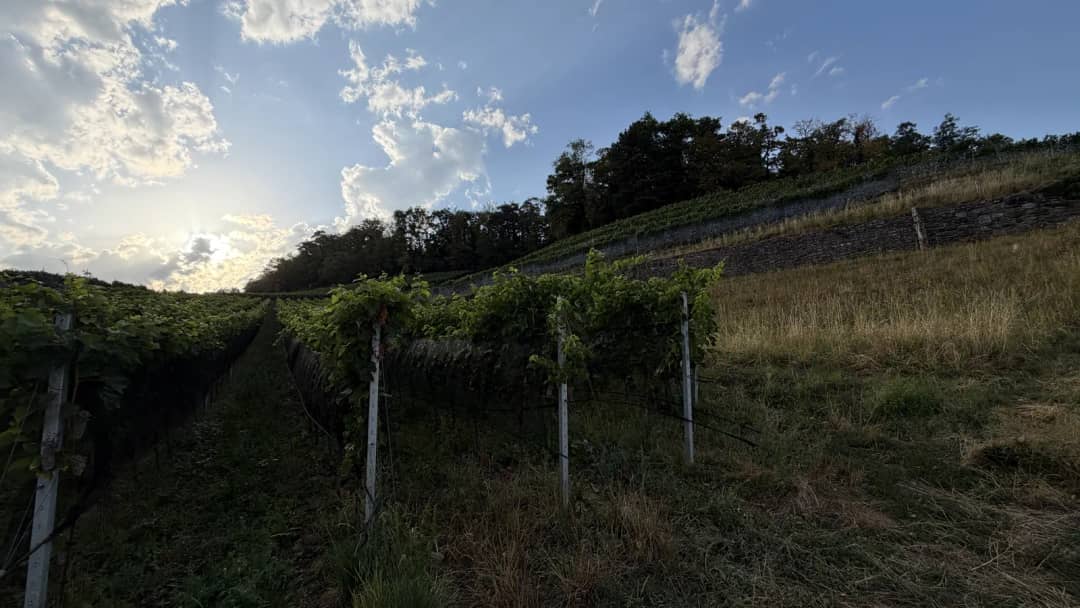
Weintour Spiez: Schweizer Wein über dem Thunersee probieren
98% des Schweizer Weins verlassen das Land nie. Er steht in keinem Regal in London oder New York. Er bleibt hier, in den Kantonen, in denen er gewachsen ist, und wird von den Leuten getrunken, die neben den Reben wohnen.
Für Sie heisst das etwas ganz Konkretes. Ein Glas Riesling-Sylvaner vom Hang über dem Thunersee ist ein Wein, den Sie zu Hause nicht finden. Es gibt ihn ausserhalb der Schweiz nicht. Das ist kein Marketingversprechen. Das ist eine Frage der Menge.
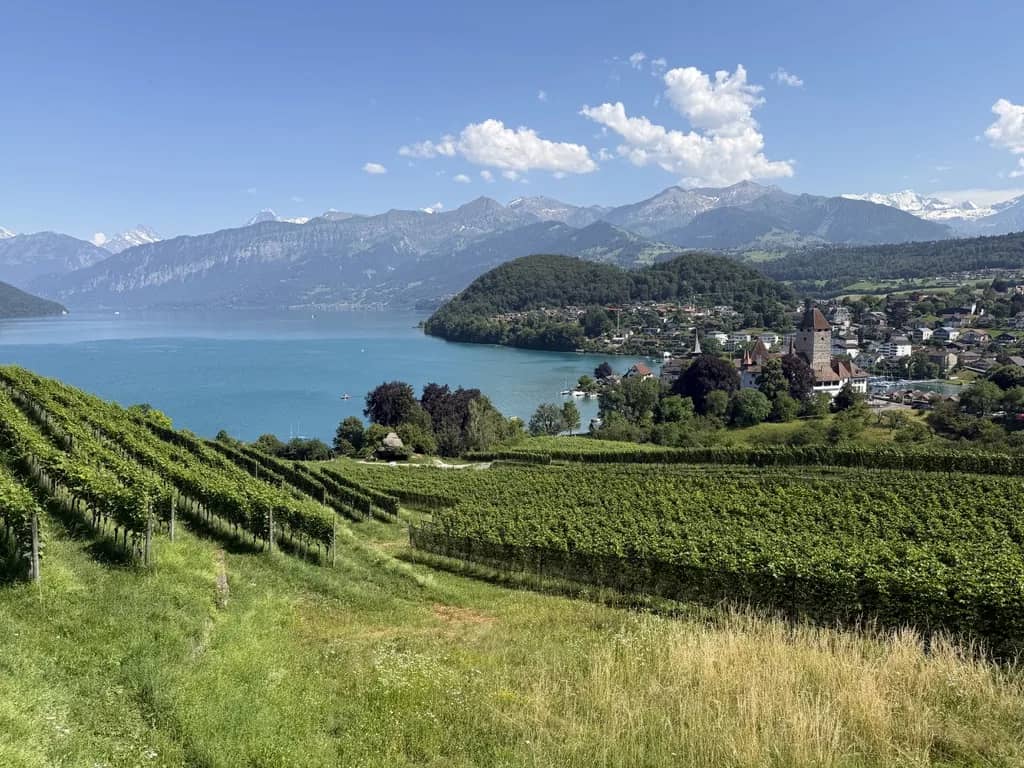
Spiez liegt 20 Minuten mit dem Direktzug ab Interlaken. Die Reben fallen zum See hin ab, eingerahmt von einem mittelalterlichen Schloss auf der einen und den Berner Alpen auf der anderen Seite. Die meisten Gäste kommen wegen der Aussicht. Sie bleiben wegen des Weins. Dieser Beitrag zeigt, was Sie erwartet, was Sie trinken, wann Sie kommen sollten und warum genau diese Tour mit nichts anderem ab Interlaken vergleichbar ist.
Was macht eine Weintour in Spiez anders?
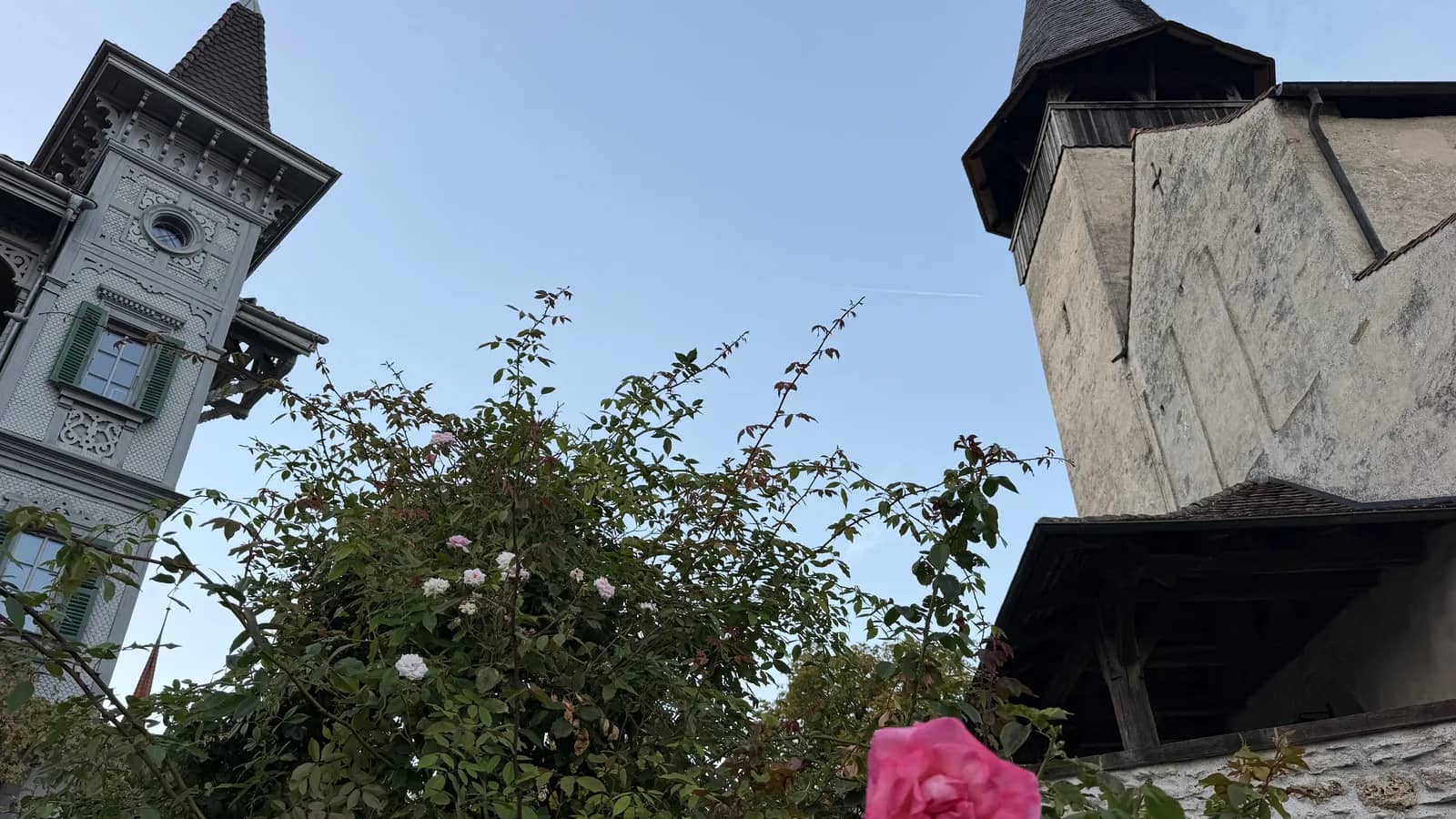
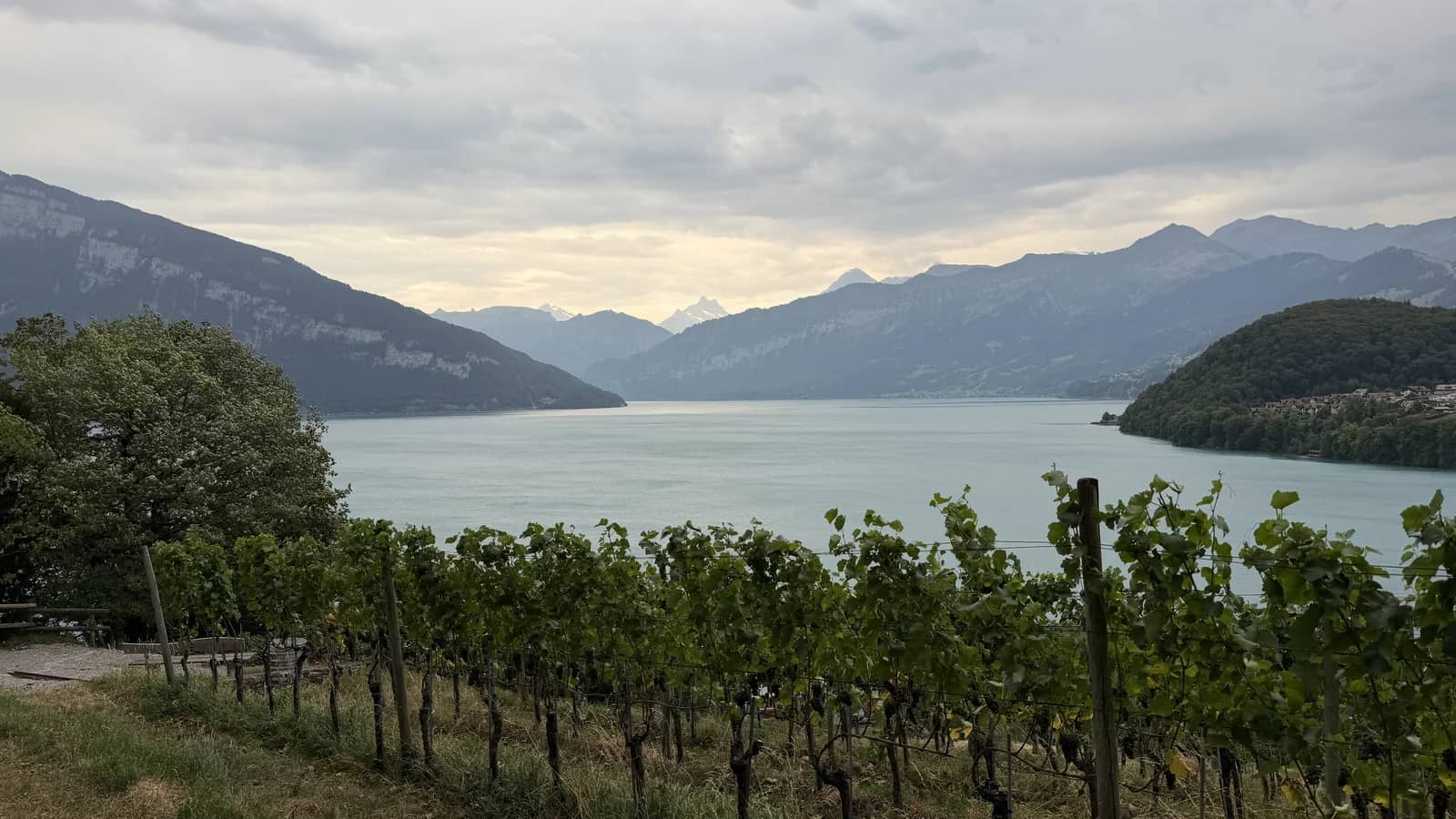
Eine Weintour in Spiez ist anders, weil sie klein und lokal ist und nicht für Massen gebaut wurde. Die Gruppe ist auf 8 Personen begrenzt. Die Weine kommen von einem einzigen Betrieb, der nicht an die Öffentlichkeit verkauft. Die Aussicht aus dem Rebberg vereint einen türkisfarbenen See, ein mittelalterliches Schloss und verschneite Alpen in einem einzigen Bild.
Die meisten Weinregionen, die Gäste besuchen, arbeiten in grossem Massstab. Es gibt Cars, Degustationsräume mit gedruckten Karten und ein Fliessbandgefühl. In Spiez gibt es nichts davon. Der Betrieb Rebbau Spiez produziert Wein in kleinen Mengen für einen lokalen Markt. Der Zugang zu diesem Betrieb und zu einer Degustation am Hang über dem Thunersee besteht dank einer direkten Partnerschaft mit Swiss Local Adventures. Diesen Besuch können Sie nicht selbst organisieren.
Das Ergebnis ist näher bei einem Besuch bei Bekannten, die zufällig Wein machen, als bei einer kommerziellen Tour. Dieser Unterschied zählt, wenn Sie anderswo Degustationen gemacht haben und sie vergessenswert fanden.
Die Reben von Spiez: eine Geschichte, die 994 n. Chr. beginnt
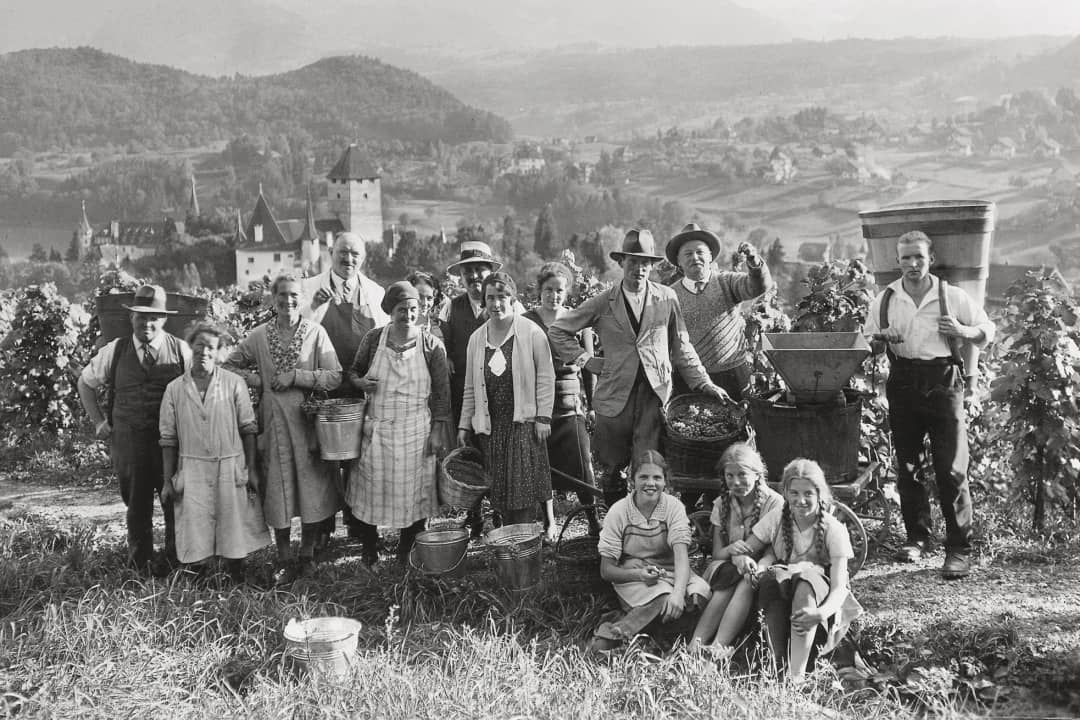
Weinbau in Spiez ist seit 994 n. Chr. dokumentiert. Das ist älter als die meisten berühmten Weinregionen Frankreichs. Die ersten schriftlichen Belege für Reben an diesen Hängen stehen in mittelalterlichen Dokumenten rund um die Benediktinermönche, die das Potenzial der südexponierten Hänge über dem Thunersee erkannten.
Der Schweizer Adel verfeinerte die Techniken in den folgenden Jahrhunderten. Die Weine von hier waren nicht für den allgemeinen Konsum bestimmt. Sie waren adligen Haushalten und diplomatischen Anlässen vorbehalten, was ein Qualitätsniveau hielt, das von Prestige und nicht von Menge getrieben war.
Wie aus einem Klosterrebberg von 994 die Genossenschaft wurde, die diese Hänge heute noch bewirtschaftet, erzählt unser Porträt von Alpine Weinkultur Spiez, dem Partner hinter jeder Degustation auf dieser Tour.
Der heutige Betrieb Rebbau Spiez führt diese Tradition weiter. Die Reben gelten als heroischer Weinbau: Hänge, die so steil sind, dass alles von Hand gemacht werden muss. Auf diesen Terrassen kann keine Maschine arbeiten. Schneiden, Kontrollieren und Ernten passieren von Hand, wie seit über tausend Jahren.
Olivia fragte einen Winzer: „Wie viel Arbeit auf diesen Terrassen kann eine Maschine übernehmen?“
„Keine. Die Hänge sind zu steil. Wir schneiden, kontrollieren die Reben und lesen jede Reihe von Hand.“
Olivia Lufman, Ihrer Reiseautorin bei Swiss Local Adventures
Spiez gehört ausserdem zu den höchstgelegenen Rebbaugebieten nördlich der Alpen. Die Höhe bedeutet langsamere Reife und mehr Zeit für die Aromen. Der See wirft das Sonnenlicht auf die Reben zurück und zieht die nutzbare Vegetationszeit in den Herbst hinein. Daraus entstehen Weine mit einer Präzision und Frische, die Weinbau in der Ebene nicht nachmachen kann.
Was probieren Sie auf der Weintour in Spiez?
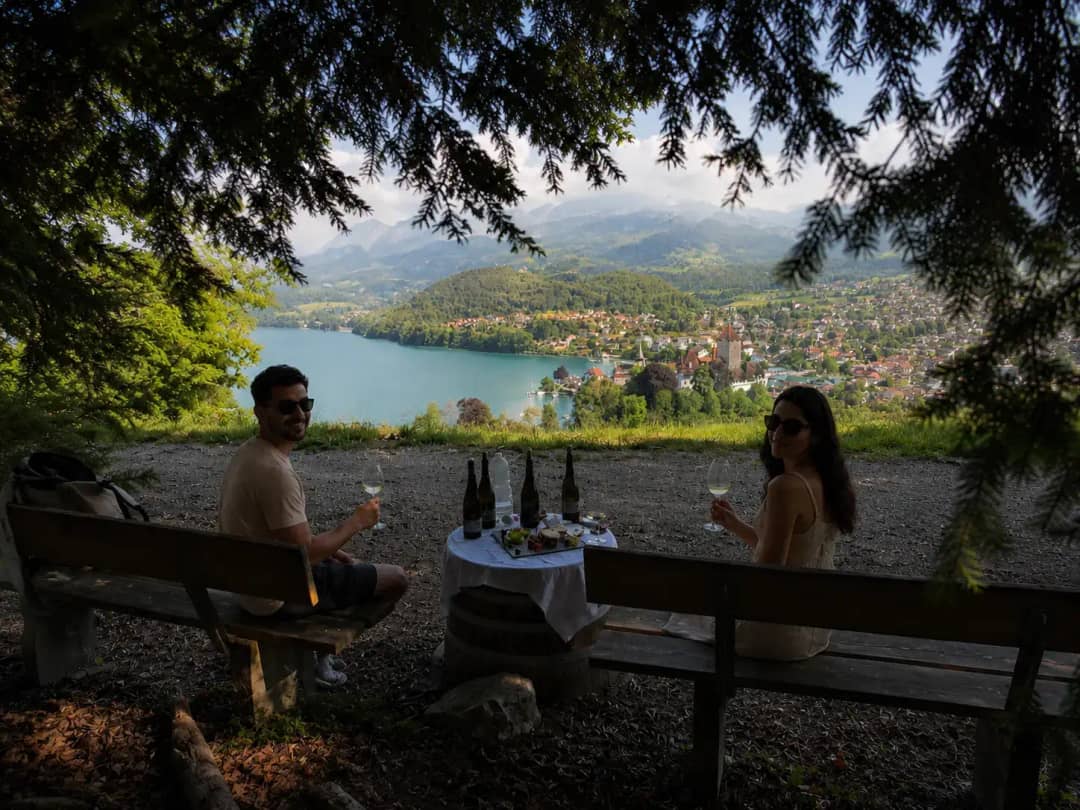
Die Degustation umfasst vier Weine von Rebbau Spiez, begleitet von Schweizer AOP-Käse und handwerklichem Brot. Die beiden Hauptsorten des Betriebs sind Riesling-Sylvaner und Pinot Noir.
Riesling-Sylvaner (Müller-Thurgau) ist die wichtigste weisse Traube von Spiez. Sie ergibt einen frischen, aromatischen Wein mit blumigen Noten, Zitruscharakter und klarer alpiner Säure. Am Gaumen: grüner Apfel, weisse Blüten, Zitronenschale und ein feiner kräutriger Abgang. Er passt von selbst zu den milden Hartkäsen auf dem Brett, besonders zu Emmentaler AOP, wo die Säure durch das Fett schneidet und den Abgang hebt.
Pinot Noir (Blauburgunder) ist der Rote des Betriebs. Schlanker als Burgunder oder Pinot aus der Neuen Welt, mit Aromen von roten Beeren, Kirschen und weichem Waldboden. Die Gerbstoffe sind seidig, der Abgang frisch. Er passt gut zu gereiftem Käse und zu den luftgetrockneten Fleischspezialitäten des Berner Oberlands.
Olivia sagt: „Jemand schenkte ein zweites Glas ein, bevor ich zu Ende gefragt hatte, welche Traube das ist.“
Olivia Lufman, Ihrer Reiseautorin bei Swiss Local Adventures
Käse und Brot werden passend zu den Weinen des Tages ausgewählt. Sowohl der Wein als auch der Käse entstehen in Mengen, die für den Export zu klein sind. Sie probieren eine Kombination, die es ausserhalb dieser bestimmten Gegend nicht gibt.
Falls jemand in Ihrer Gruppe keinen Wein trinkt, lohnen sich Käse, Brot und der Gang durch den Rebberg trotzdem. Was sich ändert und was gleich bleibt, beschreiben wir in unserem Beitrag zur Weintour Spiez ohne Alkohol.
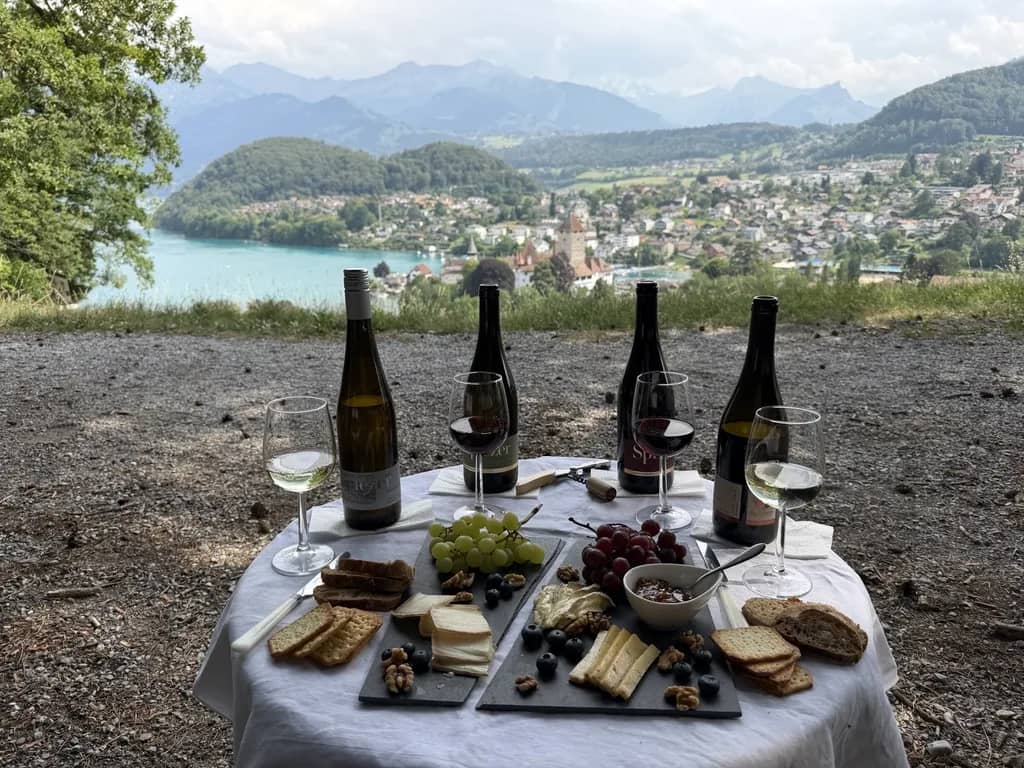
Was Sie auf einer Weintour in Spiez erwartet
Ich war in Weinregionen, die sich wie Flughäfen anfühlen. Carreisegruppen, laminierte Karten, Gläser mit aufgedrucktem Logo. Spiez ist das Gegenteil. Wir waren zu sechst am Tisch. Der See war direkt da. Jemand schenkte ein zweites Glas ein, bevor ich zu Ende gefragt hatte, welche Traube das ist. Das ist die Spiezer Version von Weingastfreundschaft.
Die Tour startet in Interlaken und dauert insgesamt rund 3,5 Stunden:
Abholung in Interlaken
Fahrt nach Spiez (20 Minuten)
Geführter Gang durch die Rebterrassen
Sitzende Degustation von vier Weinen mit Käse und Brot
Rückfahrt nach Interlaken
Der Betrieb und die Partnerschaft
Bei Rebbau Spiez ist Sebastian der Kontakt, der diese Partnerschaft möglich gemacht hat. Er betreut die Beziehung zwischen SLA und dem Weingut, und deshalb ist der Zugang auf dieser Tour nirgends sonst buchbar. Die Degustation steht in keinem öffentlichen Kalender. Es gibt sie genau über diese Abmachung.
Was anziehen
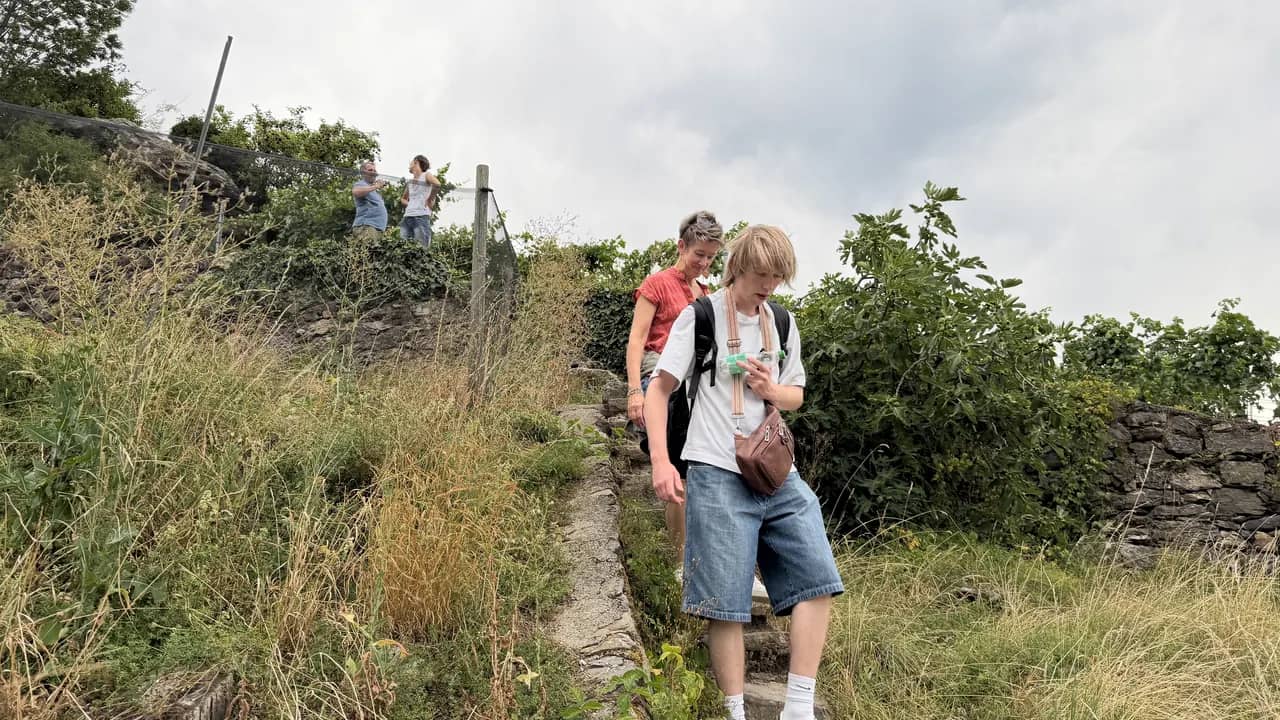
Bequeme Schuhe mit Profil sind das Wichtigste. Die Wege im Rebberg fallen ab und der Boden ist stellenweise uneben. Ziehen Sie sich dem Wetter entsprechend an: Schichten im Frühling und Herbst, leichtere Kleidung im Juli und August. Sonnenbrille und Sonnencreme zählen im Sommer. Für die Degustation gibt es keine Kleidervorschrift.
Olivia sagt: „Lassen Sie die Ausgehschuhe im Hotel. Die Wege im Rebberg sind abschüssig und uneben, und zwischen den Reihen zählt Halt mehr als Stil.“
Olivia Lufman, Ihrer Reiseautorin bei Swiss Local Adventures
Spiez oder Lavaux: welche Weintour ab Interlaken?
Wenn Sie zwischen den beiden Hauptoptionen für Weintourismus ab Interlaken schwanken, hier der ehrliche Vergleich.
Lavaux steht auf der UNESCO-Liste, ist ikonisch und rund 90 Minuten mit dem Zug ab Interlaken entfernt. Die Rebterrassen über dem Genfersee sind eine der eindrücklichsten Weinlandschaften Europas. Die Reise lohnt sich, wenn Sie einen ganzen Tag haben. Die Hauptsorte ist Chasselas, ein mineralischer, feiner Weisser, wie er sonst nirgends wächst.
Spiez liegt 20 Minuten mit dem Direktzug ab Interlaken. Keine Cars. Höchstens 8 Personen. Die Aussicht von der Rebterrasse vereint Thunersee, Schloss Spiez und Berner Alpen im selben Bild. Es passt ohne Hetze in einen halben Tag.
Fun Fact: Spiez gehört zu den höchstgelegenen Rebbaugebieten nördlich der Alpen.
Wenn Sie einen halben Tag haben: Spiez. Gut erreichbar, persönlich und landschaftlich aussergewöhnlich.
Wenn Sie einen ganzen Tag haben: Lavaux belohnt die Reise.
Für einen vollständigen Vergleich aller fünf Schweizer Weinregionen mit Reisezeiten ab Interlaken behandelt der Beitrag zu den besten Weinregionen der Schweiz jede einzelne im Detail.
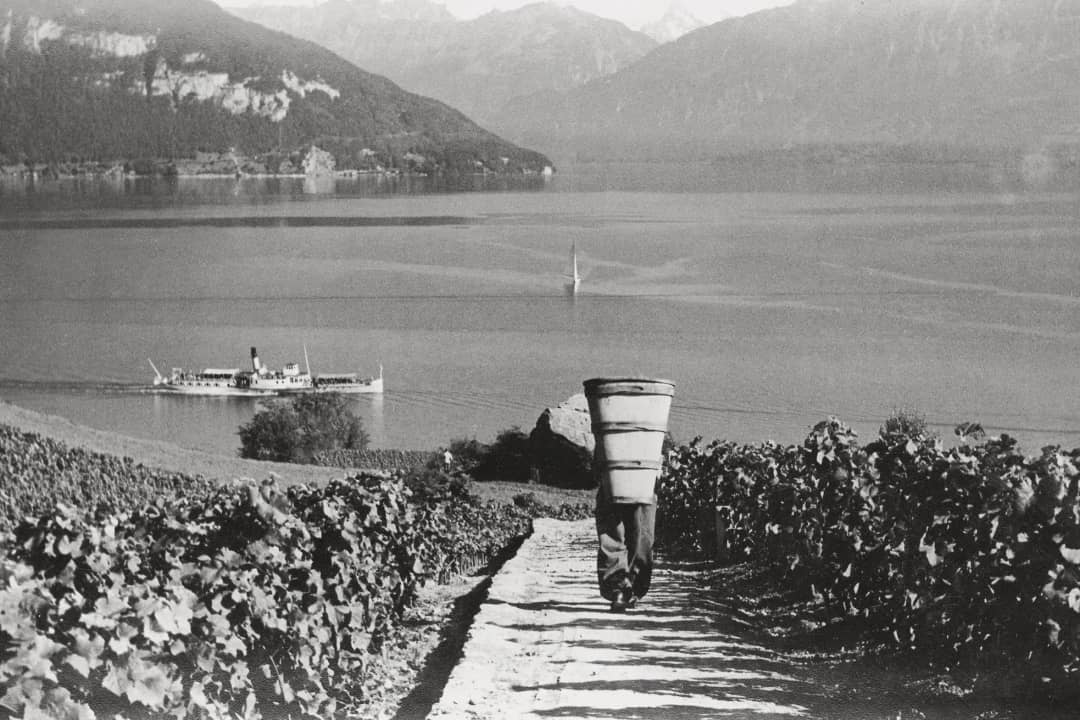
Wann besucht man den Rebberg Spiez am besten?
Der Rebberg ist von Mai bis Oktober für Touren offen. Jede Periode hat ihren eigenen Charakter.
Insider-Tipp: Das Schloss, das Sie aus den Reben sehen, hat dieselbe Saison: Schloss Spiez ist vom 1. Mai bis 31. Oktober offen, Dienstag bis Sonntag ab 10 Uhr, Montag erst ab 14 Uhr, jeweils bis 17 Uhr (im Juli und August bis 18 Uhr). Planen Sie es am Vormittag vor der Tour, nicht an einem Montag.
Mai und Juni bringen frisch grüne Reben, Wildblumen zwischen den Zeilen und ruhigere Bedingungen. Das Licht am späten Nachmittag ist gut zum Fotografieren und die Temperaturen sind angenehm zum Gehen. Ein bis zwei Wochen Vorlauf reichen meist.
Juli und August sind Hochsaison. Die Reben stehen im vollen Wuchs, der See hat seine intensivste Farbe und die Abende sind lang. Buchen Sie für diese Monate zwei bis drei Monate im Voraus. Wegen der Begrenzung auf 8 Personen ist die Tour schnell voll.
September und Oktober sind die Erntemonate. Die Reben färben sich von Grün zu Gold und Rot. Die Trauben sind reif und in der Luft liegt der Geruch von gärendem Most.
Der Spiezer Läset-Sunntig ist ein jährliches Fest Ende September oder Anfang Oktober. Die Produzenten öffnen ihre Keller und im Rebberg wird geerntet. Wenn Ihre Reisedaten flexibel sind, ist dieses Fenster eine Priorität wert.
💡 Insidertipp von Pierre:
"Wenn Sie das magischste Erlebnis wollen, buchen Sie die Tour am Freitagabend während der Erntezeit (Ende September). Das goldene Licht auf dem See bei Sonnenuntergang, zusammen mit der Energie der Ernte, vergessen Sie nie mehr."
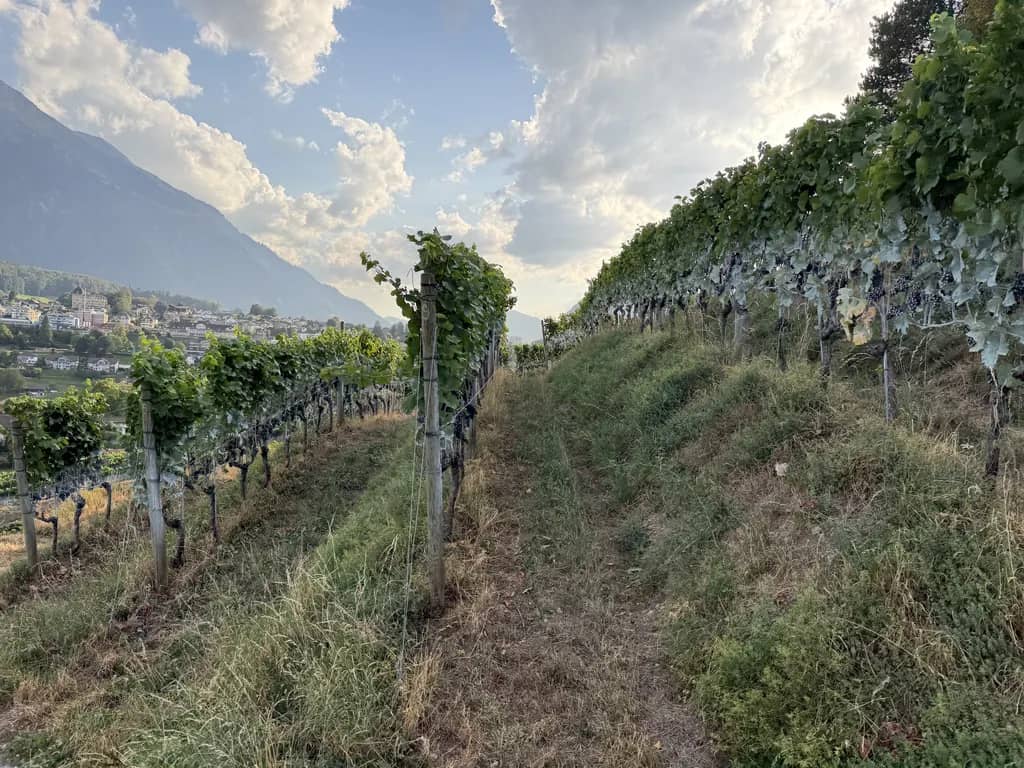
Ihre Fragen zur Weintour in Spiez
Wie lange dauert die Weintour?
Das ganze Erlebnis dauert ab Interlaken rund 3,5 Stunden, inklusive Abholung, Fahrt nach Spiez, Gang durch den Rebberg, sitzender Degustation und Rückfahrt. Die Degustation selbst dauert rund 90 Minuten. Planen Sie den Rest des Tages um eine Rückkehr am späten Nachmittag herum.
Wenn Sie wissen möchten, wie sich diese 3,5 Stunden von der Abholung bis zum letzten Glas verteilen, zeigt Ihnen der Ablauf Minute für Minute, wann Sie gehen, sitzen und probieren.
Was kostet die Weintour?
Die Tour kostet CHF 139 pro Person. Darin enthalten sind der geführte Transport ab Interlaken, der Gang durch den Rebberg, die Degustation mit vier Weinen und die Begleitung mit Schweizer AOP-Käse und Brot. Die Gruppe ist auf 8 Personen begrenzt. Das ist ein Erlebnis mit privatem Charakter, keine geteilte Carfahrt.
Welche Weine probieren Sie?
Die Degustation dreht sich um die beiden Hauptsorten von Rebbau Spiez: Riesling-Sylvaner und Pinot Noir. Beide entstehen in kleinen Mengen und sind ausserhalb der Schweiz nicht erhältlich. Die Auswahl kann je nach Saison und Jahrgang leicht wechseln.
Ist Schweizer Wein wirklich gut?
Durchwegs besser, als Gäste erwarten. Die Schweiz produziert Wein, der fast vollständig im Land bleibt, und das erzeugt den falschen Eindruck von geringer Qualität. Der Riesling-Sylvaner aus Spiez und der Grand Cru Chasselas aus dem Lavaux halten beide mit etablierten europäischen Weinregionen mit. Die meisten Gäste beschreiben nach dem ersten Glas dieselbe Reaktion: "Ich hatte keine Ahnung, dass die Schweiz solchen Wein macht."
Wenn Ihnen der Name auf der Etikette nichts sagt, erklärt unser Beitrag was Riesling-Sylvaner eigentlich ist, warum er fast nie ins Ausland verkauft wird und was Sie im Glas erwartet, bevor Sie in Spiez ankommen.
Muss ich im Voraus buchen?
Ja. Die Gruppen sind auf 8 Personen begrenzt, die Tour ist von Juli bis Oktober also schnell voll. Für September und Oktober empfehlen wir zwei bis drei Monate Vorlauf. Ausserhalb der Hochsaison genügen meist ein bis zwei Wochen.
Kann ich eine Weintour in Spiez auf eigene Faust machen?
Der Sinnesweg durch den Rebberg Spiez ist ein öffentlicher Fussweg durch die Reben, das ganze Jahr offen und gratis. Er enthält keine Degustation und keinen Zugang zum Betrieb Rebbau Spiez. Wenn Sie die Reben selbständig ablaufen wollen, ist der Weg eine gute Option. Wenn Sie eine Degustation mit lokalen Weinen und einer Begleitung wollen, ist die organisierte Tour der einzige Weg direkt zu Rebbau Spiez.
Wie weit ist Spiez von Interlaken entfernt?
Spiez liegt rund 30 Kilometer von Interlaken entfernt. Mit dem Direktzug ab Interlaken Ost dauert die Fahrt 20 Minuten. Der Transport nach Spiez und zurück ist im Tourpreis enthalten.
Sprechen die Winzer Englisch?
Ihre Begleitung auf der SLA-Tour ist zweisprachig und übernimmt alle Erklärungen auf Englisch. Die Winzer bei Rebbau Spiez können Grundlegendes auf Englisch vermitteln, aber durch die geführte Form verlieren Sie während der Degustation nie den Faden. Wenn Sie weitere Erlebnisse in kleinen Gruppen ab Interlaken entdecken möchten, passt die Weintour natürlich zu einem halben Tag auf dem See oder zu einem Bauernhofbesuch am nächsten Morgen.
Bereit für den Wein, den die Schweiz für sich behält?
Die Reben über dem Thunersee produzieren seit 994 n. Chr. Wein. Der Betrieb Rebbau Spiez macht seinen Wein für einen lokalen Markt, der alles aufnimmt, was entsteht. Der Wein, den Sie hier probieren, existiert nur an diesem Ort, in dieser Saison.
Die meisten Gäste in Interlaken verbringen ihre Zeit damit, zu Bergen hinaufzuschauen. Die Weintour in Spiez ist das, was Sie machen, wenn Sie über einen See hinausschauen, ein Glas von etwas halten wollen, das Sie zu Hause nicht kaufen können, und einen Nachmittag an einem Ort verbringen, der seinen Charakter seit tausend Jahren nicht verändert hat.
Scenic Wine Tour - Wine and Cheese Tasting Interlaken. Begrenzt auf 8 Gäste pro Tour.
*Geschrieben von Olivia Lufman, Ihrer Reiseautorin bei Swiss Local Adventures
Quelle:
Besuche vor Ort in den Rebbergen der Rebbau Spiez Genossenschaft, 2026.
Schlagwörter
#homepage#interlaken#spiez#wine-tours#swiss-wine#lake-thun#swiss-vineyards#bernese-oberland#wine-tour-interlaken#interlaken-activities
Quellen & Referenzen
Diesen Artikel teilen
Ähnliche Artikel
Setzen Sie Ihre Lektüre mit diesen verwandten Artikeln fort
Wine Tour
19.8.2026
5 Min
Weintour Spiez: Lohnt sich der Preis von CHF 139?
Vergleichen Sie: Eine einzelne Degustation kostet in der Schweiz CHF 30 bis 70, und kaum ein Weingut verkauft sie. Das bekommen Sie für CHF 139.
wine-tour-interlakenwine-tasting-cost-switzerlandswiss-wine
Von Olivia LufmanMehr Lesen
Wine Tour
18.8.2026
4 Min
Weindegustation in Interlaken: 6 echte Möglichkeiten
Degustieren Sie Schweizer Wein bei Interlaken: drei Rebberge in 25 Minuten, echte Öffnungstage und Preise. Nur 2% Schweizer Wein geht ins Ausland.
wine-tour-interlakenswiss-winespiez-vineyard
Von Olivia LufmanMehr Lesen
Wine Tour
10.7.2026
6 Min
Was ist Riesling-Sylvaner? Seltener Schweizer Wein
Verstehen Sie den Riesling-Sylvaner: keine Mischung aus zwei Sorten, sondern der meistmissverstandene Weisswein der Schweiz. Und wo Sie ihn probieren.
riesling-sylvanermuller-thurgauswiss-wine
Von Olivia LufmanMehr Lesen