Winter
Is Snowshoeing Worth It? An Interlaken Guide Answers
P
Pierre Vetsch
Author
October 26, 2026
8 min
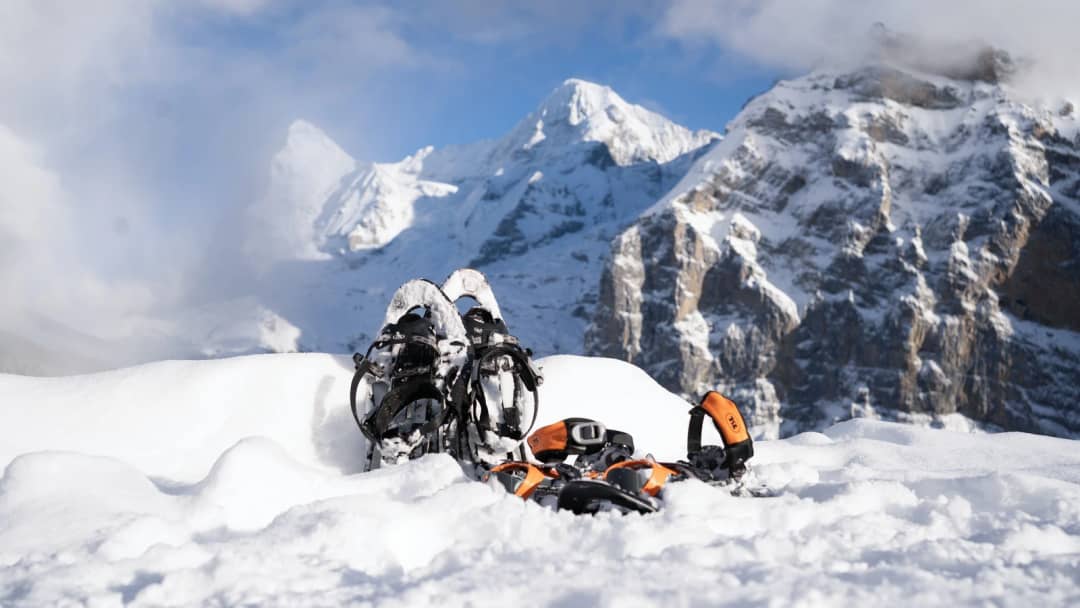
Is snowshoeing worth it? Yes, if you like walking, and no, if you do not. That is the whole answer, and it comes from Pierre Vetsch, who guides snowshoe mornings above Isenfluh every winter and has turned people away. The sceptic's version of the question is "it is just walking in the snow". His reply is that it is the mountain without the crowd: no lift queue, no groomed piste, and a forest above Lauterbrunnen where the group stops talking. Here is what you get, what it costs on your own against CHF 129 with a guide, and who should pick something else.
Is snowshoeing worth it?
Yes, for anyone who enjoys a walk and wants to be in the mountains in winter without skiing. Snowshoes carry you over snow that would swallow boots to the knee, so a forest loop or an alpine meadow that is closed to walkers from December to March opens again. The price of entry is low, the technique is learned in 10 to 15 minutes, and the risk on a marked blue trail is a sit-down in soft snow.
The "just walking" objection is half right. It is walking. What changes is where you can walk: above Isenfluh, the blue Sulwald Trail climbs 170 m through forest and meadows in about an hour, and in winter you only get there on snowshoes. Our guide to snowshoeing near Interlaken lists 12 such trails within 70 minutes of the town.
Pierre Vetsch, founder and head guide, says: when a guest tells him snowshoeing is just walking in the snow, he does not argue about the walking. He answers that it is "the mountain without the crowd", and lets the first quiet stretch of forest finish the sentence.

When do guests decide it was worth it?
At the table, in front of the fondue. Asked at which moment his guests say the morning was worth it, Pierre's answer is the restaurant at Sulwald after the loop, warm, hungry, snow still on the trousers. The walk itself is quieter than people expect: the detail guests bring up on the way down is the silence in the forest, not a view.
That order matters if you are deciding. The payoff of snowshoeing is not a single photo stop, the way a summit or a cliff walk is. It is an hour of effort in the cold with a reward at the end, which is why the fondue is part of our tour and not an add-on. Whether the effort is hard for you is covered in our article on whether snowshoeing is hard: on the packed trail, no; off the track in fresh snow, yes.
Fun fact: the Isenfluh to Sulwald cable car, the small red cabin that starts our mornings, rents sleds for CHF 7 and a wooden Velogemel for CHF 8, but no snowshoes, according to its price list read on 26 October 2026. Snowshoes have to come up with you from Interlaken.

Who should skip snowshoeing?
People who do not like walking. Pierre is blunt about it: an hour on the Sulwald loop is an easy hour, but it is an hour of walking uphill in the cold, and someone who dislikes that will not be converted by the view. For them, a sled run or a winter day on a lift gives the mountain without the legs.
Two other groups should think twice. Children under 10 are not on our tour, because the loop is long and cold for them, and anyone chasing speed will find snowshoeing slow by design: a group covers about 3 km in the hour it takes a cross-country skier to do nine. If that is you, our comparison of snowshoeing and cross-country skiing or the sledding tour or on your own question will serve you better.
Insider tip: Pierre's split for families and groups is simple. Sledding for the young and for families, snowshoes for the calm ones. If your group has both, do the snowshoe loop in the morning and a sled run in the afternoon, not the other way round.

Is a guided snowshoe tour worth CHF 129?
It depends on what you count. On your own, a morning at Sulwald costs CHF 16 for the cable car return, CHF 15 for snowshoes and CHF 10 for poles at Swiss Alpine Guides in Matten, prices read on 26 October 2026, so about CHF 41 plus the train from Interlaken and your own lunch. Our tour costs CHF 129, or CHF 119 from six people.
When a guest hesitates at that gap, Pierre does not discount. He lists what is inside: the transport from Interlaken, the cable car, the snowshoes and poles, a guide who has asked Sulwald how much fresh snow fell and Peter at the cabin what the wind is doing at the top, and the fondue at the restaurant. Most people do the sum and decide for themselves, in either direction. If you go alone, the Isenfluh and Sulwald guide gives you the cable car times and the trail.
Pierre says: his price answer is the list, nothing else. "Transport, cable car, snowshoes, poles, guide, fondue." He would rather a guest go up on his own with the right trail than book without knowing what the CHF 129 contains.

Your Questions About Whether Snowshoeing Is Worth It
Is snowshoeing fun, or is it boring?
Fun for walkers, boring for thrill-seekers, and the line is drawn in the first twenty minutes. The pleasure is quiet: a trail nobody else is on, the crunch of the shoe, the moment the forest goes silent. There is no speed and no drop. If you measure a winter day in adrenaline, you will be bored by the top of the first climb, and you should sled instead. If you measure it in places you could not otherwise reach, the blue trail above Isenfluh is one of the better hours of a winter week, and the fondue at the end is the part people describe when they get home. Pierre's guests who come back do so for the silence, not for the sport.
Is snowshoeing worth it with no snow in Interlaken?
Yes, because Interlaken itself rarely keeps snow, and the trails do. The town sits at 568 m and Pierre's own observation is that snow there melts fast, while Sulwald at about 1,500 m holds it from December to March in a normal winter. The question to ask is not whether Interlaken is white but whether the trail is, which Sulwald and the Isenfluh cabin report every morning. The real snowshoe risk is too little snow on the trail, stones and ice under the shoe, and that is a December problem in a thin year, not a sign to cancel the whole idea.
Can you go snowshoeing without a guide near Interlaken?
Yes, on an open marked trail with company and a conditions check. The cable car cooperative at Isenfluh grades its blue trail as beginner terrain, with no traverses and no steep sections, and the route is visible on a clear day. Rent snowshoes and poles in Interlaken, since the cable car has none, take the CHF 16 return ticket, and stay on the blue markers. A guide adds the local check, the gear, the pace, and the fondue, which is the part guests say made it worth it.
What is the best month for snowshoeing near Interlaken?
March, in Pierre's experience: fewer people, more sun, and the snow at altitude still deep. January and February are the safer bets for snow on every trail, December depends on the year. Our tour runs from December to March as long as the trail has snow, and the day's call is made the evening before with the people who live at the top.

Come for the silence, stay for the fondue
If the price list above left you unsure, the honest test is the first question in this article: do you like walking? If yes, snowshoeing is worth a morning of your winter, on your own at Sulwald for about CHF 41 in tickets and gear, or with us. Our snowshoe tour with Swiss cheese fondue leaves Interlaken at 10:00, eight guests at most, from 10 years old, and ends at the table where most people decide it was worth it.

How we made this: based on Pierre's interview of 26 October 2026, facts and prices checked at the official sources on 26 October 2026, written with AI assistance.
Source: Isenfluh-Sulwald cable car, prices, Swiss Alpine Guides, rental, and guided snowshoe mornings at Sulwald with Swiss Local Adventures, 2025-2026.
*Written by Pierre Vetsch, founder and head guide at Swiss Local Adventures
Tags
#is-snowshoeing-worth-it#snowshoeing-interlaken#guided-snowshoe-tour#winter-activities-interlaken#snowshoeing-for-beginners
Sources & References
- •Isenfluh-Sulwald cable car, prices (read 26 October 2026)
- •Swiss Alpine Guides, Matten, rental prices (read 26 October 2026)
- •Snowshoe Tour with Swiss Cheese Fondue, Swiss Local Adventures (price and age, read 26 October 2026)
- •Compendium of Physical Activities 2024, winter activities (snowshoeing effort)
- •Photo: Jungfrau Region Tourismus AG (CC0), snowshoes above Mürren
- •Other photos: Swiss Local Adventures, Sulwald and Isenfluh, winter 2025-2026
Share this article
Similar Articles
Continue your reading with these related articles
Winter
10/26/2026
15 min
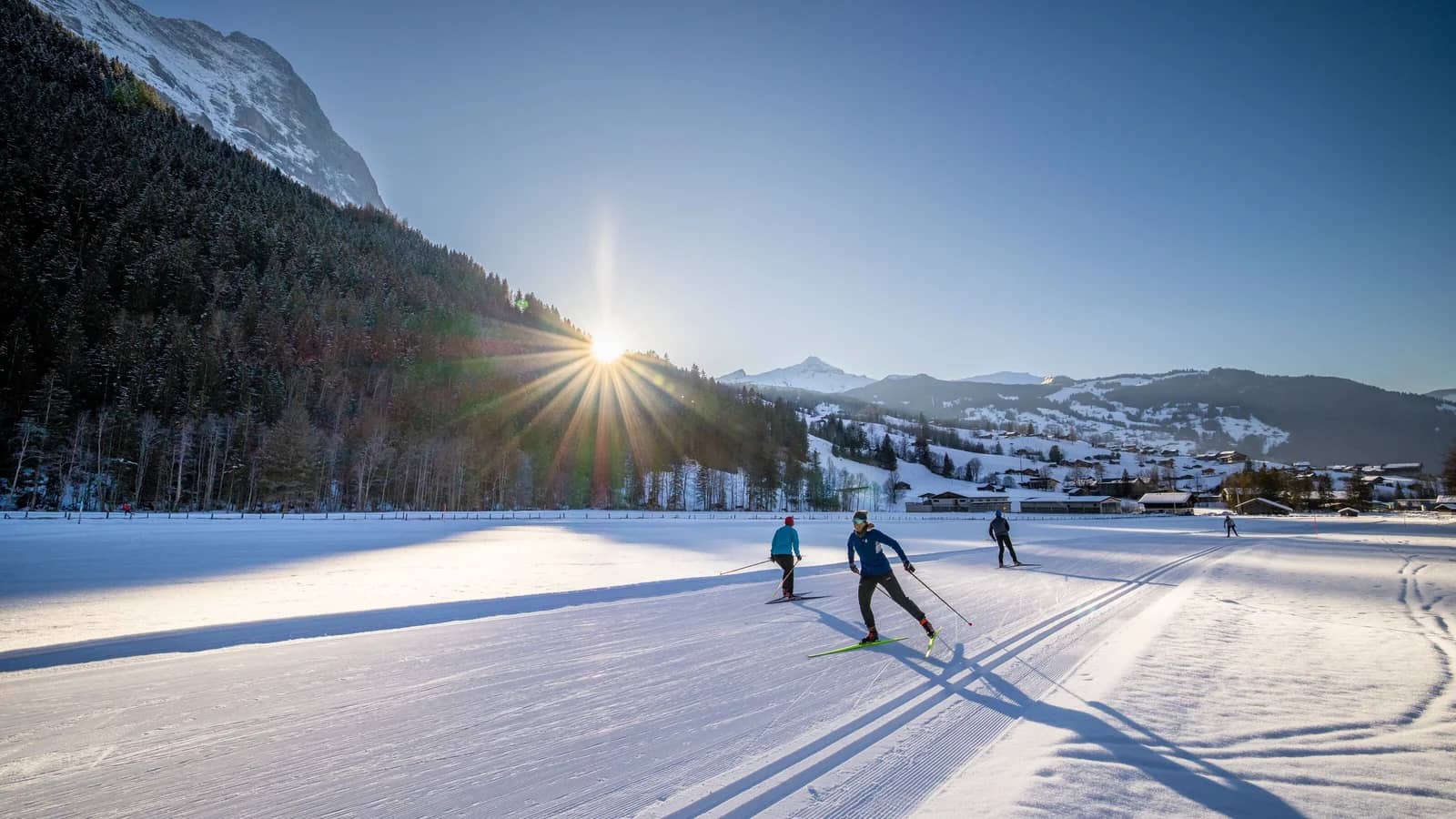
Snowshoeing vs Cross-Country Skiing: Which to Pick?
Snowshoeing vs cross-country skiing near Interlaken: a guide who fell on his first loipe compares effort, a CHF 10 day pass and the CHF 16 cable car.
snowshoeing-vs-cross-country-skiingsnowshoeing-interlakencross-country-skiing-grindelwald
By Pierre VetschRead More
Winter
10/25/2026
6 min
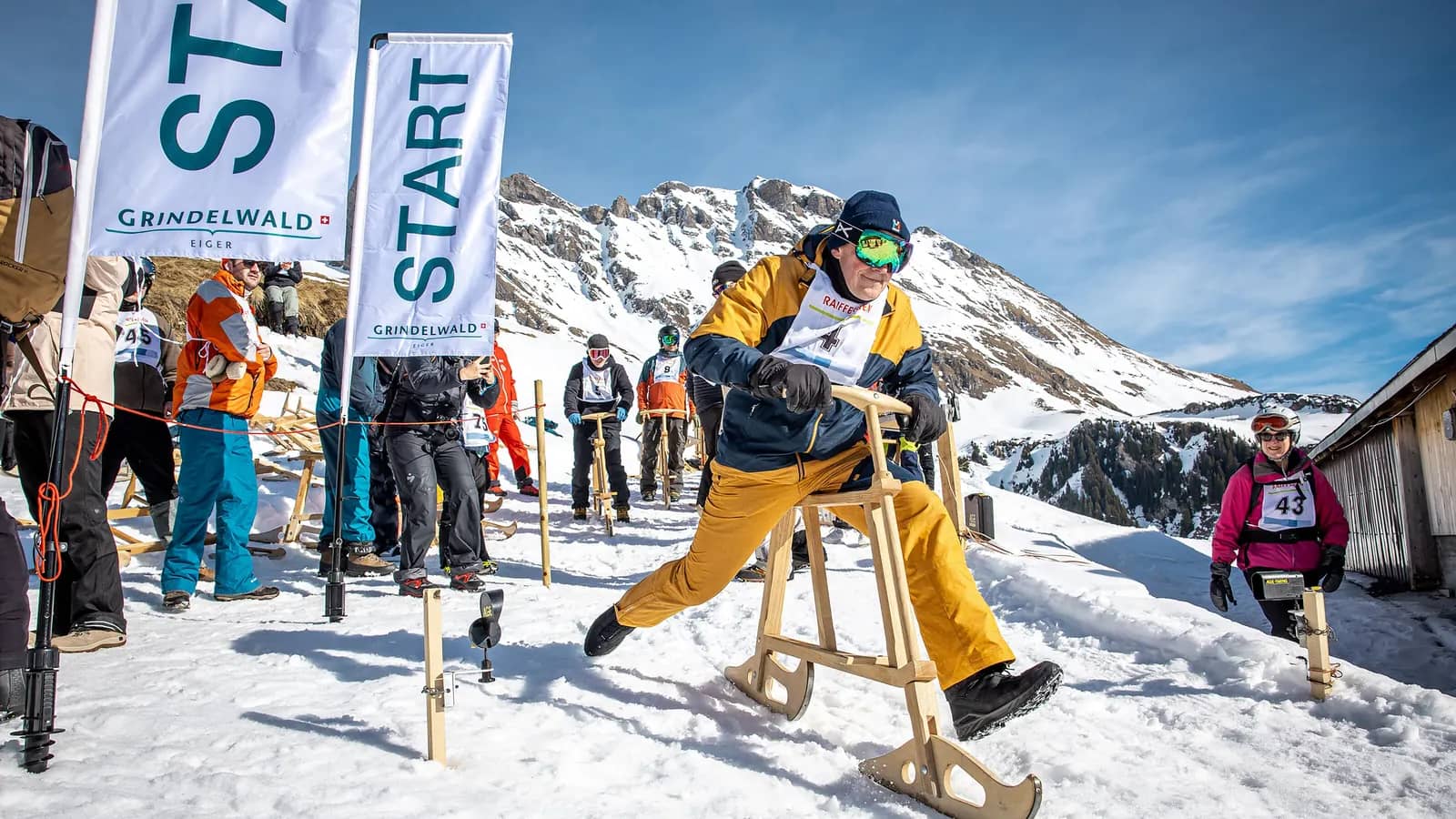
What Is a Velogemel? Grindelwald's Snow Bike
A Velogemel is a wooden snow bike invented in Grindelwald in 1911. Rent one for CHF 8 at Isenfluh, learn how it rides, and see the race on 7 February 2027.
velogemelvelogemel-grindelwaldswiss-snow-bike
By Pierre VetschRead More
Winter
10/25/2026
16 min
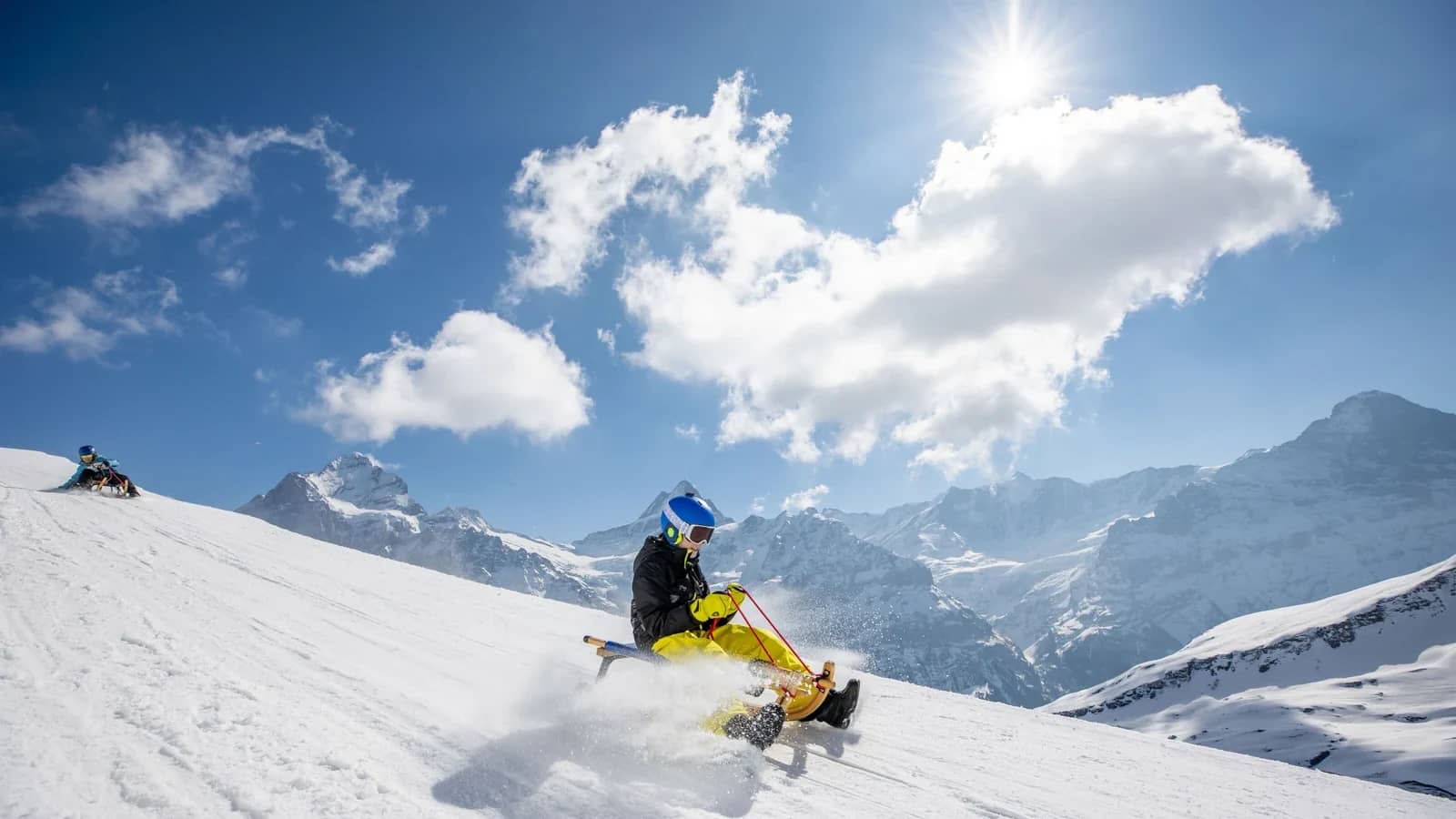
Best Sledding in Switzerland: A Guide's Honest Ranking
The best sledding in Switzerland, ranked by a local guide: 10 runs from 2 to 11 km, which ones he has ridden, which to skip. Checked 25 October 2026.
best-sledding-switzerlandlongest-sled-run-switzerlandsled-runs-jungfrau-region
By Pierre VetschRead More