Interlaken
Is Snowshoeing Hard? A Guide's Answer near Interlaken
T
Teona Gvasalia
Author
October 7, 2026
8 min
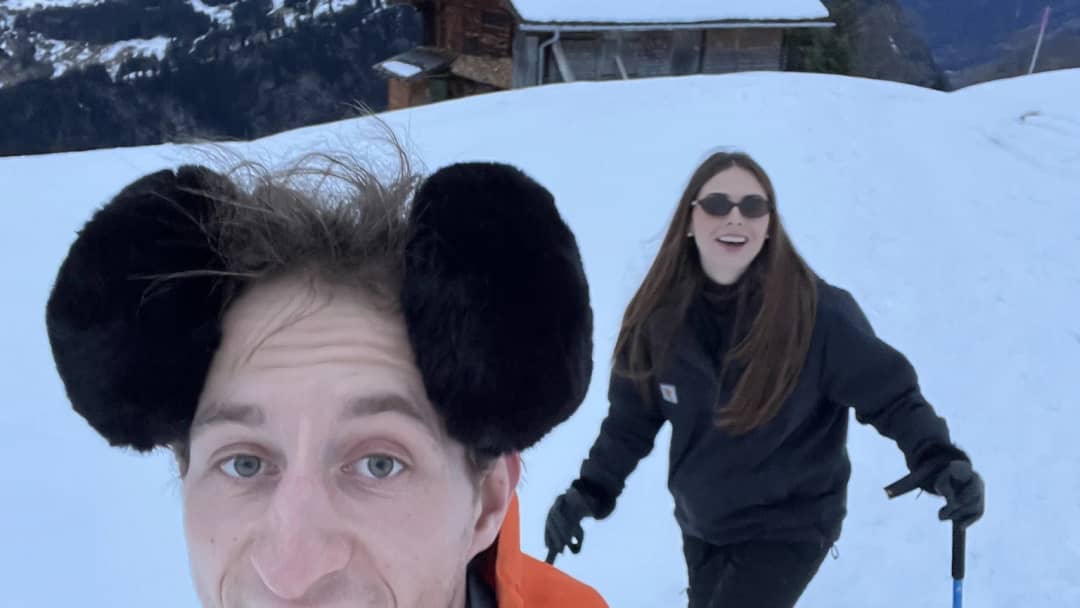
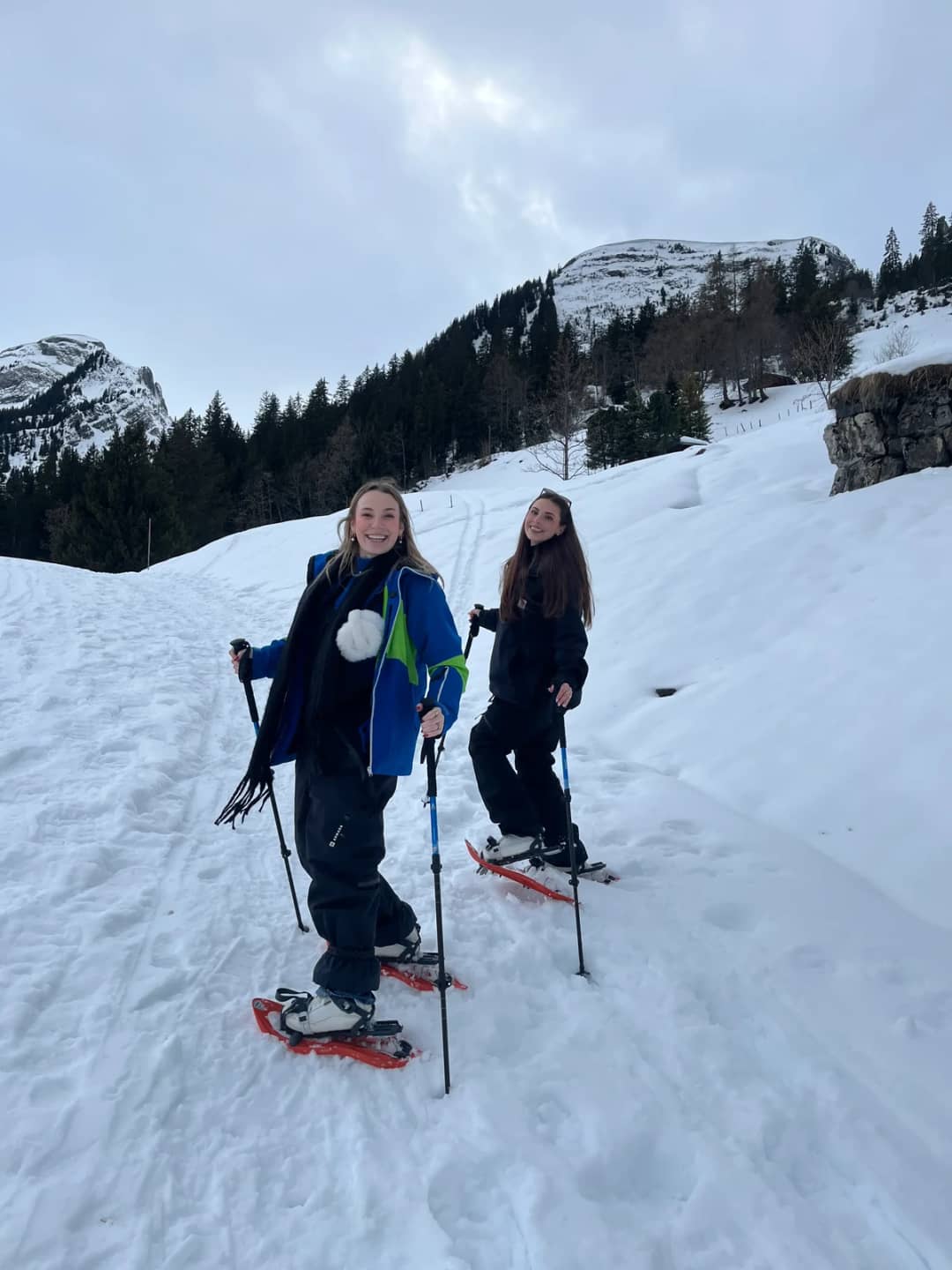
Is snowshoeing hard? The walking is not: most beginners on our tours feel at ease after 10 to 15 minutes. What makes people breathe hard is the snow itself, the moment they leave the packed trail and sink into fresh powder.
Pierre Vetsch, our head guide, leads a snowshoe loop above Isenfluh, at Sulwald, every winter, and the same questions come up before every walk: harder than hiking, bad for the knees, too much for someone who never does sport. Here are his answers, with the facts checked on 7 October 2026.
Is snowshoeing hard for a beginner?
No, not on a marked easy trail. The technique takes a few minutes to learn, and the effort depends on the snow and the climb, not on the snowshoes. Asked how long a beginner needs before walking comfortably, Pierre gives the same answer every season.
Pierre says: "10 to 15 minutes."
Pierre Vetsch, founder and head guide at Swiss Local Adventures
The Swiss Alpine Club grades snowshoe routes from WT1 to WT6. A WT1 route is an easy snowshoe hike under 25 degrees, mostly flat or gently sloping, with no avalanche danger and no risk of slipping or falling, according to the SAC snowshoe grading scale. The scale leaves out the length of the route, so a WT1 can still be long.
Asked who he has seen in the most trouble on our loop, Pierre picked one profile: someone who does no sport at all. Even for them, the Sulwald Trail climbs about 170 metres in total, according to the federal trail data we used in the guide to snowshoeing in Interlaken.
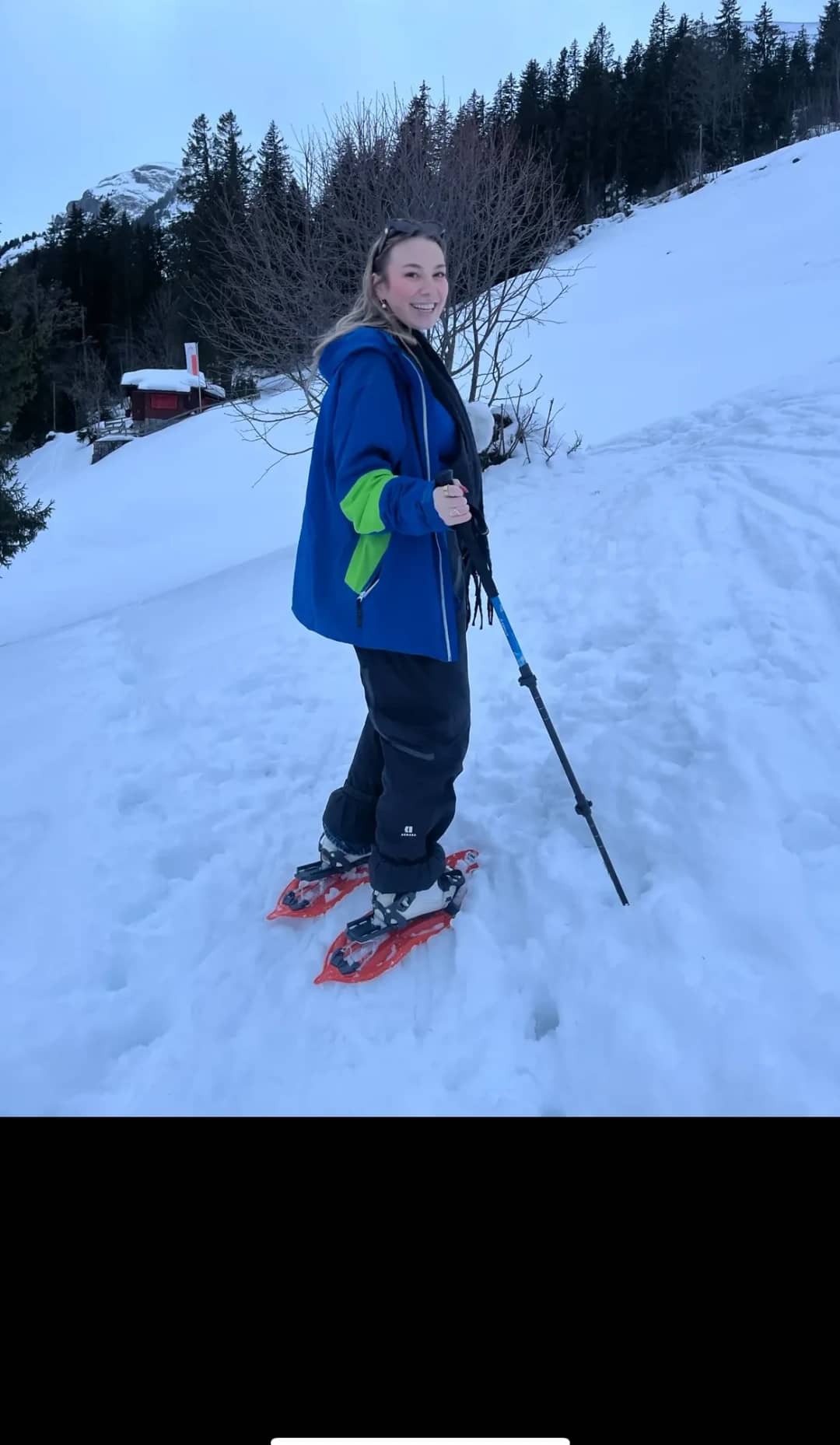
What makes snowshoeing tiring: the trail or the fresh snow?
Fresh snow. On a packed trail, snowshoeing feels like a brisk winter walk. Off the trail, in deep powder, every step sinks, and you lift the snow with your foot before you can move forward. That is where Pierre's groups slow down and start to breathe hard.
Pierre says: "Off the trail, in fresh snow."
Pierre
The numbers say the same. The Compendium of Physical Activities, the reference table researchers use to rate effort, puts snowshoeing at 5.3 METs at a moderate effort and 10.0 METs at a vigorous one (Compendium, winter activities). One MET is your energy use at rest. Same activity, almost twice the effort, and the difference is mostly the snow under your feet.
Before Pierre takes a group up, Sulwald gives him the state of the snow.
Insider tip: in fresh snow, walk in the footprints of the person in front of you and swap the lead every few minutes. The first one in the line does most of the work.
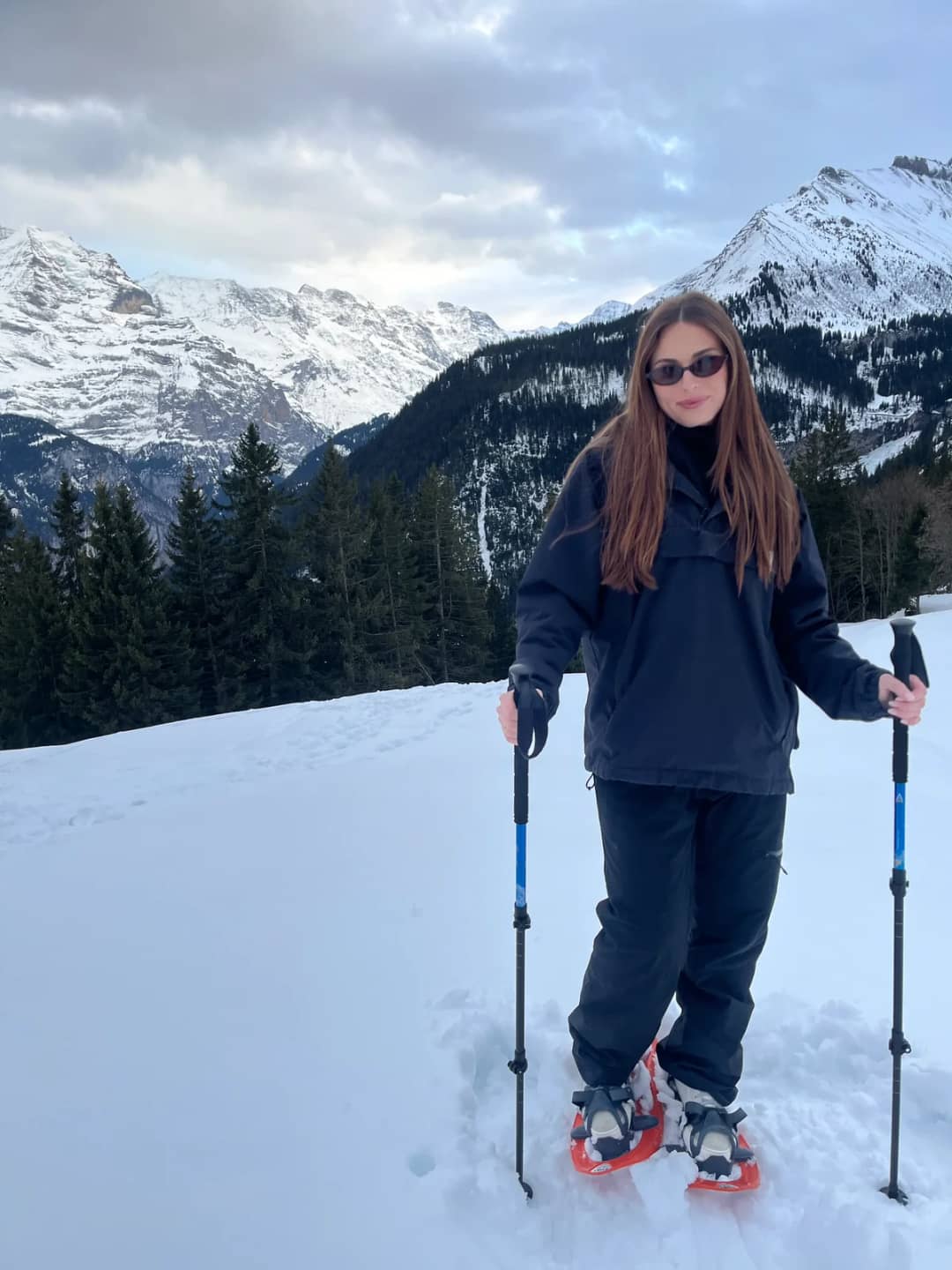
Snowshoes or winter hiking boots: which is easier for a beginner?
Snowshoes, as soon as there is real snow on the ground. On a groomed winter path, walking boots are enough. On a snowy trail, you sink with boots and stay on top with snowshoes, and that is the whole difference. Asked what he tells a beginner who hesitates between the two, Pierre did not hesitate either.
Pierre says: "Snowshoes."
Pierre
Snowshoeing at a moderate pace sits close to hiking in effort: 5.3 METs against 6.0 METs for a cross-country hike, in the same Compendium. A slow hike rates 3.8. So on snow, snowshoes do not make the walk harder. They make it possible.
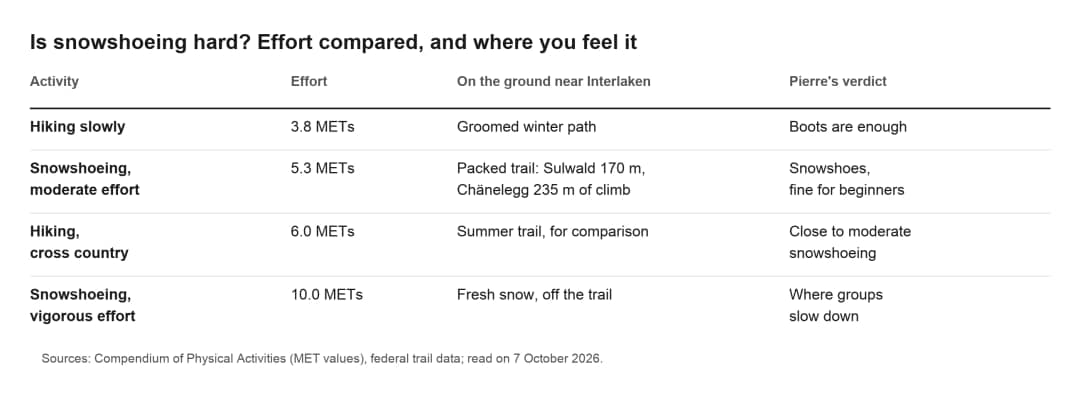
The table in words. Hiking slowly rates 3.8 METs, moderate snowshoeing 5.3, a cross-country hike 6.0, and vigorous snowshoeing in deep snow 10.0. On the marked trails near Interlaken, the Sulwald Trail climbs 170 metres in about 1 hour 15, the Chänelegg loop in Mürren 235 metres in about 1 hour 55, and the Chüematte Trail 440 metres in about 5 hours, according to the federal trail data.
Our verdict: on a groomed path, keep your boots and enjoy the walk. On a snowy trail, take snowshoes, and pick a trail by its climb, not by its name.
What mistake do beginners make on snowshoes?
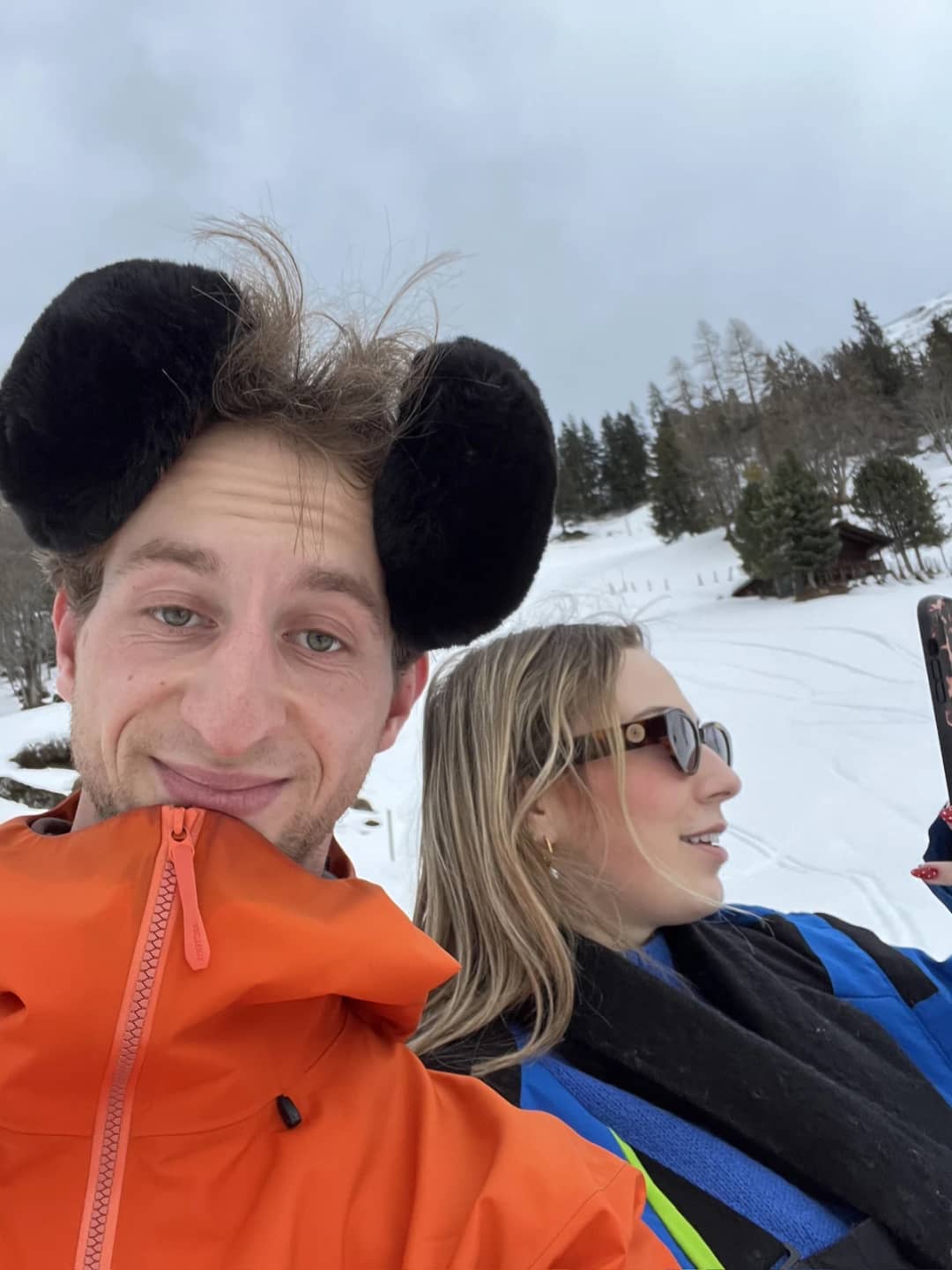
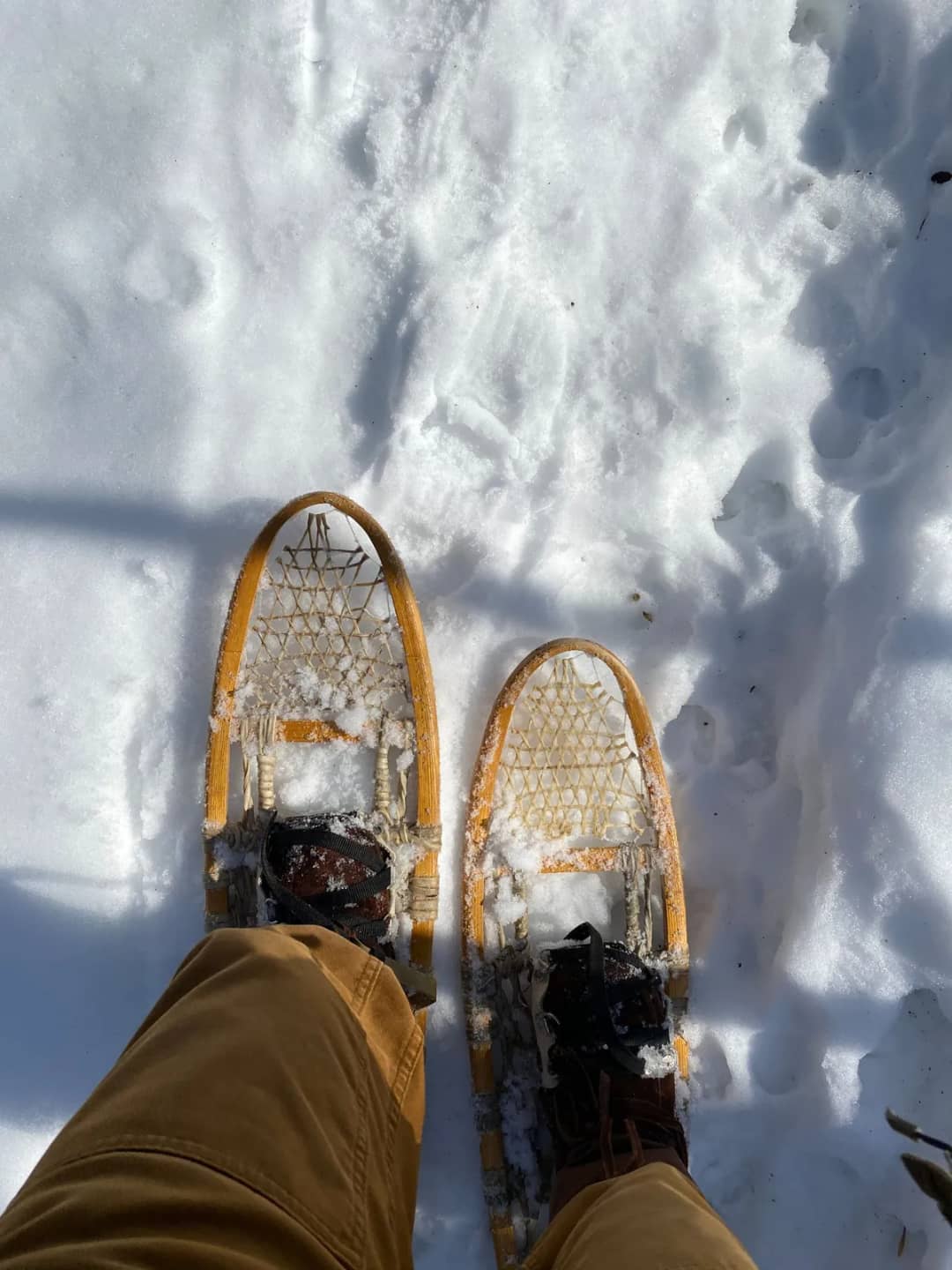
They keep their feet too close together. On snowshoes, your feet are wider than usual, so if you walk as you do in town, one snowshoe lands on the other and you trip. Walk with your feet a little apart, as if you were stepping over a small log.
Pierre says: "Feet too close together."
Pierre
That is the only real technique to learn, and it is why most people need those first 10 to 15 minutes. Then a few habits make the climb easier. Shorten your poles for the climb and lengthen them for the descent. On a steep climb, lift the heel bar under your boot if your snowshoes have one, and kick the front of the snowshoe into the slope.
Fun fact: the small red cable car that takes our groups from Isenfluh to Sulwald carries eight people or one cow, and it has run since 1975, as our Isenfluh and Sulwald sledding guide explains.
Is snowshoeing hard on your knees?
Rarely, on an easy trail. The climb works your thighs and your breath, the descent loads the knees, and poles take part of that load off. Asked whether guests complain about their knees on the way down, Pierre answered that it happens, but not often.
Pierre says: "Rarely."
Pierre
On the descent, keep your knees soft, your weight slightly forward and your steps short. Do not lean back: the snowshoe then slides and you land on your bottom. Plant both poles a little in front of you on the steeper parts. If your knees already hurt on a downhill hike in summer, choose a loop with little climb, such as the Sulwald Trail, rather than a long descent.
Dress for the stops, not for the climb. You sweat on the way up and cool down fast at the top. Our guide on what to wear sledding in Switzerland gives the layers we also use on snowshoes.
Your Questions About Snowshoeing Difficulty
Do you need to be fit to go snowshoeing?
You need to walk for an hour without stopping, not to be an athlete. On a WT1 trail like the Sulwald Trail, the climb is about 170 metres. The guests who find it hardest are those who do no sport at all, and even they finish the loop at their own pace. What makes the difference is the snow: if it fell overnight and the trail is not packed, the same loop asks for more breath. If you are unsure, pick the shortest loop, keep the group pace slow, and stop for a drink halfway. Your heart rate tells you more than the map.
How many calories does snowshoeing burn?
It depends on your weight, your pace and the snow. The Compendium of Physical Activities rates moderate snowshoeing at 5.3 METs, which is 5.3 times your energy use at rest. For a person of 70 kg, that makes about 370 kcal an hour by the usual MET calculation, so about 460 kcal for the 1 hour 15 of the Sulwald Trail. In deep fresh snow, at 10.0 METs, the same hour climbs to about 700 kcal. These are estimates from a reference table, not a measurement on our tours, and a fondue at the end will easily cancel them.
Is snowshoeing harder at night?
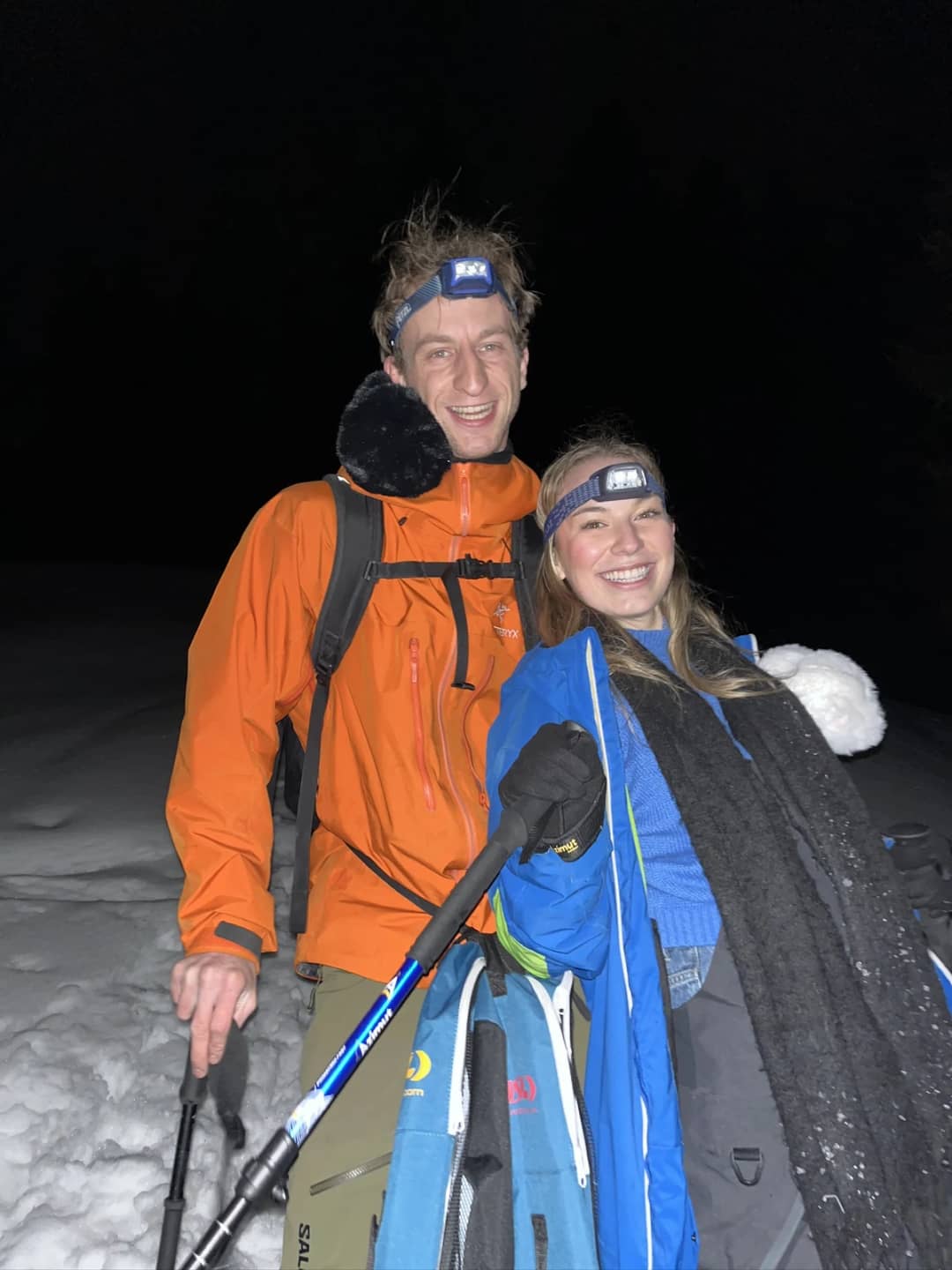
The effort is the same; the pace is slower. With a headlamp you see a small circle of snow, so you place your feet more carefully and walk slower. Cold also counts: once the sun has gone, the temperature drops fast, and you lose heat at every stop. Our snowshoe tour runs in the morning, at 10:00, so you walk in daylight. If you go out at night on your own, stay on a marked trail that is open after dark, carry a spare battery, and tell someone where you are going. The guide to snowshoeing in Interlaken lists which trails you can walk at night.
Can you snowshoe without a guide?
Yes, on a marked WT1 trail with no avalanche danger, and the region has several. The Swiss Alpine Club recommends an avalanche transceiver, a shovel and a probe for every snowshoe route above WT1, and avalanche knowledge from WT2 up. So the rule is simple: stay on marked trails, check that they are open on the day, and turn back if the snow or the visibility gets worse. The mistake Pierre sees in people who go alone is not the technique: they do not check where they are and where they are going. For a first time on your own, the Chänelegg loop in Mürren is Pierre's pick.
Try an easy snowshoe loop with a local guide
The fear most beginners bring is simple: that they will be too slow, too unfit or too clumsy for the group. On an easy loop, with someone who checks the snow before you start, none of that holds after the first 15 minutes.
Asked what strikes people on their very first steps in front of the restaurant at Sulwald, Pierre answered in one word: the silence. It is also what his guests talk about again at the fondue table.
Our Snowshoe Tour with Swiss Cheese Fondue takes 8 people at most, runs from Thursday to Sunday at 10:00 from mid-December to April, depending on the snow, and costs CHF 129 per person, or CHF 119 from 6. Snowshoes and poles are included, and the walk ends with a cheese fondue at Sulwald, the kind we describe in the best fondue in Interlaken.
How we made this: based on Pierre's interview of 7 October 2026, facts and prices checked at the official sources on 7 October 2026, written with AI assistance.
Source: SAC snowshoe grading scale, Compendium of Physical Activities, winter activities, federal trail data, and guided snowshoe walks at Sulwald with Swiss Local Adventures, 2025-2026.
*Written by Teona Gvasalia, your alpine guide at Swiss Local Adventures
Tags
#is-snowshoeing-hard#snowshoeing-for-beginners#snowshoeing-interlaken#snowshoe-tour-interlaken#winter-activities-interlaken
Sources & References
- •SAC snowshoe grading scale (BASPO PDF)
- •Compendium of Physical Activities, winter activities
- •Snowshoe Tour with Swiss Cheese Fondue, Swiss Local Adventures
- •Federal trail data, map.geo.admin.ch
- •Photo: Andrew Gaertner on Pexels
- •Photos: Swiss Local Adventures, snowshoe walk above Isenfluh, 23 February 2026
Share this article
Similar Articles
Continue your reading with these related articles
Interlaken
10/5/2026
10 min
24
Sledding with Kids near Interlaken: Ages and Runs
Sledding with kids near Interlaken: from 8 on their own sled, under-6s free on the Niederhorn gondola. Which run fits which age, from a local guide.
sledding-with-kidsfamily-winter-activitiessledding-interlaken
By Pierre VetschRead More
Interlaken
10/4/2026
9 min
26
How to Steer a Sled: A Swiss Guide's Brake Method
How to steer a sled: lean in, brake with both heels. On a 9% run above Lauterbrunnen, a Swiss guide shows when to slow down and which sled to rent.
how-to-steer-a-sledsledding-for-beginnerssledding-interlaken
By Pierre VetschRead More

Interlaken
10/3/2026
12 min
51
Best Fondue in Interlaken: Where a Local Guide Eats
Best fondue in Interlaken: a local guide's pick is the Taverne at CHF 30 per person. Where our groups eat, what to order, how to skip the traps.
best-fondue-interlakencheese-fondue-interlakenwhere-to-eat-interlaken
By Pierre VetschRead More