Winter
What Is a Velogemel? Grindelwald's Snow Bike
P
Pierre Vetsch
Author
October 25, 2026
6 min
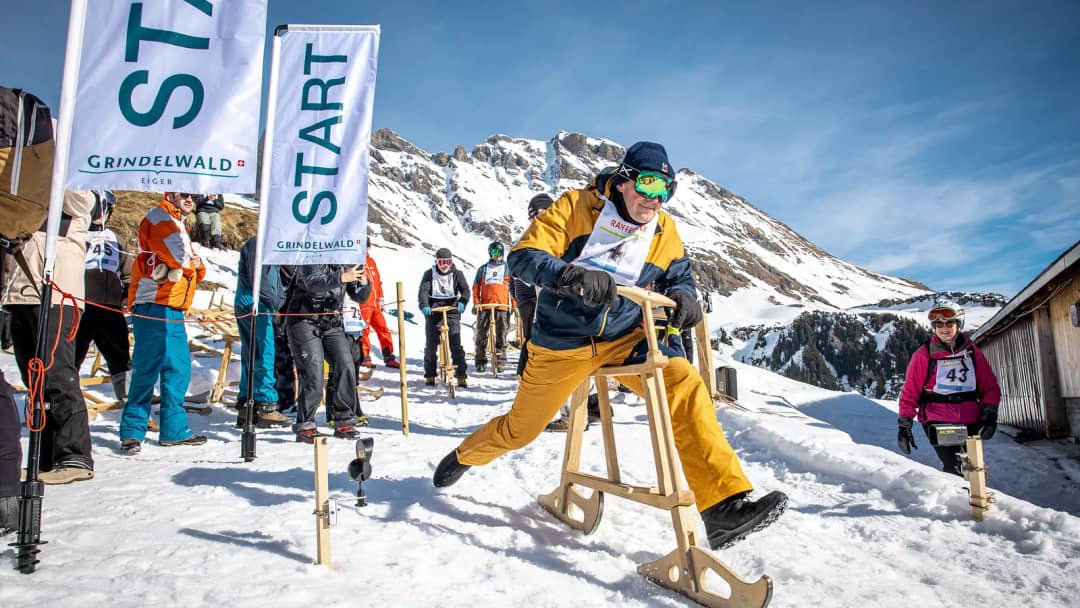
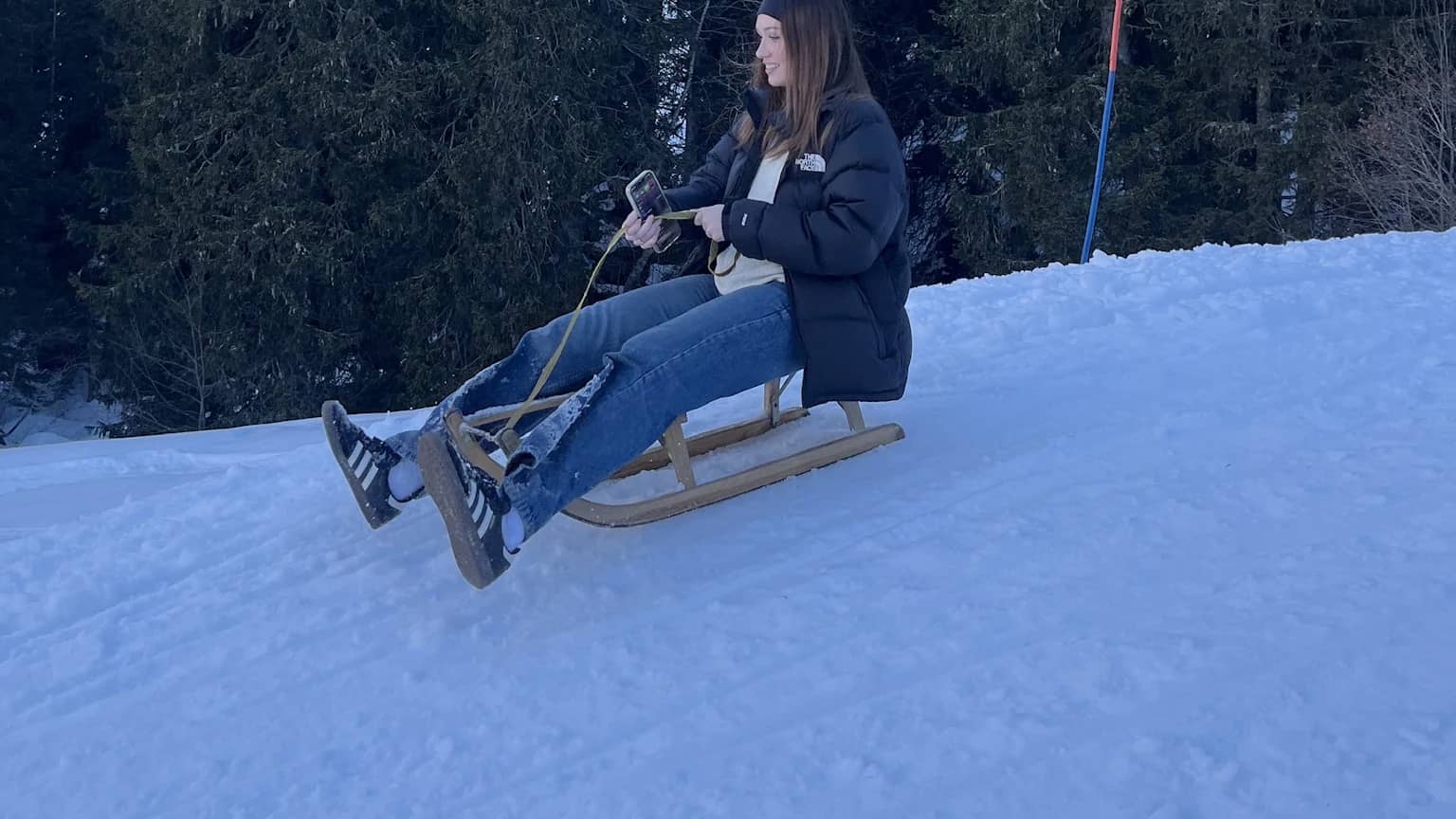
A Velogemel is a wooden snow bike: a bicycle frame on two runners, invented in Grindelwald in 1911 by a woodcarver who was tired of wading through deep snow. You steer it with a handlebar, push with your legs, and there is no brake. Pierre Vetsch rented one for CHF 8 at Isenfluh, above Lauterbrunnen, and came back with a verdict and a fall.
What is a Velogemel?
A Velogemel is a one-track wooden sled shaped like a bicycle, built in Grindelwald since 1911. Jungfrau Region Tourism credits Christian Bühlmann, a woodcarver and singer from Grindelwald, who made himself a snow bike that year because walking to his customers through deep snow was slow. The name joins Velo, Swiss German for bicycle, and Gemel, the Grindelwald dialect word for sledge.
The design has barely moved in a century: a wooden frame on two runners, a steerable one at the front under the handlebar, a fixed one at the back under the saddle. You sit, push off with both legs, and lean into the bends. The Jungfrau Zeitung, Grindelwald's local paper, dates the patent to 1 April 1911 and reports that the sleds are still made by hand in the village.
Fun fact: the Velogemel World Championship has been held above Grindelwald since 1996, when the village celebrated its 850th anniversary, according to the Jungfrau Zeitung. Jungfrau Region Tourism says it takes place every February on the Bussalp.
Where can you ride a Velogemel today?
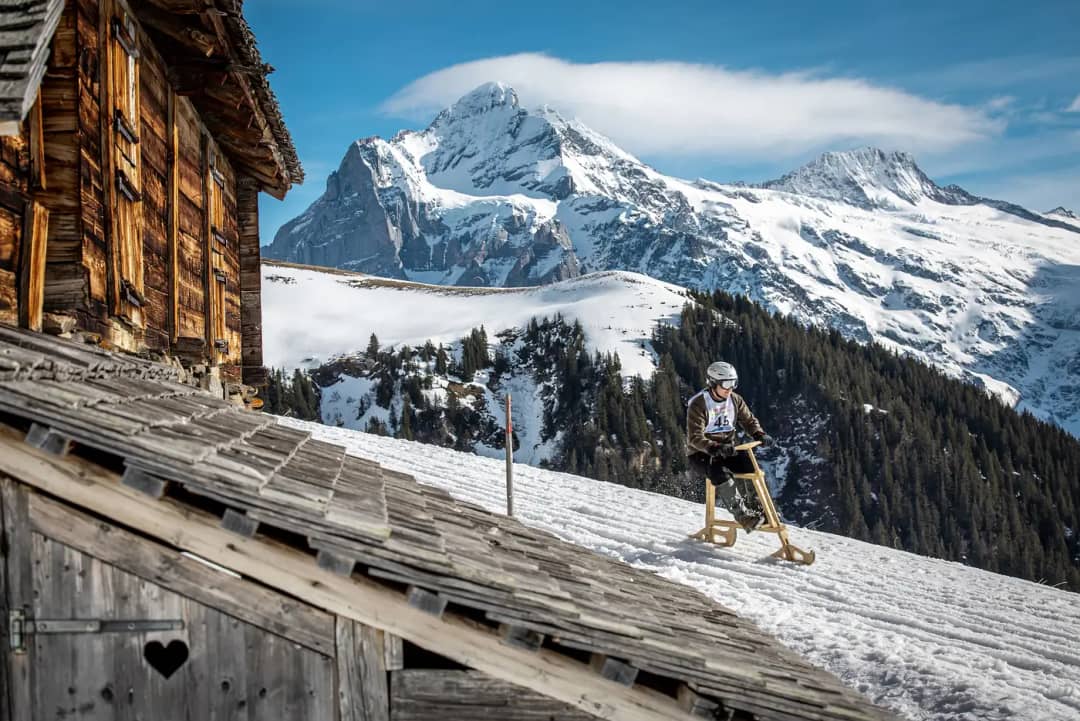
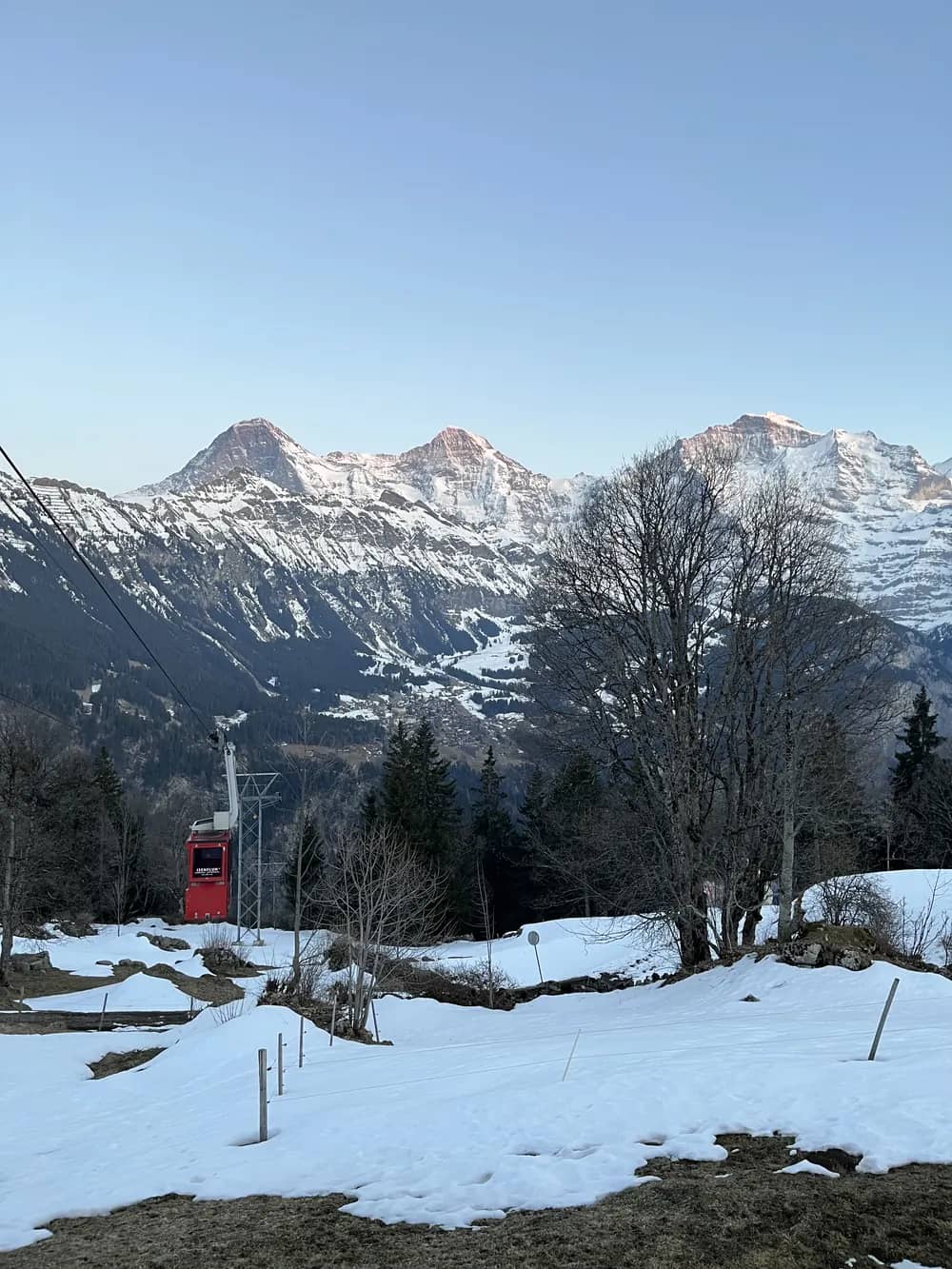
At Isenfluh, above Lauterbrunnen, for CHF 8 a day, and in Grindelwald, where the sleds are built. The Isenfluh to Sulwald cable car rents a Velogemel for CHF 8 and a wooden sled for CHF 7, prices read on its website on 25 October 2026, and the return ticket costs CHF 16 for an adult, CHF 8 for a child.
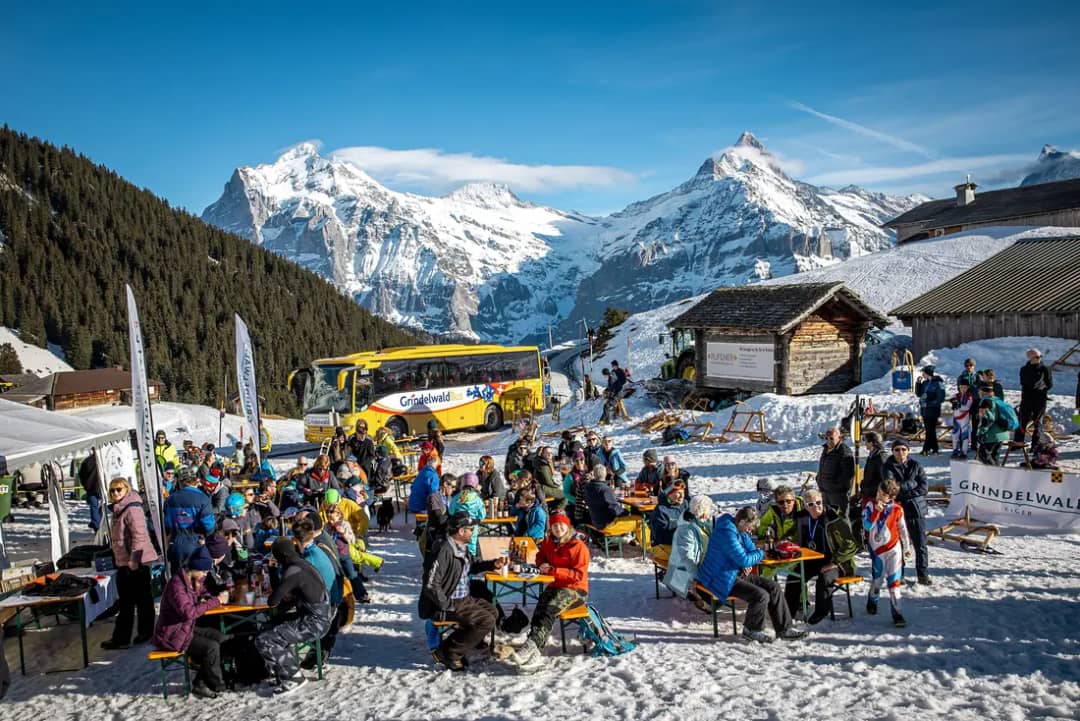
The run is the closed road from Sulwald down to Isenfluh, 4.72 km from 1,520 m to 1,095 m, the same road our guided sled evenings use when the snow allows. In Grindelwald, the Velogemel is rented through the winter, and once a year it races: the 31st Velogemel World Championship is announced for Sunday 7 February 2027 on the Bussalp, from the Oberläger down to the Mittelläger.
Our guide to sledding in Grindelwald for first-timers covers the ordinary sled runs on the same mountain, and the Isenfluh and Sulwald sled road has its own page with the cable car hours.
Velogemel or wooden sled: which should you rent at Isenfluh?
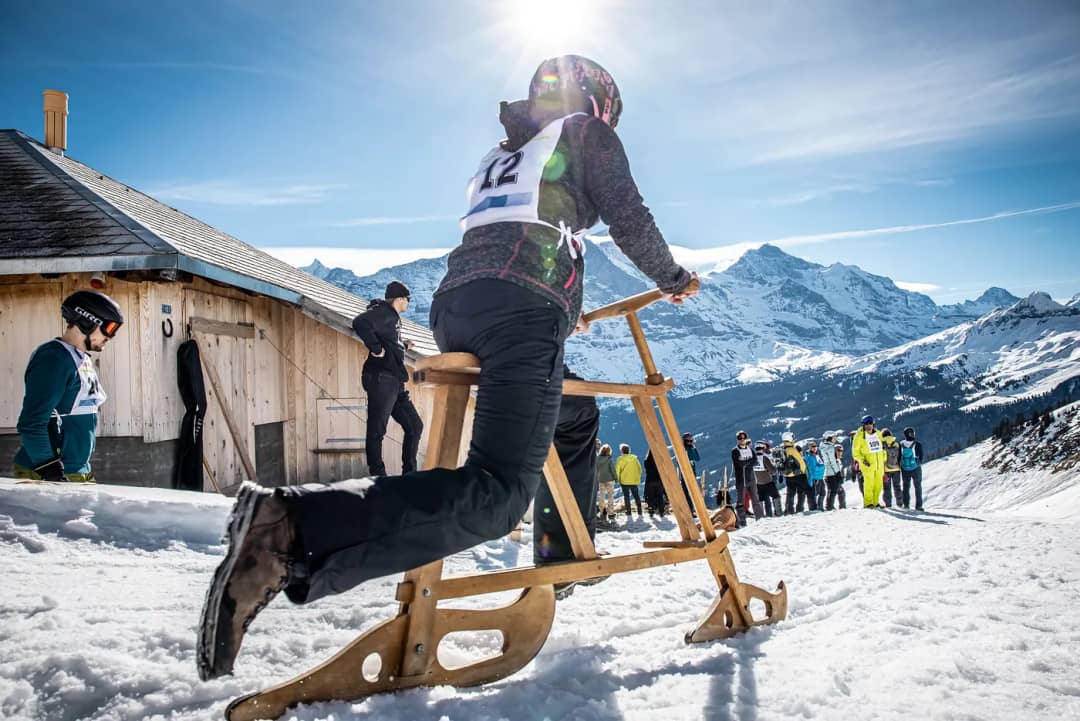
The wooden sled, unless you came with friends who want to laugh at each other. Pierre has ridden both on the Sulwald road, and his honest summary of the Velogemel is "a neck-breaker, dangerous, but very funny to do with friends", young ones, he adds. Asked who he would recommend it to, he says "groups of young friends". Not a family, not a first day on snow.
The reason is the braking. On a wooden sled you drag both heels and the sled slows. On a Velogemel you sit higher, on one track, with no brake lever and your boots as the only anchor, so the bike wants to go straight when you want to turn. Pierre's own memory of the Sulwald road on a Velogemel is "a fall in a bend". He does not say which bend, and we will not invent one. The Swiss accident prevention office counts about 6,400 sledding injuries treated by a doctor every year and recommends a helmet.
Pierre Vetsch, founder and head guide, says: Before a sled evening at Isenfluh, the cabin attendant tells him the state of the run before he takes a group up. If the lower section is icy, that is the day to leave the Velogemel on its hook: the bottom of the road is where braking matters most.
Our guide to how to steer a wooden sled covers the feet and the weight, and sledding versus luge in Switzerland sorts out the words.
Your Questions About the Velogemel
How do you steer and brake a Velogemel?
You steer with the handlebar, which turns the front runner, and you lean into the bend. There is no brake lever: you slow down with your boots flat on the snow on both sides, which is harder than on a sled because you sit higher and the single track resists turning. Pierre's advice from his own ride is to treat it as a toy for a group of friends on a soft, sunny afternoon, and to keep the first run slow. Waterproof boots with a real sole matter more than on a sled, because your feet do all the braking.
Can you buy a Velogemel, and what does it cost?
Yes, they are still made by hand in Grindelwald, according to the Jungfrau Zeitung, and "velogemel for sale" is one of the searches people type. We did not find a published retail price on 25 October 2026, so we will not quote one. Renting is the sensible first step: CHF 8 a day at the Isenfluh cable car. If you fall for it, the people to ask are at the Bussalp race in February, where every rider owns one.
Is the Velogemel dangerous?
More than a wooden sled, in Pierre's experience. The sled has two runners and a low seat; the Velogemel has one track, a high saddle and no brake. Wear a helmet, choose a wide, gentle road with soft snow, go in daylight, and skip it when the attendant says the bottom is icy. Our pillar on whether night sledding is dangerous explains the same rules for sleds, with the accident figures.
When is the Velogemel World Championship?
Every February on the Bussalp above Grindelwald, according to Jungfrau Region Tourism. The 31st edition is announced for Sunday 7 February 2027, from Bussalp Oberläger to Mittelläger, subject to snow. Race numbers are handed out at the finish from 10:00 to 11:30, adults pay CHF 30 and juniors born in 2010 or later CHF 20, and buses leave Grindelwald station at 08:55, 09:45 and 10:30. You can rent a Velogemel in Grindelwald through the winter to practise before you enter.
Try the wooden sled first, with a guide
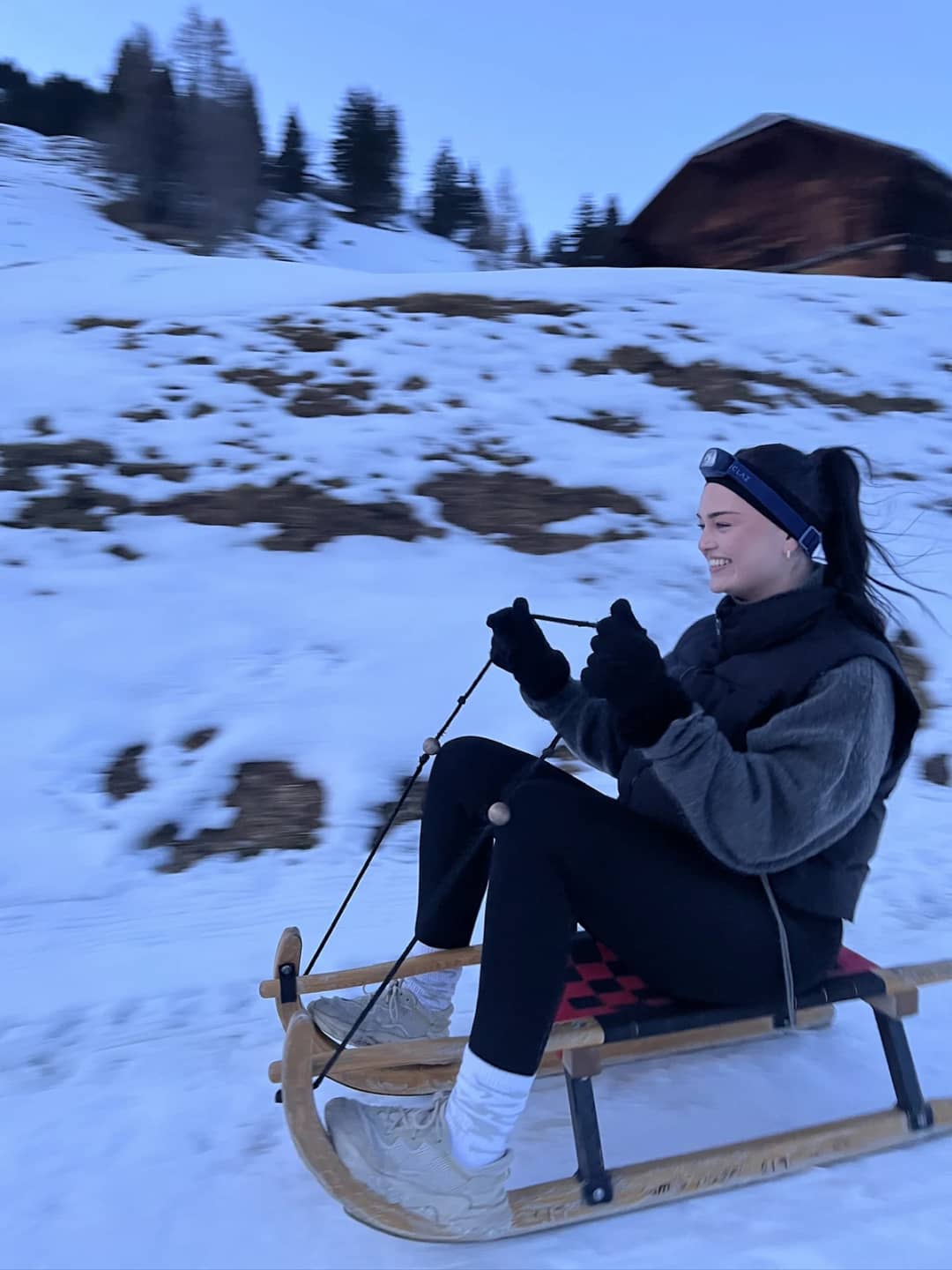
The Velogemel is the second thing to do on the Sulwald road, not the first. The first is a wooden sled at dusk, with someone who has checked the snow, a headlamp for the forest and a fondue waiting at the bottom. That is our sunset sledding with cheese fondue from Interlaken, eight people at most, CHF 139 with everything in the price. Come back for the Velogemel with your friends, in daylight, and tell us which bend got you.
How we made this: based on Pierre's interview of 25 October 2026, facts and prices checked at the official sources on 25 October 2026, written with AI assistance.
Source: Isenfluh-Sulwald cable car, Jungfrau Region Tourism, Switzerland Tourism, Velogemel World Championship, and a Velogemel ride on the Sulwald road.
*Written by Pierre Vetsch, founder and head guide at Swiss Local Adventures
Tags
#velogemel#velogemel-grindelwald#swiss-snow-bike#isenfluh-sledding#sledding-switzerland
Sources & References
- •Isenfluh-Sulwald cable car, prices
- •Jungfrau Region Tourism, A region full of traditions
- •Switzerland Tourism, Velogemel World Championship 2027
- •Jungfrau Zeitung, Velogemel history
- •BFU Swiss Council for Accident Prevention, sledding
- •swisstopo and OpenStreetMap, Sulwald to Isenfluh road, 4.72 km, 1,520 to 1,095 m
- •Photos: David Birri / Jungfrau Region Tourismus (CC0), other photos Swiss Local Adventures
Share this article
Similar Articles
Continue your reading with these related articles
Winter
10/25/2026
16 min
Best Sledding in Switzerland: A Guide's Honest Ranking
The best sledding in Switzerland, ranked by a local guide: 10 runs from 2 to 11 km, which ones he has ridden, which to skip. Checked 25 October 2026.
best-sledding-switzerlandlongest-sled-run-switzerlandsled-runs-jungfrau-region
By Pierre VetschRead More
Winter
10/24/2026
14 min
How Much Does Sledding Cost in Switzerland?
Sledding in Switzerland costs CHF 16 to 92 for the lift, run by run, plus CHF 7 to 18 for the sled. Prices read on 24 October 2026, with a guide's verdict.
sledding-switzerland-pricesledding-cost-interlakenjungfrau-sledging-pass
By Pierre VetschRead More
Winter
10/23/2026
10 min
Sledding vs Luge: What You Actually Ride in Switzerland
Luge is the Olympic sled you ride on your back. Swiss sledding means sitting up on a wooden sled: CHF 16 return and CHF 7 sled hire at Isenfluh.
sledding-vs-lugeswiss-sleddingluge-bobsleigh-skeleton
By Pierre VetschRead More