Winter
Sledding vs Luge: What You Actually Ride in Switzerland
P
Pierre Vetsch
Author
October 23, 2026
10 min
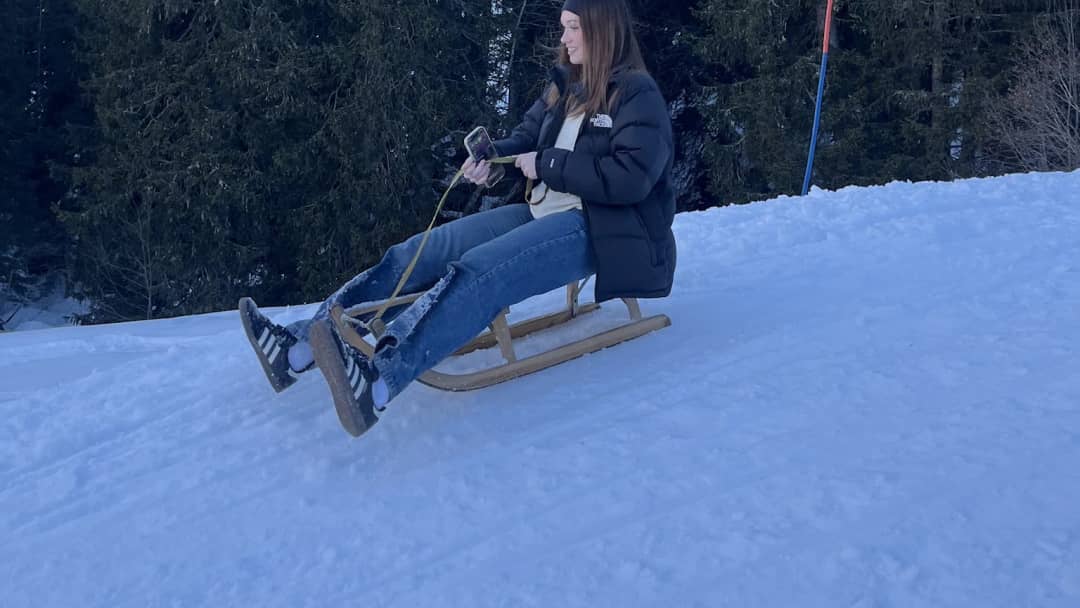
Sledding vs luge sounds like a question of words, but in English they are two different rides. A luge is the small racing sled you ride on your back, feet first, down an ice track. Sledding in the Swiss Alps means sitting up on a wooden sled, boots in the snow, on a mountain path that can run for several kilometres.
Most of our guests arrive picturing a kids' slope. Pierre Vetsch, our head guide, has ridden the lot, bob, luge and skeleton, and takes beginners down Swiss sled runs all winter. Here is what each word means, which ones a visitor can try, and the one he picks for a first winter day.
Is sledding the same as luge?
No. In English, a luge is a racing sled ridden lying on your back, feet first, "used especially in competition", says Merriam-Webster. Sledding is the everyday version: you sit upright on a sled and steer with your heels. The confusion comes from French, where "luge" means any sled, including the one a Swiss child rides to school.
That French meaning is why French speakers, and our own French pages, call this tour a "luge" without anyone lying down. The German-speaking Swiss say Schlitteln for sledding and Rodel for the light steerable sled, and the wooden sled with two runners is often called a Davos.
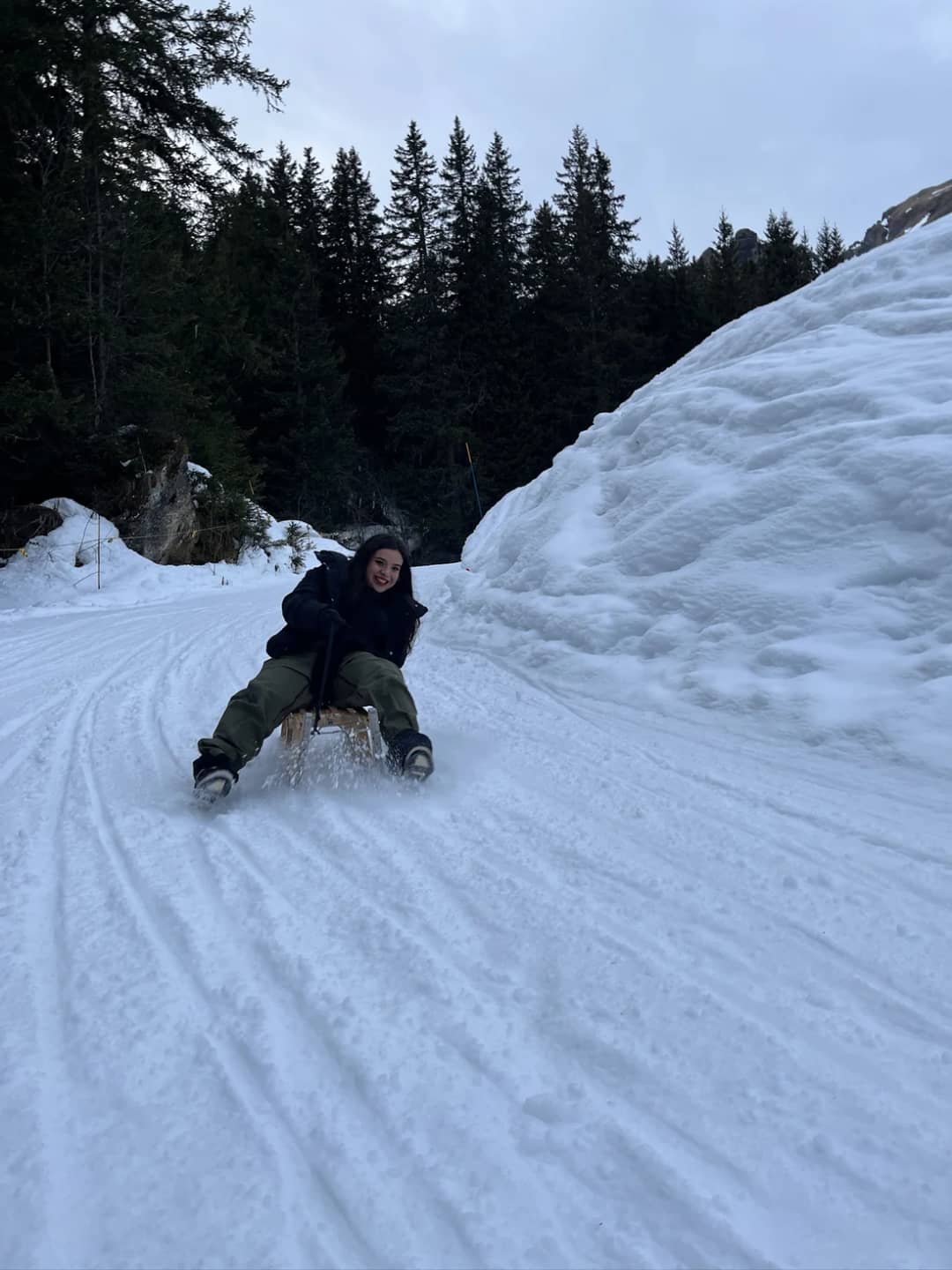
What you ride on a Swiss mountain path is a sled, not a luge. You sit up, your feet are in front of you, and your heels are the brakes. We explain the technique in our guide on how to steer a sled.
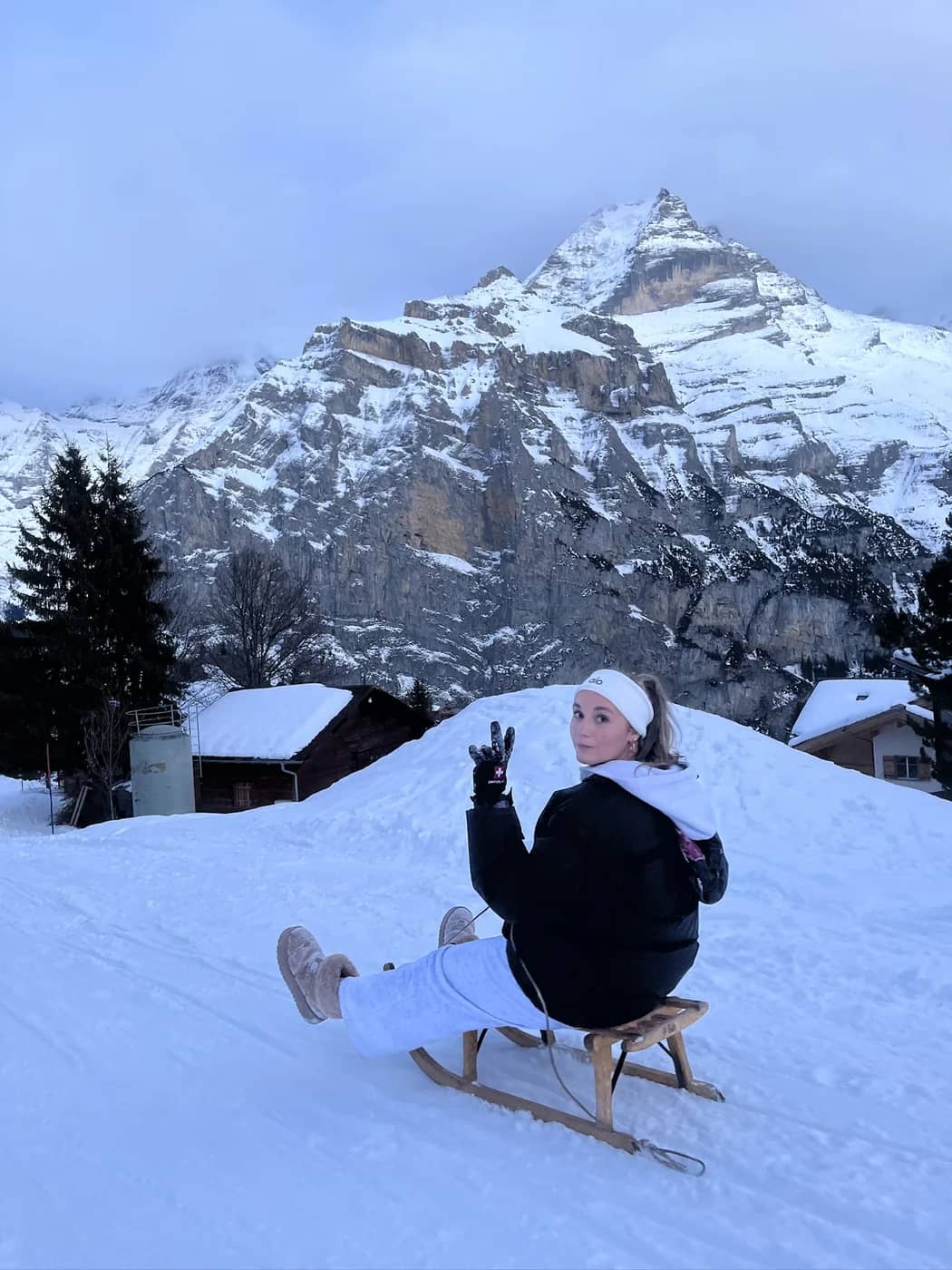
Sledding, sledging or tobogganing: which word is right?
All three are right. Americans say sled and sledding, the British say sledge and sledging, and Canadians often say toboggan. Merriam-Webster traces toboggan to Canadian French, from an Algonquian word akin to the Mi'kmaq name for a drag made of skin. Luge, from French, is first recorded in English in 1905.
In practice the words point to different shapes. A toboggan, in the strict sense, is a long flat-bottomed sled made of thin boards, curled up at the front. A sled or sledge stands on runners. On a Swiss run you will almost always get the second kind, a wooden sled on two steel-edged runners.
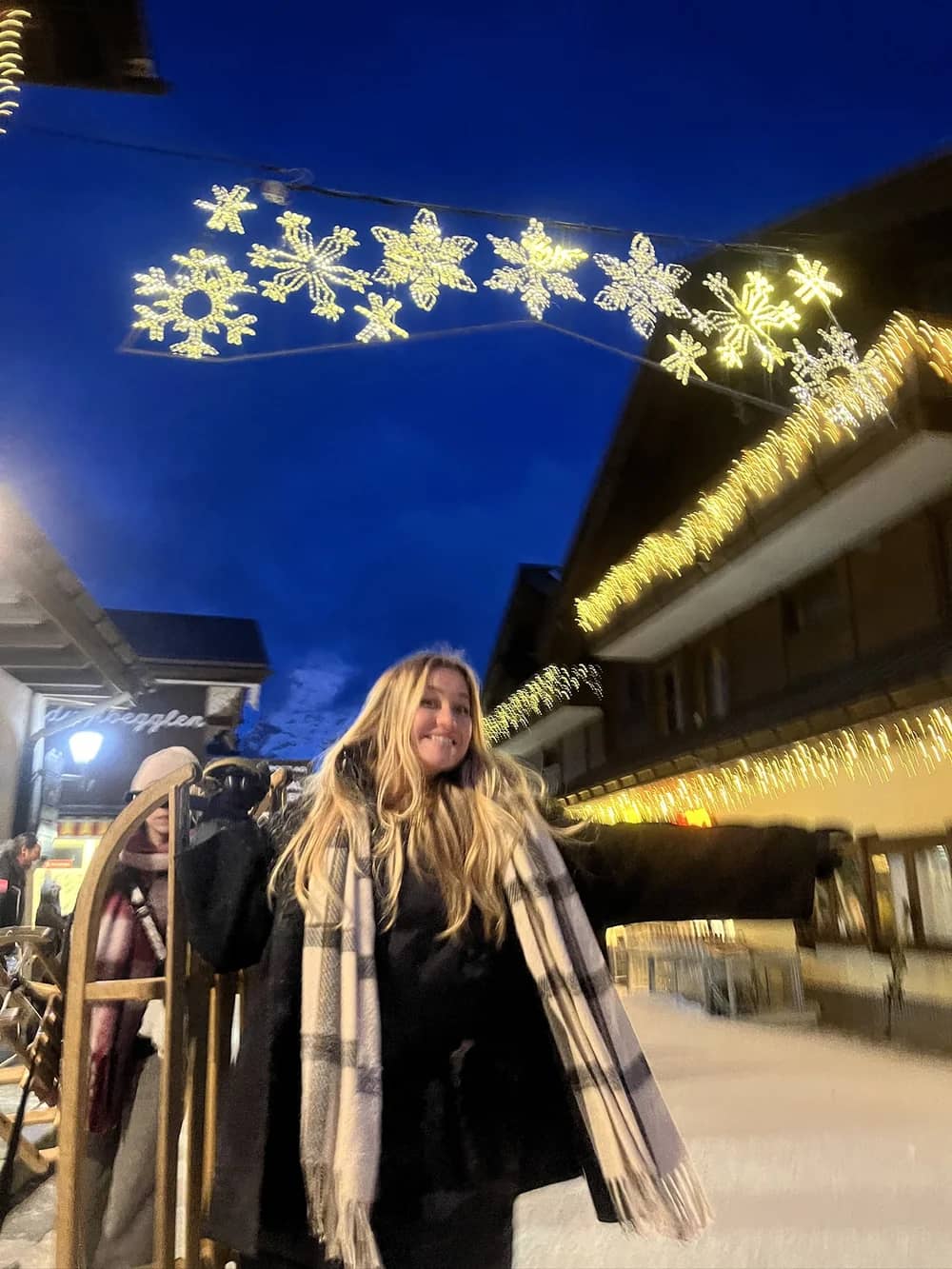
Fun fact: In Swiss German you do not go sledding, you go schlitteln. Rent a sled at the Isenfluh cable car and the price list calls it "Schlittenmiete": CHF 7 for the day, read on 23 October 2026.
So if a French-speaking friend invites you to "faire de la luge", pack ski pants, not a racing suit. It means a sled run, the same thing we call sledding.
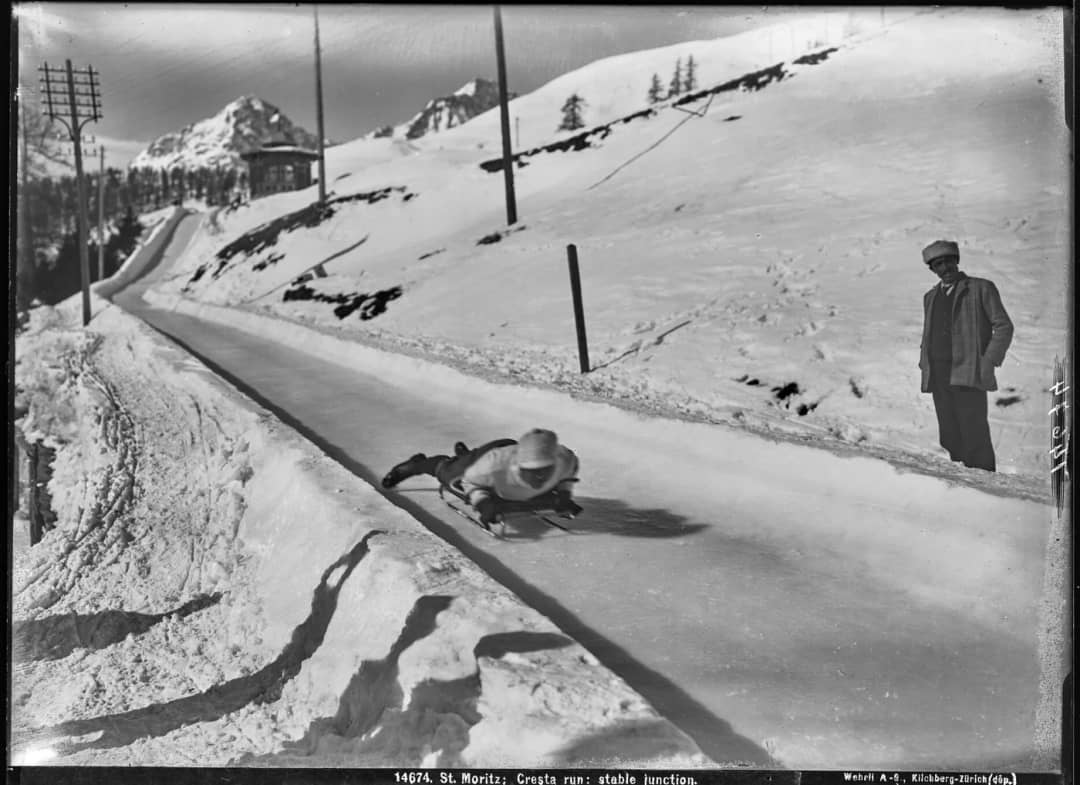
Luge, bobsleigh, skeleton and the Cresta Run: what is the difference?
Position. On a luge you lie on your back, feet first. On a skeleton you lie on your stomach, head first. In a bobsleigh two or four riders sit in a metal capsule, one steering, one braking. All three race on ice tracks. A Swiss sled is the only one you ride sitting up, on snow.
Switzerland has the oldest of these ice runs. The St Moritz Tobogganing Club writes that the first Cresta Run was completed in January 1885 and took nearly nine weeks to build. Its first race, against Davos, was held on 16 February 1885, and by 1890 every rider went down head first. The fastest speed ever recorded there is 82.87 mph, about 133 km/h, on 1 February 2015.
The club also counts about 14 bob runs in the world, the oldest and the only one made of natural ice being in St. Moritz. Pierre has tried all three disciplines, in France.
Pierre says: "Yes, all of them, at La Clusaz in France." That was his answer when we asked whether he had ridden a bob, a racing luge or a skeleton. What surprised him most, compared with our wooden sleds: "the speed".
The table below sets the six rides side by side, with the prices we read on 23 October 2026.
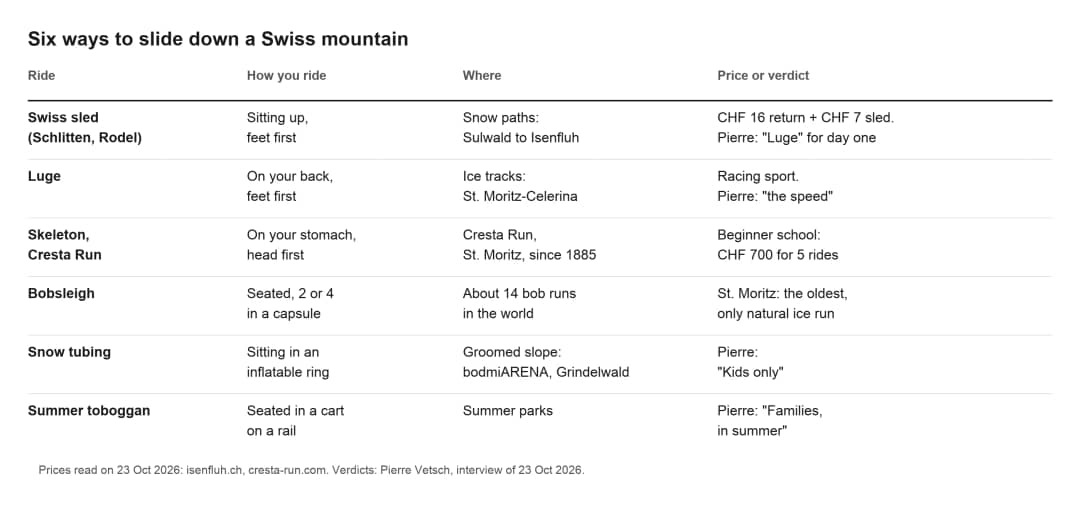
In short: on a Swiss sled you sit up, on snow paths such as Sulwald to Isenfluh, at CHF 16 return on the cable car plus CHF 7 for the sled. A luge is ridden on your back, feet first, on ice tracks such as St. Moritz-Celerina. The skeleton is head first on your stomach, and the Cresta Run's beginner school costs CHF 700 for the first 5 rides, equipment and tuition. A bobsleigh carries two or four people seated. Snow tubing is a ring on a groomed slope, such as the bodmiARENA in Grindelwald, and a summer toboggan is a cart on a rail.
Why is Swiss sledding not a kids' slope?
Because the runs are mountain roads, not hills. The Isenfluh sled run starts at Sulwald, 1,520 m, and ends in the village at 1,095 m, so you drop about 425 m. The Swiss accident prevention office BFU notes that even beginners pass 40 km/h on an easy path. Guests feel it within seconds.
Pierre says: "A kids' slope." That is what guests picture when they book a sled tour with us, Pierre told us. The moment they change their mind: "the first straight".
A Florida expat on Reddit's Switzerland forum once asked why nobody had warned them how hardcore Swiss sledding is. Pierre names the exact spot where guests find out: the first straight, before any bend. If the speed worries you, read whether night sledding is dangerous, with the BFU injury figures.
Insider tip: Put your heels down before you need them. On the first straight, drag both heels lightly in the snow from the start: you keep a speed you chose, and you learn the brake while it is still easy.
Snow tubing, summer toboggan or a real sled?
Snow tubing and summer toboggans are fun, but they are not the same day out. Tubing means sliding down a short groomed slope in an inflatable ring; in Grindelwald, the bodmiARENA beginners' area offers it next to skiing and sledging. A summer toboggan is a cart on a rail. Pierre keeps both for the family.
Pierre says: Tubing against a real sled? "Kids only." The rail toboggan, for "families, in summer".
Children are not left out of the real thing either. Peter, who works the Isenfluh cable car, told Pierre that the kids love it. For ages and the gentlest runs, see sledding with kids near Interlaken.
Our view: a ring on a short groomed slope gives you an hour of laughs. A sled run gives you the mountain, the forest and a descent you steer yourself. If you have one winter afternoon, take the sled.
Skiing or sledding: which should you pick for one winter day?
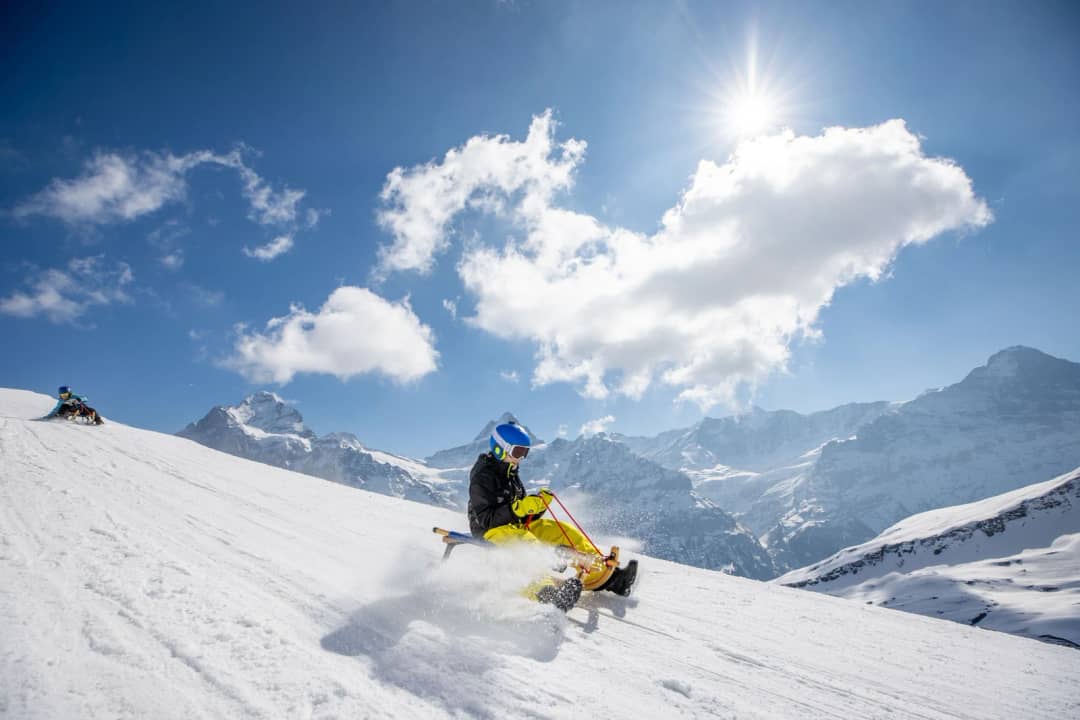
Sledding, if you have never skied. Pierre's answer was "Luge", meaning the sled. You need no lesson, no ski pass and no ski boots, and you enjoy the first descent instead of spending the day learning to stop. Our sled tour page says the same: never skied, never sledded, no experience required.
The arithmetic backs him up. At Isenfluh, a return ticket on the cable car costs CHF 16 and a sled CHF 7, read on 23 October 2026, and the run starts at the top station. A first ski day adds lessons, equipment and a lift pass before you see the same view.
Sledding is not risk-free, and our article on night sledding compares the injury figures with skiing. But for a non-skier with one day, the sled gives you the mountain from the first minute. And this is not a sledder's prejudice: Pierre is a state-qualified Austrian ski instructor, a Landesskilehrer.
Your Questions About Sledding vs Luge
Is tobogganing a sport?
It can be. Luge, skeleton and bobsleigh are Olympic sports raced on ice tracks, and the Cresta Run in St. Moritz has been racing since February 1885, when its first race, against Davos, was held on 16 February. The everyday sledding you do on a Swiss mountain path is a leisure activity: there is no timing, no ice channel, and you ride sitting up at your own speed. As a visitor you go for the descent and the view, not for a time. If you want the sporting version, the Cresta's beginner school is open to visitors, and the bob runs host World Cup races you can watch.
Can tourists ride the Cresta Run?
Yes, through its beginner school. The St Moritz Tobogganing Club asks for full payment of CHF 700 when you book, which covers your first 5 rides, equipment and tuition, read on 23 October 2026. Beginners start from Junction, a point lower down the run, and aim for a time between 65 and 75 seconds on their first rides. Riding from the very top only starts in mid-January. The club's site also states that women may now ride on the same basis as men. It is a head-first descent on ice, at speeds that have reached 133 km/h for the fastest riders, so it is a very different day from a Swiss sled run.
Can you go sledding on a ski slope?
In Switzerland, sled runs are usually marked and kept separate from ski pistes, and you should stay on them. Wouter, who rents sleds in Mürren, told Pierre that some customers who hired sleds ended up on the ski slopes, which is exactly what you want to avoid: skiers come down fast and do not expect a sled. Follow the sled run signs from the top station, and ask the rental shop which run is open that day. In Mürren and Isenfluh, the runs follow paths and roads through the forest, so once you are on the right one, you stay on it to the bottom. Our guide to the best sled runs near Interlaken lists the marked ones.
What is a Velogemel?
A Velogemel is a wooden snow bike from Grindelwald: a sled with a seat and a front runner you steer with handlebars. The village still races them, with a world championship on the Bussalp in February 2024. It sits between a sled and a bicycle, and you brake with your feet as on a sled. You can rent one at the Isenfluh cable car for CHF 8 a day, next to sleds at CHF 7, read on 23 October 2026. It is fun for a second or third descent once you know the run, but for a very first time we stick to a normal sled. Our guide to sledding in Grindelwald for first-timers covers its runs.
Can adults go sledding in Switzerland?
Yes. A sled run here is not a children's hill: it is a few kilometres of mountain path, and grown-ups ride it after a day of skiing or instead of skiing. Our guided tour is made for adults and families with children from 10, in groups of eight at most, and both our runs, at Mürren and Isenfluh, are officially rated easy. You need no experience and no particular fitness, but you do need waterproof boots with a good grip, since you brake with your heels, and ski pants or waterproof trousers. Our guide to what to wear sledding in Switzerland gives the full list.
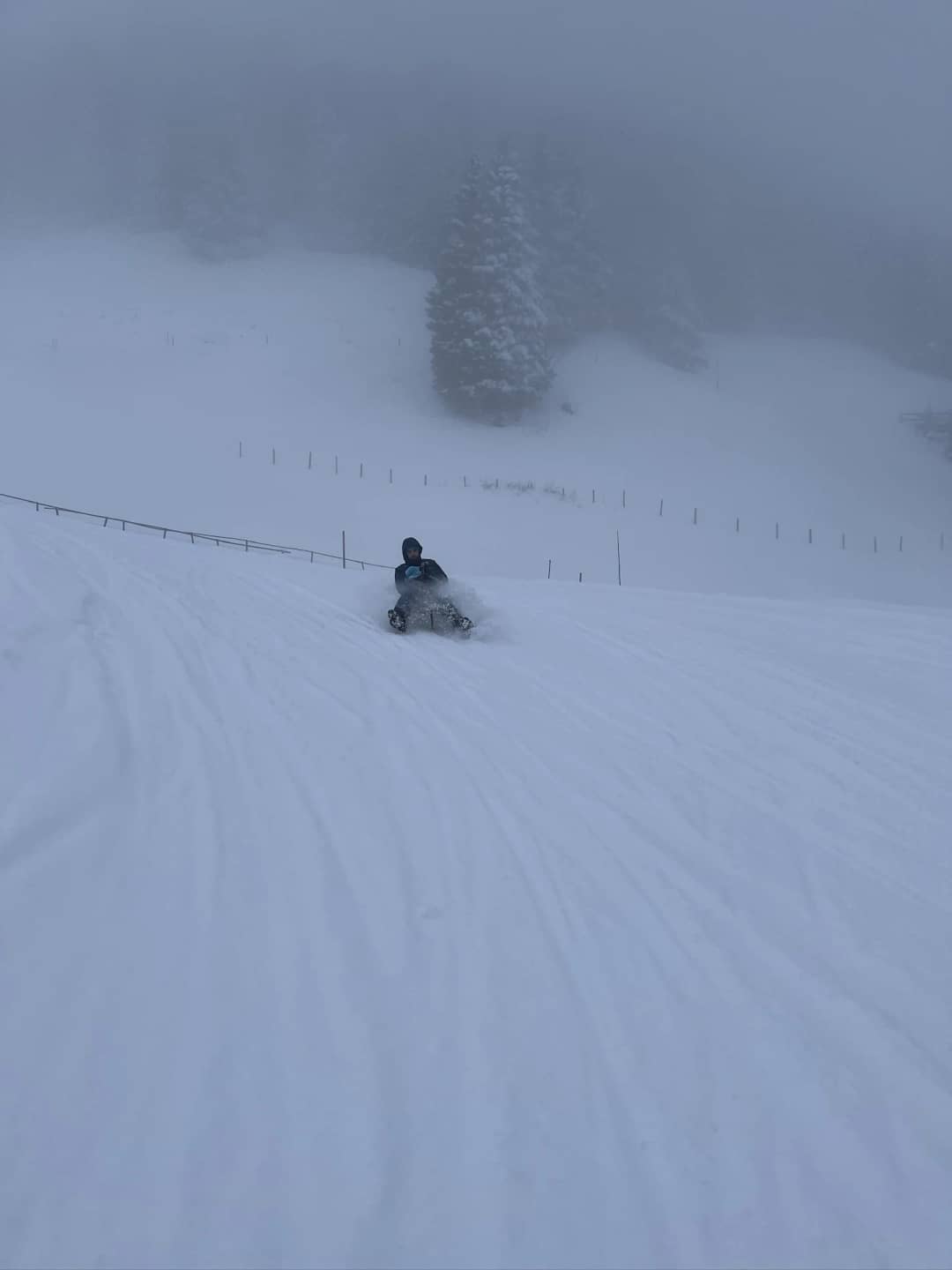
Try the Swiss kind of sledding with a guide
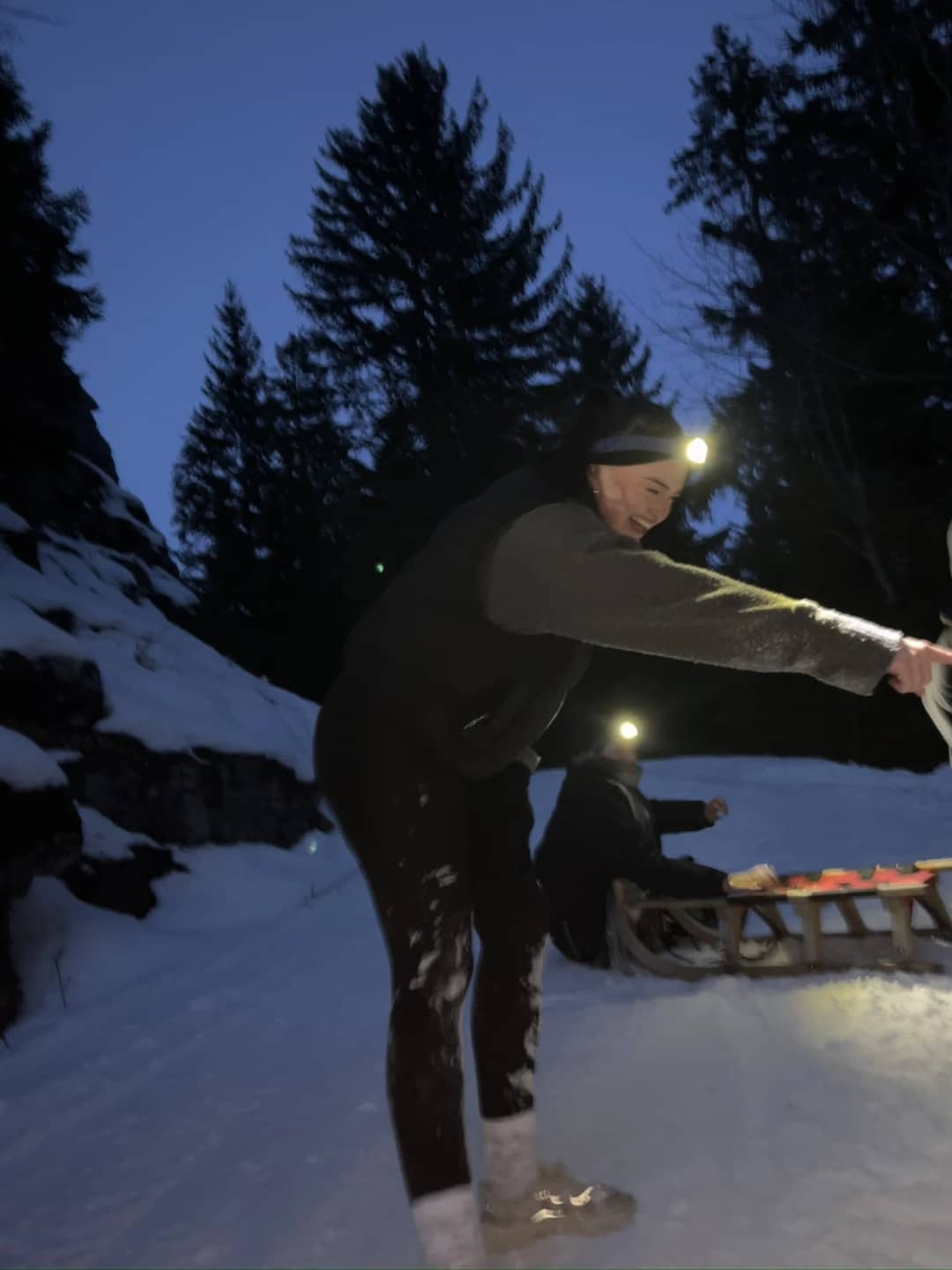
The obstacle for most first-timers is the speed of that first straight, and not knowing the run. On our Sunset Sledding with Swiss Cheese Fondue, a local guide picks the run with the best snow that day, Isenfluh or Mürren, shows you the heel brake at the top and rides down behind the group.
You leave Interlaken at 15:30, ride the cable car up, watch the Eiger, Mönch and Jungfrau turn pink, and sled down with mulled wine halfway. The evening ends with a cheese fondue and a glass of white wine in Interlaken. It costs CHF 139 per person, CHF 129 from six people, with the transport, sled, headlamp and guide included, for eight guests at most.
How we made this: based on Pierre's interview of 23 October 2026, facts and prices checked at the official sources on 23 October 2026, written with AI assistance.
Source: The Cresta Run, St Moritz Tobogganing Club, Luftseilbahn Isenfluh-Sulwald, prices, and on-site sledding tours in Mürren and Isenfluh, 2026.
*Written by Pierre Vetsch, founder and head guide at Swiss Local Adventures
Tags
#sledding-vs-luge#swiss-sledding#luge-bobsleigh-skeleton#winter-activities-interlaken#sunset-sledding-interlaken
Sources & References
- •The Cresta Run, St Moritz Tobogganing Club: History of the Club
- •The Cresta Run: Facts about the Cresta
- •The Cresta Run: Beginners on the Cresta Run (CHF 700, read 23.10.2026)
- •Luftseilbahn Isenfluh-Sulwald: prices (CHF 16, CHF 7, CHF 8, read 23.10.2026)
- •Merriam-Webster: luge
- •Merriam-Webster: toboggan
- •Grindelwald Tourismus: bodmiARENA
- •BFU, Swiss Council for Accident Prevention: Schlitteln
- •Olympia Bob Run St. Moritz-Celerina
- •Photo Cresta Run 1907: Photoglob-Wehrli, Swiss National Library, public domain, via Wikimedia Commons
- •Photo family sledding Faulhorn-Bussalp: Jungfraubahnen / Jungfrau Region Tourismus DAM, CC0
- •Other photos: Swiss Local Adventures, sledding tours in Mürren and Isenfluh, 2025-2026
Share this article
Similar Articles
Continue your reading with these related articles
Winter
10/23/2026
10 min
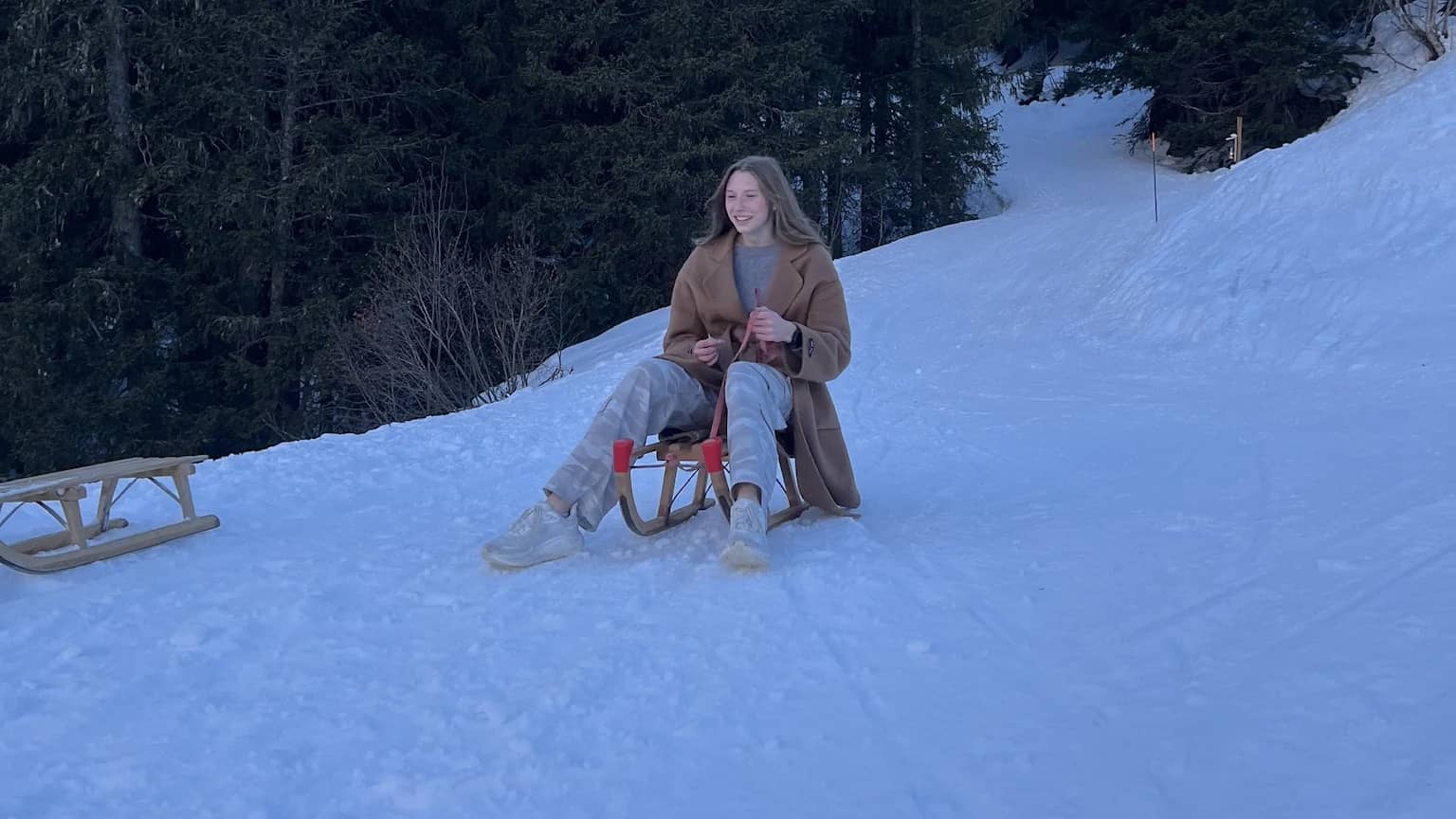
When Does Sledding Season Start in Switzerland?
At 1,632 m in Mürren, 8 winters in 14 had 30 cm of snow by 15 December. When sledding starts near Interlaken, the best month, and what if no snow.
sledding-season-switzerlandsnow-conditions-switzerlandswitzerland-in-december
By Pierre VetschRead More
Winter
10/22/2026
11 min
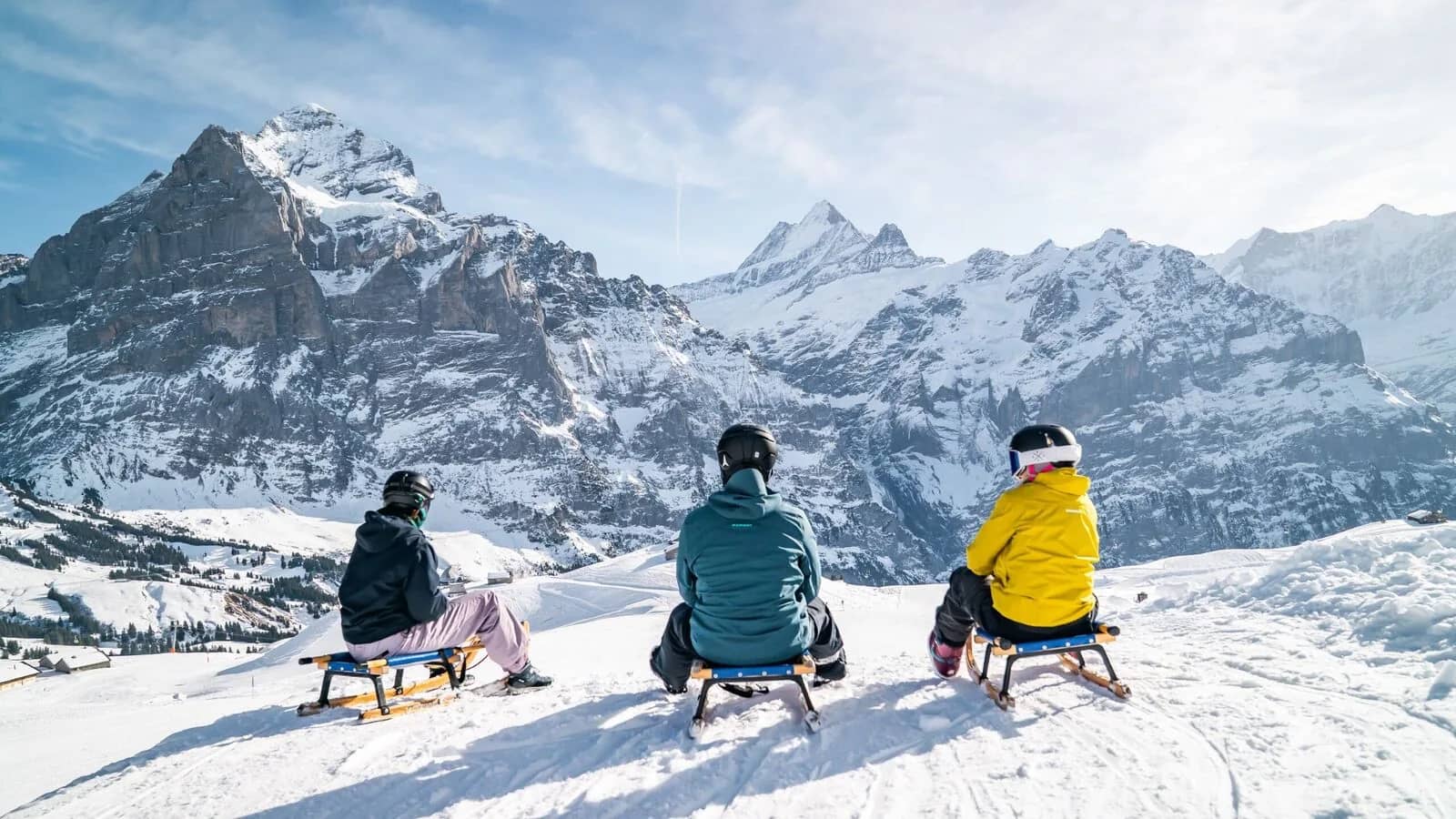
Sledding in Grindelwald: Which Run for First-Timers?
Sledding in Grindelwald: 6 runs, one for a first ride. Our guide picks Männlichen, skips the 36% Eiger Run and flags the last train.
sledding-grindelwaldsledding-switzerlandeiger-run
By Pierre VetschRead More
Winter
10/21/2026
11 min
Mürren or Grindelwald in Winter: Which to Pick?
Mürren or Grindelwald in winter? On 21 December Mürren gets 4 hours of direct sun, Grindelwald none. Our guide's verdict for a day, a stay, the Eiger.
murren-or-grindelwaldmurren-wintergrindelwald-winter
By Pierre VetschRead More