Farm Tour
¿Qué es el Alpkäse? Queso suizo de alpe, solo en verano
T
Teona Gvasalia
Autor
22 de junio de 2026
6 min
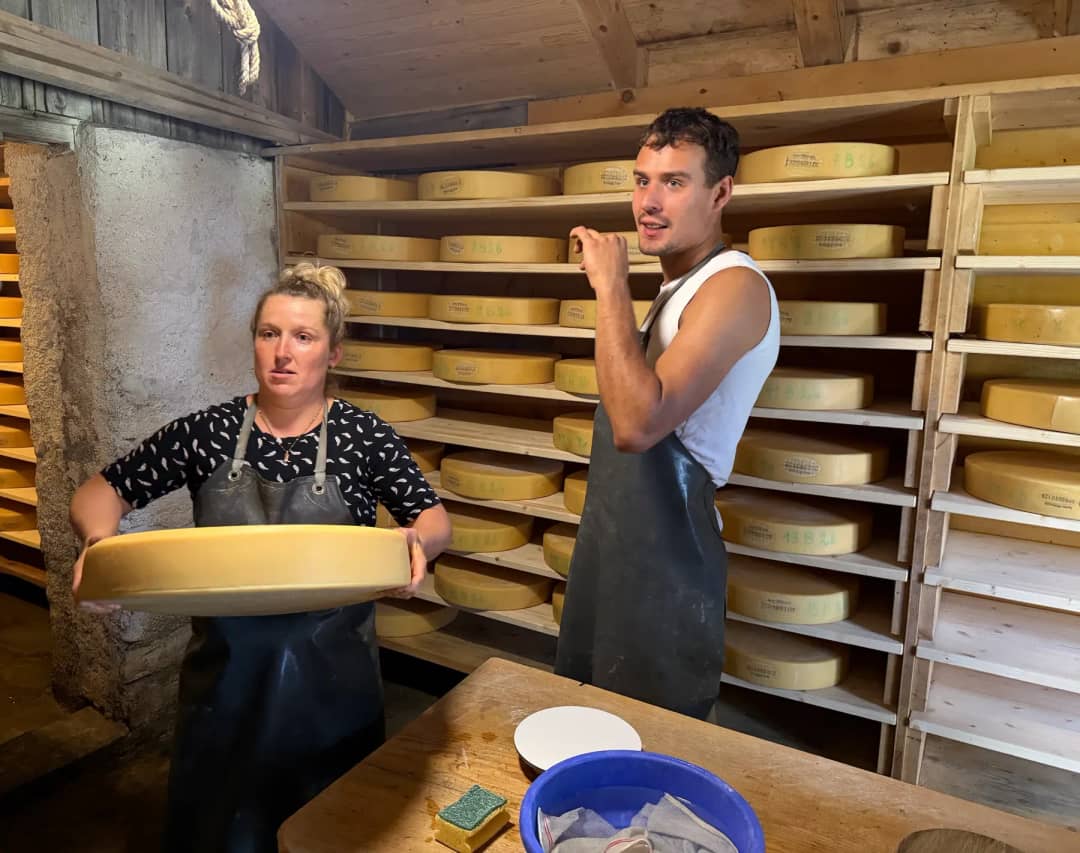
¿Qué es el Alpkäse? El queso de alpe que no se encuentra en ningún otro sitio
Suiza tiene más de 450 variedades de queso. La mayoría nunca sale del país. El Alpkäse es el caso más extremo: se hace solo en verano, en el alpe, con leche cruda que pasa de la vaca a la caldera de cobre esa misma mañana. Una granja de alpe del Justistal produce 348 ruedas por temporada. Cuando las vacas bajan en septiembre, la producción se detiene por completo. El queso que reposa en una bodega en octubre se hizo en julio.
No es una historia de marketing. Es una restricción de calendario.
Si ha probado Alpkäse cerca de Interlaken y se ha preguntado qué lo distingue de cualquier otro queso suizo, esta guía responde justo a eso.
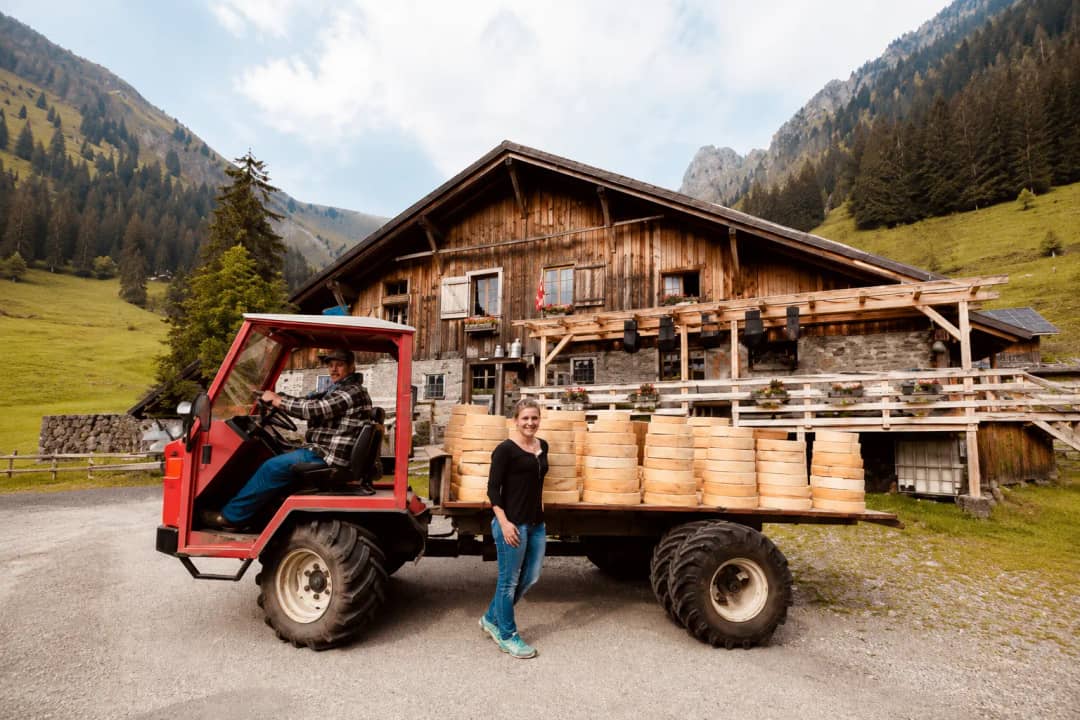
¿Qué es el Alpkäse y de dónde viene?
El Alpkäse es un queso de pasta dura de leche cruda que se produce en las granjas suizas de altura entre junio y septiembre. Se elabora exclusivamente en el alpe, con leche de vacas que pastan en los alpes, y nunca se procesa industrialmente. Un granjero, un rebaño, una temporada de verano.
El nombre significa « queso de alpe » en suizo alemán. La definición legal importa: para llevar ese nombre, el queso debe hacerse en un alpe, una granja de montaña estacional, no en una quesería del valle. La leche viene de vacas que comen cientos de plantas silvestres, dientes de león, trébol, tomillo silvestre, hierbas de montaña que solo crecen a esa altitud. Ese alimento es lo que da carácter al queso. El sabor viene del pasto, no de una receta.
Teona dice: «El sabor viene del pasto, no de una receta.»
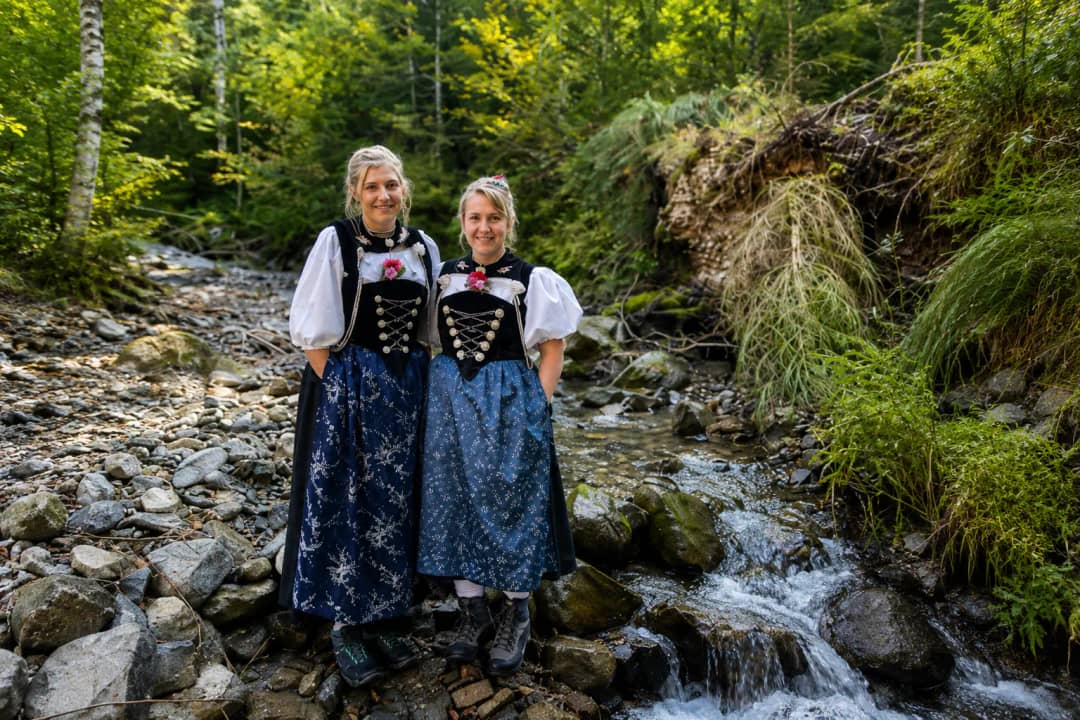
Teona Gvasalia, su guía alpina en Swiss Local Adventures
La normativa suiza exige una curación mínima de 4,5 meses. La mayoría de las ruedas llega a 6 a 12 meses antes de venderse.
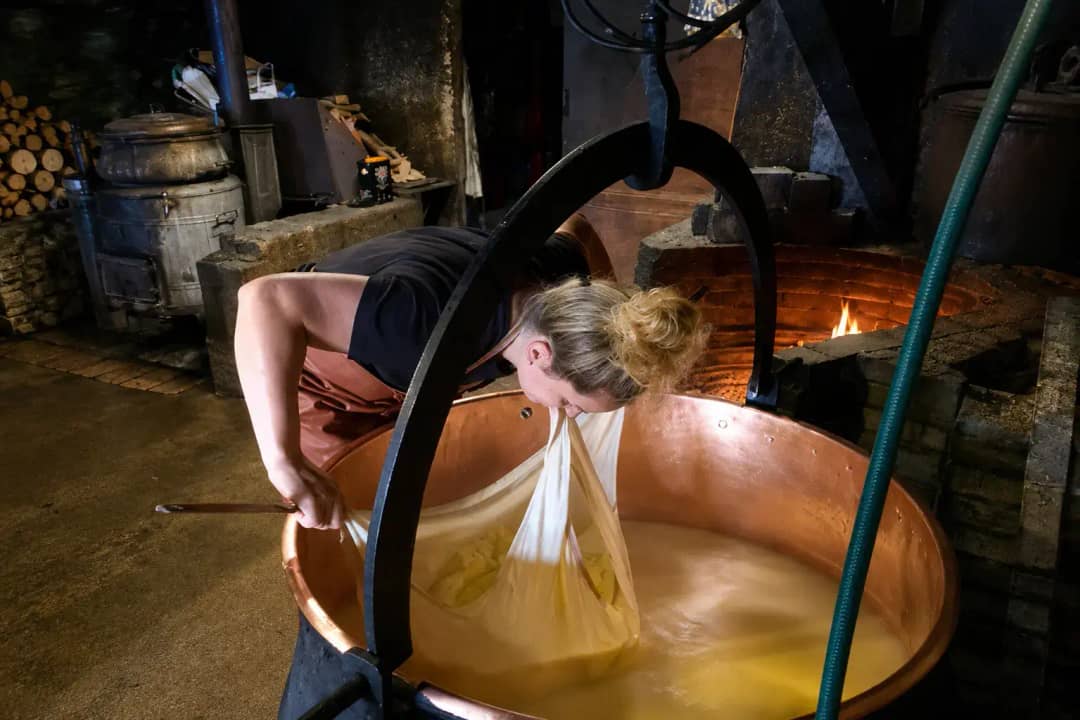
¿En qué se diferencia la elaboración del Alpkäse de otros quesos suizos?
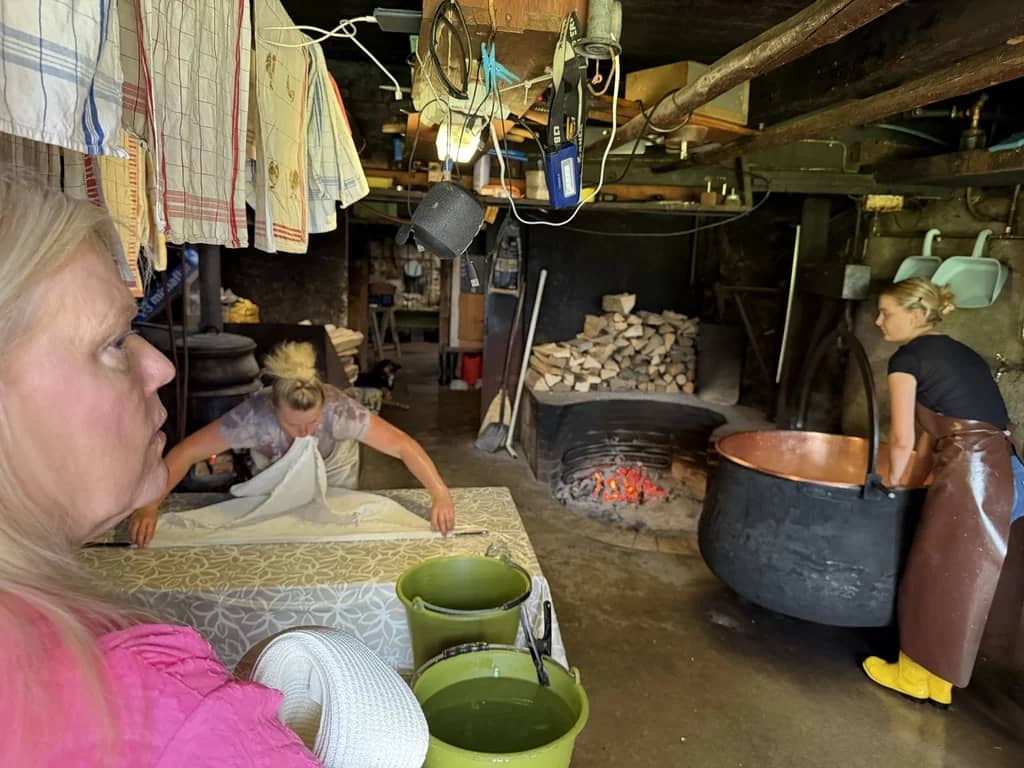
El Alpkäse se hace en un Chäschessi, una gran caldera de cobre calentada sobre fuego de leña abierto. Ni resistencia eléctrica, ni quemador de gas. Fuego de leña. Esa llama directa es uno de los detalles que más sorprenden a quienes visitan la granja: el olor del fuego, el sonido de la leche que empieza a moverse, el granjero removiendo a mano.
Si prefiere ver esa caldera en marcha en vez de leerlo, el recorrido del tour de granja cuenta la mañana hora por hora, desde que entra la leche en el cobre hasta que sale la cuajada.
La leche cruda se usa justo después del ordeño. Nunca se pasteuriza, nunca se estandariza, nunca se almacena. Los fermentos que se desarrollan en la leche de alpe sin pasteurizar son propios de esa montaña, esa temporada y ese rebaño. No se replican en una quesería de valle.
Una vez prensada y salada, cada rueda pasa a la bodega y se voltea con regularidad durante meses. La corteza se forma sola. El interior se endurece poco a poco. Las ruedas más viejas desarrollan un sabor más fuerte, a nuez y a hierba. Las jóvenes (2 a 3 meses) son más suaves, casi mantecosas.
Dato curioso: El Alpkäse se hace en un Chäschessi, una gran caldera de cobre calentada sobre fuego de leña abierto. Ni resistencia eléctrica, ni quemador de gas.
Cada rueda lleva el nombre de la granja, el número de alpe y la fecha de producción. Las reglas suizas de trazabilidad permiten identificar qué vaca, en qué montaña y en qué semana del verano dio la leche que tiene en la mano.
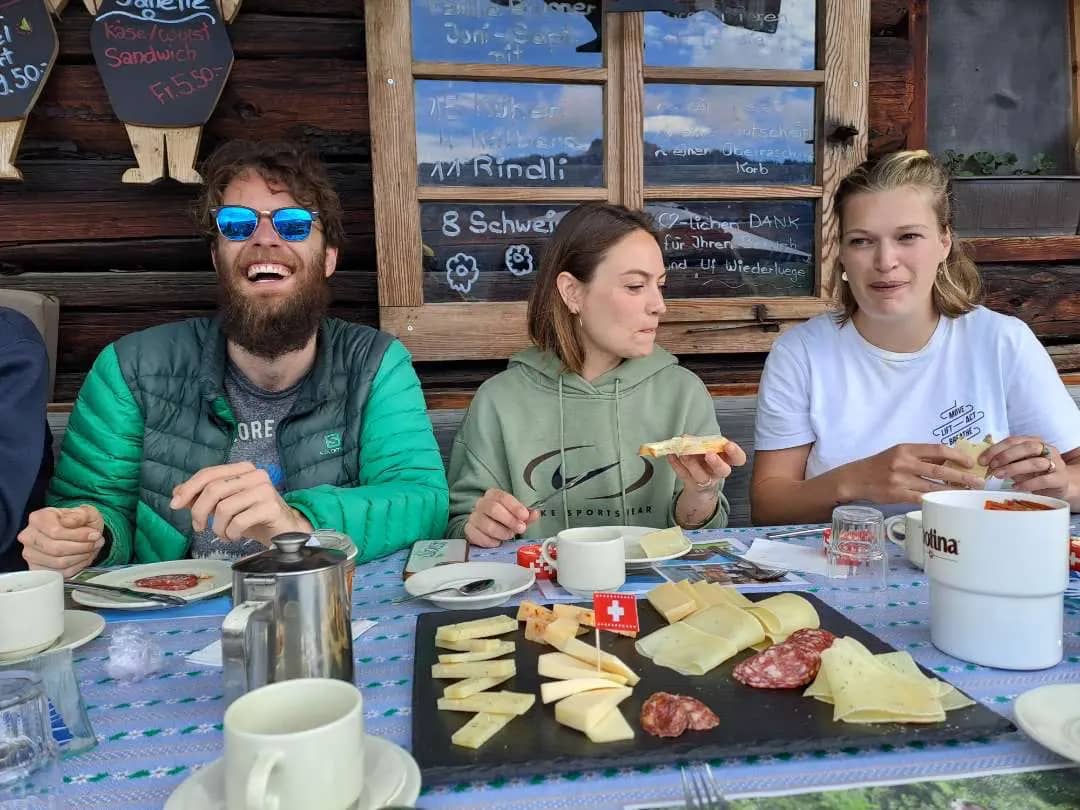
¿Cuál es la diferencia entre Alpkäse y Bergkäse?
Es la pregunta que más confunde a los visitantes anglófonos. Los dos nombres aparecen en las tablas de queso de toda Suiza.
El Alpkäse se hace en el propio alpe, solo en verano, exclusivamente con leche cruda. El granjero vive en la montaña con el rebaño toda la temporada.
El Bergkäse (queso de montaña) se produce en queserías de pueblo de la zona de montaña, todo el año. La leche puede estar pasteurizada. La producción es mayor y más estandarizada. Puede ser un queso excelente, pero no está sujeto a las mismas exigencias de altitud, temporada o leche cruda.
Teona le preguntó a un granjero: «¿Cómo distingo en una tienda un Alpkäse de verdad de un Bergkäse?»
«Lea la etiqueta. Busque Alp o AOP y el nombre de una granja. Sin nombre de granja, lo más probable es que tenga en la mano un Bergkäse.»
Teona Gvasalia, su guía alpina en Swiss Local Adventures
La confusión es frecuente en las reseñas en inglés porque los dos términos se traducen a grandes rasgos como « queso de montaña ». No son lo mismo. Si la etiqueta no dice « Alp » ni « AOP » y no muestra un nombre de granja, lo más probable es que sea Bergkäse.
¿Qué significa « Berner Alpkäse AOP »?
AOP significa Appellation d'Origine Protégée, una certificación legal europea que garantiza que el queso procede de un territorio definido y sigue un pliego de condiciones estricto. El sello AOP en una rueda de Berner Alpkäse quiere decir que se hizo en los Alpes berneses, con leche cruda, en un alpe de altura y solo en verano. Ninguna quesería de valle puede usar ese sello.
En la práctica: si ve « Berner Alpkäse AOP »,Berner Alpkäse AOP tiene delante un queso cuya cadena entera, del pasto a la bodega, es trazable y auditada. Es el mismo sistema que protege el Gruyère AOP y el Champagne. No es un distintivo de marketing. Es una frontera legal.
¿Cómo se compara el Alpkäse con el Gruyère?
Los dos son suizos. Los dos son de pasta dura. Los dos se hacen con leche cruda. Las diferencias son importantes.
El Gruyère AOP se produce en la región de Gruyères, en queserías que trabajan todo el año. El proceso está estandarizado para garantizar la regularidad. El resultado es excelente y está disponible en 40 países.
El Alpkäse lo hace un granjero, en una montaña, con un rebaño, durante un verano. El sabor cambia semana a semana según lo que hayan comido las vacas esa mañana. Una rueda de mediados de julio no es idéntica a una de finales de agosto de la misma granja. No hay dos ruedas exactamente iguales.
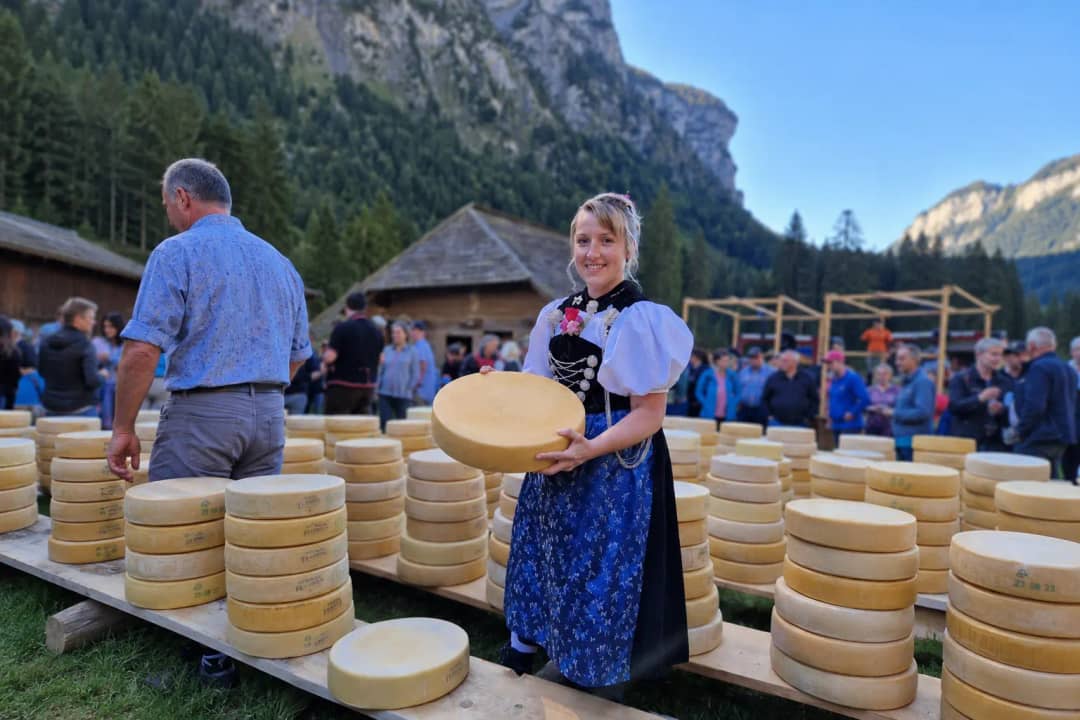
Al terminar el verano, esas ruedas se reparten entre los granjeros que subieron sus vacas al alpe. En el valle de Justistal, cerca de Interlaken, se hace en público y a sorteo: nuestra guía del Chästeilet del Justistal explica cómo transcurre el día y cómo asistir.
Teona dice: «Pruebe una junto a otra dos ruedas con fechas distintas estampadas. Misma granja, mismo rebaño, y todavía se nota la semana en que se hizo cada una.»
Teona Gvasalia, su guía alpina en Swiss Local Adventures
Gruyère se encuentra en Heathrow. Las cantidades son demasiado pequeñas para exportar Alpkäse de verdad, y el sistema de distribución nunca se pensó para volúmenes industriales. No sale.
¿Por qué no se encuentra Alpkäse de verdad en el supermercado?
Un producto estacional como el Alpkäse, con entre 200 y 700 ruedas por granja y verano, tiene un volumen demasiado pequeño para abastecer a una cadena de supermercados. Y la mayor parte ya está asignada antes de llegar a un mercado abierto.
Parte de la explicación es el Chästeilet: la ceremonia tradicional de fin de verano en la que cada familia de granjeros recibe queso en proporción a la leche que aportaron sus vacas a la cooperativa. Este sistema funciona en el Justistal desde 1739. La mayor parte del queso va directamente de la granja a las familias y sus redes locales antes de llegar a ningún puesto.
Lo que se vende como « Alpkäse » en los supermercados suizos suele ser queso de valle hecho para parecerse a la versión de alpe. Es legal según las reglas suizas de etiquetado. No es lo mismo.
Consejo local: Saque el Alpkäse de la nevera 30 minutos antes de servir. Viaja bien en el equipaje de mano, en una bolsa cerrada, pero evite la bodega del avión en vuelos largos.
Esto no se encuentra en un supermercado porque la versión real obliga a ir a la fuente.
¿Por qué sabe distinto la leche de las vacas de alpe?
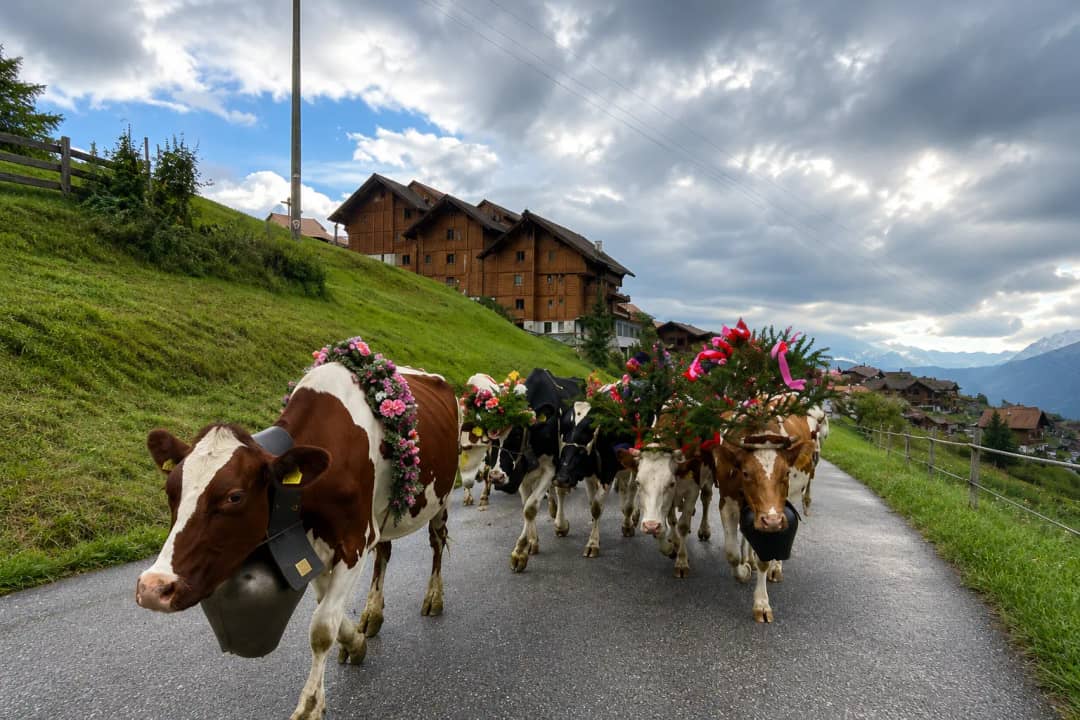
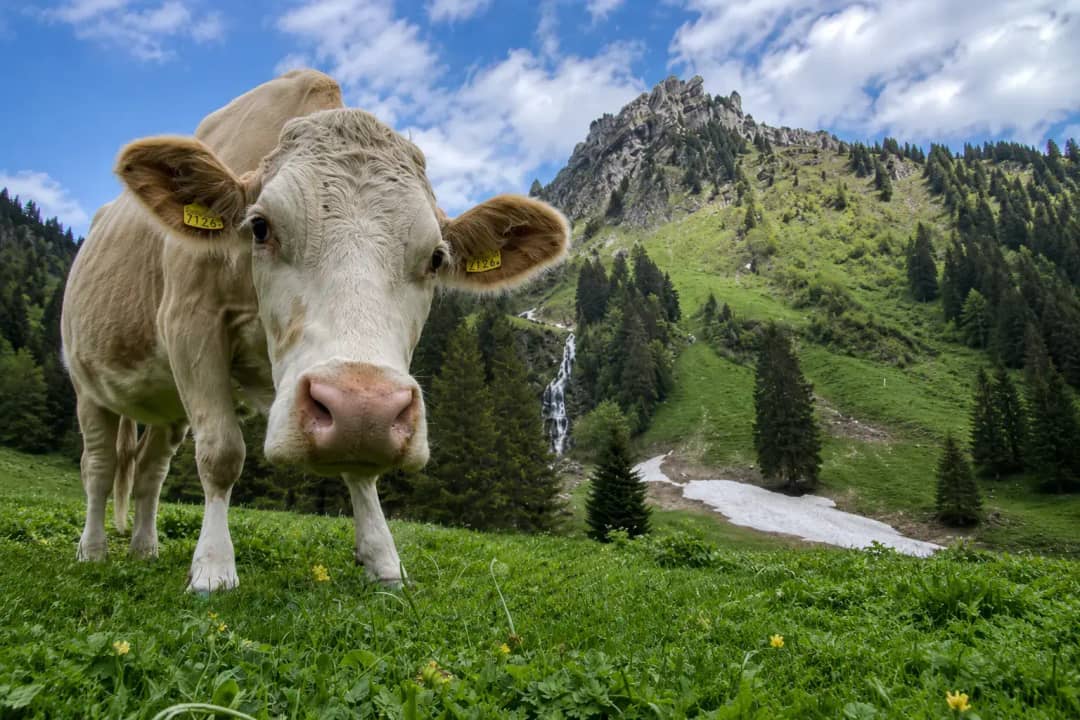
La leche de vacas que pastan hierbas de alpe tiene una composición medible distinta de la leche de llanura. Los pastos de altura contienen cientos de especies vegetales que no crecen más abajo, entre ellas tomillo silvestre, diente de león de montaña y variedades de trébol propias de la altitud.
Las vacas que comen esa diversidad producen una leche bastante más rica en ácidos grasos omega 3 y en ácido linoleico conjugado que la leche estándar de llanura. La misma vaca, con otra hierba, da una leche con un perfil de grasa y proteína completamente distinto.
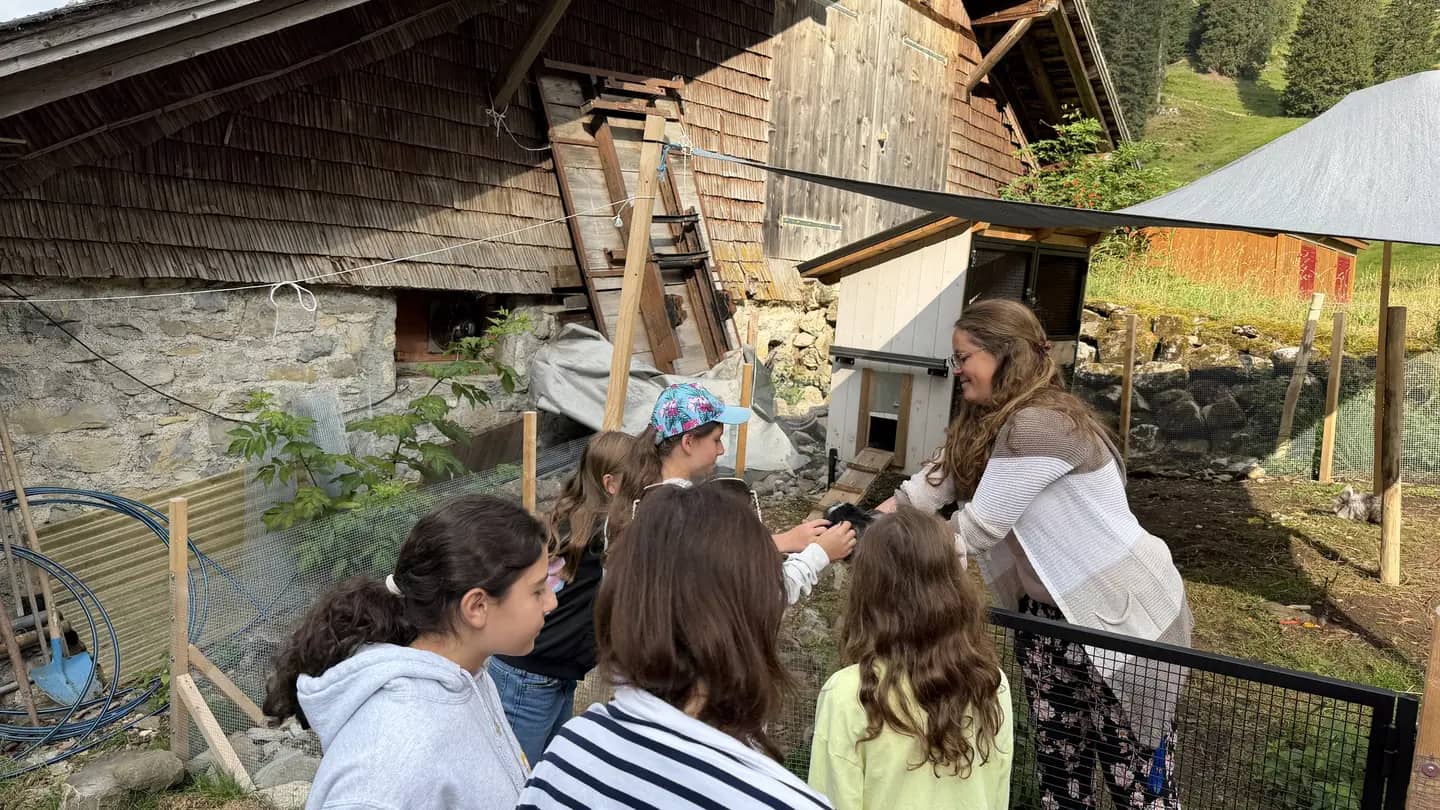
A los niños les da igual el perfil de ácidos grasos, pero se acuerdan de las vacas y de la hierba. Si viaja en familia, nuestra guía para padres del farm tour cuenta qué funciona a cada edad y qué llevar.
Los queseros usan la palabra terroir para esto: el mismo término que emplean los viticultores para la uva. Una rueda de Alpkäse del Justistal sabe distinto de una hecha veinte kilómetros más allá, en otra montaña. Misma raza. Otro pasto.
Sus preguntas sobre el Alpkäse
¿Es seguro el Alpkäse si está hecho con leche cruda?
Sí. La normativa suiza exige una curación mínima de 4,5 meses para el Alpkäse. Durante ese tiempo, la fermentación natural elimina las bacterias nocivas. El Berner Alpkäse AOP debe cumplir normas estrictas de higiene y trazabilidad, auditadas por las autoridades cantonales suizas. Los quesos duros de leche cruda curados más de 60 días están reconocidos como seguros por las autoridades sanitarias de Suiza, la UE y el Reino Unido.
¿Puedo comer Alpkäse si soy intolerante a la lactosa?
La mayoría de las personas con intolerancia a la lactosa comen Alpkäse sin problema. La curación mínima de 4,5 meses hace que la lactosa se descomponga de forma natural durante la fermentación. Cuando el queso llega a su plato, el contenido de lactosa es insignificante. Los quesos duros curados son, en general, la categoría mejor tolerada por las personas sensibles a la lactosa.
¿Cuál es la diferencia entre Alpkäse y Bergkäse?
El Alpkäse se hace en el propio alpe, solo en verano, exclusivamente con leche cruda. El Bergkäse se produce en queserías de pueblo de la zona de montaña, todo el año, y la leche puede estar pasteurizada. Los dos se venden como « queso de montaña » en inglés, lo que genera confusión constante. La distinción clave es la altitud, la temporada y la obligación de leche cruda: el Alpkäse cumple las tres, el Bergkäse no.
¿Dónde comprar Alpkäse de verdad cerca de Interlaken?
La fuente más fiable es directamente una granja de alpe en activo. En el Farm and Alpine Breakfast Tour se prueba y se compra queso cortado de la bodega de Daniela, en Sigriswiler Bärgli, en el Justistal: CHF 20 por kilo, solo en efectivo. Los mercados regionales de Interlaken lo tienen a veces en verano, pero la disponibilidad no está garantizada.
¿Cuánto dura el Alpkäse después de comprarlo?
Una rueda bien curada aguanta 3 a 4 semanas en el frigorífico una vez abierta. Sabe mejor a temperatura ambiente: sáquelo de la nevera 30 minutos antes de servir. Viaja bien en el equipaje de mano, en una bolsa cerrada. Evite la bodega del avión en vuelos largos.
¿El Alpkäse solo está disponible en verano?
La producción es estacional: de junio a septiembre. Pero las ruedas curadas se encuentran todo el año en granjas y mercados regionales, porque el queso sigue madurando en bodega durante el otoño y el invierno. Lo que no se encuentra después de septiembre es Alpkäse recién hecho. Una rueda disponible en enero se hizo en julio y lleva seis meses curándose. Eso forma parte de su sabor.
¿Dónde probar Alpkäse cerca de Interlaken?
La granja de Daniela, Sigriswiler Bärgli, está en el valle del Justistal, por encima de Interlaken. Cada verano produce 348 ruedas de Berner Alpkäse AOP antes de que acabe la temporada. El Chästeilet de septiembre, documentado en este valle desde 1739, reparte el queso entre las familias de la cooperativa antes de que cualquier excedente llegue a los mercados locales.
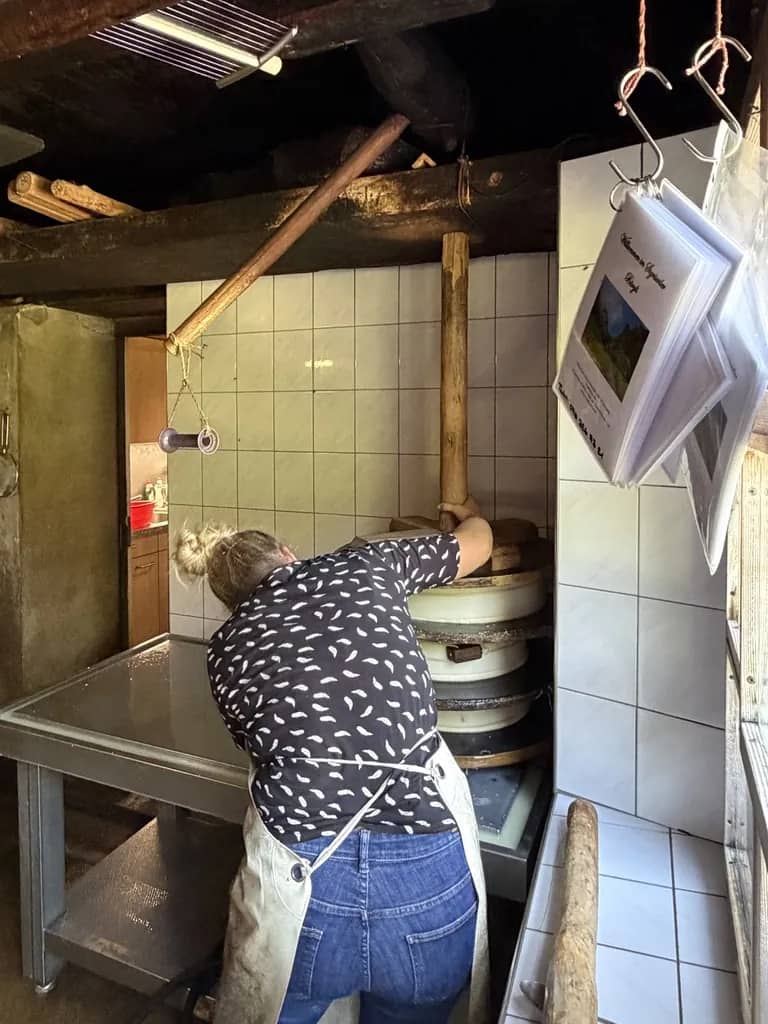
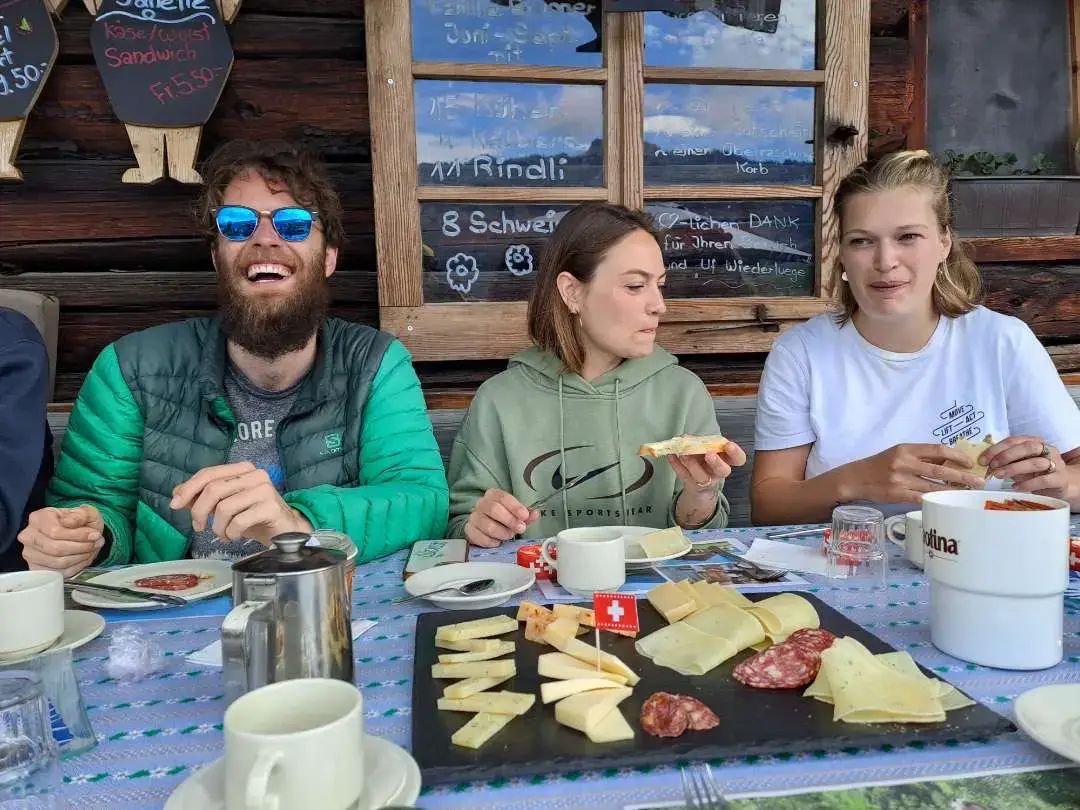
En el Farm and Alpine Breakfast Tour se prueba este queso en la fuente: cortado la misma mañana en que se sirve, no envasado. Visita la bodega, conoce a Daniela y ve el proceso de cerca. Los grupos están limitados a 8 personas. Las salidas son los martes y los jueves. Puede comprar ruedas para llevar a CHF 20 por kilo, solo en efectivo.
Lea también: La granjera de alpe que hace 348 ruedas cada verano
348 ruedas. Un verano. Ningún intermediario.
*Escrito por Teona Gvasalia, su guía alpina en Swiss Local Adventures
Source:
Berner Alpkäse AOP, y una visita sobre el terreno a Sigriswiler Bärgli, Justistal, 2026.
Etiquetas
#swiss-mountain-cheese#farm-tour-interlaken#alpine-cheese-switzerland#interlaken-food#justistal#swiss-cheese-guide#swiss-dairy-farm#alpine-cheese#cheese-making-workshop-interlaken#interlaken-activities
Fuentes y Referencias
Compartir este artículo
Artículos Similares
Continúe leyendo con estos artículos relacionados
Farm Tour
17/8/2026
6 min
Chästeilet del Justistal 2026: queso repartido a sorteo
Descubra el Chästeilet del Justistal del 18 de septiembre de 2026: la fecha, cómo llegar sin coche y lo que no cuenta ninguna web oficial.
farm-tour-interlakenswiss-dairy-farmalpine-cheese
Por Teona GvasaliaLeer Más
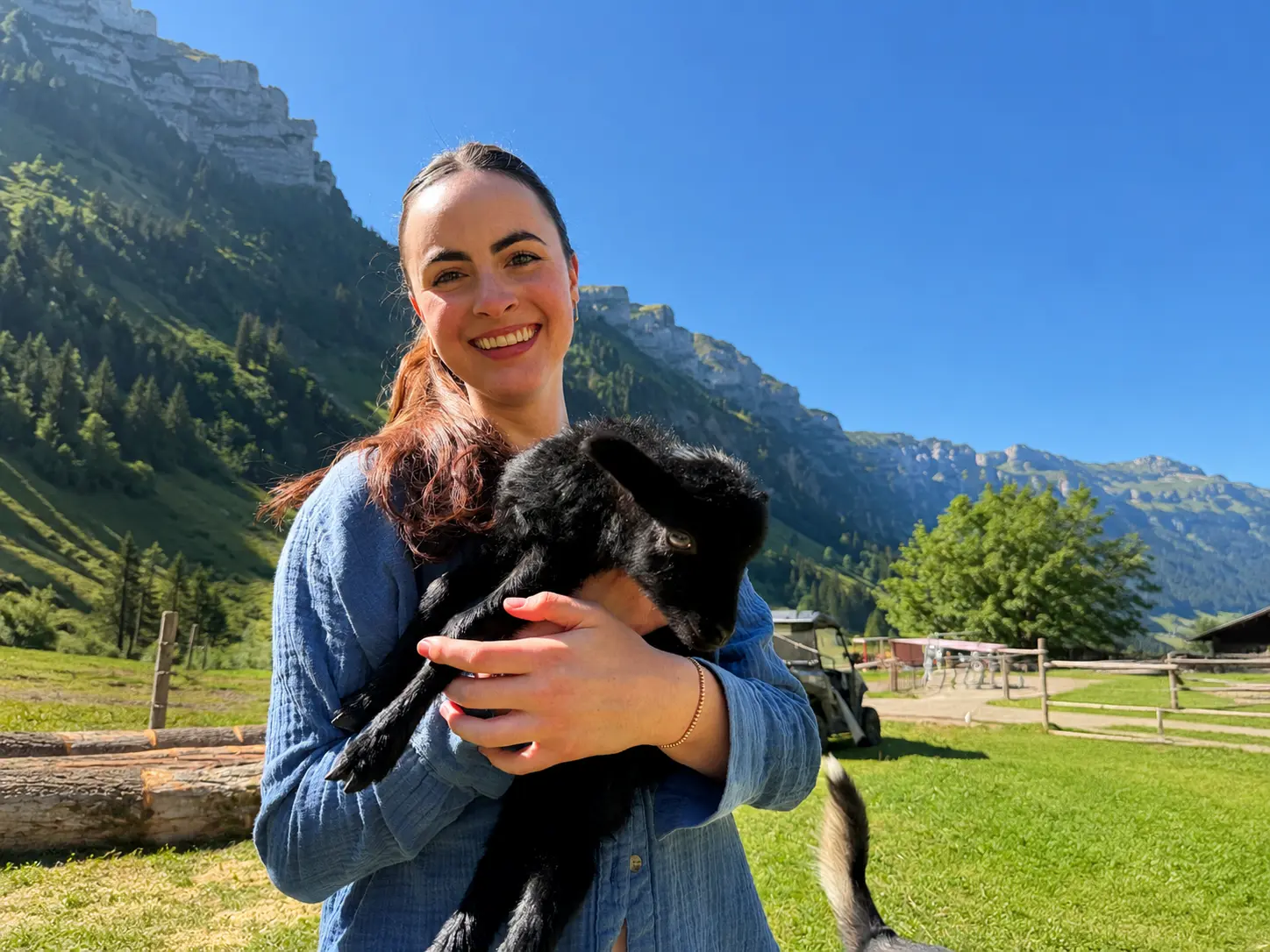
Farm Tour
4/8/2026
6 min
Tour de granja en Interlaken: de 8 a 12 del mediodía
Siga el horario completo de nuestra mañana en la granja alpina, desde la recogida a las 08:00 en Interlaken West hasta volver cerca del mediodía.
farm-tour-interlakenswiss-dairy-farmalpine-cheese
Por Teona GvasaliaLeer Más
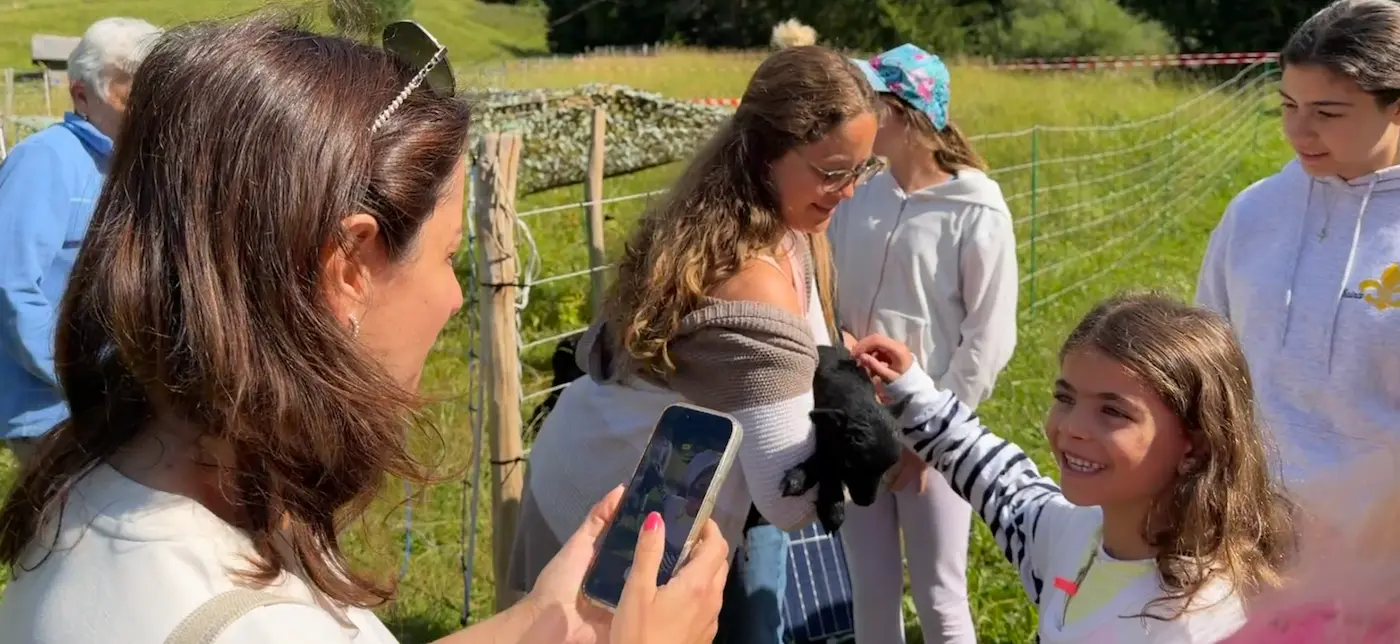
Farm Tour
22/7/2026
5 min
Farm tour con niños en Interlaken: guía para padres
Descubra el farm tour con niños: sin edad mínima, sin ninguna caminata hasta la granja, silla infantil a petición y un desayuno que todos acaban.
farm-tour-interlakenswiss-dairy-farminterlaken-with-kids
Por Teona GvasaliaLeer Más