Winter
Switzerland in Winter for Non Skiers: Pick Jungfrau
P
Pierre Vetsch
Author
November 25, 2026
10 min
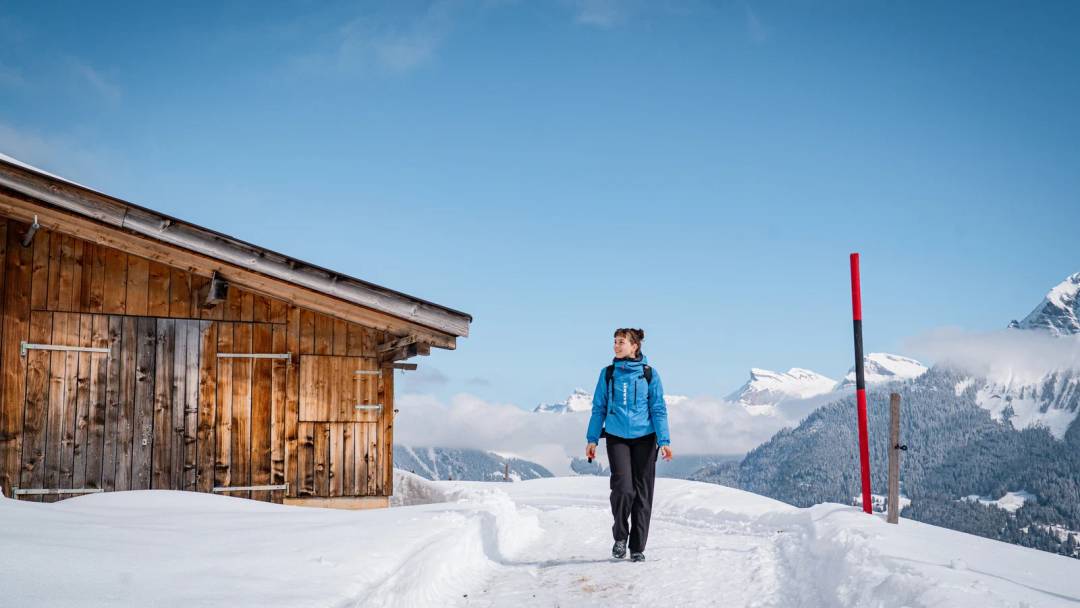
Switzerland in winter for non skiers works best in the Jungfrau Region: on 25 November 2026, a one-day winter hiking and sledging pass there costs CHF 61, against CHF 79 for a ski day pass, and Grindelwald, Wengen and Mürren sit 36 to 50 minutes by train from Interlaken Ost. Most lists send you to Zermatt first. I would not.
I'm Pierre. I live near Interlaken and guide here all winter. The worry I hear from guests who don't ski is being bored while everyone else is on the slopes. Here is where I would go, what it costs, what is open this winter, and the order I would do it in.
Where to go in Switzerland in winter if you don't ski: the Jungfrau Region
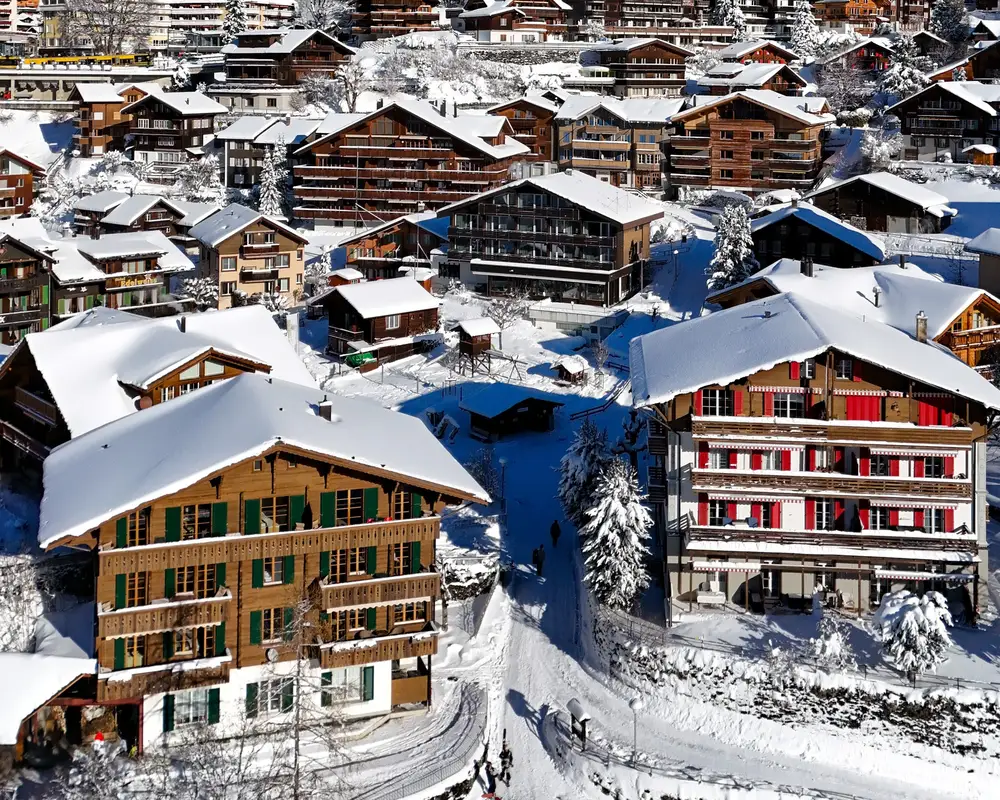
The best winter base in Switzerland for people who don't ski is the Jungfrau Region, above Interlaken. Three mountain villages, groomed winter walking trails, sled runs and two high viewpoints all hang off one train line, so you change plans with the weather instead of sitting out a grey day.
On the timetable of Tuesday 19 January 2027, the fastest trains from Interlaken Ost take 36 minutes to Grindelwald (direct), 37 minutes to Wengen (one change) and 50 minutes to Mürren (two changes). No car, no chains, no parking.
Pierre Vetsch, founder and head guide, says: "Yes, it's worth it even without skiing. You can snowshoe, or just walk up and take the gondola."
The mistake I see most is staying down in town. Asked which winter activity is overrated, my answer was "not going up, even if you don't ski". The snow, the sun and the views are up in the villages. Our ranked list of things to do in Interlaken in winter goes through each activity one by one.
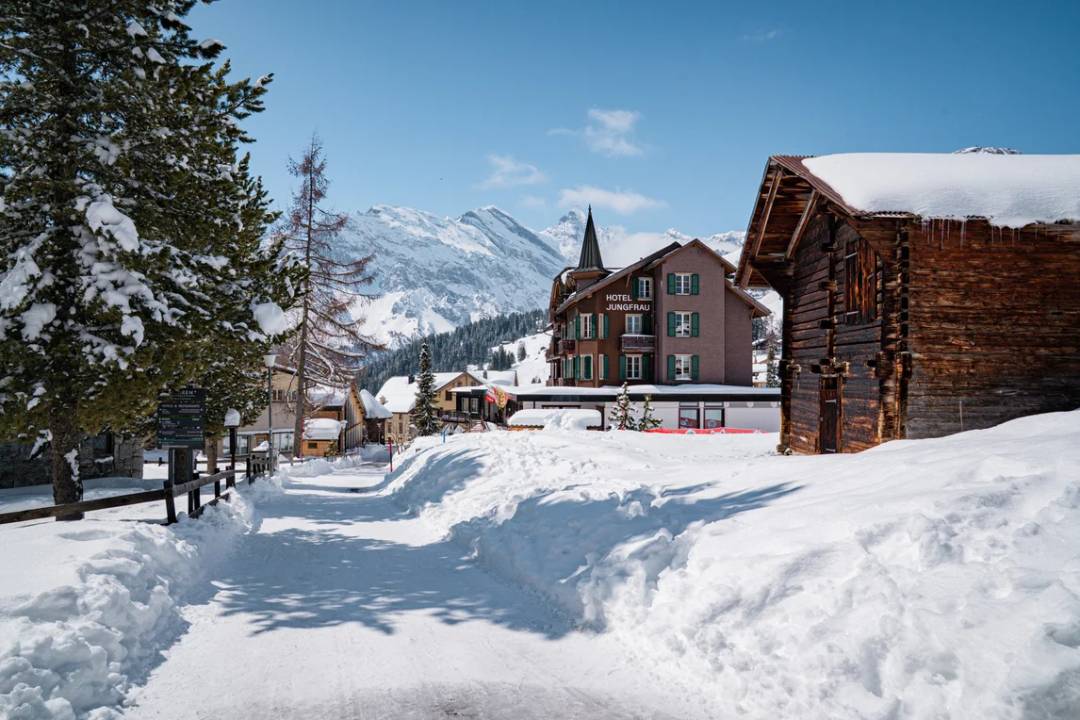
Grindelwald or Zermatt if you don't ski: the Jungfrau Region wins
Between Grindelwald's Jungfrau Region and Zermatt, a non-skier should pick the Jungfrau Region. It is closer, it costs less per day, and it gives you more than one valley to choose from when the weather turns.
The numbers, read on 25 November 2026. From Zurich Airport, the fastest train on 19 January 2027 reaches Interlaken Ost in 129 minutes and Zermatt in 208 minutes. In Zermatt, the classic non-ski outing is the Gornergrat railway: CHF 102 return from the village, on the price list for November 2026 to April 2027. In the Jungfrau Region, the one-day hiking and sledging pass costs CHF 61.
Zermatt has the Matterhorn, and it is a beautiful village. If the Matterhorn is the reason for your trip, go. I have sledded there, on the Rotenboden run.
Pierre says: "Zermatt is pretty, but expensive for what it is."
Asked to choose a base between Zermatt and Interlaken, I chose Interlaken. And do not plan both as day trips from one hotel: Interlaken Ost to Zermatt takes 127 minutes each way at best on the same timetable.
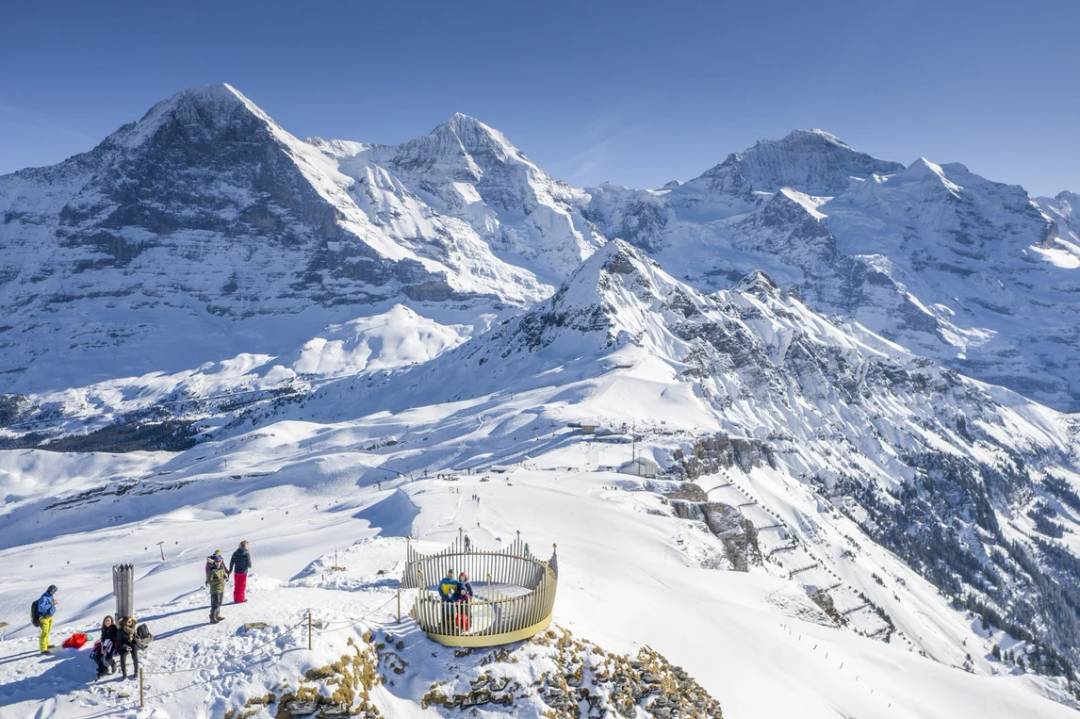
What to do in the Swiss Alps if you don't ski: prices and opening dates
A non-skier in the Swiss Alps walks groomed winter trails, sleds, snowshoes, rides up to a viewpoint and eats fondue. The table below gives each option around Interlaken with its price, its dates for winter 2026-27 and its train time, all read at the official sources on 25 November 2026.
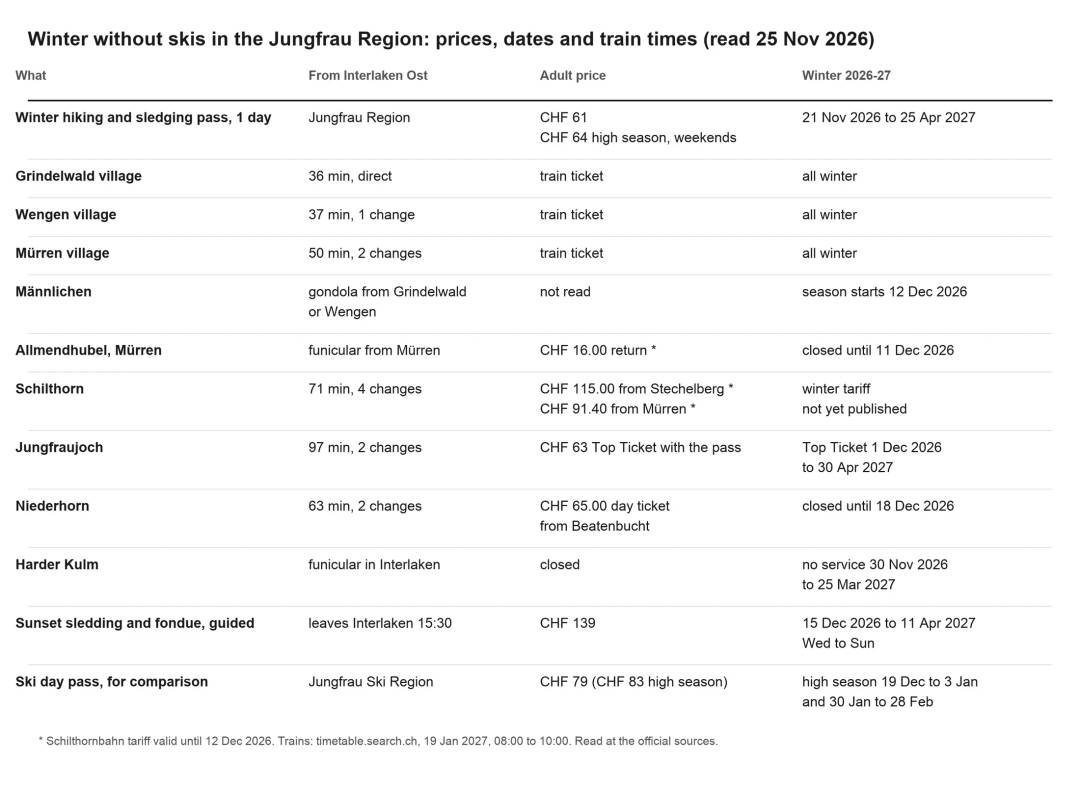
The same figures in words. The winter hiking and sledging pass is sold from 21 November 2026 to 25 April 2027: CHF 61 for one day, CHF 64 in high season (19 December to 3 January, 30 January to 28 February) and on weekends. With it, the Jungfraujoch "Top Ticket" costs CHF 63, from 1 December 2026 to 30 April 2027; the trip takes 97 minutes from Interlaken Ost with two changes.
The Männlichen opens its winter season on 12 December 2026. In Mürren, the Allmendhubel funicular is closed until 11 December 2026 and costs CHF 16.00 return. The Schilthorn cable car costs CHF 115.00 return from Stechelberg and CHF 91.40 from Mürren; the summit is 71 minutes from Interlaken Ost with four changes. These Schilthornbahn prices are valid until 12 December 2026, and the winter tariff was not yet published when I checked.
The Niederhorn gondola is closed for maintenance until 18 December 2026; its day ticket from Beatenbucht costs CHF 65.00, 63 minutes from Interlaken Ost. The Harder Kulm funicular does not run from 30 November 2026 to 25 March 2027, which is why the Niederhorn replaces the Harder Kulm in winter.
One guided evening needs no skill at all. Our sunset sledding with fondue leaves Interlaken at 15:30, Wednesday to Sunday, from 15 December 2026 to 11 April 2027, for CHF 139. The guide to snowshoeing in Interlaken explains what a first outing on snowshoes is like.
Fun fact: on your birthday, the Schilthornbahn takes you up from Stechelberg or Mürren for free, according to its own website (read on 25 November 2026). Check the conditions before you go.
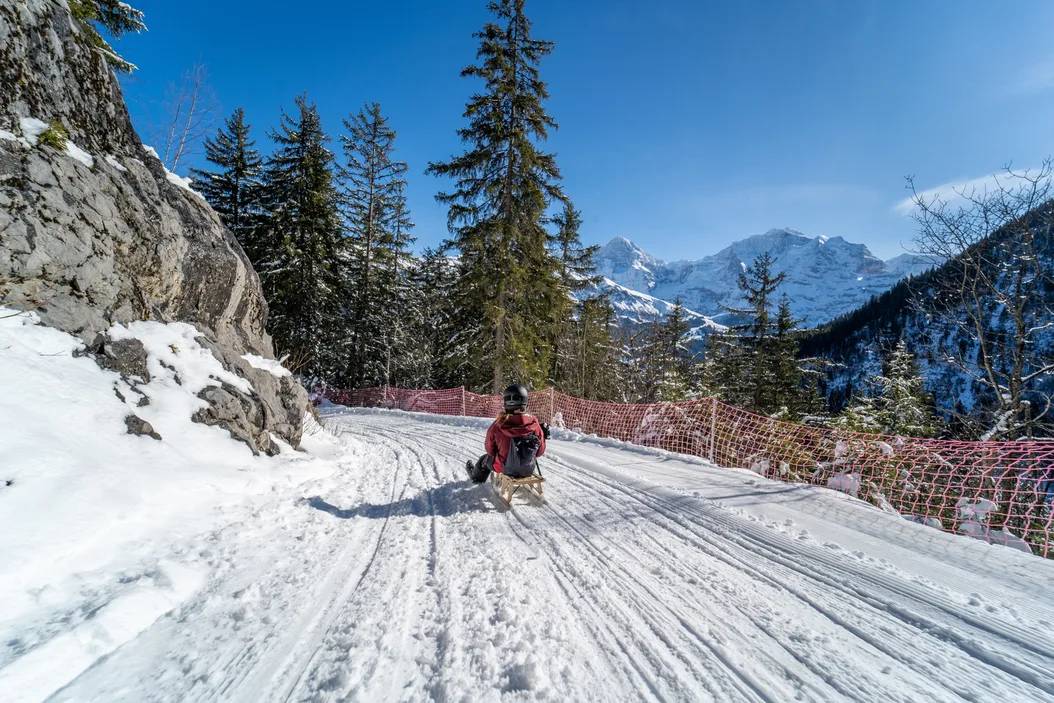
Best ski resorts for non skiers in Switzerland when one of you skis
When one of you skis and the other doesn't, choose a resort where the lifts carry walkers too. Grindelwald, Wengen and Mürren all do: the non-skier rides the same gondolas and trains, walks the groomed trails next to the pistes, and meets the skier for lunch on a terrace.
What I tell guests: go up anyway and take the gondola, either Grindelwald to Männlichen or the Schilthorn. At First, above Grindelwald, a non-skier has the Cliff Walk, the winter walk towards the Bachalpsee, the sled run down to Bort and a terrace in the sun. I pick First over the Männlichen for a non-skier: more sun, and a better view.
A ski instructor I met in Interlaken gave me two pieces of advice I pass on: come in March, when there is more sun and fewer people, and remember that Mürren is quieter than Grindelwald.
Insider tip: before you pay for a summit, open its webcam. The classic mistake is paying for the Jungfraujoch, or the Schilthorn, on a day when the top is in cloud.
For each village, we have a full guide: Grindelwald without skiing, Wengen without skiing and Mürren in winter without skiing.
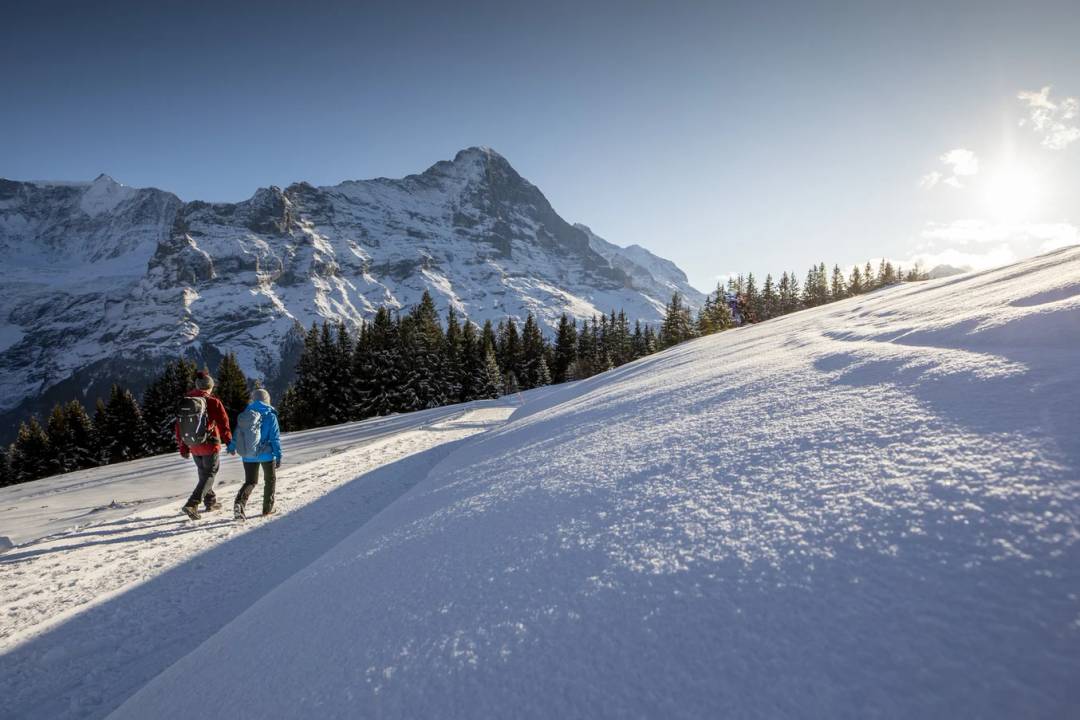
Cheapest month to go to Switzerland without skis: day pass prices
The cheapest winter days on the mountain are weekdays in early December, January and March, when the low fare applies. High season runs from 19 December 2026 to 3 January 2027 and from 30 January to 28 February 2027. Outside those dates you pay the low fare, except on Saturdays and Sundays, when day passes go back to the high-season price. My own month is March.
A day without skis also costs less than a ski day: CHF 61 for the winter hiking and sledging pass against CHF 79 for the ski day pass in low season, and CHF 64 against CHF 83 in high season, on the prices Jungfrau Railways published for winter 2026-27. The non-skier also rents no skis and no boots.
Pierre says: "March: fewer people, more sun, and still snow."
One evening is worth paying for with a guide. On the sunset sled run above Isenfluh, guests talk about the sunset at the top, then the descent through the forest by headlamp. The CHF 139 covers the transport, the guide, the sled and the fondue with a glass of wine. How ski passes work for the skiers in your group is in our Jungfrau ski pass guide.
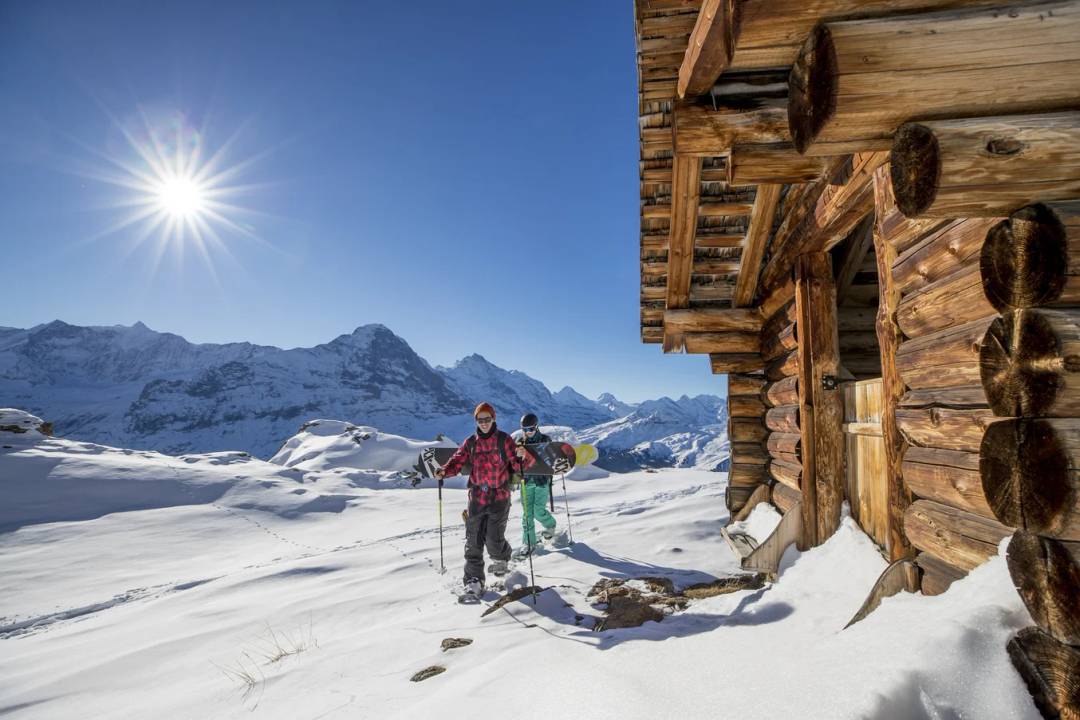
Things to do in Switzerland in winter for non skiers: three days in order
You will not be bored: three winter days without skis fill up fast, and I would do them in this order. Day one, Mürren and the Schilthorn. Day two, First above Grindelwald. Day three, the evening sled run at Isenfluh. With a fourth day, why not a day trip to the Oeschinensee, which I describe in the guide to Kandersteg in winter.
For the Mürren day, my order is Lauterbrunnen, Gimmelwald, Mürren, then the Schilthorn if the webcam is clear. If I could go up one summit only in winter, it would be the Schilthorn, and the comparison of the Jungfraujoch or the Schilthorn in winter gives the prices side by side. Dress for it: the coldest I have felt on the Jungfraujoch was minus 20 with wind.
When it rains in the valley, go up anyway. In Mürren, it is usually snow. On a day when even the summits are closed in, I send guests to Thun or Bern for the day. And if you wonder where the snow starts on a given week, where to see snow in Switzerland has the measured depths.
The mistake visitors make in Wengen, and everywhere else up here, is believing there is nothing to do without skis.
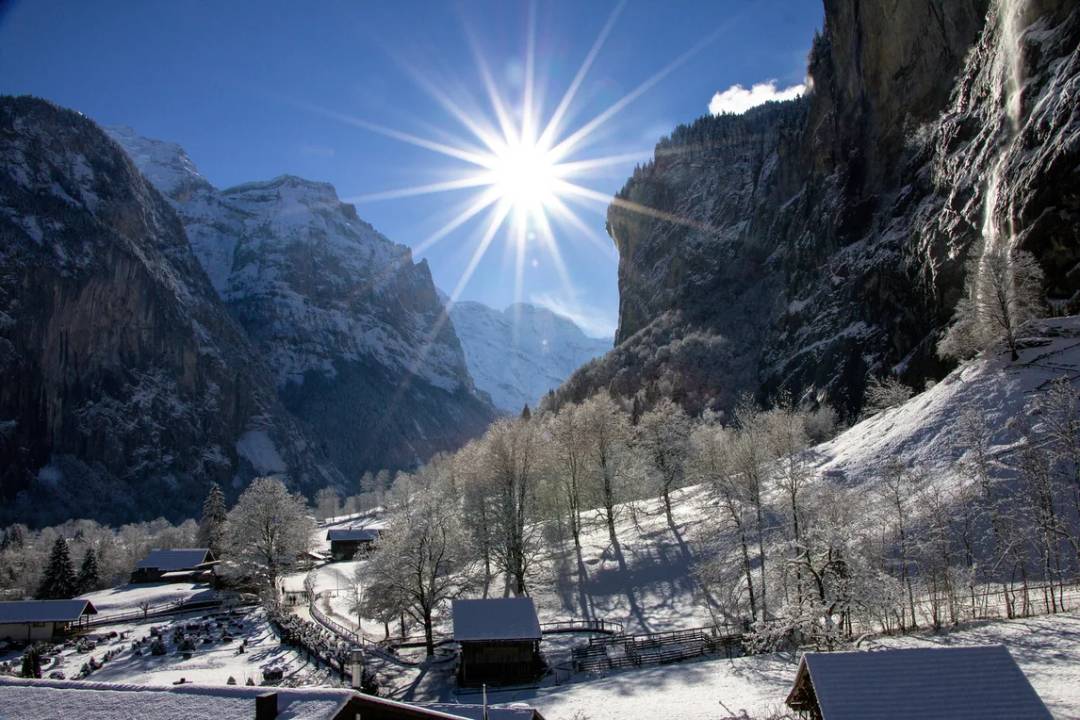
Your Questions About Switzerland in Winter for Non Skiers
What to do in the winter if you don't ski?
Walk, sled, snowshoe and ride up. In the Jungfrau Region, the winter hiking and sledging pass (CHF 61 a day in low season, read on 25 November 2026) covers groomed trails and sled runs from 21 November 2026 to 25 April 2027. Add one viewpoint on a clear day and one fondue evening. My number one winter activity is sledding in Interlaken, at sunset.
Where is the best winter vacation for people who don't ski?
In Switzerland, the Jungfrau Region. Grindelwald, Wengen and Mürren are 36 to 50 minutes by train from Interlaken Ost, and Zurich Airport is 129 minutes away, against 208 minutes for Zermatt (timetable of 19 January 2027). For three winter nights without skis, I would sleep in Wengen or Mürren. Between Interlaken and Grindelwald, our comparison of Interlaken or Grindelwald in winter picks Interlaken.
Is Zermatt worth visiting if you don't ski?
Yes, if you came for the Matterhorn. The Gornergrat railway costs CHF 102 return from Zermatt between November 2026 and April 2027. For a non-skier with one week, I still pick the Jungfrau Region: a day pass at CHF 61, three villages on one train line, and a shorter trip from Zurich Airport.
Is Interlaken worth it in winter?
Yes, as long as you go up. Snow is rare in the town itself and melts fast; the winter is in the villages above. The full answer, month by month, is in is Interlaken worth visiting in winter.
What are some fun activities to do in Switzerland during the winter?
Sledding at sunset, snowshoeing and fondue come first on my list. I have also done the winter kayak tour on Lake Brienz and paragliding in winter, and between those two, the kayak is the one I recommend to guests. We describe it on the winter kayak tour in Interlaken page.
How we made this: based on Pierre's interviews of 24 and 30 September, 4, 15, 21 and 25 October, 3, 5 and 10 November 2026, facts and prices checked at the official sources on 25 November 2026, written with AI assistance.
Source: Jungfrau Railways, timetable.search.ch, and on-site visits to Mürren, Grindelwald and the Schilthorn, 2026.
*Written by Pierre Vetsch, founder and head guide at Swiss Local Adventures
Tags
#switzerland-winter-non-skiers#winter-without-skiing#jungfrau-region-winter#winter-hiking-sledging-pass#jungfrau-or-zermatt
Sources & References
- •Jungfrau Railways, Winter Hiking and Sledging Pass 2026-27: prices, dates, Jungfraujoch Top Ticket (read 25 November 2026)
- •Jungfrau Railways, ski pass prices 2026-27 (read 25 November 2026)
- •Jungfrau Railways, Harder Kulm operating dates (read 25 November 2026)
- •Schilthornbahn, timetable and tariff (prices valid until 12 December 2026, Allmendhubel maintenance, birthday offer) (read 25 November 2026)
- •Gondelbahn Grindelwald-Männlichen, start of the winter season (read 25 November 2026)
- •Niederhornbahn, prices and winter maintenance (read 25 November 2026)
- •Gornergrat Bahn, prices November 2026 to April 2027 (read 25 November 2026)
- •Swiss timetable for Tuesday 19 January 2027, departures 08:00 to 10:00, timetable.search.ch (read 25 November 2026)
- •Photos: Jungfrau Region Tourismus AG (CC0, media library of Jungfrau Region Tourismus)
Share this article
Similar Articles
Continue your reading with these related articles
Winter
11/23/2026
10 min
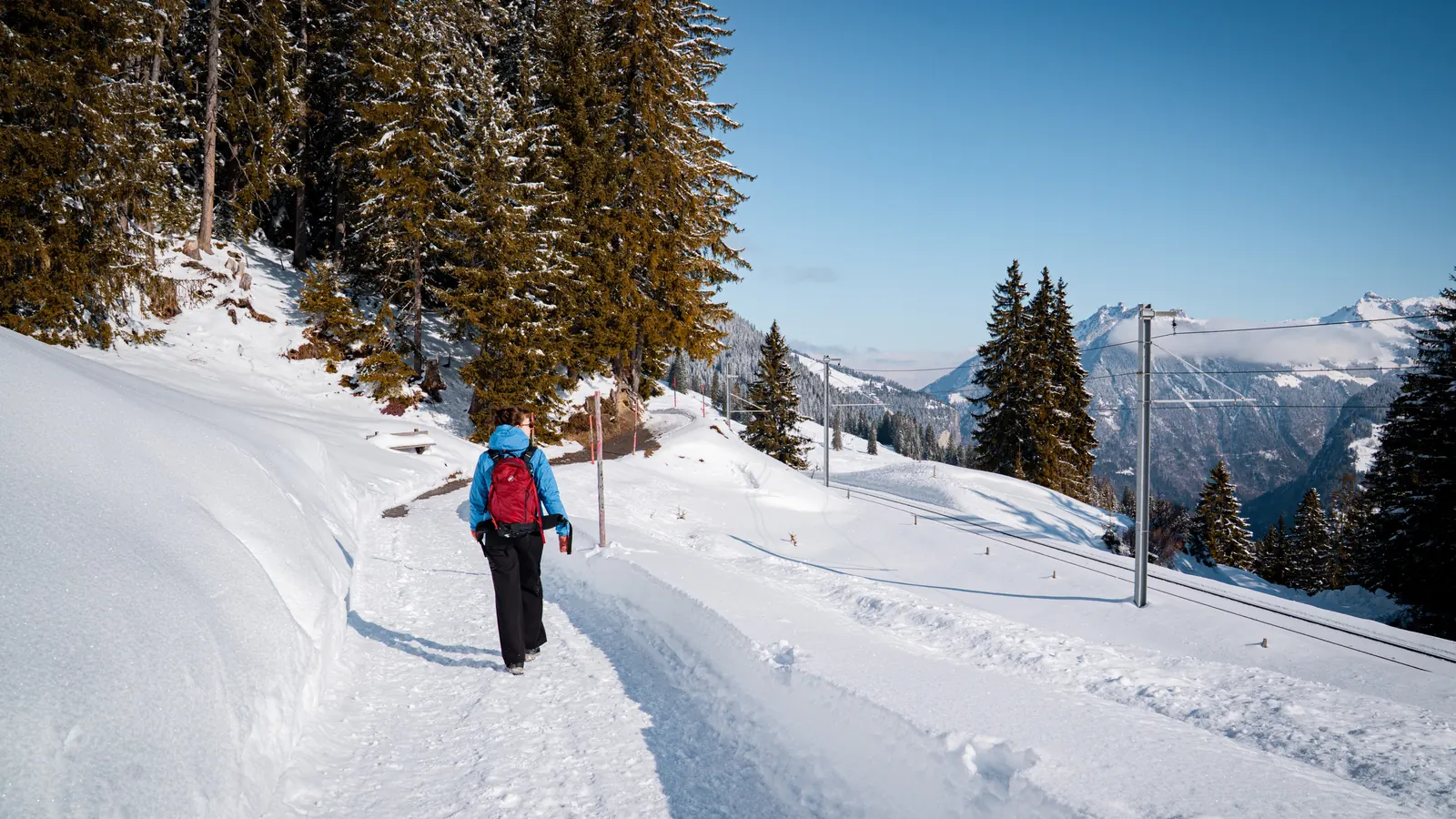
Where to See Snow in Switzerland: Go Up to Mürren
On 22 November 2026, Mürren had 11 cm of snow and Wengen none. Where to see snow in Switzerland from Interlaken, month by month, by train.
where-to-see-snow-switzerlandsnow-near-interlakenmurren-in-winter
By Pierre VetschRead More
Winter
11/22/2026
5 min
Is Heli Skiing Worth It? Only for Good Skiers
Is heli skiing worth it near Interlaken? CHF 455 for two runs from 3,910 m, February to April. For good skiers and groups of friends, yes.
heli-skiingfreeride-murrenoff-piste-skiing
By Pierre VetschRead More
Winter
11/21/2026
11 min
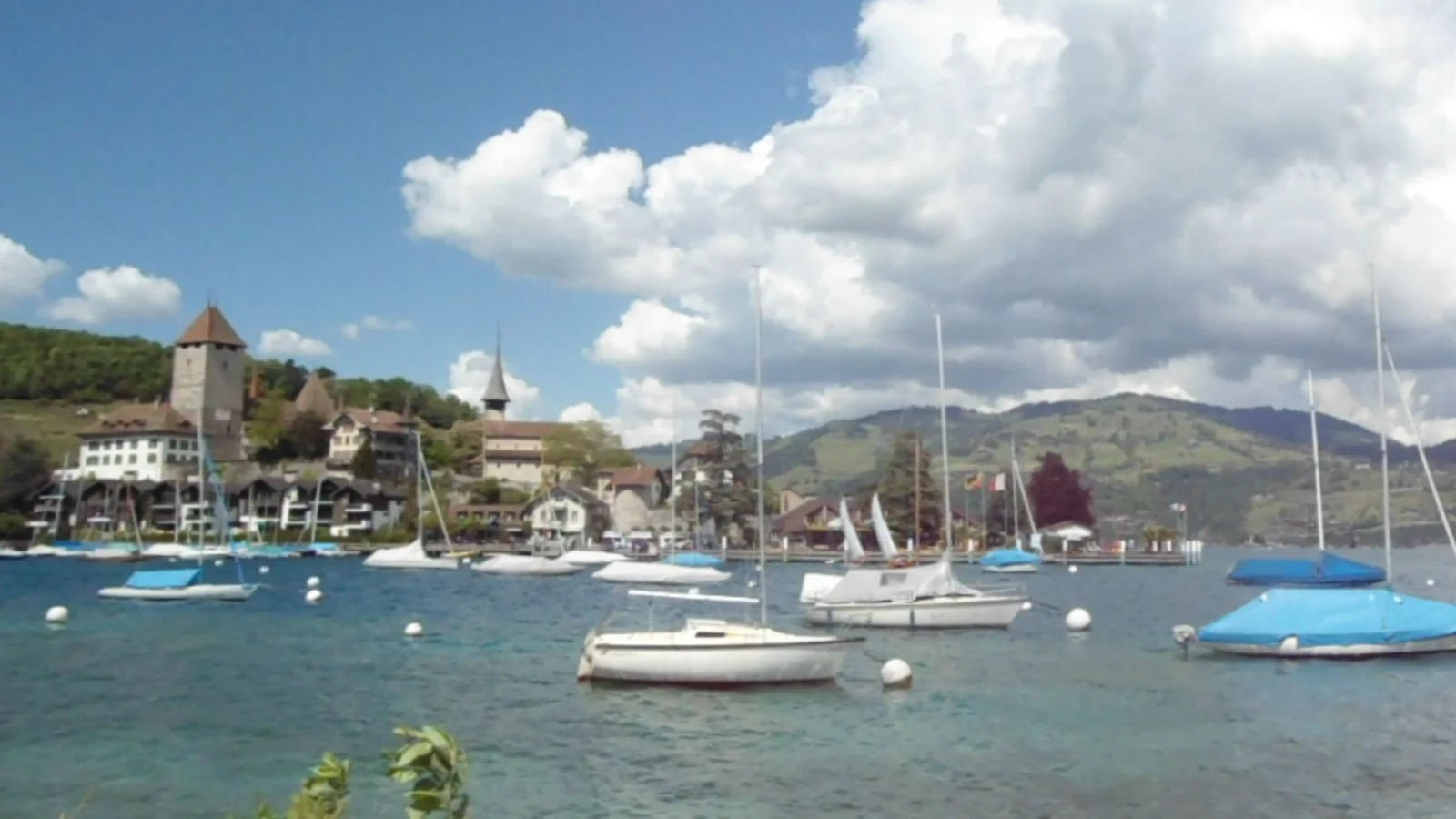
Is Spiez Worth Visiting in Winter? Yes, by Train
Is Spiez worth visiting in winter? Yes, for half a day: castle park and church open, museum shut until 30 April, 15 min by train from Interlaken.
spiez-in-winterlake-thuninterlaken-day-trips
By Pierre VetschRead More