Interlaken
Is Snowshoeing Dangerous? Real Risks near Interlaken
P
Pierre Vetsch
Author
October 11, 2026
10 min
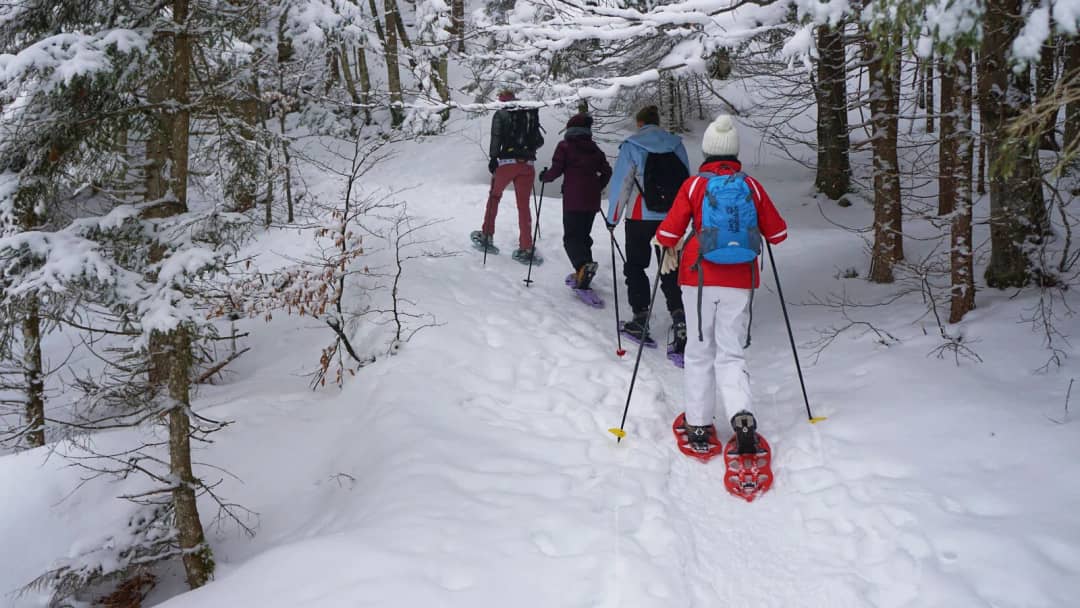
Is snowshoeing dangerous? On a marked, open snowshoe trail, rarely: the Swiss accident prevention office counts on average two snowshoe deaths a year in Switzerland, and most serious accidents happen off the marked routes. On our loop above Isenfluh, the risk I watch most is the one nobody expects: too little snow.
Is snowshoeing dangerous?
Snowshoeing is a low-risk winter activity as long as you stay on a marked route that is open. The BFU counts on average two deaths a year among snowshoers in Switzerland. It writes that most serious accidents are avalanches away from the pink-signposted snowshoe routes.
Those pink routes are secured against avalanches by the people who run them. They are not groomed like a winter walking path, so the snow under your feet changes from day to day. That difference matters more than the word "avalanche" on a beginner's day.
I guide the snowshoe loop at Sulwald, above Isenfluh, every winter. On an average morning there, the number of falls I see is zero. Even so, I never take a group up on trust alone:
Pierre Vetsch, founder and head guide, says: "I check, even if the route is secured."

What actually goes wrong on a snowshoe walk?
On a marked trail, the usual problems are small: a slip, cold feet, a group that sets off too late or loses the markers in fog. Avalanches cause the serious accidents, but mostly off the routes. On our loop at Sulwald, I name a less obvious risk first: a winter without enough snow.
Asked what the real risk is on the Sulwald loop, my answer is three words:
Pierre says: "Not enough snow."
Thin snow brings two problems at once. Where the trail has been walked hard and refrozen, the snowshoe sits on ice instead of biting into snow. Where the snow cover is thin, stones and roots come through and catch the frame. Both make you trip on ground that looks easy. Fresh, deep snow is tiring, as I explain in is snowshoeing hard for beginners, but it is forgiving when you fall.
The other risks are the classic ones. Cold hands and feet come at the stops, not on the climb, which is why what to wear snowshoeing matters more than most people think. Getting lost happens to walkers who leave without knowing where the trail goes and how they get back.
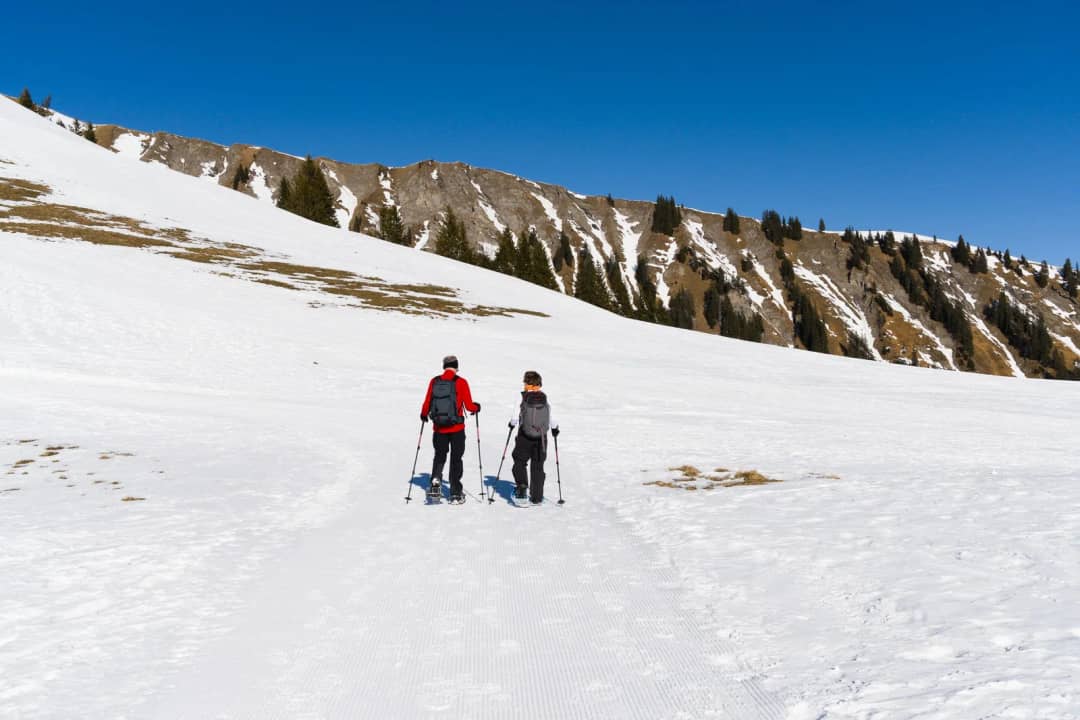
How high is the avalanche risk for snowshoers in Switzerland?
Lower than for other winter backcountry users. Avalanches kill on average 24 people a year in Switzerland, all activities together, according to the SLF, the Swiss avalanche research institute. A 2016 study found that snowshoe hikers had a risk about six times lower per day out than other backcountry users.
That study, by Kurt Winkler, Adrian Fischer and Frank Techel, was presented at the International Snow Science Workshop in 2016. It found that the growing share of snowshoers was the main reason the average risk per day in the Swiss backcountry fell between 1999 and 2010.
The SLF adds one more number worth knowing: over its long-term statistics, most avalanche accidents happen when the bulletin shows danger level 3, "considerable", on a scale of 1 to 5. Level 3 sits in the middle of the scale, below "high" and "very high", which is exactly why it does not feel like a warning.
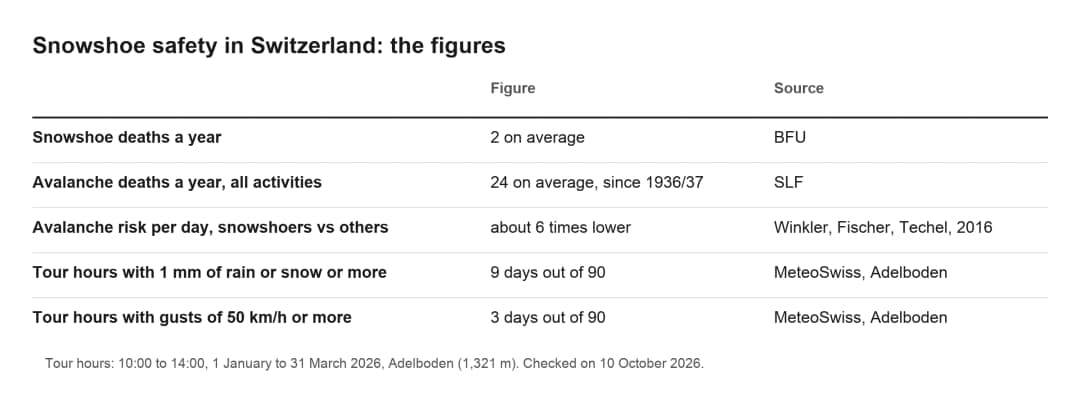
The table in words. The BFU counts on average 2 snowshoe deaths a year in Switzerland. The SLF counts on average 24 avalanche deaths a year, all activities, since winter 1936/37. Snowshoe hikers had an avalanche death risk about 6 times lower per day than other backcountry users (Winkler, Fischer and Techel, 2016). At Adelboden, 1,321 metres, between 10:00 and 14:00 from January to March 2026, 9 days out of 90 had at least 1 mm of rain or snow, and 3 days out of 90 had gusts of 50 km/h or more.
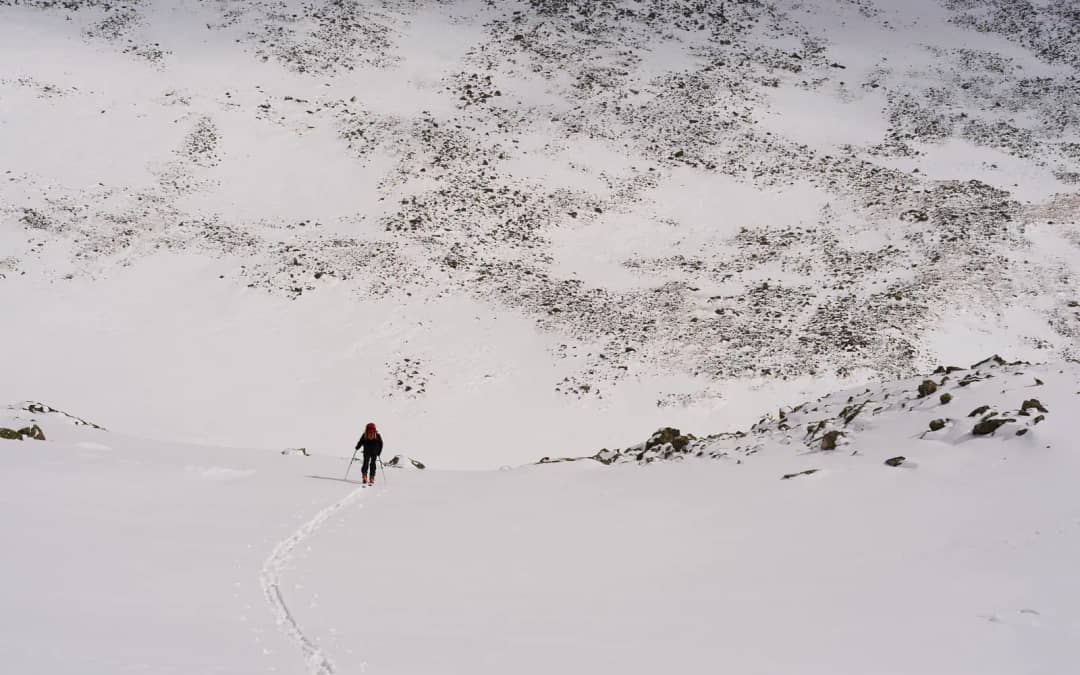
Pink trail or off-trail: where does the danger start?
The danger starts where the pink markers stop. A signposted snowshoe route is checked and closed when the risk rises. Off the route, you choose the slope yourself, and the BFU says you then need an avalanche transceiver, a probe, a shovel and the training to use them.
Around Sulwald, I see people leave the pink markers sometimes. Nothing on the trail tells you when a slope stops being harmless, and a winter day with a level 3 bulletin looks the same as any other from below.
My verdict: on a first or second snowshoe day, stay on the pink route, every time. Leave it only after an avalanche course, with the gear, and never alone. The marked loop at Sulwald is an easy loop and needs none of that, which is why we use it, and why I never take a group on the Lobhorn Trail.
Insider tip: read the avalanche bulletin the evening before, then again in the morning. The SLF publishes it in the evening and updates it in the morning, so the morning version is the one that counts for your day.
What does a guide check before taking a group up?
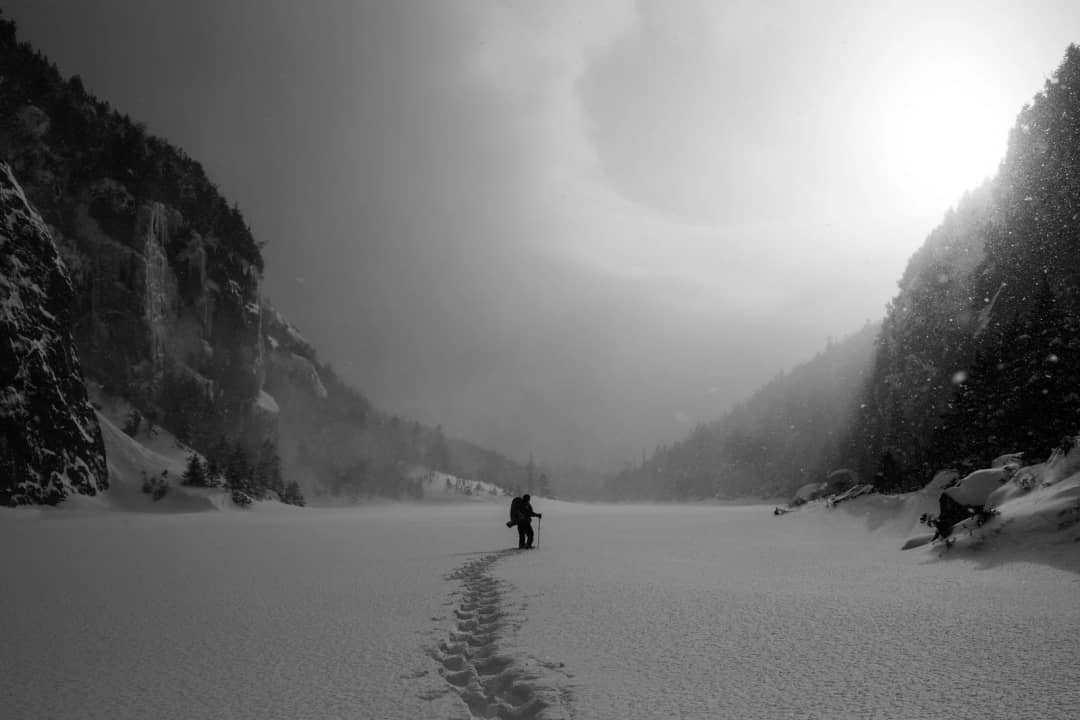
Three things: the avalanche bulletin, the people at the top, and the weather for the hours we are out. I read the bulletin even though our route is secured. Then the local voices: Peter, who runs the small cable car between Isenfluh and Sulwald, gives me the temperature at the top, the snow and the wind, and he is the one who tells me about closed trails and danger.
Sulwald, at the top, tells me the state of the snow on the day. Between the two, I know before we leave Interlaken whether the snow is deep, thin or icy, and whether the loop is open.
What is in my bag on the loop is simple, and it says a lot about the risk on a marked route:
a first-aid kit and a rescue blanket
a charged phone
a hot drink for the group
There is no avalanche transceiver, shovel or probe in it, and that is deliberate: the BFU lists them for off-route walking, and we do not leave the route. The BFU's own list for marked trails stops at a first-aid kit with a rescue blanket and a charged phone.

When should you not go snowshoeing?
Do not go when the bulletin or the operator closes the route, when strong wind or rain is forecast for your hours out, or when fog is so thick you cannot see the next marker. Without snow, do not go either: thin cover means ice and stones. When I have cancelled or moved a snowshoe day, it was for the weather: wind and rain.
Bad days are rarer than people think. I pulled the hourly open data of MeteoSwiss for the hours our tour is on the snow, 10:00 to 14:00, from 1 January to 31 March 2026. At Adelboden, the closest station in altitude at 1,321 metres, 9 days out of 90 had at least 1 mm of rain or snow in those hours. On 3 of them it stayed above 1 °C the whole time, so most likely rain or wet snow. Only 3 days out of 90 had gusts of 50 km/h or more.
Fresh snow is not a reason to stay home on a marked route. It makes the walk harder and quieter. Fog is different. The moment I slow everything down up there is when the fog comes in and the next marker disappears.
Pierre says: "Fog."
Fun fact: the strongest gust at Adelboden during tour hours last winter reached 80 km/h, on 25 March 2026, according to MeteoSwiss hourly data. In Interlaken that same day, the strongest gust measured 57 km/h.
The season matters too. Our tour runs from mid-December to April, depending on the snow. Early in December and late in April, thin cover is the rule rather than the exception, and that is when the ice-and-stones problem shows up.
Your Questions About Snowshoeing Safety
Can you go snowshoeing alone?
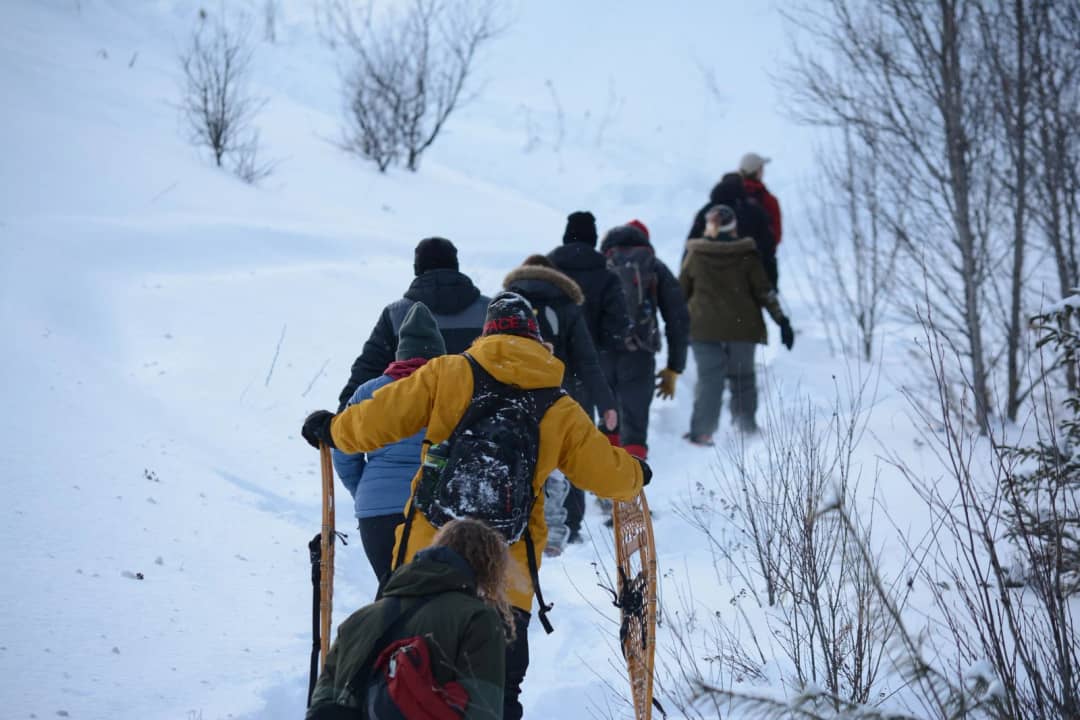
You can, on an open, marked route, but the BFU advises against going alone, and the Swiss Alpine Club asks you to leave your route and return time with someone. A twisted ankle on a quiet trail in January is a cold wait, and nobody knows where to look if you did not tell them your route. If you go without a guide, pick a pink-signposted route rated easy, tell someone where you are going and when you expect to be back, and check the bulletin and the forecast the evening before and in the morning. Leave early enough to be down well before dark, since the light goes fast in midwinter. Our guide to snowshoeing in Interlaken compares the marked trails near town and says which suits a first time.
Do you need avalanche gear for snowshoeing?
Not on an open, pink-signposted snowshoe route. The operators secure those routes against avalanches and close them when the danger rises, so the BFU lists only snowshoes, poles, warm clothes, food, a first-aid kit with a rescue blanket and a charged phone for them. Off the routes, the answer changes completely: you need an avalanche transceiver, a probe and a shovel, and the training to use them, since the gear is useless if nobody in the group knows how to search. Renting the gear without a course gives a false sense of safety. On our Sulwald loop we stay on the route, so we carry none of the three.
How do you call for help on a snowshoe trail?
Call Rega, the Swiss air rescue, on 1414, or the European emergency number 112. The Swiss Alpine Club recommends noting these numbers before you leave, together with your route. Keep your phone charged and warm in an inside pocket, because cold drains a battery fast, and carry the rescue blanket the BFU lists for every snowshoe walk. If someone in your group is hurt, keep them warm and off the snow while you wait. A cable car operator or the restaurant at the top of a route can also help with local directions and conditions, which is one more reason to talk to them before you set off.
What happens if a snowshoe tour is cancelled for weather?
On our Snowshoe Tour, if we cancel for weather or safety reasons, you get a full refund or a new date, as written on the tour page on 10 October 2026. We try to offer another date or another activity first. If you have not heard from us, the tour runs as planned. When I have cancelled or moved a snowshoe day, it was for the weather: wind and rain. If you book a day near the start or the end of the season, keep a second day free in your plans, because snow cover decides then, not the calendar.
Snowshoe the safe way with a local guide
The fear most first-timers bring is the avalanche, and on a marked, open route it is the smallest of the risks. What makes a snowshoe day go wrong near Interlaken is thin snow, fog, wind, and walking off the markers without knowing why they are there. A guide removes most of that before you leave town: the bulletin, the cabin, the snow at the top.
Our Snowshoe Tour with Swiss cheese fondue takes 8 guests at most on the easy loop at Sulwald, Thursday to Sunday at 10:00, from mid-December to April depending on the snow. It costs CHF 129 per person, or CHF 119 from 6 people, with snowshoes, poles, the cable car and the fondue at Sulwald included. New to it? Read how to snowshoe for beginners first. Also coming for a sled? See is night sledding dangerous.

How we made this: based on Pierre's interview of 10 October 2026, facts and prices checked at the official sources on 10 October 2026, written with AI assistance.
Source: BFU, snowshoe hiking advice, SLF, avalanche statistics, and guided snowshoe walks at Sulwald with Swiss Local Adventures, 2025-2026.
*Written by Pierre Vetsch, founder and head guide at Swiss Local Adventures
Tags
#snowshoeing-interlaken#is-snowshoeing-dangerous#snowshoeing-safety#avalanche-safety#winter-activities-interlaken
Sources & References
- •BFU, Schneeschuhwandern (snowshoe hiking advice), read 10 October 2026
- •SLF, Long-term avalanche statistics
- •SLF, About the avalanche bulletin
- •Winkler, Fischer, Techel (2016), Avalanche Risk in Winter Backcountry Touring: Status and Recent Trends in Switzerland, ISSW 2016
- •Swiss Alpine Club SAC, Safety when snowshoeing
- •MeteoSwiss open data, hourly SwissMetNet data Adelboden and Interlaken, 1 January to 31 March 2026
- •Swiss Local Adventures, Snowshoe Tour with Swiss Cheese Fondue, tour page read 10 October 2026
- •Photo: - landsmann - on Pexels
- •Photo: Jean-Paul Wettstein on Pexels
- •Photo: Lukas Seitz on Pexels
- •Photo: Sawyer Sutton on Pexels
- •Photo: Zane Blacquier on Pexels
- •Photos: Swiss Local Adventures, Isenfluh and Sulwald, 2025 and 2026
Share this article
Similar Articles
Continue your reading with these related articles

Interlaken
10/9/2026
10 min
What to Wear Snowshoeing near Interlaken
What to wear snowshoeing near Interlaken: midday was 0.9 to 5.5 °C last winter at 1,321 m. Ski pants, waterproof boots, a layer to take off.
snowshoeing-interlakenwhat-to-wear-snowshoeingsnowshoe-clothing
By Pierre VetschRead More
Interlaken
10/8/2026
9 min
How to Snowshoe for Beginners: A Guide's Steps
How to snowshoe for beginners in 4 steps: feet apart, heel lift up, knees bent on the descent. A guide's method from our loop near Interlaken.
snowshoeing-interlakenhow-to-snowshoesnowshoe-technique
By Pierre VetschRead More
Interlaken
10/7/2026
8 min
Is Snowshoeing Hard? A Guide's Answer near Interlaken
Is snowshoeing hard? Most beginners walk at ease after 10 to 15 minutes; fresh snow, not the snowshoes, is what tires you. An Interlaken guide explains.
is-snowshoeing-hardsnowshoeing-for-beginnerssnowshoeing-interlaken
By Teona GvasaliaRead More