Farm, Wine & Fondue
Interlaken Farm Tour Itinerary: 8am to Noon
T
Teona Gvasalia
Author
August 4, 2026
6 min
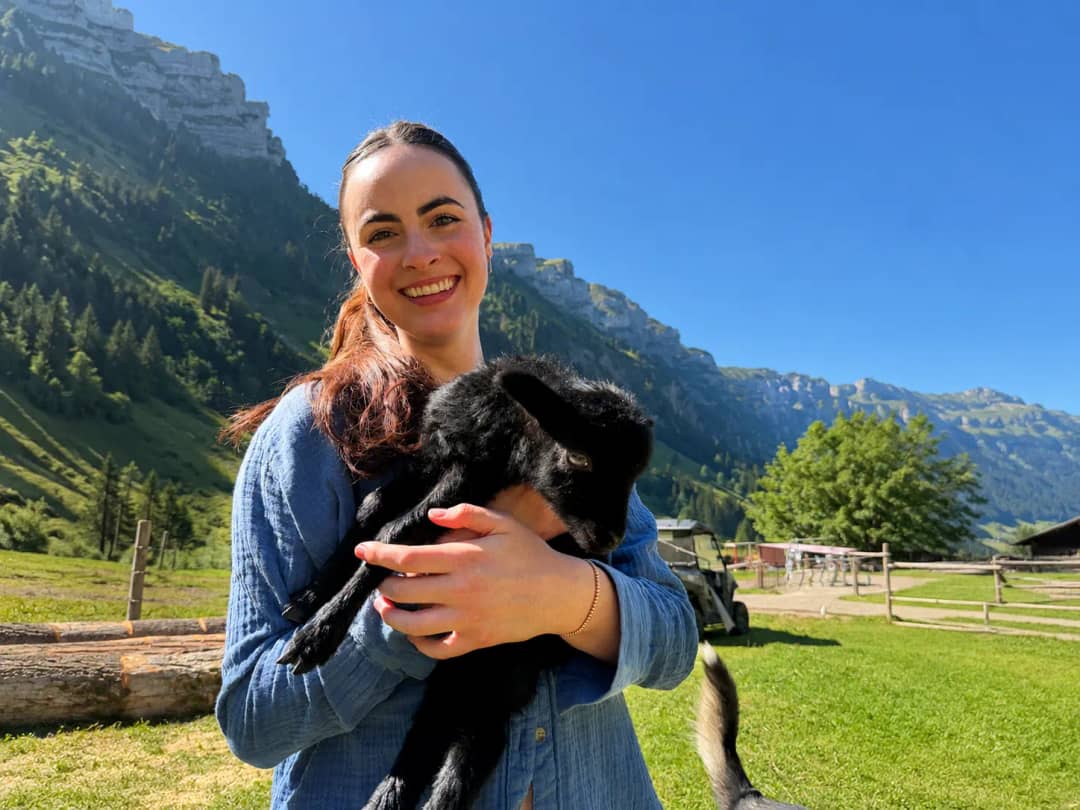
Interlaken Farm Tour Itinerary: What Happens From 8am to Noon
You are about to book a morning you cannot test in advance. That is the real problem with alpine farm visits near Interlaken. Listings show a copper cauldron and a cow, then stay vague about the parts that decide your day: how far you walk, what you do with your hands, and when you get back from those four hours.
Read the reviews of other farm visits here and the same warnings repeat. The hike can be difficult and requires sturdy shoes and walking sticks. Be prepared for a steep climb, and on the way back to the van it is an uphill hike. One operator sells a tractor ride down, which tells you how many guests would rather pay than walk.
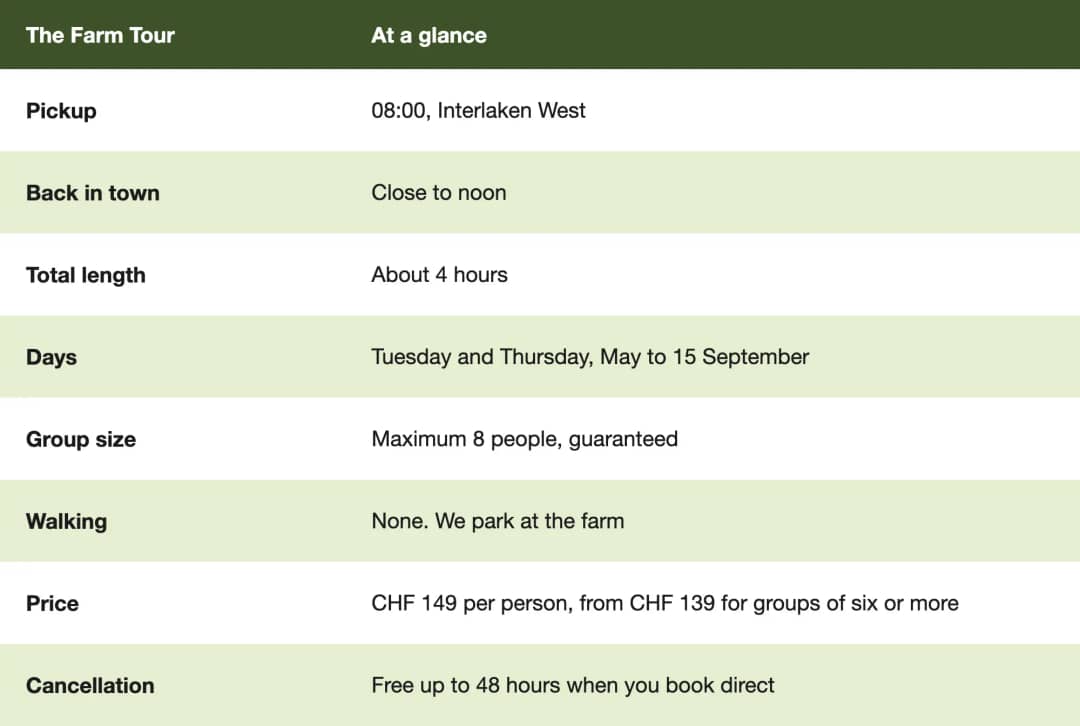
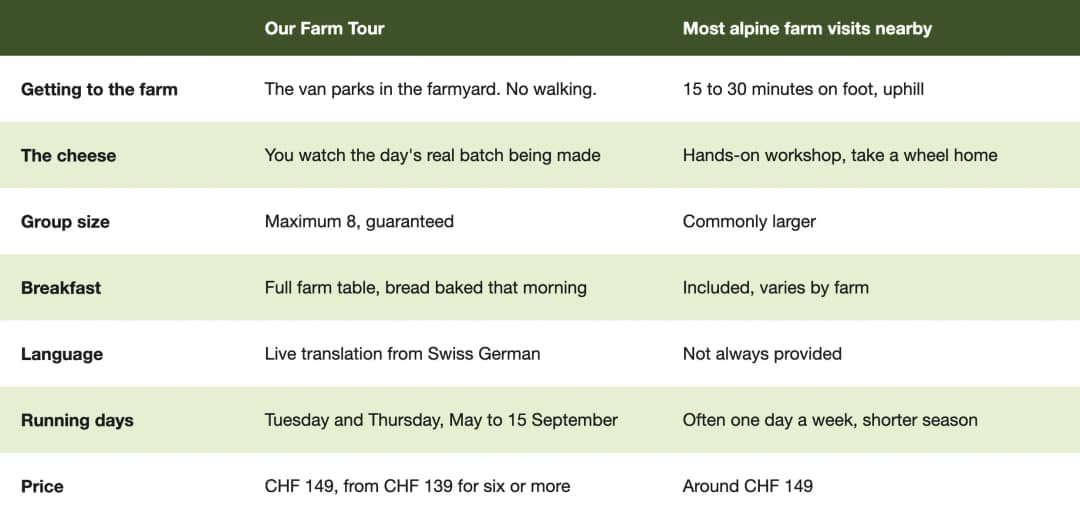
Our tour has zero walking. The van parks at the farm door at 1 370m, and the only ground you cover is from one building to the next.
I drive this tour myself. Below is the real schedule, from the 08:00 pickup at Interlaken West to being back in town close to noon.
Do you have to hike to reach this alpine farm?
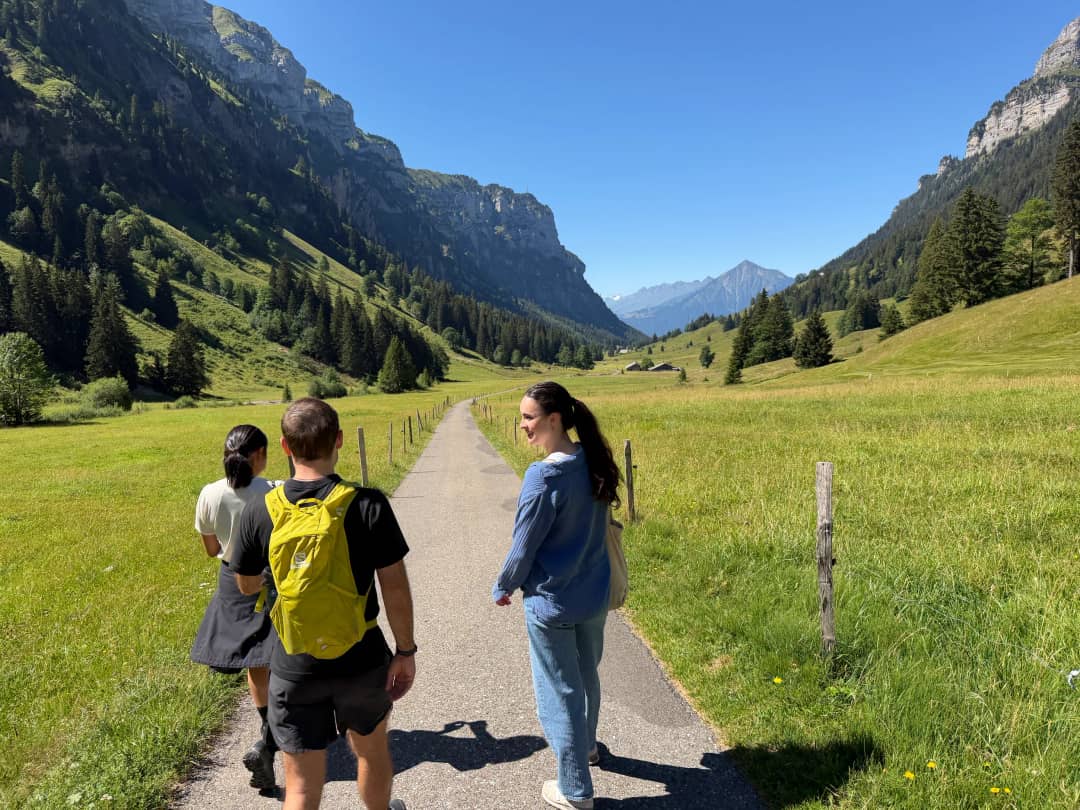
No. This is the answer most people arrive doubting, so here it is first. The van drives into the farmyard and parks. Your total walking distance is from the van door to the breakfast table, roughly the length of a supermarket aisle.
Almost every alpine dairy near Interlaken sits at the end of a footpath. The official listing for the states it is about 20 minutes on foot from Aeschiried to the dairy, and it runs Thursdays only.
I built this tour for the people that model quietly excludes. Bad knees, a recent operation, a grandparent, a pregnancy, a three year old, or no appetite for a climb before breakfast. No walking was a decision, not an accident of geography.
One honest limit: the farm is not wheelchair accessible. The yard is uneven earth and gravel, with thresholds between buildings. If you walk slowly you are fine. If you roll, I would rather tell you now than at 08:00.
08:00: the pickup at Interlaken West
We meet at Interlaken West at 08:00 and take a few minutes to load everyone in. This is the only fixed time of the day, and the one to write down. From there it is a 35 minute drive over Beatenberg.
That drive is part of the tour, not a transfer you endure. The road climbs above Lake Thun, the Niederhorn ridge fills the window, and I talk while I drive.
We enter the Justistal, the valley the tourist maps skip. It is karst country, so the streams vanish into sinkholes and the meadows stay dry and herb heavy. That dryness ends up in the milk, and then in the cheese you eat an hour later.
Fun fact: In September the Justistal holds the Chästeilet, when the summer's cheese is divided between the families who sent cows up.
In September (on 18 September in 2026) the valley holds the Chästeilet, when the summer's cheese is divided between the families who sent cows up. Nobody stages that for visitors. For the full geography, I wrote about the Justistal valley above Interlaken separately.
Around 8:45: arriving at the farm
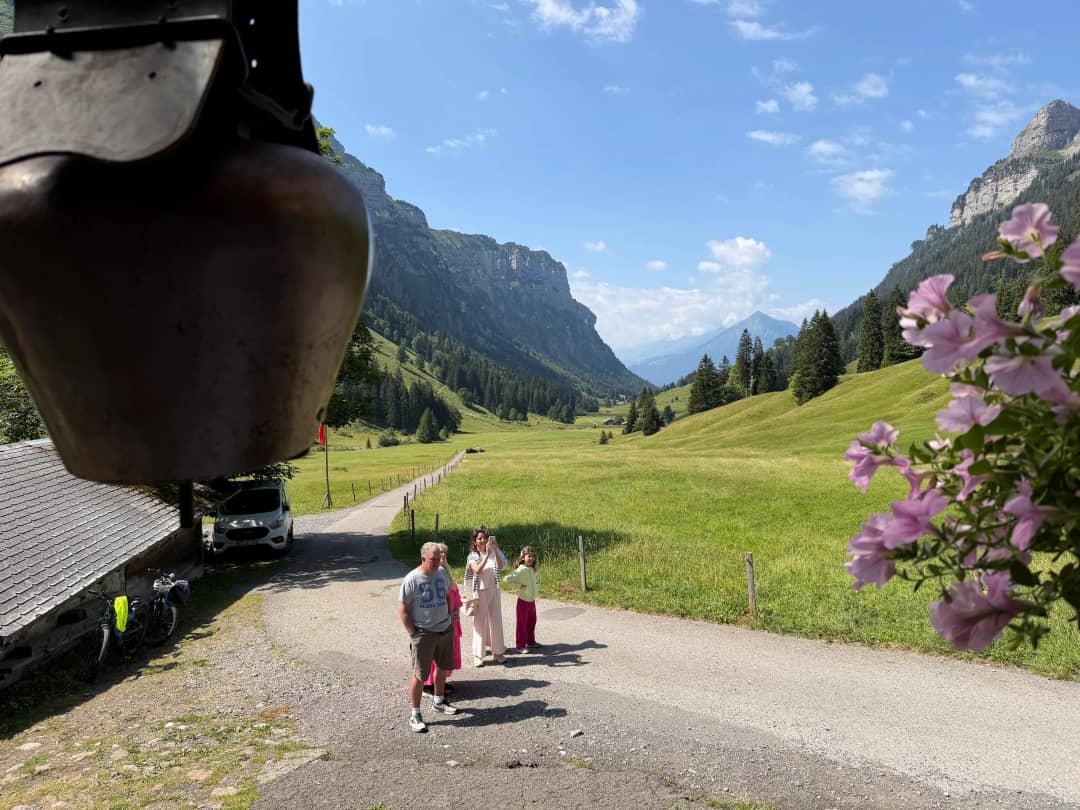
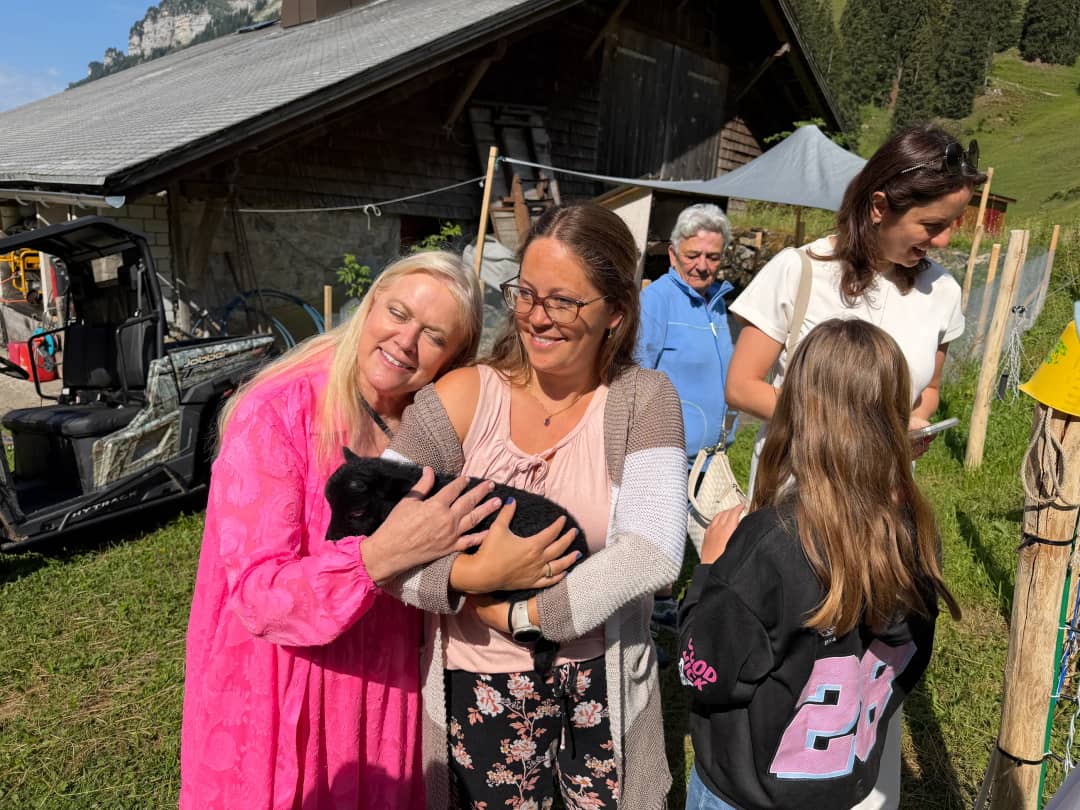
We reach Sigriswiler Bärgli around a quarter to nine. You get out, you meet Daniela, and we take a slow loop of the yard. No briefing, no waiver, no safety talk.
Daniela lives up here from May to the end of September, up at five and finished around nine at night. The tour slots into her working day rather than replacing it.
Once she brings the animals down at the end of September, the slopes above Lake Thun switch to a different sound, and I explain where and when to listen in the article on the red deer rut near Interlaken.
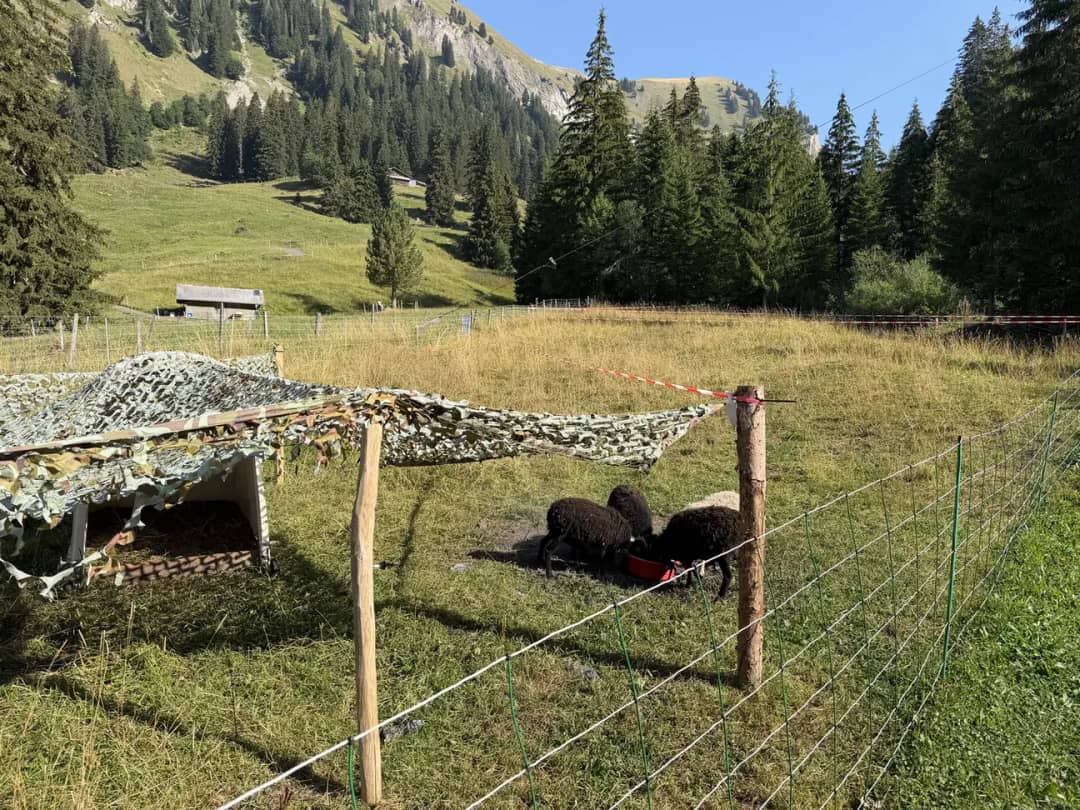
There are 21 cows, plus pigs, ewes, hens, rabbits, guinea pigs, a farm dog, and goats that roam loose and will investigate your pockets. Couples without children usually end up taking more photos than the families do.
Around 9:00: the alpine farmers breakfast
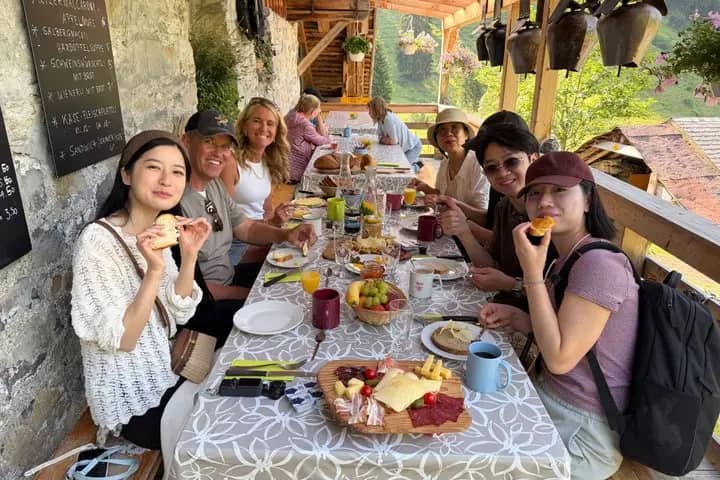
Then we sit down and eat, and this is where most guests recalibrate. People expect a snack with a coffee. What arrives is a full table that lasts as long as you want it to.
If you want to know before you sit down what Daniela puts out, I listed every dish and where it comes from in a separate article on the alpine farm breakfast table.
On it: butter churned on the farm, eggs from the hens outside, cheeses from a few months to over a year old, bacon, dried sausage, jam, fruit, juice, coffee, hot chocolate, and bread baked the same morning.
Insider tip: Ask for raw morning milk: it is available on request, straight from the milking. If you are pregnant, there is an alternative on the table.
Raw morning milk is available on request, straight from the milking. If you are pregnant we will say so before you pour, and there is an alternative on the table.
Yes, breakfast comes before the cheese making, and most people assume the opposite. Daniela's real batch starts when it starts, and we eat while we wait for it.
10:00: do you make your own cheese, or watch?
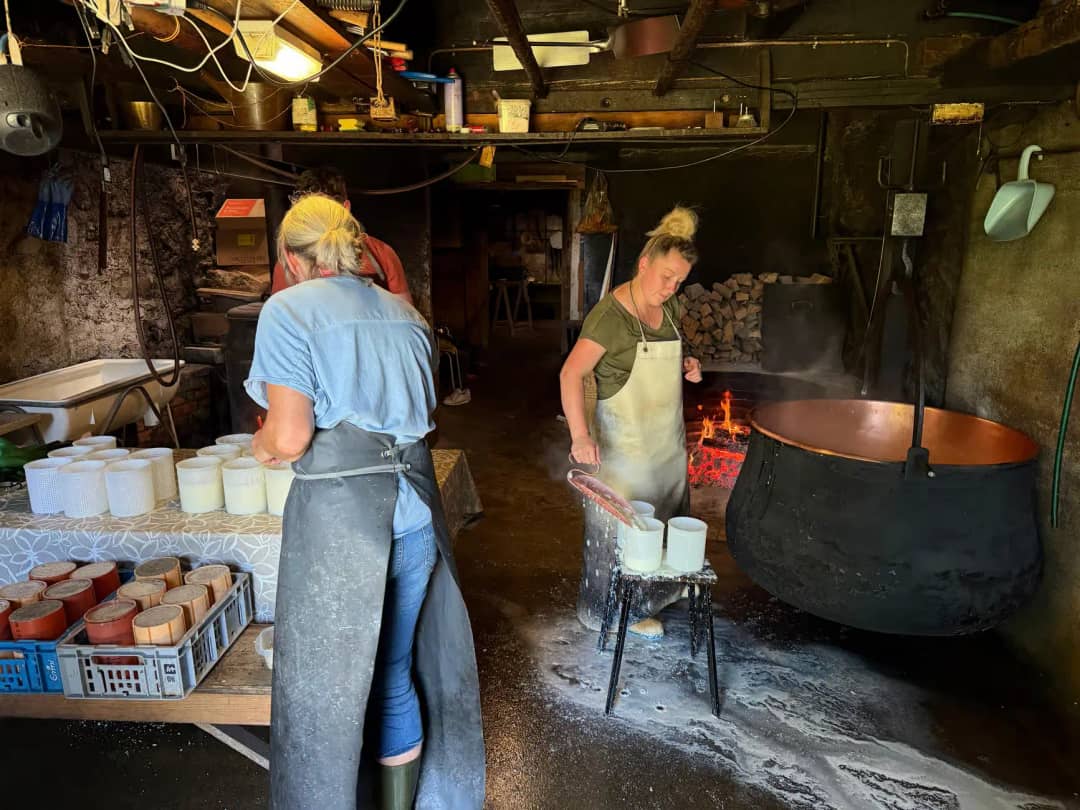
You watch. I am blunt about this, because the market around us sells a hands-on workshop and a wheel to take home, and you may have arrived expecting that. Nobody puts their hands in the vat, and you do not leave with cheese you made.
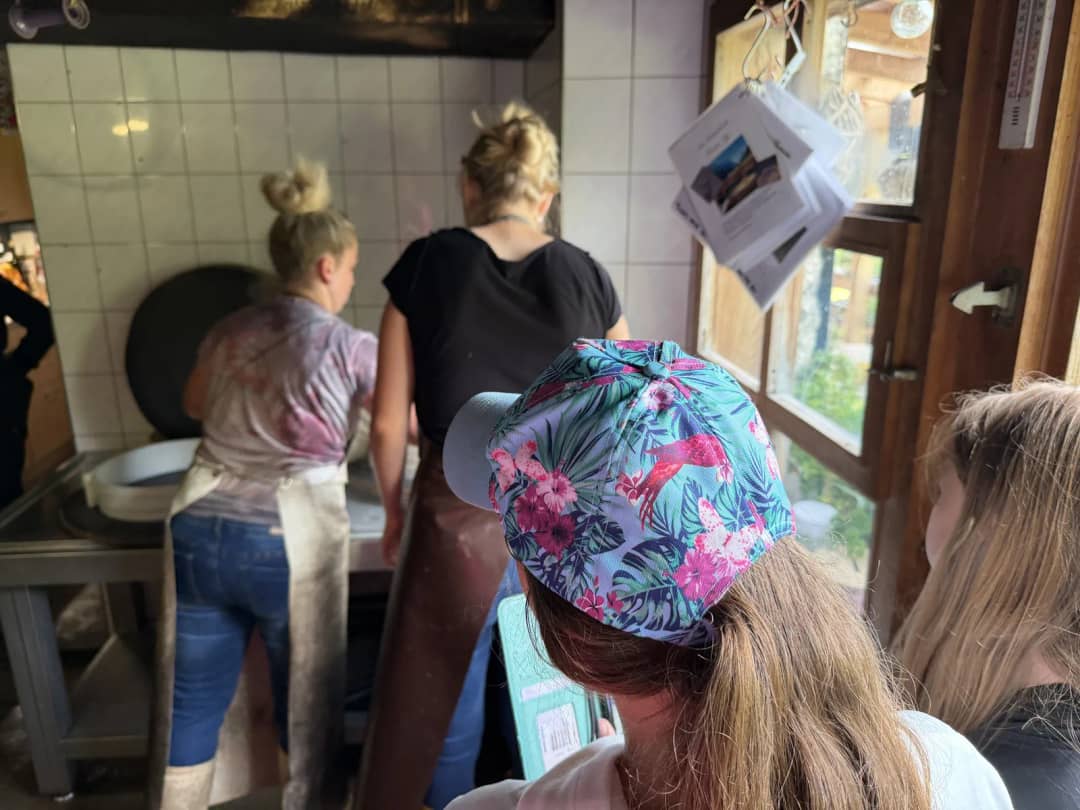
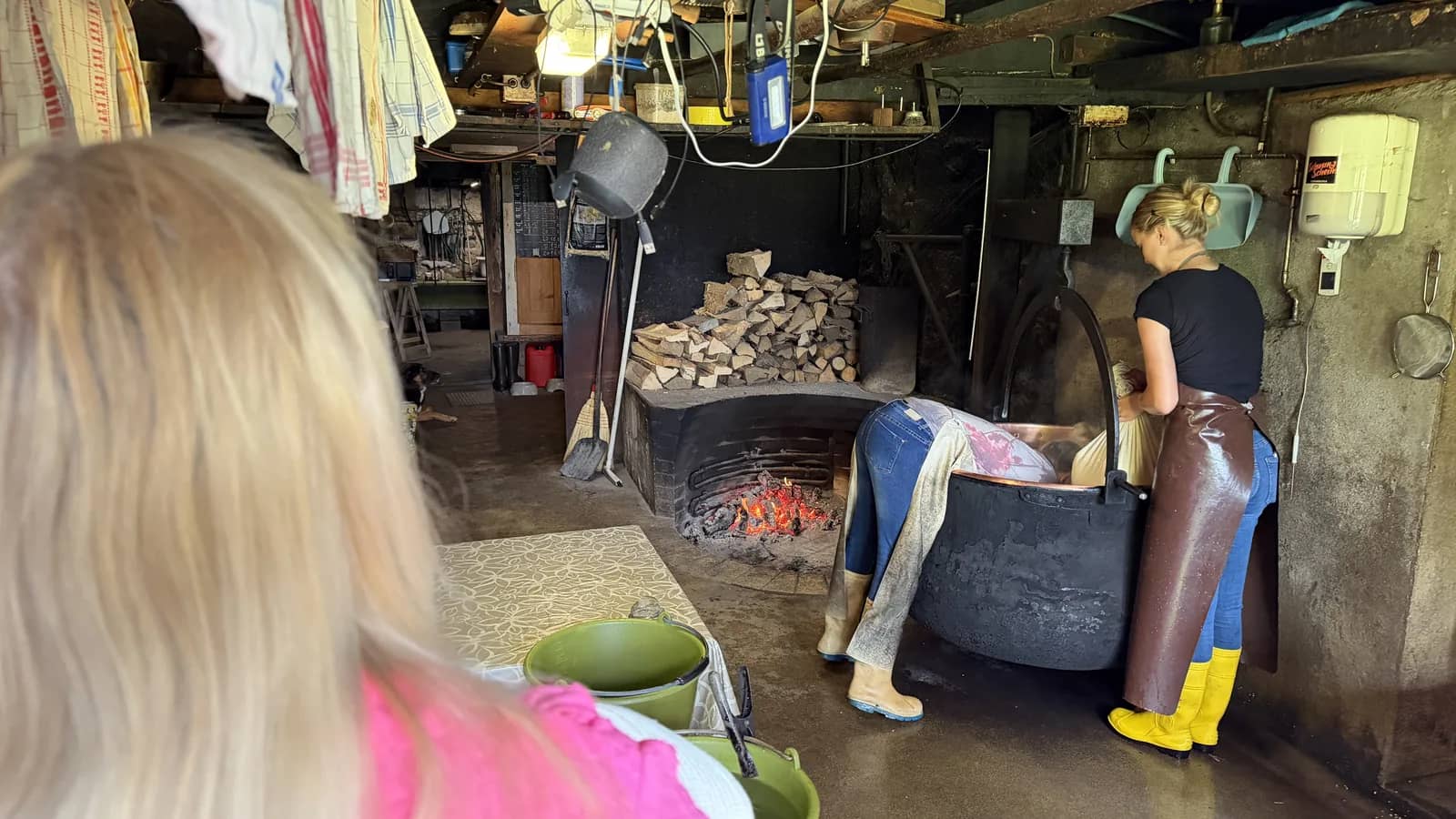
What you get instead is the real thing. Around ten, Daniela makes the day's actual batch, the one that goes on to be sold and eaten. Cauldron, curd, cutting, pressing, at the speed it happens rather than at demonstration speed.
Teona says: "You watch. I am blunt about this, because the market around us sells a hands-on workshop and a wheel to take home, and you may have arrived expecting that."
Teona Gvasalia, your alpine guide at Swiss Local Adventures
You stand close, you film, you ask anything. The guide explains the process as the farmer works, which is the arrangement guests describe as the good version. A rehearsed session with pre-warmed milk would be easier to sell, and it would also be theatre. I compared an alpine farm versus a cheese factory elsewhere on the blog.
That comparison looks at what you actually see, smell and taste in each place, so if you are still choosing between the two for your Interlaken days, read the alpine farm versus cheese factory article before you book either.
By half past ten: the cellar and the brine tub
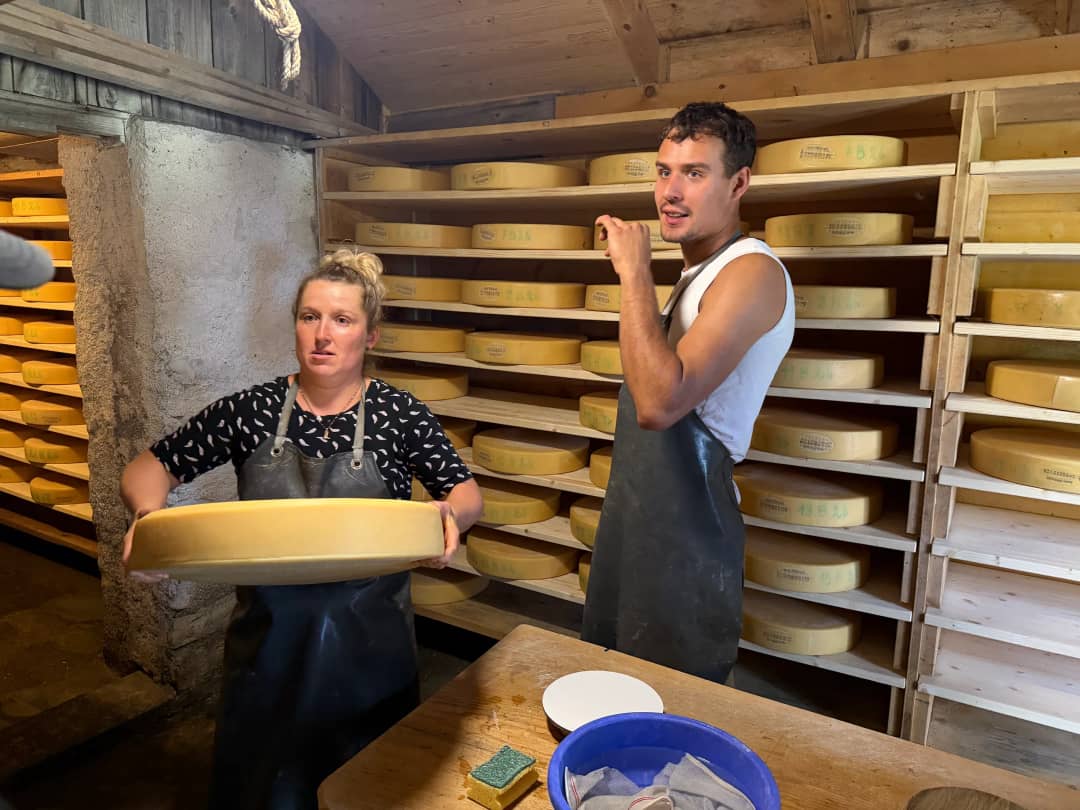
Next we go into the ageing cellar, where the wheels sit on wooden boards and get turned and rubbed by hand. It is cold, it smells extraordinary, and it is the part people photograph least and remember most.
Teona asked a farmer: "How can you tell a wheel is getting better down here?"
"You turn it and rub it by hand, on wooden boards, for months. The rind forms by itself. A young wheel tastes mild, almost buttery. An older one turns nutty and herbal."
Teona Gvasalia, your alpine guide at Swiss Local Adventures
In the corner sits the brine tub. The same salt has been in it for more than ten years, topped up but never replaced. Every wheel on this alp has passed through that liquid. That detail is the moment guests stop wondering whether the morning was arranged for them.
The free hour: animals, and finishing the food
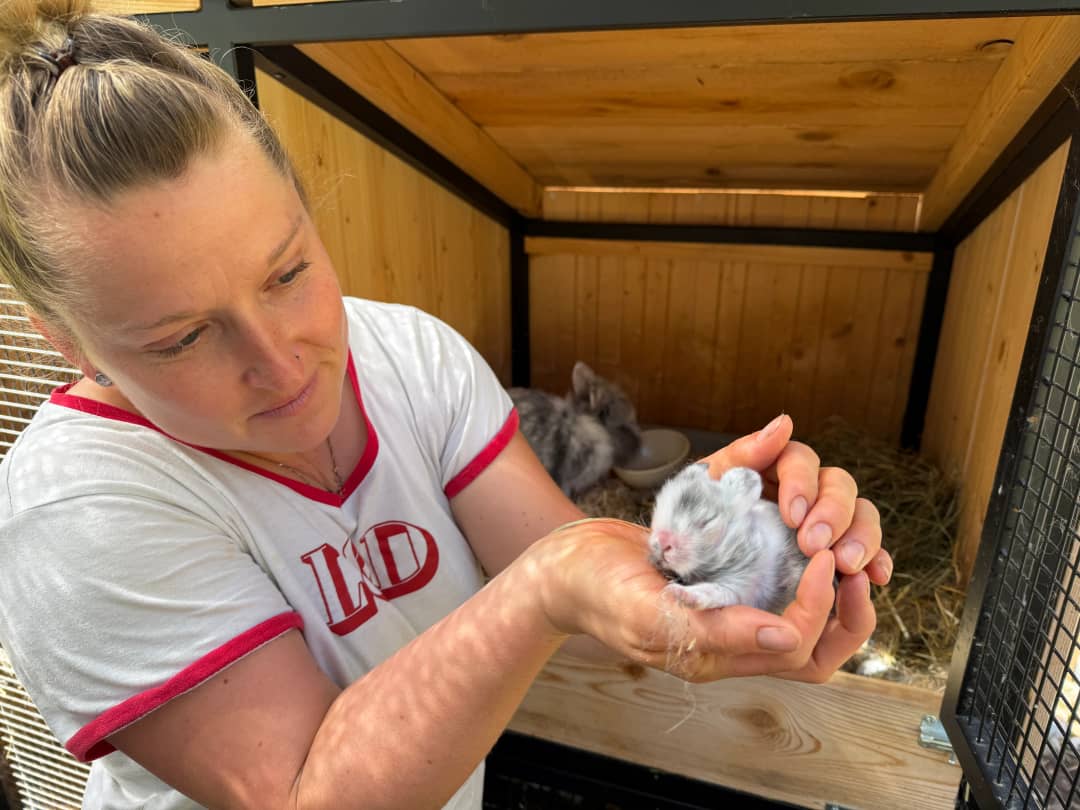
After the cellar there is roughly an hour with no schedule. Go back to the goats, sit with the dog, keep eating, or do nothing at a table at 1 370m with no transit road, no cable car, and no souvenir shop in sight. This hour is why people call farm mornings very chill and relaxing, and it is when the best questions get asked.
Does the farmer speak English?
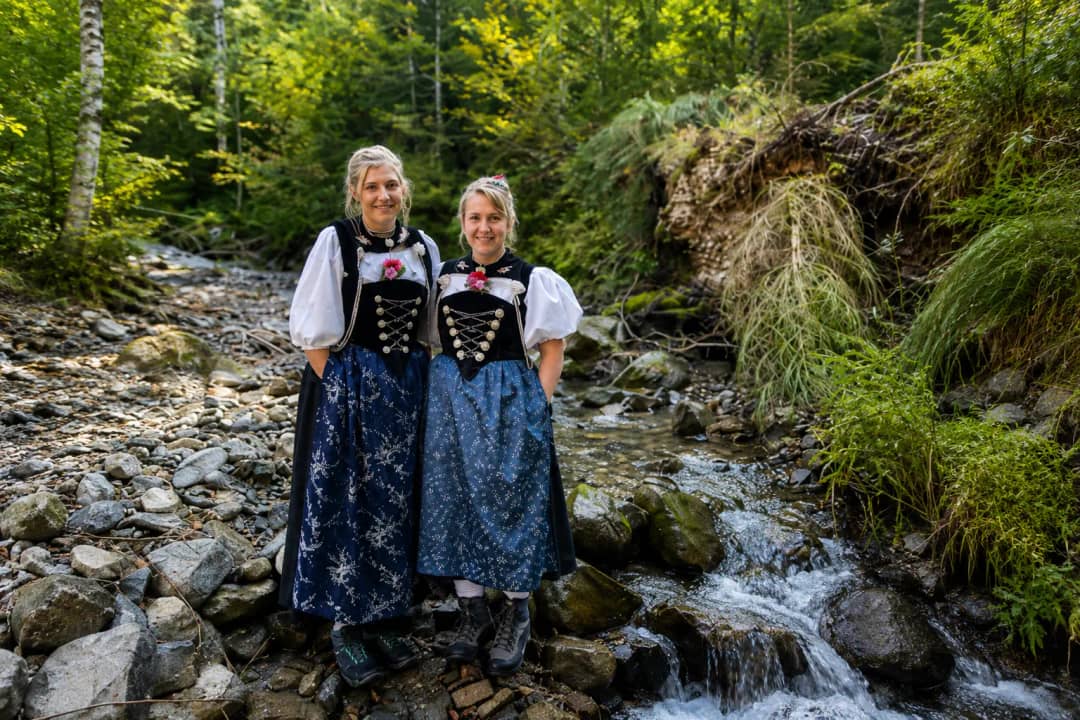
Daniela speaks Swiss German and only Swiss German. When her cousin is there, she translates live and serves breakfast. Otherwise I translate, and I narrate the morning in English either way. Nothing reaches you untranslated.
Guests at other farms report never meeting a single farmer who spoke English, and also that bringing someone who understands German gave them a richer experience. We built the translator in instead.
Teona says: "Ask what happens in a bad summer. Nobody up there works from a memorised English script, so the answer that comes back through translation is the real one."
Teona Gvasalia, your alpine guide at Swiss Local Adventures
The upside is that Daniela answers as herself. She has no memorised English script, so when you ask what she does in a bad summer, you get her real answer, relayed. Here is who Daniela is if you want to know before you book.
Close to noon: what is left of your day
We are back at Interlaken West close to midday, which is the point of the 08:00 start. You get an alpine morning and still have a whole afternoon, with Jungfraujoch trains, the lakes and paragliding all open to you. Four hours is not a day trip. It is the first half of one.
If the price is what still holds you back, I broke down what CHF 149 actually covers in a separate article, from the van ride to the cheese cellar, so you can judge it against the other farm visits around Interlaken.
Your questions about the farm tour
How long does the farm tour take?
About four hours door to door. We leave Interlaken West at 08:00, drive 35 minutes over Beatenberg, spend roughly three hours at the farm, and are back in town close to noon. The only fixed point is the 08:00 departure. Everything after that runs on farm rhythm, which is why I describe the middle of the morning in approximations rather than exact minutes. Breakfast may run long if the conversation is good, and the cheese making starts when the milk is ready.
Which days does the tour run, and how late can I book?
Tuesdays and Thursdays, from May to 15 September. Those are our scheduled departure days. Daniela makes cheese every day, so you can ask for another date, which we confirm with the farm before you book. Booking closes at 14:00 the day before, because the farm needs a head count to prepare breakfast. Book direct and cancellation is free up to 48 hours ahead. Through GetYourGuide or Viator the platform's own cancellation terms apply, not ours. Direct is CHF 149 per person (2026 rate, checked on 8 October 2026), from CHF 139 for groups of six or more.
Can I take cheese home?
You can buy cheese from Daniela at the farm, and most people do. What you cannot take home is a wheel you made yourself, because you do not make one. You watch her make the day's real batch instead.
Is it suitable for children, and for people with limited mobility?
Children do very well here, because there is no walk, no waiting in line, and loose goats. The maximum group is eight people, so nobody is herded. For limited mobility the answer is more precise: if you can walk short distances slowly on uneven ground, this is one of the few alpine farms in the region you can reach at all, since we park in the yard. If you use a wheelchair, the terrain does not work and I will say so before you book.
What happens if it rains?
The tour runs. Breakfast is under a roof, the cheese making happens indoors at the cauldron, and the cellar is a cellar. Rain mostly changes the drive, which stays beautiful in a different way, and the free hour, which moves inside. We only cancel for genuinely dangerous conditions on the mountain road, and if that happens you are refunded in full. Bring a light jacket regardless. At 1 370m a July morning can start at eight degrees before the sun clears the ridge.
Since there is no hike, the packing question is mostly about that early chill and the farmyard ground, so I wrote a short, honest list of what to wear on the farm tour and what you can leave at the hotel.
Is this worth CHF 149?
That depends what you are comparing it to, and I wrote a full piece on what CHF 149 actually buys rather than argue it here. Short version: it covers transport from Interlaken West and back, a working alpine farm at 1 370m you cannot otherwise reach, a full farm breakfast, live translation, a cheese making session that is real production, and a group capped at eight. Our first tour ran on 11 July 2026 with an American family of six.
Booking a morning you already know the shape of
You now know where the van leaves from, what time it leaves, how far you walk, whether you touch the cheese, who translates, and when you are back. The suspicion you brought to this page is the right instinct for booking anything you cannot test first, and the only honest fix is to publish the schedule.
If a Tuesday or a Thursday before 15 September fits your trip, book the farm tour here. Eight seats, free cancellation up to 48 hours, and I will be the one driving.
How we made this: facts and prices checked at the official sources on 8 October 2026, written with AI assistance.
*Written by Teona Gvasalia, your alpine guide at Swiss Local Adventures
Tags
#farm-tour-interlaken#swiss-dairy-farm#alpine-cheese#farm-tour-itinerary#no-hiking-tours#things-to-do-interlaken
Sources & References
Share this article
Similar Articles
Continue your reading with these related articles
Farm, Wine & Fondue
10/3/2026
12 min
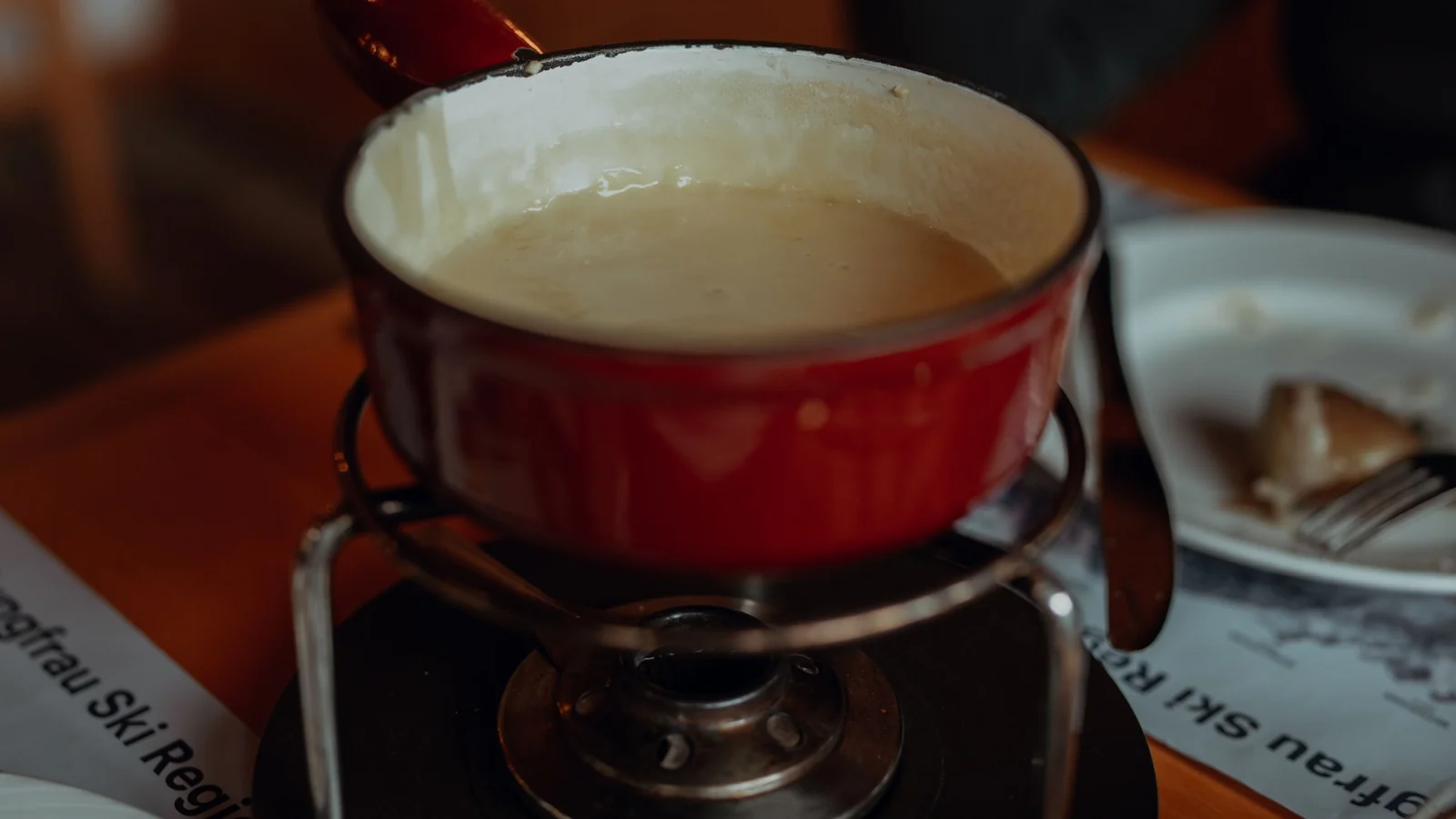
Best Fondue in Interlaken: Where a Local Guide Eats
Best fondue in Interlaken: a local guide's pick is the Taverne at CHF 30 per person. Where our groups eat, what to order, how to skip the traps.
best-fondue-interlakencheese-fondue-interlakenwhere-to-eat-interlaken
By Pierre VetschRead More
Farm, Wine & Fondue
8/20/2026
7 min
Swiss Food Experiences: A Local's Guide
Swiss food experiences beyond fondue: alpine cheese made over a wood fire only 14 weeks a year, and the farms where you can watch it being made.
swiss-food-experiencesalpine-cheeseswiss-dairy-farm
By Pierre VetschRead More
Farm, Wine & Fondue
8/19/2026
5 min
Is the Spiez Wine Tour Worth CHF 139?
CHF 139 buys 3 hours: Interlaken pickup, four wines, three cheeses, 8 guests max. See if the Spiez wine tour is worth it next to every Swiss option.
wine-tour-interlakenwine-tasting-cost-switzerlandswiss-wine
By Olivia LufmanRead More