Interlaken
Things to Do in Interlaken: A Local's Honest Guide 2026
P
Pierre, Swiss Local Adventures
Author
May 17, 2026
6 min
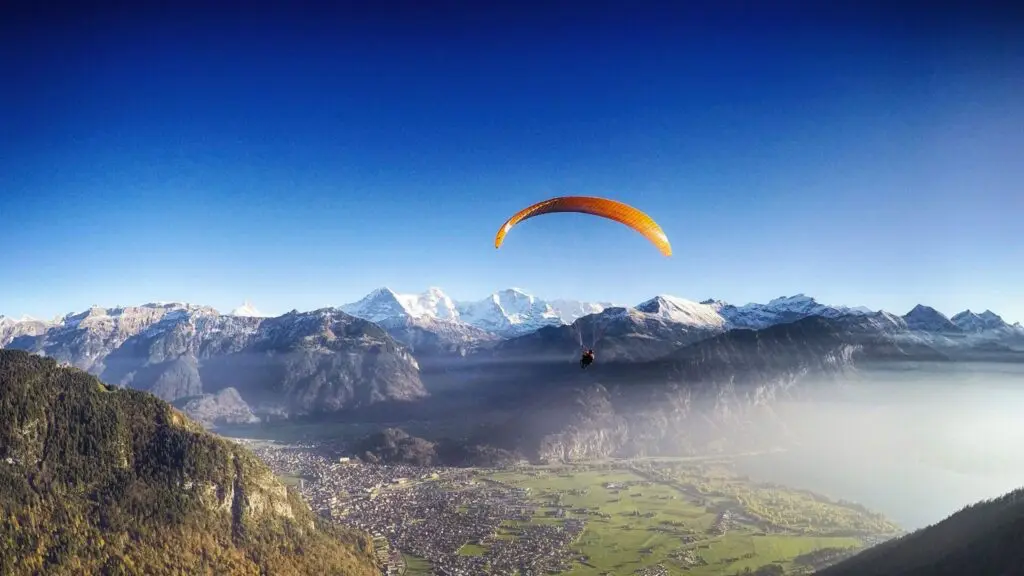
Things to Do in Interlaken: A Local's Honest Guide for 2026
You step off the train at Interlaken Ost. The platform smells faintly of pine resin and warm metal. Through the gap between the station roof and the mountains, you see it for the first time: the white wall of the Jungfrau pretending to float above the town. A paraglider drifts overhead. Somewhere, cowbells ring.
Most travelers spend two days here. Most of them admit, on the train back, that two days was not enough.
I run small-group adventure tours in this region every week. After more than 300 guided days across the Bernese Oberland, I know the gap between what lands on every itinerary and what actually stays with people. Thousands of visitors arrive with the same Google list. Some of those things deserve their reputation. Some are tourist traps in beautiful packaging. And some of the best moments in the Bernese Oberland never make it onto any list at all.
Here is the honest version.
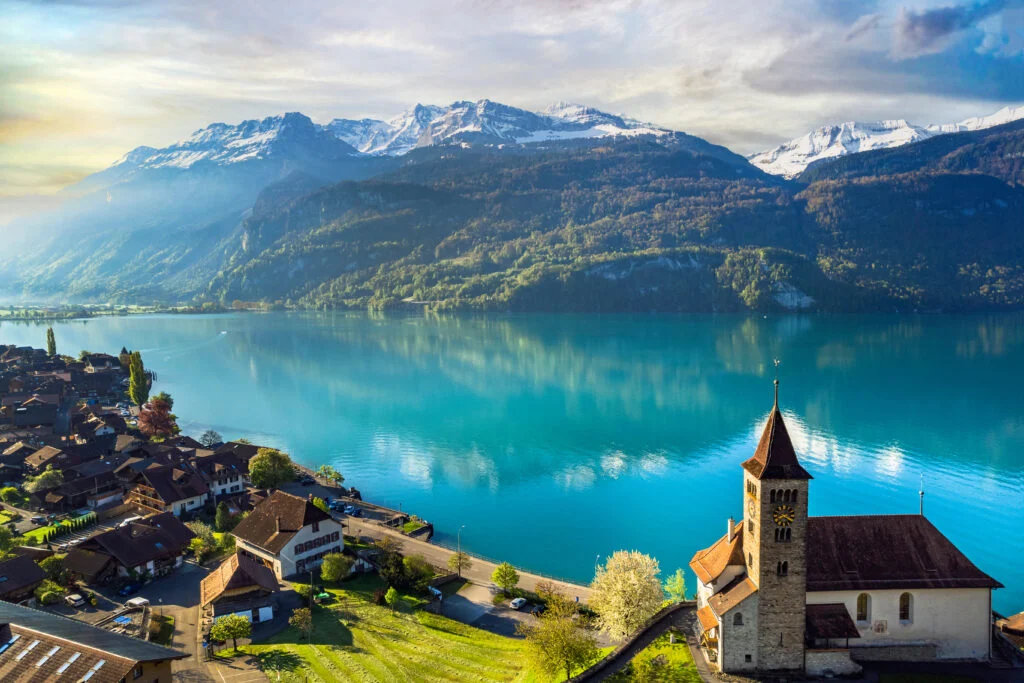
Is Interlaken Worth Visiting?
Yes, Interlaken is worth it. For visitors worried about "just another overcrowded Swiss town," the reality surprises them. The town itself is calm outside one square kilometer of souvenir shops. The surrounding region, two lakes, three mountains, and dozens of villages, is what earns the reputation.
People who say "the city is beautiful but not breathtaking as expected" are describing the wrong scale. Interlaken is not a destination you admire from the street. It is a platform for what surrounds it.
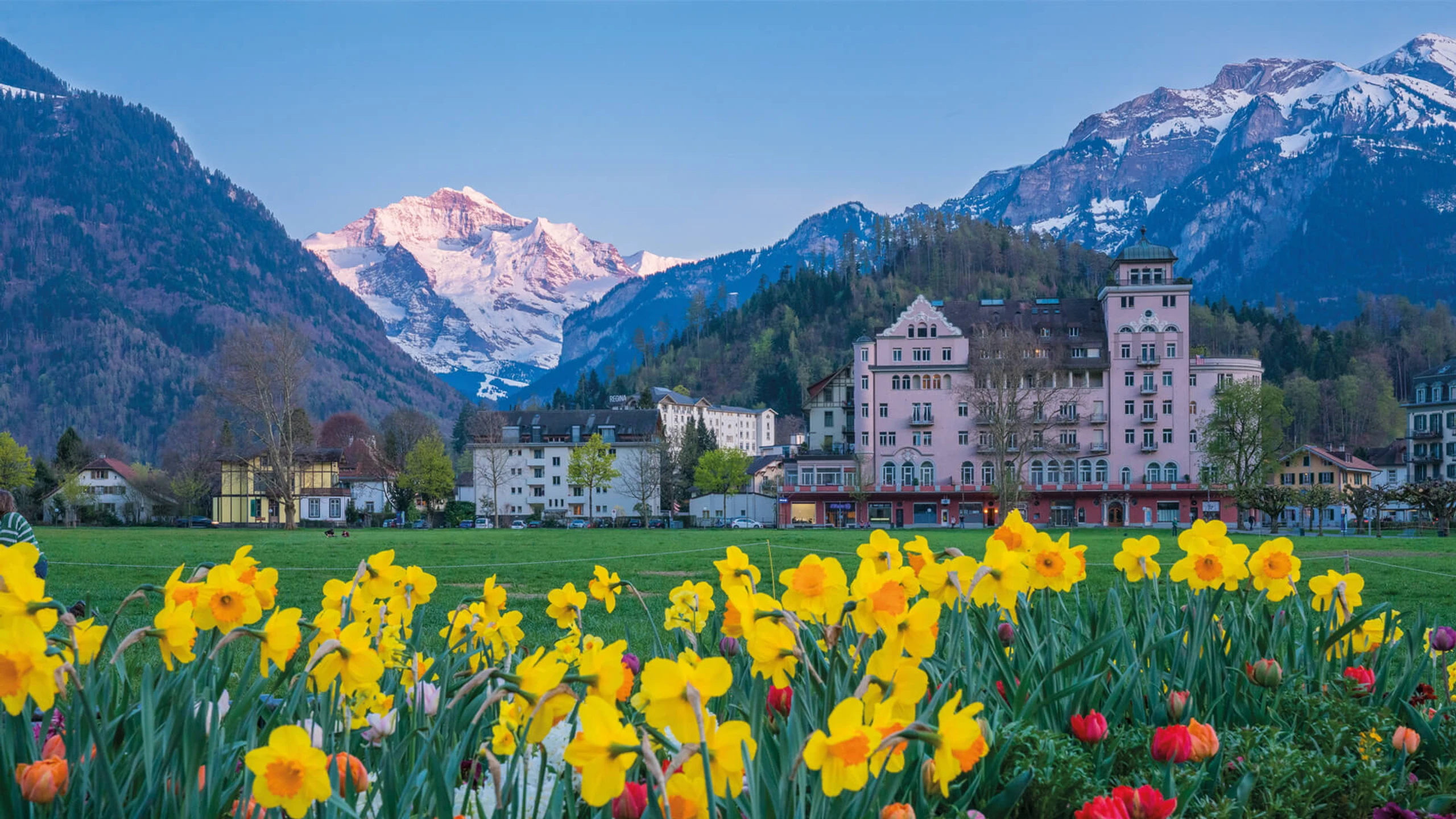
Interlaken sits between Lake Thun to the west and Lake Brienz to the east, in a flat alluvial basin surrounded by the highest mountain range in central Europe. The name literally means between the lakes. That geography produces the single most photographed park in Switzerland: the Höhematte, a 14-hectare meadow in the dead centre of town, kept green by a pact signed in 1864 by 37 local farming families who refused to let any building rise on it. Their agreement still holds. That is why you can stand on grass in the middle of a town and see the Jungfrau rise directly above your head.
Lord Byron came here in 1816. Mark Twain arrived in 1878 and complained, lovingly, about the cowbells. The Bernese Oberland Tourism Association predates most functioning democracies. Interlaken has been doing this for two centuries, and it shows.
What Is Interlaken Best Known For?
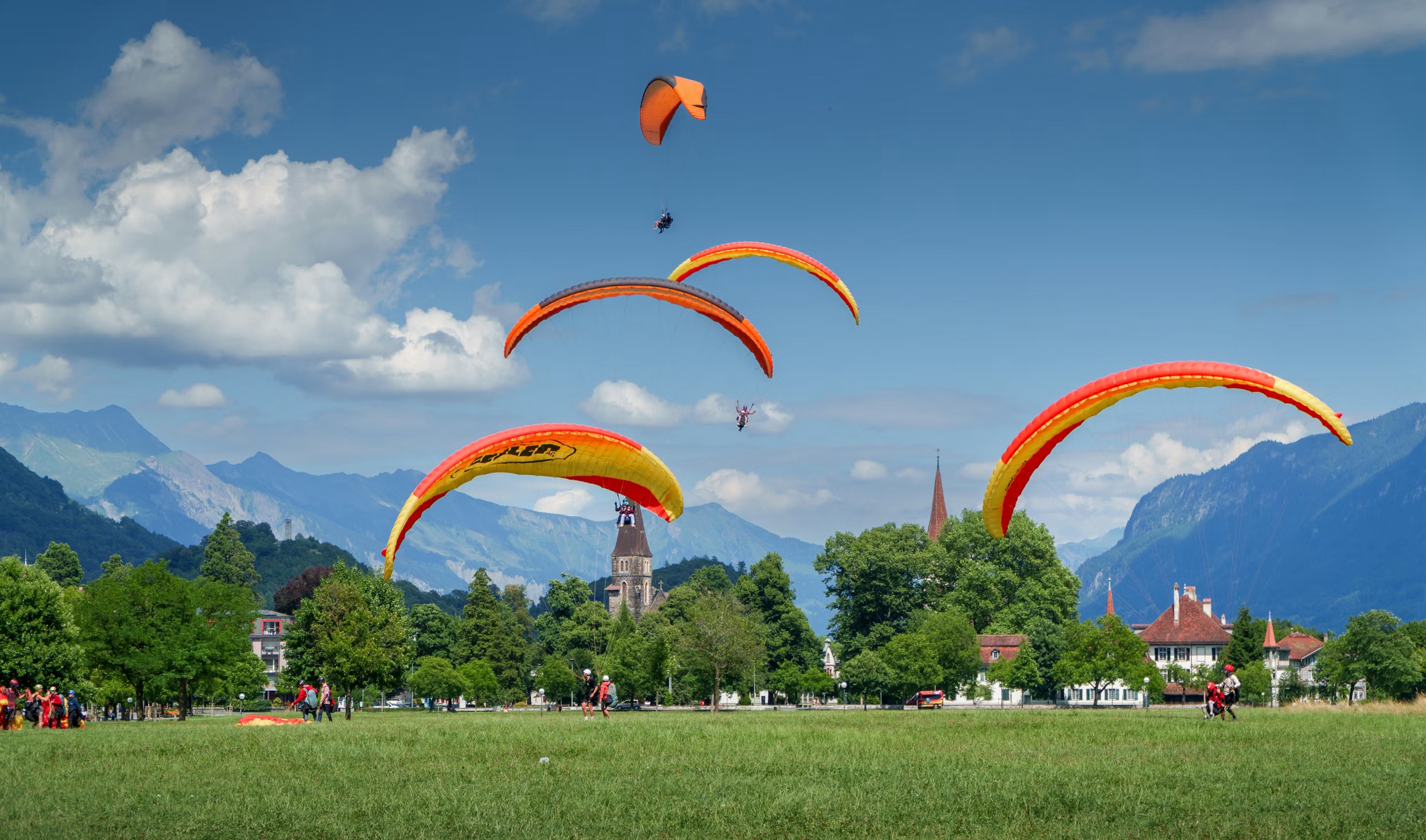
Interlaken is best known as the adventure capital of Switzerland and the gateway to the Jungfrau region. Paragliding, skydiving, canyoning, and the train to the highest railway station in Europe have put it on every bucket list since the 1990s. But the lakes, the mountain villages, and the Swiss food culture draw just as many people who want nothing to do with adrenaline.
The 25 Best Things to Do in Interlaken in 2026
These are grouped by type. Within each group, they run from most iconic to most overlooked.
Mountain Adventures
Paragliding from Beatenberg (CHF 160-180): Tandem flights launch above the treeline and land on the Höhematte. You run three steps and the world goes quiet. Twenty minutes later you slide onto grass surrounded by tourists eating ice cream. People who were terrified at the top consistently describe it as "honestly one of the best experiences of my life." Their fears disappeared within the first sixty seconds of flight. See the full paragliding in Interlaken guide.
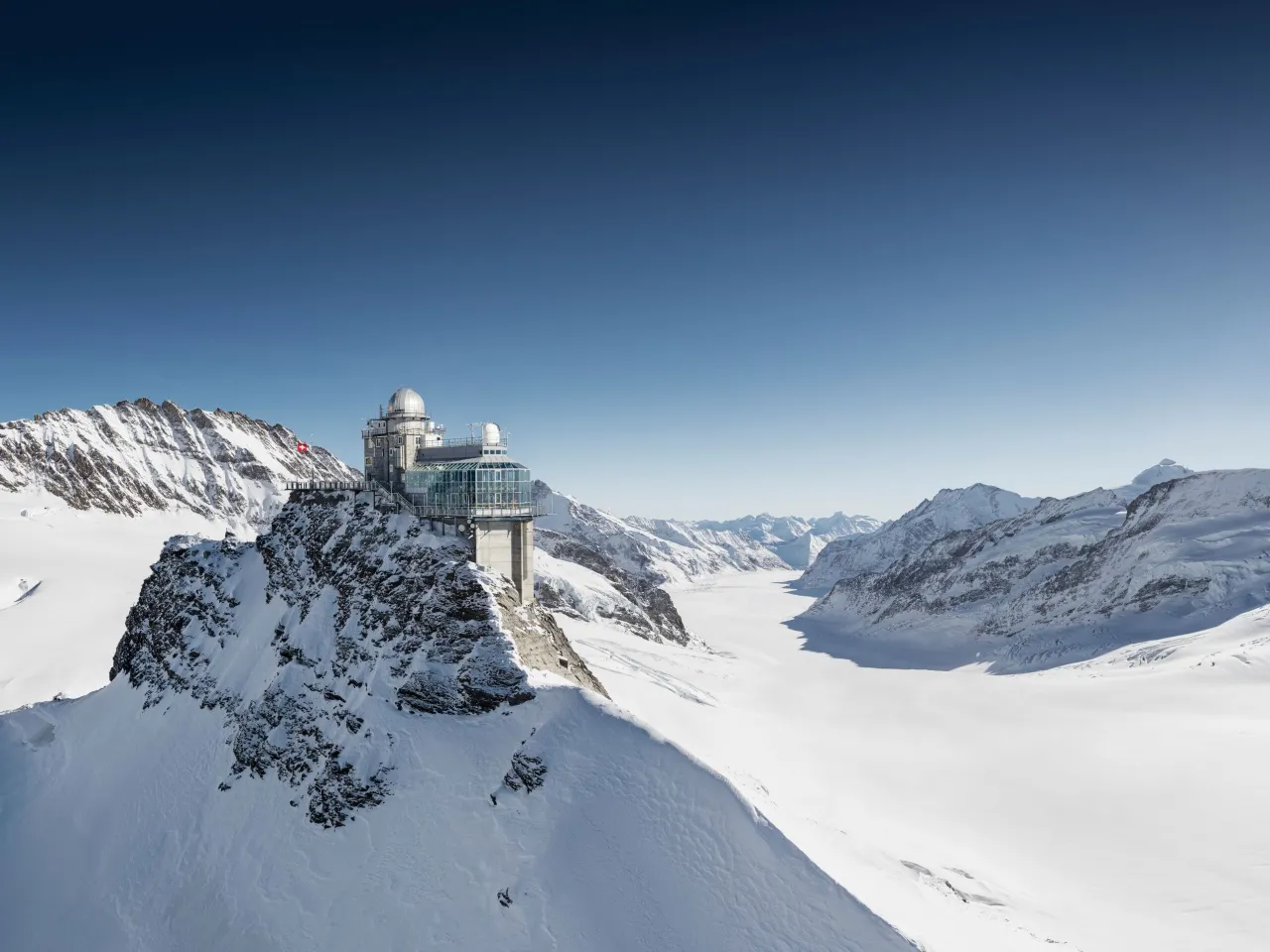
Jungfraujoch, Top of Europe (CHF 210-230 round trip): The train climbs to 3,454 metres, the highest railway station in Europe. Ice palaces, a glacier walkway, and yes, a Lindt stand. Touristy. Also genuinely breathtaking. Go on a clear day or skip it entirely. With the Swiss Travel Pass, you save roughly CHF 45.
Skydiving over the Jungfrau (CHF 450-550): A helicopter takes you to 4,000 metres. Free fall at 200 km/h. The Eiger Nordwand passes under your feet. Nobody who does it regrets it.
Canyoning in Saxetenbach or Grimsel (CHF 100-150): Rappelling down waterfalls into emerald pools. The Saxetenbach canyon runs 2.5 hours and works for first-timers. See the best outdoor adventures guide.
White-water rafting on the Lutschine (CHF 80-120): Class II-III rapids, accessible June through September. Short, punchy, good for groups with mixed experience.
Eiger Express gondola to Eigergletscher (CHF 60-80): The fastest cable car in the Alps reaches Eigergletscher in 15 minutes. Glacier views and the Eiger's north face at eye level, without the altitude of Jungfraujoch.
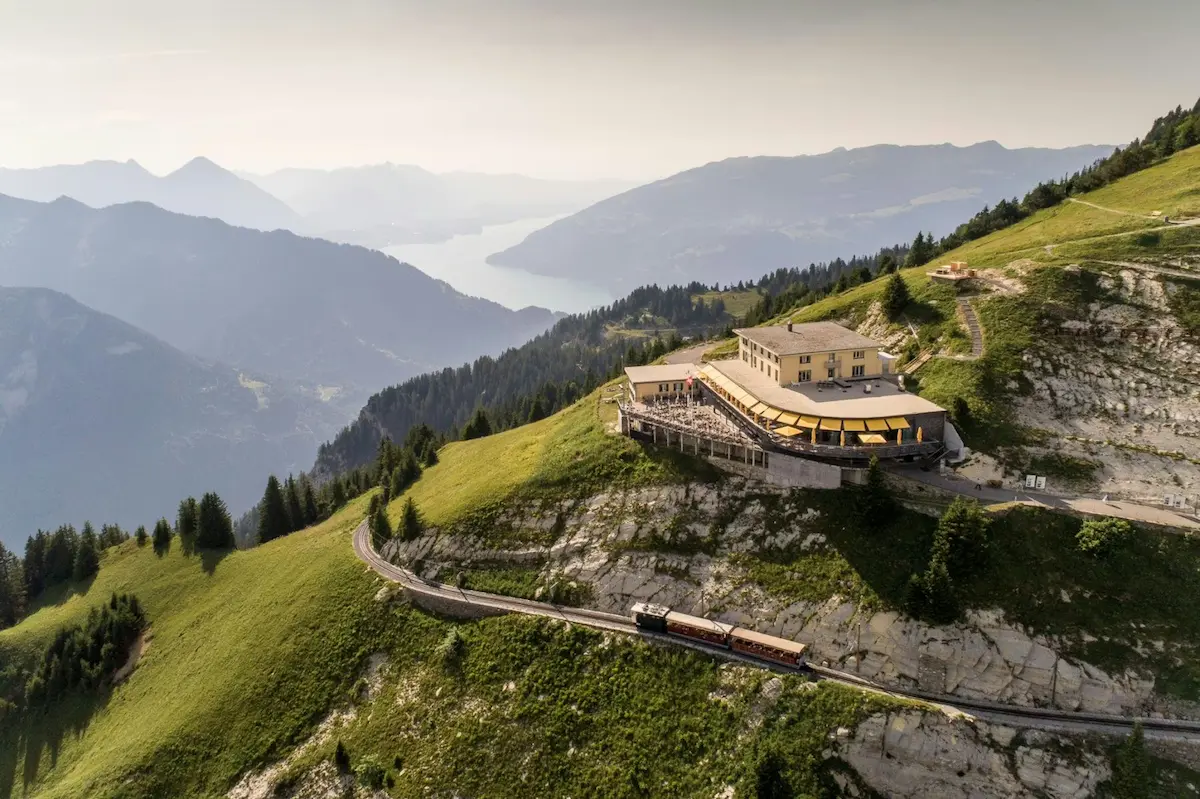
Schynige Platte cogwheel railway (CHF 60-75 round trip, or included in Swiss Travel Pass): The local pick for price-to-magic ratio. A 19th-century cogwheel train climbs through wildflower meadows to a botanical garden at 1,987 metres. The panorama of all three peaks from the summit ridge takes about ten seconds to understand and longer to forget.
Augstmatthorn ridge hike: The cliff selfie spot most Instagram accounts tag without noting the country. 2.5 hours from Habkern, no guide needed in summer.
Lake Experiences
Kayaking on Lake Brienz at dawn (CHF 60-90): The lake sits cold, emerald, and nearly empty before 8 a.m. Glacier melt keeps it that color all summer. Worth the early start.
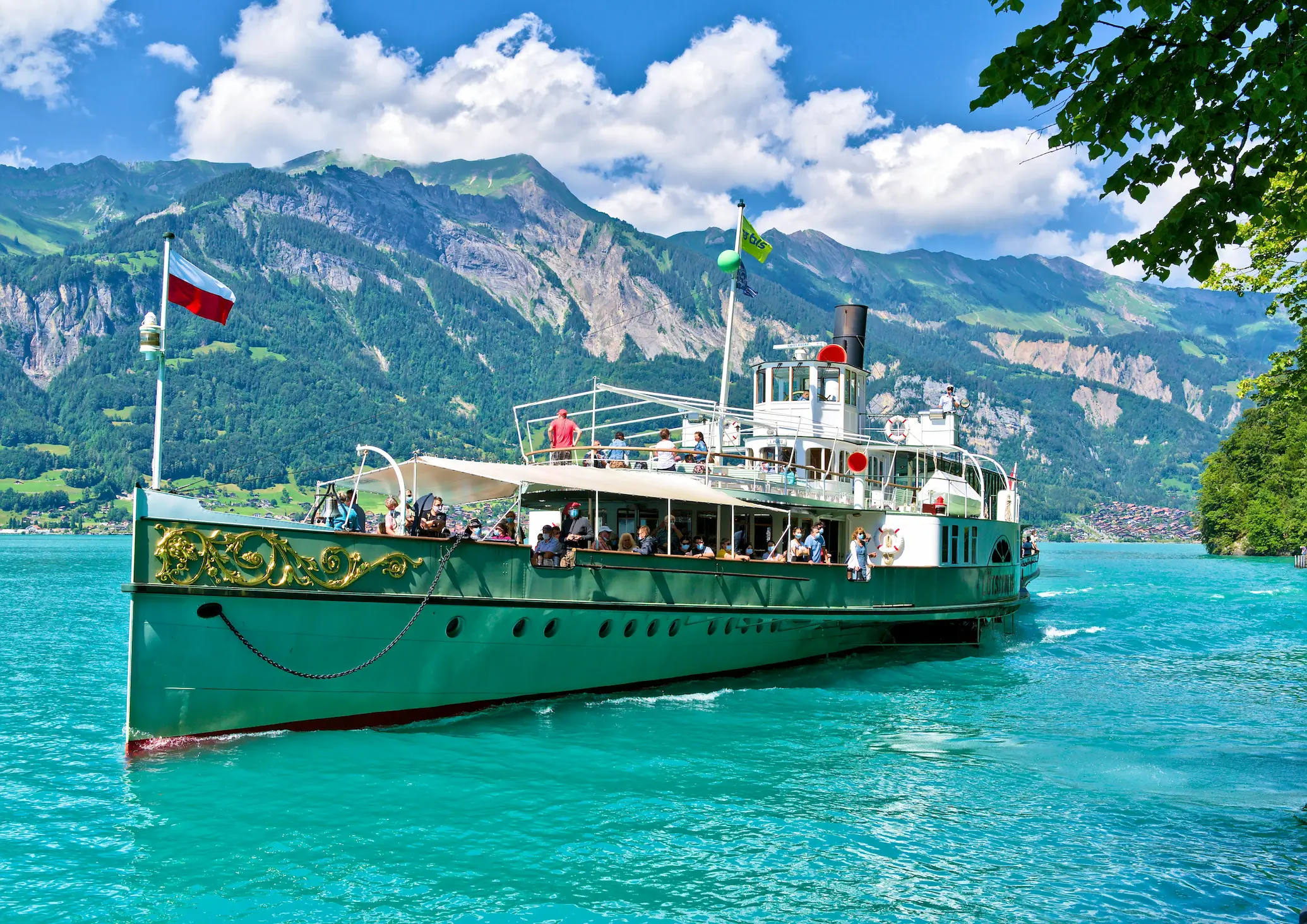
BLS ferry from Interlaken to Spiez (included in Swiss Travel Pass): Castle shores, vineyards above the water, the town of Spiez with its 9th-century castle. A two-hour return trip most visitors skip.
Swimming at Bönigen (free): The village beach on Lake Brienz, five minutes by bus from Interlaken Ost. Clear water, mountain backdrop, fraction of the main beach crowd.
Iseltwald jetty (CHF 5 access fee): Made internationally famous by the Korean drama Crash Landing on You. You will queue. The photo is still worth it. Go before 9 a.m. if you want space.
Giessbach Falls, Lake Brienz (free, ferry extra): Fourteen falls that drop directly into the lake, reached by the oldest funicular in Switzerland (1879). The spray reaches the viewing platforms.
St. Beatus Caves on Lake Thun (CHF 19): Underground river galleries, limestone stalactites, and a 14th-century chapel carved into rock. Most visitors never hear about it. Better for rainy days than any shopping street.
Mountain Villages and Culture
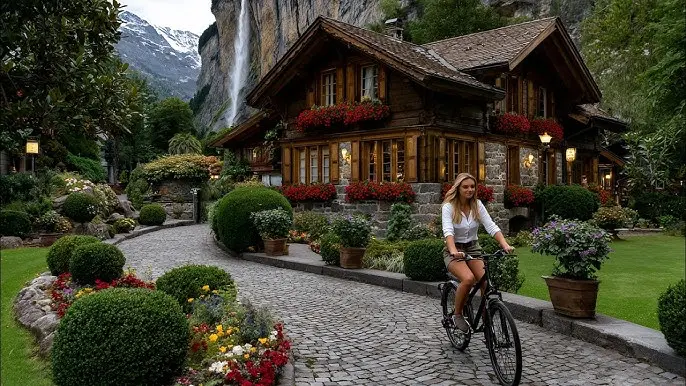
Lauterbrunnen valley (free to enter): 72 waterfalls, including the Staubbachfall that drops 300 metres in a single strand. Walk the valley floor for two hours without paying anything.
Mürren by cable car and train (CHF 45-60 from Lauterbrunnen): Car-free at 1,650 metres. Flower boxes on chalets. The Schilthorn above it appeared in the 1969 Bond film On Her Majesty's Secret Service. The Piz Gloria restaurant at the summit still serves fondue.
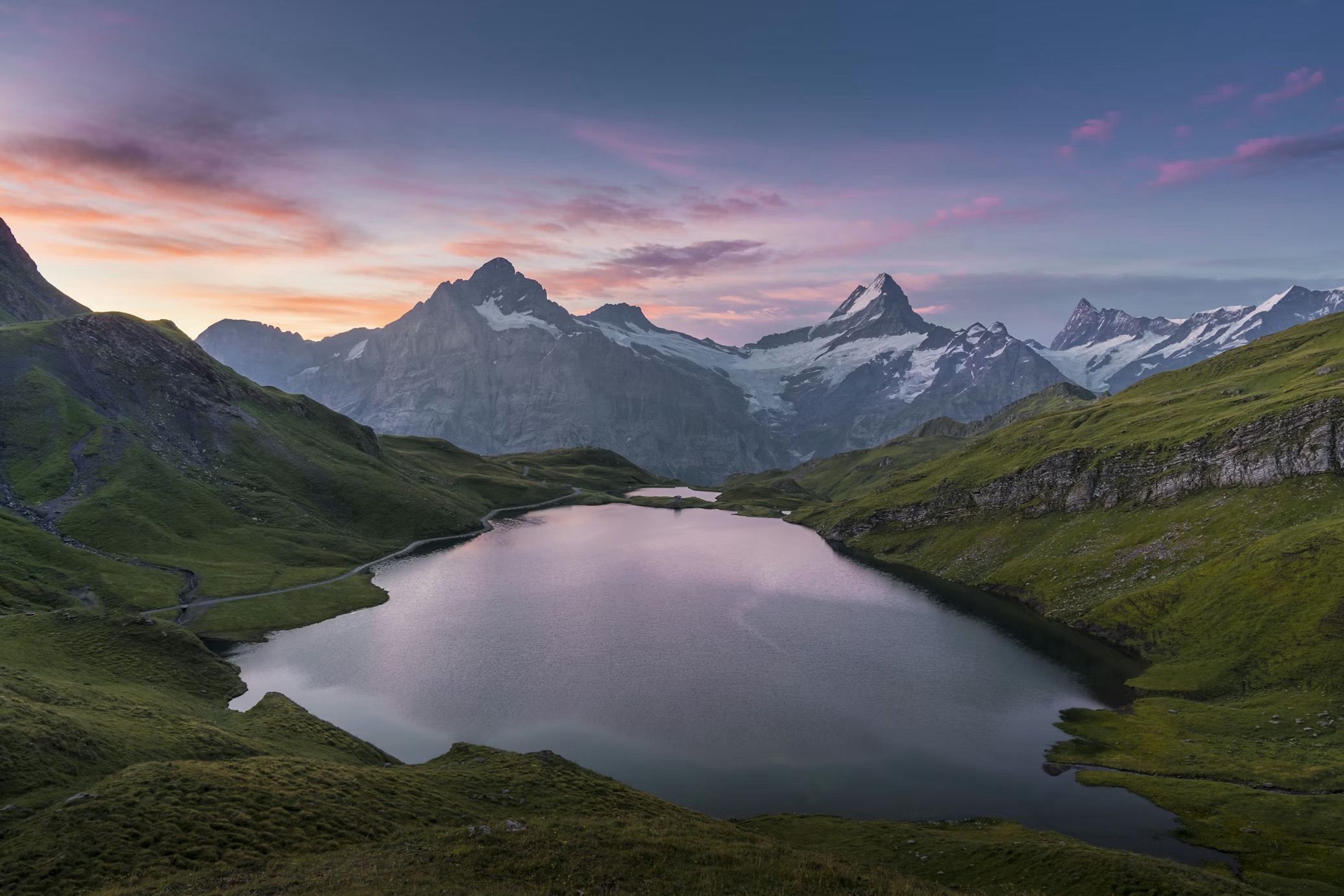
Grindelwald and Bachalpsee hike: Take the cable car to Grindelwald-First (CHF 55 round trip), then hike 45 minutes to Bachalpsee. The lake mirrors the Schreckhorn so perfectly it looks manipulated. Best at sunrise.
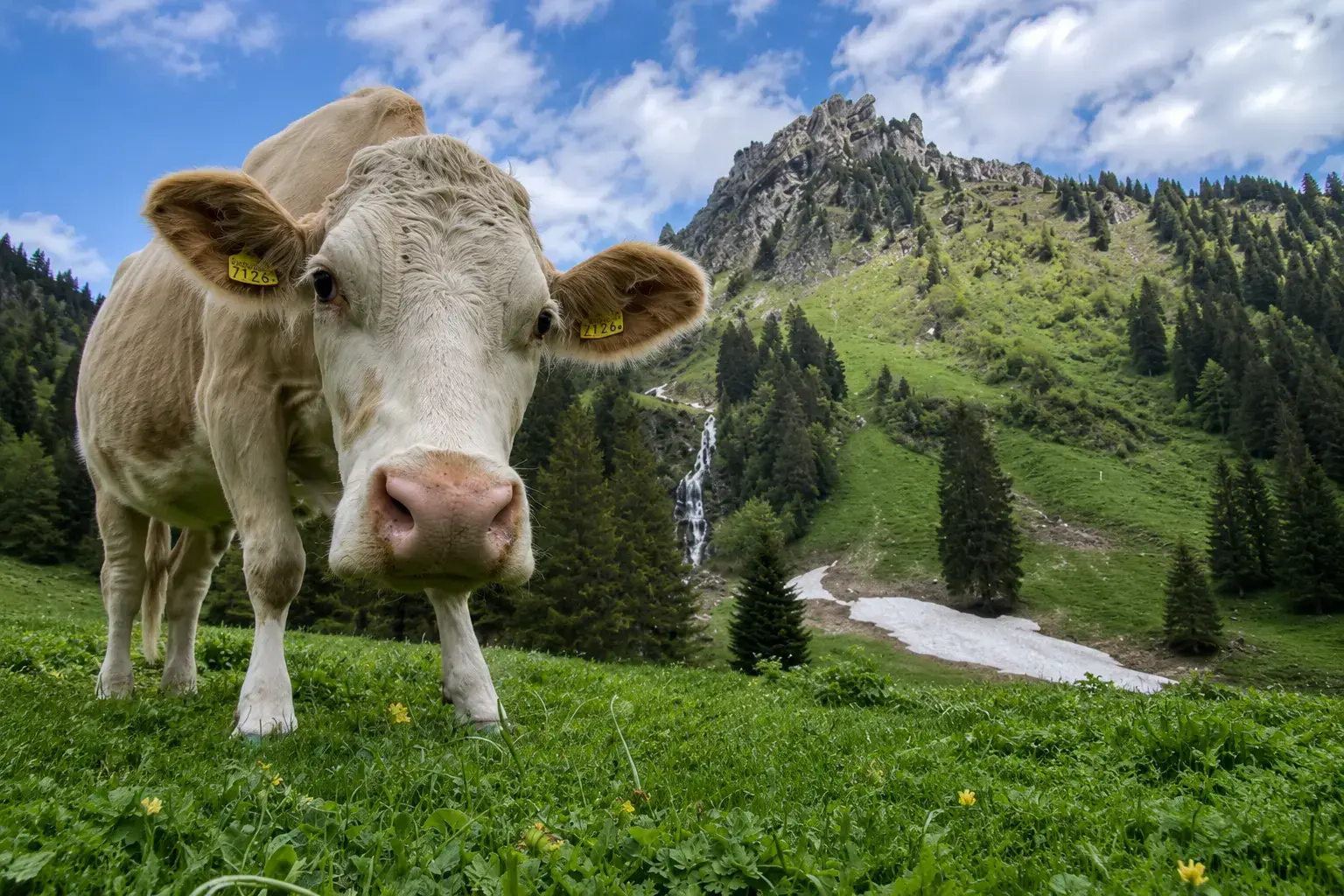
Justistal, the cheese valley above Beatenberg: A high pasture where the Alpaufzug, the spring cow migration, still happens with bells, flowers, and people in traditional costume. The tourist maps skip it. Locals do not.
Reichenbach Falls above Meiringen (CHF 12 funicular): Where Sherlock Holmes died in Conan Doyle's story. The Sherlock Holmes Museum in Meiringen is more charming than it has any right to be.
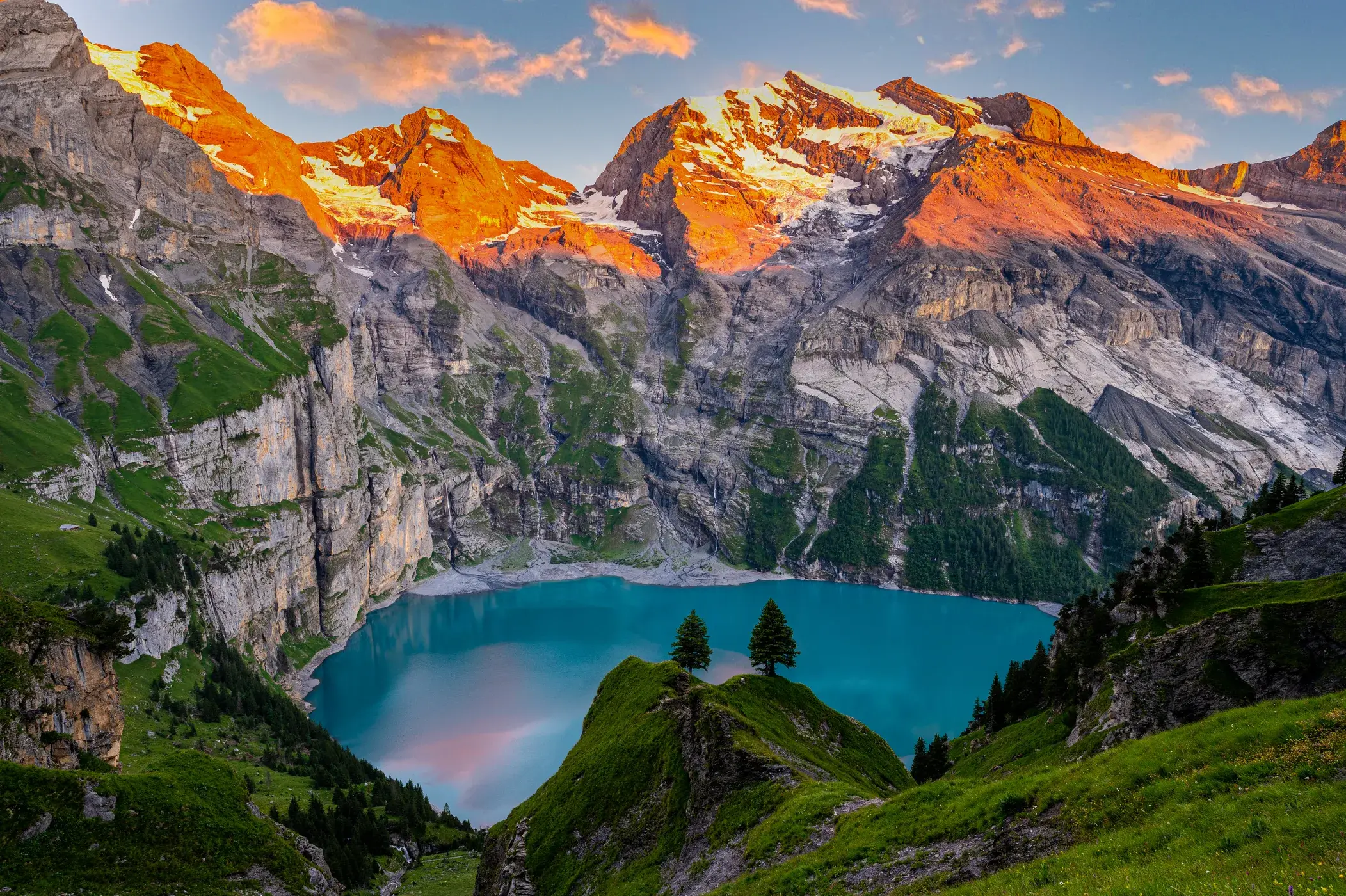
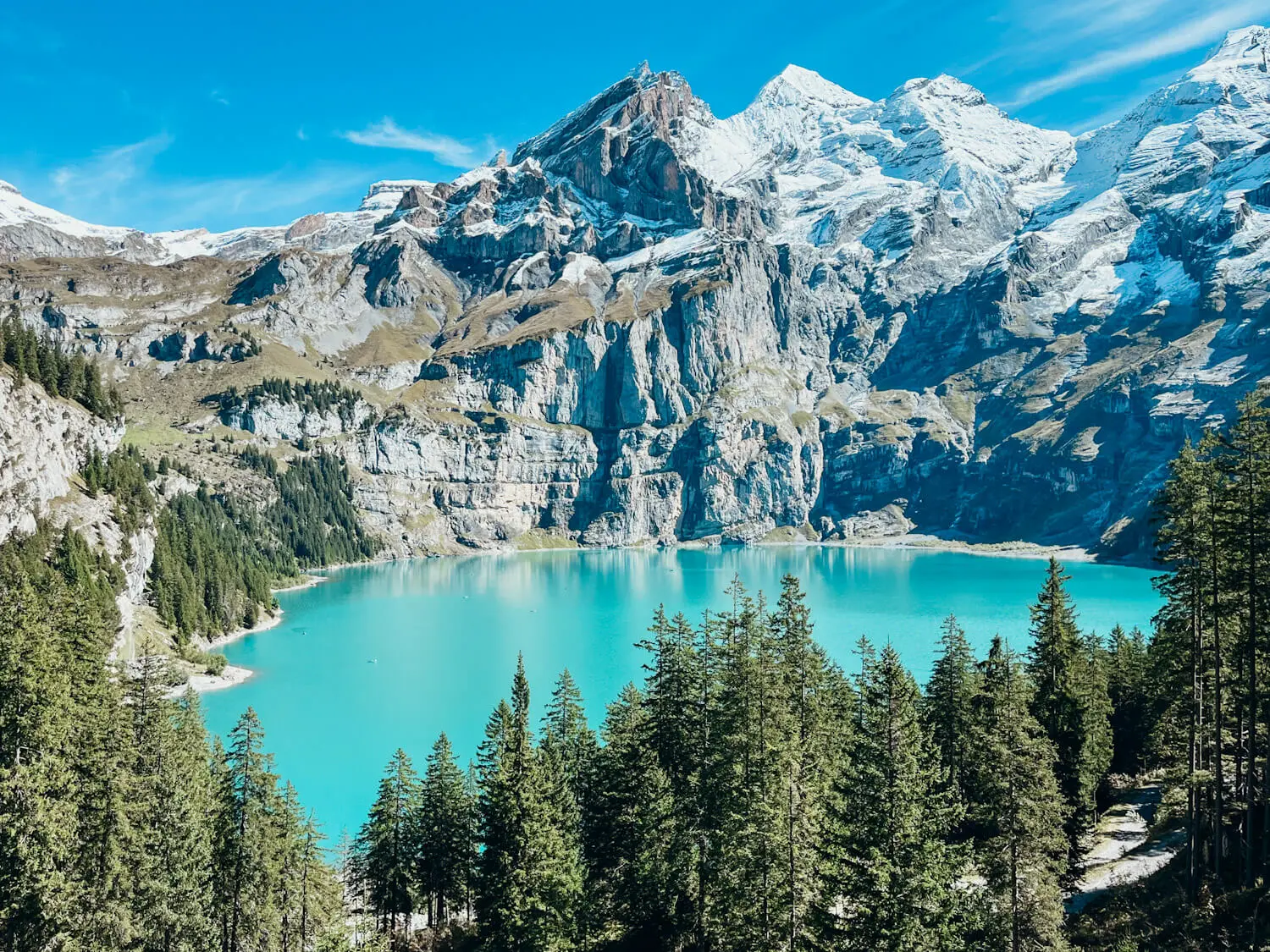
Oeschinensee, Switzerland's most beautiful mountain lake (CHF 36-40 gondola round trip): Deep blue lake at 1,578 metres, backed by cliffs and glacier. Reservation required 20 June to 20 September 2026. Swiss Travel Pass: 50% off. Important: the Berner Oberland Pass is no longer accepted at Oeschinensee since January 2026. Full guide: Oeschinensee: Switzerland's Most Beautiful Mountain Lake.
Food and Culture
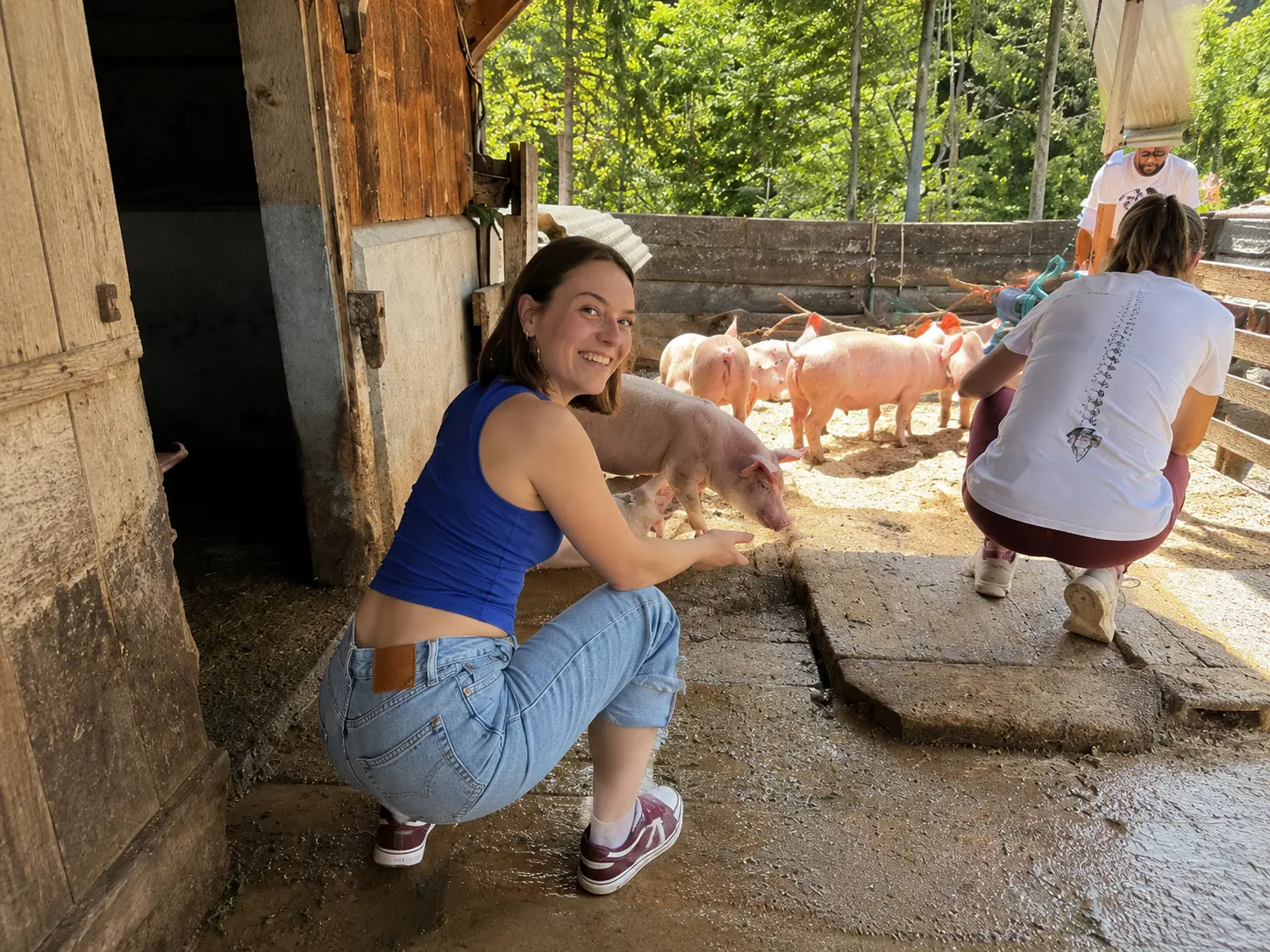
Swiss alpine farm breakfast at Alp Sigriswiler, Justistal (CHF 139): Daniela manages production at 1,400 metres in the valley the tourist maps skip. The farm tour runs at sunrise, with fresh milk, cheese, and bread baked the same morning before the day crowds arrive in the valley. Book the Swiss Alpine Farm Tour.
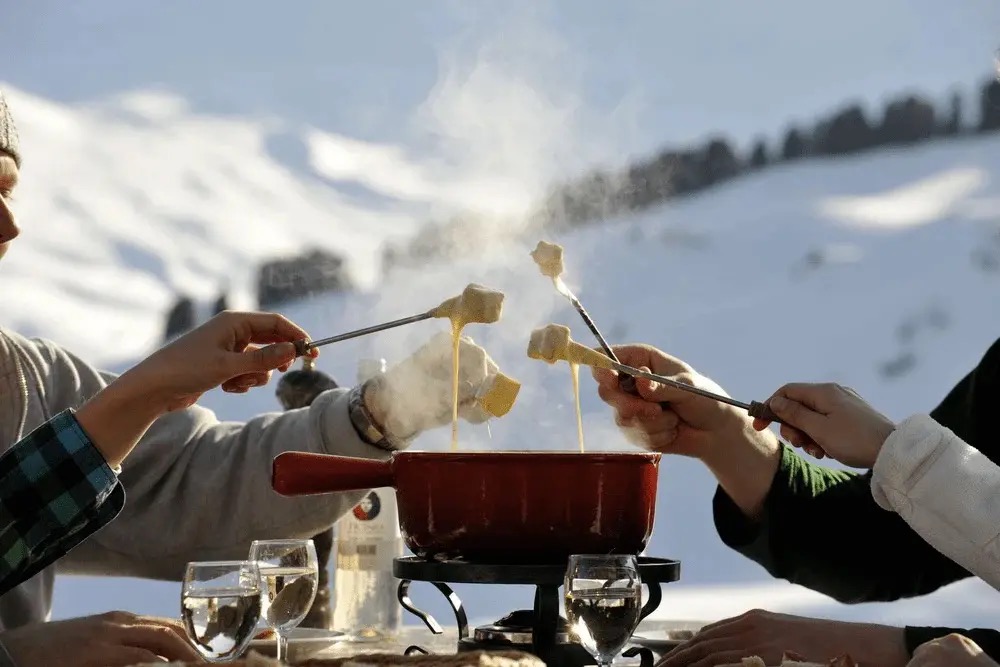
Fondue dinner in Interlaken: The Bernese version uses Gruyère and Vacherin Fribourgeois, melted with white wine and a touch of kirsch. If your bread falls in the pot, tradition says you owe a round of drinks. Order this at least once.
Funky Chocolate Club workshop (CHF 45-65): Hands-on chocolate making in the centre of Interlaken. Better than any boutique tasting and small enough to stay personal.
Spiez wine walk above Lake Thun (free walking, tasting extra): The vineyards above Spiez produce a local Pinot Noir and a Chasselas that very few tourists ever find. An afternoon that costs almost nothing.
Free and Low-Cost
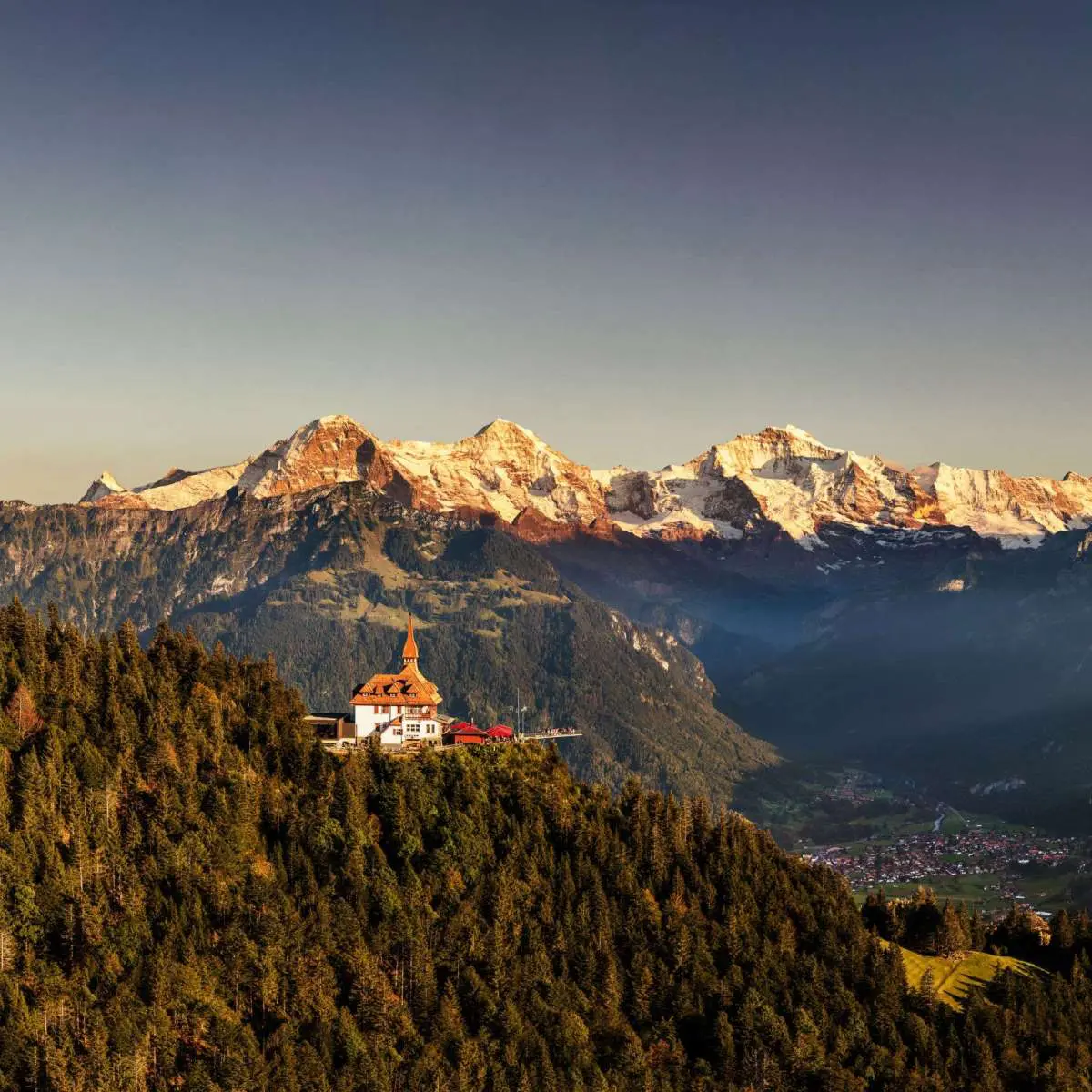
The Höhematte at sunset (free): Sit on the grass. Watch the Jungfrau turn pink, then orange, then white again. The 37 families who signed that 1864 pact gave every visitor this view. It still works.
What Can You Do in Interlaken in Just One Day?
One full day is enough if you move with a plan. Most first-timers waste hours deciding.
The best single day in Interlaken:
6:45 a.m. Bus to Beatenberg for the first paragliding slot
8:30 a.m. Land on the Höhematte. Coffee and a Gipfeli at the nearest bakery
10:00 a.m. Cogwheel to Schynige Platte (first train departs 07:25)
12:30 p.m. Lunch at the alpine restaurant on the summit
2:30 p.m. Return to Interlaken Ost, walk to Bönigen for a swim
6:00 p.m. Fondue dinner. Order Spiez white wine with it
8:30 p.m. Sit on the Höhematte and watch the light leave the Jungfrau
You will sleep well and wake up wanting to extend the trip. That is the point.
Is Interlaken Good for People Who Don't Want Adventure Sports?
Completely. The outdoor activities get the marketing attention, but two lakes, three mountain villages, a railway from 1893, and one of the best cheese and wine regions in Switzerland exist entirely outside the adrenaline economy.
This is the part of the trip that surprises most people. They come expecting a sports resort and find a region with actual culture.
Non-adventurers do well with: lake ferry trips on the BLS, the Schynige Platte botanical garden, the St. Beatus Caves, Lauterbrunnen valley on foot, a fondue evening, a wine walk above Spiez, and the farm breakfast at Alp Sigriswiler. None of these require a harness.
How Many Days Do You Need in Interlaken?
Two days: enough for one big mountain (Schynige Platte or Schilthorn), one adventure (paragliding), and one lake afternoon. You will leave wanting more. This is the bare minimum.
Three to four days: the right amount for first-timers. Add Lauterbrunnen valley, an evening in Grindelwald, Iseltwald and Bachalpsee, and at least one proper cheese dinner. Three days feels complete. Four days feels luxurious.
Five to seven days: the right investment if you mix adventure, day trips, and a full rest day. Lucerne is 1 hour by train. Zermatt is 2.5 hours. Bern is 55 minutes. Interlaken as a base covers the entire Swiss Alps without a car.
What Are the Free Things to Do in Interlaken?
Several of the best experiences cost nothing:
Walking the Höhematte at sunset
Lauterbrunnen valley floor (72 waterfalls, no entry fee)
Augstmatthorn ridge hike from Habkern
Justistal valley above Beatenberg
Swimming at Bönigen (Lake Brienz village beach)
Spiez wine walk above Lake Thun
Watching the ferry arrive in any lakeside village on the BLS line
The Swiss Travel Pass covers trains, BLS lake ferries, and gives 50% off most cable cars. If you have the pass, the effective cost of a mountain day drops significantly.
What Day Trips Can You Do from Interlaken?
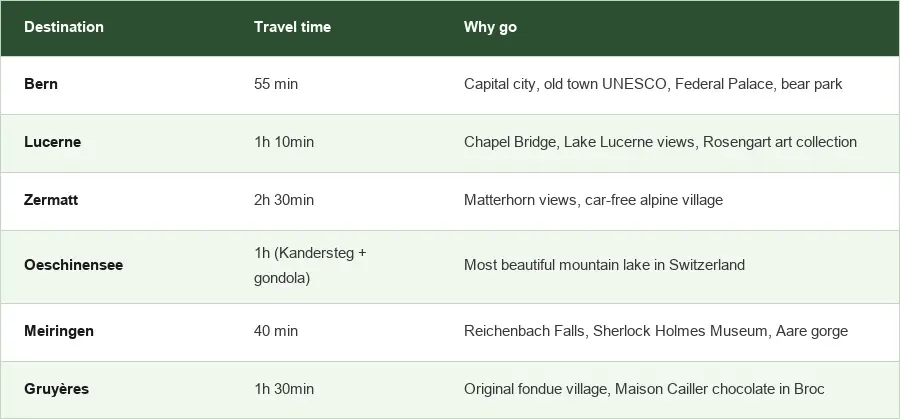
Interlaken is a genuine hub. These are the best day trips, all reachable by train:
See the full best day trips from Interlaken 2026 for detailed logistics.
💡 Insider Tip from Pierre If you have only one full day, do this. Wake up early, take the cogwheel to Schynige Platte at 7:25 a.m. when the first train runs. Walk the panorama loop for two hours, eat at the alpine restaurant. Come back down by noon. Spend the afternoon paragliding from Beatenberg. End on the Höhematte with a fondue and a glass of Spiez white wine. You will sleep like a stone and wake up wanting to come back.
Is Jungfraujoch Worth It?
On a clear day, yes. At CHF 210-230 for the round trip (less with the Swiss Travel Pass), it is expensive. But the views from 3,454 metres over the Aletsch glacier are singular.
On an overcast day: skip it. Redirect to Grindelwald-First or Schynige Platte. Check the summit webcam the evening before. Blue sky on the summit: go. Cloud cover: save the money.
The train ride itself, through the tunnel carved inside the Eiger, justifies part of the cost regardless of the summit view.
The Two Lakes That Started All of This
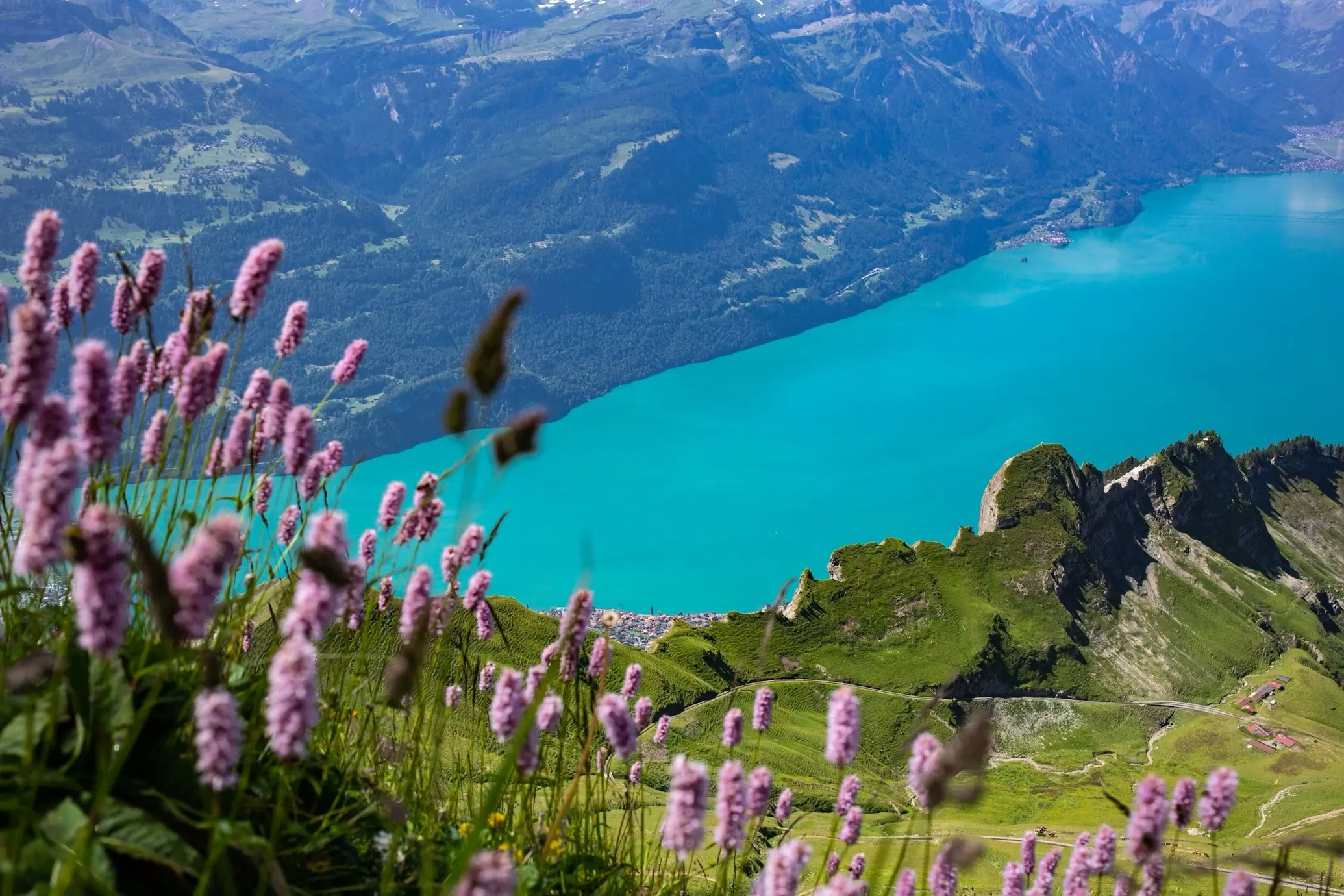
Lake Thun and Lake Brienz are not the same lake. Treat them as two separate decisions.
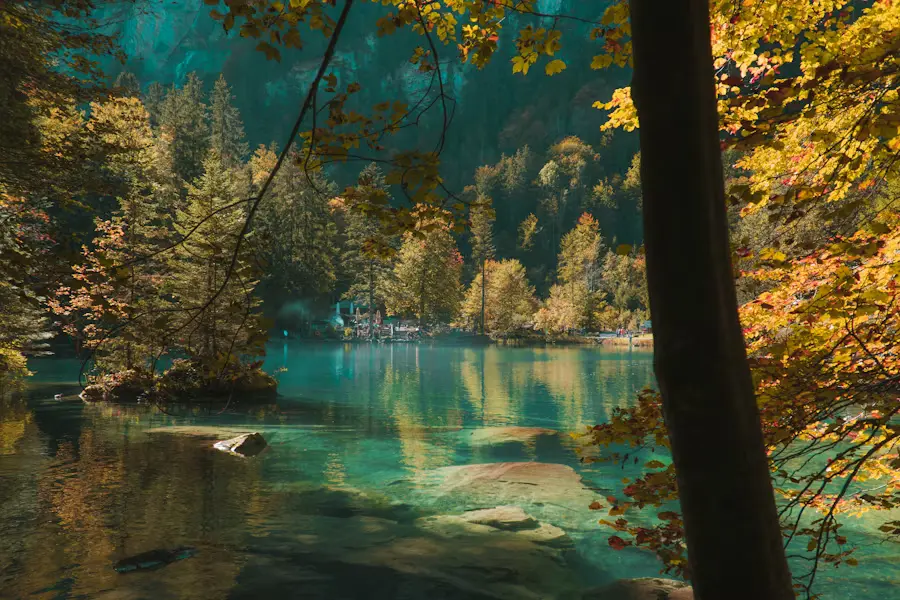
Lake Thun is wider, calmer, more inhabited. Castles line its shoreline: Spiez, Oberhofen, Thun. The BLS ferries loop between villages on a schedule you can build a day around. The water turns mineral-blue in morning light and gold at 7 p.m. This is the lake for slow travel: vineyard walks above Spiez, a boat picnic, a swim off a wooden pier in a village where nobody is rushing.
Lake Brienz runs colder and more emerald. Less developed. Glacier melt keeps the color almost artificial-looking all summer. Iseltwald sits at its western shore, made internationally famous overnight by a Korean drama. The Giessbach Falls drop fourteen times into the lake's eastern edge. The village of Brienz itself is known for hand-carved wooden objects, a craft that survives in actual workshops you can visit.
Clear skies: start on Brienz for the color. Overcast: Thun's castle country needs less light.
For the full breakdown of swimming spots, ferry routes, and hidden coves, see all the lakes around Interlaken.
The Three Mountains That Define the Skyline
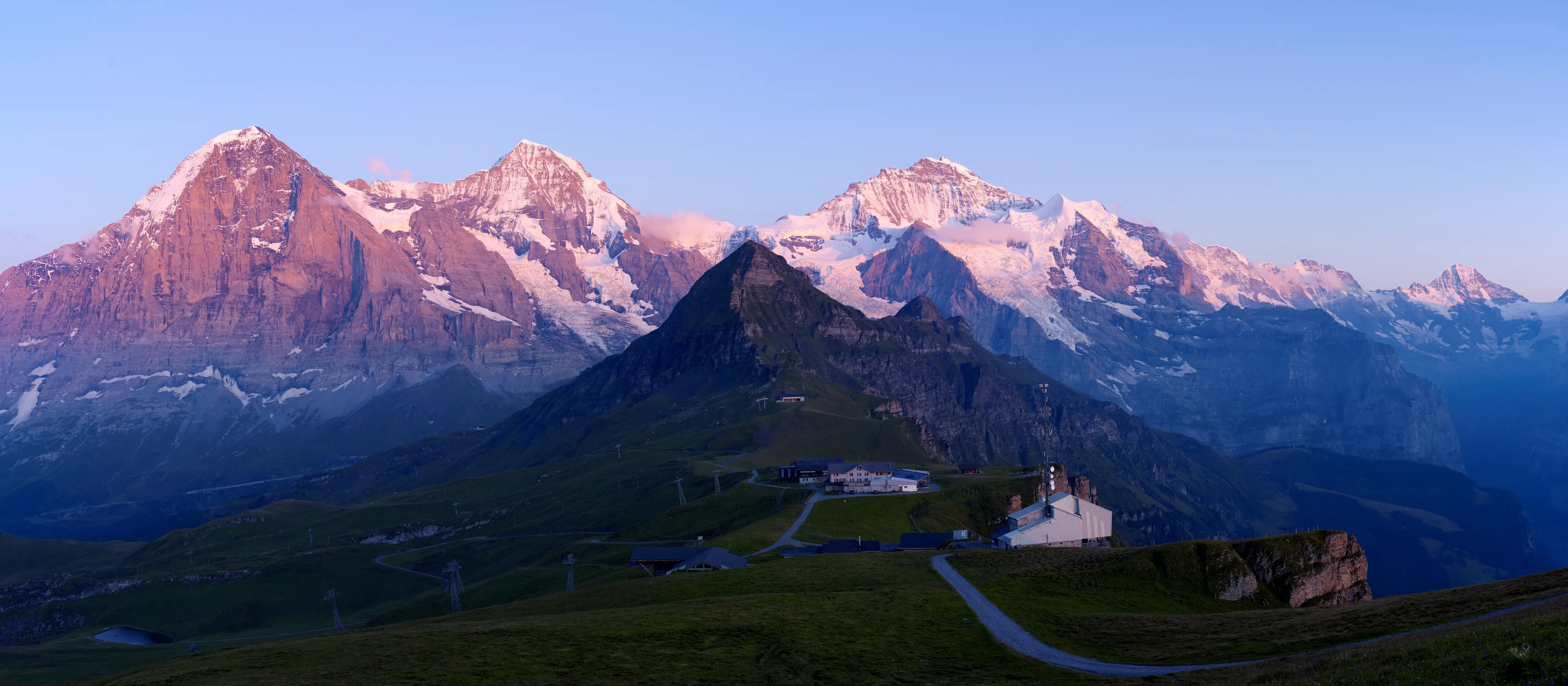
Stand on the Höhematte and look south. Three peaks fill the view.
The Eiger (3,967 m) stands on the left, a dark wall. Its north face is one of the most famous and dangerous in mountaineering history. Thirteen expeditions failed before the first ascent in 1938. You do not need to climb it. Looking at it does most of the work.
The Mönch (4,107 m) sits in the middle. Mönch means monk. The story: the monk stands between the Eiger (ogre) and the Jungfrau (maiden) to protect her. Swiss alpine folklore is older than alpinism itself.
The Jungfrau (4,158 m) rises on the right. One of four UNESCO World Heritage peaks in the Jungfrau-Aletsch region. The symbol of the Bernese Oberland. Eleven months of the year, snow covers the summit.
Where Do Locals Actually Go in Interlaken?
The overcrowded version of Interlaken exists in one square kilometer around Höheweg. Step outside it and the region changes completely.
The places guides mention to each other over a beer:
Justistal above Beatenberg: a high pasture where traditional alpine farming still runs unchanged. No signage. No tourist infrastructure. Cows with bells, hay, a working alp.
Bachalpsee at sunrise: 45 minutes from the cable car at Grindelwald-First. Most groups sleep through the window when the lake sits perfectly still.
Augstmatthorn ridge: a trail that runs along a narrow cliff with drop views that belong in a film. Not hidden, but not marketed.
Spiez on a Tuesday morning: the market, the castle courtyard, the wine cooperative tasting room. Empty of organized tour groups before noon.
Bönigen beach: the village 2 km from Interlaken Ost. Locals swim here. The tourist maps mark the main beach in town. This one is better.
What Does Interlaken Cost? A Realistic Budget
This is Switzerland. Budget accordingly.
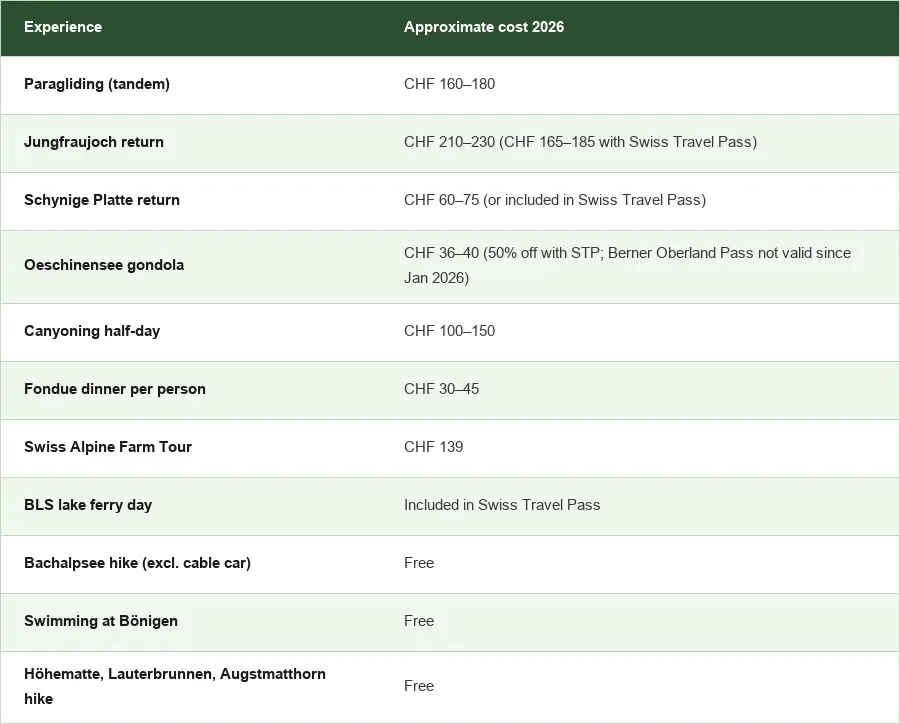
The Swiss Travel Pass pays for itself if you plan three or more train or cable car days in the Bernese Oberland.
Where to Stay and How to Get Around
For base options: Interlaken covers every price point, from dorms to four-star hotels on the Höheweg. Quieter alternatives are Wilderswil (5 minutes by train, cheaper, local feel), Bönigen (on Lake Brienz, walkable to the beach), and Beatenberg (altitude views over both lakes, one bus connection). For splurging: Mürren and Wengen sit car-free on the cliffs above Lauterbrunnen, accessible only by cable car or mountain train.
You do not need a car. The BLS trains run on time. The lake ferries run on time. The bus to Beatenberg runs on time. This is Switzerland, and the public transport is the infrastructure that makes the region function. A visitor with a Swiss Travel Pass has access to more of the Bernese Oberland than most car owners.
Your Questions About Things to Do in Interlaken
What is Interlaken best known for?
Interlaken is best known as Switzerland's adventure capital and the gateway to the Jungfrau region. Paragliding, skydiving, canyoning, and the railway to the highest station in Europe (Jungfraujoch, 3,454 m) put it on international bucket lists. The two lakes and three alpine peaks surrounding the town complete the picture.
Is Interlaken worth visiting?
Yes. Visitors who arrive skeptical and leave converted are common. The town center is unremarkable. The surrounding region, lakes, mountain villages, alpine farms, and glacier views, is what justifies the trip. Most people who said "I wasn't too excited to go at first" describe it as "honestly one of the best experiences" after the fact.
How many days do you need in Interlaken?
Two days is the minimum to see one mountain and one lake properly. Three to four days covers the essentials without rushing. Five to seven days works well for people using Interlaken as a base for day trips across the Swiss Alps.
What is the best time to visit Interlaken?
June to September for adventure activities, hiking, and lake swimming. July and August are peak months: more expensive, more crowded, but all activities operating. June and September offer better rates and fewer people. Winter (December to March) works for skiing above Grindelwald and Mürren, and for snowshoeing the Lauterbrunnen valley.
Is Interlaken expensive?
Yes. Switzerland is among the most expensive countries in Europe. Budget CHF 100-150 per day for accommodation at the hostel or budget hotel level, plus CHF 50-80 for food. A full mountain day adds CHF 60-150 depending on the destination. The Swiss Travel Pass reduces transport costs if you plan multiple rail or gondola days.
What are free things to do in Interlaken?
The Höhematte at sunset. Lauterbrunnen valley (72 waterfalls, no entry). Augstmatthorn ridge hike from Habkern. Justistal valley above Beatenberg. Swimming at Bönigen on Lake Brienz. Walking the Spiez wine trail above Lake Thun. BLS lake ferries are included in the Swiss Travel Pass.
Is Interlaken good for non-adventurers?
Completely. Lake ferry trips, the Schynige Platte botanical garden, St. Beatus Caves, Lauterbrunnen valley on foot, fondue evenings, vineyard walks above Spiez, and the alpine farm breakfast at Alp Sigriswiler all work without a harness. The adventure sports represent one part of what the region offers.
What to do in Interlaken in one day?
Paraglide from Beatenberg in the morning (first slot, 6:45 a.m.). Take the cogwheel to Schynige Platte after landing. Lunch at the summit restaurant. Swim at Bönigen in the afternoon. Fondue dinner in town, with a glass of Spiez Chasselas. Sit on the Höhematte at sunset.
What day trips can you do from Interlaken?
The strongest day trips by train: Bern (55 min), Lucerne (1h 10min), Zermatt (2h 30min), Oeschinensee via Kandersteg (1h), Gruyères (1h 30min). No car required for any of them. See the best day trips from Interlaken for detailed logistics.
Is Jungfraujoch worth it from Interlaken?
On a clear day, yes. At CHF 210-230 for the round trip, it is expensive, but the views from 3,454 metres over the Aletsch glacier are singular. On an overcast day, skip it and redirect to Grindelwald-First or Schynige Platte. Check the summit webcam the night before.
Do you need a car in Interlaken?
No. The train, bus, and ferry network covers every significant destination in the Bernese Oberland. A Swiss Travel Pass or point-to-point tickets cover everything.
Where do locals hang out in Interlaken?
Outside the one square kilometer of Höheweg shops. Justistal above Beatenberg. Bönigen beach on Lake Brienz. Spiez market and wine cooperative on a weekday morning. Bachalpsee before 8 a.m. The Höhematte on a Sunday evening when the paragliders are still landing and the light is going off the Jungfrau.
Ready to Plan Your Interlaken Trip Like a Local?
Most visitors plan from a list. A few plan from a conversation with someone who knows the region the way a guide knows it: which gondola has the better angle this time of year, which lake is calmer at dawn, which farm serves breakfast before the other tourists wake up.
If you want to build an Interlaken trip that actually fits your time and interests, reach out directly.
WhatsApp Pierre: +41 76 721 14 43.
Or book the Swiss Alpine Farm Tour to start with the experience most first-timers tell me they wish they had done on day one.
For the full season calendar, see the summer activities guide. For honest assessments of every activity, see the outdoor adventures ranking.
*Written by Pierre Vetsch, founder and head guide at Swiss Local Adventures
Source:
on-site guided tours in the Bernese Oberland, 2026.
Tags
#things-to-do-interlaken#interlaken#bernese-oberland#jungfrau-region#swiss-alps#switzerland-travel#lake-thun#lake-brienz#swiss-travel-guide
Sources & References
Share this article
Similar Articles
Continue your reading with these related articles
Interlaken
6/8/2026
8 min
1091
Oeschinensee: Switzerland's Most Beautiful Mountain Lake
Discover Oeschinensee near Kandersteg: how to get there from Interlaken, the science behind the turquoise water, swimming, hiking, and the best time to visit.
oeschinenseekanderstegswiss-alps
By Pierre, Swiss Local AdventuresRead More
Interlaken
6/3/2026
4 min
974
Summer in Interlaken: 14 Things Locals Do
The official tourist guide is fine. This is what locals in Interlaken actually do in summer, from sunrise hikes to lake-side dinners and hidden swim spots.
summer-interlakenthings-to-do-interlakeninterlaken
By Olivia, Swiss Local AdventuresRead More
Interlaken
5/28/2026
6 min
1463
Best Outdoor Adventures in Interlaken (Local Guide)
A local ranks every adventure in Interlaken, from paragliding to base jumping. What's worth the price, what to skip, and the underrated experiences locals love.
outdoor-adventuresinterlakenswiss-alps
By Timoté, Swiss Local AdventuresRead More