Interlaken
Oeschinensee: el lago de montaña más bello de Suiza
P
Pierre, Swiss Local Adventures
Autor
8 de junio de 2026
8 min
El Oeschinensee no es solo un lago. Esta es la razón de su aspecto.
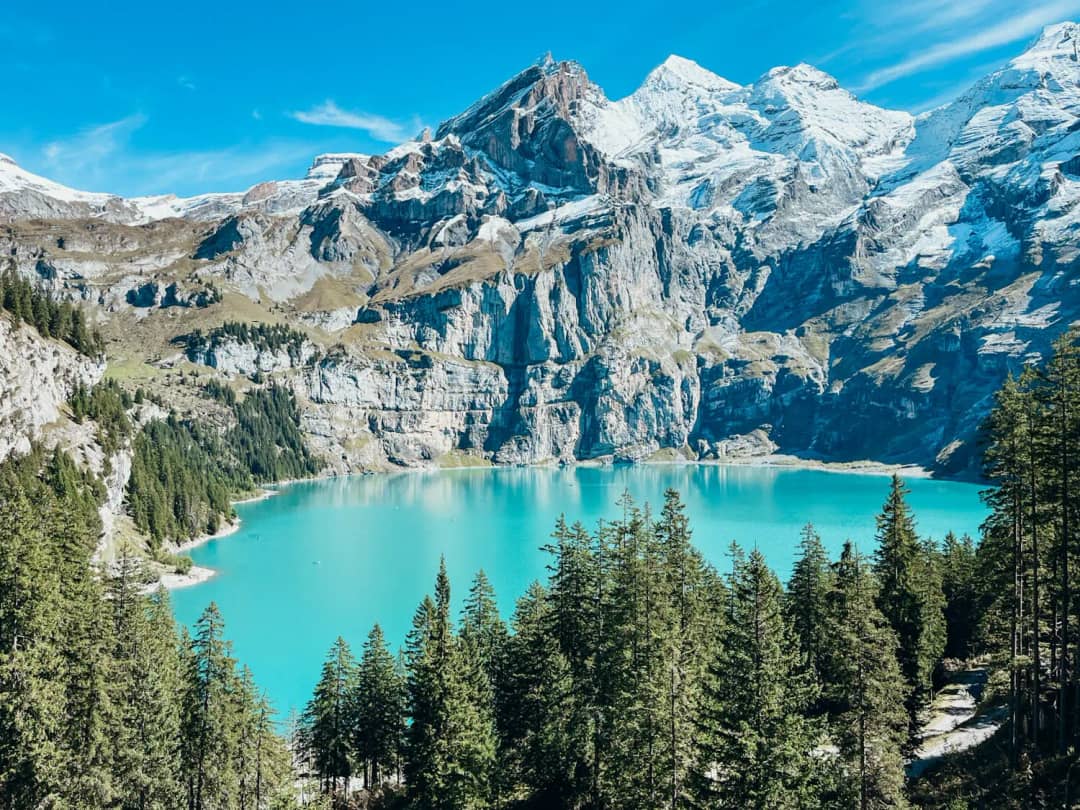
Lo ve antes de esperarlo. La góndola deja atrás la última mancha de coníferas oscuras y, de golpe, no hay nada entre usted y una pared de roca tan alta que parece inclinarse hacia usted. Entonces baja la mirada. Bajo el acantilado, bajo el prado alpino, bajo los chalés de madera dispersos, aparece el lago. No azul. Tampoco del todo verde. Algo intermedio que su cerebro tarda un momento en clasificar, un color que parece intencionado, como si alguien hubiera mezclado la cantidad justa de pigmento en un cuenco natural enorme y luego lo hubiera dejado ahí para que lo descubrieran.
Esta es su primera vista del Oeschinensee. Un lago que le hace dejar de hablar.
Los viajeros que llegan a este rincón del Oberland bernés suelen describir el momento de la llegada igual: inesperado, aun habiéndolo esperado todo. Ha visto las fotos. Sabe que es bonito. Y aun así, la escala y el color le pillan a contrapié. Las paredes que rodean la cuenca se elevan más de 1000 metros sobre la superficie del agua. En las mañanas tranquilas el agua está casi inmóvil. El silencio es completo salvo por el ruido de cascadas lejanas que caen por las paredes en finos hilos blancos.
Entre los lagos de Suiza, el Oeschinensee está en una categoría propia. Elegido una y otra vez el lago de montaña más bello del país, este es un sitio que se gana ese título cada día.
Por qué el agua tiene ese color
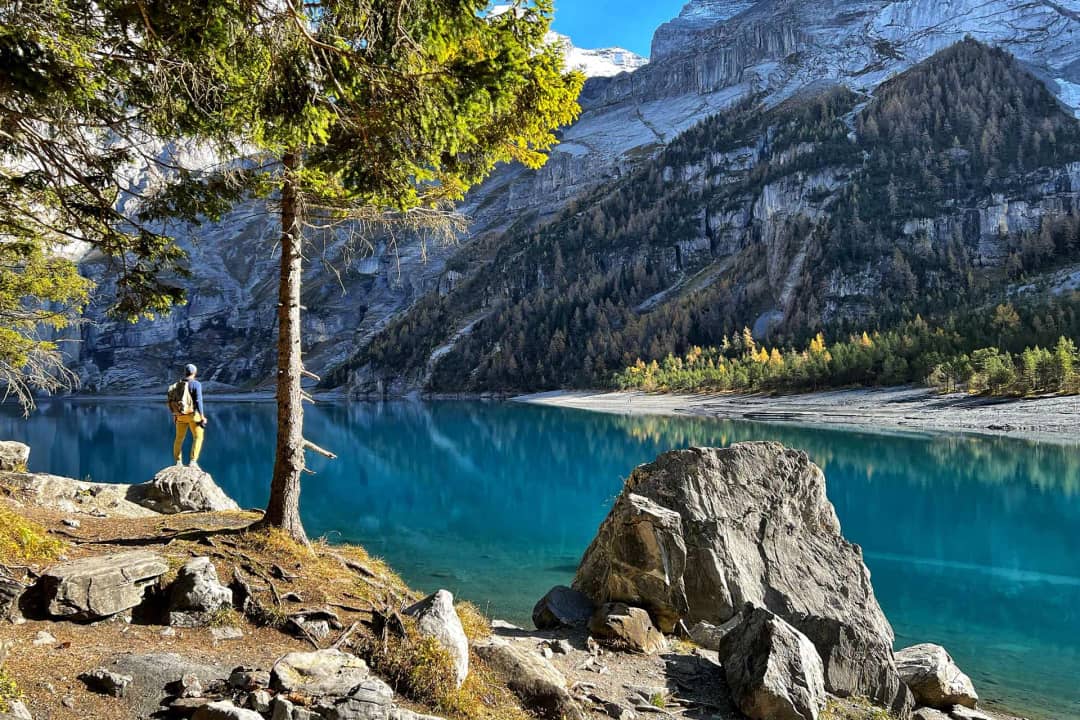
Casi todo el mundo que ve el Oeschinensee por primera vez da por hecho que el turquesa es un efecto de la luz o el reflejo del cielo. Yo pensé lo mismo la primera vez. No lo es. La respuesta está dentro del propio agua, y entenderla hace la experiencia más viva, no menos.
El lago está a 1578 metros sobre el nivel del mar y se alimenta sobre todo del deshielo y del agua glaciar de las cumbres que lo dominan. Cuando el hielo y la nieve raspan lentamente la caliza y la roca cristalina del fondo, pulverizan la piedra hasta convertirla en un polvo finísimo llamado harina glaciar. Estas partículas, de unos pocos micrómetros cada una, quedan en suspensión en toda la columna de agua en lugar de hundirse. Cuando la luz del sol entra en el lago y choca con ellas, dispersan las longitudes de onda cortas, los azules y los verdes, y absorben las largas, los rojos y los naranjas. Lo que usted ve desde la orilla o desde la góndola es el resultado de millones de choques diminutos entre la luz y el polvo de roca: un color que vive entre el jade y el glaciar, y que cambia con el ángulo del sol y con la profundidad bajo sus pies.
En una mañana tranquila de principios de julio, cuando el deshielo está en su punto más alto y el agua va cargada de harina glaciar fresca, el color alcanza su máxima intensidad. A finales de septiembre, cuando el agua de deshielo baja, el lago se aclara un poco y se vuelve de un azul más profundo. Las dos versiones merecen la pena. Es el mismo lago con distinto humor.
Un apunte honesto: el color depende de la luz del sol. Los días nublados, el lago se vuelve de un gris azulado discreto en lugar del turquesa vivo de casi todas las fotos de internet. Si el cielo está cargado cuando llegue, el viaje sigue mereciendo la pena, pero será distinto de lo que ha visto en Instagram.
Un lago que tardó milenios en formarse
Los glaciares excavaron el valle durante la última glaciación y, cuando el hielo se retiró hace milenios, quedaron las paredes y las crestas del macizo del Blüemlisalp. Pero el Oeschinensee es más joven que el valle en el que está. Hace unos 3200 años, una serie de desprendimientos enormes se desgajó del flanco norte del Doldenhorn, sobre Kandersteg, y liberó escombros con un volumen total de más de 100 millones de metros cúbicos. Ese material formó una presa natural en el fondo del valle y el lago se llenó detrás. La presa sigue siendo permeable, y por eso el lago no tiene salida superficial visible: el agua se filtra despacio a través de la roca hacia los manantiales que alimentan el valle de abajo.
Las paredes que lo rodean, que superan los 3600 metros en el Blüemlisalphorn, funcionan como una cuenca de recogida permanente de precipitación y deshielo.
El paisaje que rodea el Oeschinensee, junto con la región de la Jungfrau que empieza justo al otro lado de la cresta hacia el este, forma parte del sitio del Patrimonio Mundial de la UNESCO Alpes suizos Jungfrau-Aletsch, una de las mayores regiones glaciares de los Alpes. La UNESCO reconoció este territorio en 2001, y una ampliación en 2007 extendió la zona protegida más al oeste, hacia Kandersteg. Lo que la UNESCO protege aquí no es solo el paisaje. Es uno de los registros científicamente más importantes de la glaciación alpina en la Tierra, un paisaje moldeado por fuerzas que empezaron antes de la historia humana y que siguen trabajando hoy, aunque más despacio.
Para el pueblo de Kandersteg, al pie del valle, el Oeschinensee siempre ha sido el hecho que ordena la vida: el hito que puso el pueblo en los mapas, la fuente de agua que alimentó la agricultura, la pared de roca que decidió qué rutas hacia la montaña eran posibles y cuáles no.
Cómo llegar desde Interlaken
El Oeschinensee está sobre Kandersteg, a unos 45 a 60 minutos de Interlaken según cómo enlace.
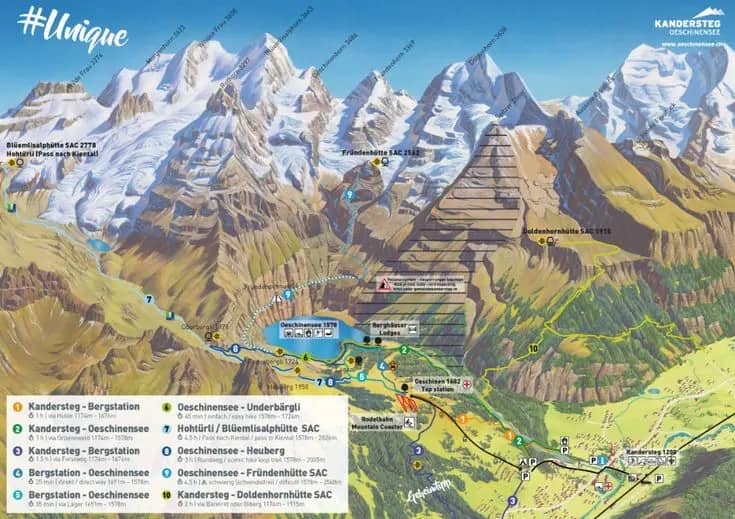
La ruta más directa es en tren. Tanto Interlaken West como Interlaken Ost tienen servicios regulares hacia Spiez, donde se cambia a la línea del Lötschberg en dirección sur hacia Kandersteg. El viaje hasta Kandersteg dura unos 45 minutos en total y atraviesa algunos de los mejores paisajes de valle del Oberland bernés, con el río Kander a la vista casi todo el camino y las montañas cerrándose a su alrededor a medida que el valle se estrecha.
Desde la estación de Kandersteg, la góndola al Oeschinensee funciona todo el año. El trayecto dura seis minutos y le ahorra unos 500 metros de desnivel. De la estación de tren a la de la góndola hay diez minutos a pie. Si prefiere subir andando, un sendero señalizado desde el pueblo gana el mismo desnivel en unos 45 minutos, por bosque y luego por prado abierto, con las paredes apareciendo poco a poco por encima de los árboles.
Desde la estación superior de la góndola son cinco minutos llanos por un camino de grava hasta la orilla. El lago aparece a la derecha cuando el camino gira la última curva, y ese es el momento en que se hacen casi todas las fotos. Permítase parar. Se lo merece.
Las familias con niños pequeños encontrarán fácil y manejable el camino llano desde la estación superior hasta el lago. La zona de baño de la orilla norte y las barcas de remos funcionan bien con niños. Lleve zapatillas de caminar o botas ligeras, el camino de la orilla sur es pedregoso en algunos tramos. Las sandalias valen en el propio lago, pero hacen incómoda la vuelta completa.
El Swiss Travel Pass cubre el tren hasta Kandersteg; la góndola aplica un 50% de descuento a quien tenga Swiss Travel Pass.
Aviso: el Berner Oberland Pass ya no se acepta en la góndola del Oeschinensee desde 2026.
Del 20 de junio al 20 de septiembre, los billetes de la góndola deben reservarse por adelantado en oeschinensee.skiperformance.com; las franjas horarias se llenan rápido los fines de semana y a media mañana suele ser imposible comprar en taquilla. Reserve la noche anterior como muy tarde. La góndola cuesta CHF 36 ida y vuelta en temporada media (de mayo al 14 de junio y del 22 de septiembre al 8 de noviembre) y CHF 40 en plena temporada alta (del 15 de junio al 21 de septiembre).
Si viene desde Interlaken dentro de un día más largo por el Oberland bernés, juntar una mañana en el pueblo de Kandersteg con una tarde en el lago da un ritmo generoso en lugar de apresurado.
Qué hacer en el lago
Bañarse. La temperatura del agua del Oeschinensee se mantiene fría casi toda la temporada, normalmente entre 15 y 19 grados Celsius en superficie durante las semanas más cálidas del verano. Esto no es el baño tibio de un río de llanura. Esto es frío limpio, frío de glaciar, un frío que atraviesa la piel y convierte su respiración en algo más lento y más consciente. Casi todo el mundo suelta un grito ahogado la primera vez. Y casi todo el mundo se alegra de haberlo hecho. La primera vez que traje a un grupo aquí, un tipo de Texas se quedó al borde del embarcadero, miró el agua, miró las paredes y no dijo una palabra durante dos minutos enteros. Nadie le interrumpió. Ese silencio dice más del Oeschinensee que cualquier cosa que yo pueda contarle antes. La transparencia del agua sorprende: ve las piedras del fondo a tres metros de profundidad sin esfuerzo, cada una nítida, como si el agua no estuviera. Hay una pequeña zona de baño en la orilla norte, junto al restaurante, con hierba para tumbarse y un embarcadero de madera. Venga por la mañana si quiere el lago para usted.
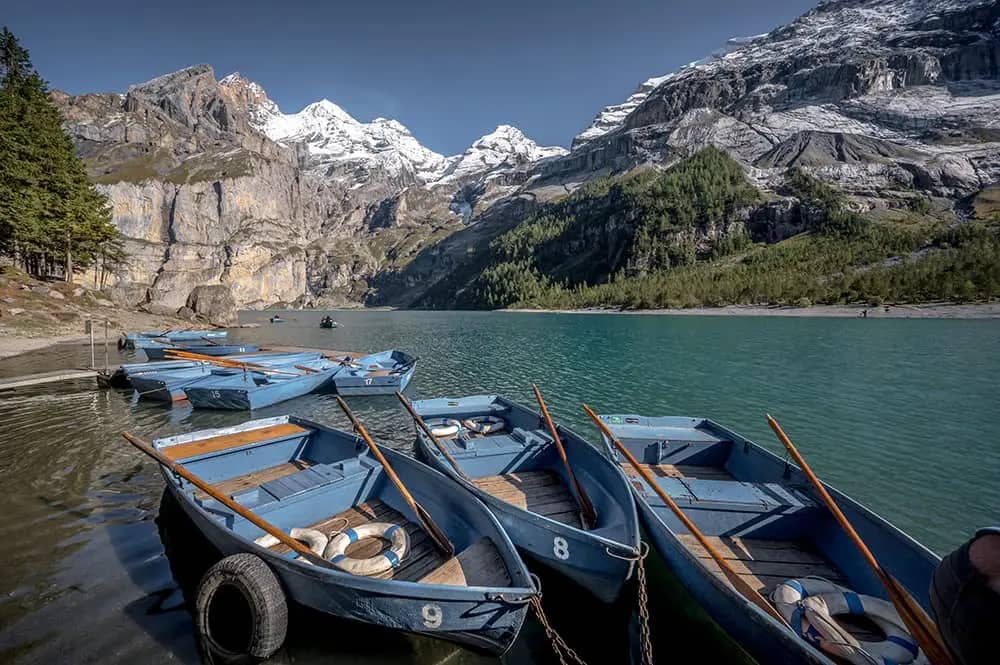
Barcas de remos. Se alquilan barcas de madera en la orilla desde finales de primavera hasta principios de otoño. Una barca para dos o tres personas se alquila por horas y se puede cruzar hasta la orilla opuesta, donde las paredes caen directamente al agua y la escala de la roca se vuelve física de un modo que desde la orilla no se percibe. Desde el agua, mirando hacia la estación de la góndola, se ve toda la cuenca del lago de una vez, y el silencio que se junta entre la roca y la superficie es distinto de cualquier otro silencio de la región.
La vuelta al lago. Un camino bien señalizado rodea el lago en aproximadamente 1.5 horas a paso tranquilo. La orilla norte es más abierta, con vistas de prado hacia las paredes. La orilla sur va más pegada al agua, entre vegetación más densa, con tramos donde puede tocar la superficie desde el camino. El fondo del lago, enfrente de la góndola, es la parte más silenciosa. Poca gente da la vuelta completa, así que la orilla sur suele estar vacía incluso cuando la norte está concurrida.
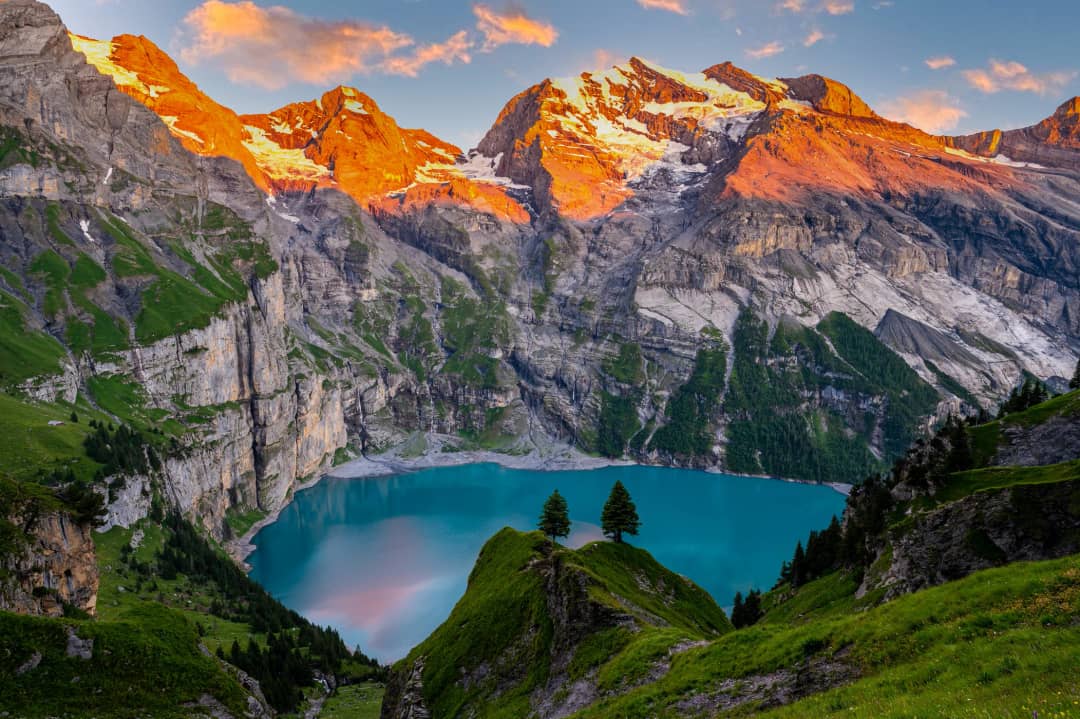
La subida a la cabaña Blüemlisalp. Para quien quiera subir más, un sendero señalizado continúa desde el extremo este del lago por una serie de zetas empinadas hasta la cabaña Blüemlisalp, a 2834 metros. Esta subida lleva de 2.5 a 3 horas desde el lago e implica un desnivel importante por terreno alpino áspero. La recompensa es la vista del Oeschinensee desde arriba, con todo el sistema de paredes desplegado a sus pies y el lago reducido a una joya turquesa engastada en caliza gris. La cabaña sirve comida y bebida y tiene dormitorio común para quien quiera despertarse en altura y ver el amanecer sobre las cumbres. A principios de temporada, antes de que se derritan los neveros, hacen falta crampones.
La vía ferrata del Oeschinensee. Una vía equipada recorre un tramo de las paredes sobre la orilla norte. Exige arnés y casco, y es apta para caminantes en forma con cierta tolerancia a la altura, aunque no tengan experiencia de escalada. En Kandersteg se alquila el material.
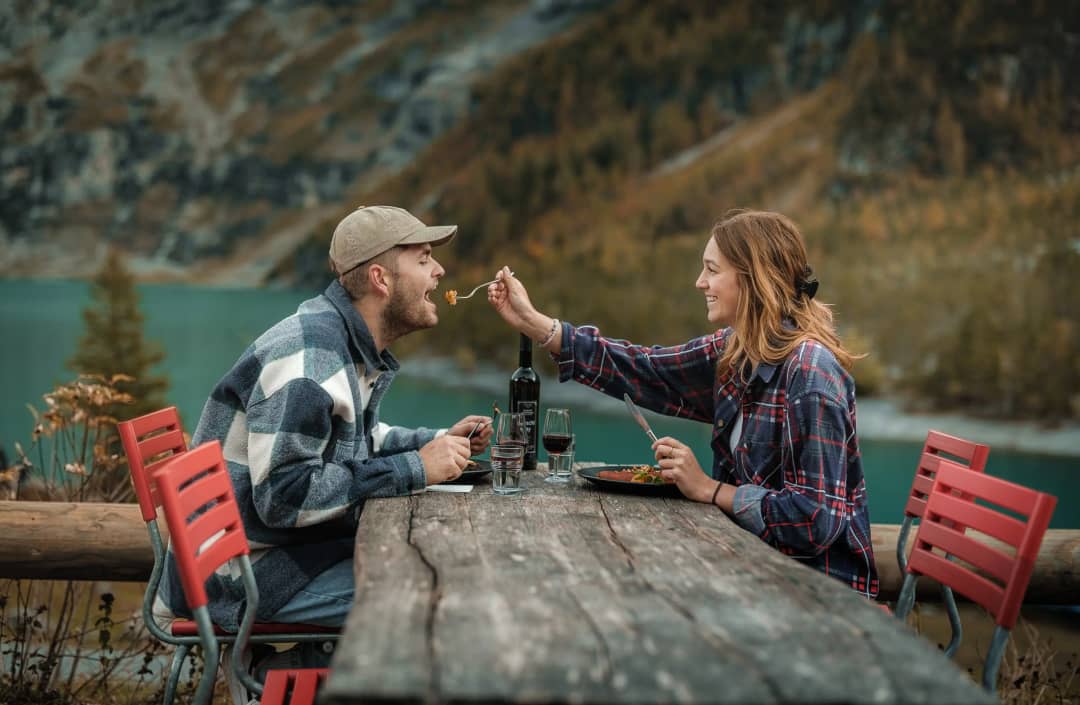
Comer en el lago
El Restaurante Oeschinensee, construido en estilo chalé tradicional y situado justo a la orilla, da de comer a los visitantes desde el siglo 19. La carta es alpina suiza: rösti, fondue de queso, bratwurst, sopa. La terraza mira directamente al lago y a las paredes, de modo que casi todo el mundo pasa tanto tiempo mirando hacia arriba como comiendo. El servicio es eficiente en las horas punta y más tranquilo en temporada media. El restaurante es la única opción de comida en el lago, así que si planea un día completo, organícese en torno a él o lleve su propio almuerzo.
El agua del grifo de aquí, y de cualquier punto de Kandersteg, es agua de manantial de montaña. Potable, fría y limpia. Llene una botella antes de subir y no necesitará comprar agua en el lago.
Un detalle que conviene saber antes de subir: el Restaurante Oeschinensee acepta solo efectivo, francos suizos o euros. Las tarjetas no se aceptan en el lago.
Calcule unos CHF 60-80 por persona para un día completo: góndola ida y vuelta (CHF 36-40), comida en el restaurante (CHF 20-30) y alquiler de barca si le apetece (CHF 20-25/hora).
Mejor época para ir
Primavera (mayo, principios de junio): el deshielo está en su momento más espectacular, las cascadas caen por cada pliegue de la roca y las flores del camino desde la góndola están en su mejor momento. El lago alcanza su turquesa más intenso en las semanas de mayor deshielo. Una visita a primera hora a finales de mayo puede darle la sensación de tener el lago para usted solo. Las temperaturas son frescas; lleve una capa para la mañana.
Julio y agosto: temporada alta. El lago está más lleno entre las 10 de la mañana y las 3 de la tarde, cuando llegan en los trenes del mediodía los excursionistas de Interlaken y Berna. Las condiciones de baño son las mejores. Las barcas funcionan a pleno rendimiento. Familias, parejas, grupos escolares, senderistas y fotógrafos comparten el mismo camino de orilla. Si llega antes de las 9 de la mañana o después de las 4 de la tarde, la gente se reduce bastante.
Septiembre: por consenso local, el mejor mes. La luz se suaviza. Los alerces de las laderas empiezan a amarillear y, a finales de septiembre, las paredes se llenan de color de otoño sobre la caliza gris. El aire es más nítido y los reflejos en el agua, más limpios. El número de visitantes cae más o menos a la mitad respecto a agosto. El restaurante cierra antes, así que organícese.
Octubre: la góndola tiene horario reducido y algunas instalaciones cierran por temporada. El lago está frío, la luz es baja y las paredes están muy calladas. Para fotógrafos y para quien busque soledad, este es el mes.
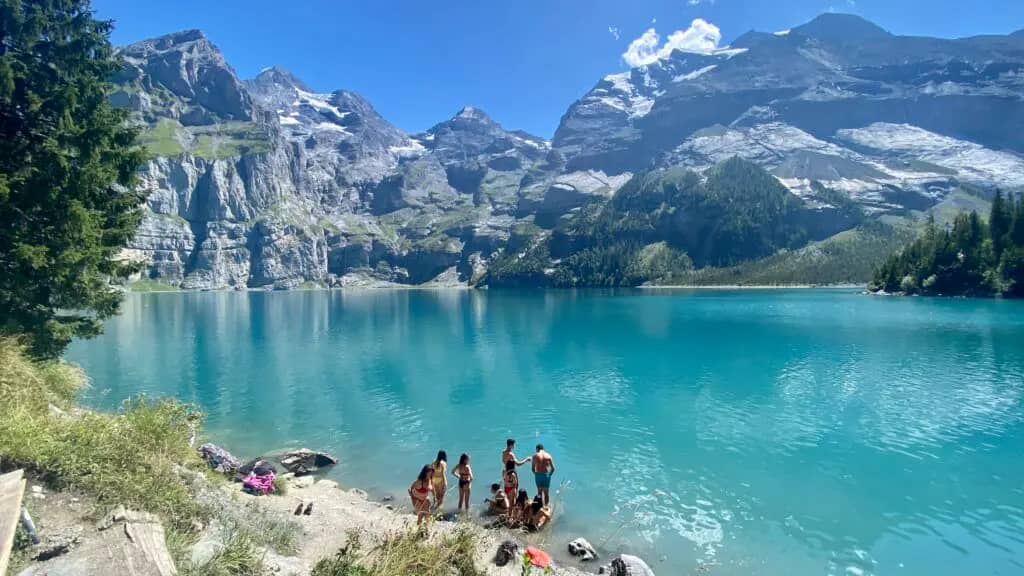
¿Se puede nadar en el Oeschinensee?
Sí. Bañarse está permitido y muy recomendado. No hay socorrista, algo habitual en los lagos de montaña suizos. La profundidad cae rápido hacia el centro del lago, así que quien nade poco debería quedarse cerca de la orilla norte, más somera. El agua es limpia y segura. El choque térmico es real y conviene prepararse: respire antes de entrar, entre despacio en lugar de saltar y dé a su cuerpo 30 segundos para adaptarse. Después, el frío se vuelve casi placentero, una conciencia del cuerpo entero que le hace estar más presente que casi ninguna otra cosa en los Alpes.
El embarcadero de baño junto al restaurante es el acceso más cómodo. La hierba bajo la estación de la góndola tiene sitio para toallas y mochilas. Ninguna de las dos zonas tiene vestuarios, así que venga preparado.
Después del baño, siéntese al sol en la hierba y mire las paredes. Oirá cascadas que no ve. Olerá pino mojado y piedra calentada por el sol. El frío saldrá de su cuerpo despacio y el día le parecerá más grande que antes.
> El consejo de Pierre
> El mejor momento para llegar al Oeschinensee es la primera góndola de la mañana, que sale a las 8:30 de mediados de junio a principios de octubre. A las 9:15 está en el lago antes que los excursionistas, la luz todavía entra baja y oblicua sobre el agua, y las paredes se reflejan perfectamente en la superficie. Lleve café en un termo. Siéntese en el embarcadero. Concédase 30 minutos antes de hacer cualquier otra cosa. Lo que se vive a esa hora, la multitud del mediodía no llega a verlo nunca. Si no puede coger la primera góndola, apunte a llegar después de las 4:30 de la tarde, cuando la oleada principal ya ha bajado y la luz empieza a poner las paredes naranjas. En cualquier caso, evite de 11 de la mañana a 3 de la tarde en julio y agosto.
Organice su día alrededor del Oeschinensee
El Oeschinensee da para un día entero si usted quiere. La góndola, la vuelta al lago, un baño, la comida en la terraza, una barca por la tarde: puede llenar siete u ocho horas sin repetirse.
También combina muy bien con otras experiencias de la región. Una mañana en el lago seguida de una tarde en una farm tour guiada con desayuno suizo en el valle de Interlaken le da dos caras completamente distintas de la vida alpina en un solo día: la geología salvaje y vertical del lago de altura y, después, el mundo cálido y humano de una granja en activo, con queso fresco y pan del horno de leña.
Para un viaje más largo, combine el Oeschinensee con una ruta del vino y un paseo por los viñedos sobre el lago de Thun, donde la misma luz que por la mañana vuelve turquesa el lago madura por la tarde la Pinot Noir de las terrazas orientadas al sur. El contraste entre altura y valle, entre frío glaciar y calor de viñedo, es uno de los mejores argumentos para ir despacio en esta parte de Suiza.
Planifique su viaje al Oberland bernés con Swiss Local Adventures y deje que una experiencia en grupo reducido dé forma a un día que seguirá contando dentro de cinco años.
FAQ: Oeschinensee, Suiza
¿Cómo llego al Oeschinensee desde Interlaken?
Tome el tren desde Interlaken Ost o Interlaken West hacia Spiez y cambie allí a Kandersteg. El trayecto total es de unos 45 minutos. Desde la estación de Kandersteg, camine 10 minutos hasta la estación de la góndola. La góndola tarda 6 minutos hasta el lago. Viaje total desde Interlaken: entre 60 y 75 minutos. El Swiss Travel Pass cubre el tren; la góndola aplica un 50% de descuento a quien tenga Swiss Travel Pass.
¿El restaurante del Oeschinensee acepta solo efectivo?
Sí. El Restaurante Oeschinensee acepta solo efectivo, francos suizos o euros. No se aceptan tarjetas. Lleve suficiente para una comida (CHF 20-30 por persona) antes de subir en la góndola. No hay ninguna otra opción de comida en el lago.
¿Se puede nadar en el Oeschinensee?
Sí. Bañarse está permitido y es muy habitual durante los meses de verano. El agua es fría, normalmente de 15 a 19 grados Celsius en superficie en julio y agosto, alimentada por el deshielo glaciar. Hay una zona de baño junto al restaurante con embarcadero de madera. No hay socorrista. El agua es limpia y segura.
¿Por qué es tan azul el Oeschinensee?
El color viene de la harina glaciar: partículas de roca ultrafinas arrancadas de la caliza del entorno por el deshielo y el hielo glaciar, suspendidas en toda la columna de agua. Estas partículas dispersan las longitudes de onda azules y verdes y absorben las rojas y naranjas. El resultado es el turquesa que se ve desde la orilla o desde la góndola, más intenso a finales de junio y principios de julio, cuando el deshielo está en su máximo.
¿Es el Oeschinensee Patrimonio Mundial de la UNESCO?
El Oeschinensee está dentro del área Patrimonio Mundial de la UNESCO Alpes suizos Jungfrau-Aletsch, declarada en 2001 y ampliada en 2007. La zona está reconocida por sus paisajes glaciares excepcionales, su biodiversidad y su valor científico como registro de los procesos geológicos alpinos.
¿Cómo es la caminata alrededor del Oeschinensee?
La vuelta al lago lleva unas 1.5 horas a paso tranquilo por un sendero bien señalizado y casi llano. La orilla norte es abierta y panorámica; la sur va más pegada al agua y es más tranquila. Para un reto mayor, el sendero a la cabaña Blüemlisalp, a 2834 metros, sale del extremo este del lago y lleva de 2.5 a 3 horas con un desnivel importante.
¿Cuál es la mejor época para visitar el Oeschinensee?
A primera hora de la mañana, de finales de junio a septiembre, o a última hora de la tarde. El lago está más lleno entre las 10 de la mañana y las 3 de la tarde en julio y agosto. Muchos vecinos consideran septiembre el mejor mes: menos gente, luz dorada y los alerces empezando a cambiar. La primera góndola del día (hacia las 8:30) es la mejor forma de ver el lago antes de que llegue la multitud.
¿Hay que reservar la góndola por adelantado?
Sí, si va entre el 20 de junio y el 20 de septiembre. El teleférico del Oeschinensee funciona con reserva de franja horaria en temporada alta y las franjas se agotan rápido, sobre todo los fines de semana. Reserve en oeschinensee.skiperformance.com antes de salir hacia Kandersteg. Fuera de temporada alta suele haber billetes en taquilla, pero conviene reservar en línea para evitar colas.
Escrito por Pierre Vetsch, fundador y guía principal de Swiss Local Adventures
Fuente:
experiencia de guiado sobre el terreno, más información oficial de Oeschinensee Bergbahnen ( oeschinensee.ch ) y Kandersteg Tourismus (kandersteg.ch).
Etiquetas
#oeschinensee#kandersteg#swiss-alps#bernese-oberland#mountain-lake#switzerland-hiking#unesco#jungfrau-region#swimming-switzerland#most-beautiful-lake
Fuentes y Referencias
Compartir este artículo
Artículos Similares
Continúe leyendo con estos artículos relacionados
Interlaken
14/9/2026
10 min
1
Ruta al Hinterburgseeli: no pierda el bus de las 17:14
Prepare la ruta al Hinterburgseeli desde Axalp: 6 km, 400 m de desnivel y 37 min de bus desde Brienz. Nieve, baño, normas y el último bus.
hinterburgseeli-hikehiking-lake-brienzwoodcarving-trail
Por Timoté BailyLeer Más
Interlaken
12/9/2026
12 min
9
¿Ala delta o parapente en Interlaken? CHF 260 o 170
Compare el ala delta y el parapente en Interlaken: misma ladera, los mismos 20 minutos, CHF 170 frente a CHF 260. Esto compran los 90 francos.
tandem-hang-glidingtandem-paraglidingadventure-sports
Por Timoté BailyLeer Más
Interlaken
11/9/2026
15 min
12
Ruta de casas históricas de Bönigen: gratis, a 4 min
Recorra gratis la ruta de casas históricas de Bönigen, a cuatro minutos en bus de Interlaken Ost, entre casas de madera de 1549. Horarios y mapa.
historic-house-trailday-trip-brienzinterlaken-day-trips
Por Pierre VetschLeer Más