Interlaken
Höhematte de Interlaken: por qué sigue siendo un prado
O
Olivia Lufman
Autor
16 de mayo de 2026
4 min
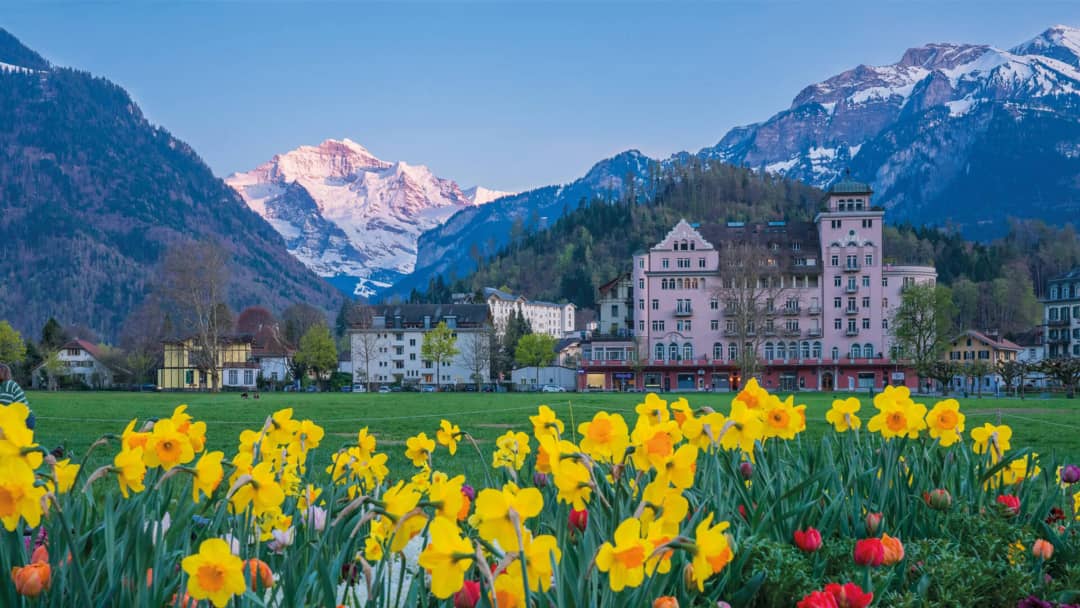
En 1864, los hoteleros de Interlaken compraron este prado para que usted pueda aterrizar aquí hoy en parapente
Hay un prado de 14 hectáreas en pleno centro de Interlaken. Casi no hay nada construido en él. No tiene vallas. No tiene aparcamiento. Todas las demás ciudades suizas llenaron su centro de hoteles, bancos y boutiques. Interlaken conservó este campo verde abierto en el corazón del pueblo.
Si ha estado en Interlaken, ha estado de pie sobre él. Se llama Höhematte, palabra que contiene Matte, prado en suizo alemán, y pocos prados de los Alpes son más conocidos. Los parapentes aterrizan en él. Los turistas comen helado en él. Los niños corren detrás de un balón en él. El Eiger, el Mönch y el Jungfrau se levantan detrás como un decorado pintado por alguien con demasiado presupuesto.
Pero casi nadie de quienes cruzan la Höhematte conoce la historia de cómo sobrevivió.
Esta es la historia de los hoteleros que lo compraron en 1864, de los 37 copropietarios que lo repartieron y de las reglas que lo mantienen abierto.
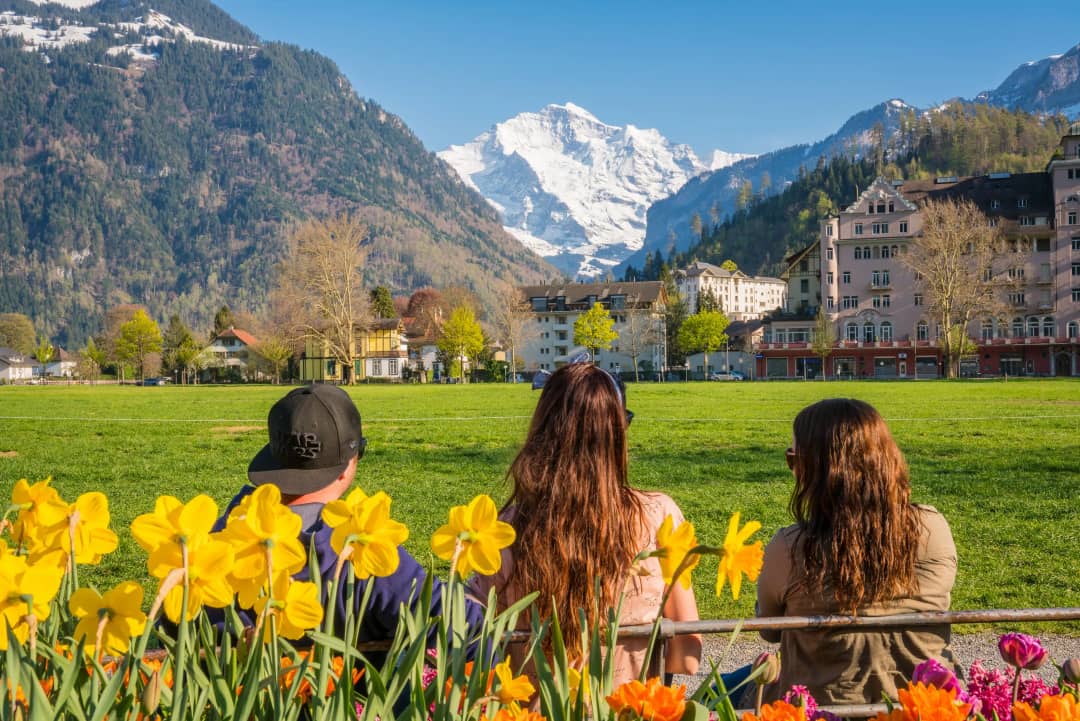
La geografía que creó el prado
Interlaken se asienta sobre una llanura aluvial plana entre el lago de Thun y el lago de Brienz. Esa llanura la fue depositando durante miles de años el río Aare y sus afluentes, dejando una franja de terreno llano y fértil en un valle por lo demás dominado por paredes de montaña. En la Edad Media esa franja plana ya se cultivaba.
En el siglo XII, los monjes agustinos del Kloster Interlaken, el monasterio del que el pueblo toma su nombre, entre los lagos, controlaban estas tierras. La Höhematte servía de pasto y para el heno. Las montañas al sur del prado eran demasiado empinadas para la agricultura, y las orillas pantanosas de los lagos eran inservibles. La Höhematte era el campo productivo central de todo el valle.
Tras la Reforma del siglo XVI, el monasterio fue secularizado y sus tierras pasaron al Estado bernés. En 1864 la Höhematte era un dominio del Estado, una Staatsdomäne del cantón de Berna, y antiguamente había servido como lugar de tribunal y de asamblea.
Entonces llegaron los turistas.
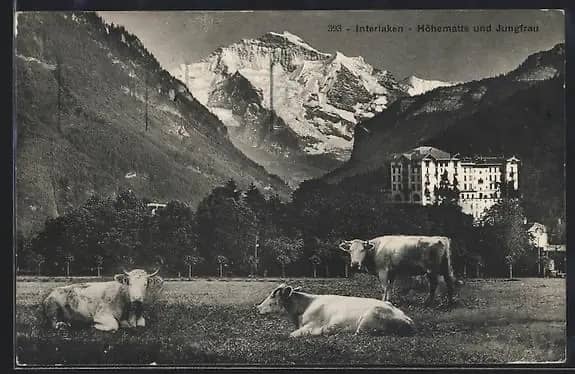
La amenaza: el turismo del siglo XIX
A principios del siglo XIX, Interlaken se estaba haciendo famosa en Europa. Lord Byron vino en 1816 y escribió sobre estas vistas en Manfred . Los primeros aristócratas ingleses llegaron en la década de 1820, tras el largo viaje en carruaje desde Berna, para pasar los veranos contemplando la Jungfrau. Empezaron a abrir hoteles a lo largo del actual Höheweg, el elegante bulevar que bordea el lado norte de la Höhematte.
A lo largo del Höheweg no dejaban de abrir pensiones y hoteles, y todos vendían lo mismo: la vista sobre el prado hacia la Jungfrau. Un terreno del Estado podía venderse, y un comprador podía convertirlo en una zona urbanizable. Los hoteleros lo sabían mejor que nadie.
Según los criterios del urbanismo europeo de la época, un prado libre en medio de un destino turístico en pleno auge era un sitio evidente para construir.
Así que los hoteleros se adelantaron.
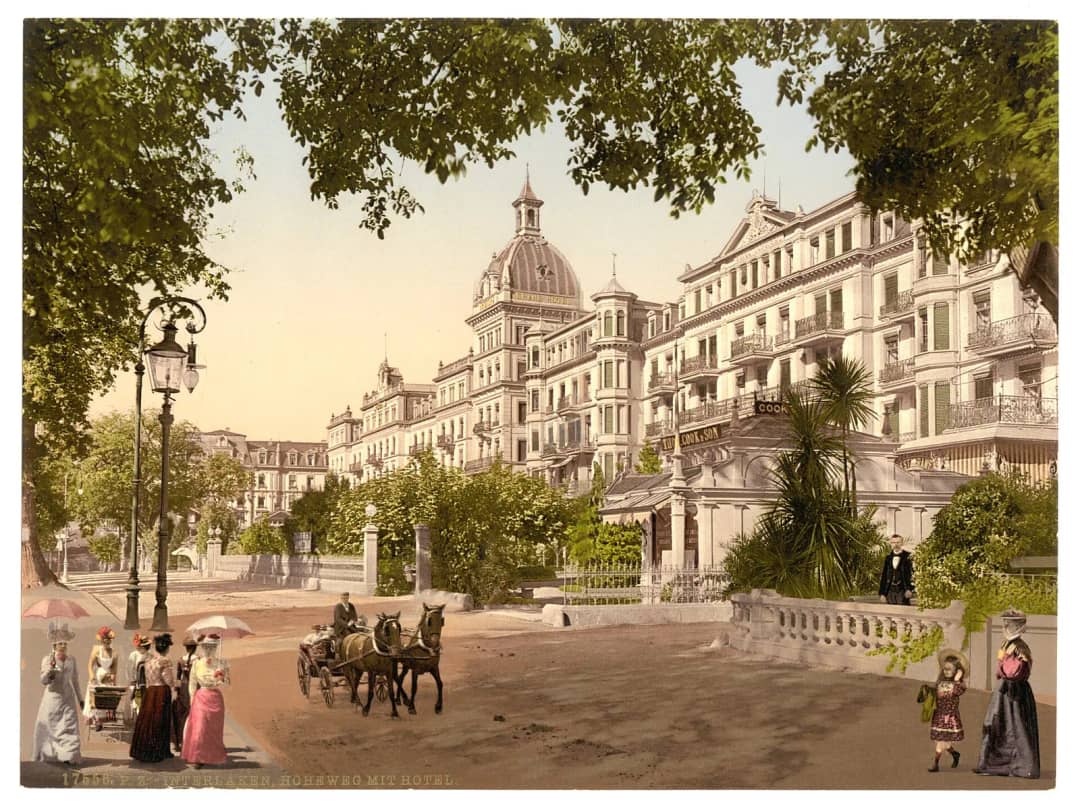
La compra: 1864
El 25 de enero de 1864, el Gran Consejo del cantón de Berna aprobó la venta de la Höhematte a un grupo privado de personalidades de Interlaken. Entre los solicitantes estaban casi todos los grandes hoteleros del pueblo, encabezados por Peter Ober, que dirigía el hotel Victoria desde 1839. Reunieron 150.000 francos, una suma considerable para la época, y la propiedad se repartió entre 37 copropietarios.
Su solicitud al cantón incluía tres reglas:
Nada de construcciones, nada de parcelar y nada de talar árboles en la Höhematte.
Lo ingenioso fue quién podía hacerlas cumplir. Los propietarios de todos los terrenos en un amplio radio alrededor del prado recibieron, mediante una servidumbre sobre su propia finca, el derecho a vigilar las reglas, igual que el municipio de Interlaken y el cantón de Berna. Cualquiera de ellos podía recurrir en cuanto se incumpliera una de las tres reglas.
La prohibición de parcelar hizo el trabajo en silencio. Como el prado no podía dividirse, desde entonces ningún copropietario ha conseguido quedarse con un trozo para sí.
Dato curioso: Desde 1864, la Höhematte, en el centro de Interlaken, está protegida frente a la construcción.
Los hoteleros de 1864 no eran románticos. Vendían habitaciones con vista a la Jungfrau, y entendían que un prado abierto a perpetuidad valdría más para sus hoteles y para todo el pueblo dentro de 100 años que cualquier ganancia inmobiliaria a corto plazo.
Tenían razón.
160 años después
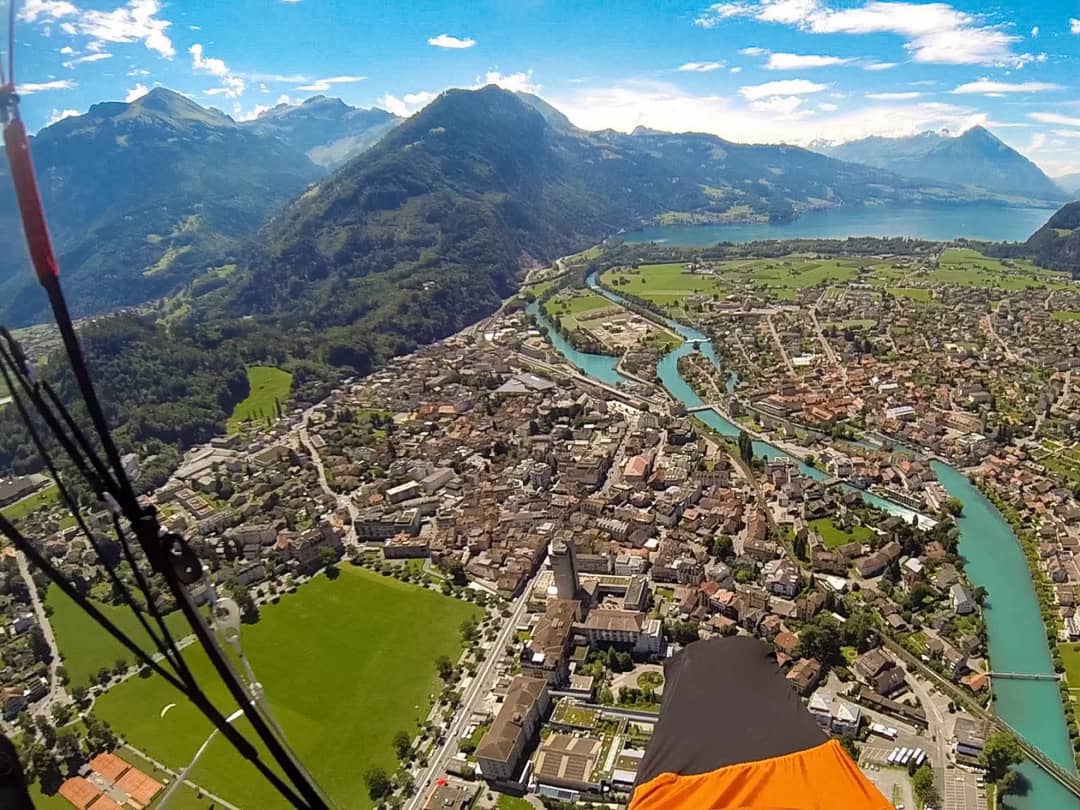
La Höhematte sigue siendo hierba. La Jungfrau sigue levantándose detrás. En 2014, cuando el prado cumplió 150 años, la Jungfrau Zeitung contaba todavía diez copropietarios de los 37 originales.
Las reglas no siempre se respetaron, y eso también forma parte de la historia. En 1892 y 1893, dos hoteleros del comité de 1864, entre ellos Eduard Ruchti, construyeron pistas de tenis y un vestuario en el prado. Nadie protestó, en 1920 y 1921 se añadieron dos pistas más, y en 1930 el cantón pidió que desaparecieran como muy tarde en 1935. En 2014 seguían allí. La gran prueba llegó en septiembre de 1989: Interlaken votó sobre un aparcamiento subterráneo en la Höhematte y dijo que no, por 1248 votos contra 320.
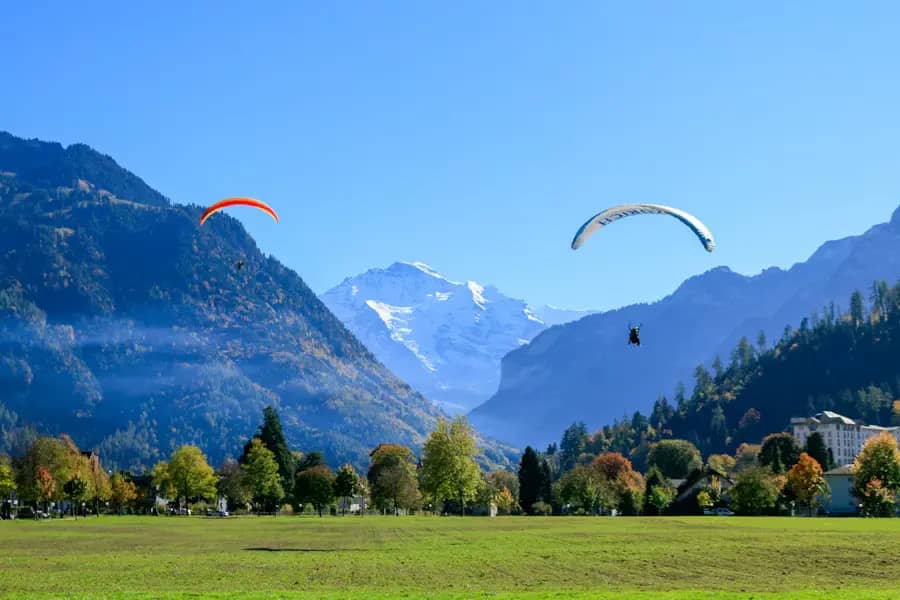
Hoy el prado absorbe todo lo que el pueblo le echa encima. Los parapentes biplaza aterrizan aquí toda la temporada, con las velas bajando en espiral una tras otra. Los eventos temporales se montan y se vuelven a desmontar. Los niños juegan al fútbol. Los estudiantes se tumban entre clase y clase. Los pilotos de parapente se estiran entre vuelo y vuelo. La prohibición de construir de 1864 aguanta a través de todo ello.
Consejo local: Para ver aterrizar los parapentes, sitúese cerca del borde oriental del prado, más o menos a medio camino entre el paseo del Höheweg y el centro de la hierba, y deje unos metros a los pilotos que aterrizan.
Qué aspecto tiene el prado en diciembre
Durante varios inviernos, la Höhematte se transformó en Ice Magic, una pista de patinaje montada sobre la hierba y desmontada después. Ice Magic se suspendió porque no era rentable, y para el invierno de 2023 Interlaken Tourismus planeaba en su lugar un laberinto de 2000 abetos desechados sobre el prado. En el invierno 2026 a 2027, el nuevo Top of Europe Magic Park, con una pista de unos 1000 metros cuadrados, abre del 18 de diciembre al 28 de febrero en el Kursaalgarten, no en la Höhematte. Si viene en octubre y se pregunta si el viaje sigue mereciendo la pena más adelante en el año, la respuesta es sí. El ambiente es distinto, los Alpes siguen ahí, y la historia que hay bajo la nieve no se ha ido a ninguna parte.
¿Por qué le importa al visitante la historia de la Höhematte?
Cuando hoy se planta en la Höhematte y ve un parapente bajar en espiral hacia la hierba, está presenciando una promesa de 160 años que se sigue cumpliendo.
Eso no es poca cosa.
La mayoría de los paisajes que visita como turista son accidentes de la geografía. La Höhematte es un acto de voluntad. Existe tal como es porque un grupo de hoteleros encabezado por Peter Ober puso 150.000 francos sobre la mesa y después se ató las manos con reglas que todo el vecindario podía hacer cumplir. La hierba nunca dejó de ser tierra agrícola: en 2014, fuera de las pistas de tenis, el prado seguía usándose para la agricultura. Si quiere ver cómo es hoy de verdad esa relación entre la tierra y el ganado, Swiss Local Adventures organiza un Farm Tour al valle del Justistal, donde las granjas alpinas en activo siguen siendo lo importante.
Sin ellos, en la Höhematte bien podría haber hoteles hoy. El parapente en Interlaken no sería como es, porque no habría zona de aterrizaje central. La vista que atrae a los visitantes a Interlaken estaría parcialmente tapada por los edificios en los que se habrían alojado esos turistas.
Olivia dice: «La mayoría de los paisajes que visita como turista son accidentes de la geografía. La Höhematte es un acto de voluntad.»
Olivia Lufman, su redactora de viajes en Swiss Local Adventures
Los visitantes repiten siempre las mismas palabras: el pulmón verde del pueblo, el parque central de Interlaken, un sitio del que no te cansas nunca. Una reseña hablaba de "the largest greens ever seen in the middle of a town", que suena a exageración hasta que está usted allí con la Jungfrau justo enfrente y vistas alpinas impresionantes en todas direcciones, y se da cuenta de que la escala es sencillamente cierta.
Este es el tipo de detalle que hace que Suiza sea Suiza. Horizontes largos. Acuerdos tozudos. Reglas escritas por hoteleros en 1864 que siguen obligando al prado en 2026.
¿Cómo se visita hoy la Höhematte?
La Höhematte está abierta al público todo el año. Puede cruzarla libremente. No hay entrada, ni horario de apertura, ni hora de cierre.
La mayoría de los visitantes la cruzan sin saber que están pisando 160 años de promesas cumplidas. Esa es la historia escondida que Interlaken nunca puso en un cartel.
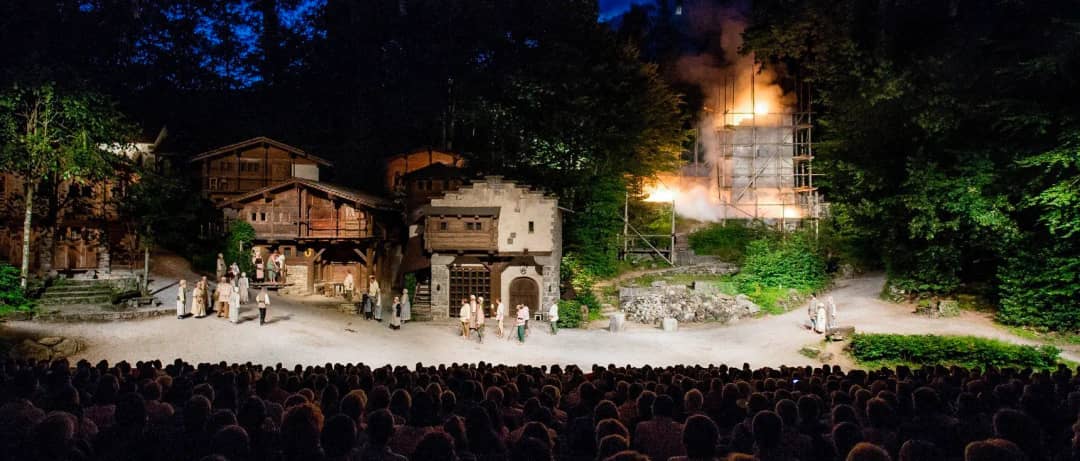
El momento importa más de lo que la gente espera. En julio, la luz del atardecer toca la Jungfrau entre las 20h y las 21h y el prado se vuelve dorado; lleve una manta y una botella de vino. Al amanecer, en una mañana tranquila, el prado está vacío, las montañas están rosadas y tiene todo el centro de Interlaken para usted. Si quiere ver parapentes, entre las 10h y primera hora de la tarde es cuando aumenta el tráfico y los descensos se suceden. Los Tellspiele, el teatro al aire libre de Guillermo Tell, se representan de finales de julio a principios de septiembre en su propio escenario del bosque de Rugen, no en el prado (del 24 de julio al 4 de septiembre en 2027): consulte el programa antes de ir, solo el escenario al aire libre ya vale la pena.
Dónde colocarse cuando llegan los parapentes
Sitúese cerca del borde oriental del prado, más o menos a medio camino entre el paseo del Höheweg y el centro de la hierba. Desde ahí tiene una línea de visión limpia hacia la franja principal de aterrizaje sin estar dentro de ella. Una tarde concurrida, ver aterrizar 10 o 15 parapentes en una hora es lo que una visitante describió como "nonstop entertainment", y no exageraba. Las velas bajan en espiral en secuencia suelta, el personal de tierra va cantando posiciones, y si no está atento puede acabar esquivando a un piloto que aterriza en mitad de su café. El personal de tierra suele indicar de buen grado dónde colocarse para las mejores fotos. Deje unos metros a los pilotos que aterrizan, y el resto es gratis.
💡 Consejo de Pierre: si cruza la Höhematte a las 7h de una mañana clara de verano, antes de que despeguen los primeros parapentes y antes de que abran las cafeterías del Höheweg, tiene para usted solo uno de los espacios verdes de 14 hectáreas más tranquilos de los Alpes. Compre un café en el quiosco de la estación. Siéntese en el banco del borde oeste, de cara a la Jungfrau. Eso es lo que habría hecho Lord Byron en 1816, y no ha cambiado.
FAQ - La historia de la Höhematte
¿Qué es la Höhematte de Interlaken?
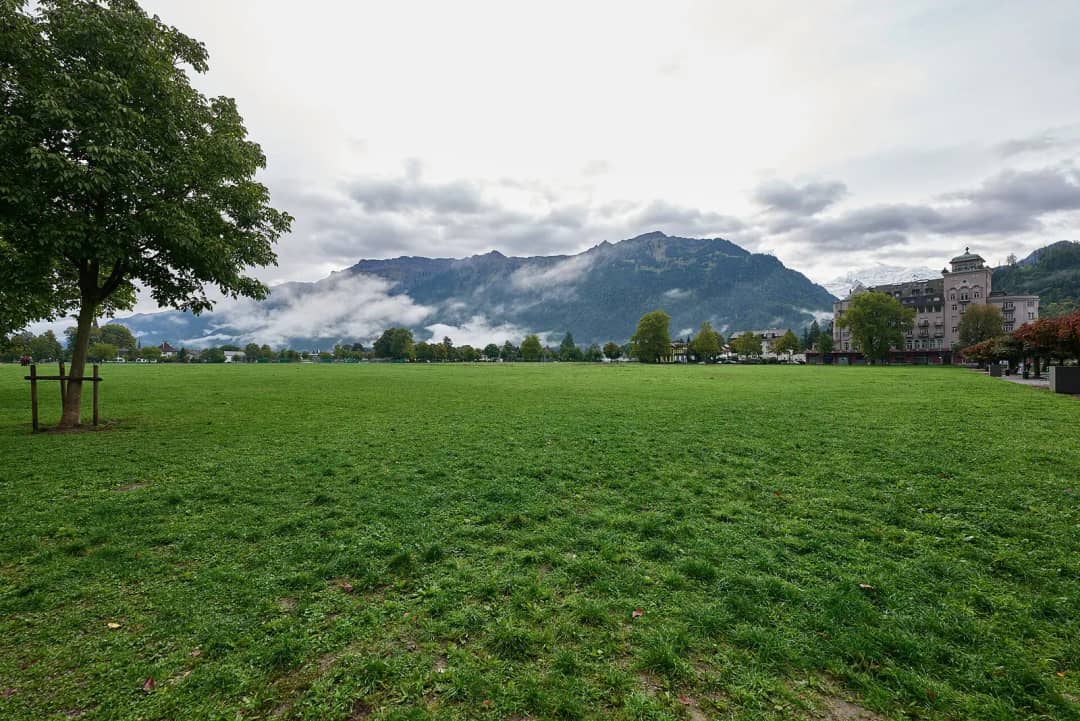
La Höhematte es un prado de 14 hectáreas en el centro de Interlaken, protegido de la construcción desde 1864, cuando un grupo encabezado por los hoteleros del pueblo lo compró al cantón de Berna y lo ató a una prohibición de construir. Es la principal zona de aterrizaje de parapente de la región y un espacio verde público.
¿Por qué está protegida la Höhematte?
En 1864, casi todos los grandes hoteleros de Interlaken, encabezados por Peter Ober, compraron el prado al cantón de Berna por 150.000 francos. Su solicitud incluía tres prohibiciones: no construir, no parcelar, no talar árboles. Los vecinos, el municipio y el cantón recibieron el derecho de hacerlas cumplir. El objetivo era mantener abierta la vista de la Jungfrau.
¿Se puede caminar por la Höhematte?
Sí. Está totalmente abierta al público todo el año. Sin entrada y sin horarios.
¿Dónde aterrizan los parapentes en Interlaken?
En la Höhematte, el prado central de Interlaken. Es una de las zonas de aterrizaje de parapente biplaza más famosas de Europa.
¿Qué significa Höhematte?
Matte significa prado en suizo alemán, y Höhe significa altura. No he encontrado una fuente fiable que explique el origen del nombre.
¿De quién es hoy la Höhematte?
De copropietarios privados. En 1864 el prado se repartió entre 37 copropietarios, y la Jungfrau Zeitung contaba diez en 2014. No he encontrado una lista publicada de los propietarios actuales.
¿Es la Höhematte el parque central de Interlaken?
La mayoría la llama así, y la comparación no es del todo errónea. El prado está en el corazón del pueblo, está abierto a todos y funciona como un parque a todos los efectos prácticos. Pero no lo es. La Höhematte es propiedad privada de unos pocos copropietarios, no del municipio de Interlaken. Pero desde 1864 el municipio, el cantón y los vecinos tienen derecho a recurrir si se incumplen sus reglas. Ese es el detalle que convierte un bonito espacio verde en algo más interesante: el pueblo no posee su espacio abierto más conocido, y aun así lo vigila.
¿Se admiten perros en la Höhematte?
El prado es accesible a cualquier hora y no hay restricciones señalizadas en la entrada, así que los perros entran y salen libremente por lo general. Dicho esto, la zona de aterrizaje de parapentes crea un entorno imprevisible. Las velas llegan rápido y bajas, las cuerdas se arrastran por la hierba y el personal de tierra se mueve deprisa. Algunos perros se lo toman con calma; a otros les cuesta más el ruido repentino y el movimiento. Si su perro se asusta con facilidad, el borde este del prado, lejos de la franja principal de aterrizaje, es más tranquilo. Lleve correa corta cerca de las zonas de aterrizaje activas y no habrá problema.
¿Qué eventos se celebran en la Höhematte?
Los parapentes aterrizan aquí toda la temporada, y los eventos temporales se montan y se desmontan. Ice Magic, la pista de patinaje de invierno que ocupaba el prado, se suspendió. En el invierno 2026 a 2027, el nuevo Magic Park abre en el Kursaalgarten. La regla desde 1864 es no construir, y salvo las pistas de tenis de 1892, se ha mantenido: la hierba se queda, todo lo demás se desmonta y se va.
¿A qué distancia está la Höhematte de la estación de Interlaken Ost?
A unos 12 minutos a pie, caminando hacia el oeste por el Höheweg. Ese bulevar es el paseo principal de Interlaken y uno de los mejores paseos cortos del Oberland bernés, con vistas ininterrumpidas del grupo de la Jungfrau que se van abriendo según avanza. El propio paseo merece hacerse despacio. La mayoría va directa al prado y se lo pierde.
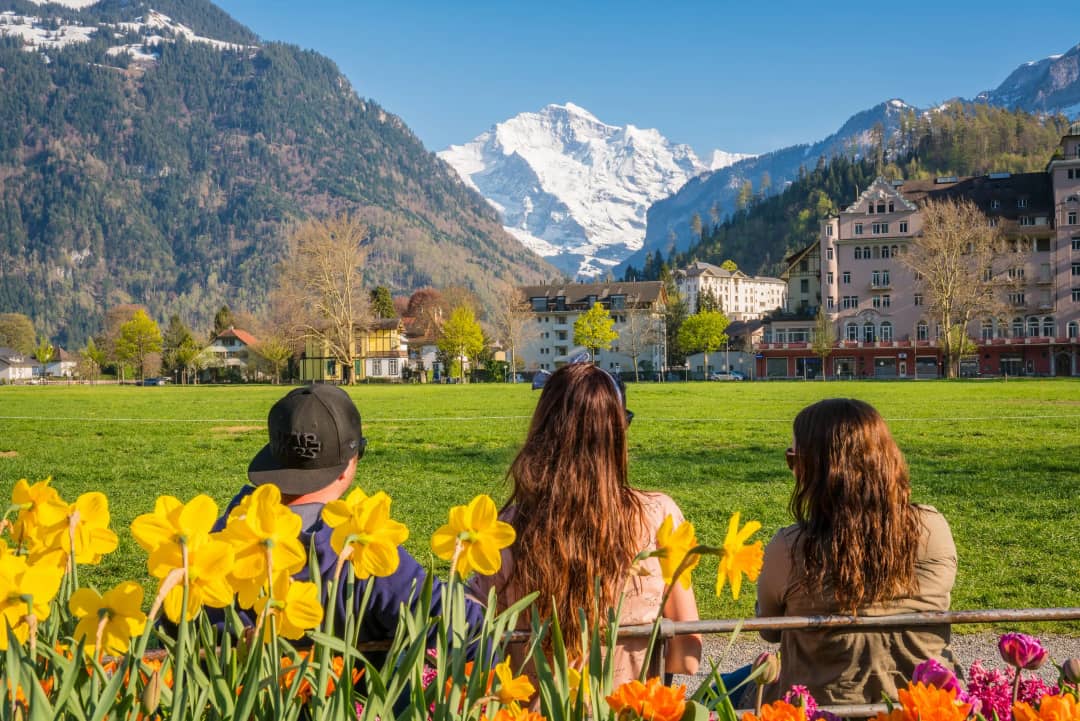
Visite el prado que salvó la historia
Hay vistas más espectaculares en el Oberland bernés. Pero no hay ningún prado con una historia mejor. La mayoría de quienes la oyen dicen lo mismo: no tenía ni idea de que esto existía.
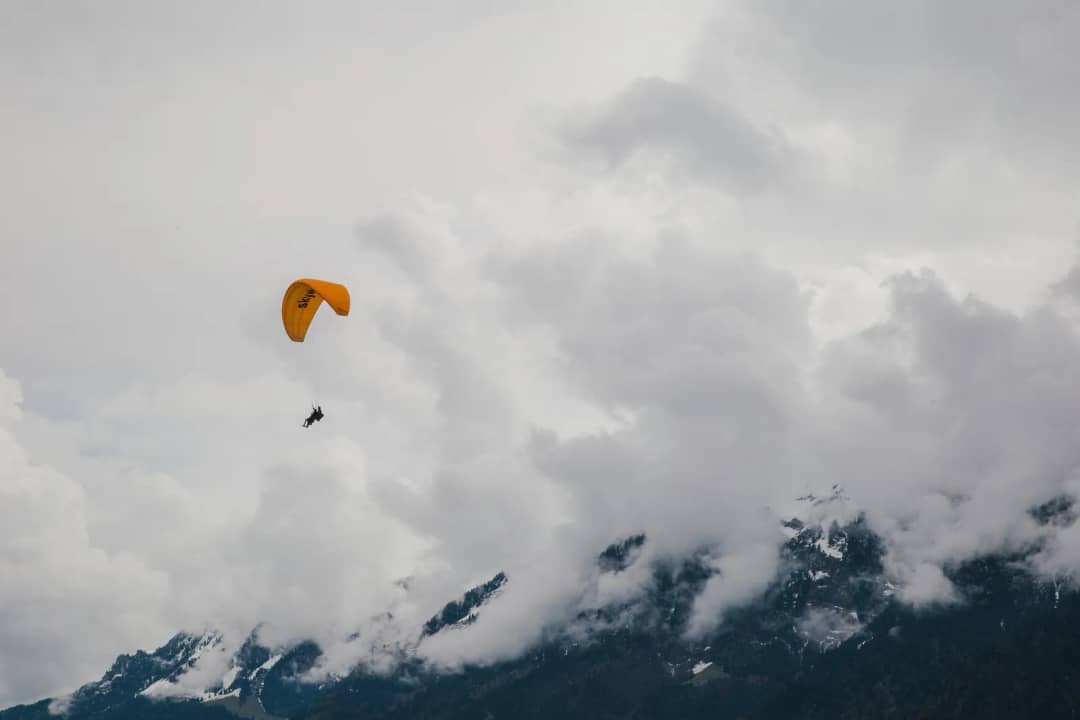
La Höhematte no es el prado más espectacular que verá en su vida. Hay pastos alpinos más altos con vistas más amplias. Están las flores de Lauterbrunnen y los panoramas de la Schynige Platte, que la superan en belleza pura.
Lo que tiene la Höhematte y no tiene ningún otro prado de los Alpes es una historia. Una historia de 160 años sobre cómo un grupo de hoteleros tomó en 1864 una decisión que sigue dando forma al pueblo en 2026.
Si quiere vivir el prado en su mejor momento, planifique el amanecer o el atardecer, lleve una capa para el fresco de la tarde y quédese el tiempo suficiente para ver aterrizar un parapente. Ese instante en que un desconocido cae del cielo sobre un prado protegido por un contrato más antiguo que la mayoría de los países es una de las cosas más auténticamente suizas que puede presenciar como visitante.
Si quiere vivir usted mismo la experiencia de aterrizar en la Höhematte, lea nuestra guía completa del parapente en Interlaken, o consulte disponibilidad directamente con los operadores que aterrizan aquí cada tarde.
Algunos destinos son accidentes. La Höhematte es un acto deliberado de conservación, firmado con tinta en 1864 y todavía vigente en 2026.
Escrito por Olivia Lufman, su redactora de viajes en Swiss Local Adventures
Fuente:
visita sobre el terreno a la Höhematte, Interlaken, 2026. Historisches Lexikon der Schweiz, artículos Interlaken y Peter Ober. Jungfrau Zeitung, 23 de enero de 2014. Hochparterre, 16 de mayo de 2014. Radio BeO, 22 de agosto de 2023 y 28 de agosto de 2026.
Etiquetas
#local-story#swiss-alps#paragliding-interlaken#switzerland-travel#jungfrau-region#bernese-oberland#swiss-history#interlaken#hohematte-interlaken#interlaken-history#interlaken-meadow
Fuentes y Referencias
- •Interlaken Tourism
- •MySwitzerland
- •Photo: Photochrom Print Collection, Library of Congress, on Wikimedia Commons
- •Photo: Leonhard Lenz on Wikimedia Commons
- •MySwitzerland, Photo Spot Höhematte Interlaken
- •Photo: Tran Mau Tri Tam, CC0, via Wikimedia Commons
- •Historisches Lexikon der Schweiz, Interlaken (Gemeinde)
- •Historisches Lexikon der Schweiz, Ober, Peter
- •Jungfrau Zeitung, Auf der ganzen Welt kein zweites Mal (23.01.2014)
- •Hochparterre, Jungfräulich (16.05.2014)
- •Interlaken Tourismus, Grand Tour photo spot Höhematte
- •Radio BeO, Magic Park löst ICE MAGIC ab (28.08.2026)
- •Radio BeO, Winter in Interlaken scheinbar wieder ohne Ice Magic (22.08.2023)
- •Interlaken Tourismus, William Tell Open-Air Theatre
Compartir este artículo
Artículos Similares
Continúe leyendo con estos artículos relacionados
Interlaken
14/9/2026
10 min
1
Ruta al Hinterburgseeli: no pierda el bus de las 17:14
Prepare la ruta al Hinterburgseeli desde Axalp: 6 km, 400 m de desnivel y 37 min de bus desde Brienz. Nieve, baño, normas y el último bus.
hinterburgseeli-hikehiking-lake-brienzwoodcarving-trail
Por Timoté BailyLeer Más
Interlaken
12/9/2026
12 min
9
¿Ala delta o parapente en Interlaken? CHF 260 o 170
Compare el ala delta y el parapente en Interlaken: misma ladera, los mismos 20 minutos, CHF 170 frente a CHF 260. Esto compran los 90 francos.
tandem-hang-glidingtandem-paraglidingadventure-sports
Por Timoté BailyLeer Más
Interlaken
11/9/2026
15 min
12
Ruta de casas históricas de Bönigen: gratis, a 4 min
Recorra gratis la ruta de casas históricas de Bönigen, a cuatro minutos en bus de Interlaken Ost, entre casas de madera de 1549. Horarios y mapa.
historic-house-trailday-trip-brienzinterlaken-day-trips
Por Pierre VetschLeer Más