Interlaken
Lakes Around Interlaken: Thun, Brienz & 3 Hidden Ones
P
Pierre, Swiss Local Adventures
Author
May 6, 2026
7 min
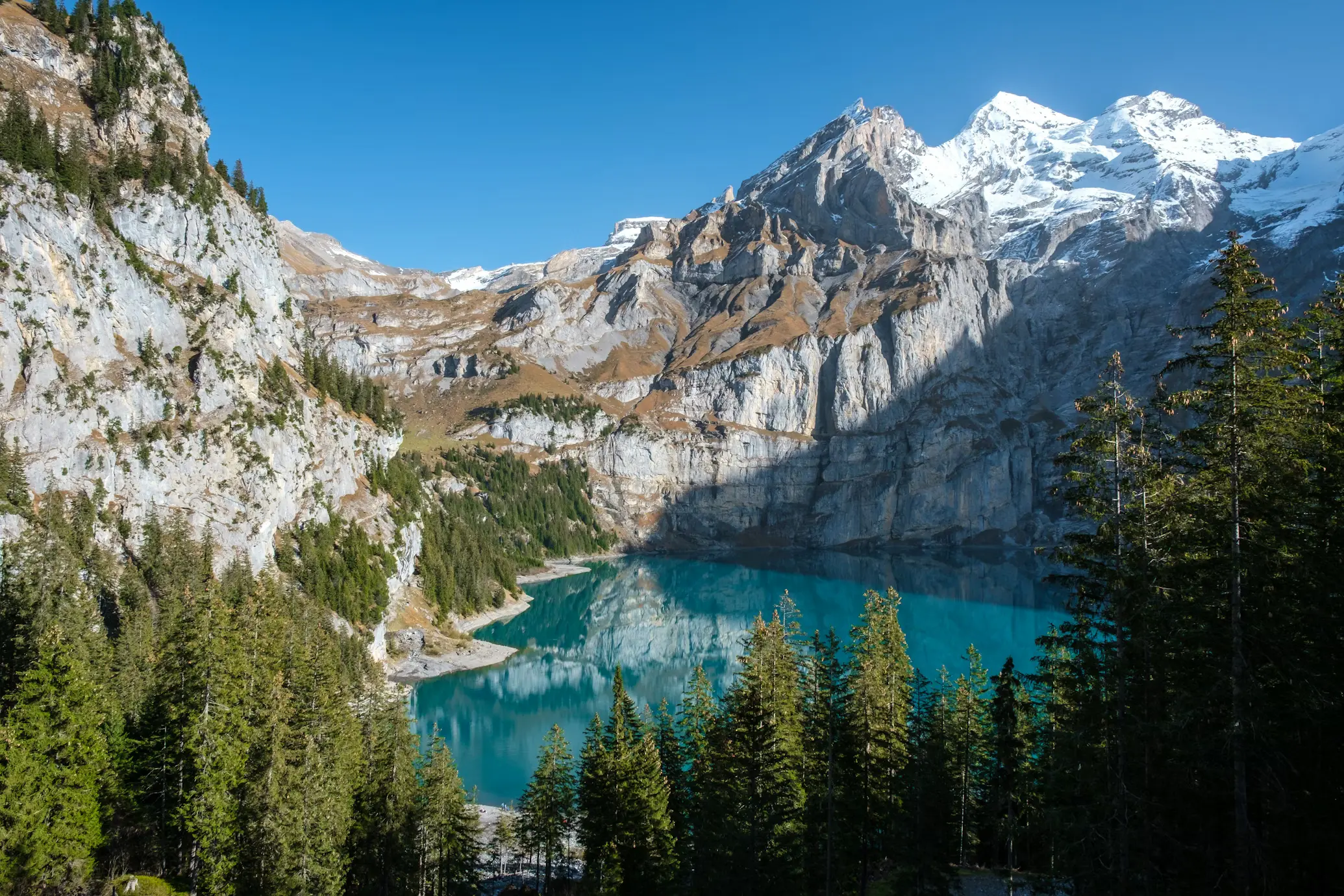
Switzerland Has 5 Hidden Lakes Around Interlaken. One Is the Most Photographed in the World
The water was a colour that I had only ever seen in toothpaste advertisements. I was twenty years old, standing on the shore of Lake Brienz in mid-June, and I genuinely did not understand how a body of water could be that turquoise without artificial dye.
Three years later, I have stood on the shores of nearly every lake in the Bernese Oberland and I still do not entirely understand it. The science is interesting (we'll get to it). But the experience is something else: a kind of unreality, a feeling that whoever designed this region was showing off.
Around Interlaken there are two famous lakes, two semi-secret ones, and a dozen hidden alpine pools that most travelers will never reach. Here is the local guide to all of them.
Why Are the Lakes Around Interlaken That Turquoise Color?
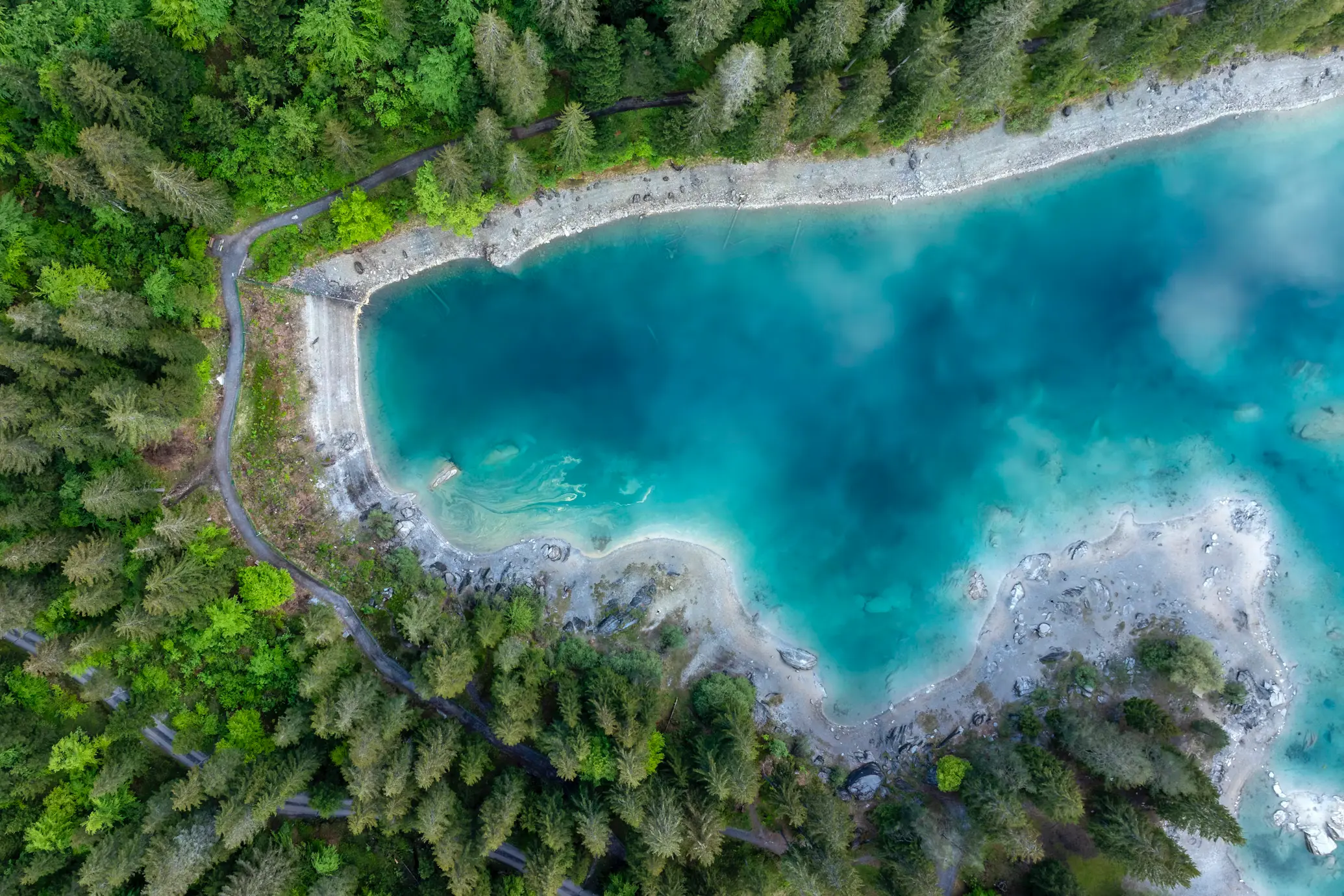
Quick science. The lakes around Interlaken are turquoise because they are fed by glacier melt. The water arrives carrying microscopic particles of ground rock called glacial flour, which scatter blue and green wavelengths of light. The colder and the more glacial the lake, the more dramatic the colour.
Lake Brienz is the most pure-glacier-fed of the major lakes. Its colour stays vivid all summer. Lake Thun receives more mixed water from the Aare and surrounding rivers, so it shifts toward darker blue. The high alpine lakes (Bachalpsee, Oeschinensee) are the closest to the source and turn the deepest emerald in July when the snow has melted but the rock flour is still suspended.
This is also why Lake Brienz stays cold even in August. Swimming is for the brave or the briefly insane. Kayaking, sailing and boat tours are for everyone.
Lake Thun: The Bigger Sister
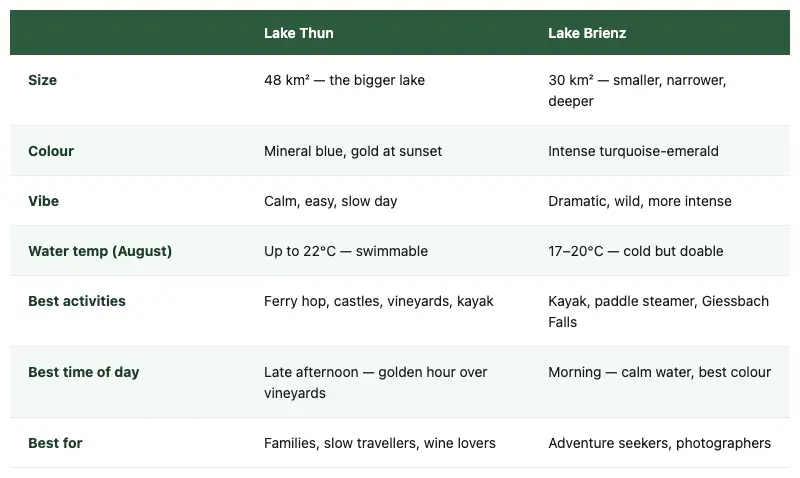
Surface: 48 km² · Depth: up to 217 m · Color: mineral blue, gold at sunset
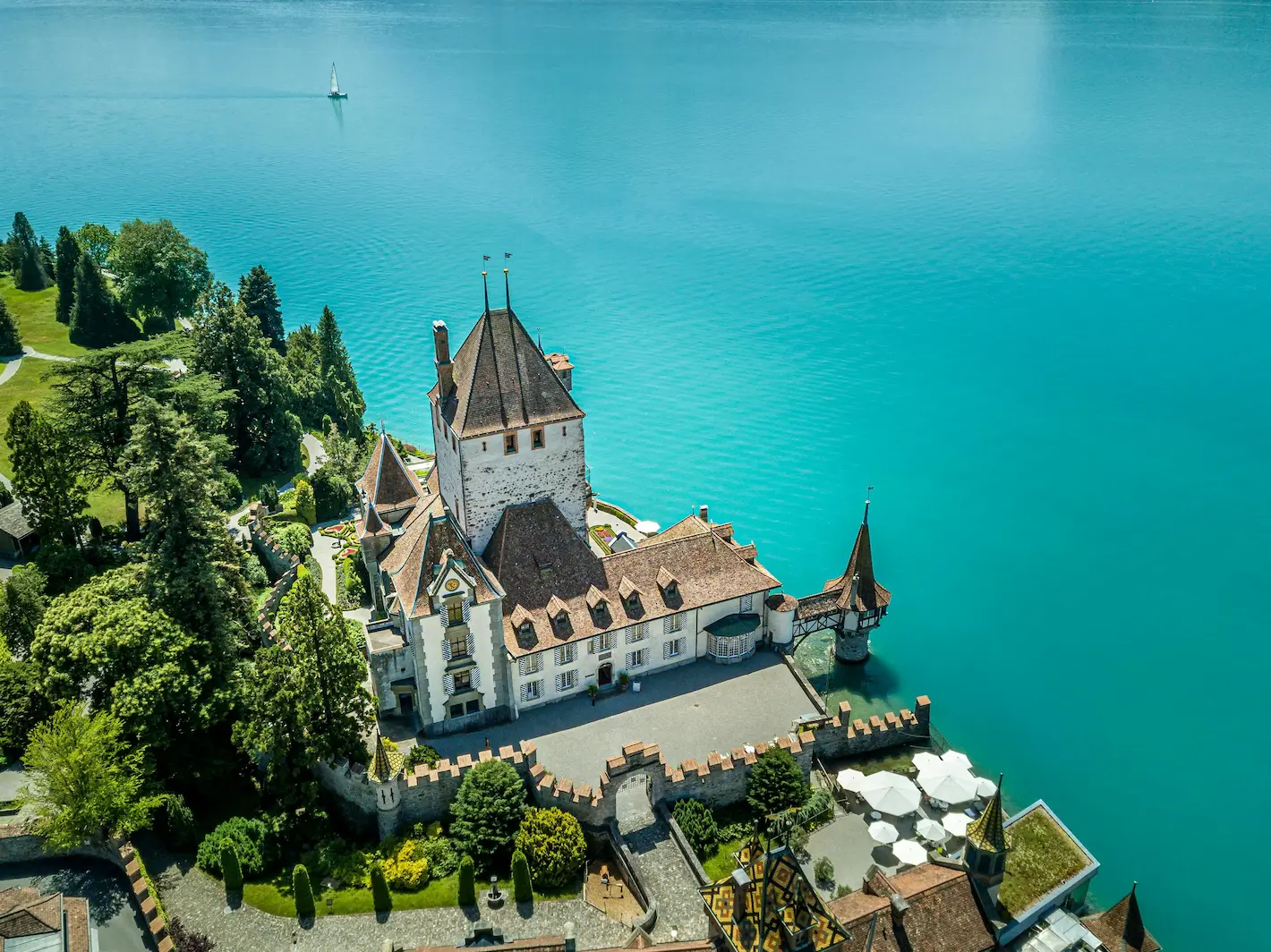
Lake Thun is the elder of Interlaken's two lakes. It runs west from the town for 17 kilometres, ending at the medieval town of Thun. Its shoreline is dotted with castles (Spiez, Oberhofen, Thun, Schadau, all visible from the water) and the mountains above its south shore hide the vineyards of Spiez.
This is the lake for slow days. The BLS ferries run frequently between villages. You can buy a one-day lake pass and hop on and off, eating in different villages, with no plan beyond be back at Interlaken West by sunset. It is one of the best ways I know to spend a day in the Bernese Oberland.
What Can You Do on Lake Thun?
Sunset cruise with a fondue on board (winter and summer evenings)
Visit Spiez : castle, vineyards, lakeside walk. Pair with our vineyard walk and Swiss wine tasting for a slow afternoon.
Stop at Oberhofen Castle : 13th-century stronghold with one of the most photographed lakeside towers in Switzerland.
Kayak from Faulensee or Spiez : the south shore is calmer and quieter than the north.
Swim from Strandbad Thun or Strandbad Hilterfingen : the most popular public swim spots in summer.
Best season: May to September. Best time of day: late afternoon for the golden hour over the vineyards.
Lake Brienz: The Quieter Twin
Surface: 30 km² · Depth: up to 260 m · Color: intense turquoise-emerald
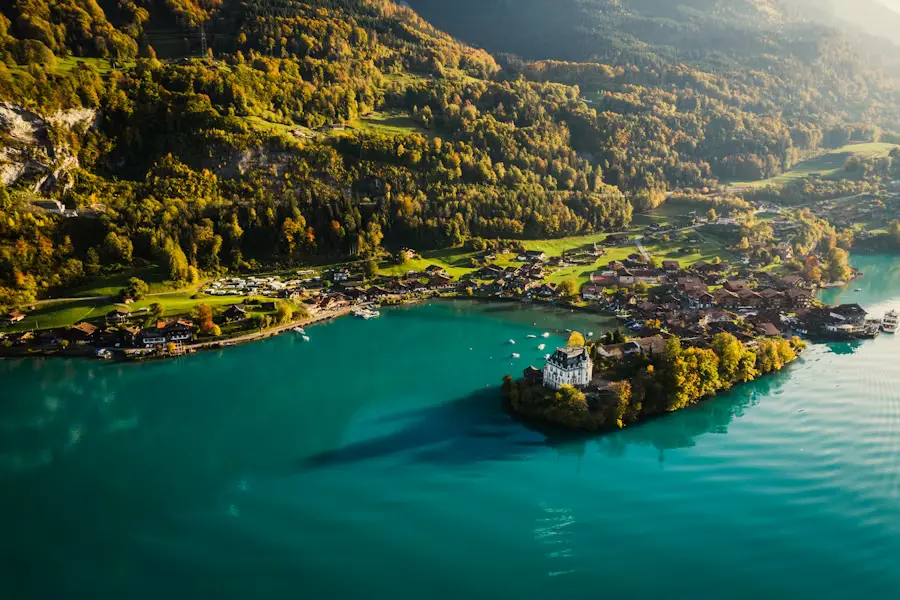
Lake Brienz is the other half of Interlaken. Smaller, narrower, deeper, and much more dramatic. Steep cliffs rise straight from the water. The shoreline is largely undeveloped on the south side. Most of the cars on the lake are concentrated on the north shore (which the highway follows), leaving the south for villages, jetties, and walkers.
This is the lake for adventure. The water is the most vivid turquoise of any major lake in Switzerland and the cold preserves it. Operators like HighTide run small-group kayak tours that often include a cheese tasting on a beach you cannot reach by car.
What Can You Do on Lake Brienz?
Kayak from Iseltwald : the south shore is a sequence of cliffs and coves with hidden beaches. Half-day tours are the sweet spot.
Visit Iseltwald: the village made famous by the Korean drama Crash Landing on You. The jetty scene turned this small lakeside hamlet into a global TikTok destination overnight. Hundreds of fans, mostly from South Korea and Southeast Asia, arrive every morning as soon as the village opens. The jetty access has been paid (CHF 5) since 2024. If you want the photo without the crowd: before 9h or after 16h. We have a dedicated guide on Iseltwald coming next week.
Take the Brienzersee steamship Lötschberg : a paddle steamer from 1914 still in service. The whole ride from Interlaken to Brienz takes 75 minutes.
Visit Giessbach Falls : 14 cascades dropping 500 metres directly into the lake. Reachable by ferry plus funicular.
Brienz village itself : the wood-carving capital of Switzerland, with workshops you can visit and the Brienzer Rothorn steam railway departing from town.
Want to see this view at the golden hour? Join us for our guided Sunset Walk and enjoy a traditional Swiss fondue picnic right by the water as the sun disappears behind the mountains.
Best season: late May to October. Best time: morning kayak (water is calm before noon).
Lake Thun VS Lake Brienz: Which One Should You Choose?
The honest answer: it depends on what you are looking for.
Lake Thun is bigger, calmer, and easier to navigate. There are castles on the shore, ferry stops every hour, and the Jungfrau peaks visible from the water on a clear day. It is the lake you take a family to.
Lake Brienz is more intense. The color is more saturated, the cliffs drop directly into the water, and the south shore is almost entirely undeveloped. It is the lake you go to when you want to feel like no one else has found it yet. If you have one day: Lake Brienz in the morning, Lake Thun in the late afternoon.
The light does different things to each one.
Where to Swim: The Best Spots Near Interlaken
The best swimming spots near Interlaken range from 22°C lake beaches to hidden local pools that most visitors never find. Water temperature varies significantly depending on the source: glacial lakes run cold, but a few spots are fed by underground springs and stay warm all summer.
Lake Thun (up to 22°C in August)
The warmest of the two main lakes. Best spots:
Neuhaus Beach (free, walkable from Interlaken West station): the go-to for a full beach afternoon without driving anywhere.
Strandbad Hilterfingen: a classic lakeside setup, great for families.
Lake Brienz (17-20°C in July-August)
Colder than Lake Thun because of its glacial sources. Still swimmable, but you feel the difference.
Bönigen (free, village 2km from Interlaken): the most accessible swim on the Brienz side.
Strandbad Brienz (CHF 5-8 entry): organized facilities, cleaner entry points.
Burgseeli: the local secret (25-26°C)
Five minutes from Interlaken, Burgseeli is fed by an underground spring rather than glacial meltwater. That means water temperature around 25-26°C in summer, which is rare in this region.
The spot has a jump platform and a Tarzan rope. It's free. And it's where locals actually go when they want to swim without the cold shock.
Address: Burgseeli, Goldswil, Ringgenberg.
If you're here for the swim, not the scenery, go to Burgseeli first. Save Oeschinensee for the photos.
Bachalpsee: The Mirror Lake
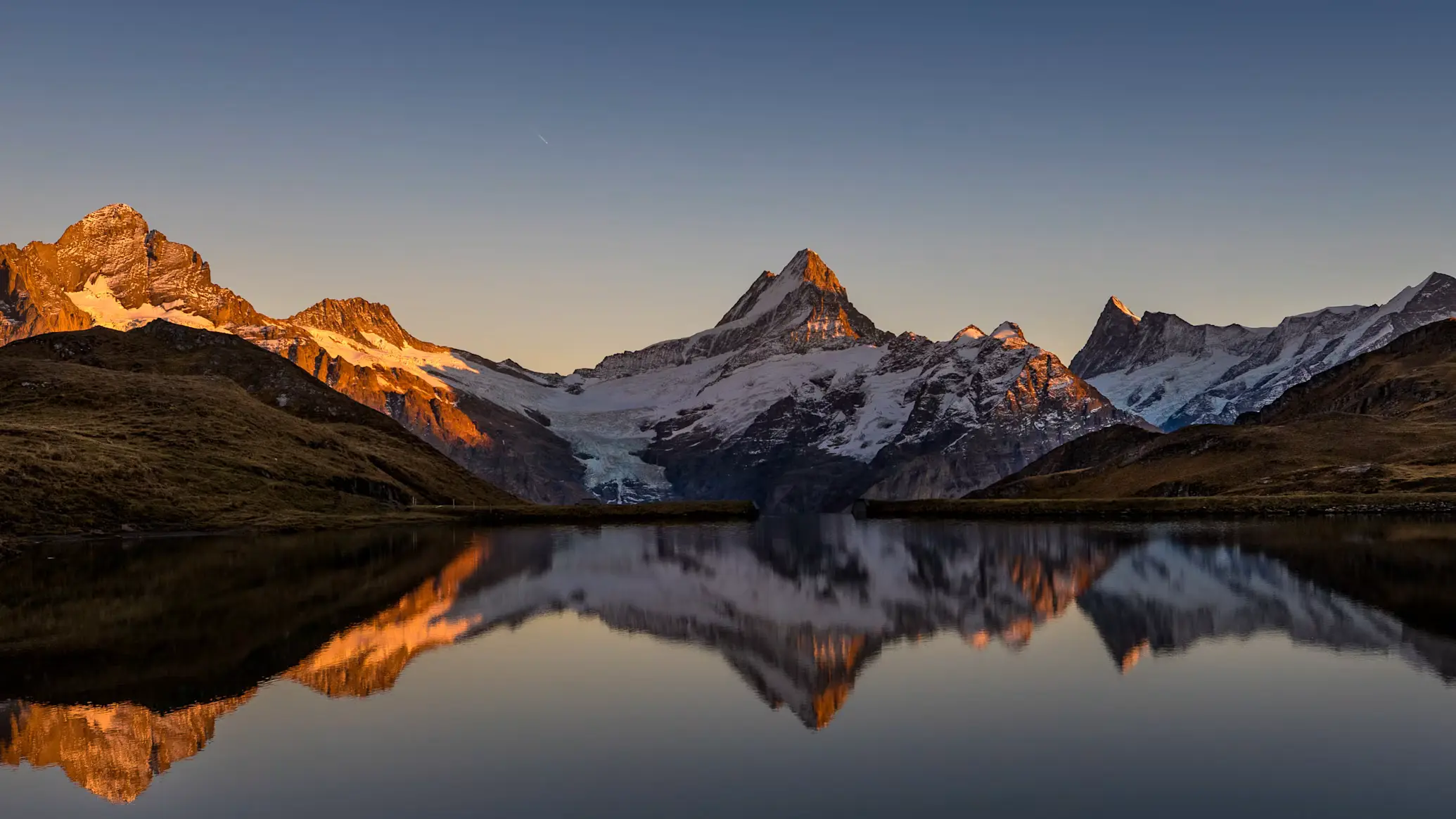
Altitude: 2,265 m · Surface: 0.08 km² · Color: pure alpine emerald, mirror-still on calm days
Bachalpsee is one of the most famous alpine lakes in the world and almost certainly the most photographed in the Bernese Oberland. It sits above Grindelwald, accessible by a 50-minute easy hike from the First cable car. On a still morning, the lake reflects the entire Schreckhorn-Wetterhorn massif perfectly. The image is so clichéd that travelers refuse to believe it is real until they stand there.
How Do You Get to Bachalpsee?
Take the Grindelwald-First cable car (running roughly mid-May to October).
Walk the well-marked trail along the ridge for about 50 minutes.
Best light: between 7 and 9 a.m. before the wind picks up. The mirror effect requires perfect stillness.
Combine with the Cliff Walk at First and the Mountain Cart descent for a full day.
Bring layers. Even in July, the temperature at 2,265 m is 10°C cooler than in Interlaken.
Oeschinensee: The Most Beautiful Lake in Switzerland (Allegedly)
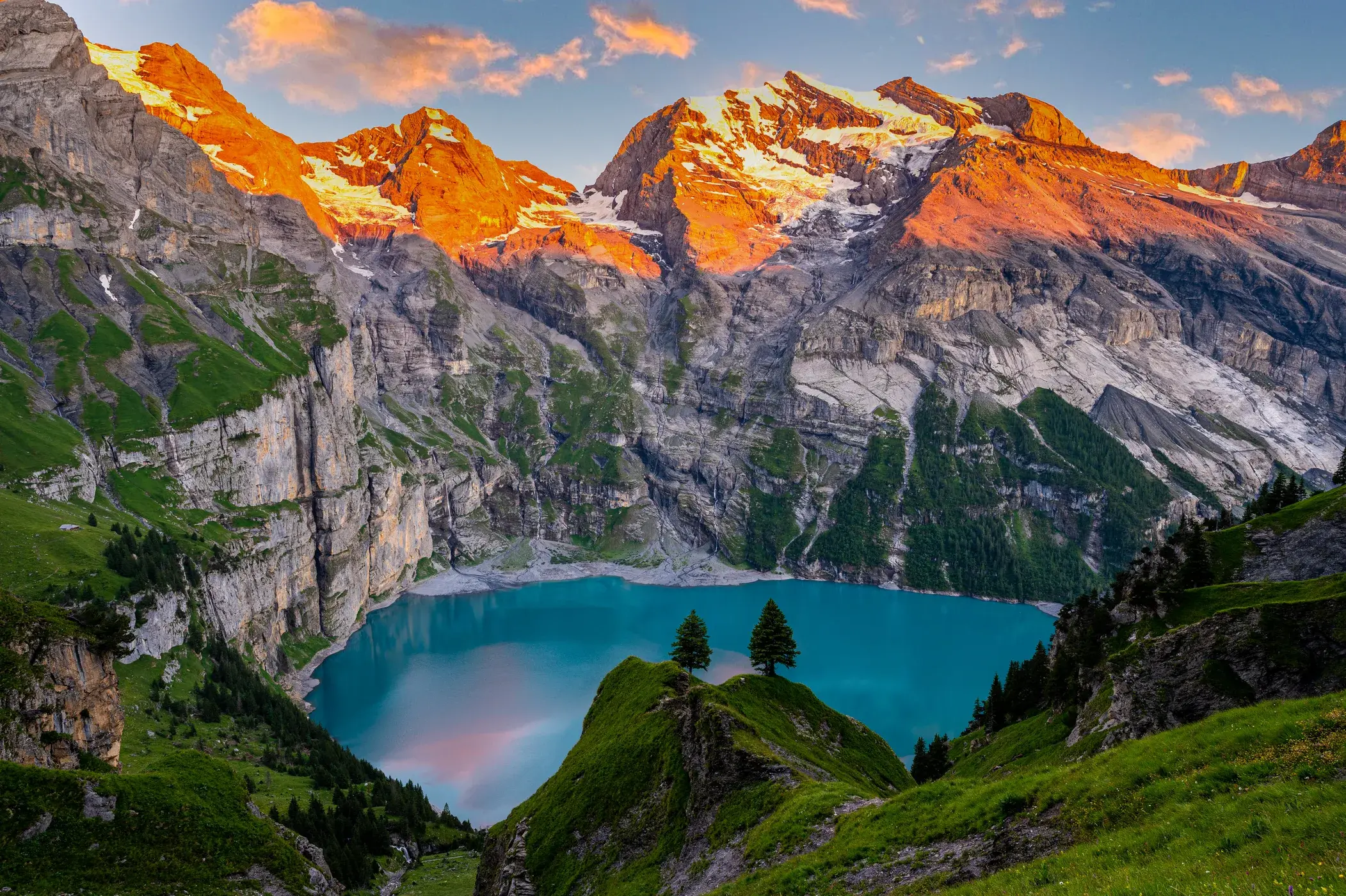
Altitude: 1,578 m · Surface: 1.16 km² · Color: electric turquoise, surrounded by 3,000-metre cliffs
Oeschinensee is the lake that Switzerland Tourism uses on its biggest international campaigns. It sits inside a natural amphitheatre of vertical rock walls above Kandersteg, accessible by a short cable car ride. The colour is almost cartoonishly turquoise. The water comes directly from the snowfields of the Blümlisalp massif. On a sunny day, it is genuinely difficult to photograph because the contrast is too high.
How Do You Get to Oeschinensee?
From Interlaken, take the train to Kandersteg (about 50 minutes). Then the gondola up to Oeschinen station, followed by a 20-minute walk down to the lake.
Important for 2026: the gondola requires advance booking from 20 June to 20 September. Without a reservation, you risk arriving to a fully booked cable car. Book at oeschinensee.ch.
Gondola prices: CHF 36 RT (May to 14 June, 22 Sept to November) / CHF 40 RT (15 June to 21 September). Swiss Travel Pass gives 50% off, not free access. The Berner Oberland Pass is no longer accepted since January 2026.
First gondola: 8h30.
Activities at the lake: rowboats, swimming for the brave (around 14°C in August), summer toboggan run on the descent. The Heuberg circuit is the classic hiking loop above the lake.
Crowd warning: Oeschinensee is on every Switzerland bucket list. July and August bring thousands of visitors per day. If you can't book the gondola, you can walk up from Kandersteg (1h30, +400m elevation gain). Aim for a weekday in June or September for a quieter experience.
Bachalpsee or Oeschinensee: Which Alpine Lake If You Only Have One Day?
Both lakes are worth a full day. But they are different experiences, and the logistics are different enough to matter.
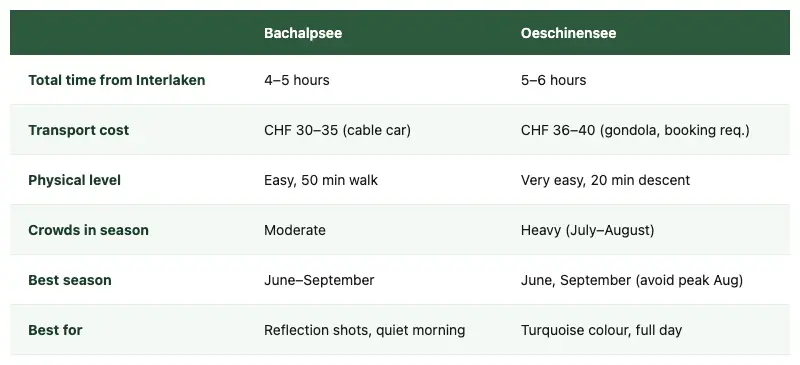
Booking: Bachalpsee requires no advance reservation. Oeschinensee gondola requires booking (20 June to 20 September 2026) at oeschinensee.ch.
Pierre's take: If you have half a day, Bachalpsee is the better call. The hike is short, the light at 8h is exceptional, and you'll have it mostly to yourself in June or September. If you have a full day and want the most photogenic lake in the Bernese Oberland, Oeschinensee is worth the logistics. Don't try to do both in one day.
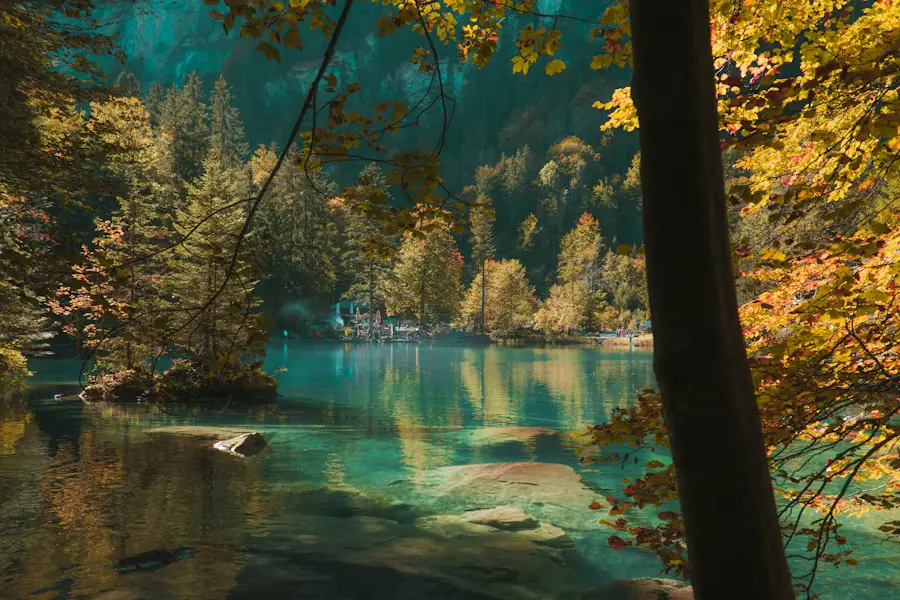
The Hidden Ones: Hinterer Geltensee and the Pools Above
Beyond the famous four, the Bernese Oberland holds a network of small alpine pools that most travelers will never see.
Hinterer Geltensee sits high above the Diemtigtal valley, at 2,300 metres. The hike in is about 4 hours one way. The reward is silence. On most weekdays you have the lake entirely to yourself.
I have brought two clients up to Hinterstockensee. Both times, we had the lake entirely to ourselves. One of them sat down at the edge and did not say anything for about four minutes. That is usually the sign that you have taken someone somewhere real.
Iffigsee above Lenk is reachable by a 2.5-hour hike. A turquoise pool surrounded by Karst formations. Less famous than Oeschinensee, less crowded, equally photogenic.
Hinterstockensee below the Stockhorn ridge is reachable by an easier 1-hour walk. A small dark lake, very different in mood from the turquoise giants. Worth it for the mood.
These are not for casual visitors. They require fitness, time, and a willingness to walk. They are also some of the most peaceful afternoons in Swiss tourism.
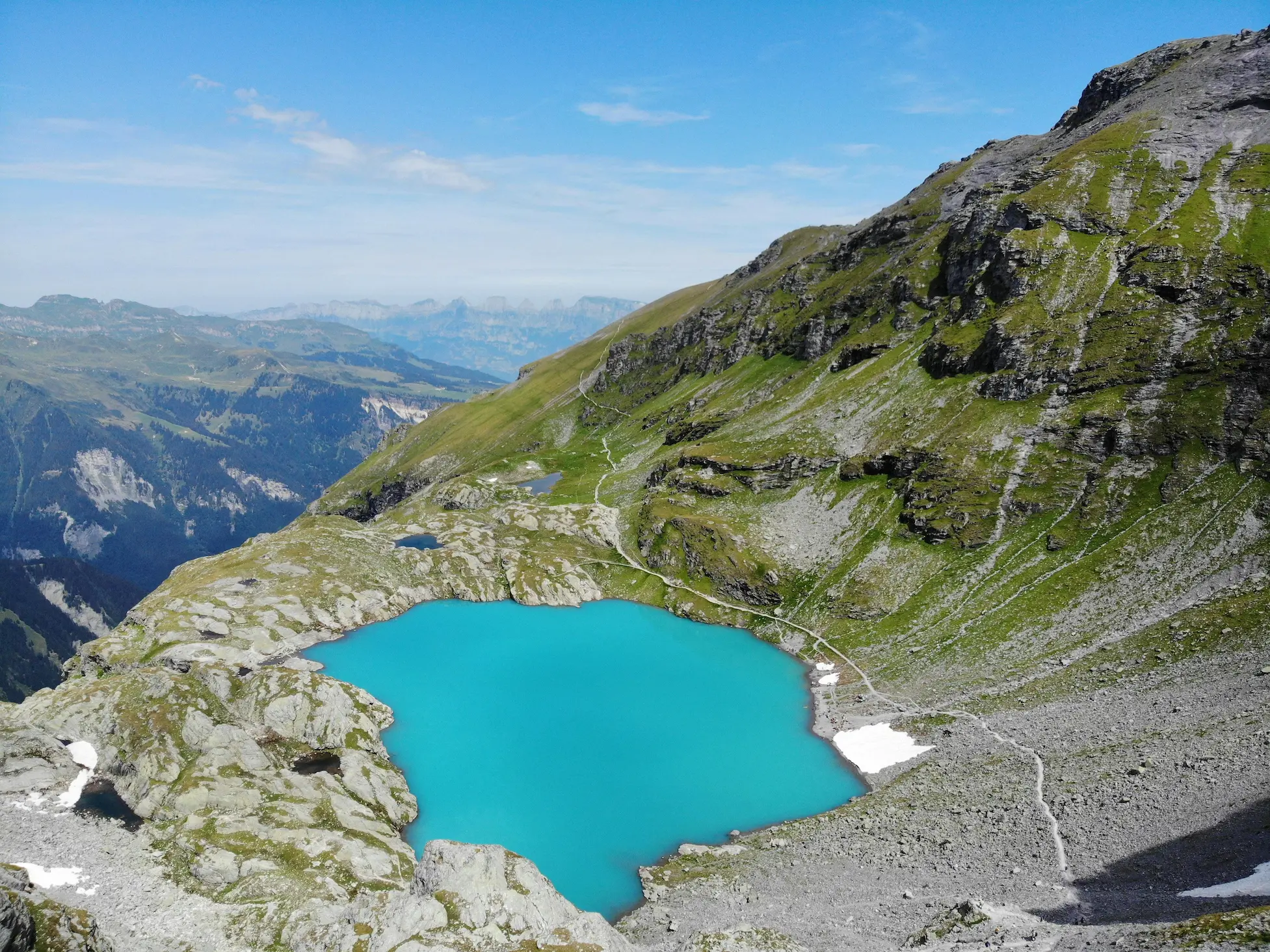
How to Combine the Lakes in One Trip
If you have one day for lakes, choose one lake and one altitude. The Spiez vineyard walk in the morning + a Lake Thun ferry in the afternoon is a perfect combo, easy on the legs and ending with a sunset over the lake.
If you have two days, do Lake Thun on day one (low altitude, vineyards, castles) and Bachalpsee or Oeschinensee on day two (high altitude, alpine mirror lake).
If you have three or more days, mix all four major lakes. Add a kayak afternoon on Lake Brienz, a hike to a hidden alpine lake, and one slow ferry ride to recover.
💡 Insider Tip from Pierre If you have only one morning for an alpine lake and you cannot decide between Bachalpsee and Oeschinensee, go to Bachalpsee. The hike is half as long, the reflection is more reliably mirror-still, and you finish your morning with the entire afternoon free for paragliding or a vineyard walk in Spiez. Oeschinensee deserves a full day, not a rushed half.
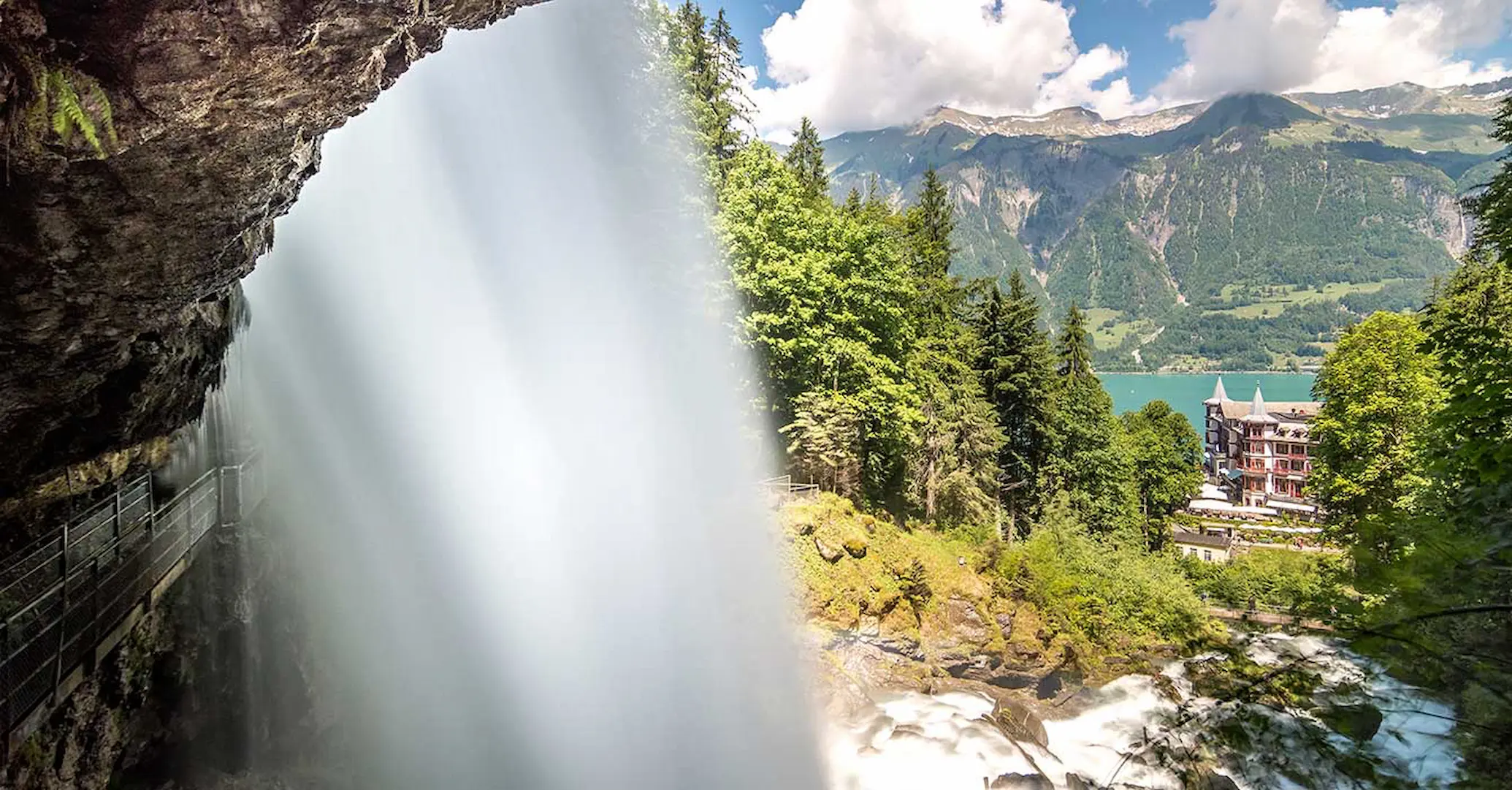
FAQ - Lakes Around Interlaken
What is the most beautiful lake near Interlaken?
Subjective. Lake Brienz for the colour and accessibility, Oeschinensee for the alpine drama, Bachalpsee for the mirror reflection. Most locals would pick Lake Brienz at sunset for an everyday answer and Oeschinensee for a once-in-a-trip splurge.
Can you swim in the lakes around Interlaken?
Yes, but the water is cold. Lake Thun warms to around 22°C in August (swimmable). Lake Brienz stays around 17°C even in summer (cold but doable). Bachalpsee and Oeschinensee are around 10-14°C (for the brave only).
Why are the lakes around Interlaken that turquoise color?
Glacier melt carries microscopic rock particles called glacial flour, which scatter blue and green light. The closer the lake to the source glacier, the more vivid the colour. Lake Brienz, Bachalpsee and Oeschinensee are all directly glacier-fed.
Is Iseltwald worth visiting?
Yes. The village itself is small but charming, and the jetty (made famous by the Korean drama Crash Landing on You) is one of the most-shared photo spots in Switzerland. Visit at sunrise to skip the crowds.
Can you visit all the lakes around Interlaken without a car?
Yes. Trains and lake ferries cover Lake Thun and Lake Brienz. Cable cars or cogwheels reach Bachalpsee (via First) and Oeschinensee (via Kandersteg). The hidden alpine pools require longer walks but are also reachable by public transport plus hike.
What is the best time of year to visit the lakes?
Late June to early September for the alpine high-altitude lakes (snow-free, accessible, longest days). Late May to mid-October for the lower lakes (Thun, Brienz). Avoid mid-July to mid-August at Oeschinensee unless you start very early.
Is the water warm enough to swim in summer?
It depends where you go. Lake Thun reaches 22°C in August, which is genuinely comfortable. Lake Brienz stays at 17-20°C, colder because of its glacial sources. For the warmest swim near Interlaken, go to Burgseeli (Goldswil, Ringgenberg): spring-fed water stays at 25-26°C all summer and it's free. The alpine lakes (Bachalpsee, Oeschinensee) sit at 10-14°C. Possible, but not a swim you'll linger in.
Do I need to book the Oeschinensee gondola in advance?
Yes, from 20 June to 20 September 2026, advance booking is mandatory. Without a reservation, you can arrive to find the gondola fully booked for the day. Book at oeschinensee.ch. First departure is at 8h30. If you can't get a slot, the alternative is to hike up from Kandersteg (1h30, +400m elevation gain). Swiss Travel Pass gives 50% off. The Berner Oberland Pass is no longer accepted.
What is the best month to visit the lakes around Interlaken?
June for the alpine lakes: snow is gone, crowds haven't arrived, and the light is long. July-August for maximum water temperature on Lake Thun and Lake Brienz, but expect significantly more people. September is the best overall compromise: water still warm from summer, alpine lakes still accessible, crowds down 40-50%, and the first hints of autumn colour on the hillsides.
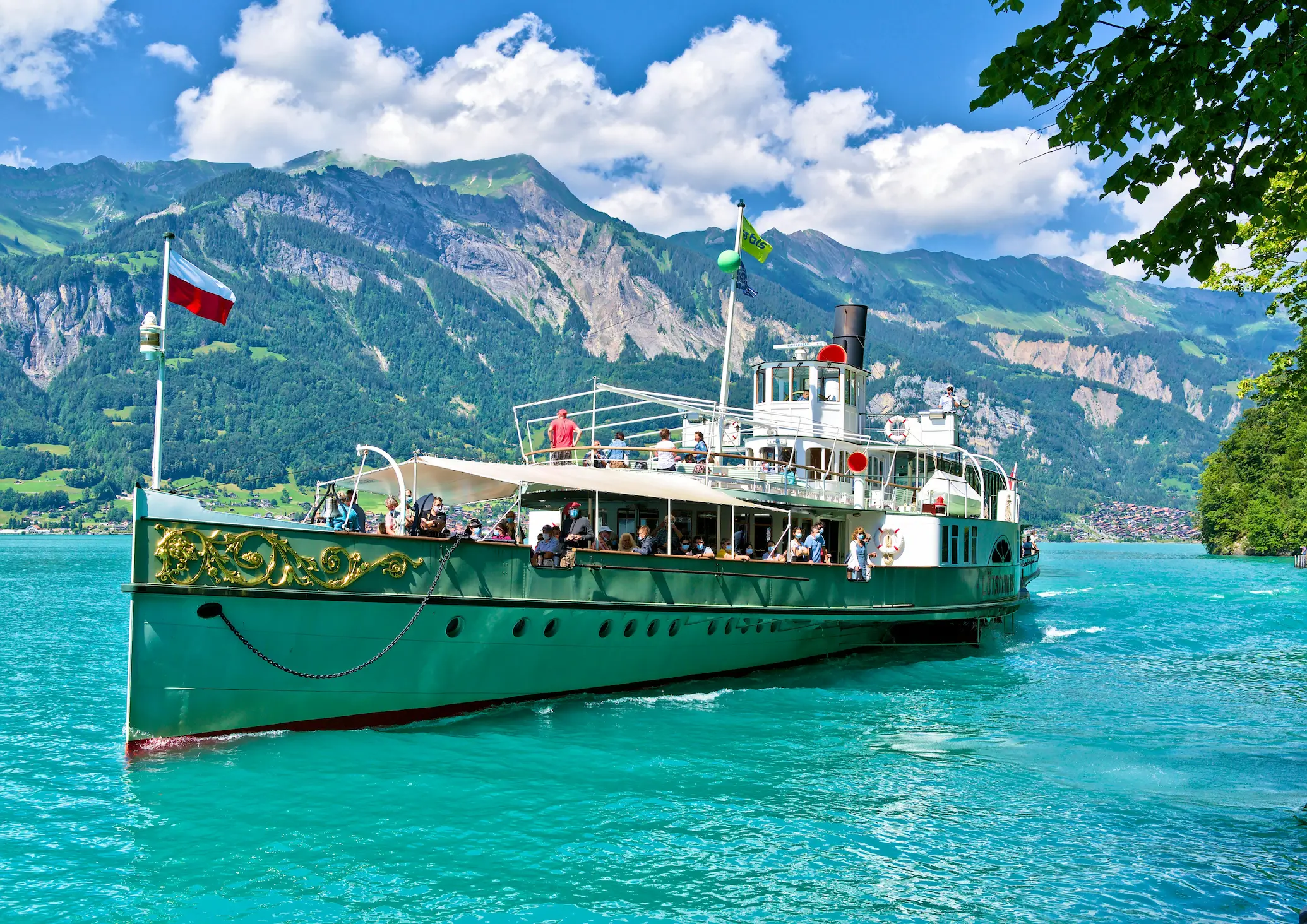
Plan a Lake Day With a Local
The lakes are the soul of the Bernese Oberland. Most travelers spend their time chasing peaks and miss the slow magic of an afternoon by the water with a glass of Swiss white wine and a piece of Gruyère.
If you want a curated lake day that combines the famous spots with the hidden ones, Swiss Local Adventures builds custom itineraries that mix kayaking, ferries, vineyard walks and lakeside meals. Our vineyard walk in Spiez is the most popular slow-afternoon experience in our summer catalogue.
Want to experience the lakes like a local? Join our guided Sunset Walk & Fondue Backpack tour. We’ll take you to the best viewpoints and enjoy a traditional Swiss cheese picnic together as the sun sets over the water.
Wherever you go, plan your lake days for the morning if you want stillness, and the late afternoon if you want golden light. The middle of the day is for the cogwheel and the cable car.
*Written by Pierre Vetsch, founder and head guide at Swiss Local Adventures
Tags
#lakes-around-interlaken#lake-brienz#lake-thun#bachalpsee#oeschinensee#swiss-alps#bernese-oberland#jungfrau-region#switzerland-travel#iseltwald
Share this article
Similar Articles
Continue your reading with these related articles
Interlaken
6/8/2026
8 min
1091
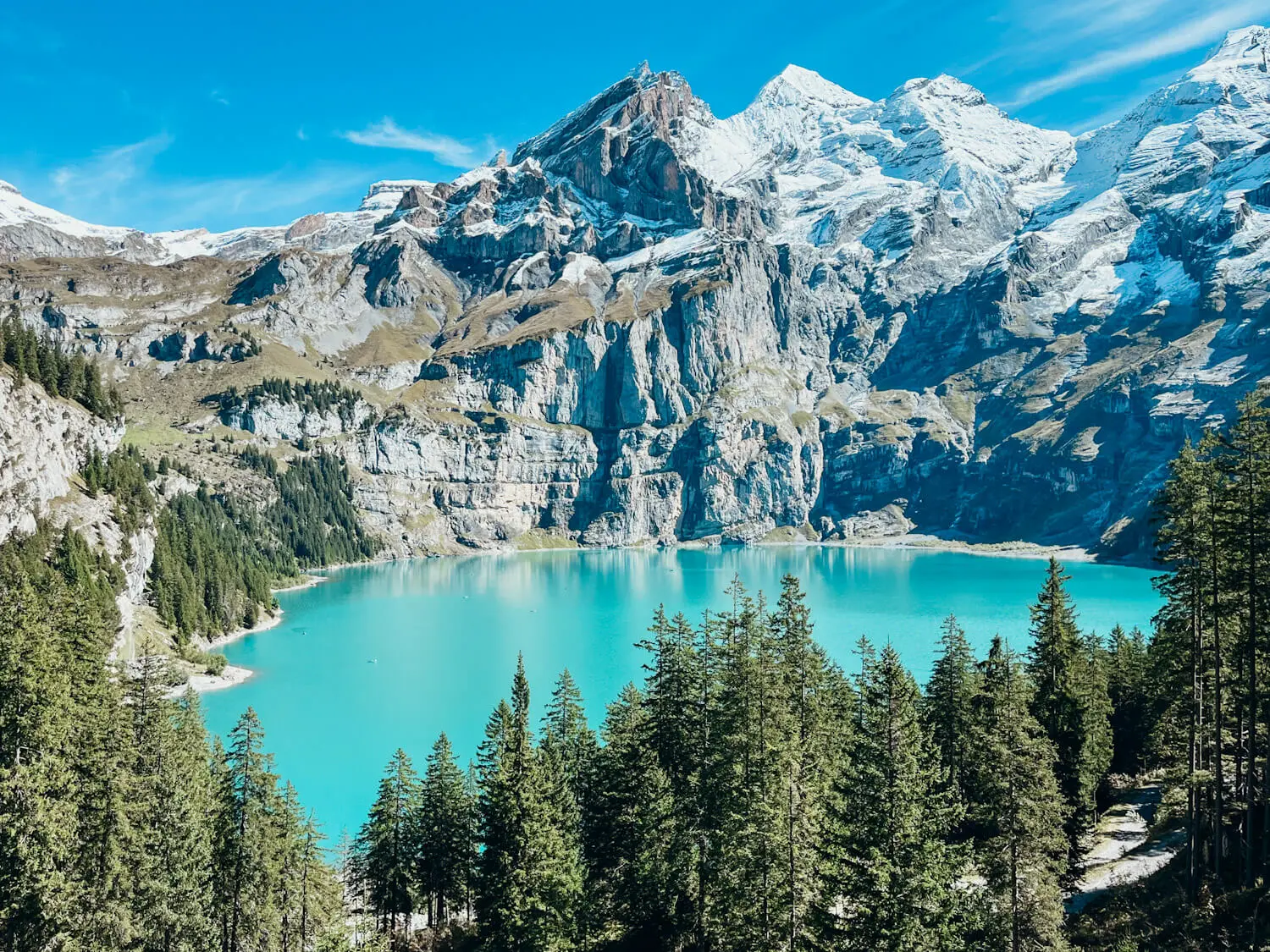
Oeschinensee: Switzerland's Most Beautiful Mountain Lake
Discover Oeschinensee near Kandersteg: how to get there from Interlaken, the science behind the turquoise water, swimming, hiking, and the best time to visit.
oeschinenseekanderstegswiss-alps
By Pierre, Swiss Local AdventuresRead More
Interlaken
6/3/2026
4 min
974
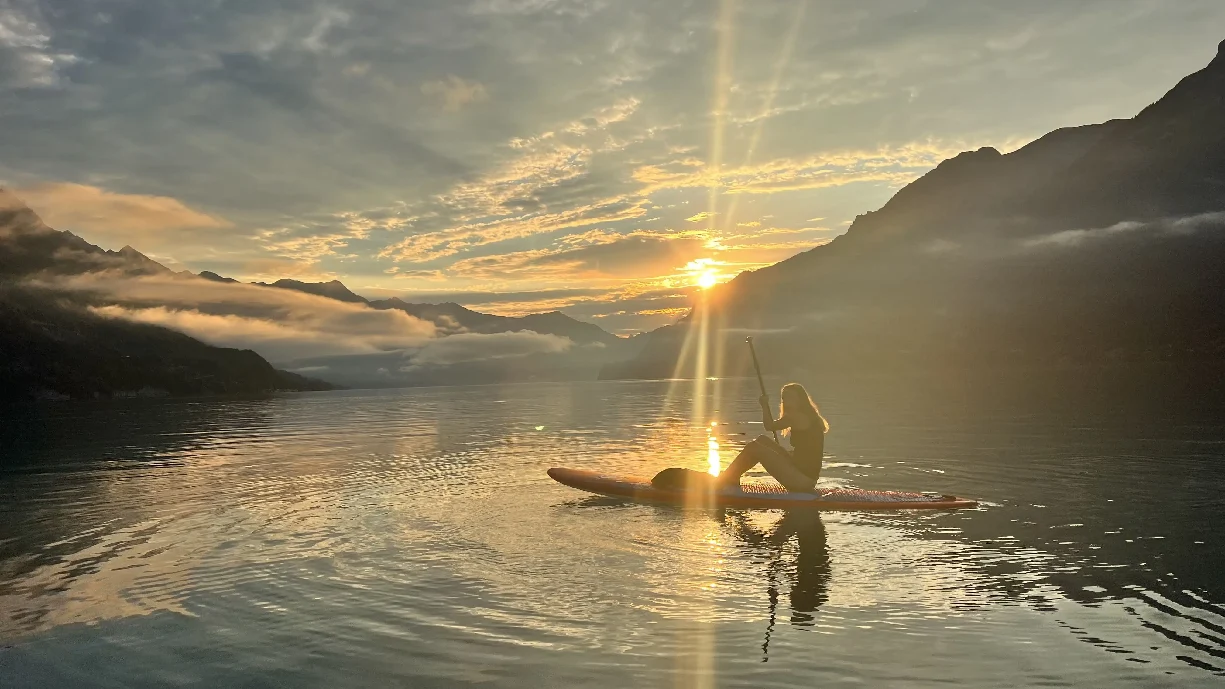
Summer in Interlaken: 14 Things Locals Do
The official tourist guide is fine. This is what locals in Interlaken actually do in summer, from sunrise hikes to lake-side dinners and hidden swim spots.
summer-interlakenthings-to-do-interlakeninterlaken
By Olivia, Swiss Local AdventuresRead More
Interlaken
5/28/2026
6 min
1463
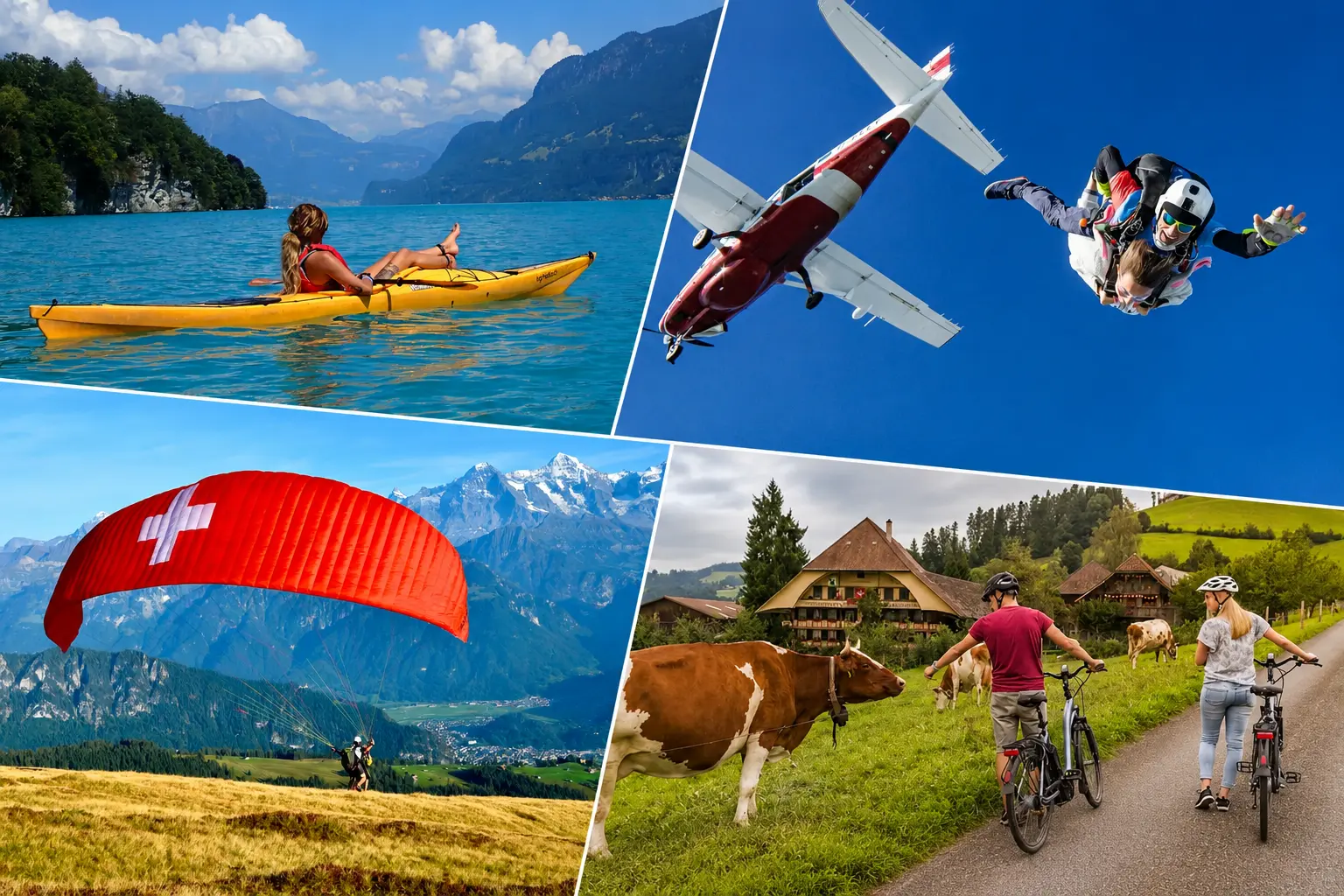
Best Outdoor Adventures in Interlaken (Local Guide)
A local ranks every adventure in Interlaken, from paragliding to base jumping. What's worth the price, what to skip, and the underrated experiences locals love.
outdoor-adventuresinterlakenswiss-alps
By Timoté, Swiss Local AdventuresRead More