Wine Tour
Le Riesling-Sylvaner, le vin rare de la Suisse
O
Olivia Lufman
Auteur
10 juillet 2026
6 min
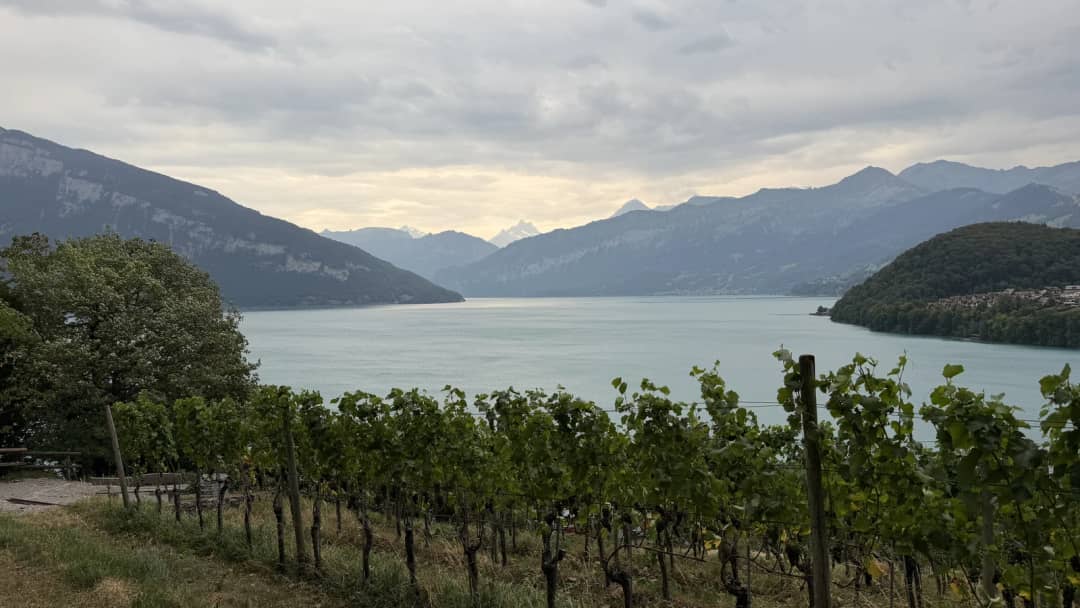
Le Riesling-Sylvaner, le vin rare de la Suisse
Vous verrez le Riesling-Sylvaner sur presque toutes les cartes des vins de Spiez. La plupart des visiteurs pensent qu'il s'agit d'un assemblage de deux cépages. Ce n'est pas le cas. La confusion est assez répandue pour que la réglementation européenne sur l'étiquetage ne reconnaisse que l'autre nom du cépage, Müller-Thurgau, pour les bouteilles vendues dans la majeure partie du continent.
98% du vin suisse ne quitte jamais le pays, et la plupart des amateurs de vin à l'étranger n'ont donc jamais l'occasion d'apprendre la vérité.
Cet article dissipe la confusion. Vous saurez ce qu'est réellement le Riesling-Sylvaner, quel goût il a, et où en boire un verre vous-même, sur les coteaux au-dessus du lac de Thoune.
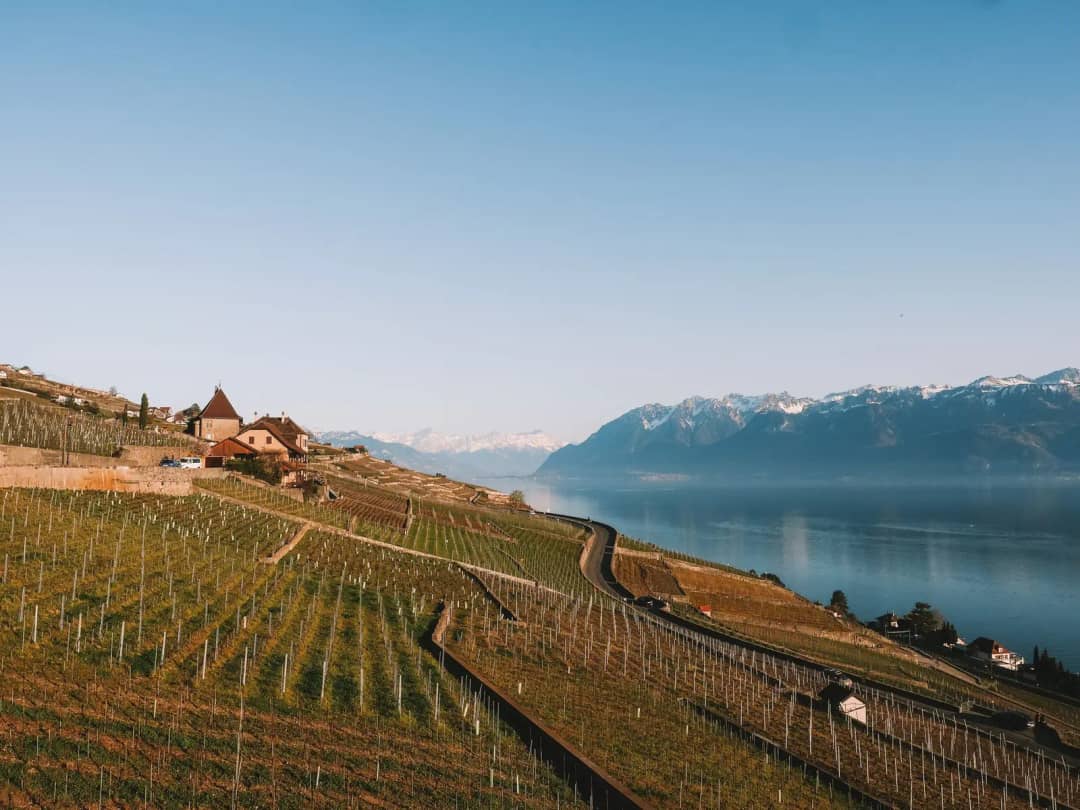
Le Riesling-Sylvaner est-il un assemblage de Riesling et de Sylvaner ?
Non. Riesling-Sylvaner est le nom suisse d'un cépage unique, le Müller-Thurgau, et non l'assemblage de deux cépages différents.
La confusion se comprend. Le nom suggère deux cépages parents mélangés dans le verre.
Le Müller-Thurgau est lui-même un croisement, obtenu en 1882 par Hermann Müller, botaniste du canton suisse de Thurgovie. Il l'a créé à l'institut de recherche de Geisenheim, en Allemagne, et le cépage a emporté avec lui son nom et son canton d'origine. Les premiers plants n'ont atteint la Suisse, à Wädenswil, qu'en 1891. Les analyses ADN ont confirmé plus tard sa filiation : Riesling et Madeleine Royale, pas Sylvaner.
Les vignerons suisses ont continué à l'appeler Riesling-Sylvaner malgré tout, par habitude et par fierté régionale. Le nom est resté en Suisse, en Autriche et dans une partie du nord de l'Italie.
Le saviez-vous ? Le Riesling-Sylvaner, ou Müller-Thurgau, a été obtenu en 1882 à Geisenheim par Hermann Müller, originaire de Thurgovie. Les analyses ADN ont montré plus tard que ses parents sont le Riesling et la Madeleine Royale, pas le Sylvaner.
La réglementation viticole européenne ne reconnaît que Müller-Thurgau comme nom officiel de cépage pour l'étiquetage, et c'est pour cela que vous ne verrez presque jamais « Riesling-Sylvaner » imprimé sur une bouteille hors des frontières suisses.
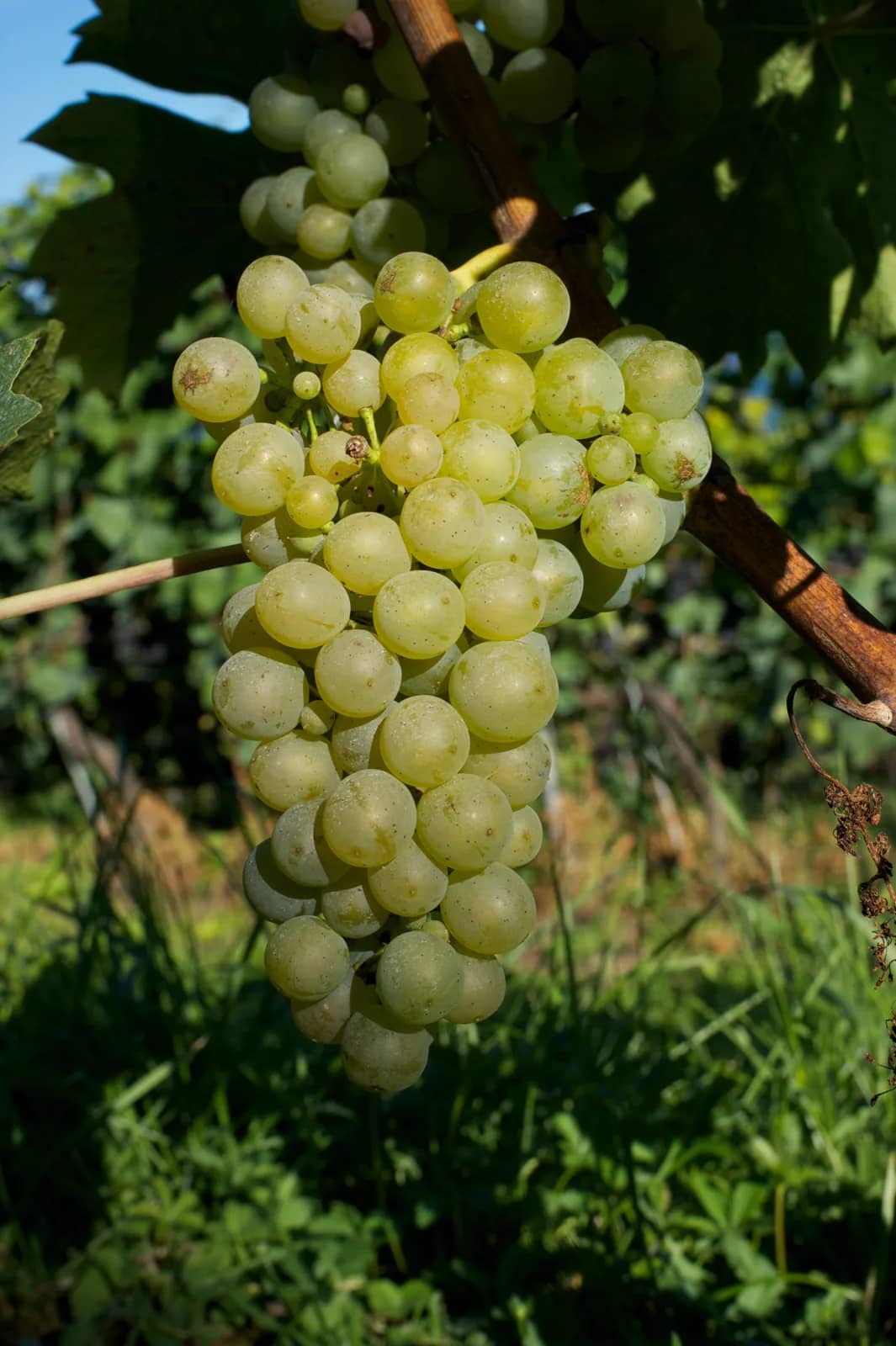
De quel cépage le Riesling-Sylvaner est-il vraiment issu ?
Le Riesling-Sylvaner est fait de Müller-Thurgau, un cépage créé pour les climats plus frais. Il mûrit tôt et supporte l'altitude et l'air refroidi par le lac bien mieux que le vrai Riesling.
C'est pour cela qu'il se plaît autour de Spiez.
Les vignes y sont situées au-dessus du lac de Thoune, où l'air frais descend des sommets environnants même en été. Le Müller-Thurgau convient bien à cet endroit.
Vous le trouverez aussi cultivé en Allemagne, où il s'appelle Müller-Thurgau, et dans une partie de l'Autriche et de la Nouvelle-Zélande sous d'autres noms locaux. Même cépage, autre passeport.
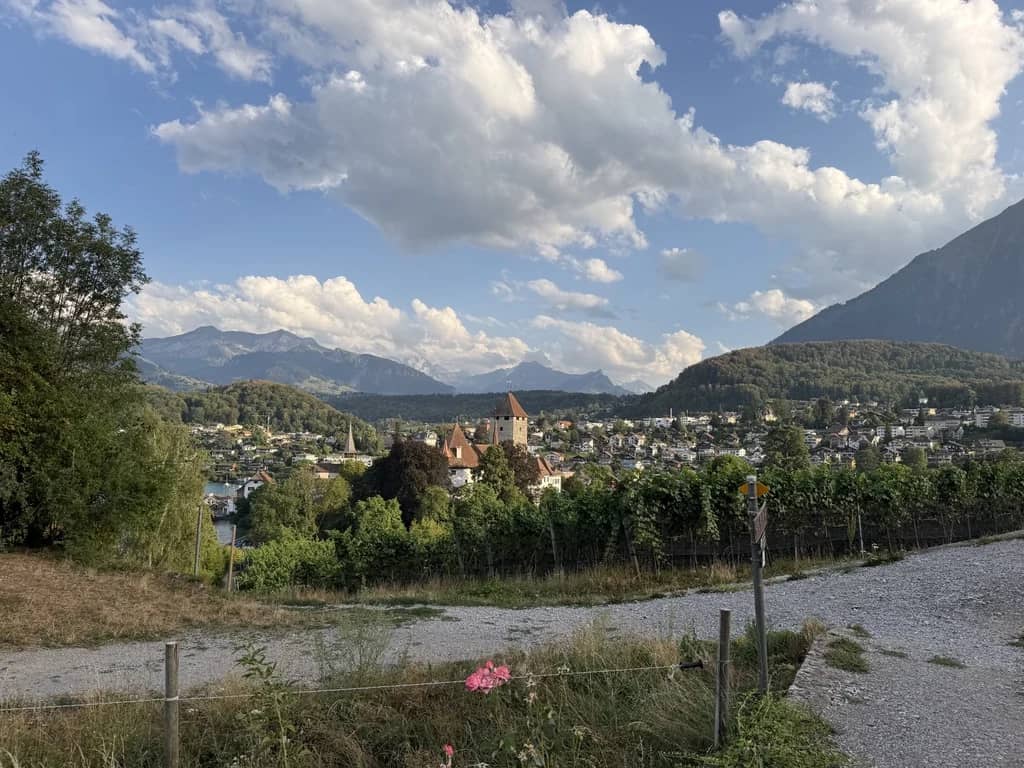
Quel goût a le Riesling-Sylvaner à Spiez ?
À Spiez, le Riesling-Sylvaner est vinifié sec, grâce au climat frais qui entoure le lac de Thoune. Attendez-vous à des arômes de fleur de sureau, de pomme verte, de poire, et à une légère arête minérale.
Le corps reste léger à moyen, jamais lourd.
L'acidité est vive et franche, ce qui garde le vin frais plutôt que plat. Le degré d'alcool reste modeste lui aussi, en général plus bas que celui de beaucoup d'autres blancs.
Olivia dit : « Le vin dans mon verre a soudain senti comme l'air autour de moi : frais, légèrement floral, presque vert. »
Olivia Lufman, votre rédactrice voyage chez Swiss Local Adventures
Je me souviens d'être restée au bout d'un rang de vigne à Spiez au début de l'automne, un verre à la main, quand le vent a tourné depuis le lac. Le vin dans mon verre a soudain senti comme l'air autour de moi : frais, légèrement floral, presque vert. C'est le moment où j'ai compris pourquoi ce cépage appartient exactement à l'endroit où il pousse.
Si vous avez goûté d'autres blancs suisses, celui-ci penche plus léger et plus floral qu'un Chasselas.
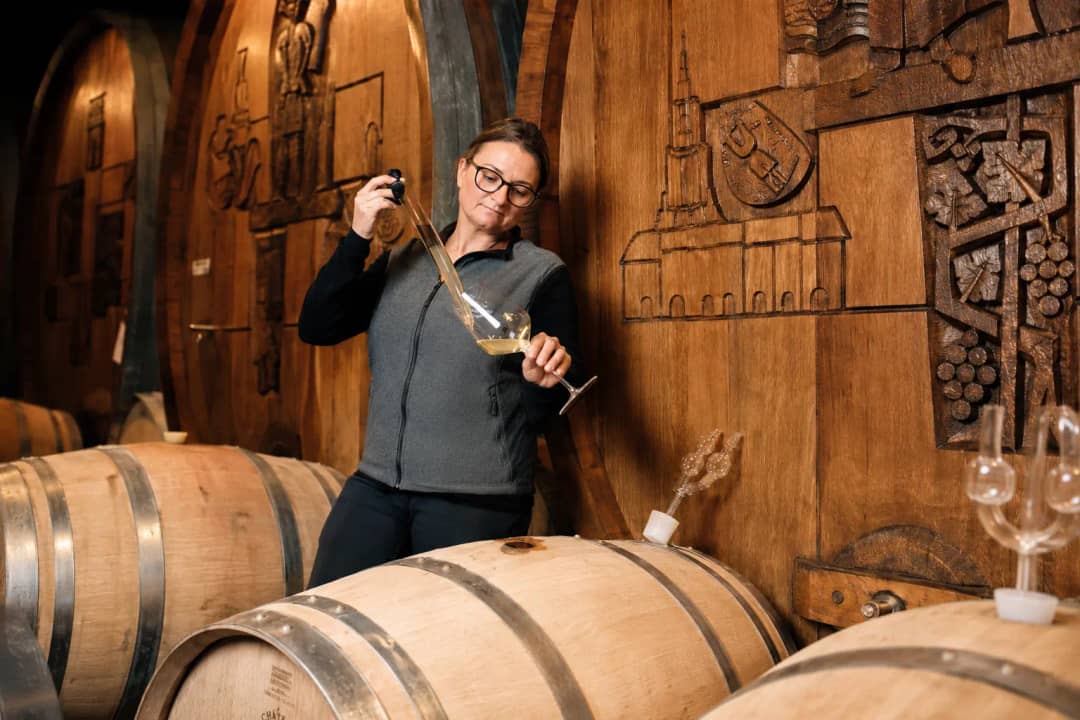
Pourquoi les vignerons suisses l'appellent-ils encore Riesling-Sylvaner ?
Les vignerons suisses ont gardé le nom Riesling-Sylvaner par tradition et par identité régionale, bien avant que les analyses ADN ne révèlent la véritable filiation du cépage.
Le nom est plus ancien que la science.
Les vignerons de Suisse alémanique l'ont adopté il y a des décennies, et il est devenu une partie du vocabulaire viticole local transmis de génération en génération.
Changer un nom que la clientèle reconnaît déjà est risqué. Beaucoup de petits producteurs, dont les vignerons autour de Spiez, n'ont jamais vu de raison de changer d'étiquette une fois la vérité connue.
Conseil d'initié : Sur place, vous entendrez les deux noms. Demandez du Müller-Thurgau dans un magasin et on vous conduira tout droit au rayon Riesling-Sylvaner.
Pour le visiteur, cela veut dire que vous entendrez les deux noms sur place. Demandez du Müller-Thurgau dans un magasin et le personnel vous fera un signe de tête avant de vous conduire tout droit au rayon Riesling-Sylvaner.
Quel âge ont les vignes de Riesling-Sylvaner près de Spiez ?
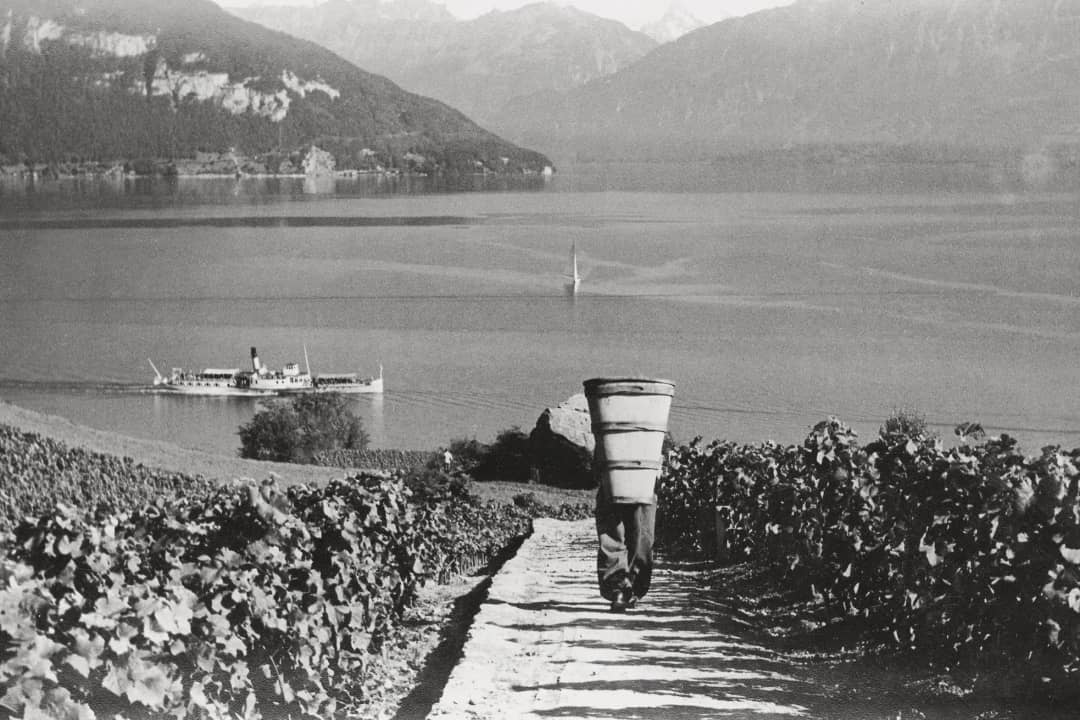
Les vignes autour de Spiez sont documentées jusqu'en 994, ce qui en fait l'un des plus anciens sites viticoles de Suisse.
Cela représente plus de mille ans de vinification continue sur les mêmes coteaux.
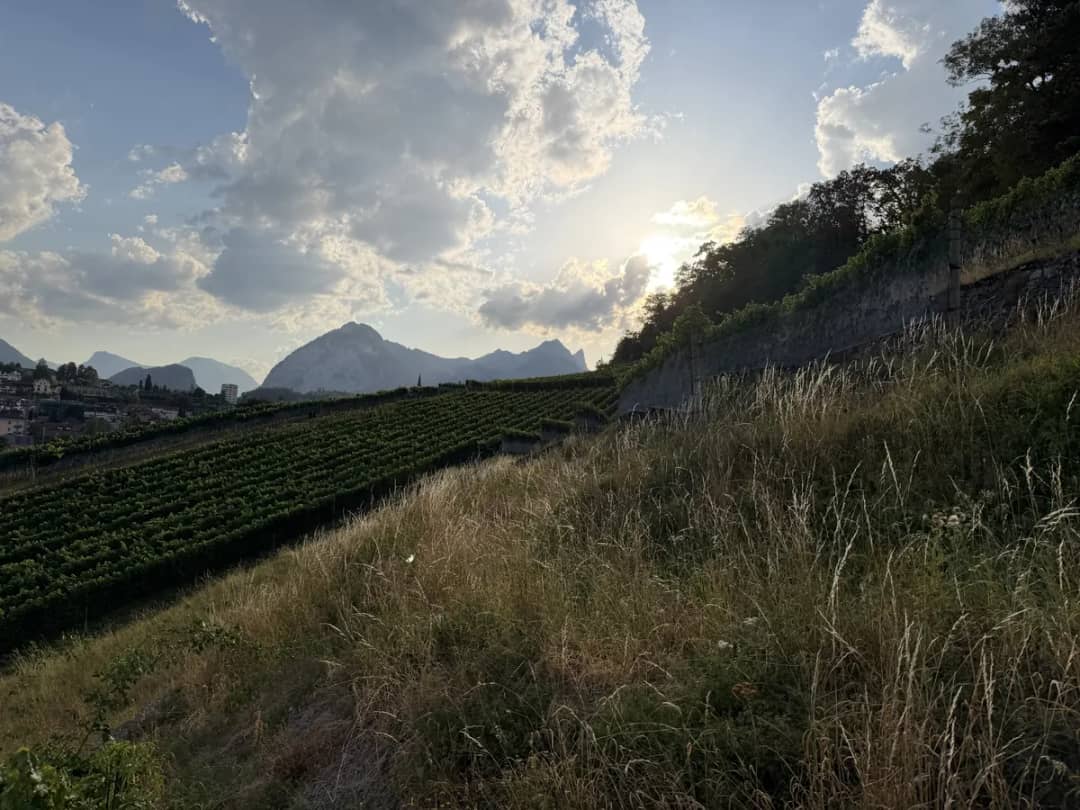
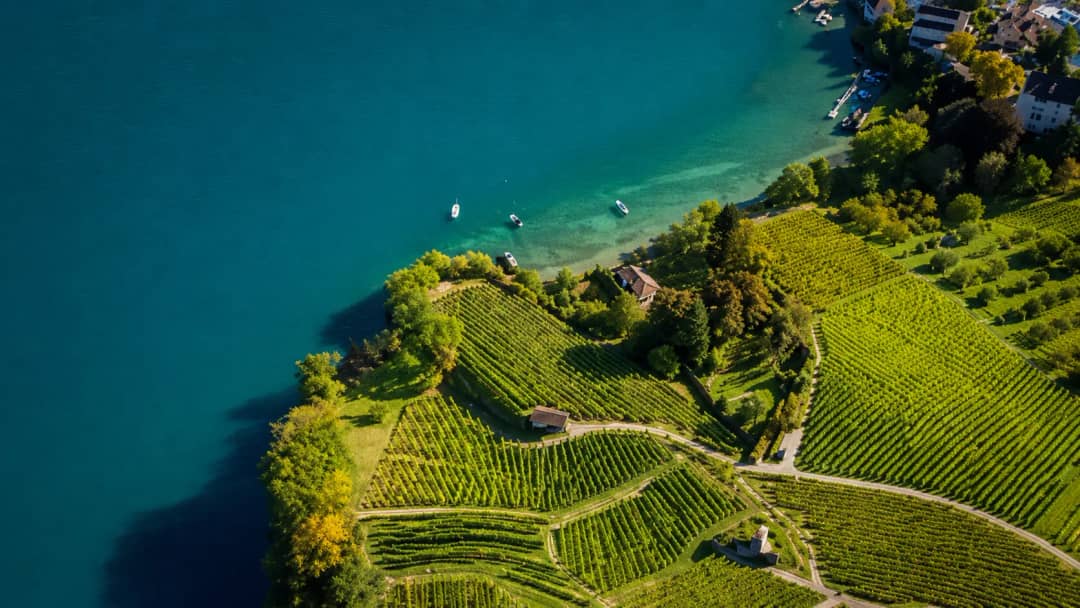
Les terrasses grimpent raide au-dessus du lac, captent le soleil la journée et l'air frais du lac la nuit. Cet écart quotidien fait partie de ce qui donne au Riesling-Sylvaner local son caractère nerveux.
Olivia a demandé à un vigneron : « Est-ce que vous arrosez ces rangs aussi raides ? »
« Personne ne le fait. Regardez la terre à nu : les racines descendent assez profond pour trouver leur eau toutes seules. »
Olivia Lufman, votre rédactrice voyage chez Swiss Local Adventures
Si vous voulez l'histoire plus profonde de ces terrasses et des gens qui les cultivent aujourd'hui, l'article Wine Tour Spiez : le vin suisse au-dessus du lac de Thoune la raconte en entier.
Quelle place occupe le Riesling-Sylvaner parmi les régions viticoles suisses ?
Le Riesling-Sylvaner est l'un des deux cépages principaux cultivés autour de Spiez, aux côtés du Pinot Noir pour les rouges. Ensemble, ils définissent l'identité viticole locale au-dessus du lac de Thoune.
La Suisse compte plusieurs régions viticoles distinctes, du Lavaux au Valais jusqu'aux rives du lac de Thoune.
Chaque région privilégie d'autres cépages selon le climat, le sol et l'altitude. Spiez penche vers les blancs de climat frais précisément à cause de son microclimat tempéré par le lac.
Pour une comparaison régionale complète, y compris la place du Riesling-Sylvaner à côté du Chasselas et des autres cépages suisses, lisez Les meilleures régions viticoles de Suisse : du Lavaux à Spiez.
Ne peut-on goûter le Riesling-Sylvaner qu'en Suisse ?
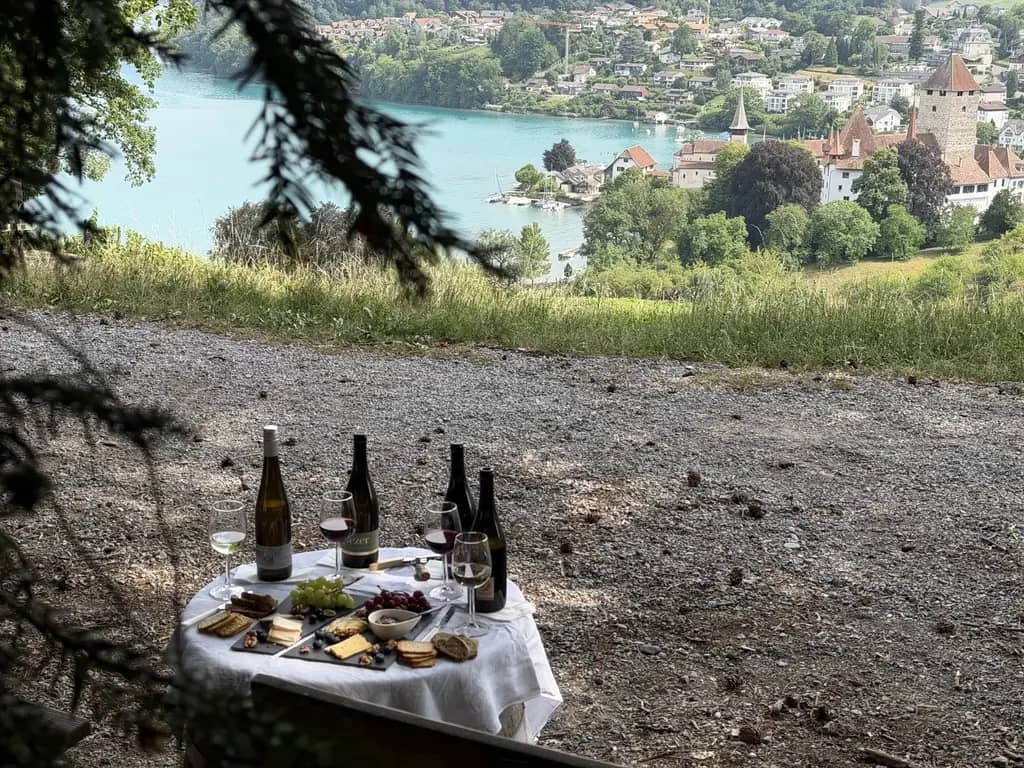
Vous trouverez du Müller-Thurgau cultivé ailleurs, mais goûter le style suisse du Riesling-Sylvaner en particulier suppose de venir en Suisse, puisque presque rien n'en est exporté. L'ironie de l'histoire : c'est le cépage blanc le plus planté de Suisse alémanique, et il reste presque introuvable à l'étranger.
Le chiffre mérite d'être répété : 98% du vin suisse ne quitte jamais le pays.
Les vignes suisses sont petites, la production est limitée, et la demande intérieure absorbe presque tout ce qui est mis en bouteille. Exporter n'est pas une priorité pour la plupart des vignerons.
Olivia dit : « Ma règle pour le Riesling-Sylvaner : le boire là où il pousse. Un Müller-Thurgau d'Allemagne chez vous, c'est le même cépage, mais il n'aura pas le goût de cette pente au-dessus du lac de Thoune. »
Olivia Lufman, votre rédactrice voyage chez Swiss Local Adventures
Cela fait de la dégustation sur place moins une option qu'une condition, si vous voulez goûter le vrai.
Vos questions sur le Riesling-Sylvaner
Le Riesling-Sylvaner est-il la même chose que le Müller-Thurgau ?
Oui, Riesling-Sylvaner et Müller-Thurgau sont le même cépage. Riesling-Sylvaner est le nom traditionnel suisse, autrichien et nord-italien de la variété.
Le cépage lui-même a été obtenu en 1882 par Hermann Müller, botaniste du canton de Thurgovie, même s'il l'a en réalité créé à l'institut de Geisenheim, en Allemagne. Les analyses ADN ont confirmé plus tard sa véritable filiation : Riesling croisé avec Madeleine Royale, et non Sylvaner comme le laisse entendre l'ancien nom.
La réglementation européenne d'étiquetage ne reconnaît que le nom Müller-Thurgau, si bien que l'étiquette traditionnelle « Riesling-Sylvaner » reste limitée à la Suisse, à l'Autriche et au nord de l'Italie. C'est pour cela que les bouteilles vendues à l'international portent presque toujours la mention Müller-Thurgau. En Suisse, en revanche, les deux noms circulent librement, et les locaux les emploient indifféremment sans y penser.
Le Riesling-Sylvaner est-il doux ou sec ?
Le Riesling-Sylvaner peut être vinifié doux ou sec selon la région et le vigneron, mais autour de Spiez il est généralement vinifié sec.
L'air frais qui descend du lac de Thoune contient les niveaux de sucre pendant la maturation, ce qui favorise un style plus nerveux et plus sec qu'un style sucré.
Attendez-vous à des notes de fleur de sureau, de pomme verte et de poire, avec une finale légèrement minérale et une acidité vive. Le degré d'alcool a lui aussi tendance à rester bas.
Dans des régions ou des pays plus chauds où pousse le Müller-Thurgau, vous trouverez parfois des versions demi-sèches ou demi-douces, mais ce n'est pas la tradition de Spiez.
Le Müller-Thurgau n'est-il pas juste un cépage de masse bon marché ?
Il traîne cette réputation, mais surtout depuis l'Allemagne, où il a été planté autrefois pour produire du vin bon marché en grand volume. La Suisse a pris l'autre chemin. C'est le cépage blanc le plus planté de Suisse alémanique, et pourtant les parcelles au-dessus de Spiez sont petites, raides et travaillées à la main, avec des rendements volontairement bas.
Le résultat n'a rien du goût de la version de masse : sec, minéral, et attaché au coteau exact où il a poussé. Même cépage, philosophie inverse.
Puis-je acheter du Riesling-Sylvaner hors de Suisse ?
Acheter du véritable Riesling-Sylvaner suisse hors de Suisse est très difficile, en grande partie parce que 98% du vin suisse ne quitte jamais le pays.
Les vignes suisses sont petites par rapport aux grands pays producteurs, et l'essentiel de ce qu'elles produisent est consommé sur place, souvent dans la région même où il a poussé.
Vous trouverez peut-être du Müller-Thurgau d'Allemagne ou de Nouvelle-Zélande dans les rayons internationaux, et c'est génétiquement le même cépage. Mais les conditions de culture suisses, le climat rafraîchi par le lac et les terrasses vieilles de plusieurs siècles autour de Spiez ne se traduisent pas dans une bouteille que vous pouvez commander ailleurs.
Si vous voulez goûter la version authentique, aller à la source est vraiment la seule option fiable.
Où puis-je goûter du Riesling-Sylvaner près d'Interlaken ?
Les vignes autour de Spiez, à environ 20 minutes d'Interlaken en train, sont l'endroit le plus proche pour goûter du vrai Riesling-Sylvaner directement à la source.
Spiez n'est pourtant pas la seule possibilité. Pour la comparer avec un bar en ville ou une visite de cave, notre tour d'horizon des six options de dégustation près d'Interlaken indique le prix de chacune et ce que vous avez vraiment dans le verre.
Ces coteaux en terrasses dominent le lac de Thoune et portent de la vigne depuis 994, ce qui donne à la région des racines viticoles profondes et documentées.
Les dégustations locales vous permettent de comparer le Riesling-Sylvaner sec et floral avec les rouges de Pinot Noir de la région, côte à côte, avec la vue sur les vignes juste devant vous.
Un après-midi guidé dans ces vignes coûte CHF 139 par personne. Avant de réserver, lisez notre bilan franc sur ce que comprend le tour de Spiez et le profil de ceux qui trouvent le prix justifié.
C'est un court trajet depuis Interlaken mais un rythme complètement différent : des rangs de vigne silencieux plutôt que la foule en montagne.
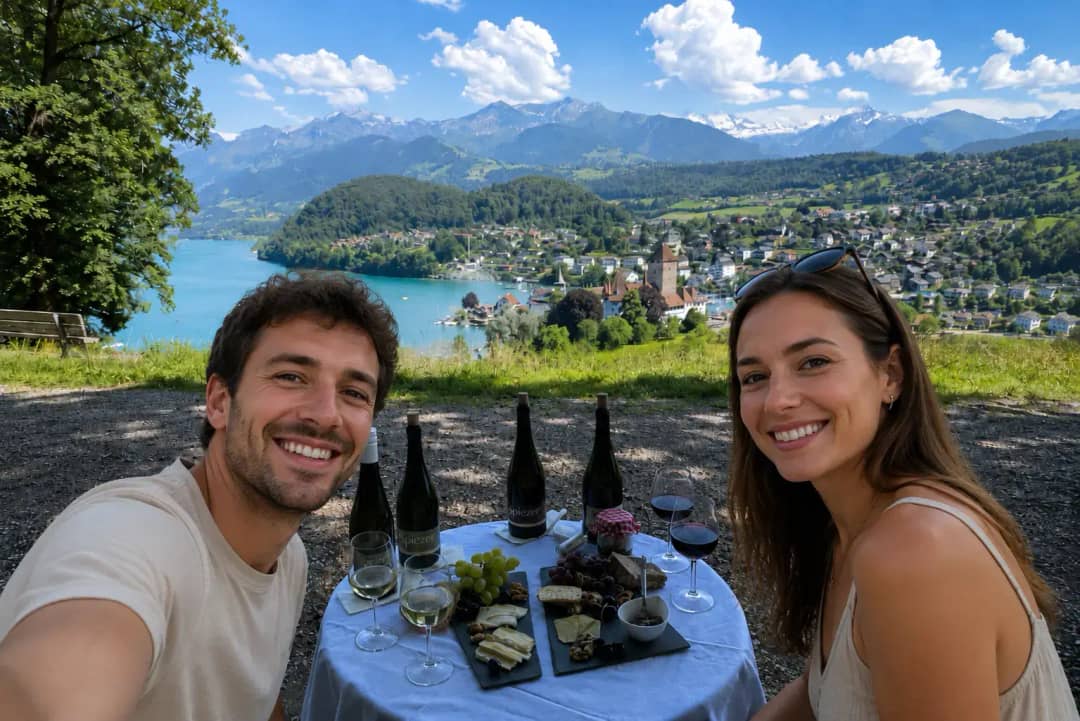
Prêt à le goûter vous-même ?
Le Riesling-Sylvaner, c'est le Müller-Thurgau sous un nom suisse, cultivé sur quelques-uns des plus anciens coteaux viticoles du pays.
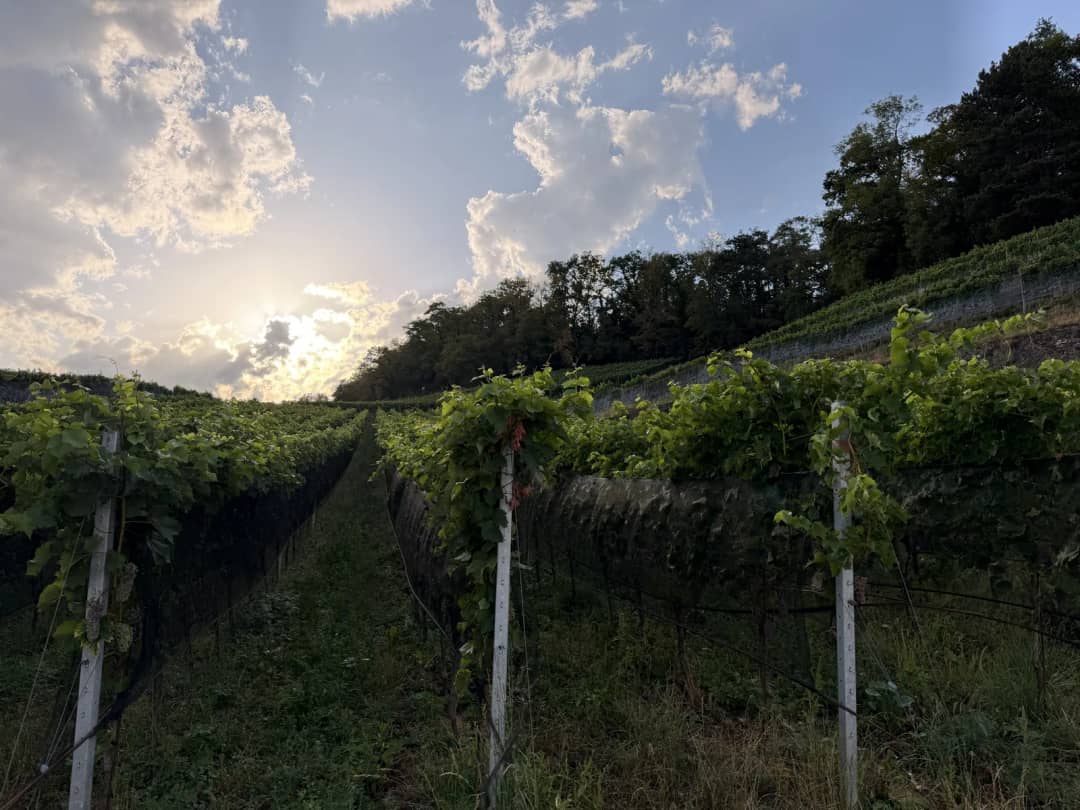
En lire le récit ne vous mène que jusqu'à un certain point. La vraie différence apparaît dans le verre, avec la brise du lac encore sur la peau.
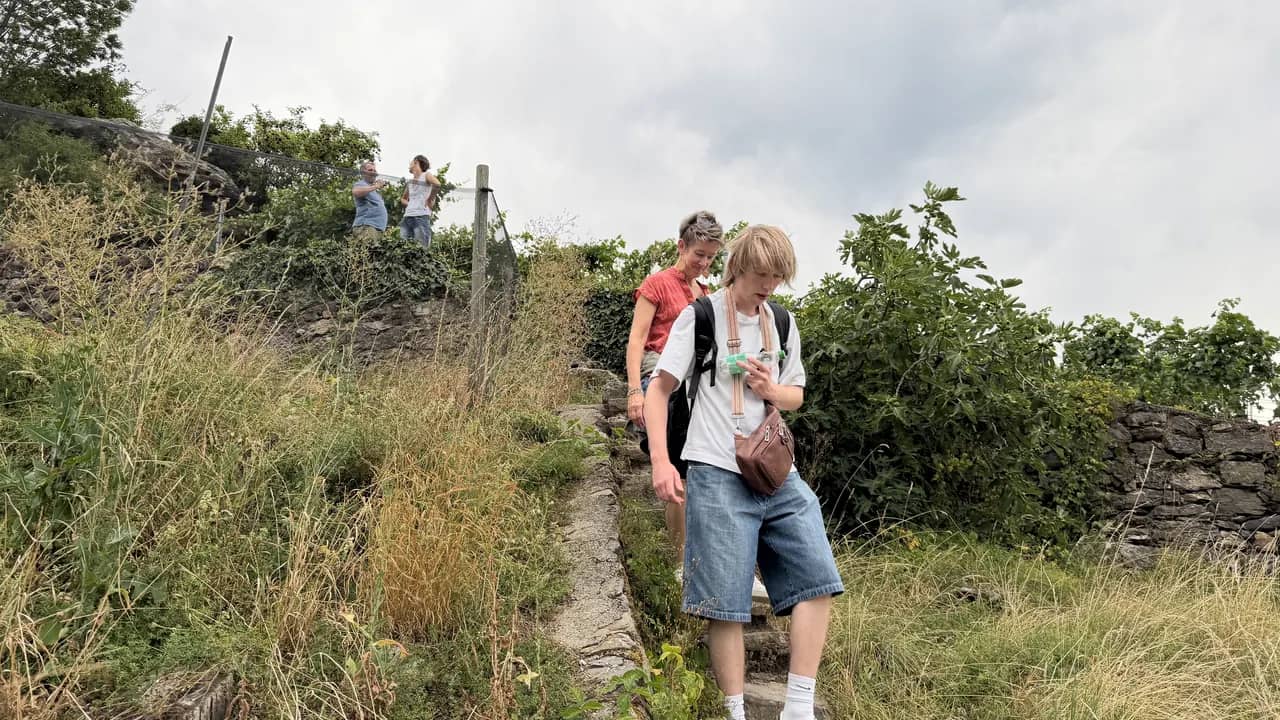
Et si quelqu'un dans votre groupe ne boit pas du tout, la marche dans les terrasses, le fromage et la vue sur le lac remplissent quand même l'après-midi. Voici ce que vivent les non-buveurs à Spiez, sans détour.
Notre Wine Tour dure 3 heures, coûte CHF 139 par personne, et reste plafonné à 8 participants pour un rythme détendu au-dessus du lac de Thoune.
Réservez votre place sur le Wine Tour à Spiez.
*Écrit par Olivia Lufman, votre rédactrice voyage chez Swiss Local Adventures
Source :
dégustation sur place à Spiez, 2026.
Mots-clés
#riesling-sylvaner#muller-thurgau#swiss-wine#spiez#wine-tasting#interlaken
Sources & Références
Partager cet article
Articles Similaires
Continuez votre lecture avec ces articles connexes
Wine Tour
19/08/2026
5 min
Le tour des vins de Spiez vaut-il ses CHF 139 ?
Comparez : une dégustation seule coûte CHF 30 à 70 en Suisse, et peu de domaines en vendent. Voici ce que CHF 139 achètent à la place.
wine-tour-interlakenwine-tasting-cost-switzerlandswiss-wine
Par Olivia LufmanLire Plus
Wine Tour
18/08/2026
4 min
Dégustation de vin à Interlaken: 6 options réelles
Dégustez du vin suisse près d'Interlaken: trois vignobles à 25 minutes, les vrais jours d'ouverture et les prix. 2% du vin suisse s'exporte.
wine-tour-interlakenswiss-winespiez-vineyard
Par Olivia LufmanLire Plus
Wine Tour
08/07/2026
4 min
Tour des vins de Spiez pour ceux qui ne boivent pas
Voyez ce que vaut le tour des vins de Spiez si vous ne buvez pas : prix identique, eau à table et aucun examen de dégustation.
Par Olivia LufmanLire Plus